
Sermons
Watch Now
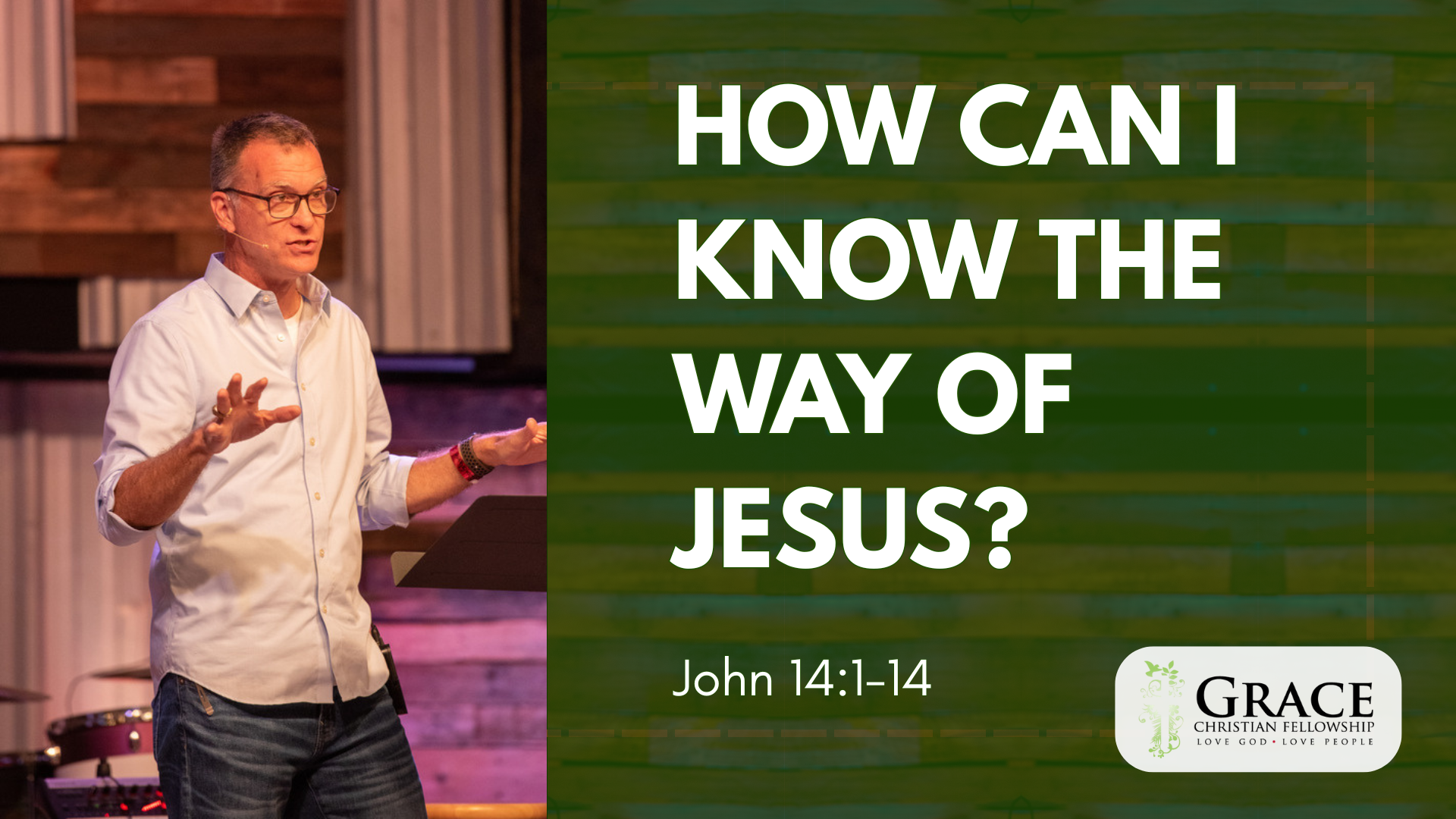
How Can I Know the Way of Jesus? | John 14:1-14 | Darien Gabriel
Series: Signs & Glory
Title: How can I know the way of Jesus?
Scripture: John 14:1-14 NIV
Bottom Line: Because Jesus is the way, the truth, and the life, we can trust His promises in the midst of our fears, follow His words, ways, and wisdom with confidence, see the Father clearly, and rely on Him to provide all we need for the mission.
INTRODUCTION
CONTEXT
SERMON OUTLINE
CONCLUSION
NOTES
QUESTIONS TO CONSIDER
DISCUSSION QUESTIONS
MAIN REFERENCES USED
Opening prayer: Lord God, help us grow to be and do like Jesus, while abiding in him and leading others to do the same.
INTRODUCTION
“I’m sure that everyone reading this book has been touched by the death of a loved one. I have; by the mercy of God, both of my parents died at home in bed. My mother slipped away at night when I was asleep, but I was next to the bed, more than fifty years ago, when my father breathed his last. I watched death in front of my eyes, and in that moment I lost the person who meant more to me than any person on the face of the earth. When it happened, something stabbed my soul, causing me to say: “This is insane. This can’t be real. He must merely be sleeping. O God, will he live again?” -R.C. Sproul
Moments like this leave us asking: Are we really prepared for what’s ahead?
His disciples faced a similar challenge 2,000 years ago, beginning with a turning point of cosmic proportions with the betrayal of Judas Iscariot.
I submit that we should proceed as Jesus led his disciples to on the night of his arrest and the eve of his crucifixion.
Bottom line:
CONTEXT
Jesus's disciples are deeply troubled because they have just heard 3 things:
One of them will betray Jesus,
Jesus is about to leave them and go where they cannot go, and
Peter will deny Jesus 3 times that night.
On top of all of this, Jesus is still wanted for arrest and likely crucifixion for treason and blasphemy. If they are looking for him, they are likely looking for them as well. They're terrified.
OUTLINE (w/ help from ChatGPT)
Bottom Line: Because Jesus is the way, the truth, and the life, we can trust His promises in the midst of our fears, follow His words, ways, and wisdom with confidence, see the Father clearly, and rely on Him to provide all we need for the mission.
1. Jesus Calms Troubled Hearts (vv. 1–3)
• Context: Jesus has announced His departure (13:33) and Peter’s denial (13:38). The disciples are shaken.
• Truth: “Let not your hearts be troubled.” The antidote to fear is faith.
• Explanation:
• Believe in God; believe also in Me → Jesus calls for the same trust we give to God.
• In My Father’s house are many rooms → heaven is real, personal, and prepared.
• I will come again → the return of Christ guarantees our eternal presence with Him.
• Application:
• When anxiety rises, put your weight down on His promises.
• We don’t just long for a place (heaven) but a Person (Jesus).
Illustration: A child afraid of the dark sleeps peacefully when she lies next to her parents bed because they are with her.
2. Jesus Is the Way, the Truth, and the Life (vv. 4–7)
• Thomas: “We don’t know where you are going. How can we know the way?” (v. 5)
• Jesus’ Answer: “I am the way, and the truth, and the life. No one comes to the Father except through Me.” (v. 6)
• Explanation:
• The Way → He doesn’t show the way; He is the way. The cross and resurrection open the road.
• The Truth → Not one truth among many; the full reality of God revealed in Him.
• The Life → Eternal life is only in Him (cf. John 11:25; 1 John 5:11–12).
• Application:
• In a culture that says “all paths lead to God,” Jesus insists: only one does.
• Jesus is not just useful; He is essential.
Illustration: GPS apps give different routes to the destination. Some take longer while others are easier. We won't all follow exactly the same way. But we do follow him his way rooted in his truth to true and lasting life.
3. Jesus Reveals the Father (vv. 8–11)
• Philip: “Lord, show us the Father, and it is enough for us.” (v. 8)
• Jesus’ Reply: “Whoever has seen Me has seen the Father.” (v. 9)
• Truth: Jesus is the full disclosure of God (cf. Col. 1:15; Heb. 1:3).
• Application:
• You don’t have to wonder what God is like—look at Jesus.
• If we’re confused about God’s character, we must return to Jesus’ words and works.
Illustration: Like a high-resolution picture bringing clarity where once it was blurry, Jesus brings the Father into perfect focus.
4. Jesus Empowers His Followers (vv. 12–14)
• Promise: “Whoever believes in Me will also do the works that I do; and greater works than these will he do.” (v. 12)
• Explanation:
• Not greater in quality but in extent—global reach through the Spirit.
• Through prayer “in My name,” Jesus continues His work through us.
• Application:
• We are not powerless—we are prayerful participants in Jesus’ mission.
• Ask boldly in His name, aligning with His will.
Illustration: A relay race—the baton of Jesus’ mission is passed on, but with Spirit-powered expansion beyond what the disciples could imagine.
Conclusion: Bringing It All Together
• When your heart is troubled → Trust His promise (vv. 1–3).
• When you wonder about the way → Follow Him as the only way (vv. 4–7).
• When you want to know what God is like → Look to Jesus (vv. 8–11).
• When you feel powerless → Pray in His name and live on His mission (vv. 12–14).
Bottom Line: Because Jesus is the way, the truth, and the life, we can trust His promises in the midst of our fears, follow His words, ways, and wisdom with confidence, see the Father clearly, and rely on Him to provide all we need for the mission.
CONCLUSION
Bottom Line: Because Jesus is the way, the truth, and the life, we can trust His promises in the midst of our fears, follow His words, ways, and wisdom with confidence, see the Father clearly, and rely on Him to provide all we need for the mission.
INVITATION
What about you?
Peter puts it all in perspective in his first sermon:
““Therefore let all Israel be assured of this: God has made this Jesus, whom you crucified, both Lord and Messiah.” When the people heard this, they were cut to the heart and said to Peter and the other apostles, “Brothers, what shall we do?” Peter replied, “Repent and be baptized, every one of you, in the name of Jesus Christ for the forgiveness of your sins. And you will receive the gift of the Holy Spirit. The promise is for you and your children and for all who are far off—for all whom the Lord our God will call.”” Acts 2:36-39 NIV
How do we respond? Answer 2 questions:
Take out a card or piece of paper right now. Write down the answer to these questions:
What is God saying to me right now?
What am I going to do about it? Write this down on a sheet of paper.
What I hear you saying, Lord, is ___________________.
[my name] is going to believe/do __________________________________________________ as a result.
Finally, share this with your Home or Mission group this week when you gather as a testimony about what God is doing in your life. You don’t have to get too specific to give him praise.
Lord's Supper, 1 Cor 11:23-26 is good passage.
Also, say something like, "Christ has died, Christ is risen, Christ will come again." (past, present, and future)
Pray
NOTES
“I’m sure that everyone reading this book has been touched by the death of a loved one. I have; by the mercy of God, both of my parents died at home in bed. My mother slipped away at night when I was asleep, but I was next to the bed, more than fifty years ago, when my father breathed his last. I watched death in front of my eyes, and in that moment I lost the person who meant more to me than any person on the face of the earth. When it happened, something stabbed my soul, causing me to say: “This is insane. This can’t be real. He must merely be sleeping. O God, will he live again?”
R.C. Sproul
QUESTIONS TO CONSIDER
What do I want them to know?
Why do I want them to know it?
What do I want them to do?
Why do I want them to do it?
How do they do this?
DISCUSSION QUESTIONS
Discovery Bible Study process: https://www.dbsguide.org/
Read the passage together.
Retell the story in your own words.
Discovery the story
What does this story tell me about God?
What does this story tell me about people?
If this is really true, what should I do?
What is God saying to you right now? (Write this down)
What are you going to do about it? (Write this down)
Who am I going to tell about this?
Find our sermons, podcasts, discussion questions and notes at https://www.gracetoday.net/podcast
Alternate Discussion Questions (by Jeff Vanderstelt): Based on this passage:
Who is God?
What has he done/is he doing/is he going to do?
Who am I? (In light of 1 & 2)
What do I do? (In light of who I am)
How do I do it?
Final Questions (Write this down)
What is God saying to you right now?
What are you going to do about it?
MAIN REFERENCES USED
“John,” by R. Kent Hughes, Preaching the Word Commentary, Edited by Kent Hughes
Exalting Jesus in John, by Matt Carter & Josh Wredberg
The Gospels & Epistles of John, FF Bruce
John, RC Sproul
John, Köstenberger
The Gospel According to John, DA Carson
Let's Study John, Mark Johnston
The Light Has Come, Leslie Newbigin (TLHC)
The Visual Word, Patrick Schreiner (TVW)
“Look at the Book” by John Piper (LATB)
“The Bible Knowledge Commentary” by Walvoord, Zuck (BKC)
“The Bible Exposition Commentary” by Warren Wiersbe (BEC)
Thru The Bible with J. Vernon McGee (TTB)
Outline Bible, D Willmington (OB)
NIV Study Bible (NIVSB) https://www.biblica.com/resources/scholar-notes/niv-study-bible/
Chronological Life Application Study Bible (NLT)
ESV Study Bible (ESVSB) https://www.esv.org
The Bible Project https://bibleproject.com
Nicky Gumbel bible reading plan app or via YouVersion
ChatGPT AI
Grok AI
Google Gemini AI
Series: Signs & Glory
Title: How can I know the way of Jesus?
Subtitle:
Scripture: John 14:1-14 NIV
Bottom Line: Because Jesus is the way, the truth, and the life, we can trust His promises in the midst of our fears, follow His words, ways, and wisdom with confidence, see the Father clearly, and rely on Him to provide all we need for the mission.
INTRODUCTION
CONTEXT
SERMON OUTLINE
CONCLUSION
NOTES
QUESTIONS TO CONSIDER
DISCUSSION QUESTIONS
MAIN REFERENCES USED
Opening prayer: Lord God, help us grow to be and do like Jesus, while abiding in him and leading others to do the same.
INTRODUCTION
“I’m sure that everyone reading this book has been touched by the death of a loved one. I have; by the mercy of God, both of my parents died at home in bed. My mother slipped away at night when I was asleep, but I was next to the bed, more than fifty years ago, when my father breathed his last. I watched death in front of my eyes, and in that moment I lost the person who meant more to me than any person on the face of the earth. When it happened, something stabbed my soul, causing me to say: “This is insane. This can’t be real. He must merely be sleeping. O God, will he live again?” -R.C. Sproul
Moments like this leave us asking: Are we really prepared for what’s ahead?
His disciples faced a similar challenge 2,000 years ago, beginning with a turning point of cosmic proportions with the betrayal of Judas Iscariot.
I submit that we should proceed as Jesus led his disciples to on the night of his arrest and the eve of his crucifixion.
Bottom line:
CONTEXT
Jesus's disciples are deeply troubled because they have just heard 3 things:
One of them will betray Jesus,
Jesus is about to leave them and go where they cannot go, and
Peter will deny Jesus 3 times that night.
On top of all of this, Jesus is still wanted for arrest and likely crucifixion for treason and blasphemy. If they are looking for him, they are likely looking for them as well. They're terrified.
OUTLINE (w/ help from ChatGPT)
Bottom Line: Because Jesus is the way, the truth, and the life, we can trust His promises in the midst of our fears, follow His words, ways, and wisdom with confidence, see the Father clearly, and rely on Him to provide all we need for the mission.
1. Jesus Calms Troubled Hearts (vv. 1–3)
• Context: Jesus has announced His departure (13:33) and Peter’s denial (13:38). The disciples are shaken.
• Truth: “Let not your hearts be troubled.” The antidote to fear is faith.
• Explanation:
• Believe in God; believe also in Me → Jesus calls for the same trust we give to God.
• In My Father’s house are many rooms → heaven is real, personal, and prepared.
• I will come again → the return of Christ guarantees our eternal presence with Him.
• Application:
• When anxiety rises, put your weight down on His promises.
• We don’t just long for a place (heaven) but a Person (Jesus).
Illustration: A child afraid of the dark sleeps peacefully when she lies next to her parents bed because they are with her.
2. Jesus Is the Way, the Truth, and the Life (vv. 4–7)
• Thomas: “We don’t know where you are going. How can we know the way?” (v. 5)
• Jesus’ Answer: “I am the way, and the truth, and the life. No one comes to the Father except through Me.” (v. 6)
• Explanation:
• The Way → He doesn’t show the way; He is the way. The cross and resurrection open the road.
• The Truth → Not one truth among many; the full reality of God revealed in Him.
• The Life → Eternal life is only in Him (cf. John 11:25; 1 John 5:11–12).
• Application:
• In a culture that says “all paths lead to God,” Jesus insists: only one does.
• Jesus is not just useful; He is essential.
Illustration: GPS apps give different routes to the destination. Some take longer while others are easier. We won't all follow exactly the same way. But we do follow him his way rooted in his truth to true and lasting life.
3. Jesus Reveals the Father (vv. 8–11)
• Philip: “Lord, show us the Father, and it is enough for us.” (v. 8)
• Jesus’ Reply: “Whoever has seen Me has seen the Father.” (v. 9)
• Truth: Jesus is the full disclosure of God (cf. Col. 1:15; Heb. 1:3).
• Application:
• You don’t have to wonder what God is like—look at Jesus.
• If we’re confused about God’s character, we must return to Jesus’ words and works.
Illustration: Like a high-resolution picture bringing clarity where once it was blurry, Jesus brings the Father into perfect focus.
4. Jesus Empowers His Followers (vv. 12–14)
• Promise: “Whoever believes in Me will also do the works that I do; and greater works than these will he do.” (v. 12)
• Explanation:
• Not greater in quality but in extent—global reach through the Spirit.
• Through prayer “in My name,” Jesus continues His work through us.
• Application:
• We are not powerless—we are prayerful participants in Jesus’ mission.
• Ask boldly in His name, aligning with His will.
Illustration: A relay race—the baton of Jesus’ mission is passed on, but with Spirit-powered expansion beyond what the disciples could imagine.
Conclusion: Bringing It All Together
• When your heart is troubled → Trust His promise (vv. 1–3).
• When you wonder about the way → Follow Him as the only way (vv. 4–7).
• When you want to know what God is like → Look to Jesus (vv. 8–11).
• When you feel powerless → Pray in His name and live on His mission (vv. 12–14).
Bottom Line: Because Jesus is the way, the truth, and the life, we can trust His promises in the midst of our fears, follow His words, ways, and wisdom with confidence, see the Father clearly, and rely on Him to provide all we need for the mission.
CONCLUSION
Bottom Line: Because Jesus is the way, the truth, and the life, we can trust His promises in the midst of our fears, follow His words, ways, and wisdom with confidence, see the Father clearly, and rely on Him to provide all we need for the mission.
INVITATION
What about you?
Peter puts it all in perspective in his first sermon:
““Therefore let all Israel be assured of this: God has made this Jesus, whom you crucified, both Lord and Messiah.” When the people heard this, they were cut to the heart and said to Peter and the other apostles, “Brothers, what shall we do?” Peter replied, “Repent and be baptized, every one of you, in the name of Jesus Christ for the forgiveness of your sins. And you will receive the gift of the Holy Spirit. The promise is for you and your children and for all who are far off—for all whom the Lord our God will call.”” Acts 2:36-39 NIV
How do we respond? Answer 2 questions:
Take out a card or piece of paper right now. Write down the answer to these questions:
What is God saying to me right now?
What am I going to do about it? Write this down on a sheet of paper.
What I hear you saying, Lord, is ___________________.
[my name] is going to believe/do __________________________________________________ as a result.
Finally, share this with your Home or Mission group this week when you gather as a testimony about what God is doing in your life. You don’t have to get too specific to give him praise.
Lord's Supper, 1 Cor 11:23-26 is good passage.
Also, say something like, "Christ has died, Christ is risen, Christ will come again." (past, present, and future)
Pray
NOTES
“I’m sure that everyone reading this book has been touched by the death of a loved one. I have; by the mercy of God, both of my parents died at home in bed. My mother slipped away at night when I was asleep, but I was next to the bed, more than fifty years ago, when my father breathed his last. I watched death in front of my eyes, and in that moment I lost the person who meant more to me than any person on the face of the earth. When it happened, something stabbed my soul, causing me to say: “This is insane. This can’t be real. He must merely be sleeping. O God, will he live again?”
R.C. Sproul
QUESTIONS TO CONSIDER
What do I want them to know?
Why do I want them to know it?
What do I want them to do?
Why do I want them to do it?
How do they do this?
DISCUSSION QUESTIONS
Discovery Bible Study process: https://www.dbsguide.org/
Read the passage together.
Retell the story in your own words.
Discovery the story
What does this story tell me about God?
What does this story tell me about people?
If this is really true, what should I do?
What is God saying to you right now? (Write this down)
What are you going to do about it? (Write this down)
Who am I going to tell about this?
Find our sermons, podcasts, discussion questions and notes at https://www.gracetoday.net/podcast
Alternate Discussion Questions (by Jeff Vanderstelt): Based on this passage:
Who is God?
What has he done/is he doing/is he going to do?
Who am I? (In light of 1 & 2)
What do I do? (In light of who I am)
How do I do it?
Final Questions (Write this down)
What is God saying to you right now?
What are you going to do about it?
MAIN REFERENCES USED
“John,” by R. Kent Hughes, Preaching the Word Commentary, Edited by Kent Hughes
Exalting Jesus in John, by Matt Carter & Josh Wredberg
The Gospels & Epistles of John, FF Bruce
John, RC Sproul
John, Köstenberger
The Gospel According to John, DA Carson
Let's Study John, Mark Johnston
The Light Has Come, Leslie Newbigin (TLHC)
The Visual Word, Patrick Schreiner (TVW)
“Look at the Book” by John Piper (LATB)
“The Bible Knowledge Commentary” by Walvoord, Zuck (BKC)
“The Bible Exposition Commentary” by Warren Wiersbe (BEC)
Thru The Bible with J. Vernon McGee (TTB)
Outline Bible, D Willmington (OB)
NIV Study Bible (NIVSB) https://www.biblica.com/resources/scholar-notes/niv-study-bible/
Chronological Life Application Study Bible (NLT)
ESV Study Bible (ESVSB) https://www.esv.org
The Bible Project https://bibleproject.com
Nicky Gumbel bible reading plan app or via YouVersion
ChatGPT AI
Grok AI
Google Gemini AI
Is Jesus Worth That Much to You? | John 12:1-11 | Darien Gabriel
Series: Signs & Glory
Title: “Is Jesus Worth That Much to You?"
Subtitle: "Extravagant worship springs from seeing Jesus’ infinite worth."
Scripture: John 12:1–11 (with parallels in Matt. 26:6–13; Mark 14:3–9)
Bottom line: True worship that is worthy of Jesus is costly, humble and lasting because it is the overflow of seeing the worth of Jesus.
INTRODUCTION
CONTEXT
SERMON OUTLINE
CONCLUSION
NOTES
OUTLINES
QUESTIONS TO CONSIDER
DISCUSSION QUESTIONS
MAIN REFERENCES USED
Opening prayer: Lord God, help us grow to be and do like Jesus, while abiding in him and leading others to do the same.
INTRODUCTION
“But we have learned to avoid that sort of thing; we say that it just isn’t practical to be too bold in the proclamation of the gospel today. In other words, we have embraced expediency.
It has been said that the church in the United States of America has been placed on a reservation. We’re still allowed to exist; we’re still allowed to practice our faith; we’re still allowed to pray in our churches. But we are tacitly forbidden from moving off the reservation and into the public square to make public proclamations of faith.
For instance, if a Christian is asked to pray at a public event and then prays in Jesus’ name, he is almost certain to be excoriated for having the audacity to pray publicly in the name of Christ. We’re simply not allowed to do that today.”
“But I have noticed that it isn’t just secularists who howl when a Christian wanders off the reservation and proclaims the gospel in the public square. Other Christians also make a fuss. Why? Because when some Christians draw the ire of secular society, everyone who enjoys peace on the reservation becomes frightened that they will become targets of the enemy. Many who claim the name of Christ would rather live peacefully on the reservation than disturb the world with the good news.That’s exactly what happened in Jerusalem”
“ Those to whom God had entrusted the ministry of the truth of His Word compromised again and again so as not to upset the Romans and possibly endanger their positions of prestige. Thus, when Jesus attracted a following, the Jewish leaders said to themselves: “If we leave this man alone, He will stir up so much trouble that the Romans will take action. They’ll come after us because they’ll see that Jesus is a Jew, and we’ll be held responsible for not controlling one of our own. Then our place and our whole nation will be lost. So what are we going to do?” In short, the Jews wanted to prevent Jesus from causing a stir among the people lest they lose their positions of power”
John - An Expositional Commentary, R.C. Sproul
Bottom line: True worship that is worthy of Jesus is costly, humble and lasting because it is the overflow of seeing the worth of Jesus.
OUTLINE (with help from ChatGPT)
Purpose: To challenge believers to examine what Jesus is worth to them—and to act accordingly.
I. The Setting for Costly Worship (vv. 1–2)
• Context:
• Six days before Passover — Jesus’ final week before the cross.
• Dinner in Bethany, hosted in His honor.
• Lazarus, alive because of Jesus, is at the table.
• Application:
• Worship thrives in a context of gratitude (Lazarus alive) and fellowship (friends gathered).
• Do you make space in your life for intentional, focused worship of Jesus?
II. The Act of Costly Worship (v. 3)
• Mary’s Action:
• Amount: About 12 oz. of pure nard (worth a year’s wages).
• Method: She pours it on Jesus’ head and feet (harmonizing with Matt. 26 & Mark 14).
• Posture: Wiping His feet with her hair — humility, vulnerability, cultural scandal.
• Impact: The fragrance fills the whole house.
“This was an act of great devotion and humility. We have already seen that John the Baptist declared he was not worthy to untie Jesus’ sandal strap (John 1:27). A rabbi’s disciple was essentially a servant to his teacher, but he was never required to attend to his master’s feet, for that was considered the lowest task of all. When John said he was not worthy to untie Jesus’ sandal strap, he was saying he was lower than a disciple. Mary probably felt the same way, but she gladly cleansed Jesus’ feet” John - An Expositional Commentary, R.C. Sproul
• Application:
• Worship that costs nothing is worth nothing (2 Sam. 24:24).
• What’s your “jar of nard”—the thing of greatest value you would pour out for Him?
• True worship is public, humble, and leaves a lasting influence.
III. The Objection to Costly Worship (vv. 4–6)
• Judas’ Complaint:
• Claims the perfume should have been sold to help the poor.
• Real motive: greed and self-interest (he stole from the money bag).
• Principle:
• Hypocrisy often cloaks itself in noble language.
• There will always be critics when you worship extravagantly.
• Application:
• Don’t let the criticism of others rob you of devotion to Christ.
• Examine your own heart: am I defending a lesser priority over the worth of Jesus?
IV. The Commendation of Costly Worship (vv. 7–8)
• Jesus’ Defense:
• “Leave her alone… It was intended that she should save this perfume for the day of my burial.”
• Mary’s act is prophetic—she is doing what others will miss after His death.
• “The poor you will always have…” — not dismissing the poor, but highlighting the uniqueness of this moment.
• Application:
• There are moments of obedience and devotion that cannot be delayed—do them now.
• Jesus treasures and defends the worship offered to Him.
V. The Aftermath of Costly Worship (vv. 9–11)
• Crowd Reaction:
• Many come to see both Jesus and Lazarus.
• Religious Leaders’ Reaction:
• They plot to kill Lazarus too, because his life is drawing people to Jesus.
• Application:
• Your devotion may attract some and provoke others.
• A transformed life is a powerful witness—but it may also invite opposition.
CONCLUSION
Bottom line: True worship that is worthy of Jesus is costly, humble and lasting because it is the overflow of seeing the worth of Jesus.
Call to Action:
1. Examine His worth to you — Do your actions match your beliefs about Jesus’ value?
2. Bring your “jar of nard” — What is the most valuable offering you can give Jesus today?
3. Act while you can — Mary seized her moment; so should you.
Closing Illustration:
The missionary widow selling her only cow to fund a church roof, or a believer giving up a career for the sake of ministry—and connect it to Mary’s act.
If Jesus is worth everything, then nothing is wasted when it’s given to Him.
INVITATION
What about you? What is your "jar of nard"?
Peter puts it all in perspective in his first sermon:
““Therefore let all Israel be assured of this: God has made this Jesus, whom you crucified, both Lord and Messiah.” When the people heard this, they were cut to the heart and said to Peter and the other apostles, “Brothers, what shall we do?” Peter replied, “Repent and be baptized, every one of you, in the name of Jesus Christ for the forgiveness of your sins. And you will receive the gift of the Holy Spirit. The promise is for you and your children and for all who are far off—for all whom the Lord our God will call.”” Acts 2:36-39 NIV
How do we respond? Answer 2 questions:
Take out a card or piece of paper right now. Write down the answer to these questions:
What is God saying to me right now?
What am I going to do about it? Write this down on a sheet of paper.
What I hear you saying, Lord, is ___________________.
[my name] is going to believe/do __________________________________________________ as a result.
Finally, share this with your Home or Mission group this week when you gather as a testimony about what God is doing in your life. You don’t have to get too specific to give him praise.
Lord's Supper, 1 Cor 11:23-26 is good passage.
Also, say something like, "Christ has died, Christ is risen, Christ will come again." (past, present, and future)
Pray
NOTES
Passion Week Travel Timeline
Friday (before sunset)
Jesus travels from Ephraim (John 11:54) toward Bethany.
Arrives before Sabbath begins at sundown.
Likely stays with Lazarus’ family or nearby.
Saturday (Sabbath)
Daytime: Rest and worship (no long travel).
After sunset (end of Sabbath): A dinner is held in His honor (John 12:2).
Mary anoints Jesus (John 12:3, Matt. 26:6–13; Mark 14:3–9).
Sunday (Palm Sunday)
The next morning, Jesus rides into Jerusalem in the Triumphal Entry (John 12:12–15).
“But we have learned to avoid that sort of thing; we say that it just isn’t practical to be too bold in the proclamation of the gospel today. In other words, we have embraced expediency.It has been said that the church in the United States of America has been placed on a reservation. We’re still allowed to exist; we’re still allowed to practice our faith; we’re still allowed to pray in our churches. But we are tacitly forbidden from moving off the reservation and into the public square to make public proclamations of faith. For instance, if a Christian is asked to pray at a public event and then prays in Jesus’ name, he is almost certain to be excoriated for having the audacity to pray publicly in the name of Christ. We’re simply not allowed to do that today.”
“But I have noticed that it isn’t just secularists who howl when a Christian wanders off the reservation and proclaims the gospel in the public square. Other Christians also make a fuss. Why? Because when some Christians draw the ire of secular society, everyone who enjoys peace on the reservation becomes frightened that they will become targets of the enemy. Many who claim the name of Christ would rather live peacefully on the reservation than disturb the world with the good news.That’s exactly what happened in Jerusalem”
“ Those to whom God had entrusted the ministry of the truth of His Word compromised again and again so as not to upset the Romans and possibly endanger their positions of prestige. Thus, when Jesus attracted a following, the Jewish leaders said to themselves: “If we leave this man alone, He will stir up so much trouble that the Romans will take action. They’ll come after us because they’ll see that Jesus is a Jew, and we’ll be held responsible for not controlling one of our own. Then our place and our whole nation will be lost. So what are we going to do?” In short, the Jews wanted to prevent Jesus from causing a stir among the people lest they lose their positions of power”
Excerpt From John - An Expositional Commentary
R.C. Sproul, This material may be protected by copyright.
OUTLINE
See above
QUESTIONS TO CONSIDER
What do I want them to know?
Why do I want them to know it?
What do I want them to do?
Why do I want them to do it?
How do they do this?
DISCUSSION QUESTIONS
Discovery Bible Study process: https://www.dbsguide.org/
Read the passage together.
Retell the story in your own words.
Discovery the story
What does this story tell me about God?
What does this story tell me about people?
If this is really true, what should I do?
What is God saying to you right now? (Write this down)
What are you going to do about it? (Write this down)
Who am I going to tell about this?
Find our sermons, podcasts, discussion questions and notes at https://www.gracetoday.net/podcast
Alternate Discussion Questions (by Jeff Vanderstelt): Based on this passage:
Who is God?
What has he done/is he doing/is he going to do?
Who am I? (In light of 1 & 2)
What do I do? (In light of who I am)
How do I do it?
Final Questions (Write this down)
What is God saying to you right now?
What are you going to do about it?
MAIN REFERENCES USED
“John,” by R. Kent Hughes, Preaching the Word Commentary, Edited by Kent Hughes
Exalting Jesus in John, by Matt Carter & Josh Wredberg
The Gospels & Epistles of John, FF Bruce
John, RC Sproul
John, Köstenberger
The Gospel According to John, DA Carson
Let's Study John, Mark Johnston
The Light Has Come, Leslie Newbigin (TLHC)
The Visual Word, Patrick Schreiner (TVW)
“Look at the Book” by John Piper (LATB)
“The Bible Knowledge Commentary” by Walvoord, Zuck (BKC)
“The Bible Exposition Commentary” by Warren Wiersbe (BEC)
Thru The Bible with J. Vernon McGee (TTB)
Outline Bible, D Willmington (OB)
NIV Study Bible (NIVSB) https://www.biblica.com/resources/scholar-notes/niv-study-bible/
Chronological Life Application Study Bible (NLT)
ESV Study Bible (ESVSB) https://www.esv.org
The Bible Project https://bibleproject.com
Nicky Gumbel bible reading plan app or via YouVersion
ChatGPT AI
Grok AI
Google Gemini AI
Series: Signs & Glory
Title: “Is Jesus Worth That Much to You?"
Subtitle: "Extravagant worship springs from seeing Jesus’ infinite worth."
Scripture: John 12:1–11 (with parallels in Matt. 26:6–13; Mark 14:3–9)
Bottom line: True worship that is worthy of Jesus is costly, humble and lasting because it is the overflow of seeing the worth of Jesus.
INTRODUCTION
CONTEXT
SERMON OUTLINE
CONCLUSION
NOTES
OUTLINES
QUESTIONS TO CONSIDER
DISCUSSION QUESTIONS
MAIN REFERENCES USED
Opening prayer: Lord God, help us grow to be and do like Jesus, while abiding in him and leading others to do the same.
INTRODUCTION
“But we have learned to avoid that sort of thing; we say that it just isn’t practical to be too bold in the proclamation of the gospel today. In other words, we have embraced expediency.
It has been said that the church in the United States of America has been placed on a reservation. We’re still allowed to exist; we’re still allowed to practice our faith; we’re still allowed to pray in our churches. But we are tacitly forbidden from moving off the reservation and into the public square to make public proclamations of faith.
For instance, if a Christian is asked to pray at a public event and then prays in Jesus’ name, he is almost certain to be excoriated for having the audacity to pray publicly in the name of Christ. We’re simply not allowed to do that today.”
“But I have noticed that it isn’t just secularists who howl when a Christian wanders off the reservation and proclaims the gospel in the public square. Other Christians also make a fuss. Why? Because when some Christians draw the ire of secular society, everyone who enjoys peace on the reservation becomes frightened that they will become targets of the enemy. Many who claim the name of Christ would rather live peacefully on the reservation than disturb the world with the good news.That’s exactly what happened in Jerusalem”
“ Those to whom God had entrusted the ministry of the truth of His Word compromised again and again so as not to upset the Romans and possibly endanger their positions of prestige. Thus, when Jesus attracted a following, the Jewish leaders said to themselves: “If we leave this man alone, He will stir up so much trouble that the Romans will take action. They’ll come after us because they’ll see that Jesus is a Jew, and we’ll be held responsible for not controlling one of our own. Then our place and our whole nation will be lost. So what are we going to do?” In short, the Jews wanted to prevent Jesus from causing a stir among the people lest they lose their positions of power”
John - An Expositional Commentary, R.C. Sproul
Bottom line: True worship that is worthy of Jesus is costly, humble and lasting because it is the overflow of seeing the worth of Jesus.
OUTLINE (with help from ChatGPT)
Purpose: To challenge believers to examine what Jesus is worth to them—and to act accordingly.
I. The Setting for Costly Worship (vv. 1–2)
• Context:
• Six days before Passover — Jesus’ final week before the cross.
• Dinner in Bethany, hosted in His honor.
• Lazarus, alive because of Jesus, is at the table.
• Application:
• Worship thrives in a context of gratitude (Lazarus alive) and fellowship (friends gathered).
• Do you make space in your life for intentional, focused worship of Jesus?
II. The Act of Costly Worship (v. 3)
• Mary’s Action:
• Amount: About 12 oz. of pure nard (worth a year’s wages).
• Method: She pours it on Jesus’ head and feet (harmonizing with Matt. 26 & Mark 14).
• Posture: Wiping His feet with her hair — humility, vulnerability, cultural scandal.
• Impact: The fragrance fills the whole house.
“This was an act of great devotion and humility. We have already seen that John the Baptist declared he was not worthy to untie Jesus’ sandal strap (John 1:27). A rabbi’s disciple was essentially a servant to his teacher, but he was never required to attend to his master’s feet, for that was considered the lowest task of all. When John said he was not worthy to untie Jesus’ sandal strap, he was saying he was lower than a disciple. Mary probably felt the same way, but she gladly cleansed Jesus’ feet” John - An Expositional Commentary, R.C. Sproul
• Application:
• Worship that costs nothing is worth nothing (2 Sam. 24:24).
• What’s your “jar of nard”—the thing of greatest value you would pour out for Him?
• True worship is public, humble, and leaves a lasting influence.
III. The Objection to Costly Worship (vv. 4–6)
• Judas’ Complaint:
• Claims the perfume should have been sold to help the poor.
• Real motive: greed and self-interest (he stole from the money bag).
• Principle:
• Hypocrisy often cloaks itself in noble language.
• There will always be critics when you worship extravagantly.
• Application:
• Don’t let the criticism of others rob you of devotion to Christ.
• Examine your own heart: am I defending a lesser priority over the worth of Jesus?
IV. The Commendation of Costly Worship (vv. 7–8)
• Jesus’ Defense:
• “Leave her alone… It was intended that she should save this perfume for the day of my burial.”
• Mary’s act is prophetic—she is doing what others will miss after His death.
• “The poor you will always have…” — not dismissing the poor, but highlighting the uniqueness of this moment.
• Application:
• There are moments of obedience and devotion that cannot be delayed—do them now.
• Jesus treasures and defends the worship offered to Him.
V. The Aftermath of Costly Worship (vv. 9–11)
• Crowd Reaction:
• Many come to see both Jesus and Lazarus.
• Religious Leaders’ Reaction:
• They plot to kill Lazarus too, because his life is drawing people to Jesus.
• Application:
• Your devotion may attract some and provoke others.
• A transformed life is a powerful witness—but it may also invite opposition.
CONCLUSION
Bottom line: True worship that is worthy of Jesus is costly, humble and lasting because it is the overflow of seeing the worth of Jesus.
Call to Action:
1. Examine His worth to you — Do your actions match your beliefs about Jesus’ value?
2. Bring your “jar of nard” — What is the most valuable offering you can give Jesus today?
3. Act while you can — Mary seized her moment; so should you.
Closing Illustration:
The missionary widow selling her only cow to fund a church roof, or a believer giving up a career for the sake of ministry—and connect it to Mary’s act.
If Jesus is worth everything, then nothing is wasted when it’s given to Him.
INVITATION
What about you? What is your "jar of nard"?
Peter puts it all in perspective in his first sermon:
““Therefore let all Israel be assured of this: God has made this Jesus, whom you crucified, both Lord and Messiah.” When the people heard this, they were cut to the heart and said to Peter and the other apostles, “Brothers, what shall we do?” Peter replied, “Repent and be baptized, every one of you, in the name of Jesus Christ for the forgiveness of your sins. And you will receive the gift of the Holy Spirit. The promise is for you and your children and for all who are far off—for all whom the Lord our God will call.”” Acts 2:36-39 NIV
How do we respond? Answer 2 questions:
Take out a card or piece of paper right now. Write down the answer to these questions:
What is God saying to me right now?
What am I going to do about it? Write this down on a sheet of paper.
What I hear you saying, Lord, is ___________________.
[my name] is going to believe/do __________________________________________________ as a result.
Finally, share this with your Home or Mission group this week when you gather as a testimony about what God is doing in your life. You don’t have to get too specific to give him praise.
Lord's Supper, 1 Cor 11:23-26 is good passage.
Also, say something like, "Christ has died, Christ is risen, Christ will come again." (past, present, and future)
Pray
NOTES
Passion Week Travel Timeline
Friday (before sunset)
Jesus travels from Ephraim (John 11:54) toward Bethany.
Arrives before Sabbath begins at sundown.
Likely stays with Lazarus’ family or nearby.
Saturday (Sabbath)
Daytime: Rest and worship (no long travel).
After sunset (end of Sabbath): A dinner is held in His honor (John 12:2).
Mary anoints Jesus (John 12:3, Matt. 26:6–13; Mark 14:3–9).
Sunday (Palm Sunday)
The next morning, Jesus rides into Jerusalem in the Triumphal Entry (John 12:12–15).
“But we have learned to avoid that sort of thing; we say that it just isn’t practical to be too bold in the proclamation of the gospel today. In other words, we have embraced expediency.It has been said that the church in the United States of America has been placed on a reservation. We’re still allowed to exist; we’re still allowed to practice our faith; we’re still allowed to pray in our churches. But we are tacitly forbidden from moving off the reservation and into the public square to make public proclamations of faith. For instance, if a Christian is asked to pray at a public event and then prays in Jesus’ name, he is almost certain to be excoriated for having the audacity to pray publicly in the name of Christ. We’re simply not allowed to do that today.”
“But I have noticed that it isn’t just secularists who howl when a Christian wanders off the reservation and proclaims the gospel in the public square. Other Christians also make a fuss. Why? Because when some Christians draw the ire of secular society, everyone who enjoys peace on the reservation becomes frightened that they will become targets of the enemy. Many who claim the name of Christ would rather live peacefully on the reservation than disturb the world with the good news.That’s exactly what happened in Jerusalem”
“ Those to whom God had entrusted the ministry of the truth of His Word compromised again and again so as not to upset the Romans and possibly endanger their positions of prestige. Thus, when Jesus attracted a following, the Jewish leaders said to themselves: “If we leave this man alone, He will stir up so much trouble that the Romans will take action. They’ll come after us because they’ll see that Jesus is a Jew, and we’ll be held responsible for not controlling one of our own. Then our place and our whole nation will be lost. So what are we going to do?” In short, the Jews wanted to prevent Jesus from causing a stir among the people lest they lose their positions of power”
Excerpt From John - An Expositional Commentary
R.C. Sproul, This material may be protected by copyright.
OUTLINE
See above
QUESTIONS TO CONSIDER
What do I want them to know?
Why do I want them to know it?
What do I want them to do?
Why do I want them to do it?
How do they do this?
DISCUSSION QUESTIONS
Discovery Bible Study process: https://www.dbsguide.org/
Read the passage together.
Retell the story in your own words.
Discovery the story
What does this story tell me about God?
What does this story tell me about people?
If this is really true, what should I do?
What is God saying to you right now? (Write this down)
What are you going to do about it? (Write this down)
Who am I going to tell about this?
Find our sermons, podcasts, discussion questions and notes at https://www.gracetoday.net/podcast
Alternate Discussion Questions (by Jeff Vanderstelt): Based on this passage:
Who is God?
What has he done/is he doing/is he going to do?
Who am I? (In light of 1 & 2)
What do I do? (In light of who I am)
How do I do it?
Final Questions (Write this down)
What is God saying to you right now?
What are you going to do about it?
MAIN REFERENCES USED
“John,” by R. Kent Hughes, Preaching the Word Commentary, Edited by Kent Hughes
Exalting Jesus in John, by Matt Carter & Josh Wredberg
The Gospels & Epistles of John, FF Bruce
John, RC Sproul
John, Köstenberger
The Gospel According to John, DA Carson
Let's Study John, Mark Johnston
The Light Has Come, Leslie Newbigin (TLHC)
The Visual Word, Patrick Schreiner (TVW)
“Look at the Book” by John Piper (LATB)
“The Bible Knowledge Commentary” by Walvoord, Zuck (BKC)
“The Bible Exposition Commentary” by Warren Wiersbe (BEC)
Thru The Bible with J. Vernon McGee (TTB)
Outline Bible, D Willmington (OB)
NIV Study Bible (NIVSB) https://www.biblica.com/resources/scholar-notes/niv-study-bible/
Chronological Life Application Study Bible (NLT)
ESV Study Bible (ESVSB) https://www.esv.org
The Bible Project https://bibleproject.com
Nicky Gumbel bible reading plan app or via YouVersion
ChatGPT AI
Grok AI
Google Gemini AI

How to Retaliate Like Jesus | 1 Peter 3:8-17
Series: A living Hope in a dying world
Title: How to retaliate like Jesus
Scripture: 1 Peter 3:8-17 NIV
John 14:6
1 Peter 2:2-3
James 1:2-4
Matthew 5:11-12
1 Peter 3:18
Bottom line: Jesus calls us to retaliate with blessing.
SERMON OUTLINE
NOTES
DISCUSSION QUESTIONS
OUTLINES
MAIN REFERENCES USED
SERMON OUTLINE
Introduction
An arm of our Milky Way Galaxy over the La Silla Observatory in northern Chile. The terms Milky Way and galaxy come from the Latin via lactea, or "the road of milk," derivative of the more ancient Greek term galaxias kyklos, or "milky circle." A luminou reminder that Jesus is "the Way" and His Word is like pure milk (John 14:6; 1 Peter 2:2-3)
In 1807, John Newton, best known as composer of the hymn ‘Amazing Grace’, encapsulated the amazing grace of God in some of his last words as he lay dying. He declared: ‘I am a great sinner but Christ is a great Saviour.’
Jesus was insulted, persecuted and slandered by his enemies.
How did Jesus retaliate?
He didn’t. Per ChatGPT: “No, Jesus is often portrayed as teaching non-retaliation and forgiveness. In the biblical narrative, particularly in the New Testament, Jesus is characterized as promoting love for enemies and responding to hostility with patience and compassion. The idea is rooted in teachings such as "turn the other cheek" and "love your enemies," emphasizing a non-retaliatory and forgiving approach.”
Retaliation refers to the act of responding to an injury or harm with a corresponding injury or harm. It often involves seeking revenge or reprisal against someone who has wronged or harmed you.
When I googled questions people are asking about retaliation, I learned at least 2 things:
People don’t know what the word means. (They’re asking a lot)
People are asking a lot about retaliation as it relates to the work place.
How did Jesus retaliate?
He retaliated the opposite to how the world retaliates:
He forgave.
He turned the other cheek.
He blessed responding to evil with good.
Let’s look at the passage in detail and see all that Jesus had to say about how to live out our living hope in this dying world that tempts us to retaliate with evil.
Outline (based on the Outline Bible)
1 PETER 3—Peter talks about appropriate conduct for believers in light of what Christ has done for us.
LAST WEEK
I. THE CONDUCT OF BELIEVERS (3:1-17)
A. Responsibilities of wives (3:1-6)
1. Peter's exhortation (3:1-5)
a. Concerning their behavior (3:1-2): Wives should depend upon their lives more than their lips in witnessing to unsaved husbands.
b. Concerning their beauty (3:3-5): Inner beauty is far more important than outer beauty.
2. Peter's example (36): He uses Sarah of the Old Testament as a role model.
B. Responsibilities of husbands (3:7)
1. What they are to do (3:7a): Husbands must be considerate of their wives and respect them.
2. Why they are to do it (3:7b): If they fail here, their prayers will not be answered.
THIS WEEK
C. Responsibilities of all (3:8-17)
1. Live in loving harmony (3:8).
2. Reward both good and evil with good (3:9-14).
3. Worship Christ as Lord, and always be ready to explain your faith (3:15).
4. Be ready to defend your faith (3:16-17).
Conclusion
Bottom Line:
Q. What do I want them to know?
A. How God expects you to live as a Christian tempted by retaliation.
Q. Why do I want them to know it?
A. Because Christ Jesus died so that you could respond to injustice as Jesus did.
Q. What do I want them to do about it?
A. Respond to insult, persecution and slander with blessing.
Q. Why do I want them to do it?
A. Because he commands it, models it, and empowers us to do it.
Q. How can they begin to do this?
A. 1. Trust Christ Jesus today. Repent and believe.
Forgive those who’ve wronged you.
Apologize to those you’ve wronged. Make things right as much as possible.
Live a holy, good, life blessing others as you’ve been blessed. Return good for good and for evil.
Embrace the unjust, undeserved suffering that comes your way.
Do life with followers of Jesus Christ as described in v. 8-12.
Be prepared to answer.
Read your bible every day. Pray about what you read. Obey what you read.
LOL: Listen, Obey, Lead others to do the same; SOAP.
Pray
NOTES
“After a particular Sunday morning worship service, a member of St. Andrew’s greeted me. When he shook my hand, he held on and said, “Pastor, my daughter is in the Air Force, and she is being deployed to the Middle East.” He began to tremble, and tears rolled down his cheeks. It was a poignant moment. I sensed the fear and concern he had for his daughter. He was expressing what every parent feels when a son or daughter is called into the midst of warfare. He said to me, “Please pray for my daughter,” and I said, “Yes, of course.” At St. Andrew’s, we have lists of people for whom we regularly pray, but this particular encounter was so urgent that I could not go to sleep that week without first pleading for his daughter before the Lord. It weighed on me because he had communicated the intensity of his feelings.To have sympathy is pathos, or passion that is shared”
Excerpt From
1-2 Peter - An Expositional Commentary
R.C. Sproul
This material may be protected by copyright.
DISCUSSION QUESTIONS
Discovery Bible Study process:
Retell the story in your own words.
Discovery the story
What does this story tell me about God?
What does this story tell me about people?
If this is really God’s word, what changes would I have to make in my life?
Who am I going to tell about this?
Final Questions (optional or in place of above)
What is God saying to you right now?
What are you going to do about it?
Find our sermons, podcasts, discussion questions and notes at https://www.gracetoday.net/podcast
OUTLINES
OUTLINE Bible 1 PETER 3—Peter talks about appropriate conduct for believers in light of what Christ has done for us.
I. THE CONDUCT OF BELIEVERS (3:1-17)
A. Responsibilities of wives (3:1-6) LAST WEEK
1. Peter's exhortation (3:1-5)
a. Concerning their behavior (3:1-2): Wives should depend upon their lives more than their lips in witnessing to unsaved husbands.
b. Concerning their beauty (3:3-5): Inner beauty is far more important than outer beauty.
2. Peter's example (36): He uses Sarah of the Old Testament as a role model.
B. Responsibilities of husbands (3:7)
1. What they are to do (3:7a): Husbands must be considerate of their wives and respect them.
2. Why they are to do it (3:7b): If they fail here, their prayers will not be answered.
C. Responsibilities of all (3:8-17) THIS WEEK
1. Live in loving harmony (3:8).
2. Reward both good and evil with good (3:9-14).
3. Worship Christ as Lord, and always be ready to explain your faith (3:15).
4. Be ready to defend your faith (3:16-17).
NEXT WEEK
II. THE CHRIST OF BELIEVERS (3:18-22): Peter describes a fourfold ministry accomplished by the Savior.
A. His death (3:18)
1. The permanence (3:18a): He died for our sins once and for all.
2. The purpose (3:18b): He died to reconcile sinners to God.
B. His journey to the spirit world (3:19-20)
1. The transgression (3:19): Jesus preached against the sins of these evil spirits.
2. The time (3:20): They committed their wickedness in the days of Noah.
C. His resurrection (3:21)
1. The salvation (3:21 a): Jesus' resurrection guarantees our redemption.
2. The symbol (3:21b): Water baptism.
D. His ascension and exaltation (3:22)
Clowney’s Outline
7. The blessing of living with Christian suffering (1 Peter 3:8-22)
Response to suffering in a life of blessing (3:8-12)
Called to a life of blessing
Called to bless in response to cursing
Called to bless as heirs of blessing
The blessed witness of suffering fro righteousness (3:13-22)
The opportunity for witness in word (3:13-15)
The opportunity for witness in life (3:16-17)
The victory of Christ’s suffering (3:18-22)
Helms’ Outline
Encouragement to Continue
I. The Need for Encouragement (1 Peter 3:8-17)
A. The Encouraging Phrase: Called to be a blessing
B. The Ideal Biblical Reference: Psalm 34
C. The Precise Words: Fear and Blessing
Fear
Blessing
II. Encouragement in Christ’s Victory (1 Peter 3:18-22)
A. Detectives in search of meaning
B. More clues from the surrounding context
A particular word: Subject
A special relationship: Jesus
An encouraging conclusion to our pursuit
MAIN REFERENCES USED
“1 - 2 Peter and Jude,” by David Helm, Preaching the Word Commentary, Edited by Kent Hughes
“1 & 2 Peter ” by RC Sproul
“1 & 2 Peter and Jude” by Thomas Schreiner
“The Message of 1 Peter” by Edmund Clowney
“Look at the Book” by John Piper
“The Visual Word,” Patrick Schreiner
“1 Peter: A living hope in Christ”, Jen Wilkin Bible study
“The Bible Knowledge Commentary” by Walvoord, Zuck (BKC)
“The Bible Exposition Commentary” by Warren Wiersbe (BEC)
Outline Bible, D Willmington
NIV Study Bible (NIVSB) https://www.biblica.com/resources/scholar-notes/niv-study-bible/
ESV Study Bible (ESVSB) https://www.esv.org
“The Bible in One Year 2023 with Nicky Gumbel” bible reading plan on YouVersion app
ChatGPT https://openai.com/blog/chatgpt
Series: A Living Hope in a Dying World
Title: How to retaliate like Jesus
Scripture: 1 Peter 3:8-17 NIV
John 14:6
1 Peter 2:2-3
James 1:2-4
Matthew 5:11-12
1 Peter 3:18
Bottom line: Jesus calls us to retaliate with blessing.
SERMON OUTLINE
NOTES
DISCUSSION QUESTIONS
OUTLINES
MAIN REFERENCES USED
SERMON OUTLINE
Introduction
An arm of our Milky Way Galaxy over the La Silla Observatory in northern Chile. The terms Milky Way and galaxy come from the Latin via lactea, or "the road of milk," derivative of the more ancient Greek term galaxias kyklos, or "milky circle." A luminou reminder that Jesus is "the Way" and His Word is like pure milk (John 14:6; 1 Peter 2:2-3)
In 1807, John Newton, best known as composer of the hymn ‘Amazing Grace’, encapsulated the amazing grace of God in some of his last words as he lay dying. He declared: ‘I am a great sinner but Christ is a great Saviour.’
Jesus was insulted, persecuted and slandered by his enemies.
How did Jesus retaliate?
He didn’t. Per ChatGPT: “No, Jesus is often portrayed as teaching non-retaliation and forgiveness. In the biblical narrative, particularly in the New Testament, Jesus is characterized as promoting love for enemies and responding to hostility with patience and compassion. The idea is rooted in teachings such as "turn the other cheek" and "love your enemies," emphasizing a non-retaliatory and forgiving approach.”
Retaliation refers to the act of responding to an injury or harm with a corresponding injury or harm. It often involves seeking revenge or reprisal against someone who has wronged or harmed you.
When I googled questions people are asking about retaliation, I learned at least 2 things:
People don’t know what the word means. (They’re asking a lot)
People are asking a lot about retaliation as it relates to the work place.
How did Jesus retaliate?
He retaliated the opposite to how the world retaliates:
He forgave.
He turned the other cheek.
He blessed responding to evil with good.
Let’s look at the passage in detail and see all that Jesus had to say about how to live out our living hope in this dying world that tempts us to retaliate with evil.
Outline (based on the Outline Bible)
1 PETER 3—Peter talks about appropriate conduct for believers in light of what Christ has done for us.
LAST WEEK
I. THE CONDUCT OF BELIEVERS (3:1-17)
A. Responsibilities of wives (3:1-6)
1. Peter's exhortation (3:1-5)
a. Concerning their behavior (3:1-2): Wives should depend upon their lives more than their lips in witnessing to unsaved husbands.
b. Concerning their beauty (3:3-5): Inner beauty is far more important than outer beauty.
2. Peter's example (36): He uses Sarah of the Old Testament as a role model.
B. Responsibilities of husbands (3:7)
1. What they are to do (3:7a): Husbands must be considerate of their wives and respect them.
2. Why they are to do it (3:7b): If they fail here, their prayers will not be answered.
THIS WEEK
C. Responsibilities of all (3:8-17)
1. Live in loving harmony (3:8).
2. Reward both good and evil with good (3:9-14).
3. Worship Christ as Lord, and always be ready to explain your faith (3:15).
4. Be ready to defend your faith (3:16-17).
Conclusion
Bottom Line:
Q. What do I want them to know?
A. How God expects you to live as a Christian tempted by retaliation.
Q. Why do I want them to know it?
A. Because Christ Jesus died so that you could respond to injustice as Jesus did.
Q. What do I want them to do about it?
A. Respond to insult, persecution and slander with blessing.
Q. Why do I want them to do it?
A. Because he commands it, models it, and empowers us to do it.
Q. How can they begin to do this?
A. 1. Trust Christ Jesus today. Repent and believe.
Forgive those who’ve wronged you.
Apologize to those you’ve wronged. Make things right as much as possible.
Live a holy, good, life blessing others as you’ve been blessed. Return good for good and for evil.
Embrace the unjust, undeserved suffering that comes your way.
Do life with followers of Jesus Christ as described in v. 8-12.
Be prepared to answer.
Read your bible every day. Pray about what you read. Obey what you read.
LOL: Listen, Obey, Lead others to do the same; SOAP.
Pray
NOTES
“After a particular Sunday morning worship service, a member of St. Andrew’s greeted me. When he shook my hand, he held on and said, “Pastor, my daughter is in the Air Force, and she is being deployed to the Middle East.” He began to tremble, and tears rolled down his cheeks. It was a poignant moment. I sensed the fear and concern he had for his daughter. He was expressing what every parent feels when a son or daughter is called into the midst of warfare. He said to me, “Please pray for my daughter,” and I said, “Yes, of course.” At St. Andrew’s, we have lists of people for whom we regularly pray, but this particular encounter was so urgent that I could not go to sleep that week without first pleading for his daughter before the Lord. It weighed on me because he had communicated the intensity of his feelings.To have sympathy is pathos, or passion that is shared”
Excerpt From
1-2 Peter - An Expositional Commentary
R.C. Sproul
This material may be protected by copyright.
DISCUSSION QUESTIONS
Discovery Bible Study process:
Retell the story in your own words.
Discovery the story
What does this story tell me about God?
What does this story tell me about people?
If this is really God’s word, what changes would I have to make in my life?
Who am I going to tell about this?
Final Questions (optional or in place of above)
What is God saying to you right now?
What are you going to do about it?
Find our sermons, podcasts, discussion questions and notes at https://www.gracetoday.net/podcast
OUTLINES
OUTLINE Bible 1 PETER 3—Peter talks about appropriate conduct for believers in light of what Christ has done for us.
I. THE CONDUCT OF BELIEVERS (3:1-17)
A. Responsibilities of wives (3:1-6) LAST WEEK
1. Peter's exhortation (3:1-5)
a. Concerning their behavior (3:1-2): Wives should depend upon their lives more than their lips in witnessing to unsaved husbands.
b. Concerning their beauty (3:3-5): Inner beauty is far more important than outer beauty.
2. Peter's example (36): He uses Sarah of the Old Testament as a role model.
B. Responsibilities of husbands (3:7)
1. What they are to do (3:7a): Husbands must be considerate of their wives and respect them.
2. Why they are to do it (3:7b): If they fail here, their prayers will not be answered.
C. Responsibilities of all (3:8-17) THIS WEEK
1. Live in loving harmony (3:8).
2. Reward both good and evil with good (3:9-14).
3. Worship Christ as Lord, and always be ready to explain your faith (3:15).
4. Be ready to defend your faith (3:16-17).
NEXT WEEK
II. THE CHRIST OF BELIEVERS (3:18-22): Peter describes a fourfold ministry accomplished by the Savior.
A. His death (3:18)
1. The permanence (3:18a): He died for our sins once and for all.
2. The purpose (3:18b): He died to reconcile sinners to God.
B. His journey to the spirit world (3:19-20)
1. The transgression (3:19): Jesus preached against the sins of these evil spirits.
2. The time (3:20): They committed their wickedness in the days of Noah.
C. His resurrection (3:21)
1. The salvation (3:21 a): Jesus' resurrection guarantees our redemption.
2. The symbol (3:21b): Water baptism.
D. His ascension and exaltation (3:22)
Clowney’s Outline
7. The blessing of living with Christian suffering (1 Peter 3:8-22)
Response to suffering in a life of blessing (3:8-12)
Called to a life of blessing
Called to bless in response to cursing
Called to bless as heirs of blessing
The blessed witness of suffering fro righteousness (3:13-22)
The opportunity for witness in word (3:13-15)
The opportunity for witness in life (3:16-17)
The victory of Christ’s suffering (3:18-22)
Helms’ Outline
Encouragement to Continue
I. The Need for Encouragement (1 Peter 3:8-17)
A. The Encouraging Phrase: Called to be a blessing
B. The Ideal Biblical Reference: Psalm 34
C. The Precise Words: Fear and Blessing
Fear
Blessing
II. Encouragement in Christ’s Victory (1 Peter 3:18-22)
A. Detectives in search of meaning
B. More clues from the surrounding context
A particular word: Subject
A special relationship: Jesus
An encouraging conclusion to our pursuit
MAIN REFERENCES USED
“1 - 2 Peter and Jude,” by David Helm, Preaching the Word Commentary, Edited by Kent Hughes
“1 & 2 Peter ” by RC Sproul
“1 & 2 Peter and Jude” by Thomas Schreiner
“The Message of 1 Peter” by Edmund Clowney
“Look at the Book” by John Piper
“The Visual Word,” Patrick Schreiner
“1 Peter: A living hope in Christ”, Jen Wilkin Bible study
“The Bible Knowledge Commentary” by Walvoord, Zuck (BKC)
“The Bible Exposition Commentary” by Warren Wiersbe (BEC)
Outline Bible, D Willmington
NIV Study Bible (NIVSB) https://www.biblica.com/resources/scholar-notes/niv-study-bible/
ESV Study Bible (ESVSB) https://www.esv.org
“The Bible in One Year 2023 with Nicky Gumbel” bible reading plan on YouVersion app
ChatGPT https://openai.com/blog/chatgpt

It Really Is About Resurrection | Matthew 22:23-33
It Really is About Resurrection!
Marriage is important on Earth, but in Heaven there is no marriage.
All relationships will be perfect and God will provide the intimacy and closeness as our Heavenly Father.
Pharisees
Believed in the OT books.
Believed in resurrection
Believed in angels
Heaven for God and His people
Sadducees (not like Jesus – spoke heaven, judgment and hell)
Only first 5 books
No resurrection
No judgment or punishment
No heaven
Jesus quotes Exodus 3:6 (Jesus knows his audience). Like John 3:16 to us today, Ex 3:6 to the 1st Century Jew.
God is not the God of the dead but the God of the living!
It Really is About Resurrection!
Marriage is important on Earth, but in Heaven there is no marriage.
All relationships will be perfect and God will provide the intimacy and closeness as our Heavenly Father.
Pharisees
Believed in the OT books.
Believed in resurrection
Believed in angels
Heaven for God and His people
Sadducees (not like Jesus – spoke heaven, judgment and hell)
Only first 5 books
No resurrection
No judgment or punishment
No heaven
Jesus quotes Exodus 3:6 (Jesus knows his audience). Like John 3:16 to us today, Ex 3:6 to the 1st Century Jew.
God is not the God of the dead but the God of the living!

What's the Big Deal About Jesus Christ? | Colossians 1:5-20
Series: Colossians: Supreme!
Title: “What’s the Big Deal about Jesus Christ?”
Scripture: Colossians 1:5-20; John 1:1-8, 14:9; Heb 1:3
(Commentary helps listed at the end)
Bottom line: Jesus Christ deserves our highest praise (worship) and deepest devotion (work, witness) because the gospel of Christ has rescued us from our rebellion and hopeless condition.
INTRODUCTION
Opening story:
God put the cookies on the bottom shelf when he came down as Jesus. He did this to make it easier for us to understand and comprehend more of who he is and what he’s like.
This translated note was translated Aug 8, 2021:
CONTEXT
The apostle Paul is going to hear about the Colossian church from Epaphras. He’s going to hear:
About their faith, love and hope.
About the false teachings that are moving in and infecting the church family.
It is in response to this second point that moves Paul to write this letter to them. He wants them to remain spiritually healthy in Christ.
The bullseye of discipleship at Grace CF is Christ-like character and competency. That’s high faith, love and hope according to Colossians 1 and Philemon 5.
This week we transition from the prayer of thanksgiving to a Christological hymn of praise that should move us to worship him in awe and gladly submit to him in obedience to his loving authority.
THEME
Absolute supremacy and sufficiency of Jesus Christ as the head of all creation and of the church.
3:1 Overall exhortation/application: “If then you have been raised with Christ, seek the things that are above, where Christ is (for now) seated at the right hand of God.”
2:6 Says it another way: “Therefore, as you received Christ Jesus the Lord, so walk in him.”
OUTLINE
Better questions: What’s the big deal about Jesus Christ?
Paul answers this question with a hymn sung to remind people why Jesus is supreme and therefore deserves all our worship, work, and witness.
Bottom line: Jesus Christ deserves our highest praise (worship) and deepest devotion (work, witness) because the gospel of Christ has rescued us from our rebellion and hopeless condition.
I. Jesus is the Lord of Creation (15-17)
A. He is the authority of creation (15)
Jesus makes the invisible visible (even thought limited by his humanity cf. Phil 2:6-8)
This alone makes him worthy of worship
B. He is the agent of creation (16)
C. He is the aim of creation (16-17)
Application: Christ must be first in our worship.
II. Jesus is the Head of the Church (18)
A. He is the source of the Church (18)
B. He is sovereign over the Church (18)
Application: Christ must be first in our work.
NEXT WEEK
III. Jesus is the Savior of the Cross (19-23)
A. He reveals the Father to us (19)
B. He reconciles us to the Father (20-23)
Application: Christ must be first in our witness.
CONCLUSION
Three Ways You Can Exercise Faith
The islanders were cannibals. Nobody trusted anybody else. His life was in constant danger. He had come to tell them the good news about Jesus. He wanted to translate John’s Gospel into their language, but he discovered that there was no word in their language for ‘trust’, ‘belief’ or ‘faith’.
John Paton (1824–1907), a Scot, had travelled to the New Hebrides (a group of islands in the south-west Pacific) determined to tell the tribal people about Jesus, but he struggled to find the right word for ‘faith’. One day, when his indigenous servant came in, Paton raised both feet off the floor, sat back in his chair and asked, ‘What am I doing now?’ In reply, the servant used a word that means, ‘to lean your whole weight upon’. This became the expression that Paton used. Faith is leaning our whole weight upon Jesus.
Bottom line: Jesus Christ deserves our highest praise (worship) and deepest devotion (work, witness) because the gospel of Christ has rescued us from our rebellion and hopeless condition.
Do you believe (fully leaning on) Jesus is Lord over creation? Does your worship reflect that?
Do you believe (fully leaning on) Jesus is Head of the Church? Does your work reflect that?
Pray
Lord’s Supper, 1 Corinthians 11:17-32
OTHER NOTES:
“By faith he left Egypt, not fearing the king’s anger; he persevered because he saw him who is invisible.”
Hebrews 11:27 NIV
https://hebrews.bible/hebrews-11-27
Outline Bible
I. Christ and the Church at Colossae (1:15-23)
A. Who Christ is (1:15): He is the visible image of the invisible God.
B. What Christ has done (1:16-23)
In regard to creation (1:16-17, 20)
He created all things (1:16) PAST
He sustains all things (1:17) PRESENT
He will reconcile all things (1:20) FUTURE
In regard to the Church (1:18-19, 21-23): He has been appointed head of the Church.
Kent Hughes outline
I. Christ: Supreme in eternity (15a)
II. Christ: Supreme in creation (15b-17): In 4 ways:
A. Firstborn (authority)
Sounds like first person created but ignores context
Creator of everything (from nothing) and eternal
Firstborn means first in rank/honor. Ex. 800,000 catalogued insects of which there are billions of species
B. Creator (agent)
C. Goal (aim)
D. Sustainer (atom)
III. Christ: Supreme in the Church (18)
Scott Pace outline (15-23)
Main idea: The glory of Christ deserves our highest praise and deepest devotion because the gospel of Christ has rescued us from our rebellious hearts and hopeless condition.
I. Jesus is the Lord of Creation (15-17)
A. He is the authority of creation (15)
B. He is the agent of creation (16)
C. He is the aim of creation (16-17)
Application: Christ must be first in our worship.
II. Jesus is the Head of the Church (18)
A. He is the source of the Church (18)
B. He is sovereign over the Church (18)
Application: Christ must be first in our work.
III. Jesus is the Savior of the Cross (19-23)
A. He reveals the Father to us (19)
B. He reconciles us to the Father (20-23)
Application: Christ must be first in our witness.
FF Bruce Outline
I. Christ the Agent in Creation (15-16)
II. Lord of the Universe and Head of the Church (17-18)
III. Christ the Agent in Reconciliation (19-20)
NT Wright
15
16
17 “And he is ahead (before), prior to all else…
18 “And he himself is supreme, the head over the body, the church
19
20
Describes who Jesus Christ is and why he matters to us with respect to authority, allegiance, and awe (worship).
In Hebrew, “head” has several meanings (like in English):
Jesus Christ is…
“First born” (15 & 18)
“Supreme” (17) = “head” or “before all things”
“Head” of there body = church (18)
“Beginning” = “head” (18)
If the Colossians are to grow as Christians, they need to know Christ is and what he has already done (and does)!
Centrality and Supremacy of Jesus Christ
God = Jesus Christ
This shows us how to live in and for him each day.
3 Things this poem/hymn points us to about Jesus Christ and what God has done in and through him:
By looking at Jesus we discover who God is.
While nobody has ever seen God, in Jesus God has
Come near, and
Become one of us
Jesus is the mirror image of the invisible God who is there but not normally seen
Seeing what Jesus did gives us a better view of who God is. (Rom 5:8)
Jesus holds together the old world AND the new, creation, and the new creation.
Jesus Christ is the one through whom creation was made, and
Jesus Christ is for whom creation was made.
When the beauty of our world causes you to catch your breath, remember it’s like that because of jesu. “Firstborn over all creation”
Also, he’s who heals the world from evil through live, cross, burial, resurrection and ascension. “Firstborn from the dead”
Jesus is therefore the blueprint (pattern) for the genuine humanness which is one offered through the gospel.
As head of the body, the Church
As first to rise again from the dead
As the one through whom cruel death God has dealt with our sins and brought peace and reconciliation
As the one through whom the new creation has now begun.
This is when Jesus has summoned us to experience genuine humanity.
My Notes
4 Christological passages in the Bible:
CHjOP:
C - Colossians 1:15-23
H - Hebrews 1:1-4
jO - John 1:1-18
P - Philippians 2:5-11
Gospel Transformation Bible
Christ is supreme over all things—visible and invisible
Christ is Lord over all
From creation of all things
To redemption of their souls
Christ is both
Transcendent Lord of all things far removed from them
Immanent Lord of all things near to them
Christ created all things and brings peace to all who trust him
Christ is head of
Creation (15-17)
The Church (18-20)
NIV Study Bible
Perhaps an early Christian Hymn on the supremacy of Christ used here to counteract the false teachings at Colossae.
2 Parts:
Supremacy of Christ in creation (15-17), and
Supremacy of Christ in redemption (18-20).
“Image of God” (15) cf. “radiance of God” (Heb 1:3)
This figure of image suggests 2 things:
God is invisible (“no one has ever seen God” John 1:18)
Christ, who is the eternal Son of God and who became the God-man, reflects and reveals him (cf John 1:18, 14:9) “Anyone has seen me has seen the Father”
1:15 “firstborn over all creation”—Just as the firstborn son had certain privileges and rights in the Biblical world, so also Christ has certain rights in relation to all creation—
Priority
Preeminence
Sovereignty
1:16 “by him all things were created” (cf John 1:3)—7x in 6 verses Paul mentions “all creation,” “all things” and “everything,” thus stressing that Christ is supreme over all.
Including “thrones or powers or rulers or authorities” Colossians heresy includes hierarchy of angelic beings.
1:17 “He is before all things” referring to time, as in John 1:1-2, 8:58
1:18 “Beginning” of the new creation. “Firstborn” Christ was first to rise from teh dead with regular body. Others raised from the dead in the Bible died again. (Raised vs Resurrected)
1:19 “fullness”
Gnostics = the summation of the supernatural forces controlling the fate of people
Paul = the totality of God with all his powers and attributes
MAIN COMMENTARY HELP:
Exalting Jesus in Colossians by Scott Pace
Preaching the Word: Philippians, Colossians and Philemon commentary by R. Kent Hughes
ESV Global Study Bible
Bible in One Year by Nicky Gumbel
Bible Knowledge Commentary
The Outline Bible, Wilmington
Paul for Everyone, The Prison Letters, NT Wright’s commentary on Philippians and Colossians
Gospel Transformation Bible
NIV Study Bible
Series: Colossians: Supreme!
Title: “What’s the Big Deal about Jesus Christ?”
Scripture: Colossians 1:5-20; John 1:1-8, 14:9; Heb 1:3
(Commentary helps listed at the end)
Bottom line: Jesus Christ deserves our highest praise (worship) and deepest devotion (work, witness) because the gospel of Christ has rescued us from our rebellion and hopeless condition.
INTRODUCTION
Opening story:
God put the cookies on the bottom shelf when he came down as Jesus. He did this to make it easier for us to understand and comprehend more of who he is and what he’s like.
This translated note was translated Aug 8, 2021:
CONTEXT
The apostle Paul is going to hear about the Colossian church from Epaphras. He’s going to hear:
About their faith, love and hope.
About the false teachings that are moving in and infecting the church family.
It is in response to this second point that moves Paul to write this letter to them. He wants them to remain spiritually healthy in Christ.
The bullseye of discipleship at Grace CF is Christ-like character and competency. That’s high faith, love and hope according to Colossians 1 and Philemon 5.
This week we transition from the prayer of thanksgiving to a Christological hymn of praise that should move us to worship him in awe and gladly submit to him in obedience to his loving authority.
THEME
Absolute supremacy and sufficiency of Jesus Christ as the head of all creation and of the church.
3:1 Overall exhortation/application: “If then you have been raised with Christ, seek the things that are above, where Christ is (for now) seated at the right hand of God.”
2:6 Says it another way: “Therefore, as you received Christ Jesus the Lord, so walk in him.”
OUTLINE
Better questions: What’s the big deal about Jesus Christ?
Paul answers this question with a hymn sung to remind people why Jesus is supreme and therefore deserves all our worship, work, and witness.
Bottom line: Jesus Christ deserves our highest praise (worship) and deepest devotion (work, witness) because the gospel of Christ has rescued us from our rebellion and hopeless condition.
I. Jesus is the Lord of Creation (15-17)
A. He is the authority of creation (15)
Jesus makes the invisible visible (even thought limited by his humanity cf. Phil 2:6-8)
This alone makes him worthy of worship
B. He is the agent of creation (16)
C. He is the aim of creation (16-17)
Application: Christ must be first in our worship.
II. Jesus is the Head of the Church (18)
A. He is the source of the Church (18)
B. He is sovereign over the Church (18)
Application: Christ must be first in our work.
NEXT WEEK
III. Jesus is the Savior of the Cross (19-23)
A. He reveals the Father to us (19)
B. He reconciles us to the Father (20-23)
Application: Christ must be first in our witness.
CONCLUSION
Three Ways You Can Exercise Faith
The islanders were cannibals. Nobody trusted anybody else. His life was in constant danger. He had come to tell them the good news about Jesus. He wanted to translate John’s Gospel into their language, but he discovered that there was no word in their language for ‘trust’, ‘belief’ or ‘faith’.
John Paton (1824–1907), a Scot, had travelled to the New Hebrides (a group of islands in the south-west Pacific) determined to tell the tribal people about Jesus, but he struggled to find the right word for ‘faith’. One day, when his indigenous servant came in, Paton raised both feet off the floor, sat back in his chair and asked, ‘What am I doing now?’ In reply, the servant used a word that means, ‘to lean your whole weight upon’. This became the expression that Paton used. Faith is leaning our whole weight upon Jesus.
Bottom line: Jesus Christ deserves our highest praise (worship) and deepest devotion (work, witness) because the gospel of Christ has rescued us from our rebellion and hopeless condition.
Do you believe (fully leaning on) Jesus is Lord over creation? Does your worship reflect that?
Do you believe (fully leaning on) Jesus is Head of the Church? Does your work reflect that?
Pray
Lord’s Supper, 1 Corinthians 11:17-32
OTHER NOTES:
“By faith he left Egypt, not fearing the king’s anger; he persevered because he saw him who is invisible.”
Hebrews 11:27 NIV
https://hebrews.bible/hebrews-11-27
Outline Bible
I. Christ and the Church at Colossae (1:15-23)
A. Who Christ is (1:15): He is the visible image of the invisible God.
B. What Christ has done (1:16-23)
In regard to creation (1:16-17, 20)
He created all things (1:16) PAST
He sustains all things (1:17) PRESENT
He will reconcile all things (1:20) FUTURE
In regard to the Church (1:18-19, 21-23): He has been appointed head of the Church.
Kent Hughes outline
I. Christ: Supreme in eternity (15a)
II. Christ: Supreme in creation (15b-17): In 4 ways:
A. Firstborn (authority)
Sounds like first person created but ignores context
Creator of everything (from nothing) and eternal
Firstborn means first in rank/honor. Ex. 800,000 catalogued insects of which there are billions of species
B. Creator (agent)
C. Goal (aim)
D. Sustainer (atom)
III. Christ: Supreme in the Church (18)
Scott Pace outline (15-23)
Main idea: The glory of Christ deserves our highest praise and deepest devotion because the gospel of Christ has rescued us from our rebellious hearts and hopeless condition.
I. Jesus is the Lord of Creation (15-17)
A. He is the authority of creation (15)
B. He is the agent of creation (16)
C. He is the aim of creation (16-17)
Application: Christ must be first in our worship.
II. Jesus is the Head of the Church (18)
A. He is the source of the Church (18)
B. He is sovereign over the Church (18)
Application: Christ must be first in our work.
III. Jesus is the Savior of the Cross (19-23)
A. He reveals the Father to us (19)
B. He reconciles us to the Father (20-23)
Application: Christ must be first in our witness.
FF Bruce Outline
I. Christ the Agent in Creation (15-16)
II. Lord of the Universe and Head of the Church (17-18)
III. Christ the Agent in Reconciliation (19-20)
NT Wright
15
16
17 “And he is ahead (before), prior to all else…
18 “And he himself is supreme, the head over the body, the church
19
20
Describes who Jesus Christ is and why he matters to us with respect to authority, allegiance, and awe (worship).
In Hebrew, “head” has several meanings (like in English):
Jesus Christ is…
“First born” (15 & 18)
“Supreme” (17) = “head” or “before all things”
“Head” of there body = church (18)
“Beginning” = “head” (18)
If the Colossians are to grow as Christians, they need to know Christ is and what he has already done (and does)!
Centrality and Supremacy of Jesus Christ
God = Jesus Christ
This shows us how to live in and for him each day.
3 Things this poem/hymn points us to about Jesus Christ and what God has done in and through him:
By looking at Jesus we discover who God is.
While nobody has ever seen God, in Jesus God has
Come near, and
Become one of us
Jesus is the mirror image of the invisible God who is there but not normally seen
Seeing what Jesus did gives us a better view of who God is. (Rom 5:8)
Jesus holds together the old world AND the new, creation, and the new creation.
Jesus Christ is the one through whom creation was made, and
Jesus Christ is for whom creation was made.
When the beauty of our world causes you to catch your breath, remember it’s like that because of jesu. “Firstborn over all creation”
Also, he’s who heals the world from evil through live, cross, burial, resurrection and ascension. “Firstborn from the dead”
Jesus is therefore the blueprint (pattern) for the genuine humanness which is one offered through the gospel.
As head of the body, the Church
As first to rise again from the dead
As the one through whom cruel death God has dealt with our sins and brought peace and reconciliation
As the one through whom the new creation has now begun.
This is when Jesus has summoned us to experience genuine humanity.
My Notes
4 Christological passages in the Bible:
CHjOP:
C - Colossians 1:15-23
H - Hebrews 1:1-4
jO - John 1:1-18
P - Philippians 2:5-11
Gospel Transformation Bible
Christ is supreme over all things—visible and invisible
Christ is Lord over all
From creation of all things
To redemption of their souls
Christ is both
Transcendent Lord of all things far removed from them
Immanent Lord of all things near to them
Christ created all things and brings peace to all who trust him
Christ is head of
Creation (15-17)
The Church (18-20)
NIV Study Bible
Perhaps an early Christian Hymn on the supremacy of Christ used here to counteract the false teachings at Colossae.
2 Parts:
Supremacy of Christ in creation (15-17), and
Supremacy of Christ in redemption (18-20).
“Image of God” (15) cf. “radiance of God” (Heb 1:3)
This figure of image suggests 2 things:
God is invisible (“no one has ever seen God” John 1:18)
Christ, who is the eternal Son of God and who became the God-man, reflects and reveals him (cf John 1:18, 14:9) “Anyone has seen me has seen the Father”
1:15 “firstborn over all creation”—Just as the firstborn son had certain privileges and rights in the Biblical world, so also Christ has certain rights in relation to all creation—
Priority
Preeminence
Sovereignty
1:16 “by him all things were created” (cf John 1:3)—7x in 6 verses Paul mentions “all creation,” “all things” and “everything,” thus stressing that Christ is supreme over all.
Including “thrones or powers or rulers or authorities” Colossians heresy includes hierarchy of angelic beings.
1:17 “He is before all things” referring to time, as in John 1:1-2, 8:58
1:18 “Beginning” of the new creation. “Firstborn” Christ was first to rise from teh dead with regular body. Others raised from the dead in the Bible died again. (Raised vs Resurrected)
1:19 “fullness”
Gnostics = the summation of the supernatural forces controlling the fate of people
Paul = the totality of God with all his powers and attributes
MAIN COMMENTARY HELP:
Exalting Jesus in Colossians by Scott Pace
Preaching the Word: Philippians, Colossians and Philemon commentary by R. Kent Hughes
ESV Global Study Bible
Bible in One Year by Nicky Gumbel
Bible Knowledge Commentary
The Outline Bible, Wilmington
Paul for Everyone, The Prison Letters, NT Wright’s commentary on Philippians and Colossians
Gospel Transformation Bible
NIV Study Bible

The Best is Yet to Come | Revelation 1:1-8
We are beginning a new series on the Book of Revelation. You will recall last week’s title: As We Wait in Uncertain Times, Put Your Hope in Him for All Time (Psalm 146). This week’s title: “The Best is Yet to Come” Main idea: “Those who hear and obey God‘s word concerning who Jesus is and what he does will be blessed by the Lord.” Bottom line: No matter how bad things get, the best is yet to come. And his name is Jesus. As pastor Darien Gabriel walks us through the book or Revelation, we look forward to Christ’s second coming just has we have remembered HIs first advent.
Series: Revelation: The Best is Yet to Come
Title: The Best is Yet to Come
Scripture: Revelation 1:1-8 NIV
Main commentary help:
Exalting Jesus in Revelation by Daniel Akin
Revelation by Jim Hamilton
Breaking the Code by Bruce Metzger
Last week’s title: As We Wait in Uncertain Times, Put Your Hope in Him for All Time (Psalm 146)
This week’s title: “The Best is Yet to Come”
Main idea: “Those who hear and obey God‘s word concerning who Jesus is and what he does will be blessed by the Lord.”
Bottom line: No matter how bad things get, the best is yet to come. And his name is Jesus.
Opening story/illustration
The Matrix
In the sci-fi movie The Matrix, Neo is told that the truth of their world is that they are shielded from reality by an illusion created by machines that control everything. Then Neo is given a choice. He can take the blue pill and forget what he just heard and live on in ignorance asleep to the truth. Or, he can take the red pill and become empowered to live in that true world that true reality.
We have a choice too. Revelation and God’s word tell us that we’re asleep and unable to see the reality of our spiritual condition unless someone opens our eyes with truth. God opens our eyes to see the truth through his word. But we have a choice to believe or not believe. We can remain skeptical and ignore the truth putting our heads back into the sand or we can “swallow the pill” of truth and live in reality fully aware of the dangers that surround us.
Other illustrations:
Persecuted Pastors
Dr. Danny Akin (professor at SEBTS.edu) asked a pastor in a persecuted country what his favorite books of the Bible were. He said Daniel and Revelation. (See story at bottom)
9/11 vs 9/10
What would you do if you knew with complete and total certainty what would happen on Sep. 11, 2001 on Sep. 10, 2001? What would you do? Something? Nothing? We would start telling people, of course.
There’s something coming that makes 9/11 and COVD-19 and WW II look like birthday parties. It’s described in Revelation.
And you and I know that it’s God’s word and therefore will come to pass.
It’s like 9/10/01. We know what’s coming. What will we do about it? Will we dare to share?
Prologue with doxology to introduce this circular letter to the churches.
“The revelation from Jesus Christ, which God gave him to show his servants what must soon take place. He made it known by sending his angel to his servant John,”
Revelation 1:1 NIV https://www.bible.com/111/rev.1.1.niv
Revelation = unveiling, revealing
Apocalypse = unveiling how it all ends
From God—>to Jesus—>to the angel—>to John—>to the 7 churches—>to the rest of the churches in that day—>to the universal church—>to us and our churches—>His servants = us
“Soon take place” means this could happen at any time.
We’re lulled to sleep because it hasn’t come in 2,000+ years so we think what’s one more day.
But whenever it does happen, we’ll feel that way. Is that the mindset you want? Really?
“who testifies to everything he saw—that is, the word of God and the testimony of Jesus Christ.”
Revelation 1:2 NIV https://www.bible.com/111/rev.1.2.niv
Word of God= truth; do you believe?
Testifies to what he saw (and heard) in his visions on the island of Patmos around AD 90 (60 years after the resurrection)
It’s all about Jesus Christ
“Blessed is the one who reads aloud the words of this prophecy, and blessed are those who hear it and take to heart what is written in it, because the time is near.”
Revelation 1:3 NIV https://www.bible.com/111/rev.1.3.niv
To obey this because you want to. Glad obedience from the inside.
Not like when you’re asked to take out the trash. You do it, but your heart isn’t into it. That’s not what “take it to heart” means.
What will Revelation call us to do?
Act justly
Love mercy
Walk humbly with our God
Glorify and worship God for his justice and his mercy
Walk in hope believing that the best is yet to come no matter what we’re going through now
When?
The “time is near” reminds us of the urgency and posture in which we are to live. Like in the time of the Passover, we live with our shoes on, our bags packed, ready to roll. It’s living in this world holding everything loosely except his word.
“John, To the seven churches in the province of Asia: Grace and peace to you from him who is, and who was, and who is to come, and from the seven spirits before his throne,”
Revelation 1:4 NIV https://www.bible.com/111/rev.1.4.niv
Grace and peace - the order matters; Know Grace, know peace. No grace, no peace.
Peace = complete wholeness and holiness
Number 7 is used a lot by John; complete or all; comprehensive
Describes Jesus here as timeless One and king/Lord
“and from Jesus Christ, who is the faithful witness, the firstborn from the dead, and the ruler of the kings of the earth. To him who loves us and has freed us from our sins by his blood,”
Revelation 1:5 NIV https://www.bible.com/111/rev.1.5.niv
Who is God...who is Jesus and what has he done/is he doing?
Jesus called “the faithful witness”
“The firstborn from the dead” - who is second, third...us!
“Ruler of the kings of the earth” - sovereign
Love - “loves us”
“Freed us from our sins by his blood” - the lamb of God who was our substitutionary atonement on the cross
Many reasons to worship/revere/fear him already
“and has made us to be a kingdom and priests to serve his God and Father—to him be glory and power for ever and ever! Amen.”
Revelation 1:6 NIV https://www.bible.com/111/rev.1.6.niv
Who are we and what do we get to do?
He anoints us as kingdom priests. What do priests do?
Represent God before people
Represent people before God
The makes him worthy of all praise forever!
““Look, he is coming with the clouds,” and “every eye will see him, even those who pierced him”; and all peoples on earth “will mourn because of him.” So shall it be! Amen.”
Revelation 1:7 NIV https://www.bible.com/111/rev.1.7.niv
Greg Stier likes to say, “Keep your eyes on the clouds ️ and on the crowds.”
Clouds - watching and ready for Jesus’ imminent return
Crowds - to be a witness in the meantime; a sacrificial lamb among wolves
Everyone will see him - even those who know and reject
Everyone will mourn him
For their sin
For their loss
“So shall it be! Amen.” It is certain.
““I am the Alpha and the Omega,” says the Lord God, “who is, and who was, and who is to come, the Almighty.””
Revelation 1:8 NIV https://www.bible.com/111/rev.1.8.niv
Beginning and the end (outside of time)
Timeless One
End of prologue
Conclusion
Think about some of our several sermon series titles from last year. And I am not this good:
Joy No Matter (what)
As We Wait (for his return)
The Best is Yet to Come (His name is Jesus)
Undeserved Grace
Better Together
Jesus Manifesto
As we wait for his return, we walk better together in joy and undeserved grace no matter what our circumstances because the best is yet to come and his name is Jesus.
Am I ready?
Do I believe this yet?
Am I prepared to take to heart what is written here today?
Will I worship God for his justice and mercy in our world?
Will I love God and love people by mercifully and gently giving people the reason for the hope that I have? (1 Peter 3:15)?
9/11 vs 9/10: What would you do if you knew with complete and total certainty what would happen on Sep. 11, 2001 on Sep. 10, 2001? What would you do? Something? Nothing?
There’s something coming that makes 9/11 and COVD-19 and WW II look like birthday parties. It’s described in Revelation.
And you and I know that it’s God’s word and therefore will come to pass.
It’s like 9/10/01. We know what’s coming. What will we do about it? Will we dare to share?
What is God saying to you right now?
What are you going to do about it?
These are not rhetorical questions. Take some time to stop and pray right now.
Let’s pray. Amen.
Basic outline of the book
The Christ of...
Communication - he is the God who reveals his will to his people.
The Churches (vision)
The Cosmos (vision)
Conquest (vision)
Consummation (vision)
Challenge
Theme:
“The majesty and glory of the warrior lamb, King Jesus, who is coming again to rule and reign forever!”
Notes:
Intro/Prologue (1:1-3)
Doxology (1:4-6)
”The revelation” or unveiling of the mystery of who God is and what he’s up to. (Hint: Kingdom of God in our world)
We’re called “servants” which is someone who gladly serves his master no matter what the task or cost.
Seems like v. 1 is the purpose: (1-2)
To reveal, unveil the word/testimony of God
From God the Father
To and through Jesus Christ
Through an angel
To John
To the Churches in that day
To us, the universal Church
What must soon take place/happen in our world
To servants of Jesus Christ i.e. the Church
v. 3 The beatitudes
the person...
who reads/listens to this prophecy aloud (to hear, believe and take to heart)
w/ urgency (time is near)
”Unveiled/revealed will of God to bless
“revelation: God’s will is to bless his people”
Revelation: Encouraged by victory
“He is the God who communicates his will to his people.”
Title as truth: God reveals his will to his people.
vv. 4-6 Writing to (audience) the 7 churches (representing all the churches forever) of Asia Minor.
Grace + Peace
Who is God?
God, the Father, Timeless One
Jesus Christ, Messiah/King, Faithful son, firstborn from the dead, resurrected one
Holy Spirit, 7 spirits
Jesus also...
freed us from our sins, by his blood
loves us
made us a kingdom of priests to serve
worthy of all our praise
eternal one
Who is coming again
from the heavens...in the clouds...every eye...
conviction and repentance
beginning and end
Almighty God
Who he is and what he does...who we are and what we get to do (make list)

What are we so excited about? Who are We Waiting for? | Luke 2
Luke 2: What are we so excited about? Who are We Waiting for?
Bottom Line: God Became a Man
So, what we’re NOT trying to do on Christmas Eve is try to make the birth of Christ more exciting. 1. If we don’t think “God became a man” is exciting enough, we should get our pulse checked.
God Became a Man, and He shouldn’t have to compete for our affection with a new phone, nunchucks, a new car or a big guy in a red suit. We don’t have to hang lights on the Light of the World.
God Became a Man – the greatest event to occur in the history of the universe
Luke 2: What are we so excited about? Who are We Waiting for?
Bottom Line: God Became a Man
So, what we’re NOT trying to do on Christmas Eve is try to make the birth of Christ more exciting. 1. If we don’t think “God became a man” is exciting enough, we should get our pulse checked.
God Became a Man, and He shouldn’t have to compete for our affection with a new phone, nunchucks, a new car or a big guy in a red suit. We don’t have to hang lights on the Light of the World.
God Became a Man – the greatest event to occur in the history of the universe Video – Tribe celebrates receiving Bibles
Luke 1:39-45 (Mary went to visit Elizabeth)
39At that time Mary got ready and hurried to a town in the hill country of Judea, 40where she entered Zechariah’s home and greeted Elizabeth. 41When Elizabeth heard Mary’s greeting, the baby leaped in her womb, and Elizabeth was filled with the Holy Spirit. 42 In a loud voice she exclaimed: “Blessed are
you among women, and blessed is the child you will bear! 43 But why am I so favored, that the mother of my Lord should come to me? 44As soon as the sound of your greeting reached my ears, the baby in my womb leaped for joy. 45 Blessed is she who has believed that the Lord would fulfill his promises to her!
John, even as a baby…not a fetus…a baby…knew who to get excited about
Rosie (rescued, separation anxiety from her rescuers and pure joy in being reunited)
John 1:1-5
In the beginning was the Word, and the Word was with God, and the Word was God. 2He was with God in the beginning. 3 Through him all things were made; without him nothing was made that has been made. 4In him was life, and that life was the light of all mankind. 5 The light shines in the darkness, and the darkness has not overcome[a]it.
John 1:14
14 The Word became flesh and made his dwelling among us. We have seen his glory, the glory of the one and only Son, who came from the Father, full of grace and truth.
1. The Creator of the World humbled Himself and became a man, just to live for us, die for us (by our own hands) and raise from the dead…all for our forgiveness and redemption.
Best summed up by:
John 3:16
For God so loved the world that he gave his one and only Son, that whoever believes in him shall not perish but have eternal life.
There are over 400 prophesies about the Messiah in the Old Testament – Jesus fulfilled them all. The odds of Jesus fulfilling just 8 of those prophesies is 1 in 1 quintillion (18 zeroes)
Lee Strobel figured out a visual for that: tiles 1 1/2” square, one with red on the bottom – covering the every bit of dry land on the earth - 1 person walking the earth for a lifetime can only pick up 1.
Genesis 49:10 (about 1500 years before Christ) The Messiah would come from the tribe of Judah
The scepter will not depart from Judah,
nor the ruler’s staff from between his feet,[a]
until he to whom it belongs[b]shall come
and the obedience of the nations shall be his.
Isaiah 7:14 (about 700 years before Jesus was born) The Messiah would be born of a virgin
14 Therefore the Lord himself will give you[c] a sign: The virgin[d] will conceive and give birth to a son, and[e] will call him Immanuel.
Fulfilled: (Luke 1:26-33)
26 In the sixth month of Elizabeth’s pregnancy, God sent the angel Gabriel to Nazareth, a town in Galilee, 27 to a virgin pledged to be married to a man named Joseph, a descendant of David. The virgin’s name was Mary. 28 The angel went to her and said, “Greetings, you who are highly favored! The Lord is with you.”
29Mary was greatly troubled at his words and wondered what kind of greeting this might be. 30 But the angel said to her, “Do not be afraid, Mary; you have found favor with God. 31 You will conceive and give birth to a son, and you are to call him Jesus. 32He will be great and will be called the Son of the Most High. The Lord God will give him the throne of his father David, 33 and he will reign over Jacob’s descendants forever; his kingdom will never end.”
Jeremiah 23:5 (about 646 years before Jesus)
“The days are coming,” declares the LORD,
“when I will raise up for David[a] a righteous Branch,
a King who will reign wisely
and do what is just and right in the land.
2 Samuel 7:12-13
When your days are over and you rest with your ancestors, I will raise up your offspring to succeed you, your own flesh and blood, and I will establish his kingdom. 13He is the one who will build a house for my Name, and I will establish the throne of his kingdom forever.
Back to Luke:
Luke 2:1-7
In those days Caesar Augustus issued a decree that a census should be taken of the entire Roman world. 2(This was the first census that took place while[a] Quirinius was governor of Syria.) 3And everyone went to their own town to register.
Micah 5:2 (400 years before the birth of Christ) The Messiah would be born in Bethlehem, from the tribe of Judah
“But you, Bethlehem Ephrathah, though you are small among the clans[a] of Judah, out of you will come for me one who will be ruler over Israel,
whose origins are from of old, from ancient times.” (In the beginning was the word) Luke 2
4So Joseph also went up from the town of Nazareth in Galilee to Judea, to Bethlehem the town of David, because he belonged to the house and line of David. 5He went there to register with Mary, who was pledged to be married to him and was expecting a child. 6While they were there, the time came for the baby to be born, 7 and she gave birth to her firstborn, a son. She wrapped him in cloths and placed him in a manger, because there was no guest room available for them.
0. Jesus is born when Israel is under Roman Rule.
1. There is an invisible power behind and OVER the human rulers. They didn’t know it at the time, but God used Caesar and Quirinius to fulfill what He had promised long before that.
2. If you’re tempted to worry or celebrate over who is in charge of this great nation, your town or you HOA, DON’T. The same God is behind and over all OUR rulers too.
3. The birth of Christ…God became a Man.
4. Nothing about this particular scene says “GLORY”, but everything about this scene INSTRUCTS us about Glory.
5. In the Kingdom of God, HUMILITY always precedes GLORY
- The first will be last, and the last will be first (Mark 10:31)
- God opposes the proud, but gives grace to the humble (James 4:6) …also 1 Peter -Humble yourself before the Lord, and in good time, He will exalt you (James 4:10) + We see this modeled right from the beginning of Jesus’ life
+ True greatness is not always visible greatness
One of our favorite Christmas songs is “Christmas Snow” by Audrey Assad (on Chris Tomlin’s Christmas)
Could've come like a mighty storm With all the strength of a hurricane
You could've come like a forest fire With the power of Heaven in Your flame
(But) You came like a winter snow Quiet and soft and slow
Falling from the sky in the night To the earth below
6. Truth is, most of us have glory-craving hearts, and the incarnation of the Son of God in an animals feeding trough should put our hearts in check. In fact, Jesus spent a lifetime showing us how to live like Him.
Philippians 2:3-11
Do nothing out of selfish ambition or vain conceit. Rather, in humility value others above yourselves, 4 not looking to your own interests but each of you to the interests of the others.
5In your relationships with one another, have the same mindset as Christ Jesus:
6Who, being in very nature[a] God,
did not consider equality with God something to be used to his own advantage; 7rather, he made himself nothing
by taking the very nature[b] of a servant,
being made in human likeness.
8And being found in appearance as a man,
he humbled himself
by becoming obedient to death—
even death on a cross!
9 Therefore God exalted him to the highest place
and gave him the name that is above every name,
10 that at the name of Jesus every knee should bow,
in heaven and on earth and under the earth,
11 and every tongue acknowledge that Jesus Christ is Lord,
to the glory of God the Father.
Ephesians 2:8-9
For it is by grace you have been saved, through faith—and this is not from yourselves, it is the gift of God— 9 not by works, so that no one can boast.
Luke 2:8-20
8And there were shepherds living out in the fields nearby, keeping watch over their flocks at night. 9An angel of the Lord appeared to them, and the glory of the Lord shone around them, and they were terrified. 10 But the angel said to them, “Do not be afraid. I bring you good news that will cause great joy for all the people. 11 Today in the town of David a Savior has been born to you; he is the Messiah, the Lord. 12 This will be a sign to you: You will find a baby wrapped in cloths and lying in a manger.”
13 Suddenly a great company of the heavenly host appeared with the angel, praising God and saying,
14 “Glory to God in the highest heaven,
and on earth peace to those on whom his favor rests.”
15When the angels had left them and gone into heaven, the shepherds said to one another, “Let’s go to Bethlehem and see this thing that has happened, which the Lord has told us about.”
1. The angels appeared to shepherds keeping watch over their flock.
- Not glorious work / bad reputation / they were considered unreliable and despised. - God chose THEM to get the good new first…the first to hear of the great joy for all people - These despised individuals were the first to hear that God became a man…
- These guys were the first to hear all of the titles of Jesus brought together – Savior, Messiah, Lord
WHY? The Bible doesn’t necessarily say why them…but
It appears that God chose the humbled of society to reveal the humble beginnings of the life of His glorious Son.
Jesus was consistent throughout His ministry in is love for the humble
Jesus’ very beginning didn’t demonstrate the riches of His existence, but Jesus Himself was born into poverty.
SIDE NOTE – What do you think that implies?
1. Poverty is not a sin.
2. Poverty is not God’s disapproval
3. Poverty does not prevent a person from worshipping God
4. Poverty does not necessarily doom a person to poverty forever
5. Poverty does not excuse unrighteousness
6. Poverty is not shameful in and of itself
7. Poverty is a cross that God entrusts to some people for a time
If some prosperity gospel preacher tries to tell you that poverty is a sin, of that it is God condemning you, and that you just have to give a certain amount of money to be released, they are lying to you.
Some poverty is our own responsibility. Point to Jesus.
16 So they hurried off and found Mary and Joseph, and the baby, who was lying in the manger. 17When they had seen him, they spread the word concerning what had been told them about this child, 18 and all who heard it were amazed at what the shepherds said to them. 19 But Mary treasured up all these things and pondered them in her heart. 20 The shepherds returned, glorifying and praising God for all the things they had heard and seen, which were just as they had been told.
19 But Mary treasured up all these things and pondered them in her heart.
1. That does not mean…”huh?”.
- An angel had visited her (and her fiancée), she became pregnant as a virgin and just gave birth to the Savior of the world in barn. A bunch of stinky shepherds came to visit her baby, the Good Shephard telling them of heavenly hosts of angels…she didn’t go “huh”…”what do ya know…”
2. She treasured the moment as a mother and pondered the events leading up to it in her heart. 3. People who ponder the fact that God Became a Man, don’t just go “huh”.
God became a man – THAT is what we’re excited about
And if you really want to get excited, knowing that Jesus fulfilled all of the Old Testament prophesies about the Messiah, give this a pondering: He’s Coming Back as a conquering King
1 Thessalonians 4: 16-17
For the Lord himself will descend from heaven with a cry of command, with the voice of an archangel, and with the sound of the trumpet of God. And the dead in Christ will rise first. Then we who are alive, who are left, will be caught up together with them in the clouds to meet the Lord in the air, and so we will always be with the Lord.
Revelation 22:12-13
“Behold, I am coming soon, bringing my recompense with me, to repay everyone for what he has done. I am the Alpha and the Omega, the first and the last, the beginning and the end.”
The one who fulfilled all of the prophesies about the Messaiah, Jesus himself, said He is coming back… We better believe it
We better be ready

Transformed to Transform | Luke 1:57-80
Bottom line: God’s great mercy leads to radiant joy and praise that transforms lives Transformation is visible. Transformation is dramatic. Transformation is life-changing. I was transformed the first time I saw the Atlantic Ocean as a kid. When we talk about transforming lives, that’s exactly what we are going for. We want a life that is so transformed that maybe the most dramatic comparison is the difference between a corpse and a person fully alive and healthy. (Eph 2:1-9). Join us as Pastor Darien teaches on Luke 1.
Last week: whether you believe it or not, Jesus is coming back and that’s the point. Are you ready?
Bottom line: God’s great mercy leads to radiant joy and praise that transforms lives.
Transformation is visible.
Transformation is dramatic.
Transformation is life-changing.
I was transformed the first time I saw the Atlantic Ocean as a kid...
Transformers movie
I can still remember the first time I saw the first Transformers movie in the theater with my friends. I can honestly say it transformed the way I saw CGI in movies. It was basically like an animator drew a cartoon movie so realistic and believable that I couldn’t believe my eyes that it wasn’t real.
When we talk about transforming lives, that’s exactly what we are going for. We want a life that is so transformed that maybe the most dramatic comparison is the difference between a corpse and a person fully alive and healthy. (Eph 2:1-9)
That is dramatic enough on its own but now make it spiritual. Think of someone dead in their sins Hellbound for all eternity being transformed into life abundant and eternal. It’s like a shadow going reverse negative and becoming a light. That would be dramatic a shadow becoming a reflection of light.
My Fair Lady...another movie of transformation
From caterpillar to butterfly
As we wait…
as we wait we live knowing that not only did Jesus come (advent, Christmas) but that he’s coming again. And the tension is living as if he was coming back today...or in another 1,000 years.
As we wait for Jesus—his second coming; his return from heaven—to finish what he started, my prayer is that he will find me full of joy and praise that is so alive and so transformative that it leads others in transformation as well. That my faith would publicly inspire others to be open enough to receive and believe the truth and hope that the good news of the kingdom of God is near and athat the King is on his way back!
Building on what we talked about last week, we once again look at the lives of Zack and Lizzie and how God‘s great mercy transformed them through joy and praise so dramatically that it couldn’t help but shape and influence and impact the entire region around them. They truly were the best neighbors ever throughout Judea and their day.
Let’s look at their lives and learn from them how we can be transformed to transform.
Article (TGC)
Like a prison cell
The most reassuring message of the season is that the existence of hope does not depend on us. It does not rely on our virtue or wisdom. It is a delivery from elsewhere.
The German theologian Dietrich Bonhoeffer compared Advent to a prison cell “in which one waits and hopes and does various unessential things . . . but is completely dependent on the fact that the door of freedom has to be opened from the outside.”
The Advent narratives are filled with waiting people: Mary, Zechariah, Elizabeth, Simeon, Anna. They lived in patient expectation and were receptive to the Good News when it arrived. Their hope did not come as the result of a battle. It came like a seed planted in the ground. Like the sun rising in defiance of night. Like a child growing within his mother.
We are not the heroes of the story. Our contribution is to be watchful and open. But hope arrives in awesome humility. God is with us. Jesus is with us. This is everything.
I. God’s great mercy leads to joy and praise that transforms lives through... (1:57-67, 80)
It transformed E
Through pregnancy and birth - like only motherhood could do; no more shame
Through Holy Spirit
Through joy
It transformed Z
Through disciplined - silence, solitude, prayer, confession, repentance, and faith
Through praise
Through Holy Spirit
It transformed J
He was prepared through birth, browsing up, and relationship with parents
He was prepared through Holy Spirit
He was prepared through his wilderness
It transformed their neighbors
It transformed their world
II. Z’s prophecy of praise explains how God’s great mercy is God’s great salvation (1:67-79)
4 parts - notice he’s filled with HS; God’s all over this. It’s prophetic and it’s been in part fulfilled already.
The Plan of salvation (1:68-73)
Plan prophesied in OT - “The entire bible—from nAbraham to the prophets down to King David—is about this one thing: salvation. The Bible has one story: God visiting or coming to get his people. That was and is his plan.” -Thabiti Anyabwile
Plan was through the line of David
Plan was for Israel and those they would bless
Plan is one of strength
Plan was to save Israel from her enemies
Plan seen in the covenant promises to Abraham 3500 years ago
The Purpose of salvation (1:72-75)
Physical freedom
Main goal: freedom to worship the Lord. “God saves so that we might worship him. Freedom is a good goal, but it’s not the ultimate goal...Just as Zechariah worshipped God when God mercifully opened his mouth and ears, so all Israel is to praise and glorify God for the salvation he brings.”
NT version of what God told Moses to tell Pharaoh: “Let my people go, so that they may worship me.” (Exodus 7:16)
Religious liberty or freedom in our country is the freedom to do this. Just like Pharaoh severely limited Israel in this when they were enslaved in Egypt, we’re headed that way too. The difference is that they didn’t have a temple where God dwelt. As Christians, we are that temple so no body can keep us from worshiping the Lord. Nobody.
The Prophet of salvation (1:76-77)
Zach prophesies about John now.
John will be great
And a prophet of God.
He will be unique in that he will be a forerunner. He will soften the ground and till the soil of Israel’s heart (think Parable of the soils, Luke 8).
He will not be the Savior but will make things ready for the Savior by teaching the people how they are to be saved.
He will be a “giant index finger” (Thabiti Anyabwile) pointing the way to God’s great mercy.
Zach’s prophecy “defines John’s life in relationship to Jesus’ life and mission.” Imagine if we all did this? He must increase and I must decrease. (John 3:30)
Th of salvation (1:77-79) - 3 Effects of this transforming salvation on people
This salvation is ultimately spiritual and personal. We need his forgiveness of sins. (77)
Why do we need this?
Because it is an offense against our creator God, who is holy, holy, holy.
God will punish sin. He must to remain holy and just.
But he is also merciful. This is why his mercy is so great. He can mercifully forgive us because he took our punishment out on someone else. (On Jesus at the cross)
What or who do we need to be saved from? The answer may surprise you.
We need to be saved from God.l
This salvation is by God’s mercy. (78) says, “because of our God’s merciful compassion.”
We can’t earn it.
We can’t demand it.
We can’t deserve it.
We can’t deal for it.
It only comes by grace through faith. Free and undeserved.
Ask for it. Beg for mercy. Confess your sin and he is faithful...(1 John 1:9)
This salvation brings light. (78-79) Transformational is usually dramatically visible to others.
Through the mercy of God we receive light.
Jesus is our sunrise (sonrise).
In our sin, we sit in a dark, locked prison dungeon.
Hanukkah is festival of life and it’s Hanukkah right now. Connection?
Christ comes bringing light and blows them door off.
By definition, darkness cannot standup to light. It has to flee by law.
Lock-ins - up all night; can’t wait for daylight when they go home.
All-nighters.7
Death is defeated and brings peace.
Peace with God
Peace with humanity
Peace with ourselves
Do you have this peace? Let the light of Christ blow the doors off your dungeon prison and free you from death ☠️ to peace ☮️.
Conclusion
Transformation like the beast in Beauty and the Beast.
Notes
Zechariah’s first words were praising God.
Yes, a new son
Yes, on the heels of 9 months of silence (mute and deaf). Talk about a crash course on silence and solitude. Even Jesus was only alone in the wilderness 40 days.
A righteous and blameless man like Z would also have been teachable and the perfect father to raise a son able and prepared to make ready and prepare God’s people for their Messiah.
Result was “all the neighbors were filled with awe.” We say we want to be the “best neighbor ever...”. This would qualify Z, wouldn’t it?
What did he do?
He nurtured a Christ-like character.
He served faithfully as a priest.
He didn’t believe God’s word and was disciplined for it.
He grew during this time in the wilderness of discipline. Ever think about your wilderness time as a time of disciplining that would strengthen you?
He responded with praise and obedience as a result of God’s mercy and discipline.
He did so publicly.
His neighbors were awed by God and began spreading the good news. (Changed his neighbors and neighborhood).
Better Question: Have you let your disobedience and discipline cause you to flourish or flounder?
As he waited...for this first coming of Jesus,
he encountered God’s messenger,
disbelieved his message,
Lived in the wilderness of his discipline for a season,
let God nurture and teach him through that season,
received an amazing blessing/mercy,
received an incredible responsibility (the one to prepare the one to prepare the way...),
impacted his own neighborhood nad nation for the glory of God...and the nations (67-80).
“For the Lord’s hand was with him.” (V. 66)
This reminds me of Joseph over his 13 years in prison. His unjust imprisonments and deliverance foreshadowed both Israel’s enslavement and deliverance, as well as, our enslavement and deliverance from sin to freedom in Christ.
Z’s song
He was filled with the Holy Spirit (like Elizabeth and son were) as he composed this song. This means God was fully involved.
“Praise be...” (he starts here (appropriately). Who God is...
“Because” - the reason he’s moved to praise God—rescue/redemption of Israel (future faith spoken in past as if done deal)
Looks ahead to coming salvation with confidence
To show mercy
Remembers his covenant with Abraham
Rescue/salvation is the reason for praise (mercy)
To enable/empower the nation to serve him without fear
New section begins in v. 76 (note change in tense)
J the B a prophet of God
Prepare the way for the Lord (God incarnate)
To give knowledge (experiencing salvation) that leads to the change (repentance) required to be prepared. No repentance, no forgiveness—knowledge of precious truth salvation escape
Again, mercy (not getting what they deserve)
Light shines because thats’ what light does. It can’t help it. To reveal to those in darkness their current reality and their way of escape. Jesus is that light directly and later indirectly through his people.
This path of hope leads from sin and death, shame and guilt, and hell itself to...peace. Jesus is the prince of peace. His kingdom is a kingdom of peace.
J the B was raised by this man—this father—alongside an equally glorious mother Elizabeth. He grew in spirit (the Holy Spirit?).
Lived in the wilderness until he appeared publicly to Israel to begin his ministry.
Apparently, Z’s discipline shaped him profoundly. He now valued silence and solitude enough to pass it on. J the B took it to another level foreshadowing Jesus’ time of temptation in the wilderness where Jesus was prepared and shaped for his public ministry. Remember, the HS drove Jesus to the wilderness right after his baptism.
I wonder if Jesus and J the B ever interacted in the wilderness...
Notes from New American Commentary, Luke by Stein starting on p. 96.
Lots of parallels to Jesus’ birth narrative.
3 parts
Birth
Circumcision
Hymn of praise
Praise to God
Prophecy of J the B
“The function of the Benedictus is clear. Luke wanted his readers to understand this as Z’s divinely inspired hymn praising God for fulfilling his promises to his people and describing the roles of J the B and especially the Messiah.”
Cycle -
Sin/disobedience of child of God
Discipline and mercy
Repentance and growth on new path
Deliverance from discipline
Praise and worship and joy
Apparently is was unusual to name a son after his father because he would then be called Zechariah son of Zechariah or Zechariah Bar Zechariah. But they still named after family members.
Z was both deaf and mute.
Writing tablet was plank of wood covered in wax
Z being able to speak immediately after naming him John amplifies the miraculous nature of this event. As a result, the neighbors (who were not aware of Elizabeth’s pregnancy) realized this work of God.
Z was a model believer.
Starting with his character (1:6)
His first words after being disciplined were praise
He is filled with the Holy Spirit after trusting and obeying Gabriel’s command to name him John
He starts his song with praise
Awe or literally fear. The proper reverent attitude which those who witness a heavenly intervention or manifestation of divine power should express. It may begin as a terrifying fear of judgment or wrath, but it progresses to a holy awe of God and a recognition of his otherness, which leads to “glorifying and praising God”.
“What then is this child going to be?” What instead of Who emphasizes J the B’s role as the one who will go before his superiors to prepare the way.
Salvation is described as a past event in vv. 68-75 even though it’s describing a future event. This is because there is so much confidence in this happening it’s sung as as good as done. This is true for us as well as we think about the hope we have in Christ and our glorification.
In going from, v. 75 to 76, there is a change in tense and focus.
The focus is now on J the B until it returns to Christ at the end.
J the B is seen as great because of God and Christ—not because of anything he’s going to do or because of Z. Same for us.
“Sun” most likely refers to Jesus.
Truths
We can trust God’s word because God’s word is true.
God’s mercy leads to joy (for E) and praise (for Z).
God’s mercy leads to awe, fear and transforming neighbors.
God shows us mercy when he gives us less wrath/judgment than we deserve.
Circumcision was a sign of God’s faithful covenant relationship with Israel.
Applications
Trust God’s word.
Receive children as a mercy and blessing from God. Receive them with the joy E received J. No matter what the circumstances. (Even rape; even if poor)
Embrace God’s sanctifying discipline and affliction as a spiritual promotion. (JC Ryle)
“The sorrow that humbles us, and drives us nearer to God, is a blessing, and a downright gain.”
The wave that dashes us against the rock of God’s glory is a mercy indeed.
Are you handling your suffering by allowing God to grow you better or bitter? Is your heart towards God growing warmer or colder?
Everyone knew that God was at work among them with this child. (66)
What does that look like? Spiritual strength
Enter the Wilderness to prepare - When God’s hand is on our children, they grow and become strong—not just in body but more importantly, in spirit. (Ex. Silence, solitude, Fasting)
There’s a connection between John’s spiritual strength and his growth in the wilderness. (Silence, solitude, fasting) Wilderness is where prophets are prepared for the hardship of public ministry.
Doesn’t the first part of v. 80 make you want the last part of v. 66?
JC Ryle quote below.
Joseph in Genesis.
God waits to be asked. Are you asking? Praying? Seeking?
God’s mercy means joy and praise for E and Z. It means the same for us if we receive it.
Benedictus Doninus = blessed be the Lord God
Ben·e·dic·tus
/ˌbenəˈdiktəs/
noun
CHRISTIAN CHURCH
1.
an invocation beginning Benedictus qui venit in nomine Domini (Blessed is he who comes in the name of the Lord) forming a set part of the Mass.
2.
a canticle beginning Benedictus Dominus Deus (Blessed be the Lord God) from Luke 1:68–79.

Believe It Or Not, Jesus Is Coming | Luke 1:5-38
Bottom line: whether you believe God’s word or not, Jesus is coming...again.
Whether you believe God’s word or not, it will come to pass. Even when you fail to believe, God’s mercy is there for you. He disciplines his children when they fail to trust him. But he brings them back into fellowship as well. Just ask Zechariah. You can please God when you take him at his word. Just ask Mary. (Cf. Heb 11:3). Make sure you don’t miss the point for the pointer. The point is that God wants to walk in fellowship with you. He sent Jesus to restore our fellowship with him. That’s why he came the first time. The second time he’s coming to finish what he started. A re you ready?
Believe it or not, Jesus is coming
Series: As We Wait (for His Second Coming) #Advent
Scripture: Luke 1:5-38
Bottom line: whether you believe God’s word or not, Jesus is coming...again.
A dog and the point
“If you try to point out something to a dog, the dog will often look at your finger instead of at the object you’re trying to point out. This is frustrating, but it illustrates a natural mistake we all make from time to time. It’s the mistake many people make when reading the Christmas story in Luke’s Gospel: focusing on the manger—the Christmas crib. The most famous animal feeding-trough in all history. To concentrate on the manger and to forget why it was mentioned in the first place is like the dog looking at the finger rather than the object.
The point Luke is making is clear. The birth of this little boy is the beginning of a confrontation between the kingdom of God and the kingdoms of the world. (Caesar) Augustus never heard of Jesus of Nazareth. But within a century or so his successors in Rome had not only heard of him; they were taking steps to obliterate his followers. Just over three centuries later, a Roman emperor became a Christian.
Luke’s narrative reminds us not to stop at the manger but to see the explosive truth it’s pointing to.”
-NT Wright, Luke: 26 studies for individuals and groups, p. 23
Advent wreaths
I grew up with advent wreaths...
Advent = Coming
1st advent = 1st coming of Jesus (as a baby/Christmas/incarnation)
2nd advent = 2nd coming of Jesus (as a warrior-king/consummation of his earthly reign)
Luke 1:5-38
Compare and contrast 2 faith responses to God’s word (truth).
Applications
Whether you believe God’s word or not, it will come to pass.
Even when you fail to believe, God’s mercy is there for you. He disciplines his children when they fail to trust him. But he brings them back into fellowship as well. Just ask Zechariah.
You can please God when you take him at his word. Just ask Mary. (Cf. Heb 11:3)
Make sure you don’t miss the point for the pointer. The point is that God wants to walk in fellowship with you. He sent Jesus to restore our fellowship with him. That’s why he came the first time. The second time he’s coming to finish what he started. Are you ready?
Cross-reference
I want to be “confident and unashamed” at Jesus’ return. 1 John 2:28
Illustration
We're all waiting for something, but the Christian hope is the difference between waiting impatiently and waiting expectantly. Waiting for time to heal wounds is an exercise in futility. We sit impatient while growing both more agitated and more numb. But waiting expectantly means we hope in the healing that God promises, while expecting the world we live in to continue in its brokenness. In the hope of Advent, we’re not surprised by the darkness, but we’re not consumed by it either.
This is not a fine and theological distinction that has no bearing on life today. In fact, I would suggest this is the only way to make sense of your life today. Hoping in Jesus’ return is the only way to look at the brokenness of reality and maintain hope despite it all. And this takes practice. Just like our waiting impatiently is a learned practice reinforced through daily habits of expecting news and notifications and clicks to make us feel better, so waiting expectantly is a learned practice reinforced through communal spiritual disciplines of reading, praying and carefully directed longing.
-Justin Early, email

Be Prepared To Answer | 1 Peter 3:15-16
Bottom line: Doing good means always being prepared to give an answer to everyone who asks you why you have hope and to do so w/ gentleness, respect, and a clear conscience. That includes your enemies and your persecutors. Be prepared & ready to share with anyone why you have hope.
In the Old Testament, the tabernacle (and later the temple) was the place where people went to meet with God. This was God’s home as we see in our Old Testament passage for today (Ezekiel 43:5).
The message of our New Testament passage though is that the glory and presence of God is to be found supremely in Jesus. It is at the very moment that Jesus is rejected and crucified that God’s presence among people is finally and fully realized. From that point on there is no need for a physical temple. The only church building the New Testament speaks about is a building made of people (Ephesians 2:20–22), founded and built upon Jesus, the chief cornerstone. The holy temple in the New Testament is one made of ‘living stones’ (1 Peter 2:5) – in other words, people like you and me. This is God’s new home.
Scripture: 1 Peter 3:15-16
Title: Be Prepared to Answer
Bottom line: Doing good means always being prepared to give an answer to everyone who asks you why you have hope and to do so w/ gentleness, respect, and a clear conscience. That includes your enemies and your persecutors.
Be prepared & ready to share with anyone why you have hope.
Open with motto of the Boy Scouts: Be prepared. I tried and gave up after 2 months.
Prepared for tests?
I walked into physics class one year after spring break fresh and rested from no studying. But I wasn’t ready or prepared for the test they handed out unexpectedly (to me) that day. I promptly left to withdraw from the class.
I was ready but not necessarily prepared for my first SAT test. We didn’t study for them back in my day. So taking the test was really a way to answer the question, “Am I ready for college?”
Where is God?
Elie Wiesel was born into a Jewish family in Romania. He was only a teenager when he and his family were rounded up by the Nazis and taken first to Auschwitz, and then to Buchenwald. In his book, Night, he gives a terrifying and intimate account of the increasing horrors he endured – the death of his parents and eight-year-old sister, and the loss of his innocence by barbaric hands.
In the foreword to the book, François Mauriac writes of his encounter with Elie Wiesel: ‘On that most horrible day, even among all those other bad days, when the child witnessed the hanging (yes!) of another child who, he tells us, had the face of a sad angel, he heard someone behind him groan: “For God’s sake, where is God?” And from within me, I heard a voice answer: “Where He is? This is where – hanging here from this gallows.”’
...His words point to the most profound answer to the question, ‘Where is God?’ God is in Christ. He was on the cross bearing our sins in his body. Now the crucified is among his people. Not only has he suffered for you, but he now suffers with you. (Bible in One Year 2020 With Nicky Gumbel: Day 327 • Devotional)
Peter exhorts the early church to be prepared to give an answer for the hope they carried in Christ. He knew, however, that he was writing to a suffering people. The time was one of persecution and opposition. From family, friends, religious institutions, philosophical discussions, employers and, of course, the government.
He wants them to do good (like Titus) but he accounts for their suffering.
We just finished Paul’s letter to Titus where we emphasized the principle that good deeds/works flow from good doctrine taught and lived in a community united in Christ.
Here we see Peter also talking about “doing good.” More specifically, he talks about suffering for doing good.
Thanksgiving is a time when family, food, politics and religion collide for a few hours resulting in a wide range of reactions. Maybe you experienced that this year. 2020 is the year of disruption and as a result we’re all not at our best. Things have been amplified and accelerated—good and bad things. As a result, our cultural norms have changed quickly.
Ex. We now have a cancel culture where people are much quicker to write someone off for something they said even long ago with no second chance.
Ex. We are much more polarized than in the past.
Ex. So much has been politicized too. Your views on race, immigration, borders, guns, marijuana, sexual orientation, religious affiliation, and police move people to make assumptions about you and put you into stereo-typed groups so that they can label you for or against them. Tribes are becoming our new identities.
As a result, people are quicker to condemn, criticize and cancel you. We are often guilty by perceived association whether it’s true or not.
But the biggest one we’re going to be dealing with in the months ahead is where you are religiously.
Like it or not, if you are a Christian who is committed to the Bible in that you believe it and live it and share it, you will be stereo-typed and labeled horrible things. Things that aren’t even true about you. And gradually, as it becomes more socially acceptable, you will be persecuted.
What can you do this about this? I have a few suggestions:
Decide who you really are? Where do you really stand? What’s your story? How does it fit in God’s epic story?
Prepare yourself and your family for the coming storm; for persecution. We’ve been saying for years it’s coming. COVID accelerated everything. It’s here. Prepare for suffering.
Decide how you are going to respond to this personally?
Will you push back? Demand to be understood? For you will be misunderstood. Jesus was and he never once defended himself.
Or will you lean in? Bless instead of curse. Return good to your tormentors? Will you reinforce their stereotypes or will you show them a better story?
Do you have hope? What or who is it in? Why? Know the answers to these questions.
The Apostle Peter spoke to early Christians about this very thing in 1 Peter 3:8-22. It is there I believe God led me to this week to share before we head into the Christmas season of sermons. It seems extremely fitting and timely.
Many of us are experiencing a crisis of faith. Do we really believe this Bible is really a word from God? If so, then let’s prepare together. If not, then it will be extremely hard for you to move forward with other believers. This is why people are leaving churches in droves. This is why churches are closing all over America.
Caution for new persecution
“In the first two chapters Peter referred to “all kinds of trials” (1:6), accusations of “doing wrong” (2:12), “the ignorant talk of foolish men” (2:15), and “the pain of unjust suffering” (2:19). All these persecutions seem to have resulted from the natural reactions of a pagan society against Christians who faithfully obeyed Jesus Christ.
Peter then warned that a time of more severe persecution and suffering was close at hand. He cautioned Christians to keep clear consciences when facing injustice, to endure the inevitable suffering with Christlike courage.” (BKC)
I. Overcoming Injustice in the coming days
1 Peter 3:8–12 (BKC): “Peter used both Christ and Noah to illustrate the principle that in times of rising persecution the right response to injustice results in blessing.“
“Finally” introduces a new section.
“Peter now addressed all his readers (all of you) and gave practical principles for living peacefully in a hostile pagan culture. First Peter 3:8–9 is Peter’s exposition of Psalm 34:12–16, which he then quoted (1 Peter 3:10–12). Peter constructed his thoughts around the three exhortations in the psalm.”
A. A Compassionate Conduct - 1 Peter 3:8-12 - 3 practical exhortations from Peter from David:
Keep from speaking evil. This includes what you say to someone AND what you type/write to someone via text, email or social media. (10)
Turn from evil and do good. (11a) “Turn the other cheek” -Jesus (Matt 5:39)
Seek and pursue peace with God and man. (11b) Respond to insult with blessing. Start with what you say then with what you (or refrain from).
B. A Clear Conscience - 1 Peter 3:13-22
“Persecution occurred, however, in spite of believers’ desires to live peacefully and their eagerness to do good. Peter encouraged his readers with the fact that the right response to undeserved suffering results in blessing. He presented the principle in verses 13–17 and provided examples in verses 18–22.”
Who is going to hurt you? (13-14) Blessed here means “highly favored”, not feel delighted.
Fear God over men. Isaiah 8:12 (ESV): “Do not call conspiracy all that this people calls conspiracy, and do not fear what they fear, nor be in dread” (14)
Overcoming fear requires us exalting Christ as Lord (15)
Reason = apologia or defense for why you believe what you believe about Christ Jesus.
1 Peter 3:15 (BKC): As a result Christians should always be prepared (hetoimoi, “ready”; cf. 1:5) to give … the reason (apologian, the “defense” which a defendant makes before a judge; cf. Acts 22:1; 25:16) for their hope in Christ. Such an oral defense should be consistent with one’s “set-apart” conduct.
There’s the posture of prepared.
There’s the work of prepared.
There’s the willingness of prepared.
Give your reason in a way that honors Christ. How you do this matters. (16)
Perhaps Peter is recalling how he did not do this when confronted 3 times after Jesus’ arrest. (Mark 14:66-72)
Yet it may be God’s will for you to suffer for doing good. (17)
Illustrations on the above principles (18-22)
Jesus is our supreme example. He suffered greatly for doing nothing but good. (Healing, miracles, preaching, serving, and the cross) Great summary: “1 Peter 3:18 (BKC): In verses 18–22 Peter illustrated the principles given in verses 13–17. Once again Christ provided the perfect example. He suffered for doing what was right (2:14). His sinless life provoked the unjust hostilities of evil men. However, He did not fear men but trusted Himself to God. Christ clearly stated His purpose and committed Himself to a course of action. He died in mankind’s place, keeping His conscience clear (cf. 2:23). As a result He received tremendous blessing and reward in His own resurrection and exultation.” (18) Maybe the greatest summary of the gospel in one verse in the Bible.
Christ (anointed one) suffered once for sins (fully sufficient sacrifice for all sin)
the righteous for the unrighteous (our substitute)
to bring you to God (to reconcile us to God)
Put to death in the body (cross)
Made alive in the Spirit
Through whom he preached to the spirits in prison (19-20)
Noah kept hammering and preaching to encourage others to repent and believe despite incredible oppositions and hostility. So must we.
Noah feared God over men.
Noah’s reward was salvation for he and his family.
Water (21)
Baptism represents a complete break from the past.
1 Peter 3:21 (BKC): He exhorted them to have the courage to commit themselves to a course of action by taking a public stand for Christ through baptism. The act of public baptism would “save” them from the temptation to sacrifice their good consciences in order to avoid persecution. For a first-century Christian, baptism meant he was following through on his commitment to Christ, regardless of the consequences.
Baptism doesn’t save you from sin but from a bad conscience.
Notes
WW notes
Preparing for the Best (3:8-17)
Peter is preparing believers for the fiery trials of persecution that were coming. But preparing for the best, not the worst. Hope-filled words!
III. God’s grace in suffering
A. Cultivate Christian Love (8-12)
B. Practice the Lordship of Christ (13-15)
C. Maintain a good conscience (16-17)
Bible in One Year 2020 With Nicky Gumbel: Day 327 • Devotional
Where is God?
Elie Wiesel was born into a Jewish family in Romania. He was only a teenager when he and his family were rounded up by the Nazis and taken first to Auschwitz, and then to Buchenwald. In his book, Night, he gives a terrifying and intimate account of the increasing horrors he endured – the death of his parents and eight-year-old sister, and the loss of his innocence by barbaric hands.
In the foreword to the book, François Mauriac writes of his encounter with Elie Wiesel: ‘On that most horrible day, even among all those other bad days, when the child witnessed the hanging (yes!) of another child who, he tells us, had the face of a sad angel, he heard someone behind him groan: “For God’s sake, where is God?” And from within me, I heard a voice answer: “Where He is? This is where – hanging here from this gallows.”’
François Mauriac goes on, ‘And I, who believe that God is love, what answer was there to give my young interlocutor... What did I say to him? Did I speak to him of that other Jew, this crucified brother who perhaps resembled him and whose cross conquered the world?
‘Did I explain to him that what had been a stumbling block for his faith had become a cornerstone for mine? And that the connection between the cross and human suffering remains, in my view, the key to the unfathomable mystery in which the faith of his childhood was lost... That is what I should have said to the Jewish child. But all I could do was embrace him and weep.’
His words point to the most profound answer to the question, ‘Where is God?’ God is in Christ. He was on the cross bearing our sins in his body. Now the crucified is among his people. Not only has he suffered for you, but he now suffers with you.
In the Old Testament, the tabernacle (and later the temple) was the place where people went to meet with God. This was God’s home as we see in our Old Testament passage for today (Ezekiel 43:5).
The message of our New Testament passage though is that the glory and presence of God is to be found supremely in Jesus. It is at the very moment that Jesus is rejected and crucified that God’s presence among people is finally and fully realised. From that point on there is no need for a physical temple. The only church building the New Testament speaks about is a building made of people (Ephesians 2:20–22), founded and built upon Jesus, the chief cornerstone. The holy temple in the New Testament is one made of ‘living stones’ (1 Peter 2:5) – in other words, people like you and me. This is God’s new home.

Truth: God Revealed It. We Teach It. | Titus 2
The Main Thing
“The main thing is to keep the main thing the main thing.” Keith Eitel
Bottom line:
•When we see God as he truly is, it reveals to us how we are to live. [Principle]
•When we see God as Truth, we teach it with character and competency so that God’s people live good, godly lives.
Most people are blind to the truth. That’s why they don’t teach it.
Title: Truth: God Revealed It. We Teach It.
Series: Underserved Grace
Scripture: Titus 2:1-8 [main]; Psalm 19:1-4, 7-11; John 1:1-5; 14; John 14:6; James 1:22; 2 Tim 2:2s; 1 John 1:9 ; Romans 1:16-32; 2 Tim 3:1-5
Time out
Greg McKeown says on his podcast that the COVID-19 pandemic is like God putting us in time out so that we will think about our unhealthy lifestyles and that we will discipline ourselves to live better more essential lives.
We live in a fallen world. A Romans 1-world. A 2 Timothy 3-world. (Romans 1:16-32; 2 Tim 3:1-5)
Kristie Anyabwile Spoke about being a Titus 2 woman in a Romans 1 world.
The Main Thing
“The main thing is to keep the main thing the main thing.” Keith Eitel
Bottom line:
•When we see God as he truly is, it reveals to us how we are to live. [Principle]
•When we see God as Truth, we teach it with character and competency so that God’s people live good, godly lives.
Most people are blind to the truth. That’s why they don’t teach it.
Disciple Triangle: Word, way, works (information, imitation, innovation)
“Root to Fruit” is another way of saying let’s start with God and end with us.
1.Who is God in this passage? What has he done?
1.God is truth. (John 14:6)
2.God has revealed himself to us through
1.General revelation (Psalm 19:1-4, 7-11
2.Special revelation:
1.Written word (Psalm 19:7-11; John 1:1-5)
2.Living word (John 1:14)
2.Who am I in light of this? What do I get to do as a result? As
1.A teacher (Leader). As a teacher of God’s word:
1.Teach what is appropriate for sound doctrine.
2.Teach to others so they’ll teach others.
3.Teach as an example:
1.Always learning (disciple = learner) [slide]
2.Teach say/don’t say. TELL
3.Teach by what you do/don’t do. SHOW
4.Teach to do, not just know.
1.“Do not merely listen to the word and so deceive yourselves—do what it says!” James 1:22 NIV
2.Parable of 2 houses. Matt 7:24-27
2.A student (Learner, Disciple). Someone learning with others how to follow Christ as he seeks and saves the lost.
3.A lost person (Ignorant person). I need God’s word revealed to me by someone else.
1.I am lost without the revealed word of God seeking and saving me as one who is lost.
2.The Church is God’s holy search and rescue team for the blind. The Church is on the front lines of the expanding kingdom of God.
3.What does this look like practically?
1.Leaders/teachers teaching/training other leaders and learners the word.
2.Older generations teaching/leading younger generations the word.
3.The Word = “What is appropriate for sound doctrine” or “healthy teaching” [at ease vs dis-ease]
4.What does this look like effectively?
1.Revival. Revival is when repentance and faith of the God’s people catches on so profoundly that it sweeps through a community of faith and overflows into the surrounding community of the lost.
So, we’re going to finish up this message differently than normal.
God is holy. That means his children are holy.
•Positionally, declared righteous.
•Practically, being sanctified towards holiness.
This process called sanctification is the process of us repenting and believing over every unholy thought, word and action that God brings to mind. We repent of the lies we’re believing and embracing once again the truth of God’s revealed word.
So what I will do is read through the description of what God’s people are supposed to look like character-wise
So that we can repent where appropriate.
I will read this passage as a prayer of confession, repentance and faith. I ask you to pray along with me repenting as you need to. After this, you’ll be invited to come forward and continue to repent and believe up front, should you wish to mark this day more strongly. This will happen during the lord’s supper.
Today is a call to repentance.
Really, every Sunday is a call to repentance. Every time the Holy Spirit convicts us of sin, we should repent.
May God have mercy on us. 1 John 1:9

Chris & Amy Karpus Share Their Testimony of Miracles God Did
Chris & Amy Karpus share about their extraordinary experience of multiple miracles that brought Chris back from cardiac arrest (2x) and a “Brain dead” diagnosis in late July 2020. Just over a month later, Chris shares from the heart and from God’s word lessons learned along the way. Amy shares lessons too but also a lot of the medical details that help us see how miraculous this really was.
Chris & Amy Karpus share about their extraordinary experience of multiple miracles that brought Chris back from cardiac arrest (2x) and a “Brain dead” diagnosis in late July 2020. Just over a month later, Chris shares from the heart and from God’s word lessons learned along the way. Amy shares lessons too but also a lot of the medical details that help us see how miraculous this really was
He’s Able. He’s Worthy. But Count the Cost | Matt 8:18-34
Bottom line: Because Jesus has absolute authority in the world and deserves absolute allegiance from the world, we trust, rest, submit to and rejoice in that authority. But we must count the cost.
Jesus is worthy of unconditional trust, even if it means giving up earthly security and comforts. (Matt 8:18-20; parallel Luke 9:57-62)
Bottom line: Because Jesus has absolute authority in the world and deserves absolute allegiance from the world, we trust, rest, submit to and rejoice in that authority. But we must count the cost.
I. Jesus has authority over disciples. (18-20) i.e. I trust Jesus no matter what.
A. Jesus is worthy of unconditional trust, even if it means giving up earthly security and comforts. (Matt 8:18-20; parallel Luke 9:57-62)
“If you follow me, I’m all you’ve got.” -David Platt
There’s a steep cost in following Jesus because he wants everything. (Time, talent, treasure, temple, testimony)
Teacher of the law thinks he wants to follow Jesus. Instead of saying “fall-in”, Jesus discourages this by calling him to count the costs.
Our security is in our home
security systems
watch dogs
locks
insurance
fences
Jesus tells him he cannot even guarantee a roof over his head if he follows him. He may be homeless or a wanderer.
“If you follow me, I’m all you’ve got/“ -David Platt Are you ready to embrace that?
Jesus is worthy of our unconditional trust, even if it means giving up everything else. Why trust? Because he’s good. Therefore, I don’t need to look elsewhere for satisfaction.
Jennifer and Chears had to count the cost of buying a dog. (Vet bills, food, time, damage) We do too.
Application: Count the costs of following Jesus.
B. Jesus is worthy of undivided affection, even if it means giving up easy access to our earthly relationships. (21-22)
Disagreement over what is actually being requested here.
Does he want to give his deceased father a proper funeral, or
Does he want to wait until his living father dies and he gets his inheritance before agreeing to follow Jesus?
It doesn’t matter. The lesson is the same.
“Jesus’ response is direct, ‘Follow me, and let the dead bury their own dead.’” -Platt quoting Jesus
Therefore, more important than honoring your father or collecting your inheritance (both of which matter) is following Jesus promptly and completely.
Seeing Jesus as Sovereign authority in the world —> gladly surrendering total allegiance in life.
Jesus said, ““If anyone comes to me and does not hate father and mother, wife and children, brothers and sisters—yes, even their own life—such a person cannot be my disciple.”
Luke 14:26 NIV
https://www.bible.com/111/luk.14.26.niv
JC Ryle quote, “Nothing, in fact, has done more to Christianity than the practice of filing ranks of Christs’ army with every volunteer who is willing to make a little profession.”
“Remember, Jesus is not begging for followers. He’s actually turning them away because he warrants unconditional trust and undivided affection from those who follow him. When Jesus speaks, leprosy, paralysis, and fever obey. The question is, ‘Do you obey?’” - Platt
"Just say the word, Lord” should be our mantra.
Count the costs.
II. Jesus has authority over demons. (Matt 8:28-34)
We have a picture of demons who
Violently possess 2 men, and yet, are
Hate Jesus, and yet, are
Deathly afraid of Jesus
Are powerless to do anything without his permission
Satan on a leash
“Satan can do nothing in the world, and nothing in your life, apart from the sovereign permission of God. Satan is (like) a lion (1 Peter 5:8), but he is a lion on a leash. And God holds the leash.”
Jennifer’s new Lab
Our daughter Jennifer got a new yellow lab. Even walking him as a gangly puppy quickly found him dragging her down the street as she tried to walk her undisciplined puppy. So she stopped taking him thinking he’s grow out of it and mature becoming more calm and obedient over time. Now she realizes that he’s still growing stronger (but not more disciplined because of lack of training) and so now he’ll only pull harder.
Satan is on a leash.
God is holding the leash.
Neither demons nor Satan himself have all authority. Only Jesus does.
Remember 2 weeks ago we saw Jesus say 2 things to the 12 after he calmed the storm on the sea:
You of little faith? (Why do you doubt?)
Why are you so afraid?
In other words, why don’t you believe that I am God and in control having absolute authority in the world?
Dallas Willard said, “To believe something is to act as if it were true.”
Clearly, we have a gap between what we say we believe and what we actually believe.
God can close your gap when you cooperate with him.
When you place your unconditional trust and your undivided affections on Jesus, he transforms you to act as if you really do gladly and whole-heartedly submit to him.
Faith
Our tendency to fear is why we must remember Jesus’ authority.
Jesus is encouraging us to believe he is able and near.
Sometimes we believe in Jesus even less than the demons do!
What do I mean?
The half-brother of Jesus, James, writes to believers scattered all over the world, “You believe that there is one God. Good! Even the demons believe that—and shudder.” James 2:19
The demons have fear because of their belief. Why? Because they know Jesus is God and are therefore terrified of him. We see this in Scripture every time Jesus confronts them.
But we often fear because we don’t believe Jesus is God and has absolute authority.
What if we believed with the confidence of the demons? (I get it, they’ve seen Jesus in the spiritual realm as he truly is now)
Conclusion
Jesus is the son of God (God incarnate) with all authority over disease, disaster, and demons. Nothing can touch us apart from his sovereign will and power.
Therefore, we should and can be the most secure people on the planet.
Our security isn’t based on our house, our good job, the strength/stability of the economy, or who is president. It’s based on believing we are in the hands of the One with all authority in this world.
He is great and able and willing to provide for us and protect us.
He is good and wants to provide and protect us...as we seek first his kingdom...(Matt 6:33)
Hear the demon’s questions (29)
“What do you have to do with us, son of God? Have you come here to torment us before the time?”
Their day of final judgment is coming. (25:41)
As believers, we look forward to the coming day of judgment. Why, you ask?
Because Jesus showed he also has authority over death. So as a believer of that trusty and follower of his way and life, I know my just and holy judgment fell on Jesus at the cross instead of on me. Therefore, I will live in mercy and not under his judgment.
You can too! This is our great hope in Christ!
We don’t like authority. But we should. We will never thrive apart from healthy authority.
Bottom line:
Because Jesus has absolute authority in the world and deserves absolute allegiance from the world, we trust, rest, submit to and rejoice in that authority. But we must count the cost.
Coast Guard
The coast guard has a mission to defend the shoreline of our nation and to rescue people who’s lives are in jeopardy outside our shorelines. They have a chain of command with people in authority all the way up to the President, congress and Supreme Court. They function effectively to the extent that they respect the authorities over them.
The Church has a mission to defend the front lines of the kingdom of God (the Church IS the FOB). In addition, we rescue people far from God but close to us (physically, relationally, emotionally, experientially) under the authority of God through Jesus.
We will function effectively to the extent that we respect and revere and follow the authority of Christ.
Application
Trust wholeheartedly in Jesus’ authority! (Put your full weight on the brake or chair)
Rest peacefully in Jesus’ authority! (Like Jesus sleeping in the boat in the storm sleep through the night no matter the storm)
Submit completely to Jesus’ authority! (Get off your hands and praise him as your Ultimate authority in life—Jesus is Lord of all!)
Rejoice gladly in Jesus’ authority! (Smile often)
Notes:
As revival scholar James Edwin Orr said, “The only proof of the new birth is the new life.” Or, in the words of Jacob (James), “someone will say, ‘You have faith and I have works.’ Show me your faith apart from your works, and I will show you my faith by my works” (James 2:18).
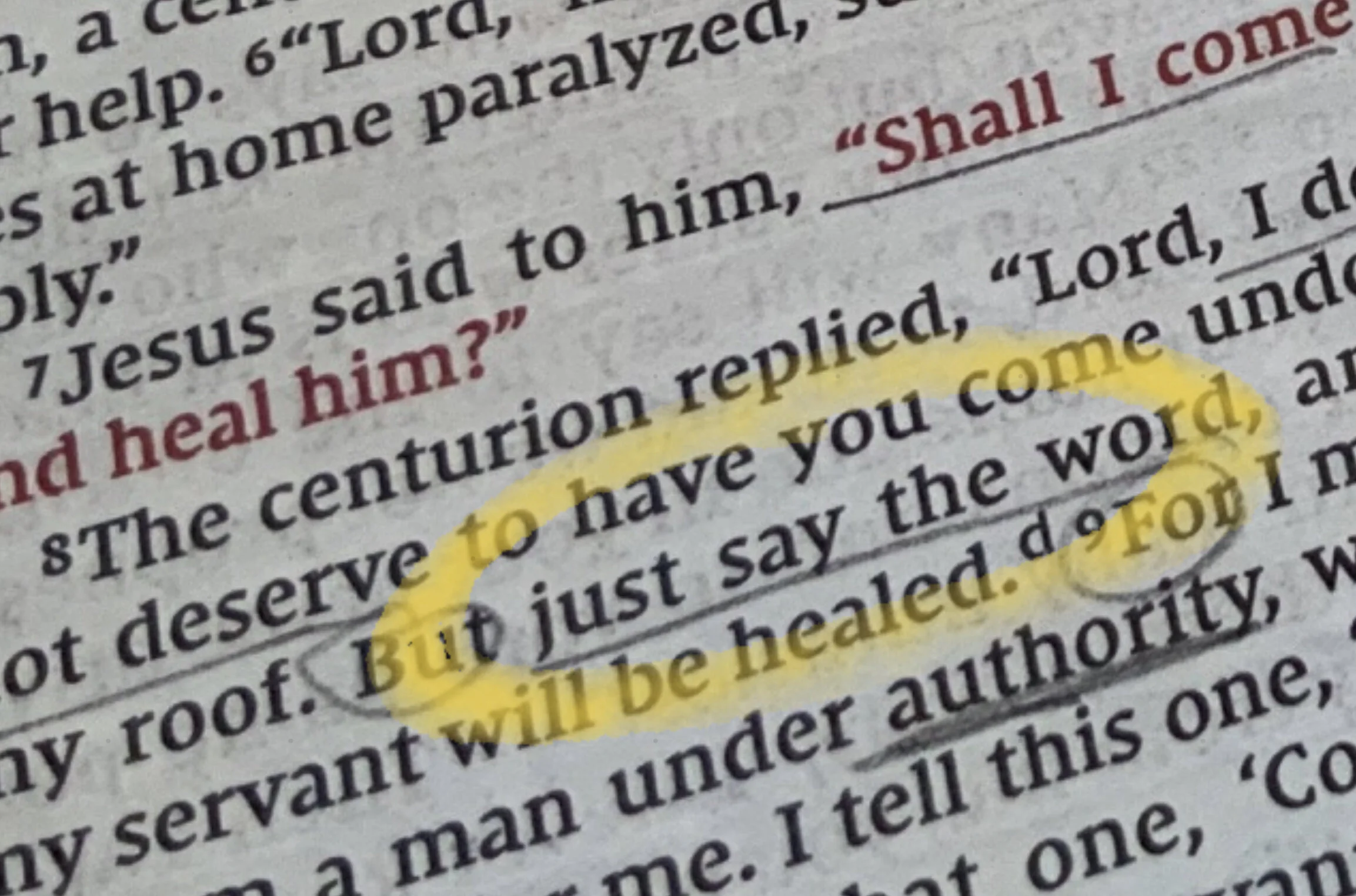
Jesus Is Lord Over Disease | Matt 8: 5-17
When Jesus came to die on the cross, he came to address the root problem—not suffering, but sin. The price was his life to over our sins. Does that mean his will for the world is we no longer experience pain, sickness, and suffering? No. These pictures of miraculous healings are to give us a picture of what is to come in the fullness of God’s kingdom when Christ fully exerts his absolute authority and reign over the earth. But not yet. In the meantime, we live in a world of suffering and pain. In fact, suffering will actually increase as a result of trusting Christ for salvation. So consider that before trusting and following Jesus. Lots of words from Jesus and Paul confirm this will happen.
Jesus has absolute authority in the world and deserves absolute allegiance from the world.
Listening to a podcast yesterday (Donald Miller, Story Brand), I learned that Elon Musk’s great dream and therefore goal in life is to colonize Mars as a backup for when humanity destroys the earth. His biographer Ashlee Vance said in all his interviews in preparing to write the book he only teared-up when he talked about this.
He also talked about how this is what drives him—saving the human race. He’s driven by logic.
When I see him building multiple successful companies to accomplish this noble goal, I am left wondering if he doesn’t have more zeal for his life mission than I do for mine. I realize his motives are not pure—but he’s driven but this goal to save humanity as if it’s logically the most important thing he could do in life. And, if this were all there was, he’d probably be right.
But it isn’t.
There’s life beyond this universe. Jesus is preparing a place for us. God is creating a new heaven and new earth to replace the current ones.
His mission may be unnecessary (probably). Yet, his zeal drives him.
What about mine?
Rom 12:11
Jesus is always able but not always willing.
When tempted to doubt or fear, remember who you’re dealing with. Jesus has absolute authority in the world because he as God created it.
I. (Centurion) Jesus heals the ethnically outcast. (8:5-13)
A gentile approaches Jesus... (Ethnically outcast (diff “race” or culture; invader even)
A gentile approaches Jesus in faith...
A gentile approaches Jesus in faith and Jesus responds with amazement.
Why? Jesus was amazed by his faith.
David Platt says this should cause us to ask, “What kind of faith is this?”
Here’s the picture Matthew gives us: “Faith is humble trust in the authority of Jesus.”
He calls Jesus “Lord”
He’s too overwhelmed to have Jesus in his house
He knows he merely needs to speak the word
v. 9 explanation shows his understanding perceiving Jesus’ authority over disease
Jesus doesn’t appear to have healed in this way before (not going himself) either. So he’s just believing Jesus has absolute authority over disease. He does.
Platt says further, “He simply and humbly had absolute trust in the authority of Jesus in a way that no one else among the Jewish people, including the disciples, had displayed up to this point.”
He then says that “servants of the kingdom”l must have this same faith for salvation.
Do you? Follow the Centurion’s example and simply and humbly believe Jesus has absolute authority in this world.
What authority matters? Jesus’ authority over sin—to save you from your sins and to rule over you as Lord of your life. (We don’t like the second part, just the first. But the second part proves you get the first part)
Authority over disease:
He cleanses the physically unclean (Leper) (8:1-4)
He heals ethnical outcast (Centurion) (8:5-13)
He restores the culturally marginalized (Peter’s mom-in-law, a woman) (8:14-17) Now Jesus heals a woman defying the traditions and practices of his day.
16-17 Healing “many”
V. 17 is a quote from Isaiah 53:4 from the suffering servant passage. See vv. 5-6)
Isaiah’s prophecy concerns Jesus’ substitutionary death in place of sinners...how does this relate?
No, by connecting Jesus’ healing authority to Isaiah’s prophecy, Matthew is showing that Jesus has the power to overcome all our suffering.
Matthew attributes this power and authority to Jesus because he paid the price to overcome all our sins. That is the point of the cross.
Consider the larger context of redemptive history.
All suffering in the world ultimately goes back to sin. (This was my point with Elon Musk's dream)
Before sin, there was no suffering. (Gen 1-2)
After sin, suffering entered. (Gen 3)
Result, the world marked with evil, suffering, sickness and pain.
So, when Jesus came to die on the cross, he came to address the root problem—not suffering, but sin.
The price was his life to over our sins.
Does that mean his will for the world is we no longer experience pain, sickness, and suffering? No.
These pictures of miraculous healings are to give us a picture of what is to come in the fullness of God’s kingdom when Christ fully exerts his absolute authority and reign over the earth. But not yet.
In the meantime, we live in a world of suffering and pain. In fact, suffering will actually increase as a result of trusting Christ for salvation. So consider that before trusting and following Jesus. Lots of words from Jesus and Paul confirm this will happen.
Jesus’ substitutionary death on the cross has killed the root of sin, but not the fruit. Not yet.
14th
But, this conquering sin should enable you to endure the suffering of disease, sickness, suffering, and pain with courage and faith that it’s temporary for those in Christ.
There’s a day coming when death, mourning, crying, and pain will be no more. (Rev 21:4)
As we wait, don’t run from suffering. Rejoice in suffering for our future hope.
2 kinds of suffering:
Due to the general effects of sin in the world.
Suffering for God’s purposes, though often hidden.
Humbly embrace this suffering as you trust him. Rejoice in it, even.
Due to a particular sin in someone’s life.
When a Christian continues to sin, he will inevitably suffer, for God disciplines those he loves.
It may be physical, mental, emotional, relational, or spiritual, but sin leads inevitably to suffering.
Response? Not rejoicing but run from sin.
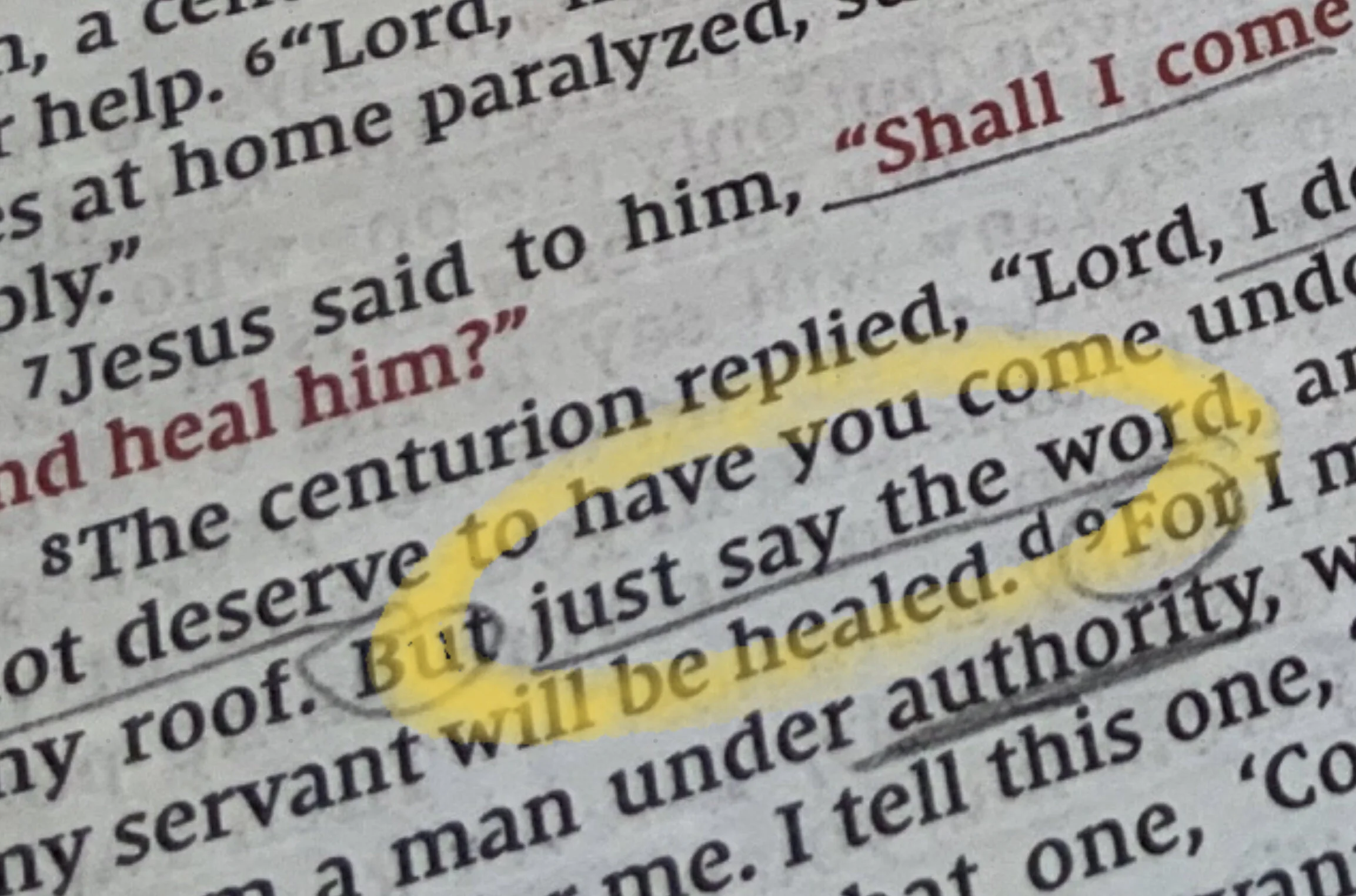
Storms of Life | Matt 8:1-4, 23-27
Jesus shows us His authority over all things, even the weather when he commands the storm to cease. Only God can speak things into being. Only God can command the winds and the waves and have them obey. This same Jesus, fully God and fully man is sovereign over every circumstance in your life.
Jesus has absolute authority in the world and deserves absolute allegiance from the world.
Jesus shows us His authority over all things, even the weather when he commands the storm to cease. Only God can speak things into being. Only God can command the winds and the waves and have them obey. This same Jesus, fully God and fully man is sovereign over every circumstance in your life.
There is no question that this is a season of crisis as a country and as individuals. The whole world is in a crisis. Understanding that God is in control changes everything.
As we see, he is in control of our health:
“When he came down from the mountain, great crowds followed him. 2 And behold, a leper came to him and knelt before him, saying, “Lord, if you will, you can make me clean.” 3 And Jesus stretched out his hand and touched him, saying, “I will; be clean.” And immediately his leprosy was cleansed. 4 And Jesus said to him, “See that you say nothing to anyone, but go, show yourself to the priest and offer the gift that Moses commanded, for a proof to them.””
And He is in control of natural events:
“23 And when he got into the boat, his disciples followed him. 24 And behold, there arose a great storm on the sea, so that the boat was being swamped by the waves; but he was asleep. 25 And they went and woke him, saying, “Save us, Lord; we are perishing.” 26 And he said to them, “Why are you afraid, O you of little faith?” Then he rose and rebuked the winds and the sea, and there was a great calm. 27 And the men marveled, saying, “What sort of man is this, that even winds and sea obey him?””