
Sermons
Watch Now

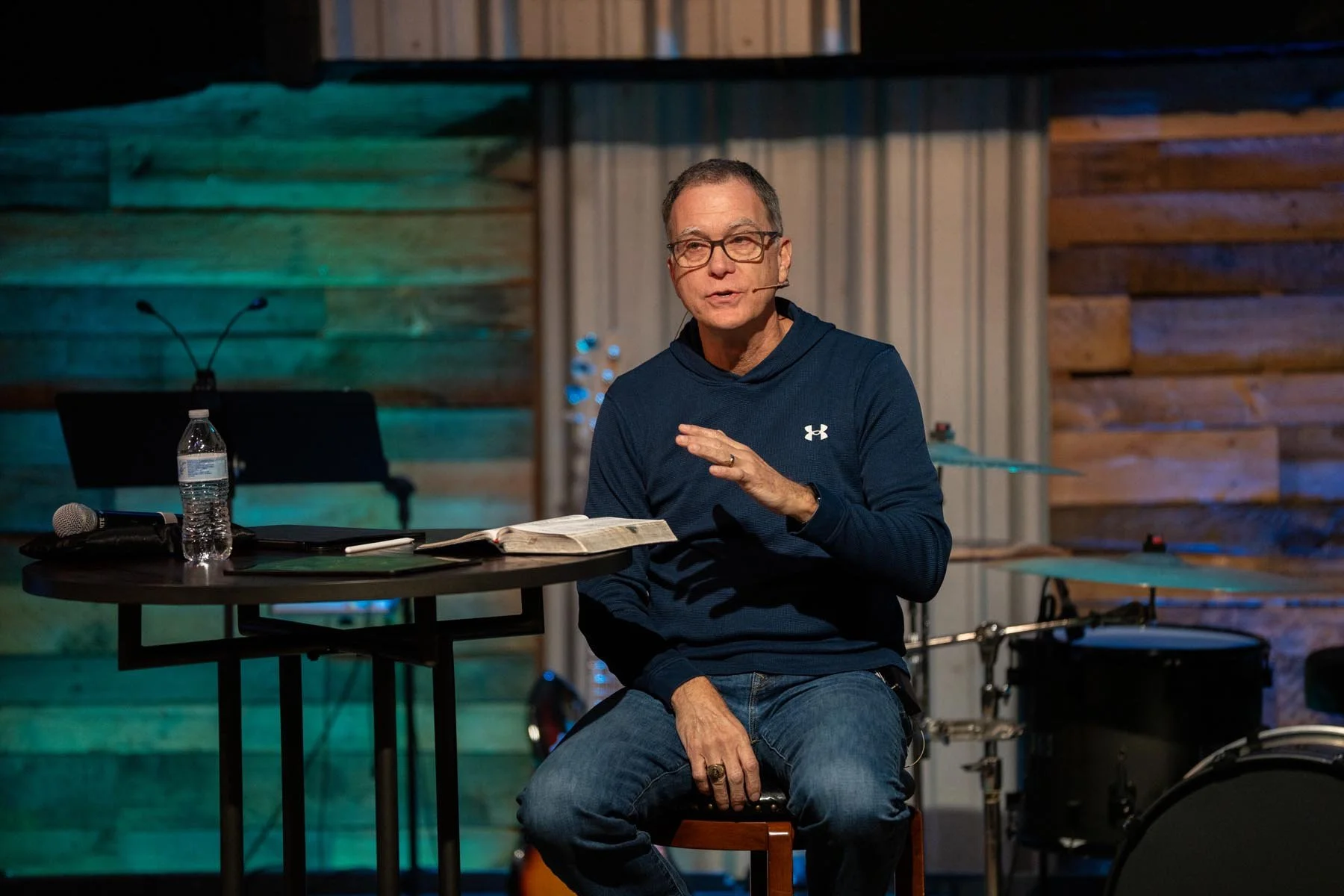
How Can I Know the Way of Jesus? | John 14:1-14 | Darien Gabriel
Series: Signs & Glory
Title: How can I know the way of Jesus?
Scripture: John 14:1-14 NIV
Bottom Line: Because Jesus is the way, the truth, and the life, we can trust His promises in the midst of our fears, follow His words, ways, and wisdom with confidence, see the Father clearly, and rely on Him to provide all we need for the mission.
INTRODUCTION
CONTEXT
SERMON OUTLINE
CONCLUSION
NOTES
QUESTIONS TO CONSIDER
DISCUSSION QUESTIONS
MAIN REFERENCES USED
Opening prayer: Lord God, help us grow to be and do like Jesus, while abiding in him and leading others to do the same.
INTRODUCTION
“I’m sure that everyone reading this book has been touched by the death of a loved one. I have; by the mercy of God, both of my parents died at home in bed. My mother slipped away at night when I was asleep, but I was next to the bed, more than fifty years ago, when my father breathed his last. I watched death in front of my eyes, and in that moment I lost the person who meant more to me than any person on the face of the earth. When it happened, something stabbed my soul, causing me to say: “This is insane. This can’t be real. He must merely be sleeping. O God, will he live again?” -R.C. Sproul
Moments like this leave us asking: Are we really prepared for what’s ahead?
His disciples faced a similar challenge 2,000 years ago, beginning with a turning point of cosmic proportions with the betrayal of Judas Iscariot.
I submit that we should proceed as Jesus led his disciples to on the night of his arrest and the eve of his crucifixion.
Bottom line:
CONTEXT
Jesus's disciples are deeply troubled because they have just heard 3 things:
One of them will betray Jesus,
Jesus is about to leave them and go where they cannot go, and
Peter will deny Jesus 3 times that night.
On top of all of this, Jesus is still wanted for arrest and likely crucifixion for treason and blasphemy. If they are looking for him, they are likely looking for them as well. They're terrified.
OUTLINE (w/ help from ChatGPT)
Bottom Line: Because Jesus is the way, the truth, and the life, we can trust His promises in the midst of our fears, follow His words, ways, and wisdom with confidence, see the Father clearly, and rely on Him to provide all we need for the mission.
1. Jesus Calms Troubled Hearts (vv. 1–3)
• Context: Jesus has announced His departure (13:33) and Peter’s denial (13:38). The disciples are shaken.
• Truth: “Let not your hearts be troubled.” The antidote to fear is faith.
• Explanation:
• Believe in God; believe also in Me → Jesus calls for the same trust we give to God.
• In My Father’s house are many rooms → heaven is real, personal, and prepared.
• I will come again → the return of Christ guarantees our eternal presence with Him.
• Application:
• When anxiety rises, put your weight down on His promises.
• We don’t just long for a place (heaven) but a Person (Jesus).
Illustration: A child afraid of the dark sleeps peacefully when she lies next to her parents bed because they are with her.
2. Jesus Is the Way, the Truth, and the Life (vv. 4–7)
• Thomas: “We don’t know where you are going. How can we know the way?” (v. 5)
• Jesus’ Answer: “I am the way, and the truth, and the life. No one comes to the Father except through Me.” (v. 6)
• Explanation:
• The Way → He doesn’t show the way; He is the way. The cross and resurrection open the road.
• The Truth → Not one truth among many; the full reality of God revealed in Him.
• The Life → Eternal life is only in Him (cf. John 11:25; 1 John 5:11–12).
• Application:
• In a culture that says “all paths lead to God,” Jesus insists: only one does.
• Jesus is not just useful; He is essential.
Illustration: GPS apps give different routes to the destination. Some take longer while others are easier. We won't all follow exactly the same way. But we do follow him his way rooted in his truth to true and lasting life.
3. Jesus Reveals the Father (vv. 8–11)
• Philip: “Lord, show us the Father, and it is enough for us.” (v. 8)
• Jesus’ Reply: “Whoever has seen Me has seen the Father.” (v. 9)
• Truth: Jesus is the full disclosure of God (cf. Col. 1:15; Heb. 1:3).
• Application:
• You don’t have to wonder what God is like—look at Jesus.
• If we’re confused about God’s character, we must return to Jesus’ words and works.
Illustration: Like a high-resolution picture bringing clarity where once it was blurry, Jesus brings the Father into perfect focus.
4. Jesus Empowers His Followers (vv. 12–14)
• Promise: “Whoever believes in Me will also do the works that I do; and greater works than these will he do.” (v. 12)
• Explanation:
• Not greater in quality but in extent—global reach through the Spirit.
• Through prayer “in My name,” Jesus continues His work through us.
• Application:
• We are not powerless—we are prayerful participants in Jesus’ mission.
• Ask boldly in His name, aligning with His will.
Illustration: A relay race—the baton of Jesus’ mission is passed on, but with Spirit-powered expansion beyond what the disciples could imagine.
Conclusion: Bringing It All Together
• When your heart is troubled → Trust His promise (vv. 1–3).
• When you wonder about the way → Follow Him as the only way (vv. 4–7).
• When you want to know what God is like → Look to Jesus (vv. 8–11).
• When you feel powerless → Pray in His name and live on His mission (vv. 12–14).
Bottom Line: Because Jesus is the way, the truth, and the life, we can trust His promises in the midst of our fears, follow His words, ways, and wisdom with confidence, see the Father clearly, and rely on Him to provide all we need for the mission.
CONCLUSION
Bottom Line: Because Jesus is the way, the truth, and the life, we can trust His promises in the midst of our fears, follow His words, ways, and wisdom with confidence, see the Father clearly, and rely on Him to provide all we need for the mission.
INVITATION
What about you?
Peter puts it all in perspective in his first sermon:
““Therefore let all Israel be assured of this: God has made this Jesus, whom you crucified, both Lord and Messiah.” When the people heard this, they were cut to the heart and said to Peter and the other apostles, “Brothers, what shall we do?” Peter replied, “Repent and be baptized, every one of you, in the name of Jesus Christ for the forgiveness of your sins. And you will receive the gift of the Holy Spirit. The promise is for you and your children and for all who are far off—for all whom the Lord our God will call.”” Acts 2:36-39 NIV
How do we respond? Answer 2 questions:
Take out a card or piece of paper right now. Write down the answer to these questions:
What is God saying to me right now?
What am I going to do about it? Write this down on a sheet of paper.
What I hear you saying, Lord, is ___________________.
[my name] is going to believe/do __________________________________________________ as a result.
Finally, share this with your Home or Mission group this week when you gather as a testimony about what God is doing in your life. You don’t have to get too specific to give him praise.
Lord's Supper, 1 Cor 11:23-26 is good passage.
Also, say something like, "Christ has died, Christ is risen, Christ will come again." (past, present, and future)
Pray
NOTES
“I’m sure that everyone reading this book has been touched by the death of a loved one. I have; by the mercy of God, both of my parents died at home in bed. My mother slipped away at night when I was asleep, but I was next to the bed, more than fifty years ago, when my father breathed his last. I watched death in front of my eyes, and in that moment I lost the person who meant more to me than any person on the face of the earth. When it happened, something stabbed my soul, causing me to say: “This is insane. This can’t be real. He must merely be sleeping. O God, will he live again?”
R.C. Sproul
QUESTIONS TO CONSIDER
What do I want them to know?
Why do I want them to know it?
What do I want them to do?
Why do I want them to do it?
How do they do this?
DISCUSSION QUESTIONS
Discovery Bible Study process: https://www.dbsguide.org/
Read the passage together.
Retell the story in your own words.
Discovery the story
What does this story tell me about God?
What does this story tell me about people?
If this is really true, what should I do?
What is God saying to you right now? (Write this down)
What are you going to do about it? (Write this down)
Who am I going to tell about this?
Find our sermons, podcasts, discussion questions and notes at https://www.gracetoday.net/podcast
Alternate Discussion Questions (by Jeff Vanderstelt): Based on this passage:
Who is God?
What has he done/is he doing/is he going to do?
Who am I? (In light of 1 & 2)
What do I do? (In light of who I am)
How do I do it?
Final Questions (Write this down)
What is God saying to you right now?
What are you going to do about it?
MAIN REFERENCES USED
“John,” by R. Kent Hughes, Preaching the Word Commentary, Edited by Kent Hughes
Exalting Jesus in John, by Matt Carter & Josh Wredberg
The Gospels & Epistles of John, FF Bruce
John, RC Sproul
John, Köstenberger
The Gospel According to John, DA Carson
Let's Study John, Mark Johnston
The Light Has Come, Leslie Newbigin (TLHC)
The Visual Word, Patrick Schreiner (TVW)
“Look at the Book” by John Piper (LATB)
“The Bible Knowledge Commentary” by Walvoord, Zuck (BKC)
“The Bible Exposition Commentary” by Warren Wiersbe (BEC)
Thru The Bible with J. Vernon McGee (TTB)
Outline Bible, D Willmington (OB)
NIV Study Bible (NIVSB) https://www.biblica.com/resources/scholar-notes/niv-study-bible/
Chronological Life Application Study Bible (NLT)
ESV Study Bible (ESVSB) https://www.esv.org
The Bible Project https://bibleproject.com
Nicky Gumbel bible reading plan app or via YouVersion
ChatGPT AI
Grok AI
Google Gemini AI
Series: Signs & Glory
Title: How can I know the way of Jesus?
Subtitle:
Scripture: John 14:1-14 NIV
Bottom Line: Because Jesus is the way, the truth, and the life, we can trust His promises in the midst of our fears, follow His words, ways, and wisdom with confidence, see the Father clearly, and rely on Him to provide all we need for the mission.
INTRODUCTION
CONTEXT
SERMON OUTLINE
CONCLUSION
NOTES
QUESTIONS TO CONSIDER
DISCUSSION QUESTIONS
MAIN REFERENCES USED
Opening prayer: Lord God, help us grow to be and do like Jesus, while abiding in him and leading others to do the same.
INTRODUCTION
“I’m sure that everyone reading this book has been touched by the death of a loved one. I have; by the mercy of God, both of my parents died at home in bed. My mother slipped away at night when I was asleep, but I was next to the bed, more than fifty years ago, when my father breathed his last. I watched death in front of my eyes, and in that moment I lost the person who meant more to me than any person on the face of the earth. When it happened, something stabbed my soul, causing me to say: “This is insane. This can’t be real. He must merely be sleeping. O God, will he live again?” -R.C. Sproul
Moments like this leave us asking: Are we really prepared for what’s ahead?
His disciples faced a similar challenge 2,000 years ago, beginning with a turning point of cosmic proportions with the betrayal of Judas Iscariot.
I submit that we should proceed as Jesus led his disciples to on the night of his arrest and the eve of his crucifixion.
Bottom line:
CONTEXT
Jesus's disciples are deeply troubled because they have just heard 3 things:
One of them will betray Jesus,
Jesus is about to leave them and go where they cannot go, and
Peter will deny Jesus 3 times that night.
On top of all of this, Jesus is still wanted for arrest and likely crucifixion for treason and blasphemy. If they are looking for him, they are likely looking for them as well. They're terrified.
OUTLINE (w/ help from ChatGPT)
Bottom Line: Because Jesus is the way, the truth, and the life, we can trust His promises in the midst of our fears, follow His words, ways, and wisdom with confidence, see the Father clearly, and rely on Him to provide all we need for the mission.
1. Jesus Calms Troubled Hearts (vv. 1–3)
• Context: Jesus has announced His departure (13:33) and Peter’s denial (13:38). The disciples are shaken.
• Truth: “Let not your hearts be troubled.” The antidote to fear is faith.
• Explanation:
• Believe in God; believe also in Me → Jesus calls for the same trust we give to God.
• In My Father’s house are many rooms → heaven is real, personal, and prepared.
• I will come again → the return of Christ guarantees our eternal presence with Him.
• Application:
• When anxiety rises, put your weight down on His promises.
• We don’t just long for a place (heaven) but a Person (Jesus).
Illustration: A child afraid of the dark sleeps peacefully when she lies next to her parents bed because they are with her.
2. Jesus Is the Way, the Truth, and the Life (vv. 4–7)
• Thomas: “We don’t know where you are going. How can we know the way?” (v. 5)
• Jesus’ Answer: “I am the way, and the truth, and the life. No one comes to the Father except through Me.” (v. 6)
• Explanation:
• The Way → He doesn’t show the way; He is the way. The cross and resurrection open the road.
• The Truth → Not one truth among many; the full reality of God revealed in Him.
• The Life → Eternal life is only in Him (cf. John 11:25; 1 John 5:11–12).
• Application:
• In a culture that says “all paths lead to God,” Jesus insists: only one does.
• Jesus is not just useful; He is essential.
Illustration: GPS apps give different routes to the destination. Some take longer while others are easier. We won't all follow exactly the same way. But we do follow him his way rooted in his truth to true and lasting life.
3. Jesus Reveals the Father (vv. 8–11)
• Philip: “Lord, show us the Father, and it is enough for us.” (v. 8)
• Jesus’ Reply: “Whoever has seen Me has seen the Father.” (v. 9)
• Truth: Jesus is the full disclosure of God (cf. Col. 1:15; Heb. 1:3).
• Application:
• You don’t have to wonder what God is like—look at Jesus.
• If we’re confused about God’s character, we must return to Jesus’ words and works.
Illustration: Like a high-resolution picture bringing clarity where once it was blurry, Jesus brings the Father into perfect focus.
4. Jesus Empowers His Followers (vv. 12–14)
• Promise: “Whoever believes in Me will also do the works that I do; and greater works than these will he do.” (v. 12)
• Explanation:
• Not greater in quality but in extent—global reach through the Spirit.
• Through prayer “in My name,” Jesus continues His work through us.
• Application:
• We are not powerless—we are prayerful participants in Jesus’ mission.
• Ask boldly in His name, aligning with His will.
Illustration: A relay race—the baton of Jesus’ mission is passed on, but with Spirit-powered expansion beyond what the disciples could imagine.
Conclusion: Bringing It All Together
• When your heart is troubled → Trust His promise (vv. 1–3).
• When you wonder about the way → Follow Him as the only way (vv. 4–7).
• When you want to know what God is like → Look to Jesus (vv. 8–11).
• When you feel powerless → Pray in His name and live on His mission (vv. 12–14).
Bottom Line: Because Jesus is the way, the truth, and the life, we can trust His promises in the midst of our fears, follow His words, ways, and wisdom with confidence, see the Father clearly, and rely on Him to provide all we need for the mission.
CONCLUSION
Bottom Line: Because Jesus is the way, the truth, and the life, we can trust His promises in the midst of our fears, follow His words, ways, and wisdom with confidence, see the Father clearly, and rely on Him to provide all we need for the mission.
INVITATION
What about you?
Peter puts it all in perspective in his first sermon:
““Therefore let all Israel be assured of this: God has made this Jesus, whom you crucified, both Lord and Messiah.” When the people heard this, they were cut to the heart and said to Peter and the other apostles, “Brothers, what shall we do?” Peter replied, “Repent and be baptized, every one of you, in the name of Jesus Christ for the forgiveness of your sins. And you will receive the gift of the Holy Spirit. The promise is for you and your children and for all who are far off—for all whom the Lord our God will call.”” Acts 2:36-39 NIV
How do we respond? Answer 2 questions:
Take out a card or piece of paper right now. Write down the answer to these questions:
What is God saying to me right now?
What am I going to do about it? Write this down on a sheet of paper.
What I hear you saying, Lord, is ___________________.
[my name] is going to believe/do __________________________________________________ as a result.
Finally, share this with your Home or Mission group this week when you gather as a testimony about what God is doing in your life. You don’t have to get too specific to give him praise.
Lord's Supper, 1 Cor 11:23-26 is good passage.
Also, say something like, "Christ has died, Christ is risen, Christ will come again." (past, present, and future)
Pray
NOTES
“I’m sure that everyone reading this book has been touched by the death of a loved one. I have; by the mercy of God, both of my parents died at home in bed. My mother slipped away at night when I was asleep, but I was next to the bed, more than fifty years ago, when my father breathed his last. I watched death in front of my eyes, and in that moment I lost the person who meant more to me than any person on the face of the earth. When it happened, something stabbed my soul, causing me to say: “This is insane. This can’t be real. He must merely be sleeping. O God, will he live again?”
R.C. Sproul
QUESTIONS TO CONSIDER
What do I want them to know?
Why do I want them to know it?
What do I want them to do?
Why do I want them to do it?
How do they do this?
DISCUSSION QUESTIONS
Discovery Bible Study process: https://www.dbsguide.org/
Read the passage together.
Retell the story in your own words.
Discovery the story
What does this story tell me about God?
What does this story tell me about people?
If this is really true, what should I do?
What is God saying to you right now? (Write this down)
What are you going to do about it? (Write this down)
Who am I going to tell about this?
Find our sermons, podcasts, discussion questions and notes at https://www.gracetoday.net/podcast
Alternate Discussion Questions (by Jeff Vanderstelt): Based on this passage:
Who is God?
What has he done/is he doing/is he going to do?
Who am I? (In light of 1 & 2)
What do I do? (In light of who I am)
How do I do it?
Final Questions (Write this down)
What is God saying to you right now?
What are you going to do about it?
MAIN REFERENCES USED
“John,” by R. Kent Hughes, Preaching the Word Commentary, Edited by Kent Hughes
Exalting Jesus in John, by Matt Carter & Josh Wredberg
The Gospels & Epistles of John, FF Bruce
John, RC Sproul
John, Köstenberger
The Gospel According to John, DA Carson
Let's Study John, Mark Johnston
The Light Has Come, Leslie Newbigin (TLHC)
The Visual Word, Patrick Schreiner (TVW)
“Look at the Book” by John Piper (LATB)
“The Bible Knowledge Commentary” by Walvoord, Zuck (BKC)
“The Bible Exposition Commentary” by Warren Wiersbe (BEC)
Thru The Bible with J. Vernon McGee (TTB)
Outline Bible, D Willmington (OB)
NIV Study Bible (NIVSB) https://www.biblica.com/resources/scholar-notes/niv-study-bible/
Chronological Life Application Study Bible (NLT)
ESV Study Bible (ESVSB) https://www.esv.org
The Bible Project https://bibleproject.com
Nicky Gumbel bible reading plan app or via YouVersion
ChatGPT AI
Grok AI
Google Gemini AI

How Does Jesus Prepare Us for What's Next? | John 13:18-38 | Darien Gabriel
Series: Signs & Glory
Title: How does Jesus prepare us for what's next?
Subtitle: Learning how to shine together in these dark days.
Scripture: John 13:18-38 NIV
Bottom line: Even (Especially) in dark times, Jesus prepares us to shine together.
Bottom line 2: Jesus prepares us to shine in the dark together by showing us his love, calling us to love one another, and showing us how to love each other even when we fail.
INTRODUCTION
CONTEXT
SERMON OUTLINE
CONCLUSION
NOTES
QUESTIONS TO CONSIDER
DISCUSSION QUESTIONS
MAIN REFERENCES USED
Opening prayer: Lord God, help us grow to be and do like Jesus, while abiding in him and leading others to do the same.
INTRODUCTION
On September 10th, 2025, thousands of people gathered at Utah Valley University to hear Charlie Kirk, the founder of Turning Point USA and Turning Point Faith. Just 31 years old, outspoken, and unafraid to share his Christian faith — Charlie was shot and killed in front of a live audience. The news has shocked our country. Whatever you think about his politics, the suddenness of it all reminds us how fragile life really is, and how quickly everything can change.
Moments like this leave us asking: Are we really prepared for what’s ahead?
No doubt his death has shaken not only his followers but many of us who are for civil dialogue in the pursuit of truth and better ideas for our future as a nation. How should they at Turning Point proceed? How should we as Americans proceed? Most importantly, how should we as followers of Jesus Christ proceed?
His disciples faced a similar challenge 2,000 years ago, beginning with a turning point of cosmic proportions with the betrayal of Judas Iscariot.
I submit that we should proceed as Jesus led his disciples to on the night of his arrest and the eve of his crucifixion.
Bottom line: Even (Especially) in dark times, Jesus prepares us to shine together.
CONTEXT
We've reached a turning point in the book of John not only from public ministry (mix of believers and unbelievers) to private (his followers) but even more so as Judas removes himself from The Twelve leaving the group made up solely of those who have been cleansed by belief in Jesus. We see this happen in verse 31.
As a result, and building on his call for them to serve one another, Jesus calls them to love one another as he has loved them. This is the most appropriate response to his cross-centered, obedient love for his Father and for us.
These are dark days, no doubt. And it's weeks like this when we feel like they're darker than ever.
The question is: Are you prepared and preparing yourself and your household (oikos), your family, your friends, your people--those you do life with?
Jesus gives us another example of his love and then sends us out as his ambassadors to shine brightly together in this dark world.
How? Well, let's read this and find out.
OUTLINE (w/ help from Kent Hughes and ChatGPT)
I. Love's Demonstration (18-30)
Jesus loved Judas and gave him every opportunity to embrace him then and there.
A. The Betrayal Foretold (18-30). Jesus reveals his knowledge of a betrayal by one of his 12 to the group. He loves his betrayer to the end giving him every opportunity to repent and believe.
He also expresses his pain in light of Psalm 41.
B. Psalm 41:9--Connection to John 13:
Jesus applies Psalm 41:9 to Judas. Just as David experienced betrayal from a trusted friend, so does the Son of David.
John presents it not as coincidence but as fulfillment of Scripture (13:18). Judas’ betrayal shows Jesus is the greater David, suffering the righteous one’s fate.
Key difference: David prayed for deliverance from his enemies; Jesus embraces betrayal as part of the Father’s plan to glorify Him through the cross.
II. Love's Demand (31-35)
Judas walks in darkness. Jesus willingly let him knowing it will lead to the cross. This willing obedience that will require infinite suffering will bring the Father glory and Jesus glory. It will also bring infinite good to those who trust and follow Jesus.
The demand of love is that we love each other as Jesus loved his disciples and loved us.
Last week we saw Jesus' love for his disciples exemplified in the washing of their feet. He called them to do this to/for one another. He continues this theme of light and love here.
A. The Glory Revealed (31-32)
B. The New Commandment Given (33-35) This "new commandment" is an expansion of his old command from Leviticus which said, "Love your neighbor as yourself."
Love demands a new object: "one another" and not just your neighbor.
Believers
A very diverse group of people
Masters and slaves
Jews and Gentiles
Men and women
Rich and poor
Gay and straight
Strong and weak
And yet the became a community of people held together by their love for God and each other. And this is how people knew they followed Jesus.
Love demands a new means: "as I have loved you" not just as you love yourself.
While it is admittedly difficult to love your neighbor as you love yourself, it's much more difficult to love others as Jesus loves us. (And maybe even harder to love each other this way)
C. The Denial Predicted (36-38)
Even our best intentions fail, but Jesus restores us by grace. Our weakness doesn’t cancel His mission.
III. Love's Denial (36-38) - Even our best intentions fail, but Jesus restores us by grace. Our weakness doesn’t cancel His mission.
CONCLUSION
Bottom line: Even (Especially) in dark times, Jesus prepares us to shine together.
King David was betrayed not only by his friend and chief advisor. I mean, you better trust your chief advisor. But he was betrayed by his son. You don't know pain until you've been betrayed by a close family member. (2 Samuel 15-17)
“David felt the sting of Ahithophel’s betrayal, but his greatest grief was for Absalom, his rebellious son. In the same way, Jesus felt the sting of Judas’ kiss, but even more, He bore the grief of a whole world of lost children — and He went to the cross so that rebels could be restored as sons and daughters of God.”
When darkness comes, we can hold on to his light and love as seen in:
His sovereignty (He knows).
His glory (He redeems suffering).
His command (love one another).
His grace (He restores the weak).
Think of a time when you were betrayed. Picture them. Now, think about God's light and love:
He knows about that and knew about that before you. He's sovereignly aware.
He redeems suffering. He can work grace into your life in and through the suffering you experienced.
He commands that you love them instead of hate; to forgive them and find healing for yourself.
His grace restores the weak and brokenhearted. His grace is enough for you.
Even in the darkest nights, Jesus prepares us not just to survive, but to shine — and to shine together.
“Friends, this is how Jesus prepares us for what’s next:
He knows — nothing surprises Him.
He redeems — suffering is never wasted.
He commands — love one another deeply.
He restores — even our failures can’t stop His grace.
So what’s next for you? Start with loving one another, serving one another, shining together in His light. That’s how we walk through dark days — not alone, but with Jesus, and with each other.”
INVITATION
What about you?
Peter puts it all in perspective in his first sermon:
““Therefore let all Israel be assured of this: God has made this Jesus, whom you crucified, both Lord and Messiah.” When the people heard this, they were cut to the heart and said to Peter and the other apostles, “Brothers, what shall we do?” Peter replied, “Repent and be baptized, every one of you, in the name of Jesus Christ for the forgiveness of your sins. And you will receive the gift of the Holy Spirit. The promise is for you and your children and for all who are far off—for all whom the Lord our God will call.”” Acts 2:36-39 NIV
How do we respond? Answer 2 questions:
Take out a card or piece of paper right now. Write down the answer to these questions:
What is God saying to me right now?
What am I going to do about it? Write this down on a sheet of paper.
What I hear you saying, Lord, is ___________________.
[my name] is going to believe/do __________________________________________________ as a result.
Finally, share this with your Home or Mission group this week when you gather as a testimony about what God is doing in your life. You don’t have to get too specific to give him praise.
Lord's Supper, 1 Cor 11:23-26 is good passage.
Also, say something like, "Christ has died, Christ is risen, Christ will come again." (past, present, and future)
Pray
NOTES
Kent Hughes Outline
I. Love's Demonstration (18-30)
II. Love's Demand (31-35)
QUESTIONS TO CONSIDER
What do I want them to know?
Why do I want them to know it?
What do I want them to do?
Why do I want them to do it?
How do they do this?
DISCUSSION QUESTIONS
Discovery Bible Study process: https://www.dbsguide.org/
Read the passage together.
Retell the story in your own words.
Discovery the story
What does this story tell me about God?
What does this story tell me about people?
If this is really true, what should I do?
What is God saying to you right now? (Write this down)
What are you going to do about it? (Write this down)
Who am I going to tell about this?
Find our sermons, podcasts, discussion questions and notes at https://www.gracetoday.net/podcast
Alternate Discussion Questions (by Jeff Vanderstelt): Based on this passage:
Who is God?
What has he done/is he doing/is he going to do?
Who am I? (In light of 1 & 2)
What do I do? (In light of who I am)
How do I do it?
Final Questions (Write this down)
What is God saying to you right now?
What are you going to do about it?
MAIN REFERENCES USED
“John,” by R. Kent Hughes, Preaching the Word Commentary, Edited by Kent Hughes
Exalting Jesus in John, by Matt Carter & Josh Wredberg
The Gospels & Epistles of John, FF Bruce
John, RC Sproul
John, Köstenberger
The Gospel According to John, DA Carson
Let's Study John, Mark Johnston
The Light Has Come, Leslie Newbigin (TLHC)
The Visual Word, Patrick Schreiner (TVW)
“Look at the Book” by John Piper (LATB)
“The Bible Knowledge Commentary” by Walvoord, Zuck (BKC)
“The Bible Exposition Commentary” by Warren Wiersbe (BEC)
Thru The Bible with J. Vernon McGee (TTB)
Outline Bible, D Willmington (OB)
NIV Study Bible (NIVSB) https://www.biblica.com/resources/scholar-notes/niv-study-bible/
Chronological Life Application Study Bible (NLT)
ESV Study Bible (ESVSB) https://www.esv.org
The Bible Project https://bibleproject.com
Nicky Gumbel bible reading plan app or via YouVersion
ChatGPT AI
Grok AI
Google Gemini AI
Series: Signs & Glory
Title: How does Jesus prepare us for what's next?
Subtitle: Learning how to shine together in these dark days.
Scripture: John 13:18-38 NIV
Bottom line: Even (Especially) in dark times, Jesus prepares us to shine together.
Bottom line 2: Jesus prepares us to shine in the dark together by showing us his love, calling us to love one another, and showing us how to love each other even when we fail.
INTRODUCTION
CONTEXT
SERMON OUTLINE
CONCLUSION
NOTES
QUESTIONS TO CONSIDER
DISCUSSION QUESTIONS
MAIN REFERENCES USED
Opening prayer: Lord God, help us grow to be and do like Jesus, while abiding in him and leading others to do the same.
INTRODUCTION
On September 10th, 2025, thousands of people gathered at Utah Valley University to hear Charlie Kirk, the founder of Turning Point USA and Turning Point Faith. Just 31 years old, outspoken, and unafraid to share his Christian faith — Charlie was shot and killed in front of a live audience. The news has shocked our country. Whatever you think about his politics, the suddenness of it all reminds us how fragile life really is, and how quickly everything can change.
Moments like this leave us asking: Are we really prepared for what’s ahead?
No doubt his death has shaken not only his followers but many of us who are for civil dialogue in the pursuit of truth and better ideas for our future as a nation. How should they at Turning Point proceed? How should we as Americans proceed? Most importantly, how should we as followers of Jesus Christ proceed?
His disciples faced a similar challenge 2,000 years ago, beginning with a turning point of cosmic proportions with the betrayal of Judas Iscariot.
I submit that we should proceed as Jesus led his disciples to on the night of his arrest and the eve of his crucifixion.
Bottom line: Even (Especially) in dark times, Jesus prepares us to shine together.
CONTEXT
We've reached a turning point in the book of John not only from public ministry (mix of believers and unbelievers) to private (his followers) but even more so as Judas removes himself from The Twelve leaving the group made up solely of those who have been cleansed by belief in Jesus. We see this happen in verse 31.
As a result, and building on his call for them to serve one another, Jesus calls them to love one another as he has loved them. This is the most appropriate response to his cross-centered, obedient love for his Father and for us.
These are dark days, no doubt. And it's weeks like this when we feel like they're darker than ever.
The question is: Are you prepared and preparing yourself and your household (oikos), your family, your friends, your people--those you do life with?
Jesus gives us another example of his love and then sends us out as his ambassadors to shine brightly together in this dark world.
How? Well, let's read this and find out.
OUTLINE (w/ help from Kent Hughes and ChatGPT)
I. Love's Demonstration (18-30)
Jesus loved Judas and gave him every opportunity to embrace him then and there.
A. The Betrayal Foretold (18-30). Jesus reveals his knowledge of a betrayal by one of his 12 to the group. He loves his betrayer to the end giving him every opportunity to repent and believe.
He also expresses his pain in light of Psalm 41.
B. Psalm 41:9--Connection to John 13:
Jesus applies Psalm 41:9 to Judas. Just as David experienced betrayal from a trusted friend, so does the Son of David.
John presents it not as coincidence but as fulfillment of Scripture (13:18). Judas’ betrayal shows Jesus is the greater David, suffering the righteous one’s fate.
Key difference: David prayed for deliverance from his enemies; Jesus embraces betrayal as part of the Father’s plan to glorify Him through the cross.
II. Love's Demand (31-35)
Judas walks in darkness. Jesus willingly let him knowing it will lead to the cross. This willing obedience that will require infinite suffering will bring the Father glory and Jesus glory. It will also bring infinite good to those who trust and follow Jesus.
The demand of love is that we love each other as Jesus loved his disciples and loved us.
Last week we saw Jesus' love for his disciples exemplified in the washing of their feet. He called them to do this to/for one another. He continues this theme of light and love here.
A. The Glory Revealed (31-32)
B. The New Commandment Given (33-35) This "new commandment" is an expansion of his old command from Leviticus which said, "Love your neighbor as yourself."
Love demands a new object: "one another" and not just your neighbor.
Believers
A very diverse group of people
Masters and slaves
Jews and Gentiles
Men and women
Rich and poor
Gay and straight
Strong and weak
And yet the became a community of people held together by their love for God and each other. And this is how people knew they followed Jesus.
Love demands a new means: "as I have loved you" not just as you love yourself.
While it is admittedly difficult to love your neighbor as you love yourself, it's much more difficult to love others as Jesus loves us. (And maybe even harder to love each other this way)
C. The Denial Predicted (36-38)
Even our best intentions fail, but Jesus restores us by grace. Our weakness doesn’t cancel His mission.
III. Love's Denial (36-38) - Even our best intentions fail, but Jesus restores us by grace. Our weakness doesn’t cancel His mission.
CONCLUSION
Bottom line: Even (Especially) in dark times, Jesus prepares us to shine together.
King David was betrayed not only by his friend and chief advisor. I mean, you better trust your chief advisor. But he was betrayed by his son. You don't know pain until you've been betrayed by a close family member. (2 Samuel 15-17)
“David felt the sting of Ahithophel’s betrayal, but his greatest grief was for Absalom, his rebellious son. In the same way, Jesus felt the sting of Judas’ kiss, but even more, He bore the grief of a whole world of lost children — and He went to the cross so that rebels could be restored as sons and daughters of God.”
When darkness comes, we can hold on to his light and love as seen in:
His sovereignty (He knows).
His glory (He redeems suffering).
His command (love one another).
His grace (He restores the weak).
Think of a time when you were betrayed. Picture them. Now, think about God's light and love:
He knows about that and knew about that before you. He's sovereignly aware.
He redeems suffering. He can work grace into your life in and through the suffering you experienced.
He commands that you love them instead of hate; to forgive them and find healing for yourself.
His grace restores the weak and brokenhearted. His grace is enough for you.
Even in the darkest nights, Jesus prepares us not just to survive, but to shine — and to shine together.
“Friends, this is how Jesus prepares us for what’s next:
He knows — nothing surprises Him.
He redeems — suffering is never wasted.
He commands — love one another deeply.
He restores — even our failures can’t stop His grace.
So what’s next for you? Start with loving one another, serving one another, shining together in His light. That’s how we walk through dark days — not alone, but with Jesus, and with each other.”
INVITATION
What about you?
Peter puts it all in perspective in his first sermon:
““Therefore let all Israel be assured of this: God has made this Jesus, whom you crucified, both Lord and Messiah.” When the people heard this, they were cut to the heart and said to Peter and the other apostles, “Brothers, what shall we do?” Peter replied, “Repent and be baptized, every one of you, in the name of Jesus Christ for the forgiveness of your sins. And you will receive the gift of the Holy Spirit. The promise is for you and your children and for all who are far off—for all whom the Lord our God will call.”” Acts 2:36-39 NIV
How do we respond? Answer 2 questions:
Take out a card or piece of paper right now. Write down the answer to these questions:
What is God saying to me right now?
What am I going to do about it? Write this down on a sheet of paper.
What I hear you saying, Lord, is ___________________.
[my name] is going to believe/do __________________________________________________ as a result.
Finally, share this with your Home or Mission group this week when you gather as a testimony about what God is doing in your life. You don’t have to get too specific to give him praise.
Lord's Supper, 1 Cor 11:23-26 is good passage.
Also, say something like, "Christ has died, Christ is risen, Christ will come again." (past, present, and future)
Pray
NOTES
Kent Hughes Outline
I. Love's Demonstration (18-30)
II. Love's Demand (31-35)
QUESTIONS TO CONSIDER
What do I want them to know?
Why do I want them to know it?
What do I want them to do?
Why do I want them to do it?
How do they do this?
DISCUSSION QUESTIONS
Discovery Bible Study process: https://www.dbsguide.org/
Read the passage together.
Retell the story in your own words.
Discovery the story
What does this story tell me about God?
What does this story tell me about people?
If this is really true, what should I do?
What is God saying to you right now? (Write this down)
What are you going to do about it? (Write this down)
Who am I going to tell about this?
Find our sermons, podcasts, discussion questions and notes at https://www.gracetoday.net/podcast
Alternate Discussion Questions (by Jeff Vanderstelt): Based on this passage:
Who is God?
What has he done/is he doing/is he going to do?
Who am I? (In light of 1 & 2)
What do I do? (In light of who I am)
How do I do it?
Final Questions (Write this down)
What is God saying to you right now?
What are you going to do about it?
MAIN REFERENCES USED
“John,” by R. Kent Hughes, Preaching the Word Commentary, Edited by Kent Hughes
Exalting Jesus in John, by Matt Carter & Josh Wredberg
The Gospels & Epistles of John, FF Bruce
John, RC Sproul
John, Köstenberger
The Gospel According to John, DA Carson
Let's Study John, Mark Johnston
The Light Has Come, Leslie Newbigin (TLHC)
The Visual Word, Patrick Schreiner (TVW)
“Look at the Book” by John Piper (LATB)
“The Bible Knowledge Commentary” by Walvoord, Zuck (BKC)
“The Bible Exposition Commentary” by Warren Wiersbe (BEC)
Thru The Bible with J. Vernon McGee (TTB)
Outline Bible, D Willmington (OB)
NIV Study Bible (NIVSB) https://www.biblica.com/resources/scholar-notes/niv-study-bible/
Chronological Life Application Study Bible (NLT)
ESV Study Bible (ESVSB) https://www.esv.org
The Bible Project https://bibleproject.com
Nicky Gumbel bible reading plan app or via YouVersion
ChatGPT AI
Grok AI
Google Gemini AI

To Believe or Not Believe... That is the Question | John 12:44-50 | Chris Karpus
To Believe or Not Believe…That is the Question
John 12:44-50
These verses are a summary of Jesus’ teaching – aimed at those who are still undecided…or unbelieving.
These verses, in some ways, are Jesus’ last verbal response to unbelief – He has already said all of these
things in part or in full elsewhere in the Gospel of John
- Jesus gives us a very clear presentation of the gospel
- Possibly Jesus’ final public address
Last week, Darien discussed why so few people believed in Jesus by going back even further to Isaiah
…God made it such that they could not believe because they would not believe
44 Then Jesus cried out, “Whoever believes in me does not believe in me only, but in the one who sent
me. 45 The one who looks at me is seeing the one who sent me. 46 I have come into the world as a light, so
that no one who believes in me should stay in darkness.
47 “If anyone hears my words but does not keep them, I do not judge that person. For I did not come to
judge the world, but to save the world. 48 There is a judge for the one who rejects me and does not
accept my words; the very words I have spoken will condemn them at the last day. 49 For I did not speak
on my own, but the Father who sent me commanded me to say all that I have spoken. 50 I know that his
command leads to eternal life. So whatever I say is just what the Father has told me to say.”
- These verses contain a summary of Jesus’ message in which He emphasizes the close
relationship between Himself and His Father and between Himself and His words. He’s making
the point that choosing not to believe in Him means rejecting God Himself.
- Belief in Jesus is equal to embracing God
- To choose unbelief is choosing to willingly reject God
(v.44) to believe in Jesus is to believe in God
(v.45) to see Jesus is to see God
(v49) to listen to Jesus is to listen to God
There is an urgency in the last appeal of Jesus
- We are confronted with having to make an eternal decision about who we believe Jesus is, but we
don’t have eternity to make that decision.
- The implications of turning away from the light of God are so terrible in the extreme that Jesus is
making sure that people are clearly aware of them.
- Sin unrepentant of is sin condemned, and will be when the King returns “a dreadful thing to fall into
the hands of the living God’
Hebrews 10:26-31
26 If we deliberately keep on sinning after we have received the knowledge of the truth, no sacrifice for
sins is left, 27 but only a fearful expectation of judgment and of raging fire that will consume the enemies
of God. 28 Anyone who rejected the law of Moses died without mercy on the testimony of two or three
witnesses. 29 How much more severely do you think someone deserves to be punished who has trampled
the Son of God underfoot, who has treated as an unholy thing the blood of the covenant that sanctified
them, and who has insulted the Spirit of grace? 30 For we know him who said, “It is mine to avenge; I will
repay,” [d] and again, “The Lord will judge his people.” [e] 31 It is a dreadful thing to fall into the hands of the
living God.
- There are consequences of the decision you make about Jesus – eternal consequences
- 44 Then Jesus cried out, “Whoever believes in me does not believe in me only, but in the one who
sent me. 45 The one who looks at me is seeing the one who sent me.
o Believe in Jesus – if we submit our lives in allegiance and obedience to Jesus – receive
eternal life – received by grace through faith
Brought out of darkness and receive eternal life
Because Jesus is God and one with the Father
John 1:1-3
1 In the beginning was the Word, and the Word was with God, and the Word was God. 2 He was with
God in the beginning. 3 Through him all things were made; without him nothing was made that has been
made.
There is still condemnation for sins, but that is what Jesus took on at the cross
v46: 46 I have come into the world as a light, so that no one who believes in me should stay in darkness.
- Not the first time Jesus refers to Himself as light
John 8:12
12 When Jesus spoke again to the people, he said, “I am the light of the world. Whoever follows me will
never walk in darkness, but will have the light of life.”
o Reject Jesus – If you reject Jesus, you are rejecting God – remain in darkness and be
condemned in the judgement on the last day…spiritual darkness…this is your verdict
- What does it mean to stay in darkness?
o Have you seen what’s going on in the world? (praying children murdered by an enabled
mentally ill man)
o Jesus is referring to spiritual darkness which results in wickedness, misery and suffering
o There is no wickedness or injustice in God – those come from man’s darkness – people who
do not know God
Example – walking around your house in the dark, when the light is available
- People might want the darkness because they think it hides their actions
- The problem with that is that everything will be brought into the light
Luke 8:17
17 For there is nothing hidden that will not be disclosed, and nothing concealed that will not be known or
brought out into the open.
- The light’s coming on whether you accept it now or not…so why not accept it now…why not accept
HIM now and live the life He has for you IN THE LIGHT?
To remain in darkness, means that the wrath of God remains on you – why would you choose that?
- To keep those idols we talked about a few weeks ago?
- To maintain a lifestyle you know is wrong?
Judgement has already been rendered on sin…sin has been condemned – we were already condemned.
Jesus has given us a choice to receive the pardon for our sin, which Jesus was condemned for… or do we
reject Jesus and His pardon and accept the judgement for our sin.
- Why would we accept the judgement for our sin if Jesus has already received that punishment for
us?
o Why would anyone choose to remain in darkness when the light is available?
Romans 6:23
23 For the wages of sin is death, but the gift of God is eternal life in [a] Christ Jesus our Lord.
Jesus paid the penalty for our sin so that OUR verdict is not death
47 “If anyone hears my words but does not keep them, I do not judge that person. For I did not come to
judge the world, but to save the world.
Jesus didn’t come to condemn the world because it was already condemned. He came to save us…to
deliver us from death that we had already earned in our sinfulness.
Romans 5:8
8 But God demonstrates his own love for us in this: While we were still sinners, Christ died for us.
Out of God’s great love for us, Jesus came to save us from the wrath of God – the wrath for those
walking in darkness…choosing to walk in darkness
48 There is a judge for the one who rejects me and does not accept my words; the very words I have
spoken will condemn them at the last day.
The words of Jesus will serve as additional evidence for condemnation.
- Those who have heard about Jesus (all of us here) knowing what we have heard and seen, if we
choose to reject Him…and thereby reject God, it will convict us.
What about people who have never heard of Jesus and don’t have access to the Bible? They never heard
Jesus’ words…right? Why would God condemn someone for not believing in Jesus when they have never
heard of Him?
- They go to hell because they are sinners. Paul says in Romans 1 that God holds them accountable
for the general revelation of truth through creation and their conscience.
Romans 1:18-20
- 18 The wrath of God is being revealed from heaven against all the godlessness and wickedness of
people, who suppress the truth by their wickedness, 19 since what may be known about God is plain
to them, because God has made it plain to them. 20 For since the creation of the world God’s
invisible qualities—his eternal power and divine nature—have been clearly seen, being understood
from what has been made, so that people are without excuse.
What Paul may be saying is that Ultimately, people are judged for their sin, not for their ignorance of
Jesus. (ignorance meaning – lack of knowledge of…)
Paul is telling us that God reveals Himself in ways that ALL humanity can and will experience.
The law of God is written on our hearts…even those tribes and communities that have never heard of
Jesus…try stealing something or killing someone…there will be punishment
The fact is…There is only one way to the Father
John 14:6
6 Jesus answered, “I am the way and the truth and the life. No one comes to the Father except through
me.
You cannot say “I believe in the Father”, but don’t believe in Jesus. If you say I believe in God, but not
Jesus, then you don’t really believe in God.
- It’s easy to equate unbelief with indecision
- In this case, our unbelief is not a lack of information – In this passage, the Jews had seen and heard
enough to make a well-informed decision…so have we.
If you fail to turn to Jesus in faith, you will not be accepted by God. – In other words, If you choose not
to believe in Jesus, then God will judge you for your unbelief on the last day. (v.48)
- UNBELIEF is the conscious rejection of God and His word
Jesus draws a close relationship between Himself and His words.
What you do with Jesus’ words now, determine what those words will do to you later.
Jesus did not come into the world to judge it, but when He comes again He will judge
Matthew 25:31-46
31 “When the Son of Man comes in his glory, and all the angels with him, he will sit on his glorious
throne. 32 All the nations will be gathered before him, and he will separate the people one from another
as a shepherd separates the sheep from the goats. 33 He will put the sheep on his right and the goats on
his left.
34 “Then the King will say to those on his right, ‘Come, you who are blessed by my Father; take your
inheritance, the kingdom prepared for you since the creation of the world. 35 For I was hungry and you
gave me something to eat, I was thirsty and you gave me something to drink, I was a stranger and you
invited me in, 36 I needed clothes and you clothed me, I was sick and you looked after me, I was in prison
and you came to visit me.’
37 “Then the righteous will answer him, ‘Lord, when did we see you hungry and feed you, or thirsty and
give you something to drink? 38 When did we see you a stranger and invite you in, or needing clothes
and clothe you? 39 When did we see you sick or in prison and go to visit you?’
40 “The King will reply, ‘Truly I tell you, whatever you did for one of the least of these brothers and
sisters of mine, you did for me.’
41 “Then he will say to those on his left, ‘Depart from me, you who are cursed, into the eternal
fire prepared for the devil and his angels. 42 For I was hungry and you gave me nothing to eat, I was
thirsty and you gave me nothing to drink, 43 I was a stranger and you did not invite me in, I needed
clothes and you did not clothe me, I was sick and in prison and you did not look after me.’
44 “They also will answer, ‘Lord, when did we see you hungry or thirsty or a stranger or needing clothes
or sick or in prison, and did not help you?’
45 “He will reply, ‘Truly I tell you, whatever you did not do for one of the least of these, you did not do
for me.’
46 “Then they will go away to eternal punishment, but the righteous to eternal life.”
A couple more questions…
Why Don’t People Believe in Jesus?
We’ve already talked about the answer to this – in some ways…
- People want to hold on to their idols
- People want to operate in the dark to conceal their actions
- Regarding the Jews who saw Jesus - In spite of overwhelming evidence that substantiated the
claims of Christ, why did most Israelites not believe?
- Unbelief is not due to intellectual deficiency or lack of knowledge. It is a response of a heart in
rebellion against God.
- You cannot coerce or manipulate someone into true belief from unbelief
- At times, the modern American church response to that is coercion…What!?
o We’re not going to overwhelm your senses and emotions and pretend that’s experiencing
God.
It can happen, but manipulating people into thinking they believe when they
actually don’t is not what the Bible teaches us – it’s the worst thing we can do to
them
Repent – Believe and Follow Jesus – commit everything you are to Him and walk in
the light…accept the redemption that He offers and change –
o Thank God He can and does use our feeble and misguided attempts
sometimes – He uses us in spite of ourselves – but he doesn’t want
us to use crutches or gimmicks – just the Word of God manifesting
itself through our lives…our words and actions
- That’s also part of why Christianity is not a religion that spreads by the sword – that’s not who Jesus
is. He pushed back on that while He was walking the earth, and pushes back against it now…
- Why Do People who DO believe in Jesus not act like it or share it?
- You’ve choses to walk in light…you’ve made that decision…
It should not be a surprise to the people around you that you follow Jesus
What you say and do reflects on who or what you follow.
Later in John, Jesus said to His Disciples “…As the Father has sent me, I also send you” (John 20:21)
The Lord himself was sent by the Father to seek and save the lost (Luke 19:10) and He passed the baton
to His disciples…and to us
- We live in a culture that embraces pluralism and relativism and we are told every day that
proselytizing people or trying to be disciples who make disciples is taboo.
Penn Jillette – well know magician and atheist
“I don’t respect people who don’t proselytize. If you believe that there’s a heaven and hell, and
people could be going to hell or not getting eternal life or whatever…and you think that it’s not really
worth telling them this because it would make it socially awkward…and atheists who think that people
shouldn’t proselytize…just leave me alone – keep your religion to yourself…How much do you have to
hate somebody to not proselytize? How much do you have to hate somebody to believe that everlasting
life is possible and not tell them that? I mean, if I believed beyond a shadow of a doubt that a truck was
coming at you and you didn’t believe it…that a truck was bearing down on you – there’s a certain point
where I tackle you, and this is more important than that.”
“He cared enough about me to proselytize and give me a Bible”
If you’re walking in the light, act like it…live like it…talk the talk and walk the talk too
Love God – Love people enough to share the gospel…the good news
Matthew 5:14-16
14 “You are the light of the world. A town built on a hill cannot be hidden. 15 Neither do people light a
lamp and put it under a bowl. Instead they put it on its stand, and it gives light to everyone in the
house. 16 In the same way, let your light shine before others, that they may see your good deeds and
glorify your Father in heaven.
There’s a decision to be made about Jesus… today is the day of salvation…now is the appointed time…
Jesus is reminding us in His final public address that an eternally consequential decision must be made…
2 Corinthians 6
As God’s co-workers we urge you not to receive God’s grace in vain. 2 For he says,
“In the time of my favor I heard you,
and in the day of salvation I helped you.” [a]
I tell you, now is the time of God’s favor, now is the day of salvation.
If you haven’t trusted in Jesus and chosen to believe in Him and accept His sacrifice for our sin, or
publicly declared Him as Lord of your life – would you do that today?
If you have chosen to make Jesus the focus of your life…I implore you to show that to the world.
To Believe or Not Believe…That is the Question
John 12:44-50
These verses are a summary of Jesus’ teaching – aimed at those who are still undecided…or unbelieving.
These verses, in some ways, are Jesus’ last verbal response to unbelief – He has already said all of these
things in part or in full elsewhere in the Gospel of John
- Jesus gives us a very clear presentation of the gospel
- Possibly Jesus’ final public address
Last week, Darien discussed why so few people believed in Jesus by going back even further to Isaiah
…God made it such that they could not believe because they would not believe
44 Then Jesus cried out, “Whoever believes in me does not believe in me only, but in the one who sent
me. 45 The one who looks at me is seeing the one who sent me. 46 I have come into the world as a light, so
that no one who believes in me should stay in darkness.
47 “If anyone hears my words but does not keep them, I do not judge that person. For I did not come to
judge the world, but to save the world. 48 There is a judge for the one who rejects me and does not
accept my words; the very words I have spoken will condemn them at the last day. 49 For I did not speak
on my own, but the Father who sent me commanded me to say all that I have spoken. 50 I know that his
command leads to eternal life. So whatever I say is just what the Father has told me to say.”
- These verses contain a summary of Jesus’ message in which He emphasizes the close
relationship between Himself and His Father and between Himself and His words. He’s making
the point that choosing not to believe in Him means rejecting God Himself.
- Belief in Jesus is equal to embracing God
- To choose unbelief is choosing to willingly reject God
(v.44) to believe in Jesus is to believe in God
(v.45) to see Jesus is to see God
(v49) to listen to Jesus is to listen to God
There is an urgency in the last appeal of Jesus
- We are confronted with having to make an eternal decision about who we believe Jesus is, but we
don’t have eternity to make that decision.
- The implications of turning away from the light of God are so terrible in the extreme that Jesus is
making sure that people are clearly aware of them.
- Sin unrepentant of is sin condemned, and will be when the King returns “a dreadful thing to fall into
the hands of the living God’
Hebrews 10:26-31
26 If we deliberately keep on sinning after we have received the knowledge of the truth, no sacrifice for
sins is left, 27 but only a fearful expectation of judgment and of raging fire that will consume the enemies
of God. 28 Anyone who rejected the law of Moses died without mercy on the testimony of two or three
witnesses. 29 How much more severely do you think someone deserves to be punished who has trampled
the Son of God underfoot, who has treated as an unholy thing the blood of the covenant that sanctified
them, and who has insulted the Spirit of grace? 30 For we know him who said, “It is mine to avenge; I will
repay,” [d] and again, “The Lord will judge his people.” [e] 31 It is a dreadful thing to fall into the hands of the
living God.
- There are consequences of the decision you make about Jesus – eternal consequences
- 44 Then Jesus cried out, “Whoever believes in me does not believe in me only, but in the one who
sent me. 45 The one who looks at me is seeing the one who sent me.
o Believe in Jesus – if we submit our lives in allegiance and obedience to Jesus – receive
eternal life – received by grace through faith
Brought out of darkness and receive eternal life
Because Jesus is God and one with the Father
John 1:1-3
1 In the beginning was the Word, and the Word was with God, and the Word was God. 2 He was with
God in the beginning. 3 Through him all things were made; without him nothing was made that has been
made.
There is still condemnation for sins, but that is what Jesus took on at the cross
v46: 46 I have come into the world as a light, so that no one who believes in me should stay in darkness.
- Not the first time Jesus refers to Himself as light
John 8:12
12 When Jesus spoke again to the people, he said, “I am the light of the world. Whoever follows me will
never walk in darkness, but will have the light of life.”
o Reject Jesus – If you reject Jesus, you are rejecting God – remain in darkness and be
condemned in the judgement on the last day…spiritual darkness…this is your verdict
- What does it mean to stay in darkness?
o Have you seen what’s going on in the world? (praying children murdered by an enabled
mentally ill man)
o Jesus is referring to spiritual darkness which results in wickedness, misery and suffering
o There is no wickedness or injustice in God – those come from man’s darkness – people who
do not know God
Example – walking around your house in the dark, when the light is available
- People might want the darkness because they think it hides their actions
- The problem with that is that everything will be brought into the light
Luke 8:17
17 For there is nothing hidden that will not be disclosed, and nothing concealed that will not be known or
brought out into the open.
- The light’s coming on whether you accept it now or not…so why not accept it now…why not accept
HIM now and live the life He has for you IN THE LIGHT?
To remain in darkness, means that the wrath of God remains on you – why would you choose that?
- To keep those idols we talked about a few weeks ago?
- To maintain a lifestyle you know is wrong?
Judgement has already been rendered on sin…sin has been condemned – we were already condemned.
Jesus has given us a choice to receive the pardon for our sin, which Jesus was condemned for… or do we
reject Jesus and His pardon and accept the judgement for our sin.
- Why would we accept the judgement for our sin if Jesus has already received that punishment for
us?
o Why would anyone choose to remain in darkness when the light is available?
Romans 6:23
23 For the wages of sin is death, but the gift of God is eternal life in [a] Christ Jesus our Lord.
Jesus paid the penalty for our sin so that OUR verdict is not death
47 “If anyone hears my words but does not keep them, I do not judge that person. For I did not come to
judge the world, but to save the world.
Jesus didn’t come to condemn the world because it was already condemned. He came to save us…to
deliver us from death that we had already earned in our sinfulness.
Romans 5:8
8 But God demonstrates his own love for us in this: While we were still sinners, Christ died for us.
Out of God’s great love for us, Jesus came to save us from the wrath of God – the wrath for those
walking in darkness…choosing to walk in darkness
48 There is a judge for the one who rejects me and does not accept my words; the very words I have
spoken will condemn them at the last day.
The words of Jesus will serve as additional evidence for condemnation.
- Those who have heard about Jesus (all of us here) knowing what we have heard and seen, if we
choose to reject Him…and thereby reject God, it will convict us.
What about people who have never heard of Jesus and don’t have access to the Bible? They never heard
Jesus’ words…right? Why would God condemn someone for not believing in Jesus when they have never
heard of Him?
- They go to hell because they are sinners. Paul says in Romans 1 that God holds them accountable
for the general revelation of truth through creation and their conscience.
Romans 1:18-20
- 18 The wrath of God is being revealed from heaven against all the godlessness and wickedness of
people, who suppress the truth by their wickedness, 19 since what may be known about God is plain
to them, because God has made it plain to them. 20 For since the creation of the world God’s
invisible qualities—his eternal power and divine nature—have been clearly seen, being understood
from what has been made, so that people are without excuse.
What Paul may be saying is that Ultimately, people are judged for their sin, not for their ignorance of
Jesus. (ignorance meaning – lack of knowledge of…)
Paul is telling us that God reveals Himself in ways that ALL humanity can and will experience.
The law of God is written on our hearts…even those tribes and communities that have never heard of
Jesus…try stealing something or killing someone…there will be punishment
The fact is…There is only one way to the Father
John 14:6
6 Jesus answered, “I am the way and the truth and the life. No one comes to the Father except through
me.
You cannot say “I believe in the Father”, but don’t believe in Jesus. If you say I believe in God, but not
Jesus, then you don’t really believe in God.
- It’s easy to equate unbelief with indecision
- In this case, our unbelief is not a lack of information – In this passage, the Jews had seen and heard
enough to make a well-informed decision…so have we.
If you fail to turn to Jesus in faith, you will not be accepted by God. – In other words, If you choose not
to believe in Jesus, then God will judge you for your unbelief on the last day. (v.48)
- UNBELIEF is the conscious rejection of God and His word
Jesus draws a close relationship between Himself and His words.
What you do with Jesus’ words now, determine what those words will do to you later.
Jesus did not come into the world to judge it, but when He comes again He will judge
Matthew 25:31-46
31 “When the Son of Man comes in his glory, and all the angels with him, he will sit on his glorious
throne. 32 All the nations will be gathered before him, and he will separate the people one from another
as a shepherd separates the sheep from the goats. 33 He will put the sheep on his right and the goats on
his left.
34 “Then the King will say to those on his right, ‘Come, you who are blessed by my Father; take your
inheritance, the kingdom prepared for you since the creation of the world. 35 For I was hungry and you
gave me something to eat, I was thirsty and you gave me something to drink, I was a stranger and you
invited me in, 36 I needed clothes and you clothed me, I was sick and you looked after me, I was in prison
and you came to visit me.’
37 “Then the righteous will answer him, ‘Lord, when did we see you hungry and feed you, or thirsty and
give you something to drink? 38 When did we see you a stranger and invite you in, or needing clothes
and clothe you? 39 When did we see you sick or in prison and go to visit you?’
40 “The King will reply, ‘Truly I tell you, whatever you did for one of the least of these brothers and
sisters of mine, you did for me.’
41 “Then he will say to those on his left, ‘Depart from me, you who are cursed, into the eternal
fire prepared for the devil and his angels. 42 For I was hungry and you gave me nothing to eat, I was
thirsty and you gave me nothing to drink, 43 I was a stranger and you did not invite me in, I needed
clothes and you did not clothe me, I was sick and in prison and you did not look after me.’
44 “They also will answer, ‘Lord, when did we see you hungry or thirsty or a stranger or needing clothes
or sick or in prison, and did not help you?’
45 “He will reply, ‘Truly I tell you, whatever you did not do for one of the least of these, you did not do
for me.’
46 “Then they will go away to eternal punishment, but the righteous to eternal life.”
A couple more questions…
Why Don’t People Believe in Jesus?
We’ve already talked about the answer to this – in some ways…
- People want to hold on to their idols
- People want to operate in the dark to conceal their actions
- Regarding the Jews who saw Jesus - In spite of overwhelming evidence that substantiated the
claims of Christ, why did most Israelites not believe?
- Unbelief is not due to intellectual deficiency or lack of knowledge. It is a response of a heart in
rebellion against God.
- You cannot coerce or manipulate someone into true belief from unbelief
- At times, the modern American church response to that is coercion…What!?
o We’re not going to overwhelm your senses and emotions and pretend that’s experiencing
God.
It can happen, but manipulating people into thinking they believe when they
actually don’t is not what the Bible teaches us – it’s the worst thing we can do to
them
Repent – Believe and Follow Jesus – commit everything you are to Him and walk in
the light…accept the redemption that He offers and change –
o Thank God He can and does use our feeble and misguided attempts
sometimes – He uses us in spite of ourselves – but he doesn’t want
us to use crutches or gimmicks – just the Word of God manifesting
itself through our lives…our words and actions
- That’s also part of why Christianity is not a religion that spreads by the sword – that’s not who Jesus
is. He pushed back on that while He was walking the earth, and pushes back against it now…
- Why Do People who DO believe in Jesus not act like it or share it?
- You’ve choses to walk in light…you’ve made that decision…
It should not be a surprise to the people around you that you follow Jesus
What you say and do reflects on who or what you follow.
Later in John, Jesus said to His Disciples “…As the Father has sent me, I also send you” (John 20:21)
The Lord himself was sent by the Father to seek and save the lost (Luke 19:10) and He passed the baton
to His disciples…and to us
- We live in a culture that embraces pluralism and relativism and we are told every day that
proselytizing people or trying to be disciples who make disciples is taboo.
Penn Jillette – well know magician and atheist
“I don’t respect people who don’t proselytize. If you believe that there’s a heaven and hell, and
people could be going to hell or not getting eternal life or whatever…and you think that it’s not really
worth telling them this because it would make it socially awkward…and atheists who think that people
shouldn’t proselytize…just leave me alone – keep your religion to yourself…How much do you have to
hate somebody to not proselytize? How much do you have to hate somebody to believe that everlasting
life is possible and not tell them that? I mean, if I believed beyond a shadow of a doubt that a truck was
coming at you and you didn’t believe it…that a truck was bearing down on you – there’s a certain point
where I tackle you, and this is more important than that.”
“He cared enough about me to proselytize and give me a Bible”
If you’re walking in the light, act like it…live like it…talk the talk and walk the talk too
Love God – Love people enough to share the gospel…the good news
Matthew 5:14-16
14 “You are the light of the world. A town built on a hill cannot be hidden. 15 Neither do people light a
lamp and put it under a bowl. Instead they put it on its stand, and it gives light to everyone in the
house. 16 In the same way, let your light shine before others, that they may see your good deeds and
glorify your Father in heaven.
There’s a decision to be made about Jesus… today is the day of salvation…now is the appointed time…
Jesus is reminding us in His final public address that an eternally consequential decision must be made…
2 Corinthians 6
As God’s co-workers we urge you not to receive God’s grace in vain. 2 For he says,
“In the time of my favor I heard you,
and in the day of salvation I helped you.” [a]
I tell you, now is the time of God’s favor, now is the day of salvation.
If you haven’t trusted in Jesus and chosen to believe in Him and accept His sacrifice for our sin, or
publicly declared Him as Lord of your life – would you do that today?
If you have chosen to make Jesus the focus of your life…I implore you to show that to the world.

What Jesus Says About Belief & Unbelief | John 12:37-50 | Darien Gabriel
Series: Signs & Glory
Title: What Jesus says about belief & unbelief
Scripture: John 12:37-50
Isaiah 6:1-11; 10:16-21; 52:13-15; 53:1
Mark 4:9-12
John 1:9-12; 3:16-18
Acts 2:23; 28:26
Romans 11:7-25
Bottom line: Jesus tells us that belief requires God to sovereignly act and people to respond by grace through faith.
INTRODUCTION
CONTEXT
SERMON OUTLINE
CONCLUSION
NOTES
OUTLINES
QUESTIONS TO CONSIDER
DISCUSSION QUESTIONS
MAIN REFERENCES USED
Opening prayer: Lord God, help us grow to be and do like Jesus, while abiding in him and leading others to do the same.
INTRODUCTION
Imagine a chess grandmaster playing against an amateur.
The amateur makes his own moves—freely, willingly, even thinking he’s clever.
Yet every move he makes only brings about the outcome the grandmaster already foresaw and planned.
The grandmaster isn’t forcing the amateur’s hand; the amateur plays by his own desires. But every move still accomplishes the grandmaster’s strategy.
In the same way:
The people in John 12 made real choices—they saw the signs and would not believe (responsibility).
Yet their choices fulfilled Isaiah’s prophecy, because God had already declared the outcome—they could not believe apart from His sovereign purpose (sovereignty).
Like the master chess player, God is never surprised. Even unbelief fits into His strategy to reveal His glory in Christ.
Bottom line: Jesus tells us that belief requires God to sovereignly act and people to respond by grace through faith.
OUTLINE (w/ help from Outline Bible)
Jesus & the Passover Crowd (12:30-50)
The first session (12:30-36) LAST WEEK
Jesus tells them both the world and Satan will soon be judged (12:30-31)
He will save men by way of the cross (12:32-34)
They need to accept him before it is too late (12:35-36)
The second session (12:37-50) THIS WEEK
The prophecy (12:37-41): Jesus tells the Jewish crowd their unbelief was predicted centuries before by Isaiah (Isaiah 53:1; 6:10)
The praise seekers (12:42-43): Some Jewish leaders believe Jesus is the Messiah but will not confess him, for they love men's praise more than God's praise.
The promise (12:44-50): To accept Christ is to accept the Father, which leads to life everlasting.
NOTE: FF Bruce says that John is summarizing the main themes of Jesus' public ministry in 44-50 and
Reflects the lack of positive response he had from the Jews.
Jesus explains why this happened--it was prophesied to.
He withdraws now to prepare for his inner circle--those who do believe.
John prepares the reader for this lack of positive response in John 1:11.
It's not Jesus' purpose to judge but judgment is coming. "It's not the purpose of the sun's shining to cast shadows, but when the sun shines, shadows are inevitable."
CONCLUSION
How to break a hard heart according to Ray Comfort: Use the 10 Commandments.
Chat GPT says, "Ray Comfort’s style is very direct, urgent, and law-to-gospel focused. He often uses the Ten Commandments to expose sin, then pivots quickly to the cross of Christ. Here’s a summary of how he might say it:
Many people think they’re good enough for God. But let’s test that by the Ten Commandments. Have you ever told a lie? That makes you a liar. Have you ever stolen anything, no matter how small? That makes you a thief. Have you ever used God’s name in vain? That’s blasphemy. Jesus said if you look with lust, you’ve committed adultery in your heart. By your own admission, you’re a lying, thieving, blasphemous adulterer at heart—and that’s just four of the commandments.
When you stand before a holy God, will you be innocent or guilty? Guilty. And if God is just, He must punish sin. The punishment is eternal separation from Him in Hell.
But here’s the good news: God loved you so much that He sent His Son, Jesus Christ, to take your punishment. He lived the perfect life you could not live, and then died the death you deserve. On the cross, He bore your guilt, and then He rose from the dead, defeating sin and death.
If you repent—turn from your sin—and put your trust in Jesus alone, God will forgive you, give you a new heart, and grant you eternal life. Not because you’re good, but because Jesus is good, and He paid it all. That’s the mercy He offers you today.”
Illustration:
In 1912, when the Titanic struck the iceberg, there weren’t enough lifeboats. Hundreds were left in the freezing Atlantic waters. One survivor later testified that while clinging to debris, she heard a man swimming from person to person, shouting, “Are you saved? Believe on the Lord Jesus Christ and you will be saved!” That man was John Harper, a Scottish pastor. He gave away his life jacket to another passenger, and with his last breaths he pleaded with people to turn to Christ before they slipped under the waves.
Connection to Sermon:
Like those passengers, every one of us is sinking without Christ. The signs have been given, the call is clear—Jesus is the light of the world, sent not to condemn but to save. His words are life, but they will also be our judge. Don’t harden your heart. Step into His light today while there is still time.
INVITATION
What about you?
Peter puts it all in perspective in his first sermon:
““Therefore let all Israel be assured of this: God has made this Jesus, whom you crucified, both Lord and Messiah.” When the people heard this, they were cut to the heart and said to Peter and the other apostles, “Brothers, what shall we do?” Peter replied, “Repent and be baptized, every one of you, in the name of Jesus Christ for the forgiveness of your sins. And you will receive the gift of the Holy Spirit. The promise is for you and your children and for all who are far off—for all whom the Lord our God will call.”” Acts 2:36-39 NIV
How do we respond? Answer 2 questions:
Take out a card or piece of paper right now. Write down the answer to these questions:
What is God saying to me right now?
What am I going to do about it? Write this down on a sheet of paper.
What I hear you saying, Lord, is ___________________.
[my name] is going to believe/do __________________________________________________ as a result.
Finally, share this with your Home or Mission group this week when you gather as a testimony about what God is doing in your life. You don’t have to get too specific to give him praise.
Lord's Supper, 1 Cor 11:23-26 is good passage.
Also, say something like, "Christ has died, Christ is risen, Christ will come again." (past, present, and future)
Pray
NOTES
Passage Flow
Persistent Unbelief (vv. 37–41)
Despite so many miraculous signs, people still don’t believe.
John interprets this through Isaiah 53:1 and Isaiah 6:10—hard hearts, blinded eyes.
Even some leaders believe but won’t confess, because they love human praise more than God’s glory.
Jesus’ Final Appeal (vv. 44–50)
Jesus cries out publicly one last time.
To believe in Him is to believe in the Father who sent Him.
He came as light, not to judge, but to save.
Yet His word will judge those who reject Him.
His words are the Father’s words—life-giving and eternal.
Major Themes
The Tragedy of Unbelief: Signs are not enough if hearts are hardened.
The Cost of Secret Faith: Loving human approval more than God’s glory leads to compromise.
Jesus’ Mission and Authority: He came as light to save, but rejection of His word brings judgment.
The Father’s Voice in Jesus’ Words: To receive Jesus is to receive the Father Himself.
"These words from Isa. 6:10 constitute one of the most primitive Christian 'testimonies' from the OT, adduced at an early date to account for the problem of Jewish unresponsiveness to the gospel.
In Mark 4:12 and the two Synoptic parallels the passage is associated with our Lord's choice of the parabolic method in teaching; in Acts 28:26 f. it is quoted by Paul to the leaders of the Jewish colony in Rome, while its thought (and possibly its language) underlies Paul's exposition in Rome. II:7-2s of the partial and temporary 'hardening' which has befallen Israel. (Paul there uses the same word for 'hardening' or 'making obtuse' - G. poroo - as John uses here to render Heb. hashmen, strictly 'make fat', which is rendered more literally in the xx.
When Isaiah was commissioned to undertake his prophetic min-istry, he was warned in advance that the people to whom he was sent would pay no attention to him - that indeed all his words would be counter-productive and make them close their ears the more decisively. This would be the effect of his ministry, but it was not its purpose (its purpose was that they might turn and be healed'); it is expressed, however, as though God were actually sending him in order that his hearers would not listen to him. This Hebraic fashion of expressing result as though it were purpose has influenced John's wording - both in the introductory formula in order that the saying of Isaiah might be fulfilled' in verse 38 and again in the words "This is the reason they were unable to believe' in verse 39. Not one of them was fated to be incapable of belief; it is made plain below (verse 42) that some did in fact believe. But the OT prediction had to be fulfilled, and fulfilled it was in those who, as a matter of fact, did not believe. From the NT writers' point of view, the unreceptive hearing which Isaiah was promised was not exhausted in the circumstances of his personal ministry: it was experienced by one prophet after another and found its..." -FF Bruce
"In that sense God himself, through the prophet, hardens the heart of people - a point later recognized by the prophet when he begs the Almighty to display himself in more merciful ways (Is. 63:15-19). The assumption that God may judicially harden men and women frequently surfaces in the New Testament (e.g. Rom. 9:18; 2 Thes. 2:11).
If a superficial reading finds this harsh, manipulative, even robotic, four things must constantly be borne in mind:
(1) God's sovereignty in these matters is never pitted against human responsibility (cf. notes on v. 38);
(2) God's judicial hardening is not presented as the capricious manipulation of an arbitrary potentate cursing morally neutral or even morally pure beings, but as a holy condemnation of a guilty people who are condemned to do and be what they themselves have chosen;
(3) God's sovereignty in these matters can also be a cause tor hope, for if he is not sovereign in these areas there is little point in petitioning him for help, while if he is sovereign the anguished pleas of the prophet (Is. 63:15-19) - and of believers throughout the history of the church - make sense;
(4) God's sovereign hardening of the people in Isaiah's day, his commissioning of Isaiah to apparently fruitless ministry, is a stage in God's 'strange work' (Is. 28:21-22) that brings God's ultimate redemptive purposes to pass. Paul argues rather similarly in Romans 9:22-33." -DA Carson
OUTLINE
See above
QUESTIONS TO CONSIDER
What do I want them to know?
Why do I want them to know it?
What do I want them to do?
Why do I want them to do it?
How do they do this?
DISCUSSION QUESTIONS
Discovery Bible Study process: https://www.dbsguide.org/
Read the passage together.
Retell the story in your own words.
Discovery the story
What does this story tell me about God?
What does this story tell me about people?
If this is really true, what should I do?
What is God saying to you right now? (Write this down)
What are you going to do about it? (Write this down)
Who am I going to tell about this?
Find our sermons, podcasts, discussion questions and notes at https://www.gracetoday.net/podcast
Alternate Discussion Questions (by Jeff Vanderstelt): Based on this passage:
Who is God?
What has he done/is he doing/is he going to do?
Who am I? (In light of 1 & 2)
What do I do? (In light of who I am)
How do I do it?
Final Questions (Write this down)
What is God saying to you right now?
What are you going to do about it?
MAIN REFERENCES USED
“John,” by R. Kent Hughes, Preaching the Word Commentary, Edited by Kent Hughes
Exalting Jesus in John, by Matt Carter & Josh Wredberg
The Gospels & Epistles of John, FF Bruce
John, RC Sproul
John, Köstenberger
The Gospel According to John, DA Carson
Let's Study John, Mark Johnston
The Light Has Come, Leslie Newbigin (TLHC)
The Visual Word, Patrick Schreiner (TVW)
“Look at the Book” by John Piper (LATB)
“The Bible Knowledge Commentary” by Walvoord, Zuck (BKC)
“The Bible Exposition Commentary” by Warren Wiersbe (BEC)
Thru The Bible with J. Vernon McGee (TTB)
Outline Bible, D Willmington (OB)
NIV Study Bible (NIVSB) https://www.biblica.com/resources/scholar-notes/niv-study-bible/
Chronological Life Application Study Bible (NLT)
ESV Study Bible (ESVSB) https://www.esv.org
The Bible Project https://bibleproject.com
Nicky Gumbel bible reading plan app or via YouVersion
ChatGPT AI
Grok AI
Google Gemini AI
Series: Signs & Glory
Title: What Jesus says about belief & unbelief
Scripture: John 12:37-50
Isaiah 6:1-11; 10:16-21; 52:13-15; 53:1
Mark 4:9-12
John 1:9-12; 3:16-18
Acts 2:23; 28:26
Romans 11:7-25
Bottom line: Jesus tells us that belief requires God to sovereignly act and people to respond by grace through faith.
INTRODUCTION
CONTEXT
SERMON OUTLINE
CONCLUSION
NOTES
OUTLINES
QUESTIONS TO CONSIDER
DISCUSSION QUESTIONS
MAIN REFERENCES USED
Opening prayer: Lord God, help us grow to be and do like Jesus, while abiding in him and leading others to do the same.
INTRODUCTION
Imagine a chess grandmaster playing against an amateur.
The amateur makes his own moves—freely, willingly, even thinking he’s clever.
Yet every move he makes only brings about the outcome the grandmaster already foresaw and planned.
The grandmaster isn’t forcing the amateur’s hand; the amateur plays by his own desires. But every move still accomplishes the grandmaster’s strategy.
In the same way:
The people in John 12 made real choices—they saw the signs and would not believe (responsibility).
Yet their choices fulfilled Isaiah’s prophecy, because God had already declared the outcome—they could not believe apart from His sovereign purpose (sovereignty).
Like the master chess player, God is never surprised. Even unbelief fits into His strategy to reveal His glory in Christ.
Bottom line: Jesus tells us that belief requires God to sovereignly act and people to respond by grace through faith.
OUTLINE (w/ help from Outline Bible)
Jesus & the Passover Crowd (12:30-50)
The first session (12:30-36) LAST WEEK
Jesus tells them both the world and Satan will soon be judged (12:30-31)
He will save men by way of the cross (12:32-34)
They need to accept him before it is too late (12:35-36)
The second session (12:37-50) THIS WEEK
The prophecy (12:37-41): Jesus tells the Jewish crowd their unbelief was predicted centuries before by Isaiah (Isaiah 53:1; 6:10)
The praise seekers (12:42-43): Some Jewish leaders believe Jesus is the Messiah but will not confess him, for they love men's praise more than God's praise.
The promise (12:44-50): To accept Christ is to accept the Father, which leads to life everlasting.
NOTE: FF Bruce says that John is summarizing the main themes of Jesus' public ministry in 44-50 and
Reflects the lack of positive response he had from the Jews.
Jesus explains why this happened--it was prophesied to.
He withdraws now to prepare for his inner circle--those who do believe.
John prepares the reader for this lack of positive response in John 1:11.
It's not Jesus' purpose to judge but judgment is coming. "It's not the purpose of the sun's shining to cast shadows, but when the sun shines, shadows are inevitable."
CONCLUSION
How to break a hard heart according to Ray Comfort: Use the 10 Commandments.
Chat GPT says, "Ray Comfort’s style is very direct, urgent, and law-to-gospel focused. He often uses the Ten Commandments to expose sin, then pivots quickly to the cross of Christ. Here’s a summary of how he might say it:
Many people think they’re good enough for God. But let’s test that by the Ten Commandments. Have you ever told a lie? That makes you a liar. Have you ever stolen anything, no matter how small? That makes you a thief. Have you ever used God’s name in vain? That’s blasphemy. Jesus said if you look with lust, you’ve committed adultery in your heart. By your own admission, you’re a lying, thieving, blasphemous adulterer at heart—and that’s just four of the commandments.
When you stand before a holy God, will you be innocent or guilty? Guilty. And if God is just, He must punish sin. The punishment is eternal separation from Him in Hell.
But here’s the good news: God loved you so much that He sent His Son, Jesus Christ, to take your punishment. He lived the perfect life you could not live, and then died the death you deserve. On the cross, He bore your guilt, and then He rose from the dead, defeating sin and death.
If you repent—turn from your sin—and put your trust in Jesus alone, God will forgive you, give you a new heart, and grant you eternal life. Not because you’re good, but because Jesus is good, and He paid it all. That’s the mercy He offers you today.”
Illustration:
In 1912, when the Titanic struck the iceberg, there weren’t enough lifeboats. Hundreds were left in the freezing Atlantic waters. One survivor later testified that while clinging to debris, she heard a man swimming from person to person, shouting, “Are you saved? Believe on the Lord Jesus Christ and you will be saved!” That man was John Harper, a Scottish pastor. He gave away his life jacket to another passenger, and with his last breaths he pleaded with people to turn to Christ before they slipped under the waves.
Connection to Sermon:
Like those passengers, every one of us is sinking without Christ. The signs have been given, the call is clear—Jesus is the light of the world, sent not to condemn but to save. His words are life, but they will also be our judge. Don’t harden your heart. Step into His light today while there is still time.
INVITATION
What about you?
Peter puts it all in perspective in his first sermon:
““Therefore let all Israel be assured of this: God has made this Jesus, whom you crucified, both Lord and Messiah.” When the people heard this, they were cut to the heart and said to Peter and the other apostles, “Brothers, what shall we do?” Peter replied, “Repent and be baptized, every one of you, in the name of Jesus Christ for the forgiveness of your sins. And you will receive the gift of the Holy Spirit. The promise is for you and your children and for all who are far off—for all whom the Lord our God will call.”” Acts 2:36-39 NIV
How do we respond? Answer 2 questions:
Take out a card or piece of paper right now. Write down the answer to these questions:
What is God saying to me right now?
What am I going to do about it? Write this down on a sheet of paper.
What I hear you saying, Lord, is ___________________.
[my name] is going to believe/do __________________________________________________ as a result.
Finally, share this with your Home or Mission group this week when you gather as a testimony about what God is doing in your life. You don’t have to get too specific to give him praise.
Lord's Supper, 1 Cor 11:23-26 is good passage.
Also, say something like, "Christ has died, Christ is risen, Christ will come again." (past, present, and future)
Pray
NOTES
Passage Flow
Persistent Unbelief (vv. 37–41)
Despite so many miraculous signs, people still don’t believe.
John interprets this through Isaiah 53:1 and Isaiah 6:10—hard hearts, blinded eyes.
Even some leaders believe but won’t confess, because they love human praise more than God’s glory.
Jesus’ Final Appeal (vv. 44–50)
Jesus cries out publicly one last time.
To believe in Him is to believe in the Father who sent Him.
He came as light, not to judge, but to save.
Yet His word will judge those who reject Him.
His words are the Father’s words—life-giving and eternal.
Major Themes
The Tragedy of Unbelief: Signs are not enough if hearts are hardened.
The Cost of Secret Faith: Loving human approval more than God’s glory leads to compromise.
Jesus’ Mission and Authority: He came as light to save, but rejection of His word brings judgment.
The Father’s Voice in Jesus’ Words: To receive Jesus is to receive the Father Himself.
"These words from Isa. 6:10 constitute one of the most primitive Christian 'testimonies' from the OT, adduced at an early date to account for the problem of Jewish unresponsiveness to the gospel.
In Mark 4:12 and the two Synoptic parallels the passage is associated with our Lord's choice of the parabolic method in teaching; in Acts 28:26 f. it is quoted by Paul to the leaders of the Jewish colony in Rome, while its thought (and possibly its language) underlies Paul's exposition in Rome. II:7-2s of the partial and temporary 'hardening' which has befallen Israel. (Paul there uses the same word for 'hardening' or 'making obtuse' - G. poroo - as John uses here to render Heb. hashmen, strictly 'make fat', which is rendered more literally in the xx.
When Isaiah was commissioned to undertake his prophetic min-istry, he was warned in advance that the people to whom he was sent would pay no attention to him - that indeed all his words would be counter-productive and make them close their ears the more decisively. This would be the effect of his ministry, but it was not its purpose (its purpose was that they might turn and be healed'); it is expressed, however, as though God were actually sending him in order that his hearers would not listen to him. This Hebraic fashion of expressing result as though it were purpose has influenced John's wording - both in the introductory formula in order that the saying of Isaiah might be fulfilled' in verse 38 and again in the words "This is the reason they were unable to believe' in verse 39. Not one of them was fated to be incapable of belief; it is made plain below (verse 42) that some did in fact believe. But the OT prediction had to be fulfilled, and fulfilled it was in those who, as a matter of fact, did not believe. From the NT writers' point of view, the unreceptive hearing which Isaiah was promised was not exhausted in the circumstances of his personal ministry: it was experienced by one prophet after another and found its..." -FF Bruce
"In that sense God himself, through the prophet, hardens the heart of people - a point later recognized by the prophet when he begs the Almighty to display himself in more merciful ways (Is. 63:15-19). The assumption that God may judicially harden men and women frequently surfaces in the New Testament (e.g. Rom. 9:18; 2 Thes. 2:11).
If a superficial reading finds this harsh, manipulative, even robotic, four things must constantly be borne in mind:
(1) God's sovereignty in these matters is never pitted against human responsibility (cf. notes on v. 38);
(2) God's judicial hardening is not presented as the capricious manipulation of an arbitrary potentate cursing morally neutral or even morally pure beings, but as a holy condemnation of a guilty people who are condemned to do and be what they themselves have chosen;
(3) God's sovereignty in these matters can also be a cause tor hope, for if he is not sovereign in these areas there is little point in petitioning him for help, while if he is sovereign the anguished pleas of the prophet (Is. 63:15-19) - and of believers throughout the history of the church - make sense;
(4) God's sovereign hardening of the people in Isaiah's day, his commissioning of Isaiah to apparently fruitless ministry, is a stage in God's 'strange work' (Is. 28:21-22) that brings God's ultimate redemptive purposes to pass. Paul argues rather similarly in Romans 9:22-33." -DA Carson
OUTLINE
See above
QUESTIONS TO CONSIDER
What do I want them to know?
Why do I want them to know it?
What do I want them to do?
Why do I want them to do it?
How do they do this?
DISCUSSION QUESTIONS
Discovery Bible Study process: https://www.dbsguide.org/
Read the passage together.
Retell the story in your own words.
Discovery the story
What does this story tell me about God?
What does this story tell me about people?
If this is really true, what should I do?
What is God saying to you right now? (Write this down)
What are you going to do about it? (Write this down)
Who am I going to tell about this?
Find our sermons, podcasts, discussion questions and notes at https://www.gracetoday.net/podcast
Alternate Discussion Questions (by Jeff Vanderstelt): Based on this passage:
Who is God?
What has he done/is he doing/is he going to do?
Who am I? (In light of 1 & 2)
What do I do? (In light of who I am)
How do I do it?
Final Questions (Write this down)
What is God saying to you right now?
What are you going to do about it?
MAIN REFERENCES USED
“John,” by R. Kent Hughes, Preaching the Word Commentary, Edited by Kent Hughes
Exalting Jesus in John, by Matt Carter & Josh Wredberg
The Gospels & Epistles of John, FF Bruce
John, RC Sproul
John, Köstenberger
The Gospel According to John, DA Carson
Let's Study John, Mark Johnston
The Light Has Come, Leslie Newbigin (TLHC)
The Visual Word, Patrick Schreiner (TVW)
“Look at the Book” by John Piper (LATB)
“The Bible Knowledge Commentary” by Walvoord, Zuck (BKC)
“The Bible Exposition Commentary” by Warren Wiersbe (BEC)
Thru The Bible with J. Vernon McGee (TTB)
Outline Bible, D Willmington (OB)
NIV Study Bible (NIVSB) https://www.biblica.com/resources/scholar-notes/niv-study-bible/
Chronological Life Application Study Bible (NLT)
ESV Study Bible (ESVSB) https://www.esv.org
The Bible Project https://bibleproject.com
Nicky Gumbel bible reading plan app or via YouVersion
ChatGPT AI
Grok AI
Google Gemini AI

Is Jesus Worth That Much to You? | John 12:1-11 | Darien Gabriel
Series: Signs & Glory
Title: “Is Jesus Worth That Much to You?"
Subtitle: "Extravagant worship springs from seeing Jesus’ infinite worth."
Scripture: John 12:1–11 (with parallels in Matt. 26:6–13; Mark 14:3–9)
Bottom line: True worship that is worthy of Jesus is costly, humble and lasting because it is the overflow of seeing the worth of Jesus.
INTRODUCTION
CONTEXT
SERMON OUTLINE
CONCLUSION
NOTES
OUTLINES
QUESTIONS TO CONSIDER
DISCUSSION QUESTIONS
MAIN REFERENCES USED
Opening prayer: Lord God, help us grow to be and do like Jesus, while abiding in him and leading others to do the same.
INTRODUCTION
“But we have learned to avoid that sort of thing; we say that it just isn’t practical to be too bold in the proclamation of the gospel today. In other words, we have embraced expediency.
It has been said that the church in the United States of America has been placed on a reservation. We’re still allowed to exist; we’re still allowed to practice our faith; we’re still allowed to pray in our churches. But we are tacitly forbidden from moving off the reservation and into the public square to make public proclamations of faith.
For instance, if a Christian is asked to pray at a public event and then prays in Jesus’ name, he is almost certain to be excoriated for having the audacity to pray publicly in the name of Christ. We’re simply not allowed to do that today.”
“But I have noticed that it isn’t just secularists who howl when a Christian wanders off the reservation and proclaims the gospel in the public square. Other Christians also make a fuss. Why? Because when some Christians draw the ire of secular society, everyone who enjoys peace on the reservation becomes frightened that they will become targets of the enemy. Many who claim the name of Christ would rather live peacefully on the reservation than disturb the world with the good news.That’s exactly what happened in Jerusalem”
“ Those to whom God had entrusted the ministry of the truth of His Word compromised again and again so as not to upset the Romans and possibly endanger their positions of prestige. Thus, when Jesus attracted a following, the Jewish leaders said to themselves: “If we leave this man alone, He will stir up so much trouble that the Romans will take action. They’ll come after us because they’ll see that Jesus is a Jew, and we’ll be held responsible for not controlling one of our own. Then our place and our whole nation will be lost. So what are we going to do?” In short, the Jews wanted to prevent Jesus from causing a stir among the people lest they lose their positions of power”
John - An Expositional Commentary, R.C. Sproul
Bottom line: True worship that is worthy of Jesus is costly, humble and lasting because it is the overflow of seeing the worth of Jesus.
OUTLINE (with help from ChatGPT)
Purpose: To challenge believers to examine what Jesus is worth to them—and to act accordingly.
I. The Setting for Costly Worship (vv. 1–2)
• Context:
• Six days before Passover — Jesus’ final week before the cross.
• Dinner in Bethany, hosted in His honor.
• Lazarus, alive because of Jesus, is at the table.
• Application:
• Worship thrives in a context of gratitude (Lazarus alive) and fellowship (friends gathered).
• Do you make space in your life for intentional, focused worship of Jesus?
II. The Act of Costly Worship (v. 3)
• Mary’s Action:
• Amount: About 12 oz. of pure nard (worth a year’s wages).
• Method: She pours it on Jesus’ head and feet (harmonizing with Matt. 26 & Mark 14).
• Posture: Wiping His feet with her hair — humility, vulnerability, cultural scandal.
• Impact: The fragrance fills the whole house.
“This was an act of great devotion and humility. We have already seen that John the Baptist declared he was not worthy to untie Jesus’ sandal strap (John 1:27). A rabbi’s disciple was essentially a servant to his teacher, but he was never required to attend to his master’s feet, for that was considered the lowest task of all. When John said he was not worthy to untie Jesus’ sandal strap, he was saying he was lower than a disciple. Mary probably felt the same way, but she gladly cleansed Jesus’ feet” John - An Expositional Commentary, R.C. Sproul
• Application:
• Worship that costs nothing is worth nothing (2 Sam. 24:24).
• What’s your “jar of nard”—the thing of greatest value you would pour out for Him?
• True worship is public, humble, and leaves a lasting influence.
III. The Objection to Costly Worship (vv. 4–6)
• Judas’ Complaint:
• Claims the perfume should have been sold to help the poor.
• Real motive: greed and self-interest (he stole from the money bag).
• Principle:
• Hypocrisy often cloaks itself in noble language.
• There will always be critics when you worship extravagantly.
• Application:
• Don’t let the criticism of others rob you of devotion to Christ.
• Examine your own heart: am I defending a lesser priority over the worth of Jesus?
IV. The Commendation of Costly Worship (vv. 7–8)
• Jesus’ Defense:
• “Leave her alone… It was intended that she should save this perfume for the day of my burial.”
• Mary’s act is prophetic—she is doing what others will miss after His death.
• “The poor you will always have…” — not dismissing the poor, but highlighting the uniqueness of this moment.
• Application:
• There are moments of obedience and devotion that cannot be delayed—do them now.
• Jesus treasures and defends the worship offered to Him.
V. The Aftermath of Costly Worship (vv. 9–11)
• Crowd Reaction:
• Many come to see both Jesus and Lazarus.
• Religious Leaders’ Reaction:
• They plot to kill Lazarus too, because his life is drawing people to Jesus.
• Application:
• Your devotion may attract some and provoke others.
• A transformed life is a powerful witness—but it may also invite opposition.
CONCLUSION
Bottom line: True worship that is worthy of Jesus is costly, humble and lasting because it is the overflow of seeing the worth of Jesus.
Call to Action:
1. Examine His worth to you — Do your actions match your beliefs about Jesus’ value?
2. Bring your “jar of nard” — What is the most valuable offering you can give Jesus today?
3. Act while you can — Mary seized her moment; so should you.
Closing Illustration:
The missionary widow selling her only cow to fund a church roof, or a believer giving up a career for the sake of ministry—and connect it to Mary’s act.
If Jesus is worth everything, then nothing is wasted when it’s given to Him.
INVITATION
What about you? What is your "jar of nard"?
Peter puts it all in perspective in his first sermon:
““Therefore let all Israel be assured of this: God has made this Jesus, whom you crucified, both Lord and Messiah.” When the people heard this, they were cut to the heart and said to Peter and the other apostles, “Brothers, what shall we do?” Peter replied, “Repent and be baptized, every one of you, in the name of Jesus Christ for the forgiveness of your sins. And you will receive the gift of the Holy Spirit. The promise is for you and your children and for all who are far off—for all whom the Lord our God will call.”” Acts 2:36-39 NIV
How do we respond? Answer 2 questions:
Take out a card or piece of paper right now. Write down the answer to these questions:
What is God saying to me right now?
What am I going to do about it? Write this down on a sheet of paper.
What I hear you saying, Lord, is ___________________.
[my name] is going to believe/do __________________________________________________ as a result.
Finally, share this with your Home or Mission group this week when you gather as a testimony about what God is doing in your life. You don’t have to get too specific to give him praise.
Lord's Supper, 1 Cor 11:23-26 is good passage.
Also, say something like, "Christ has died, Christ is risen, Christ will come again." (past, present, and future)
Pray
NOTES
Passion Week Travel Timeline
Friday (before sunset)
Jesus travels from Ephraim (John 11:54) toward Bethany.
Arrives before Sabbath begins at sundown.
Likely stays with Lazarus’ family or nearby.
Saturday (Sabbath)
Daytime: Rest and worship (no long travel).
After sunset (end of Sabbath): A dinner is held in His honor (John 12:2).
Mary anoints Jesus (John 12:3, Matt. 26:6–13; Mark 14:3–9).
Sunday (Palm Sunday)
The next morning, Jesus rides into Jerusalem in the Triumphal Entry (John 12:12–15).
“But we have learned to avoid that sort of thing; we say that it just isn’t practical to be too bold in the proclamation of the gospel today. In other words, we have embraced expediency.It has been said that the church in the United States of America has been placed on a reservation. We’re still allowed to exist; we’re still allowed to practice our faith; we’re still allowed to pray in our churches. But we are tacitly forbidden from moving off the reservation and into the public square to make public proclamations of faith. For instance, if a Christian is asked to pray at a public event and then prays in Jesus’ name, he is almost certain to be excoriated for having the audacity to pray publicly in the name of Christ. We’re simply not allowed to do that today.”
“But I have noticed that it isn’t just secularists who howl when a Christian wanders off the reservation and proclaims the gospel in the public square. Other Christians also make a fuss. Why? Because when some Christians draw the ire of secular society, everyone who enjoys peace on the reservation becomes frightened that they will become targets of the enemy. Many who claim the name of Christ would rather live peacefully on the reservation than disturb the world with the good news.That’s exactly what happened in Jerusalem”
“ Those to whom God had entrusted the ministry of the truth of His Word compromised again and again so as not to upset the Romans and possibly endanger their positions of prestige. Thus, when Jesus attracted a following, the Jewish leaders said to themselves: “If we leave this man alone, He will stir up so much trouble that the Romans will take action. They’ll come after us because they’ll see that Jesus is a Jew, and we’ll be held responsible for not controlling one of our own. Then our place and our whole nation will be lost. So what are we going to do?” In short, the Jews wanted to prevent Jesus from causing a stir among the people lest they lose their positions of power”
Excerpt From John - An Expositional Commentary
R.C. Sproul, This material may be protected by copyright.
OUTLINE
See above
QUESTIONS TO CONSIDER
What do I want them to know?
Why do I want them to know it?
What do I want them to do?
Why do I want them to do it?
How do they do this?
DISCUSSION QUESTIONS
Discovery Bible Study process: https://www.dbsguide.org/
Read the passage together.
Retell the story in your own words.
Discovery the story
What does this story tell me about God?
What does this story tell me about people?
If this is really true, what should I do?
What is God saying to you right now? (Write this down)
What are you going to do about it? (Write this down)
Who am I going to tell about this?
Find our sermons, podcasts, discussion questions and notes at https://www.gracetoday.net/podcast
Alternate Discussion Questions (by Jeff Vanderstelt): Based on this passage:
Who is God?
What has he done/is he doing/is he going to do?
Who am I? (In light of 1 & 2)
What do I do? (In light of who I am)
How do I do it?
Final Questions (Write this down)
What is God saying to you right now?
What are you going to do about it?
MAIN REFERENCES USED
“John,” by R. Kent Hughes, Preaching the Word Commentary, Edited by Kent Hughes
Exalting Jesus in John, by Matt Carter & Josh Wredberg
The Gospels & Epistles of John, FF Bruce
John, RC Sproul
John, Köstenberger
The Gospel According to John, DA Carson
Let's Study John, Mark Johnston
The Light Has Come, Leslie Newbigin (TLHC)
The Visual Word, Patrick Schreiner (TVW)
“Look at the Book” by John Piper (LATB)
“The Bible Knowledge Commentary” by Walvoord, Zuck (BKC)
“The Bible Exposition Commentary” by Warren Wiersbe (BEC)
Thru The Bible with J. Vernon McGee (TTB)
Outline Bible, D Willmington (OB)
NIV Study Bible (NIVSB) https://www.biblica.com/resources/scholar-notes/niv-study-bible/
Chronological Life Application Study Bible (NLT)
ESV Study Bible (ESVSB) https://www.esv.org
The Bible Project https://bibleproject.com
Nicky Gumbel bible reading plan app or via YouVersion
ChatGPT AI
Grok AI
Google Gemini AI
Series: Signs & Glory
Title: “Is Jesus Worth That Much to You?"
Subtitle: "Extravagant worship springs from seeing Jesus’ infinite worth."
Scripture: John 12:1–11 (with parallels in Matt. 26:6–13; Mark 14:3–9)
Bottom line: True worship that is worthy of Jesus is costly, humble and lasting because it is the overflow of seeing the worth of Jesus.
INTRODUCTION
CONTEXT
SERMON OUTLINE
CONCLUSION
NOTES
OUTLINES
QUESTIONS TO CONSIDER
DISCUSSION QUESTIONS
MAIN REFERENCES USED
Opening prayer: Lord God, help us grow to be and do like Jesus, while abiding in him and leading others to do the same.
INTRODUCTION
“But we have learned to avoid that sort of thing; we say that it just isn’t practical to be too bold in the proclamation of the gospel today. In other words, we have embraced expediency.
It has been said that the church in the United States of America has been placed on a reservation. We’re still allowed to exist; we’re still allowed to practice our faith; we’re still allowed to pray in our churches. But we are tacitly forbidden from moving off the reservation and into the public square to make public proclamations of faith.
For instance, if a Christian is asked to pray at a public event and then prays in Jesus’ name, he is almost certain to be excoriated for having the audacity to pray publicly in the name of Christ. We’re simply not allowed to do that today.”
“But I have noticed that it isn’t just secularists who howl when a Christian wanders off the reservation and proclaims the gospel in the public square. Other Christians also make a fuss. Why? Because when some Christians draw the ire of secular society, everyone who enjoys peace on the reservation becomes frightened that they will become targets of the enemy. Many who claim the name of Christ would rather live peacefully on the reservation than disturb the world with the good news.That’s exactly what happened in Jerusalem”
“ Those to whom God had entrusted the ministry of the truth of His Word compromised again and again so as not to upset the Romans and possibly endanger their positions of prestige. Thus, when Jesus attracted a following, the Jewish leaders said to themselves: “If we leave this man alone, He will stir up so much trouble that the Romans will take action. They’ll come after us because they’ll see that Jesus is a Jew, and we’ll be held responsible for not controlling one of our own. Then our place and our whole nation will be lost. So what are we going to do?” In short, the Jews wanted to prevent Jesus from causing a stir among the people lest they lose their positions of power”
John - An Expositional Commentary, R.C. Sproul
Bottom line: True worship that is worthy of Jesus is costly, humble and lasting because it is the overflow of seeing the worth of Jesus.
OUTLINE (with help from ChatGPT)
Purpose: To challenge believers to examine what Jesus is worth to them—and to act accordingly.
I. The Setting for Costly Worship (vv. 1–2)
• Context:
• Six days before Passover — Jesus’ final week before the cross.
• Dinner in Bethany, hosted in His honor.
• Lazarus, alive because of Jesus, is at the table.
• Application:
• Worship thrives in a context of gratitude (Lazarus alive) and fellowship (friends gathered).
• Do you make space in your life for intentional, focused worship of Jesus?
II. The Act of Costly Worship (v. 3)
• Mary’s Action:
• Amount: About 12 oz. of pure nard (worth a year’s wages).
• Method: She pours it on Jesus’ head and feet (harmonizing with Matt. 26 & Mark 14).
• Posture: Wiping His feet with her hair — humility, vulnerability, cultural scandal.
• Impact: The fragrance fills the whole house.
“This was an act of great devotion and humility. We have already seen that John the Baptist declared he was not worthy to untie Jesus’ sandal strap (John 1:27). A rabbi’s disciple was essentially a servant to his teacher, but he was never required to attend to his master’s feet, for that was considered the lowest task of all. When John said he was not worthy to untie Jesus’ sandal strap, he was saying he was lower than a disciple. Mary probably felt the same way, but she gladly cleansed Jesus’ feet” John - An Expositional Commentary, R.C. Sproul
• Application:
• Worship that costs nothing is worth nothing (2 Sam. 24:24).
• What’s your “jar of nard”—the thing of greatest value you would pour out for Him?
• True worship is public, humble, and leaves a lasting influence.
III. The Objection to Costly Worship (vv. 4–6)
• Judas’ Complaint:
• Claims the perfume should have been sold to help the poor.
• Real motive: greed and self-interest (he stole from the money bag).
• Principle:
• Hypocrisy often cloaks itself in noble language.
• There will always be critics when you worship extravagantly.
• Application:
• Don’t let the criticism of others rob you of devotion to Christ.
• Examine your own heart: am I defending a lesser priority over the worth of Jesus?
IV. The Commendation of Costly Worship (vv. 7–8)
• Jesus’ Defense:
• “Leave her alone… It was intended that she should save this perfume for the day of my burial.”
• Mary’s act is prophetic—she is doing what others will miss after His death.
• “The poor you will always have…” — not dismissing the poor, but highlighting the uniqueness of this moment.
• Application:
• There are moments of obedience and devotion that cannot be delayed—do them now.
• Jesus treasures and defends the worship offered to Him.
V. The Aftermath of Costly Worship (vv. 9–11)
• Crowd Reaction:
• Many come to see both Jesus and Lazarus.
• Religious Leaders’ Reaction:
• They plot to kill Lazarus too, because his life is drawing people to Jesus.
• Application:
• Your devotion may attract some and provoke others.
• A transformed life is a powerful witness—but it may also invite opposition.
CONCLUSION
Bottom line: True worship that is worthy of Jesus is costly, humble and lasting because it is the overflow of seeing the worth of Jesus.
Call to Action:
1. Examine His worth to you — Do your actions match your beliefs about Jesus’ value?
2. Bring your “jar of nard” — What is the most valuable offering you can give Jesus today?
3. Act while you can — Mary seized her moment; so should you.
Closing Illustration:
The missionary widow selling her only cow to fund a church roof, or a believer giving up a career for the sake of ministry—and connect it to Mary’s act.
If Jesus is worth everything, then nothing is wasted when it’s given to Him.
INVITATION
What about you? What is your "jar of nard"?
Peter puts it all in perspective in his first sermon:
““Therefore let all Israel be assured of this: God has made this Jesus, whom you crucified, both Lord and Messiah.” When the people heard this, they were cut to the heart and said to Peter and the other apostles, “Brothers, what shall we do?” Peter replied, “Repent and be baptized, every one of you, in the name of Jesus Christ for the forgiveness of your sins. And you will receive the gift of the Holy Spirit. The promise is for you and your children and for all who are far off—for all whom the Lord our God will call.”” Acts 2:36-39 NIV
How do we respond? Answer 2 questions:
Take out a card or piece of paper right now. Write down the answer to these questions:
What is God saying to me right now?
What am I going to do about it? Write this down on a sheet of paper.
What I hear you saying, Lord, is ___________________.
[my name] is going to believe/do __________________________________________________ as a result.
Finally, share this with your Home or Mission group this week when you gather as a testimony about what God is doing in your life. You don’t have to get too specific to give him praise.
Lord's Supper, 1 Cor 11:23-26 is good passage.
Also, say something like, "Christ has died, Christ is risen, Christ will come again." (past, present, and future)
Pray
NOTES
Passion Week Travel Timeline
Friday (before sunset)
Jesus travels from Ephraim (John 11:54) toward Bethany.
Arrives before Sabbath begins at sundown.
Likely stays with Lazarus’ family or nearby.
Saturday (Sabbath)
Daytime: Rest and worship (no long travel).
After sunset (end of Sabbath): A dinner is held in His honor (John 12:2).
Mary anoints Jesus (John 12:3, Matt. 26:6–13; Mark 14:3–9).
Sunday (Palm Sunday)
The next morning, Jesus rides into Jerusalem in the Triumphal Entry (John 12:12–15).
“But we have learned to avoid that sort of thing; we say that it just isn’t practical to be too bold in the proclamation of the gospel today. In other words, we have embraced expediency.It has been said that the church in the United States of America has been placed on a reservation. We’re still allowed to exist; we’re still allowed to practice our faith; we’re still allowed to pray in our churches. But we are tacitly forbidden from moving off the reservation and into the public square to make public proclamations of faith. For instance, if a Christian is asked to pray at a public event and then prays in Jesus’ name, he is almost certain to be excoriated for having the audacity to pray publicly in the name of Christ. We’re simply not allowed to do that today.”
“But I have noticed that it isn’t just secularists who howl when a Christian wanders off the reservation and proclaims the gospel in the public square. Other Christians also make a fuss. Why? Because when some Christians draw the ire of secular society, everyone who enjoys peace on the reservation becomes frightened that they will become targets of the enemy. Many who claim the name of Christ would rather live peacefully on the reservation than disturb the world with the good news.That’s exactly what happened in Jerusalem”
“ Those to whom God had entrusted the ministry of the truth of His Word compromised again and again so as not to upset the Romans and possibly endanger their positions of prestige. Thus, when Jesus attracted a following, the Jewish leaders said to themselves: “If we leave this man alone, He will stir up so much trouble that the Romans will take action. They’ll come after us because they’ll see that Jesus is a Jew, and we’ll be held responsible for not controlling one of our own. Then our place and our whole nation will be lost. So what are we going to do?” In short, the Jews wanted to prevent Jesus from causing a stir among the people lest they lose their positions of power”
Excerpt From John - An Expositional Commentary
R.C. Sproul, This material may be protected by copyright.
OUTLINE
See above
QUESTIONS TO CONSIDER
What do I want them to know?
Why do I want them to know it?
What do I want them to do?
Why do I want them to do it?
How do they do this?
DISCUSSION QUESTIONS
Discovery Bible Study process: https://www.dbsguide.org/
Read the passage together.
Retell the story in your own words.
Discovery the story
What does this story tell me about God?
What does this story tell me about people?
If this is really true, what should I do?
What is God saying to you right now? (Write this down)
What are you going to do about it? (Write this down)
Who am I going to tell about this?
Find our sermons, podcasts, discussion questions and notes at https://www.gracetoday.net/podcast
Alternate Discussion Questions (by Jeff Vanderstelt): Based on this passage:
Who is God?
What has he done/is he doing/is he going to do?
Who am I? (In light of 1 & 2)
What do I do? (In light of who I am)
How do I do it?
Final Questions (Write this down)
What is God saying to you right now?
What are you going to do about it?
MAIN REFERENCES USED
“John,” by R. Kent Hughes, Preaching the Word Commentary, Edited by Kent Hughes
Exalting Jesus in John, by Matt Carter & Josh Wredberg
The Gospels & Epistles of John, FF Bruce
John, RC Sproul
John, Köstenberger
The Gospel According to John, DA Carson
Let's Study John, Mark Johnston
The Light Has Come, Leslie Newbigin (TLHC)
The Visual Word, Patrick Schreiner (TVW)
“Look at the Book” by John Piper (LATB)
“The Bible Knowledge Commentary” by Walvoord, Zuck (BKC)
“The Bible Exposition Commentary” by Warren Wiersbe (BEC)
Thru The Bible with J. Vernon McGee (TTB)
Outline Bible, D Willmington (OB)
NIV Study Bible (NIVSB) https://www.biblica.com/resources/scholar-notes/niv-study-bible/
Chronological Life Application Study Bible (NLT)
ESV Study Bible (ESVSB) https://www.esv.org
The Bible Project https://bibleproject.com
Nicky Gumbel bible reading plan app or via YouVersion
ChatGPT AI
Grok AI
Google Gemini AI

What Do You Do With Rejection of Evidence? | John 10:22-42 | Ken Dorrity
What Do You Do with Rejection of Evidence?
John 10:22-42
John states the purpose in John 20:30-31. 30 Jesus performed many other signs in the presence of his disciples that are not written in this book. 31 But these are written so that you may believe that Jesus is the Messiah, the Son of God, and that by believing you may have life in his name.
A. The Ministry of the Pre-incarnate King (1:1-18)
B. The Ministry of the Incarnate King (1:19-19:42)
C. The Ministry of the Risen King (20:1-21:25)
I. Jesus Uncovers the Reasons for Their Rejection John 10:22-26
II. Jesus Uncovers the Ramifications of Their Rejection John 10:27-31
III. Jesus Uncovers the Foolishness of Their Rejection John 10:32-42
The debate is now on with the gathered Jews, centering around 2 titles: 1. Messiah (24-30) & 2. Son of God (31-39)
Blessing & Privileges of followers
1. Summoned people – hear the voice v27
2. Gifted people – eternal life v28
3. Secured people – v29
What Do You Do with Rejection of Evidence?
John 10:22-42
John states the purpose in John 20:30-31. 30 Jesus performed many other signs in the presence of his disciples that are not written in this book. 31 But these are written so that you may believe that Jesus is the Messiah, the Son of God, and that by believing you may have life in his name.
A. The Ministry of the Pre-incarnate King (1:1-18)
B. The Ministry of the Incarnate King (1:19-19:42)
C. The Ministry of the Risen King (20:1-21:25)
I. Jesus Uncovers the Reasons for Their Rejection John 10:22-26
II. Jesus Uncovers the Ramifications of Their Rejection John 10:27-31
III. Jesus Uncovers the Foolishness of Their Rejection John 10:32-42
The debate is now on with the gathered Jews, centering around 2 titles: 1. Messiah (24-30) & 2. Son of God (31-39)
Blessing & Privileges of followers
1. Summoned people – hear the voice v27
2. Gifted people – eternal life v28
3. Secured people – v29

Am I living in the Light - or just near it? | John 8:12-30 | Darien Gabriel
Series: Signs & Glory
Title: “Am I living in the Light--or just near it?
Subtitle:
Scripture: John 8:12-30
Bottom line: Jesus is the Light of the World. To follow Him is to walk in light, know God, and live. To reject Him is to remain in darkness and die in your sin.
INTRODUCTION
CONTEXT
SERMON OUTLINE
CONCLUSION
NOTES
OUTLINES
QUESTIONS TO CONSIDER
DISCUSSION QUESTIONS
MAIN REFERENCES USED
Opening prayer: Lord God, help us grow to be and do like Jesus, while abiding in him and leading others to do the same.
INTRODUCTION
"Have you ever tried going through an obstacle course blindfolded? The smallest obstacles become difficult obstructions. If we are not walking in the light of Christ, the obstacles that should not be a problem are great stumbling blocks to us. But when we have that light, we understand how to make our way through this dark world." -Hughes, p. 234
Air Florida Flight ✈️ 90
"Arland Williams and five others knew their situation was hopeless.
Floating in the icy Potomac River, the six survivors of Air Florida Flight 90 knew there was no way to reach the shore just forty yards away.
They could hear the rescuers trying to reach them, but each attempt to cross the icy waters failed. Just as they were giving up hope, they heard the sound of an approaching helicopter. A life ring fell into the hands of one of the survivors, and he was pulled to safety. Next it fell in Arland's hands. He could be saved. But before the helicopter could pull him up, he handed the life ring to someone else. The chopper could only hold two, so it turned toward the shore and sped away. Just a few minutes later it returned. Again the life ring fell into Arland's hands, and again he handed it to someone else. The third time he did the same.
There would be no fourth opportunity. By the time the helicopter had returned, Arland had disappeared below the surface.
In 2007 an article was written about Arland Williams's sacrifice and appeared in Men's Health magazine. After recounting Williams's story, the author of the article asks,
Why would anyone put the lives of strangers ahead of his own?
He couldn't even see the faces of the people he was saving, because they were on the opposite side of the wreckage, yet he made a sacrifice for them that their best friends might have refused. (McDougall, "The Hidden Cost of Heroism")
The concepts of heroism and self-sacrifice puzzle the writer. Why would someone die for someone he didn't know? He tries to analyze it scientifically and concludes,
Extreme heroism springs from something that no scientific theory can fully explain; it's an illogical impulse that flies in the face of biology, psychology, actuarial statistics, and basic common sense. (Ibid.)
He even quotes Charles Darwin, who "couldn't figure out how to crowbar heroism into his survival-of-the-fittest theory" (ibid.). Darwin said,
He who was ready to sacrifice his life, as many a savage has been, rather than betray his comrades, would often leave no offspring to inherit his noble nature. (Ibid.)
After examining the story and different theories, the writer concludes that though the act was heroic, there would be no one to pass down the family name." Carter, pp. 189-190
More on crash:
https://www.perplexity.ai/search/44ed00c4-9db0-41ca-b62e-70378c94be00#0
OUTLINE (includes some input from ChatGPT)
Bottom line: Jesus is the Light of the World.
To follow Him is to walk in light, know God, and live.
To reject Him is to remain in darkness and die in your sin.
Are You Living in the Light—or Just Near It?
Illustration: “Lost in the Cave”
A few years ago, a soccer team of twelve boys and their coach were trapped deep inside a cave in Thailand. Rising floodwaters had cut off their way out, and they were completely in the dark. One of the greatest challenges rescuers faced wasn’t just the physical danger—it was the total absence of light. In complete darkness, there’s no sense of direction, no way to move forward, no way to know what’s safe or deadly. The first thing rescuers brought them wasn’t food or even water—it was light. Only with light could they begin the journey toward life again.
In John 8:12, Jesus says, “I am the light of the world.” Without Him, we are spiritually trapped—no direction, no hope. But with Him, we not only see clearly—we live.
I. Jesus is the Light of the World (v. 12)
Following Jesus means walking no longer in darkness.
You receive the light of life—truth, clarity, and direction.
Light is essential for spiritual life.
Application:
→ Walk in the light as He is in the light.
→ Shine like stars in a dark and crooked world (Philippians 2:15).
II. To Know Jesus is to Know God (v. 19)
Jesus is one with the Father—there is no knowing God apart from Him.
Religion without relationship with Jesus is still darkness.
Application:
→ Humble yourself and respond to God’s call to know Him today.
→ Don’t settle for proximity to spiritual things—pursue Christ.
III. Apart from Jesus, You Will Die in Your Sin(s) (vv. 21–24)
Those who reject Jesus remain “of this world,” in rebellion.
The consequence is not just spiritual wandering—it’s spiritual death.
Application:
→ Believe that Jesus is who He says He is and will do what He promised.
→ Without faith in Him, sin still owns you.
IV. Follow Jesus the Way Jesus Followed the Father (vv. 25–30)
Jesus lived sent—submissively, sacrificially, and obediently.
He didn’t act independently but responded to the Father in everything.
Application:
→ Follow Jesus in the same way: as a mission-minded, obedient light-bearer.
→ You are now the light of the world on Jesus’ behalf (Matthew 5:14–16).
CONCLUSION
'Crazy Love'
Francis Chan’s mother died giving birth to him. The only affection he can remember receiving from his father lasted about thirty seconds when he was on the way to his stepmother’s funeral aged nine. When he was twelve, his father also died. Francis cried, but also felt relieved. Francis is now a pastor. He and his wife, Lisa, have seven children. When his children were born, his own love for his children and his desire for their love was so strong that it opened his eyes to how much God desires and loves *us*. He said, ‘Through this experience, I came to understand that my desire for my children is only a faint echo of God’s great love for me and for every person he made… I love my kids so much it hurts.’ Calling his first book *Crazy Love*, he wrote, ‘The idea of Crazy Love has to do with our relationship with God. All my life I’ve heard people say, “God loves you.” It’s probably the most insane statement you could make to say that the eternal Creator of this universe is in love with me. There is a response that ought to take place in believers, a crazy reaction to that love. Do you really understand what God has done for you? If so, why is your response so lukewarm?’ The word ‘zeal’ implies an *intense or passionate desire*. It can be misdirected, but as Paul writes, it is right to be zealous provided that the purpose is good (Galatians 4:18). Elsewhere he says, ‘Never be lacking in zeal’ (Romans 12:11). Perhaps a good modern translation of the word ‘zeal’ is ‘crazy love’.
Bottom line: Jesus is the Light of the World.
`To follow Him is to walk in light, know God, and live.
To reject Him is to remain in darkness and die in your sin.
Who do you trust?
"All the time we each decide whom to trust.
When we pick up medicine from the pharmacy, we trust our doctor who prescribed it and our pharmacist who prepared it. We also trust the company that developed it and the government that approved it, plus the people who trained the doctor and pharmacist and the many hands at the drug company who prepared and packaged it.
When it comes to physical life, we trust our care to a lot of people.
When it comes to your spiritual life, whom do you trust?
Your authority is either yourself—what you think, how you feel, what you have experienced—or it's God and what he says.
Do you really want to trust yourself with your eternal future? You are flesh. You didn't exist until thirty or fifty or eighty years ago. You can't keep yourself from getting sick or hurt. You cannot guarantee you will be alive tomorrow.
Do you really think you're the best choice to be the ultimate authority in your life?" -Carter
INVITATION
What about you?
Peter puts it all in perspective in his first sermon:
““Therefore let all Israel be assured of this: God has made this Jesus, whom you crucified, both Lord and Messiah.” When the people heard this, they were cut to the heart and said to Peter and the other apostles, “Brothers, what shall we do?” Peter replied, “Repent and be baptized, every one of you, in the name of Jesus Christ for the forgiveness of your sins. And you will receive the gift of the Holy Spirit. The promise is for you and your children and for all who are far off—for all whom the Lord our God will call.”” Acts 2:36-39 NIV
How do we respond? Answer 2 questions:
Take out a card or piece of paper right now. Write down the answer to these questions:
What is God saying to me right now?
What am I going to do about it? Write this down on a sheet of paper.
What I hear you saying, Lord, is ___________________.
[my name] is going to believe/do __________________________________________________ as a result.
Finally, share this with your Home or Mission group this week when you gather as a testimony about what God is doing in your life. You don’t have to get too specific to give him praise.
Lord's Supper, 1 Cor 11:23-26 is good passage.
Also, say something like, "Christ has died, Christ is risen, Christ will come again." (past, present, and future)
Pray
NOTES
Isaiah 49:6 light
Psalm 27:1 light
Exodus 14:19-20 light
Malachi 4:2 light
Luke 1:78-79 light
Exodus 13:21–22
Ephesians 5:8
Matt 5:14; 13:43
Phil 2:15 stars in the sky
Numbers 6:24-26 benediction
Numbers 9:15-22 cloud & Fire
John 3:14 lifted up
Isaiah 43:11-13 "I am he"
Imagine you’re in a remote cabin deep in the woods. Night falls quickly, and darkness surrounds you. You fumble for a flashlight or a lantern, and there it is—sitting on the table, fully charged and ready.
But instead of turning it on, you leave it sitting there. You try to find your way in the dark—bumping into furniture, stumbling over bags, even hurting yourself. You complain that it’s too dark, that you can’t see where you’re going, that you’re scared.
And all the while… the light is right there.
Jesus is the Light of the World. He’s not a philosophy or an idea—He’s a living Person who brings truth, clarity, and life. But you have to turn to Him. You have to walk in the light—not just be near it.
Don’t go home tonight bumping around in the dark when the Light has already come.
Historical and Liturgical Background: Feast of Tabernacles (Sukkot)
Timing:
John 7–8 takes place during or just after the Feast of Tabernacles, one of the three major Jewish pilgrimage festivals. It commemorated Israel’s 40 years in the wilderness after the Exodus, when God provided water, food, and guidance.
The Setting of John 8:12:
Jesus says, “I am the light of the world,” likely in the Temple courts (v. 20 specifies “in the temple treasury,” which was in the Court of Women).
John 8:28 video link
https://youtu.be/CZSlHdEoz40?si=OD54C1Ch0BKCQKc6
The Four Giant Candelabras
During the Feast of Tabernacles, Jewish tradition says that in the Court of Women, the priests lit four huge candelabras (sometimes described as 75 feet tall) every night:
Each had four golden bowls at the top, with strong young priests climbing ladders to fill them with oil and light them.
The light was so bright, Jewish writings say, that “there was not a courtyard in Jerusalem that did not reflect the light from the Temple.”
This lighting ceremony celebrated God’s presence—especially the pillar of fire that guided Israel through the wilderness (Exodus 13:21–22).
OUTLINE
See above
QUESTIONS TO CONSIDER
What do I want them to know?
Why do I want them to know it?
What do I want them to do?
Why do I want them to do it?
How do they do this?
DISCUSSION QUESTIONS
Discovery Bible Study process: https://www.dbsguide.org/
Read the passage together.
Retell the story in your own words.
Discovery the story
What does this story tell me about God?
What does this story tell me about people?
If this is really true, what should I do?
What is God saying to you right now? (Write this down)
What are you going to do about it? (Write this down)
Who am I going to tell about this?
Find our sermons, podcasts, discussion questions and notes at https://www.gracetoday.net/podcast
Alternate Discussion Questions (by Jeff Vanderstelt): Based on this passage:
Who is God?
What has he done/is he doing/is he going to do?
Who am I? (In light of 1 & 2)
What do I do? (In light of who I am)
How do I do it?
Final Questions (Write this down)
What is God saying to you right now?
What are you going to do about it?
MAIN REFERENCES USED
“John,” by R. Kent Hughes, Preaching the Word Commentary, Edited by Kent Hughes
Exalting Jesus in John, by Matt Carter & Josh Wredberg
The Gospels & Epistles of John, FF Bruce
John, RC Sproul
John, Köstenberger
The Gospel According to John, DA Carson
The Light Has Come, Leslie Newbigin (TLHC)
The Visual Word, Patrick Schreiner (TVW)
“Look at the Book” by John Piper (LATB)
“The Bible Knowledge Commentary” by Walvoord, Zuck (BKC)
“The Bible Exposition Commentary” by Warren Wiersbe (BEC)
Thru The Bible with J. Vernon McGee (TTB)
Outline Bible, D Willmington (OB)
NIV Study Bible (NIVSB) https://www.biblica.com/resources/scholar-notes/niv-study-bible/
Chronological Life Application Study Bible (NLT)
ESV Study Bible (ESVSB) https://www.esv.org
The Bible Project https://bibleproject.com
Nicky Gumbel bible reading plan app or via YouVersion
ChatGPT AI
Grok AI
Perplexity AI
Google Gemini AI
Series: Signs & Glory
Title: “Am I living in the Light--or just near it?
Subtitle:
Scripture: John 8:12-30
Bottom line: Jesus is the Light of the World. To follow Him is to walk in light, know God, and live. To reject Him is to remain in darkness and die in your sin.
INTRODUCTION
CONTEXT
SERMON OUTLINE
CONCLUSION
NOTES
OUTLINES
QUESTIONS TO CONSIDER
DISCUSSION QUESTIONS
MAIN REFERENCES USED
Opening prayer: Lord God, help us grow to be and do like Jesus, while abiding in him and leading others to do the same.
INTRODUCTION
"Have you ever tried going through an obstacle course blindfolded? The smallest obstacles become difficult obstructions. If we are not walking in the light of Christ, the obstacles that should not be a problem are great stumbling blocks to us. But when we have that light, we understand how to make our way through this dark world." -Hughes, p. 234
Air Florida Flight ✈️ 90
"Arland Williams and five others knew their situation was hopeless.
Floating in the icy Potomac River, the six survivors of Air Florida Flight 90 knew there was no way to reach the shore just forty yards away.
They could hear the rescuers trying to reach them, but each attempt to cross the icy waters failed. Just as they were giving up hope, they heard the sound of an approaching helicopter. A life ring fell into the hands of one of the survivors, and he was pulled to safety. Next it fell in Arland's hands. He could be saved. But before the helicopter could pull him up, he handed the life ring to someone else. The chopper could only hold two, so it turned toward the shore and sped away. Just a few minutes later it returned. Again the life ring fell into Arland's hands, and again he handed it to someone else. The third time he did the same.
There would be no fourth opportunity. By the time the helicopter had returned, Arland had disappeared below the surface.
In 2007 an article was written about Arland Williams's sacrifice and appeared in Men's Health magazine. After recounting Williams's story, the author of the article asks,
Why would anyone put the lives of strangers ahead of his own?
He couldn't even see the faces of the people he was saving, because they were on the opposite side of the wreckage, yet he made a sacrifice for them that their best friends might have refused. (McDougall, "The Hidden Cost of Heroism")
The concepts of heroism and self-sacrifice puzzle the writer. Why would someone die for someone he didn't know? He tries to analyze it scientifically and concludes,
Extreme heroism springs from something that no scientific theory can fully explain; it's an illogical impulse that flies in the face of biology, psychology, actuarial statistics, and basic common sense. (Ibid.)
He even quotes Charles Darwin, who "couldn't figure out how to crowbar heroism into his survival-of-the-fittest theory" (ibid.). Darwin said,
He who was ready to sacrifice his life, as many a savage has been, rather than betray his comrades, would often leave no offspring to inherit his noble nature. (Ibid.)
After examining the story and different theories, the writer concludes that though the act was heroic, there would be no one to pass down the family name." Carter, pp. 189-190
More on crash:
https://www.perplexity.ai/search/44ed00c4-9db0-41ca-b62e-70378c94be00#0
OUTLINE (includes some input from ChatGPT)
Bottom line: Jesus is the Light of the World.
To follow Him is to walk in light, know God, and live.
To reject Him is to remain in darkness and die in your sin.
Are You Living in the Light—or Just Near It?
Illustration: “Lost in the Cave”
A few years ago, a soccer team of twelve boys and their coach were trapped deep inside a cave in Thailand. Rising floodwaters had cut off their way out, and they were completely in the dark. One of the greatest challenges rescuers faced wasn’t just the physical danger—it was the total absence of light. In complete darkness, there’s no sense of direction, no way to move forward, no way to know what’s safe or deadly. The first thing rescuers brought them wasn’t food or even water—it was light. Only with light could they begin the journey toward life again.
In John 8:12, Jesus says, “I am the light of the world.” Without Him, we are spiritually trapped—no direction, no hope. But with Him, we not only see clearly—we live.
I. Jesus is the Light of the World (v. 12)
Following Jesus means walking no longer in darkness.
You receive the light of life—truth, clarity, and direction.
Light is essential for spiritual life.
Application:
→ Walk in the light as He is in the light.
→ Shine like stars in a dark and crooked world (Philippians 2:15).
II. To Know Jesus is to Know God (v. 19)
Jesus is one with the Father—there is no knowing God apart from Him.
Religion without relationship with Jesus is still darkness.
Application:
→ Humble yourself and respond to God’s call to know Him today.
→ Don’t settle for proximity to spiritual things—pursue Christ.
III. Apart from Jesus, You Will Die in Your Sin(s) (vv. 21–24)
Those who reject Jesus remain “of this world,” in rebellion.
The consequence is not just spiritual wandering—it’s spiritual death.
Application:
→ Believe that Jesus is who He says He is and will do what He promised.
→ Without faith in Him, sin still owns you.
IV. Follow Jesus the Way Jesus Followed the Father (vv. 25–30)
Jesus lived sent—submissively, sacrificially, and obediently.
He didn’t act independently but responded to the Father in everything.
Application:
→ Follow Jesus in the same way: as a mission-minded, obedient light-bearer.
→ You are now the light of the world on Jesus’ behalf (Matthew 5:14–16).
CONCLUSION
'Crazy Love'
Francis Chan’s mother died giving birth to him. The only affection he can remember receiving from his father lasted about thirty seconds when he was on the way to his stepmother’s funeral aged nine. When he was twelve, his father also died. Francis cried, but also felt relieved. Francis is now a pastor. He and his wife, Lisa, have seven children. When his children were born, his own love for his children and his desire for their love was so strong that it opened his eyes to how much God desires and loves *us*. He said, ‘Through this experience, I came to understand that my desire for my children is only a faint echo of God’s great love for me and for every person he made… I love my kids so much it hurts.’ Calling his first book *Crazy Love*, he wrote, ‘The idea of Crazy Love has to do with our relationship with God. All my life I’ve heard people say, “God loves you.” It’s probably the most insane statement you could make to say that the eternal Creator of this universe is in love with me. There is a response that ought to take place in believers, a crazy reaction to that love. Do you really understand what God has done for you? If so, why is your response so lukewarm?’ The word ‘zeal’ implies an *intense or passionate desire*. It can be misdirected, but as Paul writes, it is right to be zealous provided that the purpose is good (Galatians 4:18). Elsewhere he says, ‘Never be lacking in zeal’ (Romans 12:11). Perhaps a good modern translation of the word ‘zeal’ is ‘crazy love’.
Bottom line: Jesus is the Light of the World.
`To follow Him is to walk in light, know God, and live.
To reject Him is to remain in darkness and die in your sin.
Who do you trust?
"All the time we each decide whom to trust.
When we pick up medicine from the pharmacy, we trust our doctor who prescribed it and our pharmacist who prepared it. We also trust the company that developed it and the government that approved it, plus the people who trained the doctor and pharmacist and the many hands at the drug company who prepared and packaged it.
When it comes to physical life, we trust our care to a lot of people.
When it comes to your spiritual life, whom do you trust?
Your authority is either yourself—what you think, how you feel, what you have experienced—or it's God and what he says.
Do you really want to trust yourself with your eternal future? You are flesh. You didn't exist until thirty or fifty or eighty years ago. You can't keep yourself from getting sick or hurt. You cannot guarantee you will be alive tomorrow.
Do you really think you're the best choice to be the ultimate authority in your life?" -Carter
INVITATION
What about you?
Peter puts it all in perspective in his first sermon:
““Therefore let all Israel be assured of this: God has made this Jesus, whom you crucified, both Lord and Messiah.” When the people heard this, they were cut to the heart and said to Peter and the other apostles, “Brothers, what shall we do?” Peter replied, “Repent and be baptized, every one of you, in the name of Jesus Christ for the forgiveness of your sins. And you will receive the gift of the Holy Spirit. The promise is for you and your children and for all who are far off—for all whom the Lord our God will call.”” Acts 2:36-39 NIV
How do we respond? Answer 2 questions:
Take out a card or piece of paper right now. Write down the answer to these questions:
What is God saying to me right now?
What am I going to do about it? Write this down on a sheet of paper.
What I hear you saying, Lord, is ___________________.
[my name] is going to believe/do __________________________________________________ as a result.
Finally, share this with your Home or Mission group this week when you gather as a testimony about what God is doing in your life. You don’t have to get too specific to give him praise.
Lord's Supper, 1 Cor 11:23-26 is good passage.
Also, say something like, "Christ has died, Christ is risen, Christ will come again." (past, present, and future)
Pray
NOTES
Isaiah 49:6 light
Psalm 27:1 light
Exodus 14:19-20 light
Malachi 4:2 light
Luke 1:78-79 light
Exodus 13:21–22
Ephesians 5:8
Matt 5:14; 13:43
Phil 2:15 stars in the sky
Numbers 6:24-26 benediction
Numbers 9:15-22 cloud & Fire
John 3:14 lifted up
Isaiah 43:11-13 "I am he"
Imagine you’re in a remote cabin deep in the woods. Night falls quickly, and darkness surrounds you. You fumble for a flashlight or a lantern, and there it is—sitting on the table, fully charged and ready.
But instead of turning it on, you leave it sitting there. You try to find your way in the dark—bumping into furniture, stumbling over bags, even hurting yourself. You complain that it’s too dark, that you can’t see where you’re going, that you’re scared.
And all the while… the light is right there.
Jesus is the Light of the World. He’s not a philosophy or an idea—He’s a living Person who brings truth, clarity, and life. But you have to turn to Him. You have to walk in the light—not just be near it.
Don’t go home tonight bumping around in the dark when the Light has already come.
Historical and Liturgical Background: Feast of Tabernacles (Sukkot)
Timing:
John 7–8 takes place during or just after the Feast of Tabernacles, one of the three major Jewish pilgrimage festivals. It commemorated Israel’s 40 years in the wilderness after the Exodus, when God provided water, food, and guidance.
The Setting of John 8:12:
Jesus says, “I am the light of the world,” likely in the Temple courts (v. 20 specifies “in the temple treasury,” which was in the Court of Women).
John 8:28 video link
https://youtu.be/CZSlHdEoz40?si=OD54C1Ch0BKCQKc6
The Four Giant Candelabras
During the Feast of Tabernacles, Jewish tradition says that in the Court of Women, the priests lit four huge candelabras (sometimes described as 75 feet tall) every night:
Each had four golden bowls at the top, with strong young priests climbing ladders to fill them with oil and light them.
The light was so bright, Jewish writings say, that “there was not a courtyard in Jerusalem that did not reflect the light from the Temple.”
This lighting ceremony celebrated God’s presence—especially the pillar of fire that guided Israel through the wilderness (Exodus 13:21–22).
OUTLINE
See above
QUESTIONS TO CONSIDER
What do I want them to know?
Why do I want them to know it?
What do I want them to do?
Why do I want them to do it?
How do they do this?
DISCUSSION QUESTIONS
Discovery Bible Study process: https://www.dbsguide.org/
Read the passage together.
Retell the story in your own words.
Discovery the story
What does this story tell me about God?
What does this story tell me about people?
If this is really true, what should I do?
What is God saying to you right now? (Write this down)
What are you going to do about it? (Write this down)
Who am I going to tell about this?
Find our sermons, podcasts, discussion questions and notes at https://www.gracetoday.net/podcast
Alternate Discussion Questions (by Jeff Vanderstelt): Based on this passage:
Who is God?
What has he done/is he doing/is he going to do?
Who am I? (In light of 1 & 2)
What do I do? (In light of who I am)
How do I do it?
Final Questions (Write this down)
What is God saying to you right now?
What are you going to do about it?
MAIN REFERENCES USED
“John,” by R. Kent Hughes, Preaching the Word Commentary, Edited by Kent Hughes
Exalting Jesus in John, by Matt Carter & Josh Wredberg
The Gospels & Epistles of John, FF Bruce
John, RC Sproul
John, Köstenberger
The Gospel According to John, DA Carson
The Light Has Come, Leslie Newbigin (TLHC)
The Visual Word, Patrick Schreiner (TVW)
“Look at the Book” by John Piper (LATB)
“The Bible Knowledge Commentary” by Walvoord, Zuck (BKC)
“The Bible Exposition Commentary” by Warren Wiersbe (BEC)
Thru The Bible with J. Vernon McGee (TTB)
Outline Bible, D Willmington (OB)
NIV Study Bible (NIVSB) https://www.biblica.com/resources/scholar-notes/niv-study-bible/
Chronological Life Application Study Bible (NLT)
ESV Study Bible (ESVSB) https://www.esv.org
The Bible Project https://bibleproject.com
Nicky Gumbel bible reading plan app or via YouVersion
ChatGPT AI
Grok AI
Perplexity AI
Google Gemini AI

Why Do People Reject Jesus? | John 7:1-52 | Darien Gabriel
Series: Signs & Glory
Title: “Why Do People Reject Jesus?”
Subtitle:
Scripture: John 7:1-52
Isaiah 55:1-7
Jeremiah 2:13
Deuteronomy 18:15-18, Acts 3:20-22
Matthew 10:34-35
Look for the drama in scripture
Bottom line: People reject Jesus for many reasons, but He still calls the thirsty to come and receive real life.
INTRODUCTION
CONTEXT
SERMON OUTLINE
CONCLUSION
NOTES
OUTLINES
QUESTIONS TO CONSIDER
DISCUSSION QUESTIONS
MAIN REFERENCES USED
Opening prayer: Lord God, help us grow to be and do like Jesus, while abiding in him and leading others to do the same.
INTRODUCTION
Some people in history seem to split the world in two. Say their name, and you immediately stir debate. Martin Luther King Jr.—hero of justice or dangerous disruptor? Galileo—scientific genius or arrogant heretic? Nelson Mandela, Joan of Arc, Malcolm X—each one beloved by some, opposed by others. But history’s most polarizing figure? Jesus. No one sparked more debate, division, or devotion. And in John 7, we see that clearly. The question is: Why do people reject Him—and could we be doing the same?
John Bunyan knew all about that and wrote, "There was a man, the world did think him mad, the more he gave away, the more he had."
Feast of Tabernacles...
Originally a harvest festival coming at the end of the last major harvest of the year (grapes). They celebrated God who brought the rain.
Became a celebration of God's deliverance of Israel through the 40 years of wandering in the wilderness where God had to supernaturally supply them water for the whole nation in the desert.
It had eschatological hopes
For the restoration of the nation of Israel
For the ingathering of all nations under God
Jesus presents himself as God's agent to make these end time events a reality. He does this as the source of life--abundant (like being celebrated during this festival) and eternal (like living water).
Bottom line: People reject Jesus for many reasons, but He still calls the thirsty to come and receive real life.
In his last 6 months, Jesus enters Jerusalem during the Feast of Tabernacles surrounded by confusion, debate and division over who he is and why he matters. This is the context around his famous teaching about the Holy Spirit's role when he ascends and why he's called living water.
OUTLINE (input from ChatGPT)
1. Some reject Jesus because He doesn’t follow their expectations.
(John 7:1–10)
Jesus’ own brothers didn’t believe because He didn’t fit their agenda or timeline.
We still wrestle with disappointment or control when Jesus won’t do what we want, when we want.
2. Some reject Jesus because His truth exposes their hypocrisy.
(John 7:11–24)
Jesus confronts those judging Him wrongly, especially for healing on the Sabbath.
We resist truth when it challenges our comfort, image, or self-righteousness.
3. Some reject Jesus because of assumptions and incomplete knowledge.
(John 7:25–36)
The crowd “knows” where Jesus is from and assumes He can’t be the Christ.
Spiritual blindness often comes from thinking we already understand everything.
4. Some reject Jesus because they fear people more than God.
(John 7:40–52)
Division rises. Leaders pressure, mock, and dismiss. Nicodemus is silenced.
Following Jesus means risking disapproval—but silence is a choice too.
5. But Jesus still calls: If you’re thirsty, come to Me and drink.
(John 7:37–39)
On the last and greatest day of the feast, Jesus invites all to receive living water—the Holy Spirit.
Rejection isn’t the end of the story. Jesus still offers Himself to anyone willing to come in faith.
CONCLUSION
Bottom line: People reject Jesus for many reasons, but He still calls the thirsty to come and receive real life.
"For decades one of the first places immigrants to America landed was Ellis Island. They came hoping for a better life, longing for a chance to find happiness. Near Ellis Island was a statue, and the statue was an invitation.
A poem by Emma Lazarus captured the invitation:
"Keep, ancient lands, your storied pomp!" cries she With silent lips.
"Give me your tired, your poor,
Your huddled masses yearning to breathe free,
The wretched refuse of your teeming shore.
Send these, the homeless, tempest-tossed to me,
I lift my lamp beside the golden door!"
What a beautiful invitation. "Give me your tired, your poor, your huddled masses."
Jesus extends a better invitation. "Come, weary and broken. Come, thirsty and dying. Come to me and find life."" -Carter, p. 181
The Lion
"How are we to drink this water? Although the offer is free and open to all, there are yet some terms to be met. C. S. Lewis in his children's novel The Silver Chair puts his finger on this in the clearest of terms. Jill, seeing a lion, is scared out of her wits and runs into the forest. She runs so hard that she wears herself out and is just about to die of thirst, or so she thinks, when she hears the gurgling of a brook in the distance. She approaches it and is almost ready to go to the brook when on the grass before her is the same lion.
"Are you not thirsty?" said the Lion.
"I'm dying of thirst," said Jill.
"Then drink, " said the Lion.
"May I— could I-would you mind going away while I do?" said Jill.
The Lion answered this only by a look and a very low growl. And as Jill gazed at its motionless bulk, she realized that she might as well have asked the whole mountain to move aside for her convenience. The delicious rippling noise of the stream was driving her nearly frantic.
"Will you promise not to — do anything to me, if I do come?" said Jill.
"I make no promise,'" said the Lion.
Jill was so thirsty now that, without noticing it, she had come a step nearer.
"Do you eat girls?" she said.
"I have swallowed up girls and boys, women and men, kings and em-perors, cities and realms," said the Lion. It didn't say this as if it were boasting, nor as if it were sorry, nor as if it were angry. It just said it.
"I daren't come and drink," said Jill.
"Then you will die of thirst," said the Lion.
"Oh dear!" said Jill, coming another step nearer.
"I suppose I must go and look for another stream then."
"There is no other stream," said the Lion.
It never occurred to Jill to disbelieve the Lion —no one who had seen his stern face could do that-and her mind suddenly made itself up. It was the worst thing she had ever had to do, but she went forward to the stream, knelt down, and began scooping up water in her hand. It was the coldest, most refreshing water she had ever tasted.
Do you see what Lewis is saying? When you come to the water, you are coming to a Lion, you must come on the Lion's terms, and you have to yield yourself by faith in order to get the water. Some of us need to realize that we are thirsty, that we need that water so badly that we are going to die without it. We need to step out on faith, yielding to the Lion of the tribe of Judah, and receive the water of eternal life.
INVITATION
What about you?
Are you paralyzed by the confusion, division and debate over who Jesus is and what he came to do?
““Is anyone thirsty? Come and drink— even if you have no money! Come, take your choice of wine or milk— it’s all free! Why spend your money on food that does not give you strength? Why pay for food that does you no good? Listen to me, and you will eat what is good. You will enjoy the finest food. “Come to me with your ears wide open. Listen, and you will find life. I will make an everlasting covenant with you. I will give you all the unfailing love I promised to David. See how I used him to display my power among the peoples. I made him a leader among the nations. You also will command nations you do not know, and peoples unknown to you will come running to obey, because I, the Lord your God, the Holy One of Israel, have made you glorious.” Seek the Lord while you can find him. Call on him now while he is near. Let the wicked change their ways and banish the very thought of doing wrong. Let them turn to the Lord that he may have mercy on them. Yes, turn to our God, for he will forgive generously.”
Isaiah 55:1-7 NLT
Peter puts it all in perspective in his first sermon:
““Therefore let all Israel be assured of this: God has made this Jesus, whom you crucified, both Lord and Messiah.” When the people heard this, they were cut to the heart and said to Peter and the other apostles, “Brothers, what shall we do?” Peter replied, “Repent and be baptized, every one of you, in the name of Jesus Christ for the forgiveness of your sins. And you will receive the gift of the Holy Spirit. The promise is for you and your children and for all who are far off—for all whom the Lord our God will call.”” Acts 2:36-39 NIV
How do we respond? Answer 2 questions:
Take out a card or piece of paper right now. Write down the answer to these questions:
What is God saying to me right now?
What am I going to do about it? Write this down on a sheet of paper.
What I hear you saying, Lord, is ___________________.
[my name] is going to believe/do __________________________________________________ as a result.
Finally, share this with your Home or Mission group this week when you gather as a testimony about what God is doing in your life. You don’t have to get too specific to give him praise.
Lord's Supper, 1 Cor 11:23-26 is good passage.
Also, say something like, "Christ has died, Christ is risen, Christ will come again." (past, present, and future)
Pray
NOTES
Jesus' brothers believed in Jesus but not the biblical Jesus; we see this all the time
Jesus recognized that his brothers didn't believe in him as the Messiah yet though they'd lived with him for 30+ years; never sinned; Mary knowing who he was; favorite son; perfect son; resentment and sibling rivalry abounds
Does Jesus divide people? (Yes)
Family can be the toughest mission field
Family misunderstands when they don't believe in the biblical Jesus
Religious leaders miss the leader of their religion due to their self-righteousness, ambition and unbelief
"Christ did not want to bring division. But because of the sinfulness of our hearts, because of our fallenness, because of our unwillingness to repent and bow to him, the Prince of Peace is Christ the Divider.
When snow descends upon the Continental Divide, it melts and flows off either to the west or to the east, never to meet again. Christ is the continental divide in our lives. We will either go up with the morning stars or, to use Eliot's phrase, join the valley of the dying stars. Christ brings division to everyday life." -Hughes, p. 226
Water
"On the seven days of the Feast, a golden flagon was filled with water from the pool of Siloam and was carried in a procession led by the High Priest back to the temple. As the procession approached the watergate on the south side of the inner court three blasts from the shôphar - a trumpet connected with joyful occasions - were sounded. While the pilgrims watched, the priests processed around the altar with the flagon, the temple choir singing the Hallel (Pss. 113 - 118). When the choir reached Psalm 118, every male pilgrim shook a lulab (willow and myrtle twigs tied with palm) in his right hand, while his left raised a piece of citrus fruit (a sign of the ingathered harvest), and all cried 'Give thanks to the LORD!' three times. The water was offered to God at the time of the morning sacrifice, along with the daily drink-offering (of wine). The wine and the water were poured into their respective silver bowls, and then poured out before the LORD. Moreover, these ceremonies of the Feast of Tabernacles were related in Jewish thought both to the LorD's provision of water in the desert and to the Lord's pouring out of the Spirit in the last days. Pouring at the Feast of Tabernacles refers symbolically to the messianic age in which a stream from the sacred rock would flow over the whole earth." -Carson, p. 321-322
"In general terms, then, Jesus' pronouncement is clear: he is the fulfil-ment of all that the Feast of Tabernacles anticipated." -Carson, p. 322
OUTLINE
See above
QUESTIONS TO CONSIDER
What do I want them to know?
Why do I want them to know it?
What do I want them to do?
Why do I want them to do it?
How do they do this?
DISCUSSION QUESTIONS
Discovery Bible Study process: https://www.dbsguide.org/
Read the passage together.
Retell the story in your own words.
Discovery the story
What does this story tell me about God?
What does this story tell me about people?
If this is really true, what should I do?
What is God saying to you right now? (Write this down)
What are you going to do about it? (Write this down)
Who am I going to tell about this?
Find our sermons, podcasts, discussion questions and notes at https://www.gracetoday.net/podcast
Alternate Discussion Questions (by Jeff Vanderstelt): Based on this passage:
Who is God?
What has he done/is he doing/is he going to do?
Who am I? (In light of 1 & 2)
What do I do? (In light of who I am)
How do I do it?
Final Questions (Write this down)
What is God saying to you right now?
What are you going to do about it?
MAIN REFERENCES USED
“John,” by R. Kent Hughes, Preaching the Word Commentary, Edited by Kent Hughes
Exalting Jesus in John, by Matt Carter & Josh Wredberg
The Gospels & Epistles of John, FF Bruce
John, RC Sproul
John, Köstenberger
The Gospel According to John, DA Carson
The Light Has Come, Leslie Newbigin
The Visual Word, Patrick Schreiner
“Look at the Book” by John Piper (LATB)
“The Bible Knowledge Commentary” by Walvoord, Zuck (BKC)
“The Bible Exposition Commentary” by Warren Wiersbe (BEC)
Outline Bible, D Willmington (OB)
NIV Study Bible (NIVSB) https://www.biblica.com/resources/scholar-notes/niv-study-bible/
Chronological Life Application Study Bible (NLT)
ESV Study Bible (ESVSB) https://www.esv.org
The Bible Project https://bibleproject.com
Nicky Gumbel bible reading plan app or via YouVersion
ChatGPT
Google Gemini
Series: Signs & Glory
Title: “Why Do People Reject Jesus?”
Subtitle:
Scripture: John 7:1-52
Isaiah 55:1-7
Jeremiah 2:13
Deuteronomy 18:15-18, Acts 3:20-22
Matthew 10:34-35
Look for the drama in scripture
Bottom line: People reject Jesus for many reasons, but He still calls the thirsty to come and receive real life.
INTRODUCTION
CONTEXT
SERMON OUTLINE
CONCLUSION
NOTES
OUTLINES
QUESTIONS TO CONSIDER
DISCUSSION QUESTIONS
MAIN REFERENCES USED
Opening prayer: Lord God, help us grow to be and do like Jesus, while abiding in him and leading others to do the same.
INTRODUCTION
Some people in history seem to split the world in two. Say their name, and you immediately stir debate. Martin Luther King Jr.—hero of justice or dangerous disruptor? Galileo—scientific genius or arrogant heretic? Nelson Mandela, Joan of Arc, Malcolm X—each one beloved by some, opposed by others. But history’s most polarizing figure? Jesus. No one sparked more debate, division, or devotion. And in John 7, we see that clearly. The question is: Why do people reject Him—and could we be doing the same?
John Bunyan knew all about that and wrote, "There was a man, the world did think him mad, the more he gave away, the more he had."
Feast of Tabernacles...
Originally a harvest festival coming at the end of the last major harvest of the year (grapes). They celebrated God who brought the rain.
Became a celebration of God's deliverance of Israel through the 40 years of wandering in the wilderness where God had to supernaturally supply them water for the whole nation in the desert.
It had eschatological hopes
For the restoration of the nation of Israel
For the ingathering of all nations under God
Jesus presents himself as God's agent to make these end time events a reality. He does this as the source of life--abundant (like being celebrated during this festival) and eternal (like living water).
Bottom line: People reject Jesus for many reasons, but He still calls the thirsty to come and receive real life.
In his last 6 months, Jesus enters Jerusalem during the Feast of Tabernacles surrounded by confusion, debate and division over who he is and why he matters. This is the context around his famous teaching about the Holy Spirit's role when he ascends and why he's called living water.
OUTLINE (input from ChatGPT)
1. Some reject Jesus because He doesn’t follow their expectations.
(John 7:1–10)
Jesus’ own brothers didn’t believe because He didn’t fit their agenda or timeline.
We still wrestle with disappointment or control when Jesus won’t do what we want, when we want.
2. Some reject Jesus because His truth exposes their hypocrisy.
(John 7:11–24)
Jesus confronts those judging Him wrongly, especially for healing on the Sabbath.
We resist truth when it challenges our comfort, image, or self-righteousness.
3. Some reject Jesus because of assumptions and incomplete knowledge.
(John 7:25–36)
The crowd “knows” where Jesus is from and assumes He can’t be the Christ.
Spiritual blindness often comes from thinking we already understand everything.
4. Some reject Jesus because they fear people more than God.
(John 7:40–52)
Division rises. Leaders pressure, mock, and dismiss. Nicodemus is silenced.
Following Jesus means risking disapproval—but silence is a choice too.
5. But Jesus still calls: If you’re thirsty, come to Me and drink.
(John 7:37–39)
On the last and greatest day of the feast, Jesus invites all to receive living water—the Holy Spirit.
Rejection isn’t the end of the story. Jesus still offers Himself to anyone willing to come in faith.
CONCLUSION
Bottom line: People reject Jesus for many reasons, but He still calls the thirsty to come and receive real life.
"For decades one of the first places immigrants to America landed was Ellis Island. They came hoping for a better life, longing for a chance to find happiness. Near Ellis Island was a statue, and the statue was an invitation.
A poem by Emma Lazarus captured the invitation:
"Keep, ancient lands, your storied pomp!" cries she With silent lips.
"Give me your tired, your poor,
Your huddled masses yearning to breathe free,
The wretched refuse of your teeming shore.
Send these, the homeless, tempest-tossed to me,
I lift my lamp beside the golden door!"
What a beautiful invitation. "Give me your tired, your poor, your huddled masses."
Jesus extends a better invitation. "Come, weary and broken. Come, thirsty and dying. Come to me and find life."" -Carter, p. 181
The Lion
"How are we to drink this water? Although the offer is free and open to all, there are yet some terms to be met. C. S. Lewis in his children's novel The Silver Chair puts his finger on this in the clearest of terms. Jill, seeing a lion, is scared out of her wits and runs into the forest. She runs so hard that she wears herself out and is just about to die of thirst, or so she thinks, when she hears the gurgling of a brook in the distance. She approaches it and is almost ready to go to the brook when on the grass before her is the same lion.
"Are you not thirsty?" said the Lion.
"I'm dying of thirst," said Jill.
"Then drink, " said the Lion.
"May I— could I-would you mind going away while I do?" said Jill.
The Lion answered this only by a look and a very low growl. And as Jill gazed at its motionless bulk, she realized that she might as well have asked the whole mountain to move aside for her convenience. The delicious rippling noise of the stream was driving her nearly frantic.
"Will you promise not to — do anything to me, if I do come?" said Jill.
"I make no promise,'" said the Lion.
Jill was so thirsty now that, without noticing it, she had come a step nearer.
"Do you eat girls?" she said.
"I have swallowed up girls and boys, women and men, kings and em-perors, cities and realms," said the Lion. It didn't say this as if it were boasting, nor as if it were sorry, nor as if it were angry. It just said it.
"I daren't come and drink," said Jill.
"Then you will die of thirst," said the Lion.
"Oh dear!" said Jill, coming another step nearer.
"I suppose I must go and look for another stream then."
"There is no other stream," said the Lion.
It never occurred to Jill to disbelieve the Lion —no one who had seen his stern face could do that-and her mind suddenly made itself up. It was the worst thing she had ever had to do, but she went forward to the stream, knelt down, and began scooping up water in her hand. It was the coldest, most refreshing water she had ever tasted.
Do you see what Lewis is saying? When you come to the water, you are coming to a Lion, you must come on the Lion's terms, and you have to yield yourself by faith in order to get the water. Some of us need to realize that we are thirsty, that we need that water so badly that we are going to die without it. We need to step out on faith, yielding to the Lion of the tribe of Judah, and receive the water of eternal life.
INVITATION
What about you?
Are you paralyzed by the confusion, division and debate over who Jesus is and what he came to do?
““Is anyone thirsty? Come and drink— even if you have no money! Come, take your choice of wine or milk— it’s all free! Why spend your money on food that does not give you strength? Why pay for food that does you no good? Listen to me, and you will eat what is good. You will enjoy the finest food. “Come to me with your ears wide open. Listen, and you will find life. I will make an everlasting covenant with you. I will give you all the unfailing love I promised to David. See how I used him to display my power among the peoples. I made him a leader among the nations. You also will command nations you do not know, and peoples unknown to you will come running to obey, because I, the Lord your God, the Holy One of Israel, have made you glorious.” Seek the Lord while you can find him. Call on him now while he is near. Let the wicked change their ways and banish the very thought of doing wrong. Let them turn to the Lord that he may have mercy on them. Yes, turn to our God, for he will forgive generously.”
Isaiah 55:1-7 NLT
Peter puts it all in perspective in his first sermon:
““Therefore let all Israel be assured of this: God has made this Jesus, whom you crucified, both Lord and Messiah.” When the people heard this, they were cut to the heart and said to Peter and the other apostles, “Brothers, what shall we do?” Peter replied, “Repent and be baptized, every one of you, in the name of Jesus Christ for the forgiveness of your sins. And you will receive the gift of the Holy Spirit. The promise is for you and your children and for all who are far off—for all whom the Lord our God will call.”” Acts 2:36-39 NIV
How do we respond? Answer 2 questions:
Take out a card or piece of paper right now. Write down the answer to these questions:
What is God saying to me right now?
What am I going to do about it? Write this down on a sheet of paper.
What I hear you saying, Lord, is ___________________.
[my name] is going to believe/do __________________________________________________ as a result.
Finally, share this with your Home or Mission group this week when you gather as a testimony about what God is doing in your life. You don’t have to get too specific to give him praise.
Lord's Supper, 1 Cor 11:23-26 is good passage.
Also, say something like, "Christ has died, Christ is risen, Christ will come again." (past, present, and future)
Pray
NOTES
Jesus' brothers believed in Jesus but not the biblical Jesus; we see this all the time
Jesus recognized that his brothers didn't believe in him as the Messiah yet though they'd lived with him for 30+ years; never sinned; Mary knowing who he was; favorite son; perfect son; resentment and sibling rivalry abounds
Does Jesus divide people? (Yes)
Family can be the toughest mission field
Family misunderstands when they don't believe in the biblical Jesus
Religious leaders miss the leader of their religion due to their self-righteousness, ambition and unbelief
"Christ did not want to bring division. But because of the sinfulness of our hearts, because of our fallenness, because of our unwillingness to repent and bow to him, the Prince of Peace is Christ the Divider.
When snow descends upon the Continental Divide, it melts and flows off either to the west or to the east, never to meet again. Christ is the continental divide in our lives. We will either go up with the morning stars or, to use Eliot's phrase, join the valley of the dying stars. Christ brings division to everyday life." -Hughes, p. 226
Water
"On the seven days of the Feast, a golden flagon was filled with water from the pool of Siloam and was carried in a procession led by the High Priest back to the temple. As the procession approached the watergate on the south side of the inner court three blasts from the shôphar - a trumpet connected with joyful occasions - were sounded. While the pilgrims watched, the priests processed around the altar with the flagon, the temple choir singing the Hallel (Pss. 113 - 118). When the choir reached Psalm 118, every male pilgrim shook a lulab (willow and myrtle twigs tied with palm) in his right hand, while his left raised a piece of citrus fruit (a sign of the ingathered harvest), and all cried 'Give thanks to the LORD!' three times. The water was offered to God at the time of the morning sacrifice, along with the daily drink-offering (of wine). The wine and the water were poured into their respective silver bowls, and then poured out before the LORD. Moreover, these ceremonies of the Feast of Tabernacles were related in Jewish thought both to the LorD's provision of water in the desert and to the Lord's pouring out of the Spirit in the last days. Pouring at the Feast of Tabernacles refers symbolically to the messianic age in which a stream from the sacred rock would flow over the whole earth." -Carson, p. 321-322
"In general terms, then, Jesus' pronouncement is clear: he is the fulfil-ment of all that the Feast of Tabernacles anticipated." -Carson, p. 322
OUTLINE
See above
QUESTIONS TO CONSIDER
What do I want them to know?
Why do I want them to know it?
What do I want them to do?
Why do I want them to do it?
How do they do this?
DISCUSSION QUESTIONS
Discovery Bible Study process: https://www.dbsguide.org/
Read the passage together.
Retell the story in your own words.
Discovery the story
What does this story tell me about God?
What does this story tell me about people?
If this is really true, what should I do?
What is God saying to you right now? (Write this down)
What are you going to do about it? (Write this down)
Who am I going to tell about this?
Find our sermons, podcasts, discussion questions and notes at https://www.gracetoday.net/podcast
Alternate Discussion Questions (by Jeff Vanderstelt): Based on this passage:
Who is God?
What has he done/is he doing/is he going to do?
Who am I? (In light of 1 & 2)
What do I do? (In light of who I am)
How do I do it?
Final Questions (Write this down)
What is God saying to you right now?
What are you going to do about it?
MAIN REFERENCES USED
“John,” by R. Kent Hughes, Preaching the Word Commentary, Edited by Kent Hughes
Exalting Jesus in John, by Matt Carter & Josh Wredberg
The Gospels & Epistles of John, FF Bruce
John, RC Sproul
John, Köstenberger
The Gospel According to John, DA Carson
The Light Has Come, Leslie Newbigin
The Visual Word, Patrick Schreiner
“Look at the Book” by John Piper (LATB)
“The Bible Knowledge Commentary” by Walvoord, Zuck (BKC)
“The Bible Exposition Commentary” by Warren Wiersbe (BEC)
Outline Bible, D Willmington (OB)
NIV Study Bible (NIVSB) https://www.biblica.com/resources/scholar-notes/niv-study-bible/
Chronological Life Application Study Bible (NLT)
ESV Study Bible (ESVSB) https://www.esv.org
The Bible Project https://bibleproject.com
Nicky Gumbel bible reading plan app or via YouVersion
ChatGPT
Google Gemini

Does Jesus Ask Too Much of Me? | John 6:22-51
Series: Signs & Glory
Title: “Does Jesus ask too much of me?"
Subtitle: The hard call of following Jesus.
Scripture: John 6:22-51
Exodus 3:14 "I am who I am"
Isaiah 52:13-53:12 "Suffering servant"
Luke 23:42 "Remember me when you come into your kingdom"
Bottom line: Jesus gave all his life, to give us all life. That's hard because he calls us to live our lives the same way.
"If anyone come after me, he must deny himself, take up his cross daily, and follow me." Luke 9:23
"Seek first his kingdom and his righteousness" Matthew 6:33
"Be perfect as my Father in heaven is perfect." -Jesus
"Come and see" -Jesus to his followers
"Come and follow" -Jesus to his followers
"Come and die" -Jesus to his followers
Is Jesus asking too much of me?
INTRODUCTION
CONTEXT
SERMON OUTLINE
CONCLUSION
NOTES
OUTLINES
QUESTIONS TO CONSIDER
DISCUSSION QUESTIONS
MAIN REFERENCES USED
Opening prayer: Lord God, help us grow to be and do like Jesus, while abiding in him and leading others to do the same.
INTRODUCTION
If you knew you couldn't die, would you live this life differently?
What would you do with your life?
How would you live differently?
I ask this because, as a Christ-follower, I will never die. Oh, yes, this body--this costume I call me--will die. But I will live forever. When this body dies, I will go home and live forever there.
When I truly believe this, it impacts how I live. Truly. It changes how I see the so-called dangers of this world. It affects how I see death so it affects what I fear.
What would it have been like for Adam to feel hunger and thirst for the first time? We hunger and thirst for
food and drink
Grace, mercy, compassion, justice, knowledge, honesty, friendship
Love, holiness, wisdom, truth, relationship
God has put these desires in us to tell us that something exists to satisfy these desires. Otherwise, God would be cruel.
"The language of John 6, they say, is metaphorical, and the theology is anti-sacramentarian. In many respects this argument is sound.
Eating the flesh of the Son of Man is a striking, metaphorical way of saying that the gift of God's real bread of life' (v. 35) is appropriated by faith (v. 47).
We must appropriate him into our inmost being. Indeed, as Beasley-Murray (p. 99) points out, we are more familiar with this kind of 'eating' metaphor than we may realize:
we devour books,
drink in lectures,
swallow stories,
ruminate on ideas,
chew over a matter, and
eat our own words.
Doting grandparents declare they could eat up their grandchildren.
On the very face of it, 'The theme of John 6 is Christology.'" -DA Carson
Bottom line: Jesus gave all his life, to give us all life. That's good. But it's hard too, because he calls us to live our lives the same way.
Is Jesus asking too much of me?
Outline Bible (Willmington) -- SECTION OUTLINE SIX JOHN 6 Jesus feeds the 5,000 and walks on water. He teaches that he is the "bread from heaven" and that all who wish to have eternal life must eat his flesh and drink his blood. Many of his followers, unable to accept this difficult symbolism, desert him.
I. TWO MIRACLES (6:1-24)
A. First miracle (6:1-15): Jesus feeds the 5,000.
B. Second miracle (6:16-24): Jesus walks on water.
II. Two MESSAGES (6:25-71)
A. Public comments (6:25-66)
Christ and the curious (6:25-40)
a. He speaks concerning God's salvation (6:25-36). (1) Their confusion (6:25-26, 28, 30-31, 36) (a) They want to know how he got there (6:25). (a) They seek him only for physical bread (6:26). (b) They don't know how to please God (6:28). (c) They assume the Old Testament manna came from Moses (6:30-31). (d) They don't believe in him even though they have seen him (6:36). (2) His correction (6:27, 29, 32-35) (a) They are to seek him for spiritual bread (6:27, 33-35). (b) They will please God by believing in him (6:29). (c) He says the Old Testament manna came from God (6:32). b. He speaks concerning God's sovereignty (6:37-40). (1) Guaranteeing that all the elect will come to Christ (6:37): They will never be rejected (2) Guaranteeing that all the elect will continue in Christ (6:38-40): All who believe in him will be raised at the last day.
2. Christ and the critical (6:41-59) a. Their criticism (6:41-42, 52) (1) He is simply the son of Joseph (6:41-42). (2) No one can (physically) eat his flesh and drink his blood (6:52). b. His correction (6:43-51, 53-59) (1) Jesus says he is the bread of life (6:43-51). (2) Jesus says that anyone who wants eternal life must (spiritually) eat his flesh and drink his blood (6:53-59). 3. Christ and the carnal (6:60-66) a. Many of his followers now decide against him (6:60-65). b. Many of his followers now depart from him (60:66).
Conclusion:
Bottom line: Jesus gave all his life, to give us all life. That's good. But it's hard too, because he calls us to live our lives the same way.
Is Jesus asking too much of me?
This poem is what could happen to you and me if we fully embrace and believe Jesus is who he says he is and will do all he's promised to do:
''Twas battered and scarred, and the auctioneer Thought it scarcely worth his while
To waste much time on the old violin But held it up with a smile.
"What am I bid, good folks," he cried, "Who'll start the bidding for me?
A dollar, a dollar—now two, only two-Two dollars, and who'll make it three?
"Three dollars once, three dollars twice, Going for three"-but no!
From the room far back a gray-haired man Came forward and picked up the bow;
Then wiping the dust from the old violin And tightening up the strings,
He played a melody, pure and sweet. As sweet as an angel sings.
The music ceased, and the auctioneer With a voice that was quiet and low,
Said: "What am I bid for the old violin?" And he held it up with the bow.
"A thousand dollars—and who'll make it two? Two thousand—and who'll make it three?
Three thousand once and three thousand twice And going and gone," said he.
The people cheered, but some of them cried, "We do not quite understand
What changed its worth?" The man replied, "THE TOUCH OF THE MASTER'S HAND."
And many a man with a life out of tune, And battered and torn with sin.
Is auctioned cheap to the thoughtless crowd, Much like the old violin.
A "mess of pottage," a glass of wine, A game and he travels on.
He's going once and going twice, He's going—and almost—gone!
But the MASTER comes, and the foolish crowd Never can quite understand
The worth of a soul, and the change that's wrought By the TOUCH OF THE MASTER'S HAND.
Myra Brooks-Welch
Has he touched you?
Bottom line: Jesus gave all his life, to give us all life. That's good. But it's hard too, because he calls us to live our lives the same way.
Is Jesus asking too much of me?
When your life has been touched by the Master's hand, you'll willingly give all to him.
"Receiving Christ's Satisfaction (vv. 53-58)
So Jesus said to them, "Truly, truly, I say to you, unless you eat the flesh of the Son of Man and drink his blood, you have no life in you." (v. 53)
Our Savior meant there must be a deep partaking of him. How do we do that? We must live depending on him as the bread of life. As James Boice says:
Is he as real to you spiritually as something you can taste or handle? Is he as much a part of you as that which you eat? Do not think me blasphemous when I say that he must be as real and as useful to you as a hamburger and french fries. I say this because, although he is obviously far more real and useful than these, the unfortunate thing is that for many people he is much less.
Is he substantially real to you? That is what is involved in treating him as the bread of life. This is one of the continental divides in the life of the soul, and this is where thousands flounder." -Hughes
What about you?
“Then he said, “Jesus, remember me when you come into your kingdom.””
Luke 23:42 NIV
https://bible.com/bible/111/luk.23.42.NIV
Peter puts it all in perspective in his first sermon:
““Therefore let all Israel be assured of this: God has made this Jesus, whom you crucified, both Lord and Messiah.” When the people heard this, they were cut to the heart and said to Peter and the other apostles, “Brothers, what shall we do?” Peter replied, “Repent and be baptized, every one of you, in the name of Jesus Christ for the forgiveness of your sins. And you will receive the gift of the Holy Spirit. The promise is for you and your children and for all who are far off—for all whom the Lord our God will call.”” Acts 2:36-39 NIV
Invitation
How do we respond? Answer 2 questions:
Take out a card or piece of paper right now. Write down the answer to these questions:
What is God saying to me right now?
What am I going to do about it? Write this down on a sheet of paper.
What I hear you saying, Lord, is ___________________.
[my name] is going to believe/do __________________________________________________ as a result.
Finally, share this with your Home or Mission group this week when you gather as a testimony about what God is doing in your life. You don’t have to get too specific to give him praise.
Lord's Supper, 1 Cor 11:23-26 is good passage.
Also, say something like, "Christ has died, Christ is risen, Christ will come again." (past, present, and future)
Pray
NOTES
V. 43 ἑλκύω helkyō draw; haul
A Concise Dictionary of the Words in the Greek Testament and The Hebrew Bible
DBL Greek pull in; lead by force
A Pocket Lexicon to the Greek New Testament
The Greek Word: ἕλκω (helkō)
Basic range of meaning:
“to draw, drag, pull”—sometimes with force
Used both literally (dragging a net of fish) and figuratively (drawing someone to a decision or relationship)
Key uses:
John 6:44 – The Father draws individuals to Jesus
John 12:32 – Jesus draws all people to Himself
John 21:6, 11 – Nets full of fish being dragged
Acts 16:19 – Paul and Silas are dragged into the marketplace
James 2:6 – The rich drag people into court
So yes—helkō often implies strong action, and sometimes even resistance. But context is everything.
Does “draw” mean “compel”?
Some interpret helkō in John 6:44 as “compel” in a deterministic sense—that is:
God irresistibly pulls the elect to Jesus. They don’t choose Him; He causes them to come.
This view often aligns with Reformed theology (i.e., Calvinism) and supports the doctrine of effectual calling: that those whom God draws will come to Jesus, and only those are drawn.
This interpretation emphasizes:
The initiative of God
The inability of humans to come on their own
That “draw” is not mere persuasion or invitation, but a decisive, effective action
Support from the text:
John 6:37: “All that the Father gives me will come to me”
John 6:44: “No one can come… unless the Father… draws”
John 6:65: “No one can come unless it is granted by the Father”
From this perspective, helkō doesn’t mean dragging against someone’s will—but it does mean that God changes the will so that the person now freely wants to come. It’s not coercion, but a gracious, inward transformation that leads inevitably to faith.
But is that the only possible reading?
Not necessarily. Others (including many Arminians and non-Calvinists) argue:
Helkō does not mean “compel” in the sense of removing human response.
It can mean strong persuasion or wooing, but leaves room for rejection.
Example: John 12:32—Jesus says He will draw all people to Himself, but not all respond. So, the drawing can be resisted.
This interpretation emphasizes:
God initiates, but humans can still respond freely
Not all who are drawn necessarily come
The term “draw” is strong, but not irresistible
So, is it accurate to say “God compels the elect to come” based on John 6:44?
That depends on what is meant by “compel”:
If you mean God changes their hearts so that they want to come, yes—that’s a fair representation of effectual grace in Reformed theology.
If you mean God drags people against their will, no—that’s not the biblical picture. The will is transformed, not violated.
If you mean God draws only the elect, and they always come—yes, that’s how many Reformed interpreters understand it.
If you mean God draws everyone but only some respond, then you’d be in a different theological camp—seeing helkō as strong but resistible grace.
In Summary:
View
Draw =
Who is drawn?
Result
Reformed (Calvinist)
Effectual grace; God changes the heart
Only the elect
They will come
Arminian / Non-Calvinist
Strong persuasion; resistible grace
All people
Some respond
Universalist
God draws all and all eventually come
All people
All are saved (not supported by John 6:44)
So yes—saying that in John 6:44, draw means God effectively brings certain people to Himself is a legitimate reading within a Reformed theological framework. But other faithful, scholarly readings see helkō as powerful yet resistible—emphasizing human response within God’s initiating grace."
Here’s a simplified, congregation-friendly version of the chart, with plain language and trimmed content. This could be used in a handout, slide, or teaching note:
What Does “Draw” Mean in John 6:44?
View
What It Means
Who Is Drawn?
What Happens?
Key Verses
Reformed
God powerfully changes hearts so people come
Only those chosen
They will believe in Jesus
John 6:37, 6:44, Rom. 8:30
Arminian
God strongly invites, but people can resist
Everyone
Some believe, some don’t
John 12:32, Acts 7:51
Universalist
Jesus draws all, and all will eventually respond
Everyone
Everyone is saved
John 12:32, 1 Tim. 2:4
OUTLINES
Simple Outline of John 6:22–60 (ChatGPT)
1. The Crowd Searches for Jesus (vv. 22–25)
The crowd realizes Jesus is no longer near them.
They cross the sea to Capernaum, looking for Him.
They find Him and ask, “Rabbi, when did you get here?”
2. Jesus Confronts Their Motives (vv. 26–27)
Jesus exposes their motivation: they are seeking Him because of the miraculous feeding, not for true understanding.
He urges them to seek the food that endures to eternal life.
3. The Crowd Asks About God’s Work (vv. 28–29)
They ask, “What must we do to do the works God requires?”
Jesus replies: believe in the one He has sent.
4. The Crowd Demands a Sign (vv. 30–31)
They ask for another sign, referencing the manna their ancestors ate in the wilderness.
5. Jesus Declares He Is the Bread of Life (vv. 32–40)
Jesus contrasts the manna with Himself—the true bread from heaven.
He promises that whoever comes to Him will never hunger or thirst.
He explains His mission: to do the Father’s will and give eternal life to those who believe.
6. The Crowd Grumbles (vv. 41–42)
They murmur because Jesus claims to have come down from heaven.
They question how He could say that, since they know His earthly family.
7. Jesus Reiterates the Father’s Role and the Gift of Life (vv. 43–51)
Jesus emphasizes that only those drawn by the Father come to Him.
He again identifies Himself as the living bread that came down from heaven.
He says, “Whoever eats this bread will live forever.”
8. Jesus Intensifies the Language (vv. 52–59)
The crowd disputes among themselves: “How can this man give us his flesh to eat?”
Jesus presses the metaphor further: unless they eat His flesh and drink His blood, they have no life in them.
He speaks of real food and real drink—His flesh and blood—and promises eternal life and resurrection.
9. The Disciples React (v. 60)
Many of His disciples say, “This is a hard teaching. Who can accept it?”
QUESTIONS TO CONSIDER
What do I want them to know?
Why do I want them to know it?
What do I want them to do?
Why do I want them to do it?
How do they do this?
DISCUSSION QUESTIONS
Discovery Bible Study process: https://www.dbsguide.org/
Read the passage together.
Retell the story in your own words.
Discovery the story
What does this story tell me about God?
What does this story tell me about people?
If this is really true, what should I do?
What is God saying to you right now? (Write this down)
What are you going to do about it? (Write this down)
Who am I going to tell about this?
Find our sermons, podcasts, discussion questions and notes at https://www.gracetoday.net/podcast
Alternate Discussion Questions (by Jeff Vanderstelt): Based on this passage:
Who is God?
What has he done/is he doing/is he going to do?
Who am I? (In light of 1 & 2)
What do I do? (In light of who I am)
How do I do it?
Final Questions (Write this down)
What is God saying to you right now?
What are you going to do about it?
MAIN REFERENCES USED
“John,” by R. Kent Hughes, Preaching the Word Commentary, Edited by Kent Hughes
Exalting Jesus in John, by Matt Carter & Josh Wredberg
The Gospels & Epistles of John, FF Bruce
John, RC Sproul
John, Köstenberger
The Gospel According to John, DA Carson
The Light Has Come, Leslie Newbigin
The Visual Word, Patrick Schreiner
“Look at the Book” by John Piper (LATB)
“The Bible Knowledge Commentary” by Walvoord, Zuck (BKC)
“The Bible Exposition Commentary” by Warren Wiersbe (BEC)
Outline Bible, D Willmington (OB)
NIV Study Bible (NIVSB) https://www.biblica.com/resources/scholar-notes/niv-study-bible/
Chronological Life Application Study Bible (NLT)
ESV Study Bible (ESVSB) https://www.esv.org
The Bible Project https://bibleproject.com
Nicky Gumbel bible reading plan app or via YouVersion
ChatGPT
Google Gemini
Series: Signs & Glory
Title: “Does Jesus ask too much of me?"
Subtitle: The hard call of following Jesus.
Scripture: John 6:22-51
Exodus 3:14 "I am who I am"
Isaiah 52:13-53:12 "Suffering servant"
Luke 23:42 "Remember me when you come into your kingdom"
Bottom line: Jesus gave all his life, to give us all life. That's hard because he calls us to live our lives the same way.
"If anyone come after me, he must deny himself, take up his cross daily, and follow me." Luke 9:23
"Seek first his kingdom and his righteousness" Matthew 6:33
"Be perfect as my Father in heaven is perfect." -Jesus
"Come and see" -Jesus to his followers
"Come and follow" -Jesus to his followers
"Come and die" -Jesus to his followers
Is Jesus asking too much of me?
INTRODUCTION
CONTEXT
SERMON OUTLINE
CONCLUSION
NOTES
OUTLINES
QUESTIONS TO CONSIDER
DISCUSSION QUESTIONS
MAIN REFERENCES USED
Opening prayer: Lord God, help us grow to be and do like Jesus, while abiding in him and leading others to do the same.
INTRODUCTION
If you knew you couldn't die, would you live this life differently?
What would you do with your life?
How would you live differently?
I ask this because, as a Christ-follower, I will never die. Oh, yes, this body--this costume I call me--will die. But I will live forever. When this body dies, I will go home and live forever there.
When I truly believe this, it impacts how I live. Truly. It changes how I see the so-called dangers of this world. It affects how I see death so it affects what I fear.
What would it have been like for Adam to feel hunger and thirst for the first time? We hunger and thirst for
food and drink
Grace, mercy, compassion, justice, knowledge, honesty, friendship
Love, holiness, wisdom, truth, relationship
God has put these desires in us to tell us that something exists to satisfy these desires. Otherwise, God would be cruel.
"The language of John 6, they say, is metaphorical, and the theology is anti-sacramentarian. In many respects this argument is sound.
Eating the flesh of the Son of Man is a striking, metaphorical way of saying that the gift of God's real bread of life' (v. 35) is appropriated by faith (v. 47).
We must appropriate him into our inmost being. Indeed, as Beasley-Murray (p. 99) points out, we are more familiar with this kind of 'eating' metaphor than we may realize:
we devour books,
drink in lectures,
swallow stories,
ruminate on ideas,
chew over a matter, and
eat our own words.
Doting grandparents declare they could eat up their grandchildren.
On the very face of it, 'The theme of John 6 is Christology.'" -DA Carson
Bottom line: Jesus gave all his life, to give us all life. That's good. But it's hard too, because he calls us to live our lives the same way.
Is Jesus asking too much of me?
Outline Bible (Willmington) -- SECTION OUTLINE SIX JOHN 6 Jesus feeds the 5,000 and walks on water. He teaches that he is the "bread from heaven" and that all who wish to have eternal life must eat his flesh and drink his blood. Many of his followers, unable to accept this difficult symbolism, desert him.
I. TWO MIRACLES (6:1-24)
A. First miracle (6:1-15): Jesus feeds the 5,000.
B. Second miracle (6:16-24): Jesus walks on water.
II. Two MESSAGES (6:25-71)
A. Public comments (6:25-66)
Christ and the curious (6:25-40)
a. He speaks concerning God's salvation (6:25-36). (1) Their confusion (6:25-26, 28, 30-31, 36) (a) They want to know how he got there (6:25). (a) They seek him only for physical bread (6:26). (b) They don't know how to please God (6:28). (c) They assume the Old Testament manna came from Moses (6:30-31). (d) They don't believe in him even though they have seen him (6:36). (2) His correction (6:27, 29, 32-35) (a) They are to seek him for spiritual bread (6:27, 33-35). (b) They will please God by believing in him (6:29). (c) He says the Old Testament manna came from God (6:32). b. He speaks concerning God's sovereignty (6:37-40). (1) Guaranteeing that all the elect will come to Christ (6:37): They will never be rejected (2) Guaranteeing that all the elect will continue in Christ (6:38-40): All who believe in him will be raised at the last day.
2. Christ and the critical (6:41-59) a. Their criticism (6:41-42, 52) (1) He is simply the son of Joseph (6:41-42). (2) No one can (physically) eat his flesh and drink his blood (6:52). b. His correction (6:43-51, 53-59) (1) Jesus says he is the bread of life (6:43-51). (2) Jesus says that anyone who wants eternal life must (spiritually) eat his flesh and drink his blood (6:53-59). 3. Christ and the carnal (6:60-66) a. Many of his followers now decide against him (6:60-65). b. Many of his followers now depart from him (60:66).
Conclusion:
Bottom line: Jesus gave all his life, to give us all life. That's good. But it's hard too, because he calls us to live our lives the same way.
Is Jesus asking too much of me?
This poem is what could happen to you and me if we fully embrace and believe Jesus is who he says he is and will do all he's promised to do:
''Twas battered and scarred, and the auctioneer Thought it scarcely worth his while
To waste much time on the old violin But held it up with a smile.
"What am I bid, good folks," he cried, "Who'll start the bidding for me?
A dollar, a dollar—now two, only two-Two dollars, and who'll make it three?
"Three dollars once, three dollars twice, Going for three"-but no!
From the room far back a gray-haired man Came forward and picked up the bow;
Then wiping the dust from the old violin And tightening up the strings,
He played a melody, pure and sweet. As sweet as an angel sings.
The music ceased, and the auctioneer With a voice that was quiet and low,
Said: "What am I bid for the old violin?" And he held it up with the bow.
"A thousand dollars—and who'll make it two? Two thousand—and who'll make it three?
Three thousand once and three thousand twice And going and gone," said he.
The people cheered, but some of them cried, "We do not quite understand
What changed its worth?" The man replied, "THE TOUCH OF THE MASTER'S HAND."
And many a man with a life out of tune, And battered and torn with sin.
Is auctioned cheap to the thoughtless crowd, Much like the old violin.
A "mess of pottage," a glass of wine, A game and he travels on.
He's going once and going twice, He's going—and almost—gone!
But the MASTER comes, and the foolish crowd Never can quite understand
The worth of a soul, and the change that's wrought By the TOUCH OF THE MASTER'S HAND.
Myra Brooks-Welch
Has he touched you?
Bottom line: Jesus gave all his life, to give us all life. That's good. But it's hard too, because he calls us to live our lives the same way.
Is Jesus asking too much of me?
When your life has been touched by the Master's hand, you'll willingly give all to him.
"Receiving Christ's Satisfaction (vv. 53-58)
So Jesus said to them, "Truly, truly, I say to you, unless you eat the flesh of the Son of Man and drink his blood, you have no life in you." (v. 53)
Our Savior meant there must be a deep partaking of him. How do we do that? We must live depending on him as the bread of life. As James Boice says:
Is he as real to you spiritually as something you can taste or handle? Is he as much a part of you as that which you eat? Do not think me blasphemous when I say that he must be as real and as useful to you as a hamburger and french fries. I say this because, although he is obviously far more real and useful than these, the unfortunate thing is that for many people he is much less.
Is he substantially real to you? That is what is involved in treating him as the bread of life. This is one of the continental divides in the life of the soul, and this is where thousands flounder." -Hughes
What about you?
“Then he said, “Jesus, remember me when you come into your kingdom.””
Luke 23:42 NIV
https://bible.com/bible/111/luk.23.42.NIV
Peter puts it all in perspective in his first sermon:
““Therefore let all Israel be assured of this: God has made this Jesus, whom you crucified, both Lord and Messiah.” When the people heard this, they were cut to the heart and said to Peter and the other apostles, “Brothers, what shall we do?” Peter replied, “Repent and be baptized, every one of you, in the name of Jesus Christ for the forgiveness of your sins. And you will receive the gift of the Holy Spirit. The promise is for you and your children and for all who are far off—for all whom the Lord our God will call.”” Acts 2:36-39 NIV
Invitation
How do we respond? Answer 2 questions:
Take out a card or piece of paper right now. Write down the answer to these questions:
What is God saying to me right now?
What am I going to do about it? Write this down on a sheet of paper.
What I hear you saying, Lord, is ___________________.
[my name] is going to believe/do __________________________________________________ as a result.
Finally, share this with your Home or Mission group this week when you gather as a testimony about what God is doing in your life. You don’t have to get too specific to give him praise.
Lord's Supper, 1 Cor 11:23-26 is good passage.
Also, say something like, "Christ has died, Christ is risen, Christ will come again." (past, present, and future)
Pray
NOTES
V. 43 ἑλκύω helkyō draw; haul
A Concise Dictionary of the Words in the Greek Testament and The Hebrew Bible
DBL Greek pull in; lead by force
A Pocket Lexicon to the Greek New Testament
The Greek Word: ἕλκω (helkō)
Basic range of meaning:
“to draw, drag, pull”—sometimes with force
Used both literally (dragging a net of fish) and figuratively (drawing someone to a decision or relationship)
Key uses:
John 6:44 – The Father draws individuals to Jesus
John 12:32 – Jesus draws all people to Himself
John 21:6, 11 – Nets full of fish being dragged
Acts 16:19 – Paul and Silas are dragged into the marketplace
James 2:6 – The rich drag people into court
So yes—helkō often implies strong action, and sometimes even resistance. But context is everything.
Does “draw” mean “compel”?
Some interpret helkō in John 6:44 as “compel” in a deterministic sense—that is:
God irresistibly pulls the elect to Jesus. They don’t choose Him; He causes them to come.
This view often aligns with Reformed theology (i.e., Calvinism) and supports the doctrine of effectual calling: that those whom God draws will come to Jesus, and only those are drawn.
This interpretation emphasizes:
The initiative of God
The inability of humans to come on their own
That “draw” is not mere persuasion or invitation, but a decisive, effective action
Support from the text:
John 6:37: “All that the Father gives me will come to me”
John 6:44: “No one can come… unless the Father… draws”
John 6:65: “No one can come unless it is granted by the Father”
From this perspective, helkō doesn’t mean dragging against someone’s will—but it does mean that God changes the will so that the person now freely wants to come. It’s not coercion, but a gracious, inward transformation that leads inevitably to faith.
But is that the only possible reading?
Not necessarily. Others (including many Arminians and non-Calvinists) argue:
Helkō does not mean “compel” in the sense of removing human response.
It can mean strong persuasion or wooing, but leaves room for rejection.
Example: John 12:32—Jesus says He will draw all people to Himself, but not all respond. So, the drawing can be resisted.
This interpretation emphasizes:
God initiates, but humans can still respond freely
Not all who are drawn necessarily come
The term “draw” is strong, but not irresistible
So, is it accurate to say “God compels the elect to come” based on John 6:44?
That depends on what is meant by “compel”:
If you mean God changes their hearts so that they want to come, yes—that’s a fair representation of effectual grace in Reformed theology.
If you mean God drags people against their will, no—that’s not the biblical picture. The will is transformed, not violated.
If you mean God draws only the elect, and they always come—yes, that’s how many Reformed interpreters understand it.
If you mean God draws everyone but only some respond, then you’d be in a different theological camp—seeing helkō as strong but resistible grace.
In Summary:
View
Draw =
Who is drawn?
Result
Reformed (Calvinist)
Effectual grace; God changes the heart
Only the elect
They will come
Arminian / Non-Calvinist
Strong persuasion; resistible grace
All people
Some respond
Universalist
God draws all and all eventually come
All people
All are saved (not supported by John 6:44)
So yes—saying that in John 6:44, draw means God effectively brings certain people to Himself is a legitimate reading within a Reformed theological framework. But other faithful, scholarly readings see helkō as powerful yet resistible—emphasizing human response within God’s initiating grace."
Here’s a simplified, congregation-friendly version of the chart, with plain language and trimmed content. This could be used in a handout, slide, or teaching note:
What Does “Draw” Mean in John 6:44?
View
What It Means
Who Is Drawn?
What Happens?
Key Verses
Reformed
God powerfully changes hearts so people come
Only those chosen
They will believe in Jesus
John 6:37, 6:44, Rom. 8:30
Arminian
God strongly invites, but people can resist
Everyone
Some believe, some don’t
John 12:32, Acts 7:51
Universalist
Jesus draws all, and all will eventually respond
Everyone
Everyone is saved
John 12:32, 1 Tim. 2:4
OUTLINES
Simple Outline of John 6:22–60 (ChatGPT)
1. The Crowd Searches for Jesus (vv. 22–25)
The crowd realizes Jesus is no longer near them.
They cross the sea to Capernaum, looking for Him.
They find Him and ask, “Rabbi, when did you get here?”
2. Jesus Confronts Their Motives (vv. 26–27)
Jesus exposes their motivation: they are seeking Him because of the miraculous feeding, not for true understanding.
He urges them to seek the food that endures to eternal life.
3. The Crowd Asks About God’s Work (vv. 28–29)
They ask, “What must we do to do the works God requires?”
Jesus replies: believe in the one He has sent.
4. The Crowd Demands a Sign (vv. 30–31)
They ask for another sign, referencing the manna their ancestors ate in the wilderness.
5. Jesus Declares He Is the Bread of Life (vv. 32–40)
Jesus contrasts the manna with Himself—the true bread from heaven.
He promises that whoever comes to Him will never hunger or thirst.
He explains His mission: to do the Father’s will and give eternal life to those who believe.
6. The Crowd Grumbles (vv. 41–42)
They murmur because Jesus claims to have come down from heaven.
They question how He could say that, since they know His earthly family.
7. Jesus Reiterates the Father’s Role and the Gift of Life (vv. 43–51)
Jesus emphasizes that only those drawn by the Father come to Him.
He again identifies Himself as the living bread that came down from heaven.
He says, “Whoever eats this bread will live forever.”
8. Jesus Intensifies the Language (vv. 52–59)
The crowd disputes among themselves: “How can this man give us his flesh to eat?”
Jesus presses the metaphor further: unless they eat His flesh and drink His blood, they have no life in them.
He speaks of real food and real drink—His flesh and blood—and promises eternal life and resurrection.
9. The Disciples React (v. 60)
Many of His disciples say, “This is a hard teaching. Who can accept it?”
QUESTIONS TO CONSIDER
What do I want them to know?
Why do I want them to know it?
What do I want them to do?
Why do I want them to do it?
How do they do this?
DISCUSSION QUESTIONS
Discovery Bible Study process: https://www.dbsguide.org/
Read the passage together.
Retell the story in your own words.
Discovery the story
What does this story tell me about God?
What does this story tell me about people?
If this is really true, what should I do?
What is God saying to you right now? (Write this down)
What are you going to do about it? (Write this down)
Who am I going to tell about this?
Find our sermons, podcasts, discussion questions and notes at https://www.gracetoday.net/podcast
Alternate Discussion Questions (by Jeff Vanderstelt): Based on this passage:
Who is God?
What has he done/is he doing/is he going to do?
Who am I? (In light of 1 & 2)
What do I do? (In light of who I am)
How do I do it?
Final Questions (Write this down)
What is God saying to you right now?
What are you going to do about it?
MAIN REFERENCES USED
“John,” by R. Kent Hughes, Preaching the Word Commentary, Edited by Kent Hughes
Exalting Jesus in John, by Matt Carter & Josh Wredberg
The Gospels & Epistles of John, FF Bruce
John, RC Sproul
John, Köstenberger
The Gospel According to John, DA Carson
The Light Has Come, Leslie Newbigin
The Visual Word, Patrick Schreiner
“Look at the Book” by John Piper (LATB)
“The Bible Knowledge Commentary” by Walvoord, Zuck (BKC)
“The Bible Exposition Commentary” by Warren Wiersbe (BEC)
Outline Bible, D Willmington (OB)
NIV Study Bible (NIVSB) https://www.biblica.com/resources/scholar-notes/niv-study-bible/
Chronological Life Application Study Bible (NLT)
ESV Study Bible (ESVSB) https://www.esv.org
The Bible Project https://bibleproject.com
Nicky Gumbel bible reading plan app or via YouVersion
ChatGPT
Google Gemini

Are We Ready to Celebrate and Surrender to Jesus? | John 12:9-25 | Darien Gabriel
Series: Signs & Glory
Title: “Are we ready to celebrate AND surrender to Jesus?"
Scripture: John 12:9-25
11:47-48,
Psalm 118:19-26,
Zechariah 9:9-10,
Luke 14:25-33,
2 Corinthians 4:16-18
Bottom line: We will follow Jesus is celebration AND surrender when we see him clearly.
INTRODUCTION
CONTEXT
SERMON OUTLINE
CONCLUSION
NOTES
OUTLINES
QUESTIONS TO CONSIDER
DISCUSSION QUESTIONS
MAIN REFERENCES USED
Opening prayer: Lord God, help us grow to be and do like Jesus, while abiding in him and leading others to do the same.
INTRODUCTION
Titanic compartmentalization.
Bottom line: We will follow Jesus is celebration AND surrender when we see him clearly.
Outline (Kent Hughes)
I. The King Presented (12-19)
Context - 3 groups come and intercept Jesus and his followers
Pilgrims coming to purify themselves before the Passover
Locals and pilgrims who saw Jesus raise Lazarus from the dead
Religious leaders furious and bent on execution for blasphemy
"Hosanna" = Save! (Ps 118)
Donkey's colt (Zech 9:9-10)
Delayed understanding
"The whole world has gone after him."
II. The King Pursed (20-22)
Greeks = Gentile truth seekers
"We would like to see Jesus" --continuous sense
III. The King's Proclamation (12:24-26)
Jesus' response to their inquiry but to everyone
To live you must die--to do this life that you will live in this life and beyond
Dies "alone" - “Truly, truly, I say to you, unless a grain of wheat falls into the earth and dies, it remains alone; but if it dies, it bears much fruit.” John 12:24 ESV
To die alone is to die but not be buried in the ground. To die and be put into the ground leads to life in this parable.
https://bible.com/bible/59/jhn.12.24.ESV
No exceptions
Die => Follow => Serve => Honor
Crown preceded by the cross/crucifixion
For Jesus
For us
Additional
The Triumphal Entry of Jesus is one of the most well-known events in the Gospels, and it’s rich with meaning. It’s recorded in all four Gospels: Matthew 21:1–11, Mark 11:1–11, Luke 19:28–44, and John 12:12–19.
Here’s the basic scene:
It happens at the beginning of what we now call Holy Week, (Sunday) just a few days before Jesus’ crucifixion (Friday). Jesus is approaching Jerusalem, and as He nears the city, He sends two of His disciples to find a donkey and her colt, fulfilling the prophecy of Zechariah 9:9 — “See, your king comes to you, gentle and riding on a donkey.”
Riding a donkey (instead of a war horse) was deeply symbolic. It showed that He came not as a conquering military leader but as the humble, peaceful Messiah. As He rides into Jerusalem, crowds gather and spread their cloaks and palm branches on the road. They shout:
“Hosanna to the Son of David!”
“Blessed is he who comes in the name of the Lord!”
“Hosanna in the highest heaven!”
“Hosanna” means “save us,” so they were both praising Him and calling out for deliverance. The crowd was hoping for a political savior to overthrow Roman rule, but Jesus had come to bring a far greater salvation — freedom from sin and death.
This moment is full of contrasts:
He’s welcomed as a king, but within days, He will be rejected and crucified.
The crowds are shouting praise, but soon many will shout, “Crucify Him!”
It fulfills prophecy and shows Jesus embracing His mission, knowing exactly where it will lead.
It’s called the “Triumphal Entry,” but the triumph is not in immediate victory — it’s in Jesus walking the path of suffering for our salvation.
The Triumphal Entry is saturated with Old Testament echoes and themes that quietly (or loudly!) proclaim Jesus as the true King, the Messiah, and the sacrificial Lamb. Let’s unpack a few:
Zechariah 9:9 — King Comes on a Donkey
“Rejoice greatly, Daughter Zion! Shout, Daughter Jerusalem! See, your king comes to you, righteous and victorious, lowly and riding on a donkey, on a colt, the foal of a donkey.”
Jesus intentionally fulfills this prophecy. Kings sometimes rode donkeys in the ancient Near East to symbolize peace. When Solomon was crowned, he rode King David’s mule (1 Kings 1:33–35). So Jesus riding a donkey is a royal claim — but a humble, peaceful one. He’s not coming as a warlord; He’s coming as the Prince of Peace.
Psalm 118:25–26 — The Hosanna Psalm
The crowd shouts:
“Hosanna! Blessed is he who comes in the name of the Lord!”
This is a direct quote from Psalm 118, a psalm used in pilgrim festivals, especially Passover. “Hosanna” originally meant “save us now!” — it’s a plea for salvation and a cry of praise. Psalm 118 also speaks of the rejected stone becoming the cornerstone, which Jesus applies to Himself later in the week (Matthew 21:42).
Palm Branches — Victory and Kingship
Palm branches were symbols of victory and kingship, often associated with Jewish nationalism (think of the Maccabean Revolt about 150 years earlier, where palm branches celebrated military victory). The crowd is treating Jesus like a conquering hero, anticipating national deliverance from Rome.
(See notes below for more)
Transition:
"So, when Jesus rides into Jerusalem, He’s not just making a political statement — He’s weaving together centuries of prophecy, promise, and hope. He is the promised King, the humble servant, the Passover Lamb, the cornerstone, and the very presence of God returning to His people.
And of course, all of this sets the stage for the cross. The King enters not to take power by force, but to lay down His life." -ChatGPT
Conclusion:
Bottom line: I can trust God with everything, even when in need, because he provides, he cares, and he is with us.
George Mueller, champion of orphans in England when asked, "What has been the secret of your life?" hung his head and said, "There was a day when I died." Then he bent lower and said, "Died to George Müller, his opinions, preferences, tastes, and will; died to the world, its approval or censure; died to the approval or blame even of brethren or friends." -Hughes, p. 307-308
What about you?
Do you celebrate Jesus but not surrender to his rule and reign? The latter undoes the former.
Peter puts it all in perspective in his first sermon:
““Therefore let all Israel be assured of this: God has made this Jesus, whom you crucified, both Lord and Messiah.” When the people heard this, they were cut to the heart and said to Peter and the other apostles, “Brothers, what shall we do?” Peter replied, “Repent and be baptized, every one of you, in the name of Jesus Christ for the forgiveness of your sins. And you will receive the gift of the Holy Spirit. The promise is for you and your children and for all who are far off—for all whom the Lord our God will call.”” Acts 2:36-39 NIV
Invitation
How do we respond? Answer 2 questions:
Take out a card or piece of paper right now. Write down the answer to these questions:
What is God saying to me right now?
What am I going to do about it? Write this down on a sheet of paper.
What I hear you saying, Lord, is ___________________.
[my name] is going to believe/do __________________________________________________ as a result.
Finally, share this with your Home or Mission group this week when you gather as a testimony about what God is doing in your life. You don’t have to get too specific to give him praise.
Lord's Supper, 1 Cor 11:23-26 is good passage.
Also, say something like, "Christ has died, Christ is risen, Christ will come again." (past, present, and future)
Pray
NOTES
"George Müller (1805–1898) was a Christian evangelist and the founder of the Ashley Down orphanages in Bristol, England. Originally from Prussia (modern-day Germany), Müller lived a rebellious youth but experienced a profound conversion in his early twenties. Moved by compassion and a deep trust in God’s provision, he established homes for orphaned children at a time when many were homeless and destitute.
What set Müller apart was his radical reliance on prayer. He famously never solicited funds directly but trusted God to provide for the needs of thousands of children under his care. Over his lifetime, Müller cared for over 10,000 orphans, established schools, and distributed vast numbers of Bibles and tracts. His legacy continues as a testimony to God’s faithfulness and the power of prayerful dependence.
If you want, I can also give you some powerful quotes or stories from his life!Of course — here’s a quick bio on George Müller:
George Müller (1805–1898) was a Christian evangelist and the founder of the Ashley Down orphanages in Bristol, England. Originally from Prussia (modern-day Germany), Müller lived a rebellious youth but experienced a profound conversion in his early twenties. Moved by compassion and a deep trust in God’s provision, he established homes for orphaned children at a time when many were homeless and destitute.
What set Müller apart was his radical reliance on prayer. He famously never solicited funds directly but trusted God to provide for the needs of thousands of children under his care. Over his lifetime, Müller cared for over 10,000 orphans, established schools, and distributed vast numbers of Bibles and tracts. His legacy continues as a testimony to God’s faithfulness and the power of prayerful dependence." -ChatGPT
Key Themes in the Passage
Jesus’ fame is peaking — His miracle with Lazarus draws crowds and stirs belief.
Conflict intensifies — The religious leaders feel threatened and plan to destroy both Lazarus and Jesus.
Messianic hopes rise — The crowd greets Jesus as King, but their expectations are political and immediate.
Fulfillment of prophecy — Jesus knowingly fulfills Scripture, showing He is the promised King, though His kingdom is not what they expect.
Misunderstood glory — Even the disciples don’t grasp the full meaning until after the resurrection. -ChatGPT
Genesis 49:10–11 — The King from Judah
Jacob’s blessing over Judah includes a fascinating image:
“The scepter will not depart from Judah… He will tether his donkey to a vine, his colt to the choicest branch.”
The image of the donkey and colt ties Jesus back to this prophecy of a ruler from the tribe of Judah — which Jesus is.
Timing: Passover Lamb Selection Day
This one is stunning. Jesus enters Jerusalem on the 10th of Nisan, the day Jewish families selected their Passover lambs (Exodus 12:3). He is, in effect, presenting Himself as the Lamb of God, chosen for sacrifice. John the Baptist had already called Him this in John 1:29 — “Behold, the Lamb of God, who takes away the sin of the world!”
God’s Glory Returning to the Temple (Ezekiel 43:1–5)
Ezekiel saw a vision of God’s glory returning to the temple from the east. Jesus, the embodiment of God’s glory, approaches Jerusalem from the Mount of Olives to the east (Luke 19:37). There’s a sense that God is coming back to His house — though, heartbreakingly, many will not recognize Him.
-RC Sproul
From RC Sproul
“In the intertestamental period, something took place that would define the Jewish people in terms of their national identity for centuries to come. In the second century BC, the temple was desecrated by Antiochus IV Epiphanes, leader of the Seleucid Empire. In response, a Jewish man named Mattathias, who was committed to the ancient covenant of Israel, determined to rescue the temple and the nation from the invasion of the Seleucids. Mattathias became the leader of a guerrilla group that fought against the Seleucids.
When he died, the leadership of this insurrectionist movement passed to his son Judas, who became known as Judas Maccabaeus, which means “the hammer.” Judas Maccabaeus became a national hero, a Hebrew Robin Hood, who wreaked havoc among the troops of the Seleucids. He put so much pressure on the Seleucids that in 164 BC they released the temple for the Jews to practice their own faith.
That event was met with so much celebration that a new feast was instituted called the Feast of Dedication or the Feast of Lights. We know it as Hanukkah, which is celebrated even to this day.
Later, Judas’ brother Simon Maccabaeus actually drove the Seleucids out of Jerusalem altogether, and when that happened he was acclaimed a national hero and was celebrated with a parade, something like a ticker-tape parade in New York. In that parade, the Jews celebrated his victory with music and with the waving of palm branches.
At that point in Jewish history, the palm branch became significant .. as a sign and symbol of a military victory, of a triumph.
In fact, that symbolism became so deeply rooted in the Jewish consciousness that when the Jews revolted against the Romans in the decade of the sixties AD, they dared to mint their own coins with the image of a palm branch, because it is their national symbol of victory.
When the people waved their palm branches to welcome Jesus, they cried out: “Hosanna! ‘Blessed is He who comes in the name of the LORD!’ The King of Israel!” (v. 13b) Why did they say this? The word hosanna is derived from a Hebrew word that literally means “save now.” Both this plea and “Blessed is He who comes in the name of the LORD” are found in the hallel, a series of psalms that were sung every morning at the Feast of Tabernacles.
The series starts with Psalm 113 and goes through Psalm 118. In Psalm 118, we find these words: Open to me the gates of righteousness; I will go through them, And I will praise the LORD. This is the gate of the LORD, through which the righteous shall enter. I will praise You, for You have answered me, and have become my salvation. The stone which the builders rejected has become the chief cornerstone. This was the LORD’s doing; it is marvelous in our eyes. This is the day the LORD has made; we will rejoice and be glad in it. Save now, I pray, O LORD; O LORD, I pray, send now prosperity. Blessed is he who comes in the name of the LORD! We have blessed you from the house of the LORD. (vv. 19–26)
Every Jewish pilgrim was familiar with the words from the hallel, so when the crowds came out to see Jesus, they naturally used those words. The plea “Save now” near the end of the quoted passage is the English translation of the root word of hosanna. The words “Blessed is He who comes in the name of the LORD” and the additional description shouted by the people, “the King of Israel!” indicate that the people looked to Jesus for salvation, though most likely in a military sense.”
John - An Expositional Commentary
R.C. Sproul
OUTLINES
See above.
QUESTIONS TO CONSIDER
What do I want them to know?
Why do I want them to know it?
What do I want them to do?
Why do I want them to do it?
How do they do this?
DISCUSSION QUESTIONS
Discovery Bible Study process: https://www.dbsguide.org/
Read the passage together.
Retell the story in your own words.
Discovery the story
What does this story tell me about God?
What does this story tell me about people?
If this is really true, what should I do?
What is God saying to you right now? (Write this down)
What are you going to do about it? (Write this down)
Who am I going to tell about this?
Find our sermons, podcasts, discussion questions and notes at https://www.gracetoday.net/podcast
Alternate Discussion Questions (by Jeff Vanderstelt): Based on this passage:
Who is God?
What has he done/is he doing/is he going to do?
Who am I? (In light of 1 & 2)
What do I do? (In light of who I am)
How do I do it?
Final Questions (Write this down)
What is God saying to you right now?
What are you going to do about it?
MAIN REFERENCES USED
“John,” by R. Kent Hughes, Preaching the Word Commentary, Edited by Kent Hughes
Exalting Jesus in John, by Matt Carter & Josh Wredberg
The Gospels & Epistles of John, FF Bruce
John, RC Sproul
John, Köstenberger
The Gospel According to John, DA Carson
The Light Has Come, Leslie Newbigin
The Visual Word, Patrick Schreiner
“Look at the Book” by John Piper (LATB)
“The Bible Knowledge Commentary” by Walvoord, Zuck (BKC)
“The Bible Exposition Commentary” by Warren Wiersbe (BEC)
Outline Bible, D Willmington (OB)
NIV Study Bible (NIVSB) https://www.biblica.com/resources/scholar-notes/niv-study-bible/
Chronological Life Application Study Bible (NLT)
ESV Study Bible (ESVSB) https://www.esv.org
The Bible Project https://bibleproject.com
Nicky Gumbel bible reading plan app or via YouVersion
ChatGPT
Google Gemini
Series: Signs & Glory
Title: “Are we ready to celebrate AND surrender to Jesus?"
Scripture: John 12:9-25
11:47-48,
Psalm 118:19-26,
Zechariah 9:9-10,
Luke 14:25-33,
2 Corinthians 4:16-18
Bottom line: We will follow Jesus in celebration AND surrender when we see him clearly.
INTRODUCTION
CONTEXT
SERMON OUTLINE
CONCLUSION
NOTES
OUTLINES
QUESTIONS TO CONSIDER
DISCUSSION QUESTIONS
MAIN REFERENCES USED
Opening prayer: Lord God, help us grow to be and do like Jesus, while abiding in him and leading others to do the same.
INTRODUCTION
Titanic compartmentalization.
Bottom line: We will follow Jesus is celebration AND surrender when we see him clearly.
Outline (Kent Hughes)
I. The King Presented (12-19)
Context - 3 groups come and intercept Jesus and his followers
Pilgrims coming to purify themselves before the Passover
Locals and pilgrims who saw Jesus raise Lazarus from the dead
Religious leaders furious and bent on execution for blasphemy
"Hosanna" = Save! (Ps 118)
Donkey's colt (Zech 9:9-10)
Delayed understanding
"The whole world has gone after him."
II. The King Pursed (20-22)
Greeks = Gentile truth seekers
"We would like to see Jesus" --continuous sense
III. The King's Proclamation (12:24-26)
Jesus' response to their inquiry but to everyone
To live you must die--to do this life that you will live in this life and beyond
Dies "alone" - “Truly, truly, I say to you, unless a grain of wheat falls into the earth and dies, it remains alone; but if it dies, it bears much fruit.” John 12:24 ESV
To die alone is to die but not be buried in the ground. To die and be put into the ground leads to life in this parable.
https://bible.com/bible/59/jhn.12.24.ESV
No exceptions
Die => Follow => Serve => Honor
Crown preceded by the cross/crucifixion
For Jesus
For us
Additional
The Triumphal Entry of Jesus is one of the most well-known events in the Gospels, and it’s rich with meaning. It’s recorded in all four Gospels: Matthew 21:1–11, Mark 11:1–11, Luke 19:28–44, and John 12:12–19.
Here’s the basic scene:
It happens at the beginning of what we now call Holy Week, (Sunday) just a few days before Jesus’ crucifixion (Friday). Jesus is approaching Jerusalem, and as He nears the city, He sends two of His disciples to find a donkey and her colt, fulfilling the prophecy of Zechariah 9:9 — “See, your king comes to you, gentle and riding on a donkey.”
Riding a donkey (instead of a war horse) was deeply symbolic. It showed that He came not as a conquering military leader but as the humble, peaceful Messiah. As He rides into Jerusalem, crowds gather and spread their cloaks and palm branches on the road. They shout:
“Hosanna to the Son of David!”
“Blessed is he who comes in the name of the Lord!”
“Hosanna in the highest heaven!”
“Hosanna” means “save us,” so they were both praising Him and calling out for deliverance. The crowd was hoping for a political savior to overthrow Roman rule, but Jesus had come to bring a far greater salvation — freedom from sin and death.
This moment is full of contrasts:
He’s welcomed as a king, but within days, He will be rejected and crucified.
The crowds are shouting praise, but soon many will shout, “Crucify Him!”
It fulfills prophecy and shows Jesus embracing His mission, knowing exactly where it will lead.
It’s called the “Triumphal Entry,” but the triumph is not in immediate victory — it’s in Jesus walking the path of suffering for our salvation.
The Triumphal Entry is saturated with Old Testament echoes and themes that quietly (or loudly!) proclaim Jesus as the true King, the Messiah, and the sacrificial Lamb. Let’s unpack a few:
Zechariah 9:9 — King Comes on a Donkey
“Rejoice greatly, Daughter Zion! Shout, Daughter Jerusalem! See, your king comes to you, righteous and victorious, lowly and riding on a donkey, on a colt, the foal of a donkey.”
Jesus intentionally fulfills this prophecy. Kings sometimes rode donkeys in the ancient Near East to symbolize peace. When Solomon was crowned, he rode King David’s mule (1 Kings 1:33–35). So Jesus riding a donkey is a royal claim — but a humble, peaceful one. He’s not coming as a warlord; He’s coming as the Prince of Peace.
Psalm 118:25–26 — The Hosanna Psalm
The crowd shouts:
“Hosanna! Blessed is he who comes in the name of the Lord!”
This is a direct quote from Psalm 118, a psalm used in pilgrim festivals, especially Passover. “Hosanna” originally meant “save us now!” — it’s a plea for salvation and a cry of praise. Psalm 118 also speaks of the rejected stone becoming the cornerstone, which Jesus applies to Himself later in the week (Matthew 21:42).
Palm Branches — Victory and Kingship
Palm branches were symbols of victory and kingship, often associated with Jewish nationalism (think of the Maccabean Revolt about 150 years earlier, where palm branches celebrated military victory). The crowd is treating Jesus like a conquering hero, anticipating national deliverance from Rome.
(See notes below for more)
Transition:
"So, when Jesus rides into Jerusalem, He’s not just making a political statement — He’s weaving together centuries of prophecy, promise, and hope. He is the promised King, the humble servant, the Passover Lamb, the cornerstone, and the very presence of God returning to His people.
And of course, all of this sets the stage for the cross. The King enters not to take power by force, but to lay down His life." -ChatGPT
Conclusion:
Bottom line: I can trust God with everything, even when in need, because he provides, he cares, and he is with us.
George Mueller, champion of orphans in England when asked, "What has been the secret of your life?" hung his head and said, "There was a day when I died." Then he bent lower and said, "Died to George Müller, his opinions, preferences, tastes, and will; died to the world, its approval or censure; died to the approval or blame even of brethren or friends." -Hughes, p. 307-308
What about you?
Do you celebrate Jesus but not surrender to his rule and reign? The latter undoes the former.
Peter puts it all in perspective in his first sermon:
““Therefore let all Israel be assured of this: God has made this Jesus, whom you crucified, both Lord and Messiah.” When the people heard this, they were cut to the heart and said to Peter and the other apostles, “Brothers, what shall we do?” Peter replied, “Repent and be baptized, every one of you, in the name of Jesus Christ for the forgiveness of your sins. And you will receive the gift of the Holy Spirit. The promise is for you and your children and for all who are far off—for all whom the Lord our God will call.”” Acts 2:36-39 NIV
Invitation
How do we respond? Answer 2 questions:
Take out a card or piece of paper right now. Write down the answer to these questions:
What is God saying to me right now?
What am I going to do about it? Write this down on a sheet of paper.
What I hear you saying, Lord, is ___________________.
[my name] is going to believe/do __________________________________________________ as a result.
Finally, share this with your Home or Mission group this week when you gather as a testimony about what God is doing in your life. You don’t have to get too specific to give him praise.
Lord's Supper, 1 Cor 11:23-26 is good passage.
Also, say something like, "Christ has died, Christ is risen, Christ will come again." (past, present, and future)
Pray
NOTES
"George Müller (1805–1898) was a Christian evangelist and the founder of the Ashley Down orphanages in Bristol, England. Originally from Prussia (modern-day Germany), Müller lived a rebellious youth but experienced a profound conversion in his early twenties. Moved by compassion and a deep trust in God’s provision, he established homes for orphaned children at a time when many were homeless and destitute.
What set Müller apart was his radical reliance on prayer. He famously never solicited funds directly but trusted God to provide for the needs of thousands of children under his care. Over his lifetime, Müller cared for over 10,000 orphans, established schools, and distributed vast numbers of Bibles and tracts. His legacy continues as a testimony to God’s faithfulness and the power of prayerful dependence.
If you want, I can also give you some powerful quotes or stories from his life!Of course — here’s a quick bio on George Müller:
George Müller (1805–1898) was a Christian evangelist and the founder of the Ashley Down orphanages in Bristol, England. Originally from Prussia (modern-day Germany), Müller lived a rebellious youth but experienced a profound conversion in his early twenties. Moved by compassion and a deep trust in God’s provision, he established homes for orphaned children at a time when many were homeless and destitute.
What set Müller apart was his radical reliance on prayer. He famously never solicited funds directly but trusted God to provide for the needs of thousands of children under his care. Over his lifetime, Müller cared for over 10,000 orphans, established schools, and distributed vast numbers of Bibles and tracts. His legacy continues as a testimony to God’s faithfulness and the power of prayerful dependence." -ChatGPT
Key Themes in the Passage
Jesus’ fame is peaking — His miracle with Lazarus draws crowds and stirs belief.
Conflict intensifies — The religious leaders feel threatened and plan to destroy both Lazarus and Jesus.
Messianic hopes rise — The crowd greets Jesus as King, but their expectations are political and immediate.
Fulfillment of prophecy — Jesus knowingly fulfills Scripture, showing He is the promised King, though His kingdom is not what they expect.
Misunderstood glory — Even the disciples don’t grasp the full meaning until after the resurrection. -ChatGPT
Genesis 49:10–11 — The King from Judah
Jacob’s blessing over Judah includes a fascinating image:
“The scepter will not depart from Judah… He will tether his donkey to a vine, his colt to the choicest branch.”
The image of the donkey and colt ties Jesus back to this prophecy of a ruler from the tribe of Judah — which Jesus is.
Timing: Passover Lamb Selection Day
This one is stunning. Jesus enters Jerusalem on the 10th of Nisan, the day Jewish families selected their Passover lambs (Exodus 12:3). He is, in effect, presenting Himself as the Lamb of God, chosen for sacrifice. John the Baptist had already called Him this in John 1:29 — “Behold, the Lamb of God, who takes away the sin of the world!”
God’s Glory Returning to the Temple (Ezekiel 43:1–5)
Ezekiel saw a vision of God’s glory returning to the temple from the east. Jesus, the embodiment of God’s glory, approaches Jerusalem from the Mount of Olives to the east (Luke 19:37). There’s a sense that God is coming back to His house — though, heartbreakingly, many will not recognize Him.
-RC Sproul
From RC Sproul
“In the intertestamental period, something took place that would define the Jewish people in terms of their national identity for centuries to come. In the second century BC, the temple was desecrated by Antiochus IV Epiphanes, leader of the Seleucid Empire. In response, a Jewish man named Mattathias, who was committed to the ancient covenant of Israel, determined to rescue the temple and the nation from the invasion of the Seleucids. Mattathias became the leader of a guerrilla group that fought against the Seleucids.
When he died, the leadership of this insurrectionist movement passed to his son Judas, who became known as Judas Maccabaeus, which means “the hammer.” Judas Maccabaeus became a national hero, a Hebrew Robin Hood, who wreaked havoc among the troops of the Seleucids. He put so much pressure on the Seleucids that in 164 BC they released the temple for the Jews to practice their own faith.
That event was met with so much celebration that a new feast was instituted called the Feast of Dedication or the Feast of Lights. We know it as Hanukkah, which is celebrated even to this day.
Later, Judas’ brother Simon Maccabaeus actually drove the Seleucids out of Jerusalem altogether, and when that happened he was acclaimed a national hero and was celebrated with a parade, something like a ticker-tape parade in New York. In that parade, the Jews celebrated his victory with music and with the waving of palm branches.
At that point in Jewish history, the palm branch became significant .. as a sign and symbol of a military victory, of a triumph.
In fact, that symbolism became so deeply rooted in the Jewish consciousness that when the Jews revolted against the Romans in the decade of the sixties AD, they dared to mint their own coins with the image of a palm branch, because it is their national symbol of victory.
When the people waved their palm branches to welcome Jesus, they cried out: “Hosanna! ‘Blessed is He who comes in the name of the LORD!’ The King of Israel!” (v. 13b) Why did they say this? The word hosanna is derived from a Hebrew word that literally means “save now.” Both this plea and “Blessed is He who comes in the name of the LORD” are found in the hallel, a series of psalms that were sung every morning at the Feast of Tabernacles.
The series starts with Psalm 113 and goes through Psalm 118. In Psalm 118, we find these words: Open to me the gates of righteousness; I will go through them, And I will praise the LORD. This is the gate of the LORD, through which the righteous shall enter. I will praise You, for You have answered me, and have become my salvation. The stone which the builders rejected has become the chief cornerstone. This was the LORD’s doing; it is marvelous in our eyes. This is the day the LORD has made; we will rejoice and be glad in it. Save now, I pray, O LORD; O LORD, I pray, send now prosperity. Blessed is he who comes in the name of the LORD! We have blessed you from the house of the LORD. (vv. 19–26)
Every Jewish pilgrim was familiar with the words from the hallel, so when the crowds came out to see Jesus, they naturally used those words. The plea “Save now” near the end of the quoted passage is the English translation of the root word of hosanna. The words “Blessed is He who comes in the name of the LORD” and the additional description shouted by the people, “the King of Israel!” indicate that the people looked to Jesus for salvation, though most likely in a military sense.”
John - An Expositional Commentary
R.C. Sproul
OUTLINES
See above.
QUESTIONS TO CONSIDER
What do I want them to know?
Why do I want them to know it?
What do I want them to do?
Why do I want them to do it?
How do they do this?
DISCUSSION QUESTIONS
Discovery Bible Study process: https://www.dbsguide.org/
Read the passage together.
Retell the story in your own words.
Discovery the story
What does this story tell me about God?
What does this story tell me about people?
If this is really true, what should I do?
What is God saying to you right now? (Write this down)
What are you going to do about it? (Write this down)
Who am I going to tell about this?
Find our sermons, podcasts, discussion questions and notes at https://www.gracetoday.net/podcast
Alternate Discussion Questions (by Jeff Vanderstelt): Based on this passage:
Who is God?
What has he done/is he doing/is he going to do?
Who am I? (In light of 1 & 2)
What do I do? (In light of who I am)
How do I do it?
Final Questions (Write this down)
What is God saying to you right now?
What are you going to do about it?
MAIN REFERENCES USED
“John,” by R. Kent Hughes, Preaching the Word Commentary, Edited by Kent Hughes
Exalting Jesus in John, by Matt Carter & Josh Wredberg
The Gospels & Epistles of John, FF Bruce
John, RC Sproul
John, Köstenberger
The Gospel According to John, DA Carson
The Light Has Come, Leslie Newbigin
The Visual Word, Patrick Schreiner
“Look at the Book” by John Piper (LATB)
“The Bible Knowledge Commentary” by Walvoord, Zuck (BKC)
“The Bible Exposition Commentary” by Warren Wiersbe (BEC)
Outline Bible, D Willmington (OB)
NIV Study Bible (NIVSB) https://www.biblica.com/resources/scholar-notes/niv-study-bible/
Chronological Life Application Study Bible (NLT)
ESV Study Bible (ESVSB) https://www.esv.org
The Bible Project https://bibleproject.com
Nicky Gumbel bible reading plan app or via YouVersion
ChatGPT
Google Gemini

Do You Hear God's Warning? | John 5:19-29 | Darien Gabriel
Series: Signs & Glory
Title: "Do you hear God's warning?
Scripture: John 5:19-29
Daniel 7:13-14; Acts 2:36-39
Bottom line: In a world that is good at ignoring warnings, God sent his son into the world to warn us personally. This is so that we might believe that Jesus is the Christ, the Son of God, one with God, life-giver and judge over all, and that by believing have life in his name.
INTRODUCTION
CONTEXT
SERMON OUTLINE
CONCLUSION
NOTES
OUTLINES
QUESTIONS TO CONSIDER
DISCUSSION QUESTIONS
MAIN REFERENCES USED
Opening prayer: Lord God, help us grow to be and do like Jesus, while abiding in him and leading others to do the same.
INTRODUCTION
Last year, I ignored God's first warning.
It was September and my blood tests showed that my chloestoral was 210. It should be less than 100. Still, I felt fine. I didn't remember at the time that my family has a history of high chlorestal and related heart and artery issues. I just never occurred to me that I might have any of those issues. I felt fine. I exercise regularly. I didn't eat healthy at the time but I was better than most. (As if that were a good standard)
I ignored my first warning from God. Ignoring my doctor's plan for health, I didn't agree to start taking chlorestoral meds because I wanted to try and exercise and change my diet so that I could naturally bring my cholesterol down.
Mercifully, I got a second warning. I got a second chance. On October 8th of last year, while working on a disaster relief project in western NC after a major hurricane, I had a TIA (mini-stroke) while on site. God mercifully put a medical missionary on our team who quickly diagnosed my symptoms and sent me to the ER where I received excellent treatment at Pardee Hospital in Hendersonville. My second warning.
This was a mercy. I deserved a TIA, stroke or worse because I ignored the doctor's advice. As I was being triaged, I remembered I had my cholesterol numbers from 3 weeks earlier and showed them to the medical team. This helped them confirm their diagnosis.
God chose to be rich in love and mercy towards me that day. I woke up "heard his voice" and began taking his warning seriously. Since then, I am much more willing to heed the medical advice given to me on this life-threatening journey. I still ask questions and sometimes push back. But because God humbled me while giving me another chance, I'm in a better place medically.
I finally heard and heeded God's warning.
What about you?
Has God been warning you?
God warns us about things in this life and about things that affect the next.
What has God been warning you about?
What warnings are you ignoring?
"I remember hearing a knock on our front door. When I opened the door, I saw two ladies standing on my step holding Bibles and some religious literature. My suspicion was soon confirmed: these two ladies were Jehovah's Witnesses going from door to door sharing their false gospel.
As rapidly as I could, I told them we believed differently about Jesus, and the Bible clearly says Jesus is truly God. "Oh, we believe he's God," they said. "No, you don't. You believe he's a god, but you do not believe he's of the same essence as the Father. You do not believe he's one with the Father." At that point they admitted they viewed Jesus differently, and the conversation ended a few moments later. Those two ladies, as sweet as they were, standing on my porch with Bibles in hand, were rebelling against God. Anyone who does not submit to Jesus Christ—anyone who dishonors the Son-does not honor the Father." -Matt Carter
CONTEXT
John moves forward in chapters 5-10 highlighting the escalating conflict between Jesus and the Jewish leadership. John will use Jesus' encounters with others to escalate and teach/reveal who he is leading the Jewish leaders to grow more insistent on his execution for blasphemy. They are convinced that he is claiming to be another god equal to God the Father and they cannot rest until he is dealt with. For they think that he is leading the people astray.
SERMON
Bottom line: In a world that is good at ignoring warnings, God sent his son into the world to warn us personally. This is so that we might believe that Jesus is the Christ, the Son of God, one with God, life-giver and judge over all, and that by believing have life in his name.
Kent Hughes says that Jesus makes 3 claims that we all should take seriously. I'll pair them up with how other commentators saw this.
Jesus is one with the Father. (19-20)(Hughes)
Jesus' unity with the Father. (19-23)(ChatGPT)
Jesus does what only God can do. (19-22)(Carter)
Jesus has the power to give and sustain life. (21, 24-26)(Hughes)
Jesus gives spiritual life (eternal life) through belief. (24-25)(Chat GPT)
Jesus receives honor only God deserves. (23-24)(Carter)
Jesus has the authority to judge. (27-30)(Hughes)
Jesus brings future resurrection and judgment. (25-29) (ChatGPT)
Jesus has power only God can claim. (25-29)(Carter)
Hughes adds here, "These claims are eternal and they call for action."
Applications for Believers
Trust in Jesus' authority as if God (because he is). (19-23)
He is fully aligned and in sync with His Father. (19-20)
He is the source and sustainer of life. (Now and future) (21)
He is the judge of all people. (Now and in the future) (22)
He is God, so, honor (worship) Him accordingly. (23)
Rest in eternal life now. (24)
Rest as in fully rely on Him.
Eternal life--abundant life forever.
Now--it starts when you rest fully in Him.
Live with resurrection hope. (25-29) Live in light of eternity!
Listening for Jesus to speak. (25)
Embrace life as a gift. (26)
Live grateful for the mercy. (27)
Live in light of his imminent return. (28-29)
Applications for Not-yet believers
Believe/trust that Jesus as your pathway to life abundant and eternal starting today. (24-25)
Judgment is certain. No exceptions. (27-29)
There is still time to respond. (25)
For believers, this gives assurance, hope and a call to live in light of eternity.
For not-yet believers, this is a wake-up call to take Jesus' words seriously--life and judgment are in his hands.
CONCLUSION
Hughes or Carter write:
"It is hardly surprising therefore that controversy features prominently in the life and ministry of Jesus as he reveals the truth about himself.
The intriguing thing about the controversy that surrounded Jesus during his public ministry on earth is that it is not so much his teaching and ideas that were in dispute, but the claims that he made about himself. It was this fact that led C.S. Lewis to make his much-quoted remark,
Either this man was, and is, the Son of God, or else a madman, or something worse. You can shut him up for a fool, you can spit at him or kill him as a demon; or you can fall at his feet and call him Lord and God. But let us not come to him with any patronising nonsense about him being a great human teacher. He has not left that option open to us. He did not intend to.
Mere Christianity (New York, Macmillan: 1943), pp. 55-56
I've always heard it summarized as Jesus was either...
A lunatic, crazy for thinking he was God,
A liar, out to deceive for his own glory, or
The Lord, because all that he claimed is true.
But, no matter what, you cannot call him just a great teacher or a great man or a great prophet. For he could not be any of those if he lied or was crazy. You can't have it both ways.
Bottom line: In a world that is good at ignoring warnings, God sent his son into the world to warn us personally. This is so that we might believe that Jesus is the Christ, the Son of God, one with God, life-giver and judge over all, and that by believing have life in his name.
What about you?
Has God warned you?
Do you hear his warning?
Peter puts it all in perspective in his first sermon:
““Therefore let all Israel be assured of this: God has made this Jesus, whom you crucified, both Lord and Messiah.” When the people heard this, they were cut to the heart and said to Peter and the other apostles, “Brothers, what shall we do?” Peter replied, “Repent and be baptized, every one of you, in the name of Jesus Christ for the forgiveness of your sins. And you will receive the gift of the Holy Spirit. The promise is for you and your children and for all who are far off—for all whom the Lord our God will call.”” Acts 2:36-39 NIV
Invitation
How do we respond? Answer 2 questions:
Take out a card or piece of paper right now. Write down the answer to these questions:
What is God saying to me right now?
What am I going to do about it? Write this down on a sheet of paper.
What I hear you saying, Lord, is ___________________.
[my name] is going to believe/do __________________________________________________ as a result.
Finally, share this with your Home or Mission group this week when you gather as a testimony about what God is doing in your life. You don’t have to get too specific to give him praise.
Lord's Supper, 1 Cor 11:23-26 is good passage.
Also, say something like, "Christ has died, Christ is risen, Christ will come again." (past, present, and future)
Pray
NOTES
Possible titles and questions:
Are you listening to God's warning?
Is Jesus worth listening to?
Who does Jesus think he is?
Who has the final say over your future?
Are you alive or just breathing?
Did you hear God's warning?
Throughout history this is how people have responded to Jesus: there is no room for neutrality." -Mark Johnston
OUTLINES
N/A
QUESTIONS TO CONSIDER
What do I want them to know?
Why do I want them to know it?
What do I want them to do?
Why do I want them to do it?
How do they do this?
DISCUSSION QUESTIONS
Discovery Bible Study process: https://www.dbsguide.org/
Read the passage together.
Retell the story in your own words.
Discovery the story
What does this story tell me about God?
What does this story tell me about people?
If this is really true, what should I do?
What is God saying to you right now? (Write this down)
What are you going to do about it? (Write this down)
Who am I going to tell about this?
Find our sermons, podcasts, discussion questions and notes at https://www.gracetoday.net/podcast
Alternate Discussion Questions (by Jeff Vanderstelt): Based on this passage:
Who is God?
What has he done/is he doing/is he going to do?
Who am I? (In light of 1 & 2)
What do I do? (In light of who I am)
How do I do it?
Final Questions (Write this down)
What is God saying to you right now?
What are you going to do about it?
MAIN REFERENCES USED
“John,” by R. Kent Hughes, Preaching the Word Commentary, Edited by Kent Hughes
Exalting Jesus in John, by Matt Carter & Josh Wredberg
The Gospels & Epistles of John, FF Bruce
John, RC Sproul
John, Köstenberger
The Gospel According to John, DA Carson
The Light Has Come, Leslie Newbigin
The Visual Word, Patrick Schreiner
“Look at the Book” by John Piper (LATB)
“The Bible Knowledge Commentary” by Walvoord, Zuck (BKC)
“The Bible Exposition Commentary” by Warren Wiersbe (BEC)
Outline Bible, D Willmington (OB)
NIV Study Bible (NIVSB) https://www.biblica.com/resources/scholar-notes/niv-study-bible/
Chronological Life Application Study Bible (NLT)
ESV Study Bible (ESVSB) https://www.esv.org
The Bible Project https://bibleproject.com
Nicky Gumbel bible reading plan app or via YouVersion
ChatGPT
Google Gemini
Series: Signs & Glory
Title: "Do you hear God's warning?
Scripture: John 5:19-29
Daniel 7:13-14; Acts 2:36-39
Bottom line: In a world that is good at ignoring warnings, God sent his son into the world to warn us personally. This is so that we might believe that Jesus is the Christ, the Son of God, one with God, life-giver and judge over all, and that by believing have life in his name.
INTRODUCTION
CONTEXT
SERMON OUTLINE
CONCLUSION
NOTES
OUTLINES
QUESTIONS TO CONSIDER
DISCUSSION QUESTIONS
MAIN REFERENCES USED
Opening prayer: Lord God, help us grow to be and do like Jesus, while abiding in him and leading others to do the same.
INTRODUCTION
Last year, I ignored God's first warning.
It was September and my blood tests showed that my chloestoral was 210. It should be less than 100. Still, I felt fine. I didn't remember at the time that my family has a history of high chlorestal and related heart and artery issues. I just never occurred to me that I might have any of those issues. I felt fine. I exercise regularly. I didn't eat healthy at the time but I was better than most. (As if that were a good standard)
I ignored my first warning from God. Ignoring my doctor's plan for health, I didn't agree to start taking chlorestoral meds because I wanted to try and exercise and change my diet so that I could naturally bring my cholesterol down.
Mercifully, I got a second warning. I got a second chance. On October 8th of last year, while working on a disaster relief project in western NC after a major hurricane, I had a TIA (mini-stroke) while on site. God mercifully put a medical missionary on our team who quickly diagnosed my symptoms and sent me to the ER where I received excellent treatment at Pardee Hospital in Hendersonville. My second warning.
This was a mercy. I deserved a TIA, stroke or worse because I ignored the doctor's advice. As I was being triaged, I remembered I had my cholesterol numbers from 3 weeks earlier and showed them to the medical team. This helped them confirm their diagnosis.
God chose to be rich in love and mercy towards me that day. I woke up "heard his voice" and began taking his warning seriously. Since then, I am much more willing to heed the medical advice given to me on this life-threatening journey. I still ask questions and sometimes push back. But because God humbled me while giving me another chance, I'm in a better place medically.
I finally heard and heeded God's warning.
What about you?
Has God been warning you?
God warns us about things in this life and about things that affect the next.
What has God been warning you about?
What warnings are you ignoring?
"I remember hearing a knock on our front door. When I opened the door, I saw two ladies standing on my step holding Bibles and some religious literature. My suspicion was soon confirmed: these two ladies were Jehovah's Witnesses going from door to door sharing their false gospel.
As rapidly as I could, I told them we believed differently about Jesus, and the Bible clearly says Jesus is truly God. "Oh, we believe he's God," they said. "No, you don't. You believe he's a god, but you do not believe he's of the same essence as the Father. You do not believe he's one with the Father." At that point they admitted they viewed Jesus differently, and the conversation ended a few moments later. Those two ladies, as sweet as they were, standing on my porch with Bibles in hand, were rebelling against God. Anyone who does not submit to Jesus Christ—anyone who dishonors the Son-does not honor the Father." -Matt Carter
CONTEXT
John moves forward in chapters 5-10 highlighting the escalating conflict between Jesus and the Jewish leadership. John will use Jesus' encounters with others to escalate and teach/reveal who he is leading the Jewish leaders to grow more insistent on his execution for blasphemy. They are convinced that he is claiming to be another god equal to God the Father and they cannot rest until he is dealt with. For they think that he is leading the people astray.
SERMON
Bottom line: In a world that is good at ignoring warnings, God sent his son into the world to warn us personally. This is so that we might believe that Jesus is the Christ, the Son of God, one with God, life-giver and judge over all, and that by believing have life in his name.
Kent Hughes says that Jesus makes 3 claims that we all should take seriously. I'll pair them up with how other commentators saw this.
Jesus is one with the Father. (19-20)(Hughes)
Jesus' unity with the Father. (19-23)(ChatGPT)
Jesus does what only God can do. (19-22)(Carter)
Jesus has the power to give and sustain life. (21, 24-26)(Hughes)
Jesus gives spiritual life (eternal life) through belief. (24-25)(Chat GPT)
Jesus receives honor only God deserves. (23-24)(Carter)
Jesus has the authority to judge. (27-30)(Hughes)
Jesus brings future resurrection and judgment. (25-29) (ChatGPT)
Jesus has power only God can claim. (25-29)(Carter)
Hughes adds here, "These claims are eternal and they call for action."
Applications for Believers
Trust in Jesus' authority as if God (because he is). (19-23)
He is fully aligned and in sync with His Father. (19-20)
He is the source and sustainer of life. (Now and future) (21)
He is the judge of all people. (Now and in the future) (22)
He is God, so, honor (worship) Him accordingly. (23)
Rest in eternal life now. (24)
Rest as in fully rely on Him.
Eternal life--abundant life forever.
Now--it starts when you rest fully in Him.
Live with resurrection hope. (25-29) Live in light of eternity!
Listening for Jesus to speak. (25)
Embrace life as a gift. (26)
Live grateful for the mercy. (27)
Live in light of his imminent return. (28-29)
Applications for Not-yet believers
Believe/trust that Jesus as your pathway to life abundant and eternal starting today. (24-25)
Judgment is certain. No exceptions. (27-29)
There is still time to respond. (25)
For believers, this gives assurance, hope and a call to live in light of eternity.
For not-yet believers, this is a wake-up call to take Jesus' words seriously--life and judgment are in his hands.
CONCLUSION
Hughes or Carter write:
"It is hardly surprising therefore that controversy features prominently in the life and ministry of Jesus as he reveals the truth about himself.
The intriguing thing about the controversy that surrounded Jesus during his public ministry on earth is that it is not so much his teaching and ideas that were in dispute, but the claims that he made about himself. It was this fact that led C.S. Lewis to make his much-quoted remark,
Either this man was, and is, the Son of God, or else a madman, or something worse. You can shut him up for a fool, you can spit at him or kill him as a demon; or you can fall at his feet and call him Lord and God. But let us not come to him with any patronising nonsense about him being a great human teacher. He has not left that option open to us. He did not intend to.
Mere Christianity (New York, Macmillan: 1943), pp. 55-56
I've always heard it summarized as Jesus was either...
A lunatic, crazy for thinking he was God,
A liar, out to deceive for his own glory, or
The Lord, because all that he claimed is true.
But, no matter what, you cannot call him just a great teacher or a great man or a great prophet. For he could not be any of those if he lied or was crazy. You can't have it both ways.
Bottom line: In a world that is good at ignoring warnings, God sent his son into the world to warn us personally. This is so that we might believe that Jesus is the Christ, the Son of God, one with God, life-giver and judge over all, and that by believing have life in his name.
What about you?
Has God warned you?
Do you hear his warning?
Peter puts it all in perspective in his first sermon:
““Therefore let all Israel be assured of this: God has made this Jesus, whom you crucified, both Lord and Messiah.” When the people heard this, they were cut to the heart and said to Peter and the other apostles, “Brothers, what shall we do?” Peter replied, “Repent and be baptized, every one of you, in the name of Jesus Christ for the forgiveness of your sins. And you will receive the gift of the Holy Spirit. The promise is for you and your children and for all who are far off—for all whom the Lord our God will call.”” Acts 2:36-39 NIV
Invitation
How do we respond? Answer 2 questions:
Take out a card or piece of paper right now. Write down the answer to these questions:
What is God saying to me right now?
What am I going to do about it? Write this down on a sheet of paper.
What I hear you saying, Lord, is ___________________.
[my name] is going to believe/do __________________________________________________ as a result.
Finally, share this with your Home or Mission group this week when you gather as a testimony about what God is doing in your life. You don’t have to get too specific to give him praise.
Lord's Supper, 1 Cor 11:23-26 is good passage.
Also, say something like, "Christ has died, Christ is risen, Christ will come again." (past, present, and future)
Pray
NOTES
Possible titles and questions:
Are you listening to God's warning?
Is Jesus worth listening to?
Who does Jesus think he is?
Who has the final say over your future?
Are you alive or just breathing?
Did you hear God's warning?
Throughout history this is how people have responded to Jesus: there is no room for neutrality." -Mark Johnston
OUTLINES
N/A
QUESTIONS TO CONSIDER
What do I want them to know?
Why do I want them to know it?
What do I want them to do?
Why do I want them to do it?
How do they do this?
DISCUSSION QUESTIONS
Discovery Bible Study process: https://www.dbsguide.org/
Read the passage together.
Retell the story in your own words.
Discovery the story
What does this story tell me about God?
What does this story tell me about people?
If this is really true, what should I do?
What is God saying to you right now? (Write this down)
What are you going to do about it? (Write this down)
Who am I going to tell about this?
Find our sermons, podcasts, discussion questions and notes at https://www.gracetoday.net/podcast
Alternate Discussion Questions (by Jeff Vanderstelt): Based on this passage:
Who is God?
What has he done/is he doing/is he going to do?
Who am I? (In light of 1 & 2)
What do I do? (In light of who I am)
How do I do it?
Final Questions (Write this down)
What is God saying to you right now?
What are you going to do about it?
MAIN REFERENCES USED
“John,” by R. Kent Hughes, Preaching the Word Commentary, Edited by Kent Hughes
Exalting Jesus in John, by Matt Carter & Josh Wredberg
The Gospels & Epistles of John, FF Bruce
John, RC Sproul
John, Köstenberger
The Gospel According to John, DA Carson
The Light Has Come, Leslie Newbigin
The Visual Word, Patrick Schreiner
“Look at the Book” by John Piper (LATB)
“The Bible Knowledge Commentary” by Walvoord, Zuck (BKC)
“The Bible Exposition Commentary” by Warren Wiersbe (BEC)
Outline Bible, D Willmington (OB)
NIV Study Bible (NIVSB) https://www.biblica.com/resources/scholar-notes/niv-study-bible/
Chronological Life Application Study Bible (NLT)
ESV Study Bible (ESVSB) https://www.esv.org
The Bible Project https://bibleproject.com
Nicky Gumbel bible reading plan app or via YouVersion
ChatGPT
Google Gemini

Do You Want to Get Well? | John 5:1-18 | Darien Gabriel
Series: Signs & Glory
Title: "Do you want to get well?"
Scripture: John 5:1-18
Bottom line: To find healing and salvation, we must 1) be willing to change, 2) find hope to change, and 3) surrender to change.
INTRODUCTION
CONTEXT
SERMON OUTLINE
CONCLUSION
NOTES
OUTLINES
QUESTIONS TO CONSIDER
DISCUSSION QUESTIONS
MAIN REFERENCES USED
My opening prayer: Lord God, help us grow to be and do like Jesus, while abiding in him and leading others to do the same.
INTRODUCTION
“There was an occasion when the army of Alexander the Great was engaged in a very serious battle, and in the course of the battle, one of the soldiers fled the scene. He was a coward.
After the battle, the coward was apprehended and brought to Alexander’s tent. As the man stood trembling before his general, Alexander looked at him and said, “Why did you run?” The soldier said, “I was afraid.”
Alexander said: “So I see. What is your name?” The soldier mumbled his answer so that Alexander couldn’t hear him, so the great warrior said: “Speak up. What is your name?” The young soldier looked at him and said, “My name is Alexander.” Alexander the Great replied, “Either change your behavior or change your name.”
CONTEXT
John moves forward in chapters 5-10 highlighting the escalating conflict between Jesus and the Jewish leadership. John will use Jesus' encounters with others to escalate and teach/reveal who he is leading the Jewish leaders to grow more insistent on his execution for blashemy. They are convinced that he is claiming to be another god equal to God the Father and they cannot rest until he is dealt with. For he is leading the people astray.
These encounters will include several "I am" statements designed to reveal who Jesus really is. It's at this point that I'd like to share with you how someone described Jesus. After all, many of us struggle with following Jesus because we also are unclear about who healed us. Lesslie Newbigin, British pastor and missionary from the past wrote:
"The one of whom we are reading is the one who was finally rejected with unique unanimity by the representatives of all the forces that control human behavior (cf. I Cor. 2:8), was subjected to that death which implied the curse of God as well as of men, was raised to new life, and became the author of new life for all who believed. It is this man whose identity is being defined in these passages." -Lesslie Newbigin
He says that we cannot understand what John is doing and writing without remembering that this is all about believing that Jesus is the Messiah, the king of kings, the Son of man and the son of God and that by believing have life in his name who died for our sins and was raised to prove his atoning sacrifice for us works in his Father's eyes. We are forgiven because of him!
SERMON
Bottom line: To find healing and salvation, we must 1) be willing to change, 2) find hope to change, and 3) surrender to change.
According to Pastor Mark Johnston, Jesus' question, and the impact it makes, raises at least four major issues for this man and for all people.
WANT TO CHANGE? The truth about our life--do we even want to change?
HELPLESS TO CHANGE. The fact of our own helplessness--can we even change without outside help?
SIN KEEPS US FROM CHANGE. The cause of all our trouble--do we realize what causes our sickness is sin? (Generally or specifically)
HOPE FOR CHANGE IS FOUND IN JESUS. The hope that is found in Jesus--Healing and salvation are made possible by Jesus sovereignly initiating compassionately.
CONCLUSION
Bottom line: To find healing and salvation, we must 1) be willing to change, 2) find hope to change, and 3) surrender to change.
Do I want to get well even if it means change?
Do I acknowledge that I cannot change myself?
Do I realize that the reason I cannot change on my own is sin?
Am I ready and willing to surrender to Jesus so that I can change?
What about you?
Peter puts it all in perspective in his first sermon:
““Therefore let all Israel be assured of this: God has made this Jesus, whom you crucified, both Lord and Messiah.” When the people heard this, they were cut to the heart and said to Peter and the other apostles, “Brothers, what shall we do?” Peter replied, “Repent and be baptized, every one of you, in the name of Jesus Christ for the forgiveness of your sins. And you will receive the gift of the Holy Spirit. The promise is for you and your children and for all who are far off—for all whom the Lord our God will call.”” Acts 2:36-39 NIV
Invitation
How do we respond? Answer 2 questions:
Take out a card or piece of paper right now. Write down the answer to these questions:
What is God saying to me right now?
What am I going to do about it? Write this down on a sheet of paper.
What I hear you saying, Lord, is ___________________.
[my name] is going to believe/do __________________________________________________ as a result.
Finally, share this with your Home or Mission group this week when you gather as a testimony about what God is doing in your life. You don’t have to get too specific to give him praise.
Lord's Supper, 1 Cor 11:23-26 is good passage.
Also, say something like, "Christ has died, Christ is risen, Christ will come again." (past, present, and future)
Pray
NOTES
"This reality should motivate us to labor with all our might to make Jesus Christ and his gospel known and loved throughout the world. Augustine wrote this beautiful reflection about Jesus Christ:
You are ever active, yet always at rest. You gather all things to yourself, though you suffer no need. ... You welcome those who come to you, though you never lost them. You release us from our debts, but you lose nothing thereby. You are my God, my Life, my holy Delight, but is this enough to say of you? Can any man say enough when he speaks of you? Yet woe betide those who are silent about you! (Confessions [IX 1], 181)
May we, by the grace of God, never be silent." -Matt Carter
"I'll Do It Later (v. 35):
Jesus asks the disciples a pointed question: "Don't you say, 'There are still four more months, and then comes the harvest'?" (v. 35). He's saying, "Do you guys think you need to wait before reaping the fruit of the gospel? Are you hoping it will come later? You're wrong; look at the Samaritans coming right now. What are you waiting for? The time is now!" Jesus is driving the urgency of the gospel home to the hearts of his disciples. We don't wait for a different time or a better time; the harvest is now. Go, do the work of sharing the gospel right now. Charles Spurgeon, preaching on this passage, challenged his congregation:
Some of you good people, who do nothing except go to public meetings, the Bible readings, and prophetic conferences, and other forms of spiritual [indulgence], would be a good deal better Christians if you would look after the poor and needy around you. If you would just tuck up your sleeves for work, and go and tell the gospel to dying men, you would find your spiritual health mightily restored, for very much of the sickness of Christians comes through their having nothing to do. All feeding and no working gives men spiritual indigestion. Be idle, careless, with nothing to live for, nothing to care for, no sinner to pray for, no backslider to lead back to the cross, no trembler to encourage, no little child to tell of a Savior, no grey-headed man to enlighten in the things of God, no object, in fact, to live for; and who wonders if you begin to groan, and to murmur, and to look within, until you are ready to die of despair? (Cited in Hughes, John, 132) - Matt Carter
OUTLINES
N/A
QUESTIONS TO CONSIDER
What do I want them to know?
Why do I want them to know it?
What do I want them to do?
Why do I want them to do it?
How do they do this?
DISCUSSION QUESTIONS
Discovery Bible Study process: https://www.dbsguide.org/
Read the passage together.
Retell the story in your own words.
Discovery the story
What does this story tell me about God?
What does this story tell me about people?
If this is really true, what should I do?
What is God saying to you right now? (Write this down)
What are you going to do about it? (Write this down)
Who am I going to tell about this?
Find our sermons, podcasts, discussion questions and notes at https://www.gracetoday.net/podcast
Alternate Discussion Questions (by Jeff Vanderstelt): Based on this passage:
Who is God?
What has he done/is he doing/is he going to do?
Who am I? (In light of 1 & 2)
What do I do? (In light of who I am)
How do I do it?
Final Questions (Write this down)
What is God saying to you right now?
What are you going to do about it?
MAIN REFERENCES USED
“John,” by R. Kent Hughes, Preaching the Word Commentary, Edited by Kent Hughes
Exalting Jesus in John, by Matt Carter & Josh Wredberg
The Gospels & Epistles of John, FF Bruce
John, RC Sproul
John, Köstenberger
The Gospel According to John, DA Carson
The Light Has Come, Leslie Newbigin
The Visual Word, Patrick Schreiner
“Look at the Book” by John Piper (LATB)
“The Bible Knowledge Commentary” by Walvoord, Zuck (BKC)
“The Bible Exposition Commentary” by Warren Wiersbe (BEC)
Outline Bible, D Willmington (OB)
NIV Study Bible (NIVSB) https://www.biblica.com/resources/scholar-notes/niv-study-bible/
Chronological Life Application Study Bible (NLT)
ESV Study Bible (ESVSB) https://www.esv.org
The Bible Project https://bibleproject.com
Nicky Gumbel bible reading plan app or via YouVersion
ChatGPT
Google Gemini
Series: Signs & Glory
Title: "Do you want to get well?"
Scripture: John 5:1-18
Bottom line: To find healing and salvation, we must 1) be willing to change, 2) find hope to change, and 3) surrender to change.
INTRODUCTION
CONTEXT
SERMON OUTLINE
CONCLUSION
NOTES
OUTLINES
QUESTIONS TO CONSIDER
DISCUSSION QUESTIONS
MAIN REFERENCES USED
My opening prayer: Lord God, help us grow to be and do like Jesus, while abiding in him and leading others to do the same.
INTRODUCTION
“There was an occasion when the army of Alexander the Great was engaged in a very serious battle, and in the course of the battle, one of the soldiers fled the scene. He was a coward.
After the battle, the coward was apprehended and brought to Alexander’s tent. As the man stood trembling before his general, Alexander looked at him and said, “Why did you run?” The soldier said, “I was afraid.”
Alexander said: “So I see. What is your name?” The soldier mumbled his answer so that Alexander couldn’t hear him, so the great warrior said: “Speak up. What is your name?” The young soldier looked at him and said, “My name is Alexander.” Alexander the Great replied, “Either change your behavior or change your name.”
CONTEXT
John moves forward in chapters 5-10 highlighting the escalating conflict between Jesus and the Jewish leadership. John will use Jesus' encounters with others to escalate and teach/reveal who he is leading the Jewish leaders to grow more insistent on his execution for blashemy. They are convinced that he is claiming to be another god equal to God the Father and they cannot rest until he is dealt with. For he is leading the people astray.
These encounters will include several "I am" statements designed to reveal who Jesus really is. It's at this point that I'd like to share with you how someone described Jesus. After all, many of us struggle with following Jesus because we also are unclear about who healed us. Lesslie Newbigin, British pastor and missionary from the past wrote:
"The one of whom we are reading is the one who was finally rejected with unique unanimity by the representatives of all the forces that control human behavior (cf. I Cor. 2:8), was subjected to that death which implied the curse of God as well as of men, was raised to new life, and became the author of new life for all who believed. It is this man whose identity is being defined in these passages." -Lesslie Newbigin
He says that we cannot understand what John is doing and writing without remembering that this is all about believing that Jesus is the Messiah, the king of kings, the Son of man and the son of God and that by believing have life in his name who died for our sins and was raised to prove his atoning sacrifice for us works in his Father's eyes. We are forgiven because of him!
SERMON
Bottom line: To find healing and salvation, we must 1) be willing to change, 2) find hope to change, and 3) surrender to change.
According to Pastor Mark Johnston, Jesus' question, and the impact it makes, raises at least four major issues for this man and for all people.
WANT TO CHANGE? The truth about our life--do we even want to change?
HELPLESS TO CHANGE. The fact of our own helplessness--can we even change without outside help?
SIN KEEPS US FROM CHANGE. The cause of all our trouble--do we realize what causes our sickness is sin? (Generally or specifically)
HOPE FOR CHANGE IS FOUND IN JESUS. The hope that is found in Jesus--Healing and salvation are made possible by Jesus sovereignly initiating compassionately.
CONCLUSION
Bottom line: To find healing and salvation, we must 1) be willing to change, 2) find hope to change, and 3) surrender to change.
Do I want to get well even if it means change?
Do I acknowledge that I cannot change myself?
Do I realize that the reason I cannot change on my own is sin?
Am I ready and willing to surrender to Jesus so that I can change?
What about you?
Peter puts it all in perspective in his first sermon:
““Therefore let all Israel be assured of this: God has made this Jesus, whom you crucified, both Lord and Messiah.” When the people heard this, they were cut to the heart and said to Peter and the other apostles, “Brothers, what shall we do?” Peter replied, “Repent and be baptized, every one of you, in the name of Jesus Christ for the forgiveness of your sins. And you will receive the gift of the Holy Spirit. The promise is for you and your children and for all who are far off—for all whom the Lord our God will call.”” Acts 2:36-39 NIV
Invitation
How do we respond? Answer 2 questions:
Take out a card or piece of paper right now. Write down the answer to these questions:
What is God saying to me right now?
What am I going to do about it? Write this down on a sheet of paper.
What I hear you saying, Lord, is ___________________.
[my name] is going to believe/do __________________________________________________ as a result.
Finally, share this with your Home or Mission group this week when you gather as a testimony about what God is doing in your life. You don’t have to get too specific to give him praise.
Lord's Supper, 1 Cor 11:23-26 is good passage.
Also, say something like, "Christ has died, Christ is risen, Christ will come again." (past, present, and future)
Pray
NOTES
"This reality should motivate us to labor with all our might to make Jesus Christ and his gospel known and loved throughout the world. Augustine wrote this beautiful reflection about Jesus Christ:
You are ever active, yet always at rest. You gather all things to yourself, though you suffer no need. ... You welcome those who come to you, though you never lost them. You release us from our debts, but you lose nothing thereby. You are my God, my Life, my holy Delight, but is this enough to say of you? Can any man say enough when he speaks of you? Yet woe betide those who are silent about you! (Confessions [IX 1], 181)
May we, by the grace of God, never be silent." -Matt Carter
"I'll Do It Later (v. 35):
Jesus asks the disciples a pointed question: "Don't you say, 'There are still four more months, and then comes the harvest'?" (v. 35). He's saying, "Do you guys think you need to wait before reaping the fruit of the gospel? Are you hoping it will come later? You're wrong; look at the Samaritans coming right now. What are you waiting for? The time is now!" Jesus is driving the urgency of the gospel home to the hearts of his disciples. We don't wait for a different time or a better time; the harvest is now. Go, do the work of sharing the gospel right now. Charles Spurgeon, preaching on this passage, challenged his congregation:
Some of you good people, who do nothing except go to public meetings, the Bible readings, and prophetic conferences, and other forms of spiritual [indulgence], would be a good deal better Christians if you would look after the poor and needy around you. If you would just tuck up your sleeves for work, and go and tell the gospel to dying men, you would find your spiritual health mightily restored, for very much of the sickness of Christians comes through their having nothing to do. All feeding and no working gives men spiritual indigestion. Be idle, careless, with nothing to live for, nothing to care for, no sinner to pray for, no backslider to lead back to the cross, no trembler to encourage, no little child to tell of a Savior, no grey-headed man to enlighten in the things of God, no object, in fact, to live for; and who wonders if you begin to groan, and to murmur, and to look within, until you are ready to die of despair? (Cited in Hughes, John, 132) - Matt Carter
OUTLINES
N/A
QUESTIONS TO CONSIDER
What do I want them to know?
Why do I want them to know it?
What do I want them to do?
Why do I want them to do it?
How do they do this?
DISCUSSION QUESTIONS
Discovery Bible Study process: https://www.dbsguide.org/
Read the passage together.
Retell the story in your own words.
Discovery the story
What does this story tell me about God?
What does this story tell me about people?
If this is really true, what should I do?
What is God saying to you right now? (Write this down)
What are you going to do about it? (Write this down)
Who am I going to tell about this?
Find our sermons, podcasts, discussion questions and notes at https://www.gracetoday.net/podcast
Alternate Discussion Questions (by Jeff Vanderstelt): Based on this passage:
Who is God?
What has he done/is he doing/is he going to do?
Who am I? (In light of 1 & 2)
What do I do? (In light of who I am)
How do I do it?
Final Questions (Write this down)
What is God saying to you right now?
What are you going to do about it?
MAIN REFERENCES USED
“John,” by R. Kent Hughes, Preaching the Word Commentary, Edited by Kent Hughes
Exalting Jesus in John, by Matt Carter & Josh Wredberg
The Gospels & Epistles of John, FF Bruce
John, RC Sproul
John, Köstenberger
The Gospel According to John, DA Carson
The Light Has Come, Leslie Newbigin
The Visual Word, Patrick Schreiner
“Look at the Book” by John Piper (LATB)
“The Bible Knowledge Commentary” by Walvoord, Zuck (BKC)
“The Bible Exposition Commentary” by Warren Wiersbe (BEC)
Outline Bible, D Willmington (OB)
NIV Study Bible (NIVSB) https://www.biblica.com/resources/scholar-notes/niv-study-bible/
Chronological Life Application Study Bible (NLT)
ESV Study Bible (ESVSB) https://www.esv.org
The Bible Project https://bibleproject.com
Nicky Gumbel bible reading plan app or via YouVersion
ChatGPT
Google Gemini

What Does Authentic Faith Look Like? | John 4:43-52 | Darien Gabriel
Title: "What does authentic faith look like?
INTRODUCTION
Today we're answer the question, "What does authentic faith look like?"
But it's only worth 12 million dollars if it's an authentic Flowing Hair Silver Dollar.
John will also contrast the nobleman's growing faith with the hesitant faith of Nicodemus.
What does authentic faith look like?
What does authentic faith look like? (Help from Matt Carter's commentary)
I. Actual commitment--not just spiritual curiosity.
Nobleman embraced Light of the world and Savior of the world.
Overall response is rejection of Jews (cf. John 1:9-12); still some exceptions; not unlike us today.
Jesus condemns them for lack of faith and desire for "signs and wonders"
II. Informed belief--not just emotional feelings.
III. Growing dependence--not just a single decision.
John 1:!2 those who are believing (present tense) in his name.
To "continue" or "hold to" his word is to "abide" or "remain" in Christ.
What about you? Is your faith authentic?
Here's another way to look at it.
How do you know that you're married?
Well, you might say, I have a wedding ring and a marriage license.
What about you? Is your faith authentic?
Peter puts it all in perspective in his first sermon:
How do we respond? Answer 2 questions:
Take out a card or piece of paper right now. Write down the answer to these questions:
What I hear you saying, Lord, is ___________________.
[my name] is going to believe/do __________________________________________________ as a result.
Lord's Supper, 1 Cor 11:23-26 is good passage.
May we, by the grace of God, never be silent." -Matt Carter
Discovery Bible Study process: https://www.dbsguide.org/
Find our sermons, podcasts, discussion questions and notes at https://www.gracetoday.net/podcast
Alternate Discussion Questions (by Jeff Vanderstelt): Based on this passage:
Final Questions (Write this down)
“John,” by R. Kent Hughes, Preaching the Word Commentary, Edited by Kent Hughes
Exalting Jesus in John, by Matt Carter & Josh Wredberg
The Gospels & Epistles of John, FF Bruce
The Gospel According to John, DA Carson
The Light Has Come, Leslie Newbigin
The Visual Word, Patrick Schreiner
“Look at the Book” by John Piper (LATB)
“The Bible Knowledge Commentary” by Walvoord, Zuck (BKC)
“The Bible Exposition Commentary” by Warren Wiersbe (BEC)
Outline Bible, D Willmington (OB)
NIV Study Bible (NIVSB) https://www.biblica.com/resources/scholar-notes/niv-study-bible/
Chronological Life Application Study Bible (NLT)
ESV Study Bible (ESVSB) https://www.esv.org
The Bible Project https://bibleproject.com
Title: "What does authentic faith look like?
Today we're answer the question, "What does authentic faith look like?"
But it's only worth 12 million dollars if it's an authentic Flowing Hair Silver Dollar.
John will also contrast the nobleman's growing faith with the hesitant faith of Nicodemus.
What does authentic faith look like?
What does authentic faith look like? (Help from Matt Carter's commentary)
I. Actual commitment--not just spiritual curiosity.
Nobleman embraced Light of the world and Savior of the world.
Overall response is rejection of Jews (cf. John 1:9-12); still some exceptions; not unlike us today.
Jesus condemns them for lack of faith and desire for "signs and wonders"
II. Informed belief--not just emotional feelings.
III. Growing dependence--not just a single decision.
John 1:!2 those who are believing (present tense) in his name.
To "continue" or "hold to" his word is to "abide" or "remain" in Christ.
What about you? Is your faith authentic?
Here's another way to look at it.
How do you know that you're married?
Well, you might say, I have a wedding ring and a marriage license.
What about you? Is your faith authentic?
Peter puts it all in perspective in his first sermon:
How do we respond? Answer 2 questions:
Take out a card or piece of paper right now. Write down the answer to these questions:
What I hear you saying, Lord, is ___________________.
[my name] is going to believe/do __________________________________________________ as a result.
Lord's Supper, 1 Cor 11:23-26 is good passage.
May we, by the grace of God, never be silent." -Matt Carter
Discovery Bible Study process: https://www.dbsguide.org/
Find our sermons, podcasts, discussion questions and notes at https://www.gracetoday.net/podcast
Alternate Discussion Questions (by Jeff Vanderstelt): Based on this passage:
Final Questions (Write this down)
“John,” by R. Kent Hughes, Preaching the Word Commentary, Edited by Kent Hughes
Exalting Jesus in John, by Matt Carter & Josh Wredberg
The Gospels & Epistles of John, FF Bruce
The Gospel According to John, DA Carson
The Light Has Come, Leslie Newbigin
The Visual Word, Patrick Schreiner
“Look at the Book” by John Piper (LATB)
“The Bible Knowledge Commentary” by Walvoord, Zuck (BKC)
“The Bible Exposition Commentary” by Warren Wiersbe (BEC)
Outline Bible, D Willmington (OB)
NIV Study Bible (NIVSB) https://www.biblica.com/resources/scholar-notes/niv-study-bible/
Chronological Life Application Study Bible (NLT)
ESV Study Bible (ESVSB) https://www.esv.org
The Bible Project https://bibleproject.com

Why Do Our Relationships Suffer? Part 1 | John 4:10-26 | Darien Gabriel
Series: Signs & Glory
Title: "Why do our relationships suffer? Part 1
Scripture: John 4:10-26
Bottom line: Christians can have great relationships. They inevitably suffer, however, when we prioritize them over our ultimate relationship-Jesus Christ.
INTRODUCTION
CONTEXT
SERMON OUTLINE
CONCLUSION
NOTES
OUTLINES
QUESTIONS TO CONSIDER
DISCUSSION QUESTIONS
MAIN REFERENCES USED
My opening prayer: Lord God, help us grow to be and do like Jesus, while abiding in him and leading others to do the same.
INTRODUCTION
A great follow on Twitter/X is Gretchen Ronnevik. She's a middle-aged wife and mom of a large family raised on a farm. Homeschools, writes books, is biblically astute, and drops some great wisdom on Twitter/X.
She recently shared this:
“I watched the father who sat in front of us today (in church) manage his squirrelly kids by not reprimanding them, but rearranging the seating so he was sitting in the middle of them, and they all just leaned into him and relaxed, and there’s just a whole sermon there.” @GretchenRonnevikon X
I share this beautiful scene as an example of a healthy human relational interaction between a father and his "squirrelly kids". How was he able to do that without getting frustrated or angry with them?
I don't know this man at all but I would suggest that perhaps it's because he prioritized his relationship with Jesus even above his relationship with his children. This is what I'm getting at today when I ask the question of Christians especially, "Why do our relationships with other people suffer so?"
Prioritizing Jesus doesn't guarantee anything. But like the Proverbs, which are not promises or guarantees, they are rules of thumb that indicate that when you follow the proverb, you'll usually reap the reward the proverb says generally happens.
Ex. "Train up a child (Discipleship) in the way he should go, and when he is old he will not depart from it." This is not a promise. It is a rule of thumb that parents would be wise to follow. But we all know parents who did this and yet their children did not walk in the way of their parents and the Lord.
But, usually, they do.
Andy Stanley, a pastor in Atlanta, shared one time at his Drive Conference their parenting goal:
Raise up their kids in such a way that when they are grown, and have a choice, they will still want to come home to see you.
The Leaky Cup
• Imagine trying to fill a cup with a hole in the bottom. No matter how much you pour in, it keeps draining out. That's what happens when we expect people to do what only Jesus can--our relationships suffer under that pressure.
The Misdirected GPS
• A GPS set to the wrong destination can take you miles off course. In the same way, when we center our lives on anything other than Jesus, we end up lost— and so do our relationships.
How many times have we seen a dating relationship cause a friend to leave his personal convictions and even his or her friends and forget who they are all for the sake of that one, unhealthy relationship. They forget who they are and how they lived.
The Unanswered Text
• Imagine a friend pouring their heart out in a text message, but you never reply because you're too distracted. This is how we often treat people around us— missing opportunities to love, serve, and share Jesus because we're too focused on ourselves.
The Wilted Garden
• A garden neglected will wither, no matter how good the soil was at first.
Relationships suffer when we don't invest in them, just like our relationship with Jesus weakens when we neglect time with Him. But with care and attention, both can flourish.
Nicky Gumbel reminded me this week about the illustration the teacher of Ecclesiastes teaches us about the 3 cords of a healthy relationship. This is how Nicky described it:
"Better Together
I have never been very good at using visual aids. I am not a very practical person. On the other hand, my great friend, Nicky Lee (who, together with his wife Sila, has pioneered [The Marriage Course](http://www.themarriagecourses.org/try/the-marriage-course) and other courses for couples and parents), is extremely practical and often uses visual aids. When he is speaking at weddings he sometimes uses a visual aid to illustrate the passage in Ecclesiastes 4, where the writer says, ‘*Two are better than one*… A cord of three strands is not quickly broken’ (vv.9,12). As a picture of marriage, Nicky takes two strands of different coloured wool and weaves them together. Together they are stronger and yet they can quite easily be broken. Then he takes a third strand of nearly invisible fishing line. With this third strand, it is almost impossible to break the two pieces of wool. (I did try to use this illustration once but, for reasons I cannot remember, it went horribly wrong!) The point that he makes so well, and that comes out of the passage in Ecclesiastes, is that while friendships and marriages are wonderful gifts, having God at the centre of a friendship or marriage provides an invisible thread of enormous strength. In today’s passages, we see how two are stronger than one in marriage, mission and ministry."
The Bible with Nicky and Pippa Gumbel, Classic Version, 2025: Day 52 • Devotional
Every relationship's success and health depends on this fine, infinite cord of unconditional, sacrificial love. Our relationships inevitably suffer when we do not prioritize this eternal relationship above all others. John will illustrate this several ways in this passage.
Last week, he showed us that when we prioritize our relationship with Jesus, we'll cross all kinds of barriers that prevent us from having healthy relationships with those who are different than us: race, ethnicity, nationality, political preferences, economic class, social class, education, language, gender preferences and disphoria, fashion, sense of humor, and even college football team preferences.
CONTEXT
Jesus left Jerusalem to keep the peace with the disciples of John the Baptist and throw water on the religious leader's attempt to divide and conquer.
Jesus heads back towards his home region but chooses to take the shorter but more contentious route--through Samaria. It is in Samaria where the half-Jews live that centuries of hostility remain. John writes that Jesus "had to go" this route for he only did what his Father led him to do. Clearly, his Father had work for him to do among the Samaritans...and Jesus' 12 disciples.
Jesus is heading towards his public, Galilean ministry. John is now walking us through a series of encounters Jesus has with individuals. Nicodemus was first. Now, as Mikey showed us last week, he meets with the unnamed woman at the well. The comparisons and contrasts are stunning and show us that Jesus' mission of mercy and hope is for all--not just the Jews. Not just the wealthy. Not just the educated. Not just the religious. Not just the men. Not just the healthy. Not just those who think they have it all together...but I digress.
We will continue in this passage for 3 weeks total. Last week and next week, along with this week, will help us answer the question, "Why do our relationships suffer so?"
This is a valid question for anybody. But it's especially relevant for Christians. After all, aren't Christians supposed to have healthy relationships? Isn't that a fruit of the Spirit? If so, then why don't we? That's what I hope to uncover this week and next.
SERMON
Bottom line: Christians can have great relationships. They inevitably suffer, however, when we prioritize them over our ultimate relationship-Jesus Christ.
Why do our relationships suffer? In other words, how do we prioritize them over our ultimate relationship in Jesus Christ?
Because...
[LAST WEEK] We let cultural barriers keep us from having them. (1-9) We are afraid to relate to people different than we are. (This was PART 1, last week) Instead, we should
Cross ethnic barriers (Latino, black, Asian, white, European)
Cross nationalistic barriers (USA, Canada, Mexico)
Cross political barriers (Independent, Democrat, Republican)
Cross language barriers (Hispanic, Portuguese, ASL)
Cross societal expectation barriers (traditional like opening the door for others; men wearing hats inside, white collar, blue collar workers)
Cross gender barriers (men, women, trans, LGBTQIA's)
Cross economic barriers (poor, rich, middle class)
Cross professional barriers (retail, hospitality industry vs medical field, financial services)
Cross educational barriers (USC/Clemson; college degrees, advanced degrees, tech college, no degrees)
[THIS WEEK] We seek true satisfaction in places it cannot be found (or we settle for less than)(10-15)(PART 1)
It's only found with people in a faithful community of Jesus Christ
You personal relationships cannot live up to your expectations ultimately
We respond to conviction with excuses instead of humility, repentance and faith. (16-18)
We worship without knowing the truth. (20-26) The truth is...
The written word.
The living word. (Cf. John 14:6)
[NEXT WEEK] We ignore or get distracted from the Harvest. (27-38)(PART 2)
We don't embrace and/or share our story/testimony. (39-42)
CONCLUSION
"This interruption to the encounter provides an opportunity for us to consider the situation from the perspective of the church and its failures. The disciples were already beginning to fall into the trap of allowing their view of 'church' to be conditioned by the cultural and ethnic baggage of their day. Jesus therefore makes them think again. Their surprise at the conversation they had observed was a symptom of the prejudice that lurked in their hearts and of their failure to grasp what Christ's mission entailed.
Jesus' response is to ignore the food they had taken the trouble to bring and to express, in startling fashion, that the 'bread and butter' of his existence was to do his Father's will (4:34). If they became less, concerned about their stomachs and more concerned about the souls of the lost, then they too would share in that work. With a measure of rebuke, he says to them,
Look, I tell you, lift up your eyes, and see that the fields are white for harvest' (4:35). That rebuke to the. professing church reverberates down to the present day. We too need to be less preoccupied with ourselves and our own petty concerns and more concerned with the eternal needs of a lost humanity.
It may well be that there is some significance in the fact that Jesus speaks of the fields being 'white' for harvest. There are no Middle Eastern crops in fact that are actually white when ready for reaping!
However, the first thing the disciples saw when they looked up was a crowd of people - clothed for the most part, probably, in white robes - coming towards them (4:30). This immediately made them appreciate what Jesus was saying. It was in a human harvest that they were to be involved - and one that was to include even their traditional enemies! The amazing sight of almost an entire village of Samaritans coming to faith in Christ, and their more amazing testimony - 'we have heard for ourselves, and we know that this is indeed the Saviour of the world' (4:42) - is an unprecedented witness to the fact that Jesus is the Christ. The end-point of this circuitous diversion in Jesus' itinerary has been to bring two groups of people - the residents of Sychar and the twelve disciples - face to face with themselves, with God, and ultimately with Jesus in his true Messianic credentials. This also is the end-point of the gospel."
Let's Atudy John, Mark Johnston, pp. 64-65
The bottom line is that...
Bottom line: Christians can have great relationships. They inevitably suffer, however, when we prioritize them over our ultimate relationship-Jesus Christ.
Our marriage would have failed long ago if I hadn't prioritized my relationship with Jesus over even her. By learning to love him more, my capacity to love her has only increased. He's still making me less selfish and entitled.
Our now-grown children would not come home now that they have a choice. And when they come, they bring their own children. (Sometimes they even leave them with you!)
Andy Stanley shared one time their parenting goal: Raise up their kids in such a way that when they are grown and have a choice, they will still want to come home to see you.
My relationship with my dad could get bumpy depending on how much advice he insisted on giving our kids. I remember one time blowing up at him because he was leaning hard on one of our daughters about her future plans. He wouldn't let up and I lost it. Because of Christ, that was not normal for me. So he was able to forgive me and we were able to move forward without long-term hurt or drama.
My relationship with my mom used to be tenuous because while I was in seminary I confronted her on her faith in a pretty harsh way. My desire was a good one (make sure she knew Christ). But my execution was not good. Over time, however, as I let Christ shape me into a more gentle, patient, trusting-in-Jesus person, she was able to see Christ in me and that overcame my clumsy, insensitive sharing with her. Now we have an amazing relationship that I cherish dearly.
Those things didn't happen because I'm such a great guy or we're such great parents. Those relationships have gone well, overall, because we prioritize our relationship with Christ over all others.
As a result, we cross barriers to have relationships with people who are different than us.
We seek true satisfaction in the living water of the Spirit of Christ over any one person or family.
We respond to conviction to sin with humility and openness to what he would have us learn.
We don't limit our worship to a place, liturgy, style, time, building because to truly worship the Lord is to do so in spirit and in truth. We make knowing him through the word a priority because that's our best source of truth about who God is and what he's doing.
We lift up our eyes to the harvest that matters most to Jesus. We have a vision for our lives that puts our relationship with him at such a place, that what matters most to him matters most to us as well. This is where our true priorities are revealed. Do we love the least, the last and the lost around us enough to enter into a relationship with some of them?
We share our story with others. We prayer-care-share like the Lighthouse Movement teaches. We pray for others who are in our personal circles of influence. We care for them as God gives us opportunity. Then we share with them our story and how they can have a better story through Jesus as God opens those doors.
What about you?
Peter puts it all in perspective in his first sermon:
““Therefore let all Israel be assured of this: God has made this Jesus, whom you crucified, both Lord and Messiah.” When the people heard this, they were cut to the heart and said to Peter and the other apostles, “Brothers, what shall we do?” Peter replied, “Repent and be baptized, every one of you, in the name of Jesus Christ for the forgiveness of your sins. And you will receive the gift of the Holy Spirit. The promise is for you and your children and for all who are far off—for all whom the Lord our God will call.”” Acts 2:36-39 NIV
Invitation
How do we respond? Answer 2 questions:
Take out a card or piece of paper right now. Write down the answer to these questions:
What is God saying to me right now?
What am I going to do about it? Write this down on a sheet of paper.
What I hear you saying, Lord, is ___________________.
[my name] is going to believe/do __________________________________________________ as a result.
Finally, share this with your Home or Mission group this week when you gather as a testimony about what God is doing in your life. You don’t have to get too specific to give him praise.
Lord's Supper, 1 Cor 11:23-26 is good passage.
Also, say something like, "Christ has died, Christ is risen, Christ will come again." (past, present, and future)
Pray
NOTES
The phrase “lift up your eyes” appears multiple times in the Bible. Here are some key passages in the ESV translation:
1. Genesis 13:14 – The LORD said to Abram, after Lot had separated from him, “Lift up your eyes and look from the place where you are, northward and southward and eastward and westward,”
2. Genesis 31:12 – And he said, ‘Lift up your eyes and see, all the goats that mate with the flock are striped, spotted, and mottled, for I have seen all that Laban is doing to you.’
3. Isaiah 40:26 – Lift up your eyes on high and see: who created these? He who brings out their host by number, calling them all by name; by the greatness of his might and because he is strong in power, not one is missing.
4. John 4:35 – Do you not say, ‘There are yet four months, then comes the harvest’? Look, I tell you, lift up your eyes, and see that the fields are white for harvest.
OUTLINES
QUESTIONS TO CONSIDER
What do I want them to know?
Why do I want them to know it?
What do I want them to do?
Why do I want them to do it?
How do they do this?
DISCUSSION QUESTIONS
Discovery Bible Study process: https://www.dbsguide.org/
Read the passage together.
Retell the story in your own words.
Discovery the story
What does this story tell me about God?
What does this story tell me about people?
If this is really true, what should I do?
What is God saying to you right now? (Write this down)
What are you going to do about it? (Write this down)
Who am I going to tell about this?
Find our sermons, podcasts, discussion questions and notes at https://www.gracetoday.net/podcast
Alternate Discussion Questions (by Jeff Vanderstelt): Based on this passage:
Who is God?
What has he done/is he doing/is he going to do?
Who am I? (In light of 1 & 2)
What do I do? (In light of who I am)
How do I do it?
Final Questions (Write this down)
What is God saying to you right now?
What are you going to do about it?
MAIN REFERENCES USED
R. Kent Hughes, "John: Preaching the Word" Commentary, Edited by Kent Hughes
Matt Carter & Josh Wredberg, "Exalting Jesus in John"
FF Bruce, "The Gospels & Epistles of John"
RC Sproul, "John"
Köstenberger, "John"
DA Carson, "The Gospel According to John"
Mark Johnston, "Let's Study John"
Leslie Newbigin, "The Light Has Come"
Patrick Schreiner, "The Visual Word"
John Piper, “Look at the Book”
Walvoord, Zuck, “The Bible Knowledge Commentary” (BKC)
Warren Wiersbe, “The Bible Exposition Commentary” (BEC)
D Willmington, "The Outline Bible" (OB)
"NIV Study Bible" (NIVSB) https://www.biblica.com/resources/scholar-notes/niv-study-bible/
"Chronological Life Application Study Bible" (NLT)
"ESV Study Bible" (ESVSB) https://www.esv.org
"The Bible Project" https://bibleproject.com
Nicky & Pippa Gumbel bible reading plan app or via YouVersion
ChatGPT
Perplexity AI
Google Gemini
Series: Signs & Glory
Title: "Why do our relationships suffer? Part 1
Scripture: John 4:10-26
Bottom line: Christians can have great relationships. They inevitably suffer, however, when we prioritize them over our ultimate relationship-Jesus Christ.
INTRODUCTION
CONTEXT
SERMON OUTLINE
CONCLUSION
NOTES
OUTLINES
QUESTIONS TO CONSIDER
DISCUSSION QUESTIONS
MAIN REFERENCES USED
My opening prayer: Lord God, help us grow to be and do like Jesus, while abiding in him and leading others to do the same.
INTRODUCTION
A great follow on Twitter/X is Gretchen Ronnevik. She's a middle-aged wife and mom of a large family raised on a farm. Homeschools, writes books, is biblically astute, and drops some great wisdom on Twitter/X.
She recently shared this:
“I watched the father who sat in front of us today (in church) manage his squirrelly kids by not reprimanding them, but rearranging the seating so he was sitting in the middle of them, and they all just leaned into him and relaxed, and there’s just a whole sermon there.” @GretchenRonnevikon X
I share this beautiful scene as an example of a healthy human relational interaction between a father and his "squirrelly kids". How was he able to do that without getting frustrated or angry with them?
I don't know this man at all but I would suggest that perhaps it's because he prioritized his relationship with Jesus even above his relationship with his children. This is what I'm getting at today when I ask the question of Christians especially, "Why do our relationships with other people suffer so?"
Prioritizing Jesus doesn't guarantee anything. But like the Proverbs, which are not promises or guarantees, they are rules of thumb that indicate that when you follow the proverb, you'll usually reap the reward the proverb says generally happens.
Ex. "Train up a child (Discipleship) in the way he should go, and when he is old he will not depart from it." This is not a promise. It is a rule of thumb that parents would be wise to follow. But we all know parents who did this and yet their children did not walk in the way of their parents and the Lord.
But, usually, they do.
Andy Stanley, a pastor in Atlanta, shared one time at his Drive Conference their parenting goal:
Raise up their kids in such a way that when they are grown, and have a choice, they will still want to come home to see you.
The Leaky Cup
• Imagine trying to fill a cup with a hole in the bottom. No matter how much you pour in, it keeps draining out. That's what happens when we expect people to do what only Jesus can--our relationships suffer under that pressure.
The Misdirected GPS
• A GPS set to the wrong destination can take you miles off course. In the same way, when we center our lives on anything other than Jesus, we end up lost— and so do our relationships.
How many times have we seen a dating relationship cause a friend to leave his personal convictions and even his or her friends and forget who they are all for the sake of that one, unhealthy relationship. They forget who they are and how they lived.
The Unanswered Text
• Imagine a friend pouring their heart out in a text message, but you never reply because you're too distracted. This is how we often treat people around us— missing opportunities to love, serve, and share Jesus because we're too focused on ourselves.
The Wilted Garden
• A garden neglected will wither, no matter how good the soil was at first.
Relationships suffer when we don't invest in them, just like our relationship with Jesus weakens when we neglect time with Him. But with care and attention, both can flourish.
Nicky Gumbel reminded me this week about the illustration the teacher of Ecclesiastes teaches us about the 3 cords of a healthy relationship. This is how Nicky described it:
"Better Together
I have never been very good at using visual aids. I am not a very practical person. On the other hand, my great friend, Nicky Lee (who, together with his wife Sila, has pioneered [The Marriage Course](http://www.themarriagecourses.org/try/the-marriage-course) and other courses for couples and parents), is extremely practical and often uses visual aids. When he is speaking at weddings he sometimes uses a visual aid to illustrate the passage in Ecclesiastes 4, where the writer says, ‘*Two are better than one*… A cord of three strands is not quickly broken’ (vv.9,12). As a picture of marriage, Nicky takes two strands of different coloured wool and weaves them together. Together they are stronger and yet they can quite easily be broken. Then he takes a third strand of nearly invisible fishing line. With this third strand, it is almost impossible to break the two pieces of wool. (I did try to use this illustration once but, for reasons I cannot remember, it went horribly wrong!) The point that he makes so well, and that comes out of the passage in Ecclesiastes, is that while friendships and marriages are wonderful gifts, having God at the centre of a friendship or marriage provides an invisible thread of enormous strength. In today’s passages, we see how two are stronger than one in marriage, mission and ministry."
The Bible with Nicky and Pippa Gumbel, Classic Version, 2025: Day 52 • Devotional
Every relationship's success and health depends on this fine, infinite cord of unconditional, sacrificial love. Our relationships inevitably suffer when we do not prioritize this eternal relationship above all others. John will illustrate this several ways in this passage.
Last week, he showed us that when we prioritize our relationship with Jesus, we'll cross all kinds of barriers that prevent us from having healthy relationships with those who are different than us: race, ethnicity, nationality, political preferences, economic class, social class, education, language, gender preferences and disphoria, fashion, sense of humor, and even college football team preferences.
CONTEXT
Jesus left Jerusalem to keep the peace with the disciples of John the Baptist and throw water on the religious leader's attempt to divide and conquer.
Jesus heads back towards his home region but chooses to take the shorter but more contentious route--through Samaria. It is in Samaria where the half-Jews live that centuries of hostility remain. John writes that Jesus "had to go" this route for he only did what his Father led him to do. Clearly, his Father had work for him to do among the Samaritans...and Jesus' 12 disciples.
Jesus is heading towards his public, Galilean ministry. John is now walking us through a series of encounters Jesus has with individuals. Nicodemus was first. Now, as Mikey showed us last week, he meets with the unnamed woman at the well. The comparisons and contrasts are stunning and show us that Jesus' mission of mercy and hope is for all--not just the Jews. Not just the wealthy. Not just the educated. Not just the religious. Not just the men. Not just the healthy. Not just those who think they have it all together...but I digress.
We will continue in this passage for 3 weeks total. Last week and next week, along with this week, will help us answer the question, "Why do our relationships suffer so?"
This is a valid question for anybody. But it's especially relevant for Christians. After all, aren't Christians supposed to have healthy relationships? Isn't that a fruit of the Spirit? If so, then why don't we? That's what I hope to uncover this week and next.
SERMON
Bottom line: Christians can have great relationships. They inevitably suffer, however, when we prioritize them over our ultimate relationship-Jesus Christ.
Why do our relationships suffer? In other words, how do we prioritize them over our ultimate relationship in Jesus Christ?
Because...
[LAST WEEK] We let cultural barriers keep us from having them. (1-9) We are afraid to relate to people different than we are. (This was PART 1, last week) Instead, we should
Cross ethnic barriers (Latino, black, Asian, white, European)
Cross nationalistic barriers (USA, Canada, Mexico)
Cross political barriers (Independent, Democrat, Republican)
Cross language barriers (Hispanic, Portuguese, ASL)
Cross societal expectation barriers (traditional like opening the door for others; men wearing hats inside, white collar, blue collar workers)
Cross gender barriers (men, women, trans, LGBTQIA's)
Cross economic barriers (poor, rich, middle class)
Cross professional barriers (retail, hospitality industry vs medical field, financial services)
Cross educational barriers (USC/Clemson; college degrees, advanced degrees, tech college, no degrees)
[THIS WEEK] We seek true satisfaction in places it cannot be found (or we settle for less than)(10-15)(PART 1)
It's only found with people in a faithful community of Jesus Christ
You personal relationships cannot live up to your expectations ultimately
We respond to conviction with excuses instead of humility, repentance and faith. (16-18)
We worship without knowing the truth. (20-26) The truth is...
The written word.
The living word. (Cf. John 14:6)
[NEXT WEEK] We ignore or get distracted from the Harvest. (27-38)(PART 2)
We don't embrace and/or share our story/testimony. (39-42)
CONCLUSION
"This interruption to the encounter provides an opportunity for us to consider the situation from the perspective of the church and its failures. The disciples were already beginning to fall into the trap of allowing their view of 'church' to be conditioned by the cultural and ethnic baggage of their day. Jesus therefore makes them think again. Their surprise at the conversation they had observed was a symptom of the prejudice that lurked in their hearts and of their failure to grasp what Christ's mission entailed.
Jesus' response is to ignore the food they had taken the trouble to bring and to express, in startling fashion, that the 'bread and butter' of his existence was to do his Father's will (4:34). If they became less, concerned about their stomachs and more concerned about the souls of the lost, then they too would share in that work. With a measure of rebuke, he says to them,
Look, I tell you, lift up your eyes, and see that the fields are white for harvest' (4:35). That rebuke to the. professing church reverberates down to the present day. We too need to be less preoccupied with ourselves and our own petty concerns and more concerned with the eternal needs of a lost humanity.
It may well be that there is some significance in the fact that Jesus speaks of the fields being 'white' for harvest. There are no Middle Eastern crops in fact that are actually white when ready for reaping!
However, the first thing the disciples saw when they looked up was a crowd of people - clothed for the most part, probably, in white robes - coming towards them (4:30). This immediately made them appreciate what Jesus was saying. It was in a human harvest that they were to be involved - and one that was to include even their traditional enemies! The amazing sight of almost an entire village of Samaritans coming to faith in Christ, and their more amazing testimony - 'we have heard for ourselves, and we know that this is indeed the Saviour of the world' (4:42) - is an unprecedented witness to the fact that Jesus is the Christ. The end-point of this circuitous diversion in Jesus' itinerary has been to bring two groups of people - the residents of Sychar and the twelve disciples - face to face with themselves, with God, and ultimately with Jesus in his true Messianic credentials. This also is the end-point of the gospel."
Let's Atudy John, Mark Johnston, pp. 64-65
The bottom line is that...
Bottom line: Christians can have great relationships. They inevitably suffer, however, when we prioritize them over our ultimate relationship-Jesus Christ.
Our marriage would have failed long ago if I hadn't prioritized my relationship with Jesus over even her. By learning to love him more, my capacity to love her has only increased. He's still making me less selfish and entitled.
Our now-grown children would not come home now that they have a choice. And when they come, they bring their own children. (Sometimes they even leave them with you!)
Andy Stanley shared one time their parenting goal: Raise up their kids in such a way that when they are grown and have a choice, they will still want to come home to see you.
My relationship with my dad could get bumpy depending on how much advice he insisted on giving our kids. I remember one time blowing up at him because he was leaning hard on one of our daughters about her future plans. He wouldn't let up and I lost it. Because of Christ, that was not normal for me. So he was able to forgive me and we were able to move forward without long-term hurt or drama.
My relationship with my mom used to be tenuous because while I was in seminary I confronted her on her faith in a pretty harsh way. My desire was a good one (make sure she knew Christ). But my execution was not good. Over time, however, as I let Christ shape me into a more gentle, patient, trusting-in-Jesus person, she was able to see Christ in me and that overcame my clumsy, insensitive sharing with her. Now we have an amazing relationship that I cherish dearly.
Those things didn't happen because I'm such a great guy or we're such great parents. Those relationships have gone well, overall, because we prioritize our relationship with Christ over all others.
As a result, we cross barriers to have relationships with people who are different than us.
We seek true satisfaction in the living water of the Spirit of Christ over any one person or family.
We respond to conviction to sin with humility and openness to what he would have us learn.
We don't limit our worship to a place, liturgy, style, time, building because to truly worship the Lord is to do so in spirit and in truth. We make knowing him through the word a priority because that's our best source of truth about who God is and what he's doing.
We lift up our eyes to the harvest that matters most to Jesus. We have a vision for our lives that puts our relationship with him at such a place, that what matters most to him matters most to us as well. This is where our true priorities are revealed. Do we love the least, the last and the lost around us enough to enter into a relationship with some of them?
We share our story with others. We prayer-care-share like the Lighthouse Movement teaches. We pray for others who are in our personal circles of influence. We care for them as God gives us opportunity. Then we share with them our story and how they can have a better story through Jesus as God opens those doors.
What about you?
Peter puts it all in perspective in his first sermon:
““Therefore let all Israel be assured of this: God has made this Jesus, whom you crucified, both Lord and Messiah.” When the people heard this, they were cut to the heart and said to Peter and the other apostles, “Brothers, what shall we do?” Peter replied, “Repent and be baptized, every one of you, in the name of Jesus Christ for the forgiveness of your sins. And you will receive the gift of the Holy Spirit. The promise is for you and your children and for all who are far off—for all whom the Lord our God will call.”” Acts 2:36-39 NIV
Invitation
How do we respond? Answer 2 questions:
Take out a card or piece of paper right now. Write down the answer to these questions:
What is God saying to me right now?
What am I going to do about it? Write this down on a sheet of paper.
What I hear you saying, Lord, is ___________________.
[my name] is going to believe/do __________________________________________________ as a result.
Finally, share this with your Home or Mission group this week when you gather as a testimony about what God is doing in your life. You don’t have to get too specific to give him praise.
Lord's Supper, 1 Cor 11:23-26 is good passage.
Also, say something like, "Christ has died, Christ is risen, Christ will come again." (past, present, and future)
Pray
NOTES
The phrase “lift up your eyes” appears multiple times in the Bible. Here are some key passages in the ESV translation:
1. Genesis 13:14 – The LORD said to Abram, after Lot had separated from him, “Lift up your eyes and look from the place where you are, northward and southward and eastward and westward,”
2. Genesis 31:12 – And he said, ‘Lift up your eyes and see, all the goats that mate with the flock are striped, spotted, and mottled, for I have seen all that Laban is doing to you.’
3. Isaiah 40:26 – Lift up your eyes on high and see: who created these? He who brings out their host by number, calling them all by name; by the greatness of his might and because he is strong in power, not one is missing.
4. John 4:35 – Do you not say, ‘There are yet four months, then comes the harvest’? Look, I tell you, lift up your eyes, and see that the fields are white for harvest.
OUTLINES
QUESTIONS TO CONSIDER
What do I want them to know?
Why do I want them to know it?
What do I want them to do?
Why do I want them to do it?
How do they do this?
DISCUSSION QUESTIONS
Discovery Bible Study process: https://www.dbsguide.org/
Read the passage together.
Retell the story in your own words.
Discovery the story
What does this story tell me about God?
What does this story tell me about people?
If this is really true, what should I do?
What is God saying to you right now? (Write this down)
What are you going to do about it? (Write this down)
Who am I going to tell about this?
Find our sermons, podcasts, discussion questions and notes at https://www.gracetoday.net/podcast
Alternate Discussion Questions (by Jeff Vanderstelt): Based on this passage:
Who is God?
What has he done/is he doing/is he going to do?
Who am I? (In light of 1 & 2)
What do I do? (In light of who I am)
How do I do it?
Final Questions (Write this down)
What is God saying to you right now?
What are you going to do about it?
MAIN REFERENCES USED
R. Kent Hughes, "John: Preaching the Word" Commentary, Edited by Kent Hughes
Matt Carter & Josh Wredberg, "Exalting Jesus in John"
FF Bruce, "The Gospels & Epistles of John"
RC Sproul, "John"
Köstenberger, "John"
DA Carson, "The Gospel According to John"
Mark Johnston, "Let's Study John"
Leslie Newbigin, "The Light Has Come"
Patrick Schreiner, "The Visual Word"
John Piper, “Look at the Book”
Walvoord, Zuck, “The Bible Knowledge Commentary” (BKC)
Warren Wiersbe, “The Bible Exposition Commentary” (BEC)
D Willmington, "The Outline Bible" (OB)
"NIV Study Bible" (NIVSB) https://www.biblica.com/resources/scholar-notes/niv-study-bible/
"Chronological Life Application Study Bible" (NLT)
"ESV Study Bible" (ESVSB) https://www.esv.org
"The Bible Project" https://bibleproject.com
Nicky & Pippa Gumbel bible reading plan app or via YouVersion
ChatGPT
Perplexity AI
Google Gemini

Where is Your Samaria? | John 4:1-10 | Mikey Brannon
here Is Your Samaria? Grace Christian Fellowship Mikey Brannon February 16, 2024 The Haircut o Can you get me in? But barber wasn’t there because of an emergency. o Julie can do it though. Hair was sticking up in spike, it was all different colors. She had 100 piercings, shoes didn’t match. Polka dotted pants and a flannel shirt. She said I’m Julie are you Jack? o Thought I’ll just go to sleep. I hope she hurries. We have nothing in common. I don’t want to hear anything she has to say. o Where do you work? Down at the big church by the interstate. o She said Oh yeah I was there the other day. She said, my momma is cocaine addict. My uncle is cocaine addict. Somebody gave us a Christian video the other day, and we sat down and watched it. She said, I don’t know nothing about the Bible, but I knew when I finished watching it, I didn’t want to go to hell. o So I went down there to buy a Bible. I don’t know what to do. Already read a bunch, but I don’t know what I’m reading. o Tears are streaming down her face. By this point many of the other people in the barber shop are frozen, some are crying. o Got up out of that chair, broken by his own obstinance to the direction of the Holy Spirit, he said Julie I want to 1 apologize to you for not telling you about Jesus, but you stay right here because I’m going to get a bible study out of my car and I’m going to help you know all about Jesus. o Oh how many times do we try to decide where the Spirit gets to move and where the Spirit does not get to move ▪ That person doesn’t look like me ▪ That person is annoying ▪ He’s dirty, he’s on drugs, she is a lowlife sinner ▪ I’m an introvert. I’m just shy. I don’t even know that person. ▪ I don’t talk about religion at work, or school, or at the gym. Transition to Key Verse (John 3:8) o First talk about the hermeneutical principle of context (Contextual Interpretation). Why is this story here? o We have been looking the last few weeks at John 3, and the story of Nicodemus. o And today we have this abrupt shift where Jesus leaves Judea for an entirely new setting. So it is important to ask ourselves why is this passage placed here. o I think I know why. In fact, I want to give overwhelm you with reasons this morning so that hopefully you would agree with me. o Do you remember back in school when you would have a reading assignment, and you would get back to class and the teacher would say. Now that you all have read the book, I want you to write a paper where you compare and contrast a key character in the story? o I think that is exactly why John places this story of Jesus’ conversation with the woman at the well, next to the passage of Nicodemus. He (under inspiration of the HS) 2 wants us to see the similarities, but he also wants us to see the differences. And I really believe that both of these stories tie back to a key verse in John 3 and verse 8. ▪ [Jhn 3:8 ESV] 8 The wind blows where it wishes, and you hear its sound, but you do not know where it comes from or where it goes. So it is with everyone who is born of the Spirit." • The wind is abstract, you can’t see it • The wind is random or unpredictable • That is the way it is with everyone who is born of the Spirit • We don’t know where the Spirit is going to move. Baber shop, work, school, on an afternoon walk. • But many of us, if we are honest try to play assistant Holy Spirit all the time. o So we have both of these stories, and I content that both of them are linked to this passage. Where Jesus is showing us exactly how unexpected movements of the Spirit, Salvation, can be. The Comparison What do both of these stories have in common? ▪ They are beside each other in the Gospel of John (John 3 & John 4) ▪ Both are personal extended conversations with Jesus. ▪ Both conversations are about the nature of salvation. ▪ In both cases Jesus is well aware of who he is talking to. Even aware of personal details. ▪ Both Nicodemus and the woman start off by misunderstanding Jesus in an overly literal way. 3 4 ▪ Both conversations deal with the Holy Spirit The Contrast ▪ I believe these stories are meant to be compared ▪ I’m the 1,000,000th person also to make this comparison. Nicodemus, John 3 Woman at the Well, John 4 Nicodemus is a man, we know his name, he is prominent member of society well respected and powerful. She is a woman. We don’t know her name and she is an outcast from society. She had no social status and is without any power. He is a devout Jew. Even the teacher of the Jews. He is a member of the ruling council (the Sanhedrin). She is an immoral Samaritan. She is from a culture of misfits. Kings 17:24. Because of this influence from the Assyrians The region and its people were polluted with false idols religions, and as such were looked down on by Jewish people. He would have been viewed as righteous by his peers. She would have been viewed as unrighteous and scorned by her peers. He was educated. She was uneducated. Discussion is a night Discussion is in the day. Walks away confused, and is slow to come to Faith. His community remains unbelievers. Walks away with understanding, is quick to receive faith and her community is significantly impacted. Jesus doesn’t explicitly reveal the fullness of his identity. Jesus for the first time reveals himself as God the son incarnate. You expect the Spirit to move in the direction of Nicodemus The W@tW is the last place you expect the Spirit to move. 5 In your mind right now as we learn more about this Samaritan woman, I want you to be thinking back to Julie the hairdresser. You see the woman at the well was a picture of desperation. She was broken and wanted nothing more in her life than to have peace. [Luk 5:30-32 ESV] 30 And the Pharisees and their scribes grumbled at his disciples, saying, "Why do you eat and drink with tax collectors and sinners?" 31 And Jesus answered them, "Those who are well have no need of a physician, but those who are sick. 32 I have not come to call the righteous but sinners to repentance." I think when we read about the Pharisees there is (with me) a temptation to externalize them a little. To think wow those guys were horrible. But whenever you catch yourself doing that I want you to stop and ask yourself a question. In what ways am I just like that. Because I really believe there is a little Pharisee in each of us. [Jhn 4:1 ESV] 1 Now when Jesus learned that the Pharisees had heard that Jesus was making and baptizing more disciples than John • Pastor Darrien discussed this last week. JTB realized that he must decrease and Christ must increase. • John the Baptist is already in prison at this point. The Pharisees already suspicious of his growing popularity, and probably even have spies reporting on what Jesus is doing. • Talk about why Jesus was a threat to them, and why Jesus is a threat to the world today. 6 [Jhn 4:2 ESV] 2 (although Jesus himself did not baptize, but only his disciples), • Jesus didn’t baptize personally because of the division that might have caused. • People would have been tempted to think they were superior because they had been baptized by Jesus. See 1 Corinthians 1:12-15. • Talk here about Baptismal regeneration. Good proof text for knowing that baptism is not a requirement for salvation, but is done as a demonstration of salvation. [Jhn 4:3 ESV] 3 he left Judea and departed again for Galilee. • https://www.jesuswalk.com/john/maps/jerusalem-cana samaria-2148x3472x300.jpg • 70 mile walk • Talk about Messianic timing and his perfect connection with the Holy Spirit. • [Jhn 7:30 ESV] 30 So they were seeking to arrest him, but no one laid a hand on him, because his hour had not yet come. • JTB ministry had cleared the way for Jesus to go to Galilee. It was under Herod’s jurisdiction and the last known spot where we have John’s ministry before imprisonment. [Jhn 4:4 ESV] 4 And he had to pass through Samaria. • Look at map. • Because of the geographic location travelers were often making their way through this region. • However, the real reason is not geographic necessity it is because of a divine appointment. Talk about God’s sovereignty is all aspects of our life. How the lady was just going for water, but the appointment for her was set before the foundation of the world. • Jesus took the most direct path available. In that day most Jews would have opted for the longer route across the Jordan river because they had such a disdain for the Samaritan people. The believed that they would be defiled just by being near the people. • Parable of the good Samaritan (Luke 10) o Beaten, striped, thrown away for dead o Priest comes by, moved as far away as possible and kept walking o Levite does the same o Then we have Samaritan 7 • “had to” – verb John often uses to denote Jesus perfect obedience to the mission given to him by his Father. • Give an example of a person who is obedient, but we don’t do it perfectly [Jhn 4:5 ESV] 5 So he came to a town of Samaria called Sychar, near the field that Jacob had given to his son Joseph. • Sychar mountain village located on Mount Ebal. Recall back in the book of Joshua • [Jos 8:33-34 ESV] 33 And all Israel, sojourner as well as native born, with their elders and officers and their judges, stood on opposite sides of the ark before the Levitical priests who carried the ark of the covenant of the LORD, half of them in front of Mount Gerizim and half of them in front of Mount Ebal, just as Moses the servant of the LORD had commanded at the first, to bless the people of Israel. 34 And afterward he read all the words of the law, the blessing and the curse, according to all that is written in the Book of the Law. • The Talmud explains that as the priest would say the positive of the curse they would all face toward Mount Garizim and for the negative of the they would face Mount Ebal. • What is the Samaria in your life? What group of location have you made off limits to the gospel. (work, school, home, friend group). • Religion had become about living in a bubble. If we are honest with ourselves we too create for ourselves bubbles that we fit in. And then we justify why those bubbles exist. [Jhn 4:6 ESV] 6 Jacob's well was there; so Jesus, wearied as he was from his journey, was sitting beside the well. It was about the sixth hour. • https://images.app.goo.gl/JTNTtkGQ7XYqQBdb9 • Modern site that is claimed to be Jacob’s well. Location is pretty well established from tradition and writings. • Jacob -> Joseph shortly before he died (Gen 48) • 6th hour -> Noon. Jewish time starts counting at sunrise about 6 am. • Jesus has become weary. Gospel writers never tried to conceal Jesus’ humanity or Jesus’ divinity. We believe that Jesus is 100% man and 100% God. Bad math, but good theology. • Jesus humanity is required in order for him to be an appropriate sacrifice • [Heb 2:17 ESV] 17 Therefore he had to be made like his brothers in every respect, so that he might become a 8 merciful and faithful high priest in the service of God, to make propitiation for the sins of the people. [Jhn 4:7 ESV] 7 A woman from Samaria came to draw water. Jesus said to her, "Give me a drink." • It is unusually that this woman would come to the well at noon. Customarily this practice (Gen 24:11) would be done in the evening. • Another unusual detail is the distance this woman would have walked from the village to get to this particular well. • We will find out later in the story why. She is an outcast from the outcasts. Likely someone who regularly receives shame and scorn from others. • In fact she would rather come to the well in the heat of the day, than to have to endure the shame that she would otherwise receive. • To the discouraged, realize that God’s providence is in control, and he provides hope in the most mundane of things. Here is this woman just going to the well on any old day, and she is about to have the most life changing moment of her life. [Jhn 4:8 ESV] 8 (For his disciples had gone away into the city to buy food.) • Jesus is not being exclusive or pretentious by sending his disciples. This was customary. Because Jesus was the Rabbi, it was normal for the students of the teacher to gather the food. [Jhn 4:9 ESV] 9 The Samaritan woman said to him, "How is it that you, a Jew, ask for a drink from me, a woman of Samaria?" (For Jews have no • Jews had transactions buy things, but could not share drinks food utensils. They were considered dirty. • How thirsty was this woman? o She wasn’t seeking God o She was living in sin, running from God o She was seeking peace, guilt relief, but not God 9 dealings with Samaritans.) [Jhn 4:10 ESV] 10 Jesus answered her, "If you knew the gift of God, and who it is that is saying to you, 'Give me a drink,' you would have asked him, and he would have given you living water." • Jesus moves strait past her comment about the fued between the Samaritans and the Jews. He knows that this is a side bar and he gets right to the heart of the matter. • If you only knew who it is that asks you he says. o Can you imagine is she only knew? She sees a dirty, thirsty, tired traveler. o Jesus says if you only knew. If she only knew that the one who asks was: ▪ The word become flesh ▪ The one who hung the starts in the sky ▪ The one by whom all of creation came to be ▪ The one who was, the one is, and the one who is to come ▪ He is the I Am. As we close here, I want to ask the musicians and those serving the Lord’s supper this morning to be making their way. I want to leave you with two thoughts. As you pray this morning and as you remember what Jesus did for you on the Cross. How is blood was spilled, how his body was broken. I ask you to search your heart of sin this morning. There’s a couple of ways I want you to think about this sermon this morning. For some of you, I want you to think about where is Samaria for you. What is the place that you have marked off limits to God. If we are honest, we can admit that we have been trying to control which way the wind Where is the difficult place or the difficult thing that God is asking of you to go. This morning I want you to pray and take care of that. But I think there may be a second group of people here also. Because some of you may feel like you are not the Pharisees in the story, but maybe you feel like the Samaritan woman. You might say, this all sounds good Mikey, but I’m in a dirty dark spot. Down here where I am I just don’t think Jesus is willing to come. I’ve done things, I’ve burned bridges, I’ve broken relationships and I’m like that Samaritan woman. I think Jesus this morning is sitting on the well, and he’s waiting for you to walk up. And this morning he looks directly at you and says, I’m really thirsty would you mind getting me a drink? Don’t walk away from him. Let’s pray
Where Is Your Samaria?
Grace Christian Fellowship
Mikey Brannon
John 4:1-10
February 16, 2024
The Haircut
o Can you get me in? But barber wasn’t there because of an emergency.
o Julie can do it though. Hair was sticking up in spike, it was all different colors. She had 100 piercings, shoes didn’t match. Polka dotted pants and a flannel shirt. She said I’m Julie are you Jack?
o Thought I’ll just go to sleep. I hope she hurries. We have nothing in common. I don’t want to hear anything she has to say.
o Where do you work? Down at the big church by the interstate.
o She said Oh yeah I was there the other day. She said, my momma is cocaine addict. My uncle is cocaine addict. Somebody gave us a Christian video the other day, and we sat down and watched it. She said, I don’t know nothing about the Bible, but I knew when I finished watching it, I didn’t want to go to hell.
o So I went down there to buy a Bible. I don’t know what to do. Already read a bunch, but I don’t know what I’m reading.
o Tears are streaming down her face. By this point many of the other people in the barber shop are frozen, some are crying
. o Got up out of that chair, broken by his own obstinance to the direction of the Holy Spirit, he said Julie I want to 1 apologize to you for not telling you about Jesus, but you stay right here because I’m going to get a bible study out of my car and I’m going to help you know all about Jesus.
o Oh how many times do we try to decide where the Spirit gets to move and where the Spirit does not get to move ▪ That person doesn’t look like me ▪ That person is annoying ▪ He’s dirty, he’s on drugs, she is a lowlife sinner ▪ I’m an introvert. I’m just shy. I don’t even know that person. ▪ I don’t talk about religion at work, or school, or at the gym.
Transition to Key Verse (John 3:8)
o First talk about the hermeneutical principle of context (Contextual Interpretation). Why is this story here? o We have been looking the last few weeks at John 3, and the story of Nicodemus
. o And today we have this abrupt shift where Jesus leaves Judea for an entirely new setting. So it is important to ask ourselves why is this passage placed here.
o I think I know why. In fact, I want to give overwhelm you with reasons this morning so that hopefully you would agree with me.
o Do you remember back in school when you would have a reading assignment, and you would get back to class and the teacher would say. Now that you all have read the book, I want you to write a paper where you compare and contrast a key character in the story?
o I think that is exactly why John places this story of Jesus’ conversation with the woman at the well, next to the passage of Nicodemus. He (under inspiration of the HS) 2 wants us to see the similarities, but he also wants us to see the differences. And I really believe that both of these stories tie back to a key verse in John 3 and verse 8. ▪ [Jhn 3:8 ESV] 8 The wind blows where it wishes, and you hear its sound, but you do not know where it comes from or where it goes. So it is with everyone who is born of the Spirit."
• The wind is abstract, you can’t see it • The wind is random or unpredictable • That is the way it is with everyone who is born of the Spirit • We don’t know where the Spirit is going to move. Baber shop, work, school, on an afternoon walk. • But many of us, if we are honest try to play assistant Holy Spirit all the time. o So we have both of these stories, and I content that both of them are linked to this passage. Where Jesus is showing us exactly how unexpected movements of the Spirit, Salvation, can be. The Comparison What do both of these stories have in common? ▪ They are beside each other in the Gospel of John (John 3 & John 4) ▪ Both are personal extended conversations with Jesus. ▪ Both conversations are about the nature of salvation. ▪ In both cases Jesus is well aware of who he is talking to. Even aware of personal details. ▪ Both Nicodemus and the woman start off by misunderstanding Jesus in an overly literal way. 3 4 ▪ Both conversations deal with the Holy Spirit The Contrast ▪ I believe these stories are meant to be compared ▪ I’m the 1,000,000th person also to make this comparison. Nicodemus, John 3 Woman at the Well, John 4 Nicodemus is a man, we know his name, he is prominent member of society well respected and powerful. She is a woman. We don’t know her name and she is an outcast from society. She had no social status and is without any power. He is a devout Jew. Even the teacher of the Jews. He is a member of the ruling council (the Sanhedrin). She is an immoral Samaritan. She is from a culture of misfits. Kings 17:24. Because of this influence from the Assyrians The region and its people were polluted with false idols religions, and as such were looked down on by Jewish people. He would have been viewed as righteous by his peers. She would have been viewed as unrighteous and scorned by her peers. He was educated. She was uneducated. Discussion is a night Discussion is in the day. Walks away confused, and is slow to come to Faith. His community remains unbelievers. Walks away with understanding, is quick to receive faith and her community is significantly impacted. Jesus doesn’t explicitly reveal the fullness of his identity. Jesus for the first time reveals himself as God the son incarnate. You expect the Spirit to move in the direction of Nicodemus The W@tW is the last place you expect the Spirit to move. 5 In your mind right now as we learn more about this Samaritan woman, I want you to be thinking back to Julie the hairdresser. You see the woman at the well was a picture of desperation. She was broken and wanted nothing more in her life than to have peace. [Luk 5:30-32 ESV] 30 And the Pharisees and their scribes grumbled at his disciples, saying, "Why do you eat and drink with tax collectors and sinners?" 31 And Jesus answered them, "Those who are well have no need of a physician, but those who are sick. 32 I have not come to call the righteous but sinners to repentance." I think when we read about the Pharisees there is (with me) a temptation to externalize them a little. To think wow those guys were horrible. But whenever you catch yourself doing that I want you to stop and ask yourself a question. In what ways am I just like that. Because I really believe there is a little Pharisee in each of us. [Jhn 4:1 ESV] 1 Now when Jesus learned that the Pharisees had heard that Jesus was making and baptizing more disciples than John • Pastor Darrien discussed this last week. JTB realized that he must decrease and Christ must increase. • John the Baptist is already in prison at this point. The Pharisees already suspicious of his growing popularity, and probably even have spies reporting on what Jesus is doing. • Talk about why Jesus was a threat to them, and why Jesus is a threat to the world today. 6 [Jhn 4:2 ESV] 2 (although Jesus himself did not baptize, but only his disciples), • Jesus didn’t baptize personally because of the division that might have caused. • People would have been tempted to think they were superior because they had been baptized by Jesus. See 1 Corinthians 1:12-15. • Talk here about Baptismal regeneration. Good proof text for knowing that baptism is not a requirement for salvation, but is done as a demonstration of salvation. [Jhn 4:3 ESV] 3 he left Judea and departed again for Galilee. • https://www.jesuswalk.com/john/maps/jerusalem-cana samaria-2148x3472x300.jpg • 70 mile walk • Talk about Messianic timing and his perfect connection with the Holy Spirit. • [Jhn 7:30 ESV] 30 So they were seeking to arrest him, but no one laid a hand on him, because his hour had not yet come. • JTB ministry had cleared the way for Jesus to go to Galilee. It was under Herod’s jurisdiction and the last known spot where we have John’s ministry before imprisonment. [Jhn 4:4 ESV] 4 And he had to pass through Samaria. • Look at map. • Because of the geographic location travelers were often making their way through this region. • However, the real reason is not geographic necessity it is because of a divine appointment. Talk about God’s sovereignty is all aspects of our life. How the lady was just going for water, but the appointment for her was set before the foundation of the world. • Jesus took the most direct path available. In that day most Jews would have opted for the longer route across the Jordan river because they had such a disdain for the Samaritan people. The believed that they would be defiled just by being near the people. • Parable of the good Samaritan (Luke 10) o Beaten, striped, thrown away for dead o Priest comes by, moved as far away as possible and kept walking o Levite does the same o Then we have Samaritan 7 • “had to” – verb John often uses to denote Jesus perfect obedience to the mission given to him by his Father. • Give an example of a person who is obedient, but we don’t do it perfectly [Jhn 4:5 ESV] 5 So he came to a town of Samaria called Sychar, near the field that Jacob had given to his son Joseph. • Sychar mountain village located on Mount Ebal. Recall back in the book of Joshua • [Jos 8:33-34 ESV] 33 And all Israel, sojourner as well as native born, with their elders and officers and their judges, stood on opposite sides of the ark before the Levitical priests who carried the ark of the covenant of the LORD, half of them in front of Mount Gerizim and half of them in front of Mount Ebal, just as Moses the servant of the LORD had commanded at the first, to bless the people of Israel. 34 And afterward he read all the words of the law, the blessing and the curse, according to all that is written in the Book of the Law. • The Talmud explains that as the priest would say the positive of the curse they would all face toward Mount Garizim and for the negative of the they would face Mount Ebal. • What is the Samaria in your life? What group of location have you made off limits to the gospel. (work, school, home, friend group). • Religion had become about living in a bubble. If we are honest with ourselves we too create for ourselves bubbles that we fit in. And then we justify why those bubbles exist. [Jhn 4:6 ESV] 6 Jacob's well was there; so Jesus, wearied as he was from his journey, was sitting beside the well. It was about the sixth hour. • https://images.app.goo.gl/JTNTtkGQ7XYqQBdb9 • Modern site that is claimed to be Jacob’s well. Location is pretty well established from tradition and writings. • Jacob -> Joseph shortly before he died (Gen 48) • 6th hour -> Noon. Jewish time starts counting at sunrise about 6 am. • Jesus has become weary. Gospel writers never tried to conceal Jesus’ humanity or Jesus’ divinity. We believe that Jesus is 100% man and 100% God. Bad math, but good theology. • Jesus humanity is required in order for him to be an appropriate sacrifice • [Heb 2:17 ESV] 17 Therefore he had to be made like his brothers in every respect, so that he might become a 8 merciful and faithful high priest in the service of God, to make propitiation for the sins of the people. [Jhn 4:7 ESV] 7 A woman from Samaria came to draw water. Jesus said to her, "Give me a drink." • It is unusually that this woman would come to the well at noon. Customarily this practice (Gen 24:11) would be done in the evening. • Another unusual detail is the distance this woman would have walked from the village to get to this particular well. • We will find out later in the story why. She is an outcast from the outcasts. Likely someone who regularly receives shame and scorn from others. • In fact she would rather come to the well in the heat of the day, than to have to endure the shame that she would otherwise receive. • To the discouraged, realize that God’s providence is in control, and he provides hope in the most mundane of things. Here is this woman just going to the well on any old day, and she is about to have the most life changing moment of her life. [Jhn 4:8 ESV] 8 (For his disciples had gone away into the city to buy food.) • Jesus is not being exclusive or pretentious by sending his disciples. This was customary. Because Jesus was the Rabbi, it was normal for the students of the teacher to gather the food. [Jhn 4:9 ESV] 9 The Samaritan woman said to him, "How is it that you, a Jew, ask for a drink from me, a woman of Samaria?" (For Jews have no • Jews had transactions buy things, but could not share drinks food utensils. They were considered dirty. • How thirsty was this woman? o She wasn’t seeking God o She was living in sin, running from God o She was seeking peace, guilt relief, but not God 9 dealings with Samaritans.) [Jhn 4:10 ESV] 10 Jesus answered her, "If you knew the gift of God, and who it is that is saying to you, 'Give me a drink,' you would have asked him, and he would have given you living water." • Jesus moves strait past her comment about the fued between the Samaritans and the Jews. He knows that this is a side bar and he gets right to the heart of the matter. • If you only knew who it is that asks you he says. o Can you imagine is she only knew? She sees a dirty, thirsty, tired traveler. o Jesus says if you only knew. If she only knew that the one who asks was: ▪ The word become flesh ▪ The one who hung the starts in the sky ▪ The one by whom all of creation came to be ▪ The one who was, the one is, and the one who is to come ▪ He is the I Am. As we close here, I want to ask the musicians and those serving the Lord’s supper this morning to be making their way. I want to leave you with two thoughts. As you pray this morning and as you remember what Jesus did for you on the Cross. How is blood was spilled, how his body was broken. I ask you to search your heart of sin this morning. There’s a couple of ways I want you to think about this sermon this morning. For some of you, I want you to think about where is Samaria for you. What is the place that you have marked off limits to God. If we are honest, we can admit that we have been trying to control which way the wind Where is the difficult place or the difficult thing that God is asking of you to go. This morning I want you to pray and take care of that. But I think there may be a second group of people here also. Because some of you may feel like you are not the Pharisees in the story, but maybe you feel like the Samaritan woman. You might say, this all sounds good Mikey, but I’m in a dirty dark spot. Down here where I am I just don’t think Jesus is willing to come. I’ve done things, I’ve burned bridges, I’ve broken relationships and I’m like that Samaritan woman. I think Jesus this morning is sitting on the well, and he’s waiting for you to walk up. And this morning he looks directly at you and says, I’m really thirsty would you mind getting me a drink? Don’t walk away from him. Let’s pray

Should Jesus Matter More Than Me? | John 3:22-36 | Darien Gabriel
Series: Signs & Glory
Title: “Should Jesus Matter More Than Me?”
Scripture: John 3:22-36
Bottom line: It's not about me. If I follow Jesus, He must become greater--I must become less.
INTRODUCTION
CONTEXT
SERMON OUTLINE
CONCLUSION
NOTES
OUTLINES
QUESTIONS TO CONSIDER
DISCUSSION QUESTIONS
MAIN REFERENCES USED
My opening prayer: Lord God, help us grow to be and do like Jesus, while abiding in him and leading others to do the same.
INTRODUCTION
Should Jesus matter more than me?
I mean we just read John 3:16 where we see that God loved the world--us--so much that he gave his one and only son (the most precious thing he could give) that whoever believes in him will not perish but have eternal life. That makes it seem like God is making much of me! That I matter to him!
And we do! "But God demonstrates his love in this, that while we were still sinners Christ died for us." (Romans 5:8)
But it's because of that great love for us that he demonstrates his greatness even more. This is why he's worthy to live our lives for. This is why he matters most.
In our world, our culture, it's all about #1. It's all about taking care of myself. What's best for me. What's in it for me. But this isn't at all how the Bible teaches us to live. In fact, it's 180 degrees the other way. It's not about me. It's all about Jesus--my creator and savior.
2. The Olympic Torchbearer Who Knew His Role
In the Olympic Games, the torch relay is a huge honor. Runners carry the flame for a short distance before passing it to the next person. No single runner tries to hold onto the torch forever—each one understands their job is to carry it for a time and then hand it off.
John the Baptist saw his role the same way. He wasn’t the light—he was just carrying the flame until Jesus, the true light, arrived. He gladly stepped aside because he knew it was never about him.
Tie-in: Are we holding onto our own importance too tightly, or are we willing to pass the torch so Jesus can be seen more clearly?
So, should Jesus matter more than me?
Yes.
Why? Good question. The apostle John answers this question 4 ways in John 3:22-36. Let's take a look.
CONTEXT
Jesus & company move out from the city of Jerusalem to the Judean countryside to preach and baptize. Seeing the planned transition from J the B to J the C, this causes heartburn for John's disciples. Not unlike when a beloved pastor moves on from a church, the congregants are sometimes reluctant to follow the new pastor, even though it's often God's will.
SERMON
Bottom line: It's not about me. If I follow Jesus, He must become greater--I must become less.
Main Idea: John the Baptist’s response to his disciples shows us why Jesus must take first place in our lives—and why we must be willing to step back so He can be exalted.
Jesus matters more because...
The Church (Bride) belongs to Him. (22-29)
He comes from above (heaven). (30-31)
His words are God's words. (32-34)
He holds my eternity. (35-36)
Let's break this down a few verses at a time.
1. Jesus Matters More Because the Church Belongs to Him (vv. 22–29)
The Best Man Who Tried to Steal the Show
Imagine a wedding where the best man keeps stepping in front of the groom, trying to take the spotlight. Instead of celebrating the couple, he gives a long speech about himself, tries to dance with the bride, and insists that everyone pay attention to him.
That would be ridiculous, right? After all, that day is for the bride and groom. It's their day! And the best man should be pointing everyone else to them. That's actually his job!
But that’s exactly what happens when we try to make life about us instead of pointing to Jesus. John the Baptist understood this—his joy was in stepping aside so Jesus could take center stage.
Tie-in: Are we content being the “best man” who points to Jesus, or are we still trying to be the main attraction?
So, Jesus matters more because the Church (aka the Bride) belongs to Him..
• John calls himself the “friend of the bridegroom,” rejoicing that the bride (God’s people) belongs to Jesus, not to him.
• It’s not about building our platform, reputation, or influence—it’s about pointing people to Christ.
• Application: Am I more focused on my own importance, or am I helping others love Jesus more?
2. Jesus Matters More Because He Comes from Above (vv. 30–31)
• John contrasts himself (earthly) with Jesus (from heaven). Jesus isn’t just another teacher—He is God’s Son.
• This means He deserves absolute authority in our lives.
• Application: Who has the final say in my decisions—Jesus or me?
3. Jesus Matters More Because His Words Are God’s Words (vv. 32–34)
• Jesus speaks with firsthand knowledge of heaven, and God has given Him the Spirit without measure.
• To reject Jesus’ words is to reject God Himself.
• Application: Do I listen to Jesus above all other voices—culture, opinion, even my own desires?
4. Jesus Matters More Because He Holds My Eternity (vv. 35–36)
• The Father has placed everything in Jesus’ hands—life, judgment, salvation.
• Belief in Jesus leads to eternal life, but rejecting Him brings God’s wrath.
• Application: Am I fully trusting in Jesus, or am I still holding on to control?
CONCLUSION
John the Baptist knew his role—he wasn’t the main event, just the one pointing to Jesus. His joy was complete when Jesus was exalted. So, should Jesus matter more than me? According to John, there’s no question—He must.
Application questions for us today:
• Am I more focused on my own importance, or am I helping others love Jesus more?
• Who has the final say in my decisions—Jesus or me?
• Do I listen to Jesus above all other voices—culture, opinion, even my own desires?
• Am I fully trusting in Jesus, or am I still holding on to control?
Bottom line: It's not about me. If I follow Jesus, He must become greater--I must become less.
What about you?
Peter puts it all in perspective in his first sermon:
““Therefore let all Israel be assured of this: God has made this Jesus, whom you crucified, both Lord and Messiah.” When the people heard this, they were cut to the heart and said to Peter and the other apostles, “Brothers, what shall we do?” Peter replied, “Repent and be baptized, every one of you, in the name of Jesus Christ for the forgiveness of your sins. And you will receive the gift of the Holy Spirit. The promise is for you and your children and for all who are far off—for all whom the Lord our God will call.”” Acts 2:36-39 NIV
Invitation
How do we respond? Answer 2 questions:
Take out a card or piece of paper right now. Write down the answer to these questions:
What is God saying to me right now?
What am I going to do about it? Write this down on a sheet of paper.
What I hear you saying, Lord, is ___________________.
[my name] is going to believe/do __________________________________________________ as a result.
Finally, share this with your Home or Mission group this week when you gather as a testimony about what God is doing in your life. You don’t have to get too specific to give him praise.
Lord's Supper, 1 Cor 11:23-26 is good passage.
Also, say something like, "Christ has died, Christ is risen, Christ will come again." (past, present, and future)
Pray
NOTES
ChatGPT describes a Jewish wedding in Jesus' day in this way:
"A traditional Jewish wedding in Jesus’ day followed a structured process with deep cultural and theological significance. Understanding this context helps illuminate John the Baptist’s statement in John 3:29:
“The one who has the bride is the bridegroom. The friend of the bridegroom, who stands and hears him, rejoices greatly at the bridegroom’s voice. Therefore, this joy of mine is now complete.” (ESV)
Stages of a Jewish Wedding in Jesus’ Day
1. Betrothal (Kiddushin) – The Legal Commitment
• The marriage process began with betrothal, a legally binding agreement arranged by the families.
• The groom would present a bride price (mohar) to the bride’s father as a symbol of his commitment.
• A written contract (ketubah) outlined the husband’s responsibilities to his wife.
• The couple was considered legally married at this point, though they did not yet live together or consummate the marriage.
• The groom would then leave to prepare a home for his bride, often an addition to his father’s house.
2. Waiting Period – The Groom’s Preparation
• The groom would spend months, sometimes a year, preparing a home for his bride.
• The bride remained at her family’s house, preparing herself and staying pure for the wedding.
• The exact time of the groom’s return was often unknown, adding a sense of expectation.
3. The Wedding Procession – The Groom Comes for His Bride
• When the groom’s father declared that everything was ready, the groom would gather his friends and go to the bride’s house, often at night.
• The bride and her attendants would hear the groom’s approach, and she had to be ready to go with him immediately.
• This imagery is reflected in Jesus’ parable of the ten virgins (Matthew 25:1–13).
4. The Wedding Ceremony and Feast
• The bride and groom were escorted to the wedding feast, which could last up to seven days.
• The marriage was consummated, symbolizing their full union.
• The feast was a time of great joy, with music, dancing, and celebration.
How This Relates to John 3:29
John the Baptist identifies himself as the friend of the bridegroom (what we might call the “best man” today). In Jewish custom, this role was filled by someone who helped prepare the wedding and ensured everything was in order. His greatest joy was seeing the groom receive his bride.
• Jesus is the Bridegroom – He has come to claim His people (the bride).
• John is the Friend of the Bridegroom – His role was to prepare the way for Jesus, not to take center stage.
• The Bride Represents God’s People – In a broader biblical theme, the Church is the bride of Christ (Ephesians 5:25–32, Revelation 19:7–9).
John’s joy is complete because the groom (Jesus) has arrived and is beginning to gather His bride. His ministry was never about himself but about preparing the way for Jesus.
A traditional Jewish wedding in Jesus’ day followed a structured process with deep cultural and theological significance. Understanding this context helps illuminate John the Baptist’s statement in John 3:29:
“The one who has the bride is the bridegroom. The friend of the bridegroom, who stands and hears him, rejoices greatly at the bridegroom’s voice. Therefore, this joy of mine is now complete.” (ESV)
This is helpful in thinking through John 3:29 as well as the parable of the ten virgins in Matthew 25:1-13.
OUTLINES
Willmington's OUTLINE Bible (JOHN 3):
Jesus meets with Nicodemus and tells him in order to be saved, all people must be born again. John the Baptist tells his disciples that Jesus is the Messiah.
JOHN EXALTS THE PERSON OF SALVATION (3:22-36)
A. The argument (3:22-26): A debate occurs among John's disciples concerning which baptism is valid-those performed by John or Jesus.
B. The affirmation (3:27-36): John once again gives testimony concerning the greatness of Jesus.
1. Jesus is the bridegroom, while John is but a friend of the bridegroom (3:27-29).
2. Jesus must become greater and greater, while John must become less and less (3:30-36).
QUESTIONS TO CONSIDER
What do I want them to know?
Why do I want them to know it?
What do I want them to do?
Why do I want them to do it?
How do they do this?
DISCUSSION QUESTIONS
Discovery Bible Study process: https://www.dbsguide.org/
Read the passage together.
Retell the story in your own words.
Discovery the story
What does this story tell me about God?
What does this story tell me about people?
If this is really true, what should I do?
What is God saying to you right now? (Write this down)
What are you going to do about it? (Write this down)
Who am I going to tell about this?
Find our sermons, podcasts, discussion questions and notes at https://www.gracetoday.net/podcast
Alternate Discussion Questions (by Jeff Vanderstelt): Based on this passage:
Who is God?
What has he done/is he doing/is he going to do?
Who am I? (In light of 1 & 2)
What do I do? (In light of who I am)
How do I do it?
Final Questions (Write this down)
What is God saying to you right now?
What are you going to do about it?
MAIN REFERENCES USED
“John,” by R. Kent Hughes, Preaching the Word Commentary, Edited by Kent Hughes
Exalting Jesus in John, by Matt Carter & Josh Wredberg
The Gospels & Epistles of John, FF Bruce
John, RC Sproul
John, Köstenberger
The Gospel According to John, DA Carson
The Light Has Come, Leslie Newbigin
The Visual Word, Patrick Schreiner
“Look at the Book” by John Piper (LATB)
“The Bible Knowledge Commentary” by Walvoord, Zuck (BKC)
“The Bible Exposition Commentary” by Warren Wiersbe (BEC)
Outline Bible, D Willmington (OB)
NIV Study Bible (NIVSB) https://www.biblica.com/resources/scholar-notes/niv-study-bible/
Chronological Life Application Study Bible (NLT)
ESV Study Bible (ESVSB) https://www.esv.org
The Bible Project https://bibleproject.com
Nicky Gumbel bible reading plan app or via YouVersion
ChatGPT
Google Gemini
Series: Signs & Glory
Title: “Should Jesus Matter More Than Me?”
Scripture: John 3:22-36
Bottom line: It's not about me. If I follow Jesus, He must become greater--I must become less.
INTRODUCTION
CONTEXT
SERMON OUTLINE
CONCLUSION
NOTES
OUTLINES
QUESTIONS TO CONSIDER
DISCUSSION QUESTIONS
MAIN REFERENCES USED
My opening prayer: Lord God, help us grow to be and do like Jesus, while abiding in him and leading others to do the same.
INTRODUCTION
Should Jesus matter more than me?
I mean we just read John 3:16 where we see that God loved the world--us--so much that he gave his one and only son (the most precious thing he could give) that whoever believes in him will not perish but have eternal life. That makes it seem like God is making much of me! That I matter to him!
And we do! "But God demonstrates his love in this, that while we were still sinners Christ died for us." (Romans 5:8)
But it's because of that great love for us that he demonstrates his greatness even more. This is why he's worthy to live our lives for. This is why he matters most.
In our world, our culture, it's all about #1. It's all about taking care of myself. What's best for me. What's in it for me. But this isn't at all how the Bible teaches us to live. In fact, it's 180 degrees the other way. It's not about me. It's all about Jesus--my creator and savior.
2. The Olympic Torchbearer Who Knew His Role
In the Olympic Games, the torch relay is a huge honor. Runners carry the flame for a short distance before passing it to the next person. No single runner tries to hold onto the torch forever—each one understands their job is to carry it for a time and then hand it off.
John the Baptist saw his role the same way. He wasn’t the light—he was just carrying the flame until Jesus, the true light, arrived. He gladly stepped aside because he knew it was never about him.
Tie-in: Are we holding onto our own importance too tightly, or are we willing to pass the torch so Jesus can be seen more clearly?
So, should Jesus matter more than me?
Yes.
Why? Good question. The apostle John answers this question 4 ways in John 3:22-36. Let's take a look.
CONTEXT
Jesus & company move out from the city of Jerusalem to the Judean countryside to preach and baptize. Seeing the planned transition from J the B to J the C, this causes heartburn for John's disciples. Not unlike when a beloved pastor moves on from a church, the congregants are sometimes reluctant to follow the new pastor, even though it's often God's will.
SERMON
Bottom line: It's not about me. If I follow Jesus, He must become greater--I must become less.
Main Idea: John the Baptist’s response to his disciples shows us why Jesus must take first place in our lives—and why we must be willing to step back so He can be exalted.
Jesus matters more because...
The Church (Bride) belongs to Him. (22-29)
He comes from above (heaven). (30-31)
His words are God's words. (32-34)
He holds my eternity. (35-36)
Let's break this down a few verses at a time.
1. Jesus Matters More Because the Church Belongs to Him (vv. 22–29)
The Best Man Who Tried to Steal the Show
Imagine a wedding where the best man keeps stepping in front of the groom, trying to take the spotlight. Instead of celebrating the couple, he gives a long speech about himself, tries to dance with the bride, and insists that everyone pay attention to him.
That would be ridiculous, right? After all, that day is for the bride and groom. It's their day! And the best man should be pointing everyone else to them. That's actually his job!
But that’s exactly what happens when we try to make life about us instead of pointing to Jesus. John the Baptist understood this—his joy was in stepping aside so Jesus could take center stage.
Tie-in: Are we content being the “best man” who points to Jesus, or are we still trying to be the main attraction?
So, Jesus matters more because the Church (aka the Bride) belongs to Him..
• John calls himself the “friend of the bridegroom,” rejoicing that the bride (God’s people) belongs to Jesus, not to him.
• It’s not about building our platform, reputation, or influence—it’s about pointing people to Christ.
• Application: Am I more focused on my own importance, or am I helping others love Jesus more?
2. Jesus Matters More Because He Comes from Above (vv. 30–31)
• John contrasts himself (earthly) with Jesus (from heaven). Jesus isn’t just another teacher—He is God’s Son.
• This means He deserves absolute authority in our lives.
• Application: Who has the final say in my decisions—Jesus or me?
3. Jesus Matters More Because His Words Are God’s Words (vv. 32–34)
• Jesus speaks with firsthand knowledge of heaven, and God has given Him the Spirit without measure.
• To reject Jesus’ words is to reject God Himself.
• Application: Do I listen to Jesus above all other voices—culture, opinion, even my own desires?
4. Jesus Matters More Because He Holds My Eternity (vv. 35–36)
• The Father has placed everything in Jesus’ hands—life, judgment, salvation.
• Belief in Jesus leads to eternal life, but rejecting Him brings God’s wrath.
• Application: Am I fully trusting in Jesus, or am I still holding on to control?
CONCLUSION
John the Baptist knew his role—he wasn’t the main event, just the one pointing to Jesus. His joy was complete when Jesus was exalted. So, should Jesus matter more than me? According to John, there’s no question—He must.
Application questions for us today:
• Am I more focused on my own importance, or am I helping others love Jesus more?
• Who has the final say in my decisions—Jesus or me?
• Do I listen to Jesus above all other voices—culture, opinion, even my own desires?
• Am I fully trusting in Jesus, or am I still holding on to control?
Bottom line: It's not about me. If I follow Jesus, He must become greater--I must become less.
What about you?
Peter puts it all in perspective in his first sermon:
““Therefore let all Israel be assured of this: God has made this Jesus, whom you crucified, both Lord and Messiah.” When the people heard this, they were cut to the heart and said to Peter and the other apostles, “Brothers, what shall we do?” Peter replied, “Repent and be baptized, every one of you, in the name of Jesus Christ for the forgiveness of your sins. And you will receive the gift of the Holy Spirit. The promise is for you and your children and for all who are far off—for all whom the Lord our God will call.”” Acts 2:36-39 NIV
Invitation
How do we respond? Answer 2 questions:
Take out a card or piece of paper right now. Write down the answer to these questions:
What is God saying to me right now?
What am I going to do about it? Write this down on a sheet of paper.
What I hear you saying, Lord, is ___________________.
[my name] is going to believe/do __________________________________________________ as a result.
Finally, share this with your Home or Mission group this week when you gather as a testimony about what God is doing in your life. You don’t have to get too specific to give him praise.
Lord's Supper, 1 Cor 11:23-26 is good passage.
Also, say something like, "Christ has died, Christ is risen, Christ will come again." (past, present, and future)
Pray
NOTES
ChatGPT describes a Jewish wedding in Jesus' day in this way:
"A traditional Jewish wedding in Jesus’ day followed a structured process with deep cultural and theological significance. Understanding this context helps illuminate John the Baptist’s statement in John 3:29:
“The one who has the bride is the bridegroom. The friend of the bridegroom, who stands and hears him, rejoices greatly at the bridegroom’s voice. Therefore, this joy of mine is now complete.” (ESV)
Stages of a Jewish Wedding in Jesus’ Day
1. Betrothal (Kiddushin) – The Legal Commitment
• The marriage process began with betrothal, a legally binding agreement arranged by the families.
• The groom would present a bride price (mohar) to the bride’s father as a symbol of his commitment.
• A written contract (ketubah) outlined the husband’s responsibilities to his wife.
• The couple was considered legally married at this point, though they did not yet live together or consummate the marriage.
• The groom would then leave to prepare a home for his bride, often an addition to his father’s house.
2. Waiting Period – The Groom’s Preparation
• The groom would spend months, sometimes a year, preparing a home for his bride.
• The bride remained at her family’s house, preparing herself and staying pure for the wedding.
• The exact time of the groom’s return was often unknown, adding a sense of expectation.
3. The Wedding Procession – The Groom Comes for His Bride
• When the groom’s father declared that everything was ready, the groom would gather his friends and go to the bride’s house, often at night.
• The bride and her attendants would hear the groom’s approach, and she had to be ready to go with him immediately.
• This imagery is reflected in Jesus’ parable of the ten virgins (Matthew 25:1–13).
4. The Wedding Ceremony and Feast
• The bride and groom were escorted to the wedding feast, which could last up to seven days.
• The marriage was consummated, symbolizing their full union.
• The feast was a time of great joy, with music, dancing, and celebration.
How This Relates to John 3:29
John the Baptist identifies himself as the friend of the bridegroom (what we might call the “best man” today). In Jewish custom, this role was filled by someone who helped prepare the wedding and ensured everything was in order. His greatest joy was seeing the groom receive his bride.
• Jesus is the Bridegroom – He has come to claim His people (the bride).
• John is the Friend of the Bridegroom – His role was to prepare the way for Jesus, not to take center stage.
• The Bride Represents God’s People – In a broader biblical theme, the Church is the bride of Christ (Ephesians 5:25–32, Revelation 19:7–9).
John’s joy is complete because the groom (Jesus) has arrived and is beginning to gather His bride. His ministry was never about himself but about preparing the way for Jesus.
A traditional Jewish wedding in Jesus’ day followed a structured process with deep cultural and theological significance. Understanding this context helps illuminate John the Baptist’s statement in John 3:29:
“The one who has the bride is the bridegroom. The friend of the bridegroom, who stands and hears him, rejoices greatly at the bridegroom’s voice. Therefore, this joy of mine is now complete.” (ESV)
This is helpful in thinking through John 3:29 as well as the parable of the ten virgins in Matthew 25:1-13.
OUTLINES
Willmington's OUTLINE Bible (JOHN 3):
Jesus meets with Nicodemus and tells him in order to be saved, all people must be born again. John the Baptist tells his disciples that Jesus is the Messiah.
JOHN EXALTS THE PERSON OF SALVATION (3:22-36)
A. The argument (3:22-26): A debate occurs among John's disciples concerning which baptism is valid-those performed by John or Jesus.
B. The affirmation (3:27-36): John once again gives testimony concerning the greatness of Jesus.
1. Jesus is the bridegroom, while John is but a friend of the bridegroom (3:27-29).
2. Jesus must become greater and greater, while John must become less and less (3:30-36).
QUESTIONS TO CONSIDER
What do I want them to know?
Why do I want them to know it?
What do I want them to do?
Why do I want them to do it?
How do they do this?
DISCUSSION QUESTIONS
Discovery Bible Study process: https://www.dbsguide.org/
Read the passage together.
Retell the story in your own words.
Discovery the story
What does this story tell me about God?
What does this story tell me about people?
If this is really true, what should I do?
What is God saying to you right now? (Write this down)
What are you going to do about it? (Write this down)
Who am I going to tell about this?
Find our sermons, podcasts, discussion questions and notes at https://www.gracetoday.net/podcast
Alternate Discussion Questions (by Jeff Vanderstelt): Based on this passage:
Who is God?
What has he done/is he doing/is he going to do?
Who am I? (In light of 1 & 2)
What do I do? (In light of who I am)
How do I do it?
Final Questions (Write this down)
What is God saying to you right now?
What are you going to do about it?
MAIN REFERENCES USED
“John,” by R. Kent Hughes, Preaching the Word Commentary, Edited by Kent Hughes
Exalting Jesus in John, by Matt Carter & Josh Wredberg
The Gospels & Epistles of John, FF Bruce
John, RC Sproul
John, Köstenberger
The Gospel According to John, DA Carson
The Light Has Come, Leslie Newbigin
The Visual Word, Patrick Schreiner
“Look at the Book” by John Piper (LATB)
“The Bible Knowledge Commentary” by Walvoord, Zuck (BKC)
“The Bible Exposition Commentary” by Warren Wiersbe (BEC)
Outline Bible, D Willmington (OB)
NIV Study Bible (NIVSB) https://www.biblica.com/resources/scholar-notes/niv-study-bible/
Chronological Life Application Study Bible (NLT)
ESV Study Bible (ESVSB) https://www.esv.org
The Bible Project https://bibleproject.com
Nicky Gumbel bible reading plan app or via YouVersion
ChatGPT
Google Gemini

How Can I Be Born Again? | John 3:16-21 | Darien Gabriel
Series: Signs & Glory
Title: "How can I be born again?"
Scripture: John 3:16-21
John 1:11-13
Numbers 21:4-9
Bottom line: Every person can be born again (from above), enter the kingdom of God, and receive eternal life by looking to Jesus on the pole (cross) and believing that God loves them that much.
INTRODUCTION
CONTEXT
SERMON OUTLINE
CONCLUSION
NOTES
OUTLINES
QUESTIONS TO CONSIDER
DISCUSSION QUESTIONS
MAIN REFERENCES USED
My opening prayer: Lord God, help us grow to be and do like Jesus, while abiding in him and leading others to do the same.
INTRODUCTION
It's really important to read scripture in multiple translations so let me give you a different translation to hear this verse in today:
Ahoy, mateys! Let me spin ye a tale from the good book, as only Cap'n Jack Sparrow could tell it. Ahem...
"Fer God so loved the scallywags of the world, that he gave his one and only son, that whoever swigs a bottle o' rum with him shall not be keelhauled, but have a bounce life that never runs aground, savvy?"
CONTEXT
"Whereas the emphasis in 3:1-8 was on the necessity of spiritual rebirth, the focus in 3:12-18 is on believing; thus, the themes of divine sovereignty and human responsibility are balanced. (Ridderbos 1997)" via Köstenberger, emphasis mine
Note: In my opinion, this quote would be more accurate if he said either "spiritual birth" or "rebirth" but "spiritual rebirth" is not accurate.
"Because John 3:16 is sandwiched between vv. 14-15 and v. 17, the fact that God gave his one and only Son is tied both to the Son's incarnation
(v. 17) and to his death (vv. 14-15). That is the immediate result of the love of God for the world: the mission of the Son. His ultimate purpose is the salvation of those in the world who believe in him...Whoever believes in him experiences new birth (3:3, 5), has eternal life (3:15, 16), is saved (3:17); the alternative is to perish (cf. also 10:28), to lose one's life (12:25), to be doomed to destruction (17:12, cognate with 'to perish'). There is no third option." -Carson
SERMON
Every person can be born again, enter into the kingdom of God, and receive eternal life by looking to the cross of Christ and believing that God loves them that much.
Why? For God so loved the world that he...
GAVE "Gave his one and only son."
God gave (sent in v. 17) his son in the flesh (at his birth) to show and tell us the way to true life.
Love sent his son down to shine brightly as "The light of the world" so that our evil deeds could be revealed and turned away from.
To SAVE "...to save the world through (Jesus)."
God gave (sent in v. 17) his son up to be crucified for love. "But God demonstrates his love in this, that while we were still sinners, Christ died for us." Romans 5:8
To save us from eternal condemnation unto new life in his kingdom.
How? God births us from above, bringing us to eternal life in his kingdom when we
BELIEVE by looking to the cross of Jesus, that God loved us that much, so that we can
LIVE forever with him. We receive abundant, eternal life by trusting his words on being born again.
CONCLUSION
A Native American tribal chief was well-known throughout his region for being upright and courageous. To establish justice, he set up a punishment system for crimes.
Even after the chief had begun to enforce his stringent policies, thievery was a serious problem. Enraged by the blatant law breaking, he increased the punishment for theft to a severe beating.
Not long after he issued this decree, a thief was caught. To the chief's horror, it was his own mother! He was in a state of turmoil: Would he allow his own mother to be beaten and show himself to be unloving, or would he cancel her punishment and show himself to be unjust?
His tribe began to wager, some thinking he would be cruel, others that he would be lenient. Finally the time arrived for the punishment to be given. To the shock of everyone, the chief had his mother tied to the post. Surely the woman would die!
But just before the first crack of the whip by the ready warrior, the chief called for a halt. He stepped up, wrapped his arms around his mother's small frame, and took the beating himself.
This story shows how God is both just and loving.
Bottom line: Every person can be born again (from above), enter the kingdom of God, and receive eternal life by looking to the pole (cross) and believing that God loves them that much.
The message of the Bible is a simple message about God's love and mercy, about man's sin and need, and about the rescue that's found in Jesus Christ.
In simple words Sally Lloyd-Jones captures the love of God demonstrated in the death of his Son:
"So you're a king, are you?" the Roman soldiers jeered. "Then you'll need a crown and a robe."
They gave Jesus a crown made out of thorns. And put a purple robe on Him. And pretended to bow down to Him.
"Your Majesty!" they said.
Then they whipped Him. And spat on Him. They didn't understand that this was the Prince of Life, the King of heaven and earth, who had come to rescue them.
The soldiers made him a sign-"Our King" and nailed it
to a wooden cross.
They walked up a hill outside the city. Jesus carried the cross on His back. Jesus had never done anything wrong. But they were going to kill Him the way criminals were killed.
They nailed Jesus to the cross.
"Father, forgive them," Jesus gasped. "They don't
understand what they're doing."
"You say you've come to rescue us!" people shouted. "But
you can't even rescue yourself!"
But they were wrong. Jesus could have rescued Himself. A legion of angels would have flown to His side-if He'd called.
"If you were really the Son of God, you could just climb
down off that cross!" they said
And of course they were right. Jesus could have just climbed down. Actually, He could have just said a word and made it all stop. Like when He healed that little girl. And stilled the storm. And fed five thousand people.
But Jesus stayed.
You see, they didn't understand. It wasn't the nails that kept Jesus there. It was love. (The Jesus Storybook Bible by Saliy Lloyd-Jones, 302-6)
What about you?
Peter puts it all in perspective in his first sermon:
““Therefore let all Israel be assured of this: God has made this Jesus, whom you crucified, both Lord and Messiah.” When the people heard this, they were cut to the heart and said to Peter and the other apostles, “Brothers, what shall we do?” Peter replied, “Repent and be baptized, every one of you, in the name of Jesus Christ for the forgiveness of your sins. And you will receive the gift of the Holy Spirit. The promise is for you and your children and for all who are far off—for all whom the Lord our God will call.”” Acts 2:36-39 NIV
Invitation
How do we respond? Answer 2 questions:
Take out a card or piece of paper right now. Write down the answer to these questions:
What is God saying to me right now?
What am I going to do about it? Write this down on a sheet of paper.
What I hear you saying, Lord, is ___________________.
[my name] is going to believe/do __________________________________________________ as a result.
Finally, share this with your Home or Mission group this week when you gather as a testimony about what God is doing in your life. You don’t have to get too specific to give him praise.
Lord's Supper, 1 Cor 11:23-26 is good passage.
Also, say something like, "Christ has died, Christ is risen, Christ will come again." (past, present, and future)
Pray
NOTES
In a gallery where artistic masterpieces are on display, it is not the masterpieces but the visitors that are on trial. The works which they view are not there to abide their question, but they reveal their own taste (or lack of it) by their reactions to what they see.
The pop-star who was reported some years ago to have dismissed the Mona Lisa as 'a load of rubbish' (except that he used a less polite word than 'rubbish') did not tell us anything about the Mona Lisa; he told us much about himself. What is true in the aesthetic realm is equally true in the spiritual realm. The man who depreciates Christ, or thinks him unworthy of his allegiance, passes judgment on himself, not on Christ.
FF Bruce, p. 91
The motions to teach/remember John 3:16
"Have you heard about the man who sent a letter to twenty-five men in his town? It said: "All has been exposed. Flee at once." In response, all twenty-five men left town. What would you do if you got a letter like that? Even as Christians, we still feel that tug at our heart that causes us to look for a place to hide in the darkness rather than seeking the light of Christ." RC Sproul
OUTLINES
Willmington's OUTLINE Bible (JOHN 3):
Jesus meets with Nicodemus and tells him in order to be saved, all people must be born again. John the Baptist tells his disciples that Jesus is the Messiah.
1. JESUS EXPLAINS THE PLAN OF SALVATION (3:1-21): A man named Nicodemus visits Jesus by night.
LAST WEEK
A. The credentials of Nicodemus (3:1): He is both a member of the Jewish Sanhedrin and a Pharisee.
B. The confession of Nicodemus (3:2): He acknowledges that Jesus is from God because of his miracles.
C. The command to Nicodemus (3:3): Jesus says he needs the new birth.
D. The confusion of Nicodemus (3:4): He confuses spiritual birth with physical birth.
E. The chastening of Nicodemus (3:9-13): Jesus chides him for not knowing these things even though he is a respected Jewish teacher.
F. The clarification for Nicodemus (3:5-8, 14-15): Jesus employs three illustrations to explain the new birth to Nicodemus. (Cf. Ezekiel 36:25-28)
THIS WEEK
G. The conclusion for Nicodemus (3:16-21): Jesus now summarizes both the subjects of salvation and condemnation!
1. The persons (3:16)
a. The Father gave his Son (3:16a).
b. The Son will give his life (3:16b).
QUESTIONS TO CONSIDER
What do I want them to know?
Why do I want them to know it?
What do I want them to do?
Why do I want them to do it?
How do they do this?
DISCUSSION QUESTIONS
Discovery Bible Study process: https://www.dbsguide.org/
Read the passage together.
Retell the story in your own words.
Discovery the story
What does this story tell me about God?
What does this story tell me about people?
If this is really true, what should I do?
What is God saying to you right now? (Write this down)
What are you going to do about it? (Write this down)
Who am I going to tell about this?
Find our sermons, podcasts, discussion questions and notes at https://www.gracetoday.net/podcast
Alternate Discussion Questions (by Jeff Vanderstelt): Based on this passage:
Who is God?
What has he done/is he doing/is he going to do?
Who am I? (In light of 1 & 2)
What do I do? (In light of who I am)
How do I do it?
Final Questions (Write this down)
What is God saying to you right now?
What are you going to do about it?
MAIN REFERENCES USED
“John,” by R. Kent Hughes, Preaching the Word Commentary, Edited by Kent Hughes
Exalting Jesus in John, by Matt Carter & Josh Wredberg
The Gospels & Epistles of John, FF Bruce
John, RC Sproul
John, Köstenberger
The Gospel According to John, DA Carson
The Light Has Come, Leslie Newbigin
The Visual Word, Patrick Schreiner
“Look at the Book” by John Piper (LATB)
“The Bible Knowledge Commentary” by Walvoord, Zuck (BKC)
“The Bible Exposition Commentary” by Warren Wiersbe (BEC)
Outline Bible, D Willmington (OB)
NIV Study Bible (NIVSB) https://www.biblica.com/resources/scholar-notes/niv-study-bible/
Chronological Life Application Study Bible (NLT)
ESV Study Bible (ESVSB) https://www.esv.org
The Bible Project https://bibleproject.com
Nicky Gumbel bible reading plan app or via YouVersion
ChatGPT
Google Gemini
Series: Signs & Glory
Title: "How can I be born again?"
Scripture: John 3:16-21
John 1:11-13
Numbers 21:4-9
Bottom line: Every person can be born again (from above), enter the kingdom of God, and receive eternal life by looking to Jesus on the pole (cross) and believing that God loves them that much.
INTRODUCTION
CONTEXT
SERMON OUTLINE
CONCLUSION
NOTES
OUTLINES
QUESTIONS TO CONSIDER
DISCUSSION QUESTIONS
MAIN REFERENCES USED
My opening prayer: Lord God, help us grow to be and do like Jesus, while abiding in him and leading others to do the same.
INTRODUCTION
It's really important to read scripture in multiple translations so let me give you a different translation to hear this verse in today:
Ahoy, mateys! Let me spin ye a tale from the good book, as only Cap'n Jack Sparrow could tell it. Ahem...
"Fer God so loved the scallywags of the world, that he gave his one and only son, that whoever swigs a bottle o' rum with him shall not be keelhauled, but have a bounce life that never runs aground, savvy?"
CONTEXT
"Whereas the emphasis in 3:1-8 was on the necessity of spiritual rebirth, the focus in 3:12-18 is on believing; thus, the themes of divine sovereignty and human responsibility are balanced. (Ridderbos 1997)" via Köstenberger, emphasis mine
Note: In my opinion, this quote would be more accurate if he said either "spiritual birth" or "rebirth" but "spiritual rebirth" is not accurate.
"Because John 3:16 is sandwiched between vv. 14-15 and v. 17, the fact that God gave his one and only Son is tied both to the Son's incarnation
(v. 17) and to his death (vv. 14-15). That is the immediate result of the love of God for the world: the mission of the Son. His ultimate purpose is the salvation of those in the world who believe in him...Whoever believes in him experiences new birth (3:3, 5), has eternal life (3:15, 16), is saved (3:17); the alternative is to perish (cf. also 10:28), to lose one's life (12:25), to be doomed to destruction (17:12, cognate with 'to perish'). There is no third option." -Carson
SERMON
Every person can be born again, enter into the kingdom of God, and receive eternal life by looking to the cross of Christ and believing that God loves them that much.
Why? For God so loved the world that he...
GAVE "Gave his one and only son."
God gave (sent in v. 17) his son in the flesh (at his birth) to show and tell us the way to true life.
Love sent his son down to shine brightly as "The light of the world" so that our evil deeds could be revealed and turned away from.
To SAVE "...to save the world through (Jesus)."
God gave (sent in v. 17) his son up to be crucified for love. "But God demonstrates his love in this, that while we were still sinners, Christ died for us." Romans 5:8
To save us from eternal condemnation unto new life in his kingdom.
How? God births us from above, bringing us to eternal life in his kingdom when we
BELIEVE by looking to the cross of Jesus, that God loved us that much, so that we can
LIVE forever with him. We receive abundant, eternal life by trusting his words on being born again.
CONCLUSION
A Native American tribal chief was well-known throughout his region for being upright and courageous. To establish justice, he set up a punishment system for crimes.
Even after the chief had begun to enforce his stringent policies, thievery was a serious problem. Enraged by the blatant law breaking, he increased the punishment for theft to a severe beating.
Not long after he issued this decree, a thief was caught. To the chief's horror, it was his own mother! He was in a state of turmoil: Would he allow his own mother to be beaten and show himself to be unloving, or would he cancel her punishment and show himself to be unjust?
His tribe began to wager, some thinking he would be cruel, others that he would be lenient. Finally the time arrived for the punishment to be given. To the shock of everyone, the chief had his mother tied to the post. Surely the woman would die!
But just before the first crack of the whip by the ready warrior, the chief called for a halt. He stepped up, wrapped his arms around his mother's small frame, and took the beating himself.
This story shows how God is both just and loving.
Bottom line: Every person can be born again (from above), enter the kingdom of God, and receive eternal life by looking to the pole (cross) and believing that God loves them that much.
The message of the Bible is a simple message about God's love and mercy, about man's sin and need, and about the rescue that's found in Jesus Christ.
In simple words Sally Lloyd-Jones captures the love of God demonstrated in the death of his Son:
"So you're a king, are you?" the Roman soldiers jeered. "Then you'll need a crown and a robe."
They gave Jesus a crown made out of thorns. And put a purple robe on Him. And pretended to bow down to Him.
"Your Majesty!" they said.
Then they whipped Him. And spat on Him. They didn't understand that this was the Prince of Life, the King of heaven and earth, who had come to rescue them.
The soldiers made him a sign-"Our King" and nailed it
to a wooden cross.
They walked up a hill outside the city. Jesus carried the cross on His back. Jesus had never done anything wrong. But they were going to kill Him the way criminals were killed.
They nailed Jesus to the cross.
"Father, forgive them," Jesus gasped. "They don't
understand what they're doing."
"You say you've come to rescue us!" people shouted. "But
you can't even rescue yourself!"
But they were wrong. Jesus could have rescued Himself. A legion of angels would have flown to His side-if He'd called.
"If you were really the Son of God, you could just climb
down off that cross!" they said
And of course they were right. Jesus could have just climbed down. Actually, He could have just said a word and made it all stop. Like when He healed that little girl. And stilled the storm. And fed five thousand people.
But Jesus stayed.
You see, they didn't understand. It wasn't the nails that kept Jesus there. It was love. (The Jesus Storybook Bible by Saliy Lloyd-Jones, 302-6)
What about you?
Peter puts it all in perspective in his first sermon:
““Therefore let all Israel be assured of this: God has made this Jesus, whom you crucified, both Lord and Messiah.” When the people heard this, they were cut to the heart and said to Peter and the other apostles, “Brothers, what shall we do?” Peter replied, “Repent and be baptized, every one of you, in the name of Jesus Christ for the forgiveness of your sins. And you will receive the gift of the Holy Spirit. The promise is for you and your children and for all who are far off—for all whom the Lord our God will call.”” Acts 2:36-39 NIV
Invitation
How do we respond? Answer 2 questions:
Take out a card or piece of paper right now. Write down the answer to these questions:
What is God saying to me right now?
What am I going to do about it? Write this down on a sheet of paper.
What I hear you saying, Lord, is ___________________.
[my name] is going to believe/do __________________________________________________ as a result.
Finally, share this with your Home or Mission group this week when you gather as a testimony about what God is doing in your life. You don’t have to get too specific to give him praise.
Lord's Supper, 1 Cor 11:23-26 is good passage.
Also, say something like, "Christ has died, Christ is risen, Christ will come again." (past, present, and future)
Pray
NOTES
In a gallery where artistic masterpieces are on display, it is not the masterpieces but the visitors that are on trial. The works which they view are not there to abide their question, but they reveal their own taste (or lack of it) by their reactions to what they see.
The pop-star who was reported some years ago to have dismissed the Mona Lisa as 'a load of rubbish' (except that he used a less polite word than 'rubbish') did not tell us anything about the Mona Lisa; he told us much about himself. What is true in the aesthetic realm is equally true in the spiritual realm. The man who depreciates Christ, or thinks him unworthy of his allegiance, passes judgment on himself, not on Christ.
FF Bruce, p. 91
The motions to teach/remember John 3:16
"Have you heard about the man who sent a letter to twenty-five men in his town? It said: "All has been exposed. Flee at once." In response, all twenty-five men left town. What would you do if you got a letter like that? Even as Christians, we still feel that tug at our heart that causes us to look for a place to hide in the darkness rather than seeking the light of Christ." RC Sproul
OUTLINES
Willmington's OUTLINE Bible (JOHN 3):
Jesus meets with Nicodemus and tells him in order to be saved, all people must be born again. John the Baptist tells his disciples that Jesus is the Messiah.
1. JESUS EXPLAINS THE PLAN OF SALVATION (3:1-21): A man named Nicodemus visits Jesus by night.
LAST WEEK
A. The credentials of Nicodemus (3:1): He is both a member of the Jewish Sanhedrin and a Pharisee.
B. The confession of Nicodemus (3:2): He acknowledges that Jesus is from God because of his miracles.
C. The command to Nicodemus (3:3): Jesus says he needs the new birth.
D. The confusion of Nicodemus (3:4): He confuses spiritual birth with physical birth.
E. The chastening of Nicodemus (3:9-13): Jesus chides him for not knowing these things even though he is a respected Jewish teacher.
F. The clarification for Nicodemus (3:5-8, 14-15): Jesus employs three illustrations to explain the new birth to Nicodemus. (Cf. Ezekiel 36:25-28)
THIS WEEK
G. The conclusion for Nicodemus (3:16-21): Jesus now summarizes both the subjects of salvation and condemnation!
1. The persons (3:16)
a. The Father gave his Son (3:16a).
b. The Son will give his life (3:16b).
QUESTIONS TO CONSIDER
What do I want them to know?
Why do I want them to know it?
What do I want them to do?
Why do I want them to do it?
How do they do this?
DISCUSSION QUESTIONS
Discovery Bible Study process: https://www.dbsguide.org/
Read the passage together.
Retell the story in your own words.
Discovery the story
What does this story tell me about God?
What does this story tell me about people?
If this is really true, what should I do?
What is God saying to you right now? (Write this down)
What are you going to do about it? (Write this down)
Who am I going to tell about this?
Find our sermons, podcasts, discussion questions and notes at https://www.gracetoday.net/podcast
Alternate Discussion Questions (by Jeff Vanderstelt): Based on this passage:
Who is God?
What has he done/is he doing/is he going to do?
Who am I? (In light of 1 & 2)
What do I do? (In light of who I am)
How do I do it?
Final Questions (Write this down)
What is God saying to you right now?
What are you going to do about it?
MAIN REFERENCES USED
“John,” by R. Kent Hughes, Preaching the Word Commentary, Edited by Kent Hughes
Exalting Jesus in John, by Matt Carter & Josh Wredberg
The Gospels & Epistles of John, FF Bruce
John, RC Sproul
John, Köstenberger
The Gospel According to John, DA Carson
The Light Has Come, Leslie Newbigin
The Visual Word, Patrick Schreiner
“Look at the Book” by John Piper (LATB)
“The Bible Knowledge Commentary” by Walvoord, Zuck (BKC)
“The Bible Exposition Commentary” by Warren Wiersbe (BEC)
Outline Bible, D Willmington (OB)
NIV Study Bible (NIVSB) https://www.biblica.com/resources/scholar-notes/niv-study-bible/
Chronological Life Application Study Bible (NLT)
ESV Study Bible (ESVSB) https://www.esv.org
The Bible Project https://bibleproject.com
Nicky Gumbel bible reading plan app or via YouVersion
ChatGPT
Google Gemini

Is Turning Water into Wine a Lightweight Miracle? | John 2:1-11 | Ken Dorrity
John states the purpose in John 20:30-31. 30 Jesus performed many other signs in the presence of his disciples that are not written in this book. 31 But these are written so that you may believe that Jesus is the Messiah, the Son of God, and that by believing you may have life in his name.
A. The Ministry of the Pre-incarnate King (1:1-18)
B. The Ministry of the Incarnate King (1:19-19:42)
C. The Ministry of the Risen King (20:1-21:25)
Weddings could last a week, and supplies would be needed for all the guests.
Responsibility for providing appropriate hospitality for the family, friends, and guests. Running out of wine during the weeklong celebration would be insulting to all the guests, reflected poorly on the bridegroom, and could face a lawsuit.
John 2:4 -
Jesus was not be disrespectful for calling Mary, "woman." Like Ma'am or Madam today. He used the same term from the cross in John 19:26
What was the hour? The hour was the time of Jesus’ suffering and death. John 7:30; 8:20; 12:23
DA Carson – “John prefers the simple word, ‘signs.’ Jesus’s miracles are never simple naked displays of power, still less neat conjuring tricks to impress the masses, but signs, significant display of power that point beyond themselves to the deeper realities that could be perceived with the eyes of faith.”
Is turning water to wine a lightweight miracle? It might seem like it compared to raising someone from the dead, but like the other miracles, it points to Jesus being the Messiah
Do we have eyes of faith, looking around to see the little ways Jesus shows Himself to us?
John states the purpose in John 20:30-31. 30 Jesus performed many other signs in the presence of his disciples that are not written in this book. 31 But these are written so that you may believe that Jesus is the Messiah, the Son of God, and that by believing you may have life in his name.
A. The Ministry of the Pre-incarnate King (1:1-18)
B. The Ministry of the Incarnate King (1:19-19:42)
C. The Ministry of the Risen King (20:1-21:25)
Weddings could last a week, and supplies would be needed for all the guests.
Responsibility for providing appropriate hospitality for the family, friends, and guests. Running out of wine during the weeklong celebration would be insulting to all the guests, reflected poorly on the bridegroom, and could face a lawsuit.
John 2:4 -
Jesus was not be disrespectful for calling Mary, "woman." Like Ma'am or Madam today. He used the same term from the cross in John 19:26
What was the hour? The hour was the time of Jesus’ suffering and death. John 7:30; 8:20; 12:23
DA Carson – “John prefers the simple word, ‘signs.’ Jesus’s miracles are never simple naked displays of power, still less neat conjuring tricks to impress the masses, but signs, significant display of power that point beyond themselves to the deeper realities that could be perceived with the eyes of faith.”
Is turning water to wine a lightweight miracle? It might seem like it compared to raising someone from the dead, but like the other miracles, it points to Jesus being the Messiah
Do we have eyes of faith, looking around to see the little ways Jesus shows Himself to us?

How Do We Receive the Life Jesus Promises? | John 1:6-13
Series: Signs & Glory
Title: How do we receive the life Jesus promises?
Scripture: John 1:6-13
Bottom line: We receive the life Jesus promises by responding to the light, believing Jesus' is who he says he is and will do all he's promised to do.
INTRODUCTION
CONTEXT
SERMON OUTLINE
CONCLUSION
NOTES
OUTLINES
QUESTIONS TO CONSIDER
DISCUSSION QUESTIONS
MAIN REFERENCES USED
My opening prayer: Lord God, help us grow to be and do like Jesus, while abiding in him and leading others to do the same.
INTRODUCTION
Yes, we're talking about life eternal. But eternal life isn't worth much if it's not also amazing. Joyful; peaceful; purposeful; powerful; life-giving. But it all starts with having life in the first place. We are born into a dark world. We need rescuing from that dark world. And when you're life hangs in the balance, rescue is all you can think of.
The Lifeboat and the Drowning Sailor
In 1982, Steven Callahan was stranded in the Atlantic Ocean after his sailboat sank. For 76 days, he drifted in a small inflatable raft, battling hunger, thirst, and exposure. One day, he saw a rescue ship approaching, but it couldn’t immediately spot him. Desperate, he used a flare and a mirror to signal his location. Finally, the rescuers spotted him and pulled him to safety.
• Connection: The rescue ship was there, fully capable of saving him, but Steven had to signal his willingness to be rescued. He had to acknowledge his need and respond to the rescuers’ efforts. In the same way, Jesus has come into the world as the Light and the source of life, but we must respond to Him by receiving and believing.
Steve recognized the rescue ship. God gave him the ability to see his potential rescue.
Steve responded to the presence of this ship by sending up the flare and by using the mirror.
Steve relied on the ship to do what he himself could not do--rescue him from his life and death situation. His belief that the ship could rescue him was seen in his willingness to acknowledge his need for a rescuer and that it could actually happen.
This is what John will be talking about today in this passage.
-ChatGPT helped me with this
CONTEXT
This series is called Signs & Glory. Zooming out, this book of the Bible by John the Apostle or Disciple is written that we might believe that Jesus is the Messiah and the Son of God and that by believing have life in his name. That's the point of this gospel account of the life, death and resurrection of Jesus the Christ.
Zooming in further, we see this gospel account divided into 2 major sections.
The first 12 chapters will show us the 7 signs of belief along with many others truths that illustrate and justify the teachings of Jesus.
Chapters 13-20 will show us the glory of God on full display. We'll see the light, life and love of God through his divine AND human son, Jesus of Nazareth during the last week of his life.
The first few weeks of our series, we zoom into one of the most important and profound passages in the Bible: The Prologue, John 1:1-18. This tells us a lot about who Jesus is and all he's promised to do.
Today we'll focus on verses 6-13. We'll be introduced to John, but not the John who likely wrote this gospel. Instead, John the Baptizer, the greatest prophet to ever live, according to Jesus. John does what he calls each of us to do. Be a witness. Testify to the light to a dark world.
What do you do when someone is ready to receive Jesus? Do you know how to lead someone to walk in the light with Jesus? John and John will tell us how today!
SERMON
Read and comment on John 1:6-13. Connecting the theology of the passage to practical application:
Jesus says in John 8:12, "I am the light of the world. Whoever follows me will never walk in darkness, but will have the light of life." In this passage, we see that gives us the opportunity this Christmas season to recognize the light (Jesus), maybe for the first time, respond to the light (by grace through faith), maybe for the first time, and then, truly relying on the light (power of God) to deliver on his promise stated in John 8:12.
1. Recognize the Light (vv. 6–9)
• John the Baptist came to point others to Jesus, the true Light. Like him, we must clearly recognize that Jesus is the only source of life and truth in a world of spiritual darkness.
• Application: Examine your own life—are you seeking truth and guidance from the Light of Christ, or relying on other “false lights” such as human wisdom, tradition, or personal effort?
2. Respond to the Light (vv. 10–12)
• 2 Reponses:
1) The world rejected Jesus because it failed to know Him.
2) But to those who receive Him and believe, He offers the incredible gift of becoming children of God.
• Application: Respond to Jesus personally through faith.
Have you truly “received” Christ or are you still keeping Him at a distance?
If you have, are you living like children of light fleshing out the power of God each day?
Don't be duped believing that you're a Christian because
You have the right lineage or heritage. My dad is a pastor or I am a Jew. These will not save you.
You have decided to be a good person and to count on your good, moral behavior to save you. Even if your standard is the best in this world, you could never attain perfection. But the standard is perfection. "Be perfect as your Father in heaven is perfect." -Jesus
You have decided that your kids will become Christians so you're going to do all the "right things" and believe that that is enough. Growing up in the Church is a great start. And it gives your kids every opportunity to hear the gospel and respond by grace through faith. However, it's no substitute for you showing and telling it yourself in your home where they see who you really are. Sending them to Christian school can be good. But if what they hear there contradicts with what they see at home, they will become disillusioned and perhaps do the opposite of what you think they need.
The bottom line is there is no salvation with out God's power. And there's not activating God's power without genuine, saving faith on the person's part. Just like these baptisms signify today!
3. Rely on God’s Light (Power) (v. 13)
• Becoming a child of God is not about heritage, human effort, or others’ influence—it is a supernatural work of God’s grace. Our salvation and spiritual growth depend on Him.
• Application: Let's humbly rely on God for salvation, spiritual renewal, and power in our daily walk.
Note: Help on this outline came from ChatGPT in the writing of this section.
CONCLUSION
Here’s another true story you can use:
The Rescue of the Chilean Miners
In 2010, 33 miners were trapped 2,300 feet underground in a collapsed mine in Chile. For 69 days, they endured intense heat, darkness, and dwindling supplies. Rescuers worked tirelessly to drill an escape tunnel, eventually sending down a small capsule to bring the miners to safety. When the capsule arrived, each miner had to make a choice: climb in and trust the rescuers, or remain in the darkness. All 33 chose to step into the capsule, and every one of them was safely brought to the surface.
• Connection: The rescuers provided the way to life, but the miners had to trust and respond. They couldn’t save themselves, but they had to step into the capsule to be rescued. Similarly, Jesus has made the way to eternal life, but we must respond by believing in Him and receiving the life He offers.
1. The Capsule Was Cramped and Claustrophobic
2. The Ascent Was Long and Unpredictable
3. Physical and Emotional Strain
4. No Other Way Out
-ChatGPT
Bottom line: We receive the life Jesus promises by responding to the light, believing Jesus' is who he says he is and will do all he's promised to do.
What about you?
Peter puts it all in perspective in his first sermon:
““Therefore let all Israel be assured of this: God has made this Jesus, whom you crucified, both Lord and Messiah.” When the people heard this, they were cut to the heart and said to Peter and the other apostles, “Brothers, what shall we do?” Peter replied, “Repent and be baptized, every one of you, in the name of Jesus Christ for the forgiveness of your sins. And you will receive the gift of the Holy Spirit. The promise is for you and your children and for all who are far off—for all whom the Lord our God will call.”” Acts 2:36-39 NIV
Invitation
How do we respond? Answer 2 questions:
Take out a card or piece of paper right now. Write down the answer to these questions:
What is God saying to me right now?
What am I going to do about it? Write this down on a sheet of paper.
What I hear you saying, Lord, is ___________________.
[my name] is going to believe/do __________________________________________________ as a result.
Finally, share this with your Home or Mission group this week when you gather as a testimony about what God is doing in your life. You don’t have to get too specific to give him praise.
Lord's Supper, 1 Cor 11:23-26 is good passage.
Also, say something like, "Christ has died, Christ is risen, Christ will come again." (past, present, and future)
Pray
NOTES
Yes, the rescue of the Chilean miners involved significant risks, especially for those stepping into the capsule. Here’s a more detailed look at what the miners faced:
1. The Capsule Was Cramped and Claustrophobic
• The capsule, called the Phoenix, was only 21 inches wide and barely large enough for one person to stand inside. For miners who had been trapped in darkness and isolation for over two months, stepping into such a confined space required tremendous mental strength.
• Parallel: Faith in Christ often requires stepping out of fear and into trust, even when the way forward feels narrow or uncertain (cf. Matthew 7:13-14).
2. The Ascent Was Long and Unpredictable
• The journey to the surface took about 15-20 minutes per miner, and there were risks of the capsule getting stuck or equipment failing during the ascent. The miners knew there were no guarantees, yet they chose to trust the rescuers.
• Parallel: Trusting Jesus means placing your life in His hands, even when you can’t control the process or fully see the outcome.
3. Physical and Emotional Strain
• Many miners struggled with physical weakness and psychological trauma after weeks of confinement. Some feared they might panic during the ascent, but they still stepped into the capsule.
• Parallel: Coming to Christ involves admitting our weakness and need for rescue, trusting that He will carry us through despite our brokenness (cf. 2 Corinthians 12:9-10).
4. No Other Way Out
• The capsule was the only way to escape the mine. If a miner chose to remain underground, they would have faced certain death. Accepting the risks of the capsule was their only hope for life.
• Parallel: Jesus is the only way to eternal life (John 14:6). Just as the miners had no alternative but to trust the capsule, we have no alternative but to trust Christ for salvation.
OUTLINES
Outline from Willmington's Outline Bible
OUTLINE JOHN 1
John begins his Gospel by talking about the deity of Christ, then describes the ministry of John the Baptist. Jesus is baptized and calls his first disciples.
I. FACTS CONCERNING THE PREINCARNATE CHRIST (1:1-5)
A. His relationship to the Father (1:1-2)
1. Christ's eternality is declared (1:1a, 2): He already existed in the beginning.
2. Christ's deity is declared (1:b): He is God.
B. His relationship to the world (1:3-5)
1. He is the sole creator (1:3): Nothing exists that he didn't make.
2. He is light and life (1:4-5): His life gives light to everyone, and the darkness cannot extinguish it.
II. FACTS CONCERNING THE INCARNATE CHRIST (1:6-51)
A. The miracle (1:14): God became human and lived on earth among us.
B. The mission (1:10-13): He came to save sinners.
1. Some rejected him (1:10-11): The world and even the people in his own country did not understand him.
2. Some received him (1:12-13): Those who believed him became children of God.
C. The men (1:6-9, 15-51)
1. Christ's faithful forerunner (1:6-9, 15-34)
a. John the Baptist and the crowds (1:6-9, 15-18): John makes three key statements to the people.
(1) He is to serve as a witness to Christ (1:6-9).
(2) Christ is greater than John or Moses (1:15-17).
b. John the Baptist and the critics (1:19-28): John speaks to the Pharisees who are sent to cross-examine him.
(1) John says that he is not the Messiah (1:19-20).
(2) John says that he is not Elijah (1:21).
(3) John says that he has been sent to prepare the way for the Lord (1:22-28).
c. John the Baptist and the Christ (1:29-34)
(1) He introduces the Savior (1:29-31).
(2) He baptizes the Savior (1:32-34).
2. Christ's first five followers (1:35-51)
a. Andrew and John the apostle (1:35-39)
b. Peter (1:40-42)
c. Philip (1:43)
d. Nathanael (1:44-51)
QUESTIONS TO CONSIDER
What do I want them to know?
Why do I want them to know it?
What do I want them to do?
Why do I want them to do it?
How do they do this?
DISCUSSION QUESTIONS
Discovery Bible Study process: https://www.dbsguide.org/
Read the passage together.
Retell the story in your own words.
Discovery the story
What does this story tell me about God?
What does this story tell me about people?
If this is really true, what should I do?
What is God saying to you right now? (Write this down)
What are you going to do about it? (Write this down)
Who am I going to tell about this?
Find our sermons, podcasts, discussion questions and notes at https://www.gracetoday.net/podcast
Alternate Discussion Questions (by Jeff Vanderstelt): Based on this passage:
Who is God?
What has he done/is he doing/is he going to do?
Who am I? (In light of 1 & 2)
What do I do? (In light of who I am)
How do I do it?
Final Questions (Write this down)
What is God saying to you right now?
What are you going to do about it?
MAIN REFERENCES USED
“John,” by R. Kent Hughes, Preaching the Word Commentary, Edited by Kent Hughes
Exalting Jesus in John, by Matt Carter & Josh Wredberg
“Look at the Book” by John Piper (LATB)
“The Bible Knowledge Commentary” by Walvoord, Zuck (BKC)
“The Bible Exposition Commentary” by Warren Wiersbe (BEC)
Outline Bible, D Willmington (OB)
Willmington’s Bible Handbook, D Willmington (WBH)
NIV Study Bible (NIVSB) https://www.biblica.com/resources/scholar-notes/niv-study-bible/
Chronological Life Application Study Bible (NLT)
ESV Study Bible (ESVSB) https://www.esv.org
The Bible Project https://bibleproject.com
“The Bible in One Year 2023 with Nicky Gumbel” bible reading plan on YouVersion app (BIOY)
Series: Signs & Glory
Title: How do we receive the life Jesus promises?
Scripture: John 1:6-13
Bottom line: We receive the life Jesus promises by responding to the light, believing Jesus is who he says he is and will do all he's promised to do.
INTRODUCTION
CONTEXT
SERMON OUTLINE
CONCLUSION
NOTES
OUTLINES
QUESTIONS TO CONSIDER
DISCUSSION QUESTIONS
MAIN REFERENCES USED
My opening prayer: Lord God, help us grow to be and do like Jesus, while abiding in him and leading others to do the same.
INTRODUCTION
Yes, we're talking about life eternal. But eternal life isn't worth much if it's not also amazing. Joyful; peaceful; purposeful; powerful; life-giving. But it all starts with having life in the first place. We are born into a dark world. We need rescuing from that dark world. And when you're life hangs in the balance, rescue is all you can think of.
The Lifeboat and the Drowning Sailor
In 1982, Steven Callahan was stranded in the Atlantic Ocean after his sailboat sank. For 76 days, he drifted in a small inflatable raft, battling hunger, thirst, and exposure. One day, he saw a rescue ship approaching, but it couldn’t immediately spot him. Desperate, he used a flare and a mirror to signal his location. Finally, the rescuers spotted him and pulled him to safety.
• Connection: The rescue ship was there, fully capable of saving him, but Steven had to signal his willingness to be rescued. He had to acknowledge his need and respond to the rescuers’ efforts. In the same way, Jesus has come into the world as the Light and the source of life, but we must respond to Him by receiving and believing.
Steve recognized the rescue ship. God gave him the ability to see his potential rescue.
Steve responded to the presence of this ship by sending up the flare and by using the mirror.
Steve relied on the ship to do what he himself could not do--rescue him from his life and death situation. His belief that the ship could rescue him was seen in his willingness to acknowledge his need for a rescuer and that it could actually happen.
This is what John will be talking about today in this passage.
-ChatGPT helped me with this
CONTEXT
This series is called Signs & Glory. Zooming out, this book of the Bible by John the Apostle or Disciple is written that we might believe that Jesus is the Messiah and the Son of God and that by believing have life in his name. That's the point of this gospel account of the life, death and resurrection of Jesus the Christ.
Zooming in further, we see this gospel account divided into 2 major sections.
The first 12 chapters will show us the 7 signs of belief along with many others truths that illustrate and justify the teachings of Jesus.
Chapters 13-20 will show us the glory of God on full display. We'll see the light, life and love of God through his divine AND human son, Jesus of Nazareth during the last week of his life.
The first few weeks of our series, we zoom into one of the most important and profound passages in the Bible: The Prologue, John 1:1-18. This tells us a lot about who Jesus is and all he's promised to do.
Today we'll focus on verses 6-13. We'll be introduced to John, but not the John who likely wrote this gospel. Instead, John the Baptizer, the greatest prophet to ever live, according to Jesus. John does what he calls each of us to do. Be a witness. Testify to the light to a dark world.
What do you do when someone is ready to receive Jesus? Do you know how to lead someone to walk in the light with Jesus? John and John will tell us how today!
SERMON
Read and comment on John 1:6-13. Connecting the theology of the passage to practical application:
Jesus says in John 8:12, "I am the light of the world. Whoever follows me will never walk in darkness, but will have the light of life." In this passage, we see that gives us the opportunity this Christmas season to recognize the light (Jesus), maybe for the first time, respond to the light (by grace through faith), maybe for the first time, and then, truly relying on the light (power of God) to deliver on his promise stated in John 8:12.
1. Recognize the Light (vv. 6–9)
• John the Baptist came to point others to Jesus, the true Light. Like him, we must clearly recognize that Jesus is the only source of life and truth in a world of spiritual darkness.
• Application: Examine your own life—are you seeking truth and guidance from the Light of Christ, or relying on other “false lights” such as human wisdom, tradition, or personal effort?
2. Respond to the Light (vv. 10–12)
• 2 Reponses:
1) The world rejected Jesus because it failed to know Him.
2) But to those who receive Him and believe, He offers the incredible gift of becoming children of God.
• Application: Respond to Jesus personally through faith.
Have you truly “received” Christ or are you still keeping Him at a distance?
If you have, are you living like children of light fleshing out the power of God each day?
Don't be duped believing that you're a Christian because
You have the right lineage or heritage. My dad is a pastor or I am a Jew. These will not save you.
You have decided to be a good person and to count on your good, moral behavior to save you. Even if your standard is the best in this world, you could never attain perfection. But the standard is perfection. "Be perfect as your Father in heaven is perfect." -Jesus
You have decided that your kids will become Christians so you're going to do all the "right things" and believe that that is enough. Growing up in the Church is a great start. And it gives your kids every opportunity to hear the gospel and respond by grace through faith. However, it's no substitute for you showing and telling it yourself in your home where they see who you really are. Sending them to Christian school can be good. But if what they hear there contradicts with what they see at home, they will become disillusioned and perhaps do the opposite of what you think they need.
The bottom line is there is no salvation with out God's power. And there's not activating God's power without genuine, saving faith on the person's part. Just like these baptisms signify today!
3. Rely on God’s Light (Power) (v. 13)
• Becoming a child of God is not about heritage, human effort, or others’ influence—it is a supernatural work of God’s grace. Our salvation and spiritual growth depend on Him.
• Application: Let's humbly rely on God for salvation, spiritual renewal, and power in our daily walk.
Note: Help on this outline came from ChatGPT in the writing of this section.
CONCLUSION
Here’s another true story you can use:
The Rescue of the Chilean Miners
In 2010, 33 miners were trapped 2,300 feet underground in a collapsed mine in Chile. For 69 days, they endured intense heat, darkness, and dwindling supplies. Rescuers worked tirelessly to drill an escape tunnel, eventually sending down a small capsule to bring the miners to safety. When the capsule arrived, each miner had to make a choice: climb in and trust the rescuers, or remain in the darkness. All 33 chose to step into the capsule, and every one of them was safely brought to the surface.
• Connection: The rescuers provided the way to life, but the miners had to trust and respond. They couldn’t save themselves, but they had to step into the capsule to be rescued. Similarly, Jesus has made the way to eternal life, but we must respond by believing in Him and receiving the life He offers.
1. The Capsule Was Cramped and Claustrophobic
2. The Ascent Was Long and Unpredictable
3. Physical and Emotional Strain
4. No Other Way Out
-ChatGPT
Bottom line: We receive the life Jesus promises by responding to the light, believing Jesus' is who he says he is and will do all he's promised to do.
What about you?
Peter puts it all in perspective in his first sermon:
““Therefore let all Israel be assured of this: God has made this Jesus, whom you crucified, both Lord and Messiah.” When the people heard this, they were cut to the heart and said to Peter and the other apostles, “Brothers, what shall we do?” Peter replied, “Repent and be baptized, every one of you, in the name of Jesus Christ for the forgiveness of your sins. And you will receive the gift of the Holy Spirit. The promise is for you and your children and for all who are far off—for all whom the Lord our God will call.”” Acts 2:36-39 NIV
Invitation
How do we respond? Answer 2 questions:
Take out a card or piece of paper right now. Write down the answer to these questions:
What is God saying to me right now?
What am I going to do about it? Write this down on a sheet of paper.
What I hear you saying, Lord, is ___________________.
[my name] is going to believe/do __________________________________________________ as a result.
Finally, share this with your Home or Mission group this week when you gather as a testimony about what God is doing in your life. You don’t have to get too specific to give him praise.
Lord's Supper, 1 Cor 11:23-26 is good passage.
Also, say something like, "Christ has died, Christ is risen, Christ will come again." (past, present, and future)
Pray
NOTES
Yes, the rescue of the Chilean miners involved significant risks, especially for those stepping into the capsule. Here’s a more detailed look at what the miners faced:
1. The Capsule Was Cramped and Claustrophobic
• The capsule, called the Phoenix, was only 21 inches wide and barely large enough for one person to stand inside. For miners who had been trapped in darkness and isolation for over two months, stepping into such a confined space required tremendous mental strength.
• Parallel: Faith in Christ often requires stepping out of fear and into trust, even when the way forward feels narrow or uncertain (cf. Matthew 7:13-14).
2. The Ascent Was Long and Unpredictable
• The journey to the surface took about 15-20 minutes per miner, and there were risks of the capsule getting stuck or equipment failing during the ascent. The miners knew there were no guarantees, yet they chose to trust the rescuers.
• Parallel: Trusting Jesus means placing your life in His hands, even when you can’t control the process or fully see the outcome.
3. Physical and Emotional Strain
• Many miners struggled with physical weakness and psychological trauma after weeks of confinement. Some feared they might panic during the ascent, but they still stepped into the capsule.
• Parallel: Coming to Christ involves admitting our weakness and need for rescue, trusting that He will carry us through despite our brokenness (cf. 2 Corinthians 12:9-10).
4. No Other Way Out
• The capsule was the only way to escape the mine. If a miner chose to remain underground, they would have faced certain death. Accepting the risks of the capsule was their only hope for life.
• Parallel: Jesus is the only way to eternal life (John 14:6). Just as the miners had no alternative but to trust the capsule, we have no alternative but to trust Christ for salvation.
OUTLINES
Outline from Willmington's Outline Bible
OUTLINE JOHN 1
John begins his Gospel by talking about the deity of Christ, then describes the ministry of John the Baptist. Jesus is baptized and calls his first disciples.
I. FACTS CONCERNING THE PREINCARNATE CHRIST (1:1-5)
A. His relationship to the Father (1:1-2)
1. Christ's eternality is declared (1:1a, 2): He already existed in the beginning.
2. Christ's deity is declared (1:b): He is God.
B. His relationship to the world (1:3-5)
1. He is the sole creator (1:3): Nothing exists that he didn't make.
2. He is light and life (1:4-5): His life gives light to everyone, and the darkness cannot extinguish it.
II. FACTS CONCERNING THE INCARNATE CHRIST (1:6-51)
A. The miracle (1:14): God became human and lived on earth among us.
B. The mission (1:10-13): He came to save sinners.
1. Some rejected him (1:10-11): The world and even the people in his own country did not understand him.
2. Some received him (1:12-13): Those who believed him became children of God.
C. The men (1:6-9, 15-51)
1. Christ's faithful forerunner (1:6-9, 15-34)
a. John the Baptist and the crowds (1:6-9, 15-18): John makes three key statements to the people.
(1) He is to serve as a witness to Christ (1:6-9).
(2) Christ is greater than John or Moses (1:15-17).
b. John the Baptist and the critics (1:19-28): John speaks to the Pharisees who are sent to cross-examine him.
(1) John says that he is not the Messiah (1:19-20).
(2) John says that he is not Elijah (1:21).
(3) John says that he has been sent to prepare the way for the Lord (1:22-28).
c. John the Baptist and the Christ (1:29-34)
(1) He introduces the Savior (1:29-31).
(2) He baptizes the Savior (1:32-34).
2. Christ's first five followers (1:35-51)
a. Andrew and John the apostle (1:35-39)
b. Peter (1:40-42)
c. Philip (1:43)
d. Nathanael (1:44-51)
QUESTIONS TO CONSIDER
What do I want them to know?
Why do I want them to know it?
What do I want them to do?
Why do I want them to do it?
How do they do this?
DISCUSSION QUESTIONS
Discovery Bible Study process: https://www.dbsguide.org/
Read the passage together.
Retell the story in your own words.
Discovery the story
What does this story tell me about God?
What does this story tell me about people?
If this is really true, what should I do?
What is God saying to you right now? (Write this down)
What are you going to do about it? (Write this down)
Who am I going to tell about this?
Find our sermons, podcasts, discussion questions and notes at https://www.gracetoday.net/podcast
Alternate Discussion Questions (by Jeff Vanderstelt): Based on this passage:
Who is God?
What has he done/is he doing/is he going to do?
Who am I? (In light of 1 & 2)
What do I do? (In light of who I am)
How do I do it?
Final Questions (Write this down)
What is God saying to you right now?
What are you going to do about it?
MAIN REFERENCES USED
“John,” by R. Kent Hughes, Preaching the Word Commentary, Edited by Kent Hughes
Exalting Jesus in John, by Matt Carter & Josh Wredberg
“Look at the Book” by John Piper (LATB)
“The Bible Knowledge Commentary” by Walvoord, Zuck (BKC)
“The Bible Exposition Commentary” by Warren Wiersbe (BEC)
Outline Bible, D Willmington (OB)
Willmington’s Bible Handbook, D Willmington (WBH)
NIV Study Bible (NIVSB) https://www.biblica.com/resources/scholar-notes/niv-study-bible/
Chronological Life Application Study Bible (NLT)
ESV Study Bible (ESVSB) https://www.esv.org
The Bible Project https://bibleproject.com
“The Bible in One Year 2023 with Nicky Gumbel” bible reading plan on YouVersion app (BIOY)
ChatGPT 3.5

Why Did John Write About Jesus? | John 20:30-31
Series: Signs & Glory
Title: "Why did John write his Gospel? Or Why did John write about Jesus?
Scripture: John 20:30-31 NIV
“Jesus performed many other signs in the presence of his disciples, which are not recorded in this book. But these are written that you may believe that Jesus is the Messiah, the Son of God, and that by believing you may have life in his name.”
John 20:30-31 NIV
Bottom line: God sent Jesus that by trusting in him, we might have life to the max.
INTRODUCTION
CONTEXT
SERMON OUTLINE
CONCLUSION
NOTES
OUTLINES
QUESTIONS TO CONSIDER
DISCUSSION QUESTIONS
MAIN REFERENCES USED
My opening prayer: Lord God, help us grow to be and do like Jesus, while abiding in him and leading others to do the same.
INTRODUCTION
Why did John write his gospel? Why did he write about Jesus?s
There's a line in the amazing movie called the Polar Express that has always bothered me. It's near the end when the main boy character gets off the train after finally getting to the place where he believes in Santa. He's about to run home as Christmas Day is about to break when the conductor says, as if to summarize the entire evening,
"Conductor: watch your step please.
Boy: thank you.
Conductor: No thank you...One thing about trains...it doesn't matter where they're going. What matters is deciding to get on."
My girls will attest to what I'm about to tell you. In our house, right after he says this, I will say out loud in the room, "Yes it does matter where the train is going!"
Why? Because believing in belief is foolishness. It's from the religion of the Oprah's of the world. Doesn't matter what you believe as long as you sincerely believe it.
Oh yeah, what about the terrorist who believes if he straps on a vest of explosives and kills a bunch of infidels in the name of Allah because he sincerely believes that after he dies he'll wake up in paradise with 70 virgins.
It matters what you believe in.
Even the atheist, if they are honest, believes there is no God. They can't prove it.
Why did John write about Jesus Christ?
The short answer is that we might believe.
Believe what? I'm so glad you asked!
CONTEXT
In the book of John, John the Apostle is not calling us to believe in belief, like Oprah. He's calling us to believe--to trust in with our whole self--in someone specifically. And it's not just a good, godly person willing to die for his beliefs. He's the Son of God, Jesus the Christ, who showed us what God looks like in the flesh and what his kingdom looks like down to personally pitching his tent with us.
Why did John write his gospel?
He tells us:
“Jesus performed many other signs in the presence of his disciples, which are not recorded in this book. But these are written that you may believe that Jesus is the Messiah, the Son of God, and that by believing you may have life in his name.”
John 20:30-31 NIV
John was one of the 12 disciples and then 12 apostles. He wrote his gospel after the other 3 were written, most likely.
SERMON (lots of help from Carter & Wredberg on this; see bibliography below)
I. What do we need to believe?
That Jesus is the Christ/Messiah = anointed one (prophet, priest, king)
We believe that Jesus is who he says he is, and
That he'll do all that God promised he would do. Which includes:
He's the snake crusher. He'll defeat sin and death. (Genesis 3:15)
He'll end all injustice and rebellion. (Psalm 2)
He'll willingly suffer and die as a perfectly righteous person for our sins in our place so that we can freely live in his place for his glory. (Isaiah 53)
He'll establish his eternal, universal kingdom. (Daniel 7)
So when John says we need to believe, it's that Jesus is who he says he is and that he'll do all that God's promised he would do.
That Jesus is the Son of God. God in the flesh. Fully divine. As Jesus of Nazareth, he's also fully human. (Phil 2:6-11)
II. What does it mean to believe?
It means more than, "I believe it's going to rain today." Something that you'll change as soon as you get more information. Oh, just 5% chance? Ok, I no longer believe it's going to rain today.
Believe means to trust in someone or something with all your weight or self.
Ex. You're hiking in the Himalayas and you come to a long bridge that goes over 1,000 foot drop. The bridge is one of those swinging type bridges. You say intellectually to yourself, it looks unsturdy but it's been here a while and people have been using it. Then you watch people walk across it. You believe it could hold you up if you walked across it. That's intellectual belief. But until you actually walk across it, you aren't believing like the Bible means when it says believe. You are trusting the bridge to hold you up.
Ex. There as a circus performer who stretched a rope or cable across Niagara Falls. To the crowd he asked, "Do you think I can walk across this cable?" They all shouted, "Yes, we believe you can." "Do you believe I can walk across pushing this wheelbarrow across?" "Yes, we believe!" "Who will volunteer to ride in the wheel barrow as I push it across?" No one volunteered. Why? Because they didn't trust with their whole self that he could do it successfully.
III. Why do I need to believe?
We need to believe because our lives depend on it. Because we're born dead sinners which means we're born dead spiritually. We are no longer in the garden of Eden where the tree of life sustains us. Only he can give us new life now.
John 1:4
John 3:16
John 5:24
John 11:25-26
The life we need - spiritual, eternal life, delivers us from hell or eternal separation from life with God. Hell = spiritually dead.
Life is not a one-time transaction only either. Like adoption.
There is legal paperwork that follows an intentional decision to adopt followed by a lot of hoops to jump through. But it ends in signing paperwork that transfers legal guardianship from the birth parents to the adopting parents. At that moment, the child becomes a legal family member. And salvation starts out that way too. When we trust Christ, we are born again into the family of God. We are justified by grace through faith.
However, neither adoption nor salvation end there. They continue as you learn to live your new life in your new identity as a member of a family of people. Your salvation continues to unfold through a process called sanctification. As an adopted child, you eat meals together, share the flu together, celebrate holidays together, and even grieve the loss of life together. You do life together. In Christ, you do this forever.
Why did John write the gospel of John? So that we could believe or trust him with our whole self into new life with him and his family of grace.
CONCLUSION
Have you begun this journey?
How do you begin this journey?
I wish the movie Polar Express had ended with these words by the Conductor instead:
Conductor: The thing about trains is that their all headed somewhere different. It matters which train you get on. It matters where it's going. But even if you pick the right train, it won't get you there unless you get on. That's what it means to believe.
Optional
In the movie Mannequin, Andrew McCarthy's character cleans a department store with the night shift while the store is closed. There are mannequins everywhere. He doesn't pay them much attention because they're not real people. Until one night one wakes up! It's alive!
Some department stores use models posing as mannequins (until they decide to move and freak someone out!) Models and mannequins are wearing the same clothes in the same place for the same company. But one is clearly alive.
In Christ, we are made "alive with Christ" (Ephesians 2:1-10). This life is everything as there is nothing more precious.
Bottom line: God sent Jesus that by trusting in him, we might have life to the max.
One more thought on belief, if you haven't already picked up on it. Whenever the Bible talks about faith, trust or belief, the writer is not only talking about the first time you believe. God, through the writer, is talking to each of us about believing all the time. Especially when we're tempted to doubt him.
Peter puts it all in perspective in his first sermon:
““Therefore let all Israel be assured of this: God has made this Jesus, whom you crucified, both Lord and Messiah.” When the people heard this, they were cut to the heart and said to Peter and the other apostles, “Brothers, what shall we do?” Peter replied, “Repent and be baptized, every one of you, in the name of Jesus Christ for the forgiveness of your sins. And you will receive the gift of the Holy Spirit. The promise is for you and your children and for all who are far off—for all whom the Lord our God will call.”” Acts 2:36-39 NIV
Invitation
How do we respond? Answer 2 questions:
Take out a card or piece of paper right now. Write down the answer to these questions:
What is God saying to me right now?
What am I going to do about it? Write this down on a sheet of paper.
What I hear you saying, Lord, is ___________________.
[my name] is going to believe/do __________________________________________________ as a result.
Finally, share this with your Home or Mission group this week when you gather as a testimony about what God is doing in your life. You don’t have to get too specific to give him praise.
Lord's Supper passages
“Now these things occurred as examples to keep us from setting our hearts on evil things as they did. Do not be idolaters, as some of them were; as it is written: “The people sat down to eat and drink and got up to indulge in revelry.” Therefore, my dear friends, flee from idolatry. I speak to sensible people; judge for yourselves what I say. Is not the cup of thanksgiving for which we give thanks a participation in the blood of Christ? And is not the bread that we break a participation in the body of Christ? Because there is one loaf, we, who are many, are one body, for we all share the one loaf.”
1 Corinthians 10:6-7, 14-17 NIV
“In the following directives I have no praise for you, for your meetings do more harm than good. In the first place, I hear that when you come together as a church, there are divisions among you, and to some extent I believe it. No doubt there have to be differences among you to show which of you have God’s approval. So then, when you come together, it is not the Lord’s Supper you eat, for when you are eating, some of you go ahead with your own private suppers. As a result, one person remains hungry and another gets drunk. Don’t you have homes to eat and drink in? Or do you despise the church of God by humiliating those who have nothing? What shall I say to you? Shall I praise you? Certainly not in this matter! For I received from the Lord what I also passed on to you: The Lord Jesus, on the night he was betrayed, took bread, and when he had given thanks, he broke it and said, “This is my body, which is for you; do this in remembrance of me.” In the same way, after supper he took the cup, saying, “This cup is the new covenant in my blood; do this, whenever you drink it, in remembrance of me.” For whenever you eat this bread and drink this cup, you proclaim the Lord’s death until he comes. So then, whoever eats the bread or drinks the cup of the Lord in an unworthy manner will be guilty of sinning against the body and blood of the Lord. Everyone ought to examine themselves before they eat of the bread and drink from the cup. For those who eat and drink without discerning the body of Christ eat and drink judgment on themselves.”
1 Corinthians 11:17-29 NIV
Also, say something like, "Christ has died, Christ is risen, Christ will come again." (past, present, and future)
Pray
NOTES
N/A
OUTLINES
N/A
QUESTIONS TO CONSIDER
What do I want them to know?
Why do I want them to know it?
What do I want them to do?
Why do I want them to do it?
How do they do this?
DISCUSSION QUESTIONS
Discovery Bible Study process: https://www.dbsguide.org/
Read the passage together.
Retell the story in your own words.
Discovery the story
What does this story tell me about God?
What does this story tell me about people?
If this is really true, what should I do?
What is God saying to you right now? (Write this down)
What are you going to do about it? (Write this down)
Who am I going to tell about this?
Find our sermons, podcasts, discussion questions and notes at https://www.gracetoday.net/podcast
Alternate Discussion Questions (by Jeff Vanderstelt): Based on this passage:
Who is God?
What has he done/is he doing/is he going to do?
Who am I? (In light of 1 & 2)
What do I do? (In light of who I am)
How do I do it?
Final Questions (Write this down)
What is God saying to you right now?
What are you going to do about it?
MAIN REFERENCES USED
“John,” by R. Kent Hughes, Preaching the Word Commentary, Edited by Kent Hughes
Exalting Jesus in John, by Matt Carter & Josh Wredberg
“Look at the Book” by John Piper (LATB)
“The Bible Knowledge Commentary” by Walvoord, Zuck (BKC)
“The Bible Exposition Commentary” by Warren Wiersbe (BEC)
Outline Bible, D Willmington (OB)
Willmington’s Bible Handbook, D Willmington (WBH)
NIV Study Bible (NIVSB) https://www.biblica.com/resources/scholar-notes/niv-study-bible/
Chronological Life Application Study Bible (NLT)
ESV Study Bible (ESVSB) https://www.esv.org
The Bible Project https://bibleproject.com
“The Bible in One Year 2023 with Nicky Gumbel” bible reading plan on YouVersion app (BIOY)
ChatGPT 3.5
Series: Signs & Glory
Title: "Why did John write his Gospel? Or Why did John write about Jesus?
Scripture: John 20:30-31 NIV
“Jesus performed many other signs in the presence of his disciples, which are not recorded in this book. But these are written that you may believe that Jesus is the Messiah, the Son of God, and that by believing you may have life in his name.”
John 20:30-31 NIV
Bottom line: God sent Jesus that by trusting in him, we might have life to the max.
INTRODUCTION
CONTEXT
SERMON OUTLINE
CONCLUSION
NOTES
OUTLINES
QUESTIONS TO CONSIDER
DISCUSSION QUESTIONS
MAIN REFERENCES USED
My opening prayer: Lord God, help us grow to be and do like Jesus, while abiding in him and leading others to do the same.
INTRODUCTION
Why did John write his gospel? Why did he write about Jesus?s
There's a line in the amazing movie called the Polar Express that has always bothered me. It's near the end when the main boy character gets off the train after finally getting to the place where he believes in Santa. He's about to run home as Christmas Day is about to break when the conductor says, as if to summarize the entire evening,
"Conductor: watch your step please.
Boy: thank you.
Conductor: No thank you...One thing about trains...it doesn't matter where they're going. What matters is deciding to get on."
My girls will attest to what I'm about to tell you. In our house, right after he says this, I will say out loud in the room, "Yes it does matter where the train is going!"
Why? Because believing in belief is foolishness. It's from the religion of the Oprah's of the world. Doesn't matter what you believe as long as you sincerely believe it.
Oh yeah, what about the terrorist who believes if he straps on a vest of explosives and kills a bunch of infidels in the name of Allah because he sincerely believes that after he dies he'll wake up in paradise with 70 virgins.
It matters what you believe in.
Even the atheist, if they are honest, believes there is no God. They can't prove it.
Why did John write about Jesus Christ?
The short answer is that we might believe.
Believe what? I'm so glad you asked!
CONTEXT
In the book of John, John the Apostle is not calling us to believe in belief, like Oprah. He's calling us to believe--to trust in with our whole self--in someone specifically. And it's not just a good, godly person willing to die for his beliefs. He's the Son of God, Jesus the Christ, who showed us what God looks like in the flesh and what his kingdom looks like down to personally pitching his tent with us.
Why did John write his gospel?
He tells us:
“Jesus performed many other signs in the presence of his disciples, which are not recorded in this book. But these are written that you may believe that Jesus is the Messiah, the Son of God, and that by believing you may have life in his name.”
John 20:30-31 NIV
John was one of the 12 disciples and then 12 apostles. He wrote his gospel after the other 3 were written, most likely.
SERMON (lots of help from Carter & Wredberg on this; see bibliography below)
I. What do we need to believe?
That Jesus is the Christ/Messiah = anointed one (prophet, priest, king)
We believe that Jesus is who he says he is, and
That he'll do all that God promised he would do. Which includes:
He's the snake crusher. He'll defeat sin and death. (Genesis 3:15)
He'll end all injustice and rebellion. (Psalm 2)
He'll willingly suffer and die as a perfectly righteous person for our sins in our place so that we can freely live in his place for his glory. (Isaiah 53)
He'll establish his eternal, universal kingdom. (Daniel 7)
So when John says we need to believe, it's that Jesus is who he says he is and that he'll do all that God's promised he would do.
That Jesus is the Son of God. God in the flesh. Fully divine. As Jesus of Nazareth, he's also fully human. (Phil 2:6-11)
II. What does it mean to believe?
It means more than, "I believe it's going to rain today." Something that you'll change as soon as you get more information. Oh, just 5% chance? Ok, I no longer believe it's going to rain today.
Believe means to trust in someone or something with all your weight or self.
Ex. You're hiking in the Himalayas and you come to a long bridge that goes over 1,000 foot drop. The bridge is one of those swinging type bridges. You say intellectually to yourself, it looks unsturdy but it's been here a while and people have been using it. Then you watch people walk across it. You believe it could hold you up if you walked across it. That's intellectual belief. But until you actually walk across it, you aren't believing like the Bible means when it says believe. You are trusting the bridge to hold you up.
Ex. There as a circus performer who stretched a rope or cable across Niagara Falls. To the crowd he asked, "Do you think I can walk across this cable?" They all shouted, "Yes, we believe you can." "Do you believe I can walk across pushing this wheelbarrow across?" "Yes, we believe!" "Who will volunteer to ride in the wheel barrow as I push it across?" No one volunteered. Why? Because they didn't trust with their whole self that he could do it successfully.
III. Why do I need to believe?
We need to believe because our lives depend on it. Because we're born dead sinners which means we're born dead spiritually. We are no longer in the garden of Eden where the tree of life sustains us. Only he can give us new life now.
John 1:4
John 3:16
John 5:24
John 11:25-26
The life we need - spiritual, eternal life, delivers us from hell or eternal separation from life with God. Hell = spiritually dead.
Life is not a one-time transaction only either. Like adoption.
There is legal paperwork that follows an intentional decision to adopt followed by a lot of hoops to jump through. But it ends in signing paperwork that transfers legal guardianship from the birth parents to the adopting parents. At that moment, the child becomes a legal family member. And salvation starts out that way too. When we trust Christ, we are born again into the family of God. We are justified by grace through faith.
However, neither adoption nor salvation end there. They continue as you learn to live your new life in your new identity as a member of a family of people. Your salvation continues to unfold through a process called sanctification. As an adopted child, you eat meals together, share the flu together, celebrate holidays together, and even grieve the loss of life together. You do life together. In Christ, you do this forever.
Why did John write the gospel of John? So that we could believe or trust him with our whole self into new life with him and his family of grace.
CONCLUSION
Have you begun this journey?
How do you begin this journey?
I wish the movie Polar Express had ended with these words by the Conductor instead:
Conductor: The thing about trains is that their all headed somewhere different. It matters which train you get on. It matters where it's going. But even if you pick the right train, it won't get you there unless you get on. That's what it means to believe.
Optional
In the movie Mannequin, Andrew McCarthy's character cleans a department store with the night shift while the store is closed. There are mannequins everywhere. He doesn't pay them much attention because they're not real people. Until one night one wakes up! It's alive!
Some department stores use models posing as mannequins (until they decide to move and freak someone out!) Models and mannequins are wearing the same clothes in the same place for the same company. But one is clearly alive.
In Christ, we are made "alive with Christ" (Ephesians 2:1-10). This life is everything as there is nothing more precious.
Bottom line: God sent Jesus that by trusting in him, we might have life to the max.
One more thought on belief, if you haven't already picked up on it. Whenever the Bible talks about faith, trust or belief, the writer is not only talking about the first time you believe. God, through the writer, is talking to each of us about believing all the time. Especially when we're tempted to doubt him.
Peter puts it all in perspective in his first sermon:
““Therefore let all Israel be assured of this: God has made this Jesus, whom you crucified, both Lord and Messiah.” When the people heard this, they were cut to the heart and said to Peter and the other apostles, “Brothers, what shall we do?” Peter replied, “Repent and be baptized, every one of you, in the name of Jesus Christ for the forgiveness of your sins. And you will receive the gift of the Holy Spirit. The promise is for you and your children and for all who are far off—for all whom the Lord our God will call.”” Acts 2:36-39 NIV
Invitation
How do we respond? Answer 2 questions:
Take out a card or piece of paper right now. Write down the answer to these questions:
What is God saying to me right now?
What am I going to do about it? Write this down on a sheet of paper.
What I hear you saying, Lord, is ___________________.
[my name] is going to believe/do __________________________________________________ as a result.
Finally, share this with your Home or Mission group this week when you gather as a testimony about what God is doing in your life. You don’t have to get too specific to give him praise.
Lord's Supper passages
“Now these things occurred as examples to keep us from setting our hearts on evil things as they did. Do not be idolaters, as some of them were; as it is written: “The people sat down to eat and drink and got up to indulge in revelry.” Therefore, my dear friends, flee from idolatry. I speak to sensible people; judge for yourselves what I say. Is not the cup of thanksgiving for which we give thanks a participation in the blood of Christ? And is not the bread that we break a participation in the body of Christ? Because there is one loaf, we, who are many, are one body, for we all share the one loaf.”
1 Corinthians 10:6-7, 14-17 NIV
“In the following directives I have no praise for you, for your meetings do more harm than good. In the first place, I hear that when you come together as a church, there are divisions among you, and to some extent I believe it. No doubt there have to be differences among you to show which of you have God’s approval. So then, when you come together, it is not the Lord’s Supper you eat, for when you are eating, some of you go ahead with your own private suppers. As a result, one person remains hungry and another gets drunk. Don’t you have homes to eat and drink in? Or do you despise the church of God by humiliating those who have nothing? What shall I say to you? Shall I praise you? Certainly not in this matter! For I received from the Lord what I also passed on to you: The Lord Jesus, on the night he was betrayed, took bread, and when he had given thanks, he broke it and said, “This is my body, which is for you; do this in remembrance of me.” In the same way, after supper he took the cup, saying, “This cup is the new covenant in my blood; do this, whenever you drink it, in remembrance of me.” For whenever you eat this bread and drink this cup, you proclaim the Lord’s death until he comes. So then, whoever eats the bread or drinks the cup of the Lord in an unworthy manner will be guilty of sinning against the body and blood of the Lord. Everyone ought to examine themselves before they eat of the bread and drink from the cup. For those who eat and drink without discerning the body of Christ eat and drink judgment on themselves.”
1 Corinthians 11:17-29 NIV
Also, say something like, "Christ has died, Christ is risen, Christ will come again." (past, present, and future)
Pray
NOTES
N/A
OUTLINES
N/A
QUESTIONS TO CONSIDER
What do I want them to know?
Why do I want them to know it?
What do I want them to do?
Why do I want them to do it?
How do they do this?
DISCUSSION QUESTIONS
Discovery Bible Study process: https://www.dbsguide.org/
Read the passage together.
Retell the story in your own words.
Discovery the story
What does this story tell me about God?
What does this story tell me about people?
If this is really true, what should I do?
What is God saying to you right now? (Write this down)
What are you going to do about it? (Write this down)
Who am I going to tell about this?
Find our sermons, podcasts, discussion questions and notes at https://www.gracetoday.net/podcast
Alternate Discussion Questions (by Jeff Vanderstelt): Based on this passage:
Who is God?
What has he done/is he doing/is he going to do?
Who am I? (In light of 1 & 2)
What do I do? (In light of who I am)
How do I do it?
Final Questions (Write this down)
What is God saying to you right now?
What are you going to do about it?
MAIN REFERENCES USED
“John,” by R. Kent Hughes, Preaching the Word Commentary, Edited by Kent Hughes
Exalting Jesus in John, by Matt Carter & Josh Wredberg
“Look at the Book” by John Piper (LATB)
“The Bible Knowledge Commentary” by Walvoord, Zuck (BKC)
“The Bible Exposition Commentary” by Warren Wiersbe (BEC)
Outline Bible, D Willmington (OB)
Willmington’s Bible Handbook, D Willmington (WBH)
NIV Study Bible (NIVSB) https://www.biblica.com/resources/scholar-notes/niv-study-bible/
Chronological Life Application Study Bible (NLT)
ESV Study Bible (ESVSB) https://www.esv.org
The Bible Project https://bibleproject.com
“The Bible in One Year 2023 with Nicky Gumbel” bible reading plan on YouVersion app (BIOY)
ChatGPT 3.5