
Sermons
Watch Now

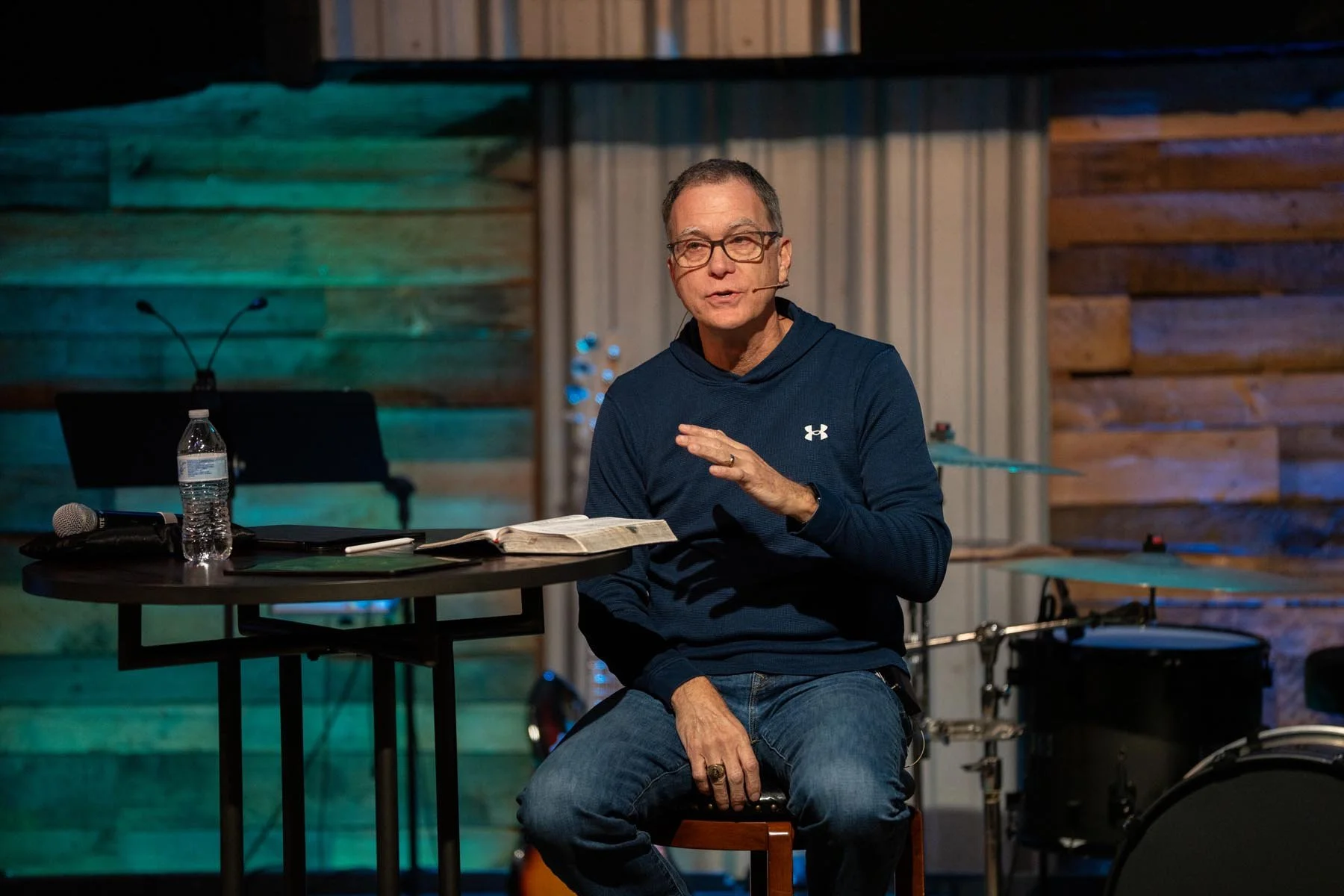
How to prepare for the end | Revelation 6:1-8
Bottom line: We must prepare for the end of life and the end of the world the same way: as if living and dying for Christ was worth it. And ordering our lives accordingly. Pastor Darien Gabriel walks us through Revelation 6:1-8 and the reality of martyrdom both in the early church and now. This sermon is one of the most important you will hear as it relates to the effects of the gospel and what it means to follow Christ no matter what.
Series: Revelation: The Best is Yet to Come
Title: How to prepare for the end
Scripture: Revelation 6:1-8
Main commentary help:
Exalting Jesus in Revelation by Daniel Akin
Revelation by Jim Hamilton
Breaking the Code by Bruce Metzger
Seven Seals by Matt Chandler, 2021 sermon
Last week: “How to Live in this world of suffering”
This week: “How to prepare for the end”
I. Intro
My dad died in 2014. He was in his 80s and died because of dementia. He forgot how to swallow. Watching him die like that was the hardest thing I’ve ever had to do. But because he knew the disease would eventually take him, he prepared himself financially, mentally, physically, relationally and spiritually. And when his brain forgot how to swallow, he started to die. But he knew that the best was yet to come. I realize that talking about God like this can get me canceled. When people don’t like what you’re saying, they want to just cancel instead of discuss and debate the issues. As a result, it’s getting riskier and riskier to speak truth—especially from the Bible. Yet Clemson football coach Dabo Swinney does so in the middle of the pandemic on a world-wide simulcast where he said the following:
“The best is not behind us. The best is yet to come, especially for those who know Jesus. I would not be able to do a positive summit and try to speak some hope and positivity if I did not say that because that is what I know. I know true peace and happiness comes from knowing Jesus. Jesus is the hope of the world. Always has been, always will be. The hope of the world is not a vaccine. It is not a politician. It is not some stimulus package. It is not any of those things. The hope of the world comes from knowing Jesus. That is what I believe and that is why I know that the best is yet to come.” -Dabo Swinney
https://www.powerofpositivesummit.com/
Where does the courage to say that and risk all he’s accomplished come from? Sheep among wolves, Luke 10:3Power of the resurrection, Phil 3:10How to prepare for what end? The end of my life or the end of the world? Yes, both. Because the answer is the same for both.
But he was ready. We talked about it often. He wasn’t wanting to leave this place but he was at peace about it whenever it happened. He’d trusted Christ at an early age.He’d led his family to follow Christ.He’d walked with Christ the best way he knew how.He’d had the important conversations while he was still thinking well. Hospice was called in when it was time.He was prepared for the end. Are you prepared for the end yet?
Bottom line: We must prepare for the end of life and the end of the world the same way: as if living and dying for Christ was worth it. And ordering our lives accordingly.
Let’s dive into the 5th and 6th seals. The 7th seal is the 7 Trumpets (judgments) we’ll learn about in the weeks to come.
II. The 5th Seal—Martyrs (6:9-11)
A. What’s a martyr? Martyr = witness. So a Christian martyr is someone willing to be a witness even if it kills them in the process.
B. Why were these people martyred? Because they were faithful to the word of God (Proclaim Jesus), and Because they were faithful to the testimony (Embody Jesus).Does your life do these 2 things?
C. They want vengeance, justice and vindication. After all, they died for loving God and loving people like Jesus did/does.
D. Vengeance is God’s job—not ours.
E. God’s character—holy and true.F. God’s method—sovereign and always on time.lG. Future martyrs? Church of Smyrna and us.
III. 6th Seal—The End. (6:12-17)
A. Common throughout scripture to be cosmic, cataclysmic destruction. Could be literal.Could be symbolic. No less real either way. Goal is to lead people to repent and believe. People would rather die than...
B. ...Face God and the wrath of the Lamb.
C. The great leveling begins. God’s justice and mercy are for all no matter your station or status in life.
D. What about you? What are you putting your hope in for your deliverance in the end? Politicians? World leaders? Scientists? Wealthy people? The Military?
Application
How do we prepare for the end?
Bottom line: We must prepare for the end of life and the end of the world the same way: as if living and dying for Christ was worth it. And ordering our lives accordingly.
Share story of Nigerian funeral
Decide if my faith is worth living for. If it’s worth living for, then it’s worth dying for. Saturate your mind and heart with scripture daily. Memorize it as if you might have to live without a printed copy one day. Pray like you might be martyred one day. Proclaim Jesus daily. Embody Jesus daily.
Bottom line: We must prepare for the end of life and the end of the world the same way: as if living and dying for Christ was worth it.We do this daily as we Proclaim & Embody Jesus.
Let’s pray.
Other notes:
How to Love
Four bullets hit Pope John Paul II – two of them lodging in his lower intestine, the others hitting his left hand and right arm. This assassination attempt on the Pope in May 1981 left him severely wounded and with considerable blood loss – his health was never the same again. In July 1981, the perpetrator, Ali Ağca, was sentenced to life imprisonment. Pope John Paul II asked people to pray ‘for my brother Ağca, whom I have sincerely forgiven’.
Two years later, he was to take the hand of Ali Ağca, then in prison, and quietly tell him that he had forgiven him for what he had done (even though his would-be killer had not asked for forgiveness). He developed a friendship over the years, meeting Ağca’s mother in 1987 and his brother a decade later. In June 2000 Ağca was pardoned by the Italian President at the Pope’s request. In February 2005 Ağca sent a letter to the Pope wishing him well. When the Pope died on 2 April 2005, Ağca’s brother, Adrian, gave an interview saying that Ağca and his entire family were grieving and that the Pope had been a great friend to them.
Pope John Paul II’s response of love and mercy is exemplary. God’s love and mercy is even more extraordinary because ‘At the cross of Jesus, pardon is complete. Love and justice mingle, truth and mercymeet.’
How to Make the Most of Your Life
‘People often ask me what Mother Teresa was like,’ writes Shane Claiborne in his book The Irresistible Revolution. ‘Sometimes it’s like they wonder if she glowed in the dark or had a halo. She was short, wrinkled, and precious, maybe even a little ornery, like a beautiful, wise old granny. But there is one thing I will never forget – her feet. Her feet were deformed.
Each morning I would stare at them. I wondered if she had contracted leprosy. One day a Sister explained, “Her feet are deformed because we get just enough donated shoes for everyone, and Mother does not want anyone to get stuck with the worst pair, so she digs through and finds them. And years of doing that have deformed her feet.” Years of loving her neighbour as herself deformed her feet.’
When people are asked about the person whose life they most admire, so often the answer is ‘Mother Teresa’. She made the most of her life. It is a paradox, because her life was a life of self-denial, taking up her cross and following Jesus.
Bible in One Year 2021 With Nicky Gumbel: Day 56 • Devotional

Motivated by the Risen Jesus | Revelation 1:9-20
This week’s main idea: “The risen Christ in glory summons forth obedience from his churches. The incomparable glory of the risen Christ motivates John’s audience to heed what John has been commissioned to write. The matchless splendor of Heaven’s King attracts the attention and compels the obedience of the churches John addresses.” -Hamilton
My Bottom line: When we (the Church) see the risen Jesus today, we’ll be super motivated to trust and obey.
Series: Revelation: The Best is Yet to Come
Title: Motivated by the Risen Jesus...
Scripture: Revelation 1:9-20 NIV
Main commentary help:
Exalting Jesus in Revelation by Daniel Akin
Revelation by Jim Hamilton
Last week’s title: “The Best is Yet to Come”
This week’s title: Motivated by the Risen Jesus...
Last week’s Main idea: “Those who hear and obey God‘s word will be blessed by the Lord.”
Summarizing some of my thoughts lately...
We see the risen Jesus in all his glory and are motivated to trust and obey. (Rev 1:9-20)
When we trust and obey, we’re blessed beyond imagination. (Rev 1:1-8)
And finally, we’re blessed to be a blessing to others around the corner and around the world. (The Bible)
We’ll focus on 1 today.
This week’s main idea: “The risen Christ in glory summons forth obedience from his churches. The incomparable glory of the risen Christ motivates John’s audience to heed what John has been commissioned to write. The matchless splendor of Heaven’s King attracts the attention and compels the obedience of the churches John addresses.” -Hamilton
My Bottom line: When we (the Church) see the risen Jesus today, we’ll be super motivated to trust and obey.
Illustration: (Cf. With Isaiah’s reaction in Isaiah 6:1-8) Isaiah went from “Woe is me” to “Here I am” in a very short time. How long would it take for you to surrender all to Jesus and let him send you wherever to do whatever? How long would it take for you to give Jesus a blank check? Not long if you see him as he is today.
I hope your motivation for trusting and following Jesus will recalibrated today. Checked against the standard. The standard is truth and God’s word.
Why are you following Jesus?
Why are you following Jesus the way you are following Jesus? (Half-heartedly vs wholeheartedly)
I. Introduction: Story + Summary (Doignetus)
II. John’s situation and Commission to write (1:9-11)
III. John’s description of the risen Jesus (1:12-16)
IV. Jesus asserts his authority and commissions John to write (1:17-20)
V. Conclusion: Summary + Story + Application + Vision
Opening story/illustration
Diognetus about Christians to Mathetes (Hamilton, pp. 32-33, 37)
1:9-20 “John’s vision of the risen Christ”
I. “John’s situation and commission to write”
“Unlike the Roman Empire, which is promised peace but delivered brutality and fear, the Kingdom of God promises tribulation and delivers peace and confidence and eternal salvation to those who patiently endure.” Hamilton, Pp. 43-44
“Make no mistakes about it: Your best life is not now. Your best life will begin when the skies are split by the shout of the archangel.” Hamilton, p. 44
Churches listed in order an itinerant preacher would visit them beginning at Island of Patmos (where John was exiled) and moving around Asia Minor.
These cities seemed to be natural centers of communication for itinerant ministry and 7 focal cities with respect to the church’s organization and distribution.
all but Thyatira had temples dedicated to emperors
all but Philadelphia and Laodicea lead imperial priests and altars
Note, though an apostle, John shared in the suffering of the church.
John shares why he writes Revelation: Because Jesus told him to!
Read 3rd paragraph in Hamilton, p. 45–it’s powerful!
This is meant to motivate the Church to gladly submit to the word of the risen Christ! This will become clear in chapters 2-3.
1:12-26 “John’s description of the risen Jesus”
Jesus described in priestly terms
References to Zechariah 4
7 lamp stands point to the presence of God in the tabernacle and temple; hence priestly terms
Like a priest, Jesus calls the churches to repentance (Chs 2-3)
Jesus’ clothing points to a heavenly high priest
Jesus described in kingly terms
References to Daniel 7
“Like a son of man” is kingly/messianic term
Jesus receives an eternal kingdom (Dan 7 & 10); cf. Rev 1:6 & 9
2 major influences on John’s first vision:
The letters to the churches—When you compare Revelation 1 with Revelation 2-3 you see Jesus described the same way
The vision of Daniel in ch. 10.
Revelation is fulfilling Daniel’s vision in Daniel 10
When you compare Revelation 1 with Daniel 10 you see Jesus described the same way
Jesus is unveiled as deity in Rev 1:14 in describing like Ancient of Days (reference to God the Father)
“Eyes like a flame of fire” 1:14
3 implications of his blazing eyes:
No sin that we commit will escape his notice,
He will see every faithful thing his people do, and
He will note every injustice done to his people by their enemies.
“Feet like burnished bronze, refined” points to the absolute purity of Jesus.
“Powerful voice” = communicating authority this is to be obeyed. His voice is to drown out other voices that would call you away from true faith and holiness that marks those who truly know God.
Sometimes he does speak in a still, small voice. But there are times when he wants to drown out everything else.
Are you listening? To whom?
3 more...
7 Stars - messengers of 7 churches (Angels, not pastors). Jesus holds in right hand = he is in control
sword in mouth - symbolically Jesus will speak decisive words of judgment.
“Face like the sun” - painful brightness of the sun shining full strength, on which we can’t look
“The risen Christ in glory summons forth obedience from his churches.”
1:17-20 “Jesus asserts his authority and commissions John to write”
John literally blown away by God’s glory in Jesus. No power on earth does this.
Jesus doesn’t leave John. He tells him not to be afraid. Why?
Because he lives forever and holds the keys of death and hell. That is, he defeated death and the cross as seen in the resurrection.
Jesus is terrifying in his holiness. We should tremble, humble ourselves and repent of our sin before him. But no need to fear for our own lives if we repent and we trust him for he empowers us to live with him forever.
Jesus among 7 lamp stands = Jesus is present in and with his church.
Conclusion:
John’s situation and commission is to write down this vision (Revelation), which includes this powerful description of Christ himself in all his glory so that we will rightly be motivated to 1) Worship Jesus, and 2) Obey him.
“Jesus reveals himself to John the way he does to compel John’s audience to
Heed the 7 letters he is about to dictate to John about the present, and to
Convince them of the truth of...the end of history in Chs 4-22.” -Hamilton
What is God saying to you right now?
What are you going to do about it?
These are not rhetorical questions. Take some time to stop and pray right now.
Let’s pray. Amen.
Trust God to Put Things Right
Pippa and I enjoy doing crosswords together. When we are stuck on one clue we don’t give up, we move on to the next clue. Every time we find an answer it helps us in resolving some of the other clues. In the end, we are sometimes able to solve most of the puzzle.
In a way, reading some of the difficult parts of the Bible is like trying to solve a crossword puzzle. Rather than getting bogged down in a tricky section, you can use the passages you do understand to help you resolve some of the more difficult ones.
Often I find it hard not only to understand some of the difficult passages in the Bible, but also to understand why certain things are happening in our world. There seems to be so much injustice. There are no easy answers.
I love the second great rhetorical question from yesterday’s passage, ‘Will not the Judge of all the earth do right?’ (Genesis 18:25). One thing that you can be sure about is that on the last day, when all is revealed, you will see God’s perfect judgment – and everyone will say, ‘That is absolutely right.’ Each of today’s passages tells us something about the fact that, in the end, God will put things right.

Be Prepared To Answer | 1 Peter 3:15-16
Bottom line: Doing good means always being prepared to give an answer to everyone who asks you why you have hope and to do so w/ gentleness, respect, and a clear conscience. That includes your enemies and your persecutors. Be prepared & ready to share with anyone why you have hope.
In the Old Testament, the tabernacle (and later the temple) was the place where people went to meet with God. This was God’s home as we see in our Old Testament passage for today (Ezekiel 43:5).
The message of our New Testament passage though is that the glory and presence of God is to be found supremely in Jesus. It is at the very moment that Jesus is rejected and crucified that God’s presence among people is finally and fully realized. From that point on there is no need for a physical temple. The only church building the New Testament speaks about is a building made of people (Ephesians 2:20–22), founded and built upon Jesus, the chief cornerstone. The holy temple in the New Testament is one made of ‘living stones’ (1 Peter 2:5) – in other words, people like you and me. This is God’s new home.
Scripture: 1 Peter 3:15-16
Title: Be Prepared to Answer
Bottom line: Doing good means always being prepared to give an answer to everyone who asks you why you have hope and to do so w/ gentleness, respect, and a clear conscience. That includes your enemies and your persecutors.
Be prepared & ready to share with anyone why you have hope.
Open with motto of the Boy Scouts: Be prepared. I tried and gave up after 2 months.
Prepared for tests?
I walked into physics class one year after spring break fresh and rested from no studying. But I wasn’t ready or prepared for the test they handed out unexpectedly (to me) that day. I promptly left to withdraw from the class.
I was ready but not necessarily prepared for my first SAT test. We didn’t study for them back in my day. So taking the test was really a way to answer the question, “Am I ready for college?”
Where is God?
Elie Wiesel was born into a Jewish family in Romania. He was only a teenager when he and his family were rounded up by the Nazis and taken first to Auschwitz, and then to Buchenwald. In his book, Night, he gives a terrifying and intimate account of the increasing horrors he endured – the death of his parents and eight-year-old sister, and the loss of his innocence by barbaric hands.
In the foreword to the book, François Mauriac writes of his encounter with Elie Wiesel: ‘On that most horrible day, even among all those other bad days, when the child witnessed the hanging (yes!) of another child who, he tells us, had the face of a sad angel, he heard someone behind him groan: “For God’s sake, where is God?” And from within me, I heard a voice answer: “Where He is? This is where – hanging here from this gallows.”’
...His words point to the most profound answer to the question, ‘Where is God?’ God is in Christ. He was on the cross bearing our sins in his body. Now the crucified is among his people. Not only has he suffered for you, but he now suffers with you. (Bible in One Year 2020 With Nicky Gumbel: Day 327 • Devotional)
Peter exhorts the early church to be prepared to give an answer for the hope they carried in Christ. He knew, however, that he was writing to a suffering people. The time was one of persecution and opposition. From family, friends, religious institutions, philosophical discussions, employers and, of course, the government.
He wants them to do good (like Titus) but he accounts for their suffering.
We just finished Paul’s letter to Titus where we emphasized the principle that good deeds/works flow from good doctrine taught and lived in a community united in Christ.
Here we see Peter also talking about “doing good.” More specifically, he talks about suffering for doing good.
Thanksgiving is a time when family, food, politics and religion collide for a few hours resulting in a wide range of reactions. Maybe you experienced that this year. 2020 is the year of disruption and as a result we’re all not at our best. Things have been amplified and accelerated—good and bad things. As a result, our cultural norms have changed quickly.
Ex. We now have a cancel culture where people are much quicker to write someone off for something they said even long ago with no second chance.
Ex. We are much more polarized than in the past.
Ex. So much has been politicized too. Your views on race, immigration, borders, guns, marijuana, sexual orientation, religious affiliation, and police move people to make assumptions about you and put you into stereo-typed groups so that they can label you for or against them. Tribes are becoming our new identities.
As a result, people are quicker to condemn, criticize and cancel you. We are often guilty by perceived association whether it’s true or not.
But the biggest one we’re going to be dealing with in the months ahead is where you are religiously.
Like it or not, if you are a Christian who is committed to the Bible in that you believe it and live it and share it, you will be stereo-typed and labeled horrible things. Things that aren’t even true about you. And gradually, as it becomes more socially acceptable, you will be persecuted.
What can you do this about this? I have a few suggestions:
Decide who you really are? Where do you really stand? What’s your story? How does it fit in God’s epic story?
Prepare yourself and your family for the coming storm; for persecution. We’ve been saying for years it’s coming. COVID accelerated everything. It’s here. Prepare for suffering.
Decide how you are going to respond to this personally?
Will you push back? Demand to be understood? For you will be misunderstood. Jesus was and he never once defended himself.
Or will you lean in? Bless instead of curse. Return good to your tormentors? Will you reinforce their stereotypes or will you show them a better story?
Do you have hope? What or who is it in? Why? Know the answers to these questions.
The Apostle Peter spoke to early Christians about this very thing in 1 Peter 3:8-22. It is there I believe God led me to this week to share before we head into the Christmas season of sermons. It seems extremely fitting and timely.
Many of us are experiencing a crisis of faith. Do we really believe this Bible is really a word from God? If so, then let’s prepare together. If not, then it will be extremely hard for you to move forward with other believers. This is why people are leaving churches in droves. This is why churches are closing all over America.
Caution for new persecution
“In the first two chapters Peter referred to “all kinds of trials” (1:6), accusations of “doing wrong” (2:12), “the ignorant talk of foolish men” (2:15), and “the pain of unjust suffering” (2:19). All these persecutions seem to have resulted from the natural reactions of a pagan society against Christians who faithfully obeyed Jesus Christ.
Peter then warned that a time of more severe persecution and suffering was close at hand. He cautioned Christians to keep clear consciences when facing injustice, to endure the inevitable suffering with Christlike courage.” (BKC)
I. Overcoming Injustice in the coming days
1 Peter 3:8–12 (BKC): “Peter used both Christ and Noah to illustrate the principle that in times of rising persecution the right response to injustice results in blessing.“
“Finally” introduces a new section.
“Peter now addressed all his readers (all of you) and gave practical principles for living peacefully in a hostile pagan culture. First Peter 3:8–9 is Peter’s exposition of Psalm 34:12–16, which he then quoted (1 Peter 3:10–12). Peter constructed his thoughts around the three exhortations in the psalm.”
A. A Compassionate Conduct - 1 Peter 3:8-12 - 3 practical exhortations from Peter from David:
Keep from speaking evil. This includes what you say to someone AND what you type/write to someone via text, email or social media. (10)
Turn from evil and do good. (11a) “Turn the other cheek” -Jesus (Matt 5:39)
Seek and pursue peace with God and man. (11b) Respond to insult with blessing. Start with what you say then with what you (or refrain from).
B. A Clear Conscience - 1 Peter 3:13-22
“Persecution occurred, however, in spite of believers’ desires to live peacefully and their eagerness to do good. Peter encouraged his readers with the fact that the right response to undeserved suffering results in blessing. He presented the principle in verses 13–17 and provided examples in verses 18–22.”
Who is going to hurt you? (13-14) Blessed here means “highly favored”, not feel delighted.
Fear God over men. Isaiah 8:12 (ESV): “Do not call conspiracy all that this people calls conspiracy, and do not fear what they fear, nor be in dread” (14)
Overcoming fear requires us exalting Christ as Lord (15)
Reason = apologia or defense for why you believe what you believe about Christ Jesus.
1 Peter 3:15 (BKC): As a result Christians should always be prepared (hetoimoi, “ready”; cf. 1:5) to give … the reason (apologian, the “defense” which a defendant makes before a judge; cf. Acts 22:1; 25:16) for their hope in Christ. Such an oral defense should be consistent with one’s “set-apart” conduct.
There’s the posture of prepared.
There’s the work of prepared.
There’s the willingness of prepared.
Give your reason in a way that honors Christ. How you do this matters. (16)
Perhaps Peter is recalling how he did not do this when confronted 3 times after Jesus’ arrest. (Mark 14:66-72)
Yet it may be God’s will for you to suffer for doing good. (17)
Illustrations on the above principles (18-22)
Jesus is our supreme example. He suffered greatly for doing nothing but good. (Healing, miracles, preaching, serving, and the cross) Great summary: “1 Peter 3:18 (BKC): In verses 18–22 Peter illustrated the principles given in verses 13–17. Once again Christ provided the perfect example. He suffered for doing what was right (2:14). His sinless life provoked the unjust hostilities of evil men. However, He did not fear men but trusted Himself to God. Christ clearly stated His purpose and committed Himself to a course of action. He died in mankind’s place, keeping His conscience clear (cf. 2:23). As a result He received tremendous blessing and reward in His own resurrection and exultation.” (18) Maybe the greatest summary of the gospel in one verse in the Bible.
Christ (anointed one) suffered once for sins (fully sufficient sacrifice for all sin)
the righteous for the unrighteous (our substitute)
to bring you to God (to reconcile us to God)
Put to death in the body (cross)
Made alive in the Spirit
Through whom he preached to the spirits in prison (19-20)
Noah kept hammering and preaching to encourage others to repent and believe despite incredible oppositions and hostility. So must we.
Noah feared God over men.
Noah’s reward was salvation for he and his family.
Water (21)
Baptism represents a complete break from the past.
1 Peter 3:21 (BKC): He exhorted them to have the courage to commit themselves to a course of action by taking a public stand for Christ through baptism. The act of public baptism would “save” them from the temptation to sacrifice their good consciences in order to avoid persecution. For a first-century Christian, baptism meant he was following through on his commitment to Christ, regardless of the consequences.
Baptism doesn’t save you from sin but from a bad conscience.
Notes
WW notes
Preparing for the Best (3:8-17)
Peter is preparing believers for the fiery trials of persecution that were coming. But preparing for the best, not the worst. Hope-filled words!
III. God’s grace in suffering
A. Cultivate Christian Love (8-12)
B. Practice the Lordship of Christ (13-15)
C. Maintain a good conscience (16-17)
Bible in One Year 2020 With Nicky Gumbel: Day 327 • Devotional
Where is God?
Elie Wiesel was born into a Jewish family in Romania. He was only a teenager when he and his family were rounded up by the Nazis and taken first to Auschwitz, and then to Buchenwald. In his book, Night, he gives a terrifying and intimate account of the increasing horrors he endured – the death of his parents and eight-year-old sister, and the loss of his innocence by barbaric hands.
In the foreword to the book, François Mauriac writes of his encounter with Elie Wiesel: ‘On that most horrible day, even among all those other bad days, when the child witnessed the hanging (yes!) of another child who, he tells us, had the face of a sad angel, he heard someone behind him groan: “For God’s sake, where is God?” And from within me, I heard a voice answer: “Where He is? This is where – hanging here from this gallows.”’
François Mauriac goes on, ‘And I, who believe that God is love, what answer was there to give my young interlocutor... What did I say to him? Did I speak to him of that other Jew, this crucified brother who perhaps resembled him and whose cross conquered the world?
‘Did I explain to him that what had been a stumbling block for his faith had become a cornerstone for mine? And that the connection between the cross and human suffering remains, in my view, the key to the unfathomable mystery in which the faith of his childhood was lost... That is what I should have said to the Jewish child. But all I could do was embrace him and weep.’
His words point to the most profound answer to the question, ‘Where is God?’ God is in Christ. He was on the cross bearing our sins in his body. Now the crucified is among his people. Not only has he suffered for you, but he now suffers with you.
In the Old Testament, the tabernacle (and later the temple) was the place where people went to meet with God. This was God’s home as we see in our Old Testament passage for today (Ezekiel 43:5).
The message of our New Testament passage though is that the glory and presence of God is to be found supremely in Jesus. It is at the very moment that Jesus is rejected and crucified that God’s presence among people is finally and fully realised. From that point on there is no need for a physical temple. The only church building the New Testament speaks about is a building made of people (Ephesians 2:20–22), founded and built upon Jesus, the chief cornerstone. The holy temple in the New Testament is one made of ‘living stones’ (1 Peter 2:5) – in other words, people like you and me. This is God’s new home.