
Sermons
Watch Now

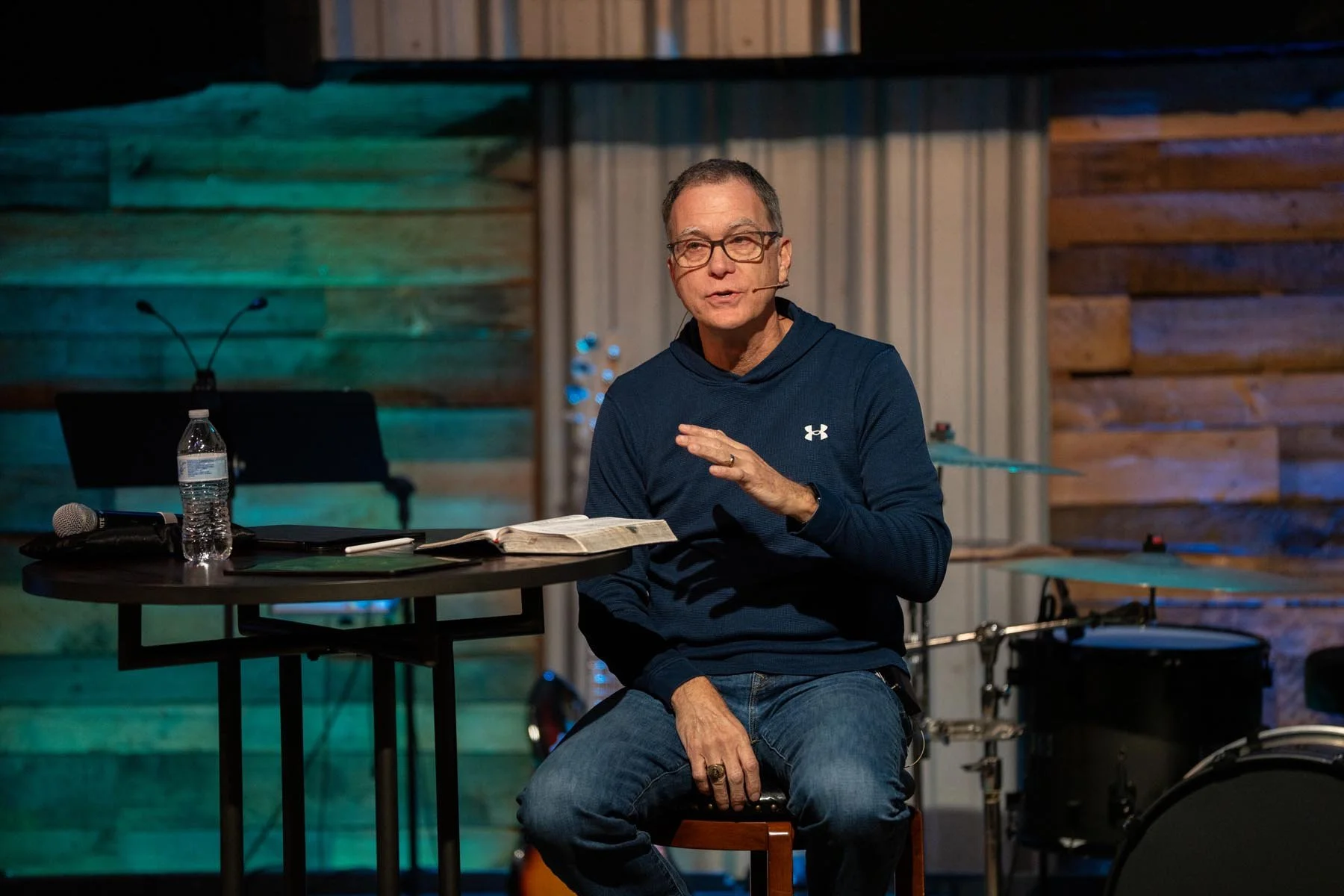
Why Did John Write About Jesus? | John 20:30-31
Series: Signs & Glory
Title: "Why did John write his Gospel? Or Why did John write about Jesus?
Scripture: John 20:30-31 NIV
“Jesus performed many other signs in the presence of his disciples, which are not recorded in this book. But these are written that you may believe that Jesus is the Messiah, the Son of God, and that by believing you may have life in his name.”
John 20:30-31 NIV
Bottom line: God sent Jesus that by trusting in him, we might have life to the max.
INTRODUCTION
CONTEXT
SERMON OUTLINE
CONCLUSION
NOTES
OUTLINES
QUESTIONS TO CONSIDER
DISCUSSION QUESTIONS
MAIN REFERENCES USED
My opening prayer: Lord God, help us grow to be and do like Jesus, while abiding in him and leading others to do the same.
INTRODUCTION
Why did John write his gospel? Why did he write about Jesus?s
There's a line in the amazing movie called the Polar Express that has always bothered me. It's near the end when the main boy character gets off the train after finally getting to the place where he believes in Santa. He's about to run home as Christmas Day is about to break when the conductor says, as if to summarize the entire evening,
"Conductor: watch your step please.
Boy: thank you.
Conductor: No thank you...One thing about trains...it doesn't matter where they're going. What matters is deciding to get on."
My girls will attest to what I'm about to tell you. In our house, right after he says this, I will say out loud in the room, "Yes it does matter where the train is going!"
Why? Because believing in belief is foolishness. It's from the religion of the Oprah's of the world. Doesn't matter what you believe as long as you sincerely believe it.
Oh yeah, what about the terrorist who believes if he straps on a vest of explosives and kills a bunch of infidels in the name of Allah because he sincerely believes that after he dies he'll wake up in paradise with 70 virgins.
It matters what you believe in.
Even the atheist, if they are honest, believes there is no God. They can't prove it.
Why did John write about Jesus Christ?
The short answer is that we might believe.
Believe what? I'm so glad you asked!
CONTEXT
In the book of John, John the Apostle is not calling us to believe in belief, like Oprah. He's calling us to believe--to trust in with our whole self--in someone specifically. And it's not just a good, godly person willing to die for his beliefs. He's the Son of God, Jesus the Christ, who showed us what God looks like in the flesh and what his kingdom looks like down to personally pitching his tent with us.
Why did John write his gospel?
He tells us:
“Jesus performed many other signs in the presence of his disciples, which are not recorded in this book. But these are written that you may believe that Jesus is the Messiah, the Son of God, and that by believing you may have life in his name.”
John 20:30-31 NIV
John was one of the 12 disciples and then 12 apostles. He wrote his gospel after the other 3 were written, most likely.
SERMON (lots of help from Carter & Wredberg on this; see bibliography below)
I. What do we need to believe?
That Jesus is the Christ/Messiah = anointed one (prophet, priest, king)
We believe that Jesus is who he says he is, and
That he'll do all that God promised he would do. Which includes:
He's the snake crusher. He'll defeat sin and death. (Genesis 3:15)
He'll end all injustice and rebellion. (Psalm 2)
He'll willingly suffer and die as a perfectly righteous person for our sins in our place so that we can freely live in his place for his glory. (Isaiah 53)
He'll establish his eternal, universal kingdom. (Daniel 7)
So when John says we need to believe, it's that Jesus is who he says he is and that he'll do all that God's promised he would do.
That Jesus is the Son of God. God in the flesh. Fully divine. As Jesus of Nazareth, he's also fully human. (Phil 2:6-11)
II. What does it mean to believe?
It means more than, "I believe it's going to rain today." Something that you'll change as soon as you get more information. Oh, just 5% chance? Ok, I no longer believe it's going to rain today.
Believe means to trust in someone or something with all your weight or self.
Ex. You're hiking in the Himalayas and you come to a long bridge that goes over 1,000 foot drop. The bridge is one of those swinging type bridges. You say intellectually to yourself, it looks unsturdy but it's been here a while and people have been using it. Then you watch people walk across it. You believe it could hold you up if you walked across it. That's intellectual belief. But until you actually walk across it, you aren't believing like the Bible means when it says believe. You are trusting the bridge to hold you up.
Ex. There as a circus performer who stretched a rope or cable across Niagara Falls. To the crowd he asked, "Do you think I can walk across this cable?" They all shouted, "Yes, we believe you can." "Do you believe I can walk across pushing this wheelbarrow across?" "Yes, we believe!" "Who will volunteer to ride in the wheel barrow as I push it across?" No one volunteered. Why? Because they didn't trust with their whole self that he could do it successfully.
III. Why do I need to believe?
We need to believe because our lives depend on it. Because we're born dead sinners which means we're born dead spiritually. We are no longer in the garden of Eden where the tree of life sustains us. Only he can give us new life now.
John 1:4
John 3:16
John 5:24
John 11:25-26
The life we need - spiritual, eternal life, delivers us from hell or eternal separation from life with God. Hell = spiritually dead.
Life is not a one-time transaction only either. Like adoption.
There is legal paperwork that follows an intentional decision to adopt followed by a lot of hoops to jump through. But it ends in signing paperwork that transfers legal guardianship from the birth parents to the adopting parents. At that moment, the child becomes a legal family member. And salvation starts out that way too. When we trust Christ, we are born again into the family of God. We are justified by grace through faith.
However, neither adoption nor salvation end there. They continue as you learn to live your new life in your new identity as a member of a family of people. Your salvation continues to unfold through a process called sanctification. As an adopted child, you eat meals together, share the flu together, celebrate holidays together, and even grieve the loss of life together. You do life together. In Christ, you do this forever.
Why did John write the gospel of John? So that we could believe or trust him with our whole self into new life with him and his family of grace.
CONCLUSION
Have you begun this journey?
How do you begin this journey?
I wish the movie Polar Express had ended with these words by the Conductor instead:
Conductor: The thing about trains is that their all headed somewhere different. It matters which train you get on. It matters where it's going. But even if you pick the right train, it won't get you there unless you get on. That's what it means to believe.
Optional
In the movie Mannequin, Andrew McCarthy's character cleans a department store with the night shift while the store is closed. There are mannequins everywhere. He doesn't pay them much attention because they're not real people. Until one night one wakes up! It's alive!
Some department stores use models posing as mannequins (until they decide to move and freak someone out!) Models and mannequins are wearing the same clothes in the same place for the same company. But one is clearly alive.
In Christ, we are made "alive with Christ" (Ephesians 2:1-10). This life is everything as there is nothing more precious.
Bottom line: God sent Jesus that by trusting in him, we might have life to the max.
One more thought on belief, if you haven't already picked up on it. Whenever the Bible talks about faith, trust or belief, the writer is not only talking about the first time you believe. God, through the writer, is talking to each of us about believing all the time. Especially when we're tempted to doubt him.
Peter puts it all in perspective in his first sermon:
““Therefore let all Israel be assured of this: God has made this Jesus, whom you crucified, both Lord and Messiah.” When the people heard this, they were cut to the heart and said to Peter and the other apostles, “Brothers, what shall we do?” Peter replied, “Repent and be baptized, every one of you, in the name of Jesus Christ for the forgiveness of your sins. And you will receive the gift of the Holy Spirit. The promise is for you and your children and for all who are far off—for all whom the Lord our God will call.”” Acts 2:36-39 NIV
Invitation
How do we respond? Answer 2 questions:
Take out a card or piece of paper right now. Write down the answer to these questions:
What is God saying to me right now?
What am I going to do about it? Write this down on a sheet of paper.
What I hear you saying, Lord, is ___________________.
[my name] is going to believe/do __________________________________________________ as a result.
Finally, share this with your Home or Mission group this week when you gather as a testimony about what God is doing in your life. You don’t have to get too specific to give him praise.
Lord's Supper passages
“Now these things occurred as examples to keep us from setting our hearts on evil things as they did. Do not be idolaters, as some of them were; as it is written: “The people sat down to eat and drink and got up to indulge in revelry.” Therefore, my dear friends, flee from idolatry. I speak to sensible people; judge for yourselves what I say. Is not the cup of thanksgiving for which we give thanks a participation in the blood of Christ? And is not the bread that we break a participation in the body of Christ? Because there is one loaf, we, who are many, are one body, for we all share the one loaf.”
1 Corinthians 10:6-7, 14-17 NIV
“In the following directives I have no praise for you, for your meetings do more harm than good. In the first place, I hear that when you come together as a church, there are divisions among you, and to some extent I believe it. No doubt there have to be differences among you to show which of you have God’s approval. So then, when you come together, it is not the Lord’s Supper you eat, for when you are eating, some of you go ahead with your own private suppers. As a result, one person remains hungry and another gets drunk. Don’t you have homes to eat and drink in? Or do you despise the church of God by humiliating those who have nothing? What shall I say to you? Shall I praise you? Certainly not in this matter! For I received from the Lord what I also passed on to you: The Lord Jesus, on the night he was betrayed, took bread, and when he had given thanks, he broke it and said, “This is my body, which is for you; do this in remembrance of me.” In the same way, after supper he took the cup, saying, “This cup is the new covenant in my blood; do this, whenever you drink it, in remembrance of me.” For whenever you eat this bread and drink this cup, you proclaim the Lord’s death until he comes. So then, whoever eats the bread or drinks the cup of the Lord in an unworthy manner will be guilty of sinning against the body and blood of the Lord. Everyone ought to examine themselves before they eat of the bread and drink from the cup. For those who eat and drink without discerning the body of Christ eat and drink judgment on themselves.”
1 Corinthians 11:17-29 NIV
Also, say something like, "Christ has died, Christ is risen, Christ will come again." (past, present, and future)
Pray
NOTES
N/A
OUTLINES
N/A
QUESTIONS TO CONSIDER
What do I want them to know?
Why do I want them to know it?
What do I want them to do?
Why do I want them to do it?
How do they do this?
DISCUSSION QUESTIONS
Discovery Bible Study process: https://www.dbsguide.org/
Read the passage together.
Retell the story in your own words.
Discovery the story
What does this story tell me about God?
What does this story tell me about people?
If this is really true, what should I do?
What is God saying to you right now? (Write this down)
What are you going to do about it? (Write this down)
Who am I going to tell about this?
Find our sermons, podcasts, discussion questions and notes at https://www.gracetoday.net/podcast
Alternate Discussion Questions (by Jeff Vanderstelt): Based on this passage:
Who is God?
What has he done/is he doing/is he going to do?
Who am I? (In light of 1 & 2)
What do I do? (In light of who I am)
How do I do it?
Final Questions (Write this down)
What is God saying to you right now?
What are you going to do about it?
MAIN REFERENCES USED
“John,” by R. Kent Hughes, Preaching the Word Commentary, Edited by Kent Hughes
Exalting Jesus in John, by Matt Carter & Josh Wredberg
“Look at the Book” by John Piper (LATB)
“The Bible Knowledge Commentary” by Walvoord, Zuck (BKC)
“The Bible Exposition Commentary” by Warren Wiersbe (BEC)
Outline Bible, D Willmington (OB)
Willmington’s Bible Handbook, D Willmington (WBH)
NIV Study Bible (NIVSB) https://www.biblica.com/resources/scholar-notes/niv-study-bible/
Chronological Life Application Study Bible (NLT)
ESV Study Bible (ESVSB) https://www.esv.org
The Bible Project https://bibleproject.com
“The Bible in One Year 2023 with Nicky Gumbel” bible reading plan on YouVersion app (BIOY)
ChatGPT 3.5
Series: Signs & Glory
Title: "Why did John write his Gospel? Or Why did John write about Jesus?
Scripture: John 20:30-31 NIV
“Jesus performed many other signs in the presence of his disciples, which are not recorded in this book. But these are written that you may believe that Jesus is the Messiah, the Son of God, and that by believing you may have life in his name.”
John 20:30-31 NIV
Bottom line: God sent Jesus that by trusting in him, we might have life to the max.
INTRODUCTION
CONTEXT
SERMON OUTLINE
CONCLUSION
NOTES
OUTLINES
QUESTIONS TO CONSIDER
DISCUSSION QUESTIONS
MAIN REFERENCES USED
My opening prayer: Lord God, help us grow to be and do like Jesus, while abiding in him and leading others to do the same.
INTRODUCTION
Why did John write his gospel? Why did he write about Jesus?s
There's a line in the amazing movie called the Polar Express that has always bothered me. It's near the end when the main boy character gets off the train after finally getting to the place where he believes in Santa. He's about to run home as Christmas Day is about to break when the conductor says, as if to summarize the entire evening,
"Conductor: watch your step please.
Boy: thank you.
Conductor: No thank you...One thing about trains...it doesn't matter where they're going. What matters is deciding to get on."
My girls will attest to what I'm about to tell you. In our house, right after he says this, I will say out loud in the room, "Yes it does matter where the train is going!"
Why? Because believing in belief is foolishness. It's from the religion of the Oprah's of the world. Doesn't matter what you believe as long as you sincerely believe it.
Oh yeah, what about the terrorist who believes if he straps on a vest of explosives and kills a bunch of infidels in the name of Allah because he sincerely believes that after he dies he'll wake up in paradise with 70 virgins.
It matters what you believe in.
Even the atheist, if they are honest, believes there is no God. They can't prove it.
Why did John write about Jesus Christ?
The short answer is that we might believe.
Believe what? I'm so glad you asked!
CONTEXT
In the book of John, John the Apostle is not calling us to believe in belief, like Oprah. He's calling us to believe--to trust in with our whole self--in someone specifically. And it's not just a good, godly person willing to die for his beliefs. He's the Son of God, Jesus the Christ, who showed us what God looks like in the flesh and what his kingdom looks like down to personally pitching his tent with us.
Why did John write his gospel?
He tells us:
“Jesus performed many other signs in the presence of his disciples, which are not recorded in this book. But these are written that you may believe that Jesus is the Messiah, the Son of God, and that by believing you may have life in his name.”
John 20:30-31 NIV
John was one of the 12 disciples and then 12 apostles. He wrote his gospel after the other 3 were written, most likely.
SERMON (lots of help from Carter & Wredberg on this; see bibliography below)
I. What do we need to believe?
That Jesus is the Christ/Messiah = anointed one (prophet, priest, king)
We believe that Jesus is who he says he is, and
That he'll do all that God promised he would do. Which includes:
He's the snake crusher. He'll defeat sin and death. (Genesis 3:15)
He'll end all injustice and rebellion. (Psalm 2)
He'll willingly suffer and die as a perfectly righteous person for our sins in our place so that we can freely live in his place for his glory. (Isaiah 53)
He'll establish his eternal, universal kingdom. (Daniel 7)
So when John says we need to believe, it's that Jesus is who he says he is and that he'll do all that God's promised he would do.
That Jesus is the Son of God. God in the flesh. Fully divine. As Jesus of Nazareth, he's also fully human. (Phil 2:6-11)
II. What does it mean to believe?
It means more than, "I believe it's going to rain today." Something that you'll change as soon as you get more information. Oh, just 5% chance? Ok, I no longer believe it's going to rain today.
Believe means to trust in someone or something with all your weight or self.
Ex. You're hiking in the Himalayas and you come to a long bridge that goes over 1,000 foot drop. The bridge is one of those swinging type bridges. You say intellectually to yourself, it looks unsturdy but it's been here a while and people have been using it. Then you watch people walk across it. You believe it could hold you up if you walked across it. That's intellectual belief. But until you actually walk across it, you aren't believing like the Bible means when it says believe. You are trusting the bridge to hold you up.
Ex. There as a circus performer who stretched a rope or cable across Niagara Falls. To the crowd he asked, "Do you think I can walk across this cable?" They all shouted, "Yes, we believe you can." "Do you believe I can walk across pushing this wheelbarrow across?" "Yes, we believe!" "Who will volunteer to ride in the wheel barrow as I push it across?" No one volunteered. Why? Because they didn't trust with their whole self that he could do it successfully.
III. Why do I need to believe?
We need to believe because our lives depend on it. Because we're born dead sinners which means we're born dead spiritually. We are no longer in the garden of Eden where the tree of life sustains us. Only he can give us new life now.
John 1:4
John 3:16
John 5:24
John 11:25-26
The life we need - spiritual, eternal life, delivers us from hell or eternal separation from life with God. Hell = spiritually dead.
Life is not a one-time transaction only either. Like adoption.
There is legal paperwork that follows an intentional decision to adopt followed by a lot of hoops to jump through. But it ends in signing paperwork that transfers legal guardianship from the birth parents to the adopting parents. At that moment, the child becomes a legal family member. And salvation starts out that way too. When we trust Christ, we are born again into the family of God. We are justified by grace through faith.
However, neither adoption nor salvation end there. They continue as you learn to live your new life in your new identity as a member of a family of people. Your salvation continues to unfold through a process called sanctification. As an adopted child, you eat meals together, share the flu together, celebrate holidays together, and even grieve the loss of life together. You do life together. In Christ, you do this forever.
Why did John write the gospel of John? So that we could believe or trust him with our whole self into new life with him and his family of grace.
CONCLUSION
Have you begun this journey?
How do you begin this journey?
I wish the movie Polar Express had ended with these words by the Conductor instead:
Conductor: The thing about trains is that their all headed somewhere different. It matters which train you get on. It matters where it's going. But even if you pick the right train, it won't get you there unless you get on. That's what it means to believe.
Optional
In the movie Mannequin, Andrew McCarthy's character cleans a department store with the night shift while the store is closed. There are mannequins everywhere. He doesn't pay them much attention because they're not real people. Until one night one wakes up! It's alive!
Some department stores use models posing as mannequins (until they decide to move and freak someone out!) Models and mannequins are wearing the same clothes in the same place for the same company. But one is clearly alive.
In Christ, we are made "alive with Christ" (Ephesians 2:1-10). This life is everything as there is nothing more precious.
Bottom line: God sent Jesus that by trusting in him, we might have life to the max.
One more thought on belief, if you haven't already picked up on it. Whenever the Bible talks about faith, trust or belief, the writer is not only talking about the first time you believe. God, through the writer, is talking to each of us about believing all the time. Especially when we're tempted to doubt him.
Peter puts it all in perspective in his first sermon:
““Therefore let all Israel be assured of this: God has made this Jesus, whom you crucified, both Lord and Messiah.” When the people heard this, they were cut to the heart and said to Peter and the other apostles, “Brothers, what shall we do?” Peter replied, “Repent and be baptized, every one of you, in the name of Jesus Christ for the forgiveness of your sins. And you will receive the gift of the Holy Spirit. The promise is for you and your children and for all who are far off—for all whom the Lord our God will call.”” Acts 2:36-39 NIV
Invitation
How do we respond? Answer 2 questions:
Take out a card or piece of paper right now. Write down the answer to these questions:
What is God saying to me right now?
What am I going to do about it? Write this down on a sheet of paper.
What I hear you saying, Lord, is ___________________.
[my name] is going to believe/do __________________________________________________ as a result.
Finally, share this with your Home or Mission group this week when you gather as a testimony about what God is doing in your life. You don’t have to get too specific to give him praise.
Lord's Supper passages
“Now these things occurred as examples to keep us from setting our hearts on evil things as they did. Do not be idolaters, as some of them were; as it is written: “The people sat down to eat and drink and got up to indulge in revelry.” Therefore, my dear friends, flee from idolatry. I speak to sensible people; judge for yourselves what I say. Is not the cup of thanksgiving for which we give thanks a participation in the blood of Christ? And is not the bread that we break a participation in the body of Christ? Because there is one loaf, we, who are many, are one body, for we all share the one loaf.”
1 Corinthians 10:6-7, 14-17 NIV
“In the following directives I have no praise for you, for your meetings do more harm than good. In the first place, I hear that when you come together as a church, there are divisions among you, and to some extent I believe it. No doubt there have to be differences among you to show which of you have God’s approval. So then, when you come together, it is not the Lord’s Supper you eat, for when you are eating, some of you go ahead with your own private suppers. As a result, one person remains hungry and another gets drunk. Don’t you have homes to eat and drink in? Or do you despise the church of God by humiliating those who have nothing? What shall I say to you? Shall I praise you? Certainly not in this matter! For I received from the Lord what I also passed on to you: The Lord Jesus, on the night he was betrayed, took bread, and when he had given thanks, he broke it and said, “This is my body, which is for you; do this in remembrance of me.” In the same way, after supper he took the cup, saying, “This cup is the new covenant in my blood; do this, whenever you drink it, in remembrance of me.” For whenever you eat this bread and drink this cup, you proclaim the Lord’s death until he comes. So then, whoever eats the bread or drinks the cup of the Lord in an unworthy manner will be guilty of sinning against the body and blood of the Lord. Everyone ought to examine themselves before they eat of the bread and drink from the cup. For those who eat and drink without discerning the body of Christ eat and drink judgment on themselves.”
1 Corinthians 11:17-29 NIV
Also, say something like, "Christ has died, Christ is risen, Christ will come again." (past, present, and future)
Pray
NOTES
N/A
OUTLINES
N/A
QUESTIONS TO CONSIDER
What do I want them to know?
Why do I want them to know it?
What do I want them to do?
Why do I want them to do it?
How do they do this?
DISCUSSION QUESTIONS
Discovery Bible Study process: https://www.dbsguide.org/
Read the passage together.
Retell the story in your own words.
Discovery the story
What does this story tell me about God?
What does this story tell me about people?
If this is really true, what should I do?
What is God saying to you right now? (Write this down)
What are you going to do about it? (Write this down)
Who am I going to tell about this?
Find our sermons, podcasts, discussion questions and notes at https://www.gracetoday.net/podcast
Alternate Discussion Questions (by Jeff Vanderstelt): Based on this passage:
Who is God?
What has he done/is he doing/is he going to do?
Who am I? (In light of 1 & 2)
What do I do? (In light of who I am)
How do I do it?
Final Questions (Write this down)
What is God saying to you right now?
What are you going to do about it?
MAIN REFERENCES USED
“John,” by R. Kent Hughes, Preaching the Word Commentary, Edited by Kent Hughes
Exalting Jesus in John, by Matt Carter & Josh Wredberg
“Look at the Book” by John Piper (LATB)
“The Bible Knowledge Commentary” by Walvoord, Zuck (BKC)
“The Bible Exposition Commentary” by Warren Wiersbe (BEC)
Outline Bible, D Willmington (OB)
Willmington’s Bible Handbook, D Willmington (WBH)
NIV Study Bible (NIVSB) https://www.biblica.com/resources/scholar-notes/niv-study-bible/
Chronological Life Application Study Bible (NLT)
ESV Study Bible (ESVSB) https://www.esv.org
The Bible Project https://bibleproject.com
“The Bible in One Year 2023 with Nicky Gumbel” bible reading plan on YouVersion app (BIOY)
ChatGPT 3.5
Tears at Christmas | Jeremiah 31:15-17 | Matthew 2:13-18
Jeremiah 31:15-17
Weeping at the Exile, but Rescue Would One Day Come
Matthew 2:13-18
Weeping at the Slaughter of the Innocents, but Rescue would come because the Savior was born.
If You Have Tears This Christmas Season, remember the Savior will one day wipe away every tear.
Tears at Christmas
Jeremiah 31:15-17
Weeping at the Exile, but Rescue Would One Day Come
Matthew 2:13-18
Weeping at the Slaughter of the Innocents, but Rescue would come because the Savior was born.
If You Have Tears This Christmas Season, remember the Savior will one day wipe away every tear.

How Would You Respond to Good News? | Luke 2:8-20
8 And there were shepherds living out in the fields nearby, keeping watch over their flocks at night. 9 An angel of the Lord appeared to them, and the glory of the Lord shone around them, and they were terrified. 10 But the angel said to them, “Do not be afraid. I bring you good news that will cause great joy for all the people. 11 Today in the town of David a Savior has been born to you; he is the Messiah, the Lord. 12 This will be a sign to you: You will find a baby wrapped in cloths and lying in a manger.”
13 Suddenly a great company of the heavenly host appeared with the angel, praising God and saying,
14 “Glory to God in the highest heaven,
and on earth peace to those on whom his favor rests.”
15 When the angels had left them and gone into heaven, the shepherds said to one another, “Let’s go to Bethlehem and see this thing that has happened, which the Lord has told us about.”
16 So they hurried off and found Mary and Joseph, and the baby, who was lying in the manger. 17 When they had seen him, they spread the word concerning what had been told them about this child, 18 and all who heard it were amazed at what the shepherds said to them. 19 But Mary treasured up all these things and pondered them in her heart. 20 The shepherds returned, glorifying and praising God for all the things they had heard and seen, which were just as they had been told.
8 And there were shepherds living out in the fields nearby, keeping watch over their flocks at night. 9 An angel of the Lord appeared to them, and the glory of the Lord shone around them, and they were terrified. 10 But the angel said to them, “Do not be afraid. I bring you good news that will cause great joy for all the people. 11 Today in the town of David a Savior has been born to you; he is the Messiah, the Lord. 12 This will be a sign to you: You will find a baby wrapped in cloths and lying in a manger.”
13 Suddenly a great company of the heavenly host appeared with the angel, praising God and saying,
14 “Glory to God in the highest heaven,
and on earth peace to those on whom his favor rests.”
15 When the angels had left them and gone into heaven, the shepherds said to one another, “Let’s go to Bethlehem and see this thing that has happened, which the Lord has told us about.”
16 So they hurried off and found Mary and Joseph, and the baby, who was lying in the manger. 17 When they had seen him, they spread the word concerning what had been told them about this child, 18 and all who heard it were amazed at what the shepherds said to them. 19 But Mary treasured up all these things and pondered them in her heart. 20 The shepherds returned, glorifying and praising God for all the things they had heard and seen, which were just as they had been told.

Is There Room? | Luke 2:1-7
1 In those days Caesar Augustus issued a decree that a census should be taken of the entire Roman world. 2 (This was the first census that took place while[a] Quirinius was governor of Syria.) 3 And everyone went to their own town to register.
4 So Joseph also went up from the town of Nazareth in Galilee to Judea, to Bethlehem the town of David, because he belonged to the house and line of David. 5 He went there to register with Mary, who was pledged to be married to him and was expecting a child. 6 While they were there, the time came for the baby to be born, 7 and she gave birth to her firstborn, a son. She wrapped him in cloths and placed him in a manger, because there was no guest room available for them.
1 In those days Caesar Augustus issued a decree that a census should be taken of the entire Roman world. 2 (This was the first census that took place while[a] Quirinius was governor of Syria.) 3 And everyone went to their own town to register.
4 So Joseph also went up from the town of Nazareth in Galilee to Judea, to Bethlehem the town of David, because he belonged to the house and line of David. 5 He went there to register with Mary, who was pledged to be married to him and was expecting a child. 6 While they were there, the time came for the baby to be born, 7 and she gave birth to her firstborn, a son. She wrapped him in cloths and placed him in a manger, because there was no guest room available for them.

Bad News, Hard News, Mixed News, and Good News | Matthew 1:20-22
Series: The Sovereign King Arrives
Title: “Bad news, Hard news, Mixed news, and Good news”
Scripture: Matthew 1:20-22; 2:13-23; Rev 11:15-12:5
(Commentary helps listed at the end)
Bottom line: We maintain hope through bad news by keeping our eyes on the prize
INTRODUCTION
News. We all read it, watch it, and groan about it. Because most of it is bad. How do we not just lose hope in a sea of bad news? We keep our eyes on the prize and press on until we find and rest in the good news.
OUTLINE
On Christmas Eve we saw that Joseph’s perspective on the news that Mary is pregnant and this changes everything including that Joseph obediently leads Mary and Jesus as God leads. (1:18-23) Today we continue through Matthew and learn more about how Joseph led his family well to keep their eyes on the prize and press on.
The prize: Your son Jesus will save his people from their sin. (Matt 1:21)
I. Bad News: Reasons (Refugees flee) for the trip:
Flee the wrath of Herod (13-14): Joseph warned in a dream that Herod will try to kill Jesus.
Fulfill words of Hosea (15): Hosea foretold trip to Egypt. cf. Hosea 11:1
“Jesus inaugurates the New exodus” -Platt
II. Hard News: Retaliation (Herod retaliates) during the trip:
Purge of Herod (16): He kills all the male babies in Bethlehem in an attempt to eliminate Jesus.
Prophecy of Jeremiah (17-18): The OT prophet predicted the Bethlehem massacre (Jeremiah 31:15)
“Jesus ends the mournful exile” -Platt
III. Mixed News: Return (Refugees return) from the trip:
First dream (19-21): Joseph is told that Herod is now dead and that he should depart from Egypt with his family.
Second dream (22-23): Joseph is told that he should dwell in Nazareth.
IV. Good News: Revelation (God delivers) trip (Rev 12:1-5):
Jesus was delivered (by Mary and the Father)
We were delivered (by the Lord)
We join the Lord in delivering others (by the Lord)
CONCLUSION
Bottom line: We maintain hope through bad news by keeping our eyes on the prize
Transition:
One of the things Jesus commanded us to do was to remember the cross through the Lord’s supper.
Lord’s Supper, 1 Corinthians 11:17-32
“For I received from the Lord what I also passed on to you: The Lord Jesus, on the night he was betrayed, took bread, and when he had given thanks, he broke it and said, “This is my body, which is for you; do this in remembrance of me.” In the same way, after supper he took the cup, saying, “This cup is the new covenant in my blood; do this, whenever you drink it, in remembrance of me.” For whenever you eat this bread and drink this cup, you proclaim the Lord’s death until he comes.”
1 Corinthians 11:23-26 NIV https://bible.com/bible/111/1co.11.23-26.NIV
Let me invite you to do 3 things:
Invited them to accept Christ.
Invited them to join a group.
Invited them to give.
Text me at 843-830-2464 as needed.
-Pastor Darien
Lord’s Supper
Explain
Read
Confess
Go out into the mission field
Pray.
Other notes
Platt:
I. Jesus inaugurates the new exodus.
II. Jesus ends the mournful exile.
III. Jesus loves his fiercest enemies.
Osbourne:
I. Out of Egypt 2:13-15; Hosea 11:1; Matt 3:17
II. Return from Exile 2:16-18; Jeremiah 31:15-16; 33-34
III. The Branch for the Nations 2:19-23; Isaiah 11:1, 10
MAIN COMMENTARY HELP:
Exalting Jesus in Matthew by David Platt
Preaching the Word: Matthew commentary by Douglas Sean Osbourne
ESV Global Study Bible
Bible in One Year by Nicky Gumbel
Bible Knowledge Commentary
The Outline Bible, Wilmington
Gospel Transformation Bible
NIV Study Bible
Jesus Through Middle-eastern Eyes, Kenneth Bailey
Series: The Sovereign King Arrives
Title: “Bad news, Hard news, Mixed news, and Good news”
Scripture: Matthew 1:20-22; 2:13-23; Rev 11:15-12:5
(Commentary helps listed at the end)
Bottom line: We maintain hope through bad news by keeping our eyes on the prize
INTRODUCTION
News. We all read it, watch it, and groan about it. Because most of it is bad. How do we not just lose hope in a sea of bad news? We keep our eyes on the prize and press on until we find and rest in the good news.
OUTLINE
On Christmas Eve we saw that Joseph’s perspective on the news that Mary is pregnant and this changes everything including that Joseph obediently leads Mary and Jesus as God leads. (1:18-23) Today we continue through Matthew and learn more about how Joseph led his family well to keep their eyes on the prize and press on.
The prize: Your son Jesus will save his people from their sin. (Matt 1:21)
I. Bad News: Reasons (Refugees flee) for the trip:
Flee the wrath of Herod (13-14): Joseph warned in a dream that Herod will try to kill Jesus.
Fulfill words of Hosea (15): Hosea foretold trip to Egypt. cf. Hosea 11:1
“Jesus inaugurates the New exodus” -Platt
II. Hard News: Retaliation (Herod retaliates) during the trip:
Purge of Herod (16): He kills all the male babies in Bethlehem in an attempt to eliminate Jesus.
Prophecy of Jeremiah (17-18): The OT prophet predicted the Bethlehem massacre (Jeremiah 31:15)
“Jesus ends the mournful exile” -Platt
III. Mixed News: Return (Refugees return) from the trip:
First dream (19-21): Joseph is told that Herod is now dead and that he should depart from Egypt with his family.
Second dream (22-23): Joseph is told that he should dwell in Nazareth.
IV. Good News: Revelation (God delivers) trip (Rev 12:1-5):
Jesus was delivered (by Mary and the Father)
We were delivered (by the Lord)
We join the Lord in delivering others (by the Lord)
CONCLUSION
Bottom line: We maintain hope through bad news by keeping our eyes on the prize
Transition:
One of the things Jesus commanded us to do was to remember the cross through the Lord’s supper.
Lord’s Supper, 1 Corinthians 11:17-32
“For I received from the Lord what I also passed on to you: The Lord Jesus, on the night he was betrayed, took bread, and when he had given thanks, he broke it and said, “This is my body, which is for you; do this in remembrance of me.” In the same way, after supper he took the cup, saying, “This cup is the new covenant in my blood; do this, whenever you drink it, in remembrance of me.” For whenever you eat this bread and drink this cup, you proclaim the Lord’s death until he comes.”
1 Corinthians 11:23-26 NIV https://bible.com/bible/111/1co.11.23-26.NIV
Let me invite you to do 3 things:
Invited them to accept Christ.
Invited them to join a group.
Invited them to give.
Text me at 843-830-2464 as needed.
-Pastor Darien
Lord’s Supper
Explain
Read
Confess
Go out into the mission field
Pray.
Other notes
Platt:
I. Jesus inaugurates the new exodus.
II. Jesus ends the mournful exile.
III. Jesus loves his fiercest enemies.
Osbourne:
I. Out of Egypt 2:13-15; Hosea 11:1; Matt 3:17
II. Return from Exile 2:16-18; Jeremiah 31:15-16; 33-34
III. The Branch for the Nations 2:19-23; Isaiah 11:1, 10
MAIN COMMENTARY HELP:
Exalting Jesus in Matthew by David Platt
Preaching the Word: Matthew commentary by Douglas Sean Osbourne
ESV Global Study Bible
Bible in One Year by Nicky Gumbel
Bible Knowledge Commentary
The Outline Bible, Wilmington
Gospel Transformation Bible
NIV Study Bible
Jesus Through Middle-eastern Eyes, Kenneth Bailey

What are we so excited about? Who are We Waiting for? | Luke 2
Luke 2: What are we so excited about? Who are We Waiting for?
Bottom Line: God Became a Man
So, what we’re NOT trying to do on Christmas Eve is try to make the birth of Christ more exciting. 1. If we don’t think “God became a man” is exciting enough, we should get our pulse checked.
God Became a Man, and He shouldn’t have to compete for our affection with a new phone, nunchucks, a new car or a big guy in a red suit. We don’t have to hang lights on the Light of the World.
God Became a Man – the greatest event to occur in the history of the universe
Luke 2: What are we so excited about? Who are We Waiting for?
Bottom Line: God Became a Man
So, what we’re NOT trying to do on Christmas Eve is try to make the birth of Christ more exciting. 1. If we don’t think “God became a man” is exciting enough, we should get our pulse checked.
God Became a Man, and He shouldn’t have to compete for our affection with a new phone, nunchucks, a new car or a big guy in a red suit. We don’t have to hang lights on the Light of the World.
God Became a Man – the greatest event to occur in the history of the universe Video – Tribe celebrates receiving Bibles
Luke 1:39-45 (Mary went to visit Elizabeth)
39At that time Mary got ready and hurried to a town in the hill country of Judea, 40where she entered Zechariah’s home and greeted Elizabeth. 41When Elizabeth heard Mary’s greeting, the baby leaped in her womb, and Elizabeth was filled with the Holy Spirit. 42 In a loud voice she exclaimed: “Blessed are
you among women, and blessed is the child you will bear! 43 But why am I so favored, that the mother of my Lord should come to me? 44As soon as the sound of your greeting reached my ears, the baby in my womb leaped for joy. 45 Blessed is she who has believed that the Lord would fulfill his promises to her!
John, even as a baby…not a fetus…a baby…knew who to get excited about
Rosie (rescued, separation anxiety from her rescuers and pure joy in being reunited)
John 1:1-5
In the beginning was the Word, and the Word was with God, and the Word was God. 2He was with God in the beginning. 3 Through him all things were made; without him nothing was made that has been made. 4In him was life, and that life was the light of all mankind. 5 The light shines in the darkness, and the darkness has not overcome[a]it.
John 1:14
14 The Word became flesh and made his dwelling among us. We have seen his glory, the glory of the one and only Son, who came from the Father, full of grace and truth.
1. The Creator of the World humbled Himself and became a man, just to live for us, die for us (by our own hands) and raise from the dead…all for our forgiveness and redemption.
Best summed up by:
John 3:16
For God so loved the world that he gave his one and only Son, that whoever believes in him shall not perish but have eternal life.
There are over 400 prophesies about the Messiah in the Old Testament – Jesus fulfilled them all. The odds of Jesus fulfilling just 8 of those prophesies is 1 in 1 quintillion (18 zeroes)
Lee Strobel figured out a visual for that: tiles 1 1/2” square, one with red on the bottom – covering the every bit of dry land on the earth - 1 person walking the earth for a lifetime can only pick up 1.
Genesis 49:10 (about 1500 years before Christ) The Messiah would come from the tribe of Judah
The scepter will not depart from Judah,
nor the ruler’s staff from between his feet,[a]
until he to whom it belongs[b]shall come
and the obedience of the nations shall be his.
Isaiah 7:14 (about 700 years before Jesus was born) The Messiah would be born of a virgin
14 Therefore the Lord himself will give you[c] a sign: The virgin[d] will conceive and give birth to a son, and[e] will call him Immanuel.
Fulfilled: (Luke 1:26-33)
26 In the sixth month of Elizabeth’s pregnancy, God sent the angel Gabriel to Nazareth, a town in Galilee, 27 to a virgin pledged to be married to a man named Joseph, a descendant of David. The virgin’s name was Mary. 28 The angel went to her and said, “Greetings, you who are highly favored! The Lord is with you.”
29Mary was greatly troubled at his words and wondered what kind of greeting this might be. 30 But the angel said to her, “Do not be afraid, Mary; you have found favor with God. 31 You will conceive and give birth to a son, and you are to call him Jesus. 32He will be great and will be called the Son of the Most High. The Lord God will give him the throne of his father David, 33 and he will reign over Jacob’s descendants forever; his kingdom will never end.”
Jeremiah 23:5 (about 646 years before Jesus)
“The days are coming,” declares the LORD,
“when I will raise up for David[a] a righteous Branch,
a King who will reign wisely
and do what is just and right in the land.
2 Samuel 7:12-13
When your days are over and you rest with your ancestors, I will raise up your offspring to succeed you, your own flesh and blood, and I will establish his kingdom. 13He is the one who will build a house for my Name, and I will establish the throne of his kingdom forever.
Back to Luke:
Luke 2:1-7
In those days Caesar Augustus issued a decree that a census should be taken of the entire Roman world. 2(This was the first census that took place while[a] Quirinius was governor of Syria.) 3And everyone went to their own town to register.
Micah 5:2 (400 years before the birth of Christ) The Messiah would be born in Bethlehem, from the tribe of Judah
“But you, Bethlehem Ephrathah, though you are small among the clans[a] of Judah, out of you will come for me one who will be ruler over Israel,
whose origins are from of old, from ancient times.” (In the beginning was the word) Luke 2
4So Joseph also went up from the town of Nazareth in Galilee to Judea, to Bethlehem the town of David, because he belonged to the house and line of David. 5He went there to register with Mary, who was pledged to be married to him and was expecting a child. 6While they were there, the time came for the baby to be born, 7 and she gave birth to her firstborn, a son. She wrapped him in cloths and placed him in a manger, because there was no guest room available for them.
0. Jesus is born when Israel is under Roman Rule.
1. There is an invisible power behind and OVER the human rulers. They didn’t know it at the time, but God used Caesar and Quirinius to fulfill what He had promised long before that.
2. If you’re tempted to worry or celebrate over who is in charge of this great nation, your town or you HOA, DON’T. The same God is behind and over all OUR rulers too.
3. The birth of Christ…God became a Man.
4. Nothing about this particular scene says “GLORY”, but everything about this scene INSTRUCTS us about Glory.
5. In the Kingdom of God, HUMILITY always precedes GLORY
- The first will be last, and the last will be first (Mark 10:31)
- God opposes the proud, but gives grace to the humble (James 4:6) …also 1 Peter -Humble yourself before the Lord, and in good time, He will exalt you (James 4:10) + We see this modeled right from the beginning of Jesus’ life
+ True greatness is not always visible greatness
One of our favorite Christmas songs is “Christmas Snow” by Audrey Assad (on Chris Tomlin’s Christmas)
Could've come like a mighty storm With all the strength of a hurricane
You could've come like a forest fire With the power of Heaven in Your flame
(But) You came like a winter snow Quiet and soft and slow
Falling from the sky in the night To the earth below
6. Truth is, most of us have glory-craving hearts, and the incarnation of the Son of God in an animals feeding trough should put our hearts in check. In fact, Jesus spent a lifetime showing us how to live like Him.
Philippians 2:3-11
Do nothing out of selfish ambition or vain conceit. Rather, in humility value others above yourselves, 4 not looking to your own interests but each of you to the interests of the others.
5In your relationships with one another, have the same mindset as Christ Jesus:
6Who, being in very nature[a] God,
did not consider equality with God something to be used to his own advantage; 7rather, he made himself nothing
by taking the very nature[b] of a servant,
being made in human likeness.
8And being found in appearance as a man,
he humbled himself
by becoming obedient to death—
even death on a cross!
9 Therefore God exalted him to the highest place
and gave him the name that is above every name,
10 that at the name of Jesus every knee should bow,
in heaven and on earth and under the earth,
11 and every tongue acknowledge that Jesus Christ is Lord,
to the glory of God the Father.
Ephesians 2:8-9
For it is by grace you have been saved, through faith—and this is not from yourselves, it is the gift of God— 9 not by works, so that no one can boast.
Luke 2:8-20
8And there were shepherds living out in the fields nearby, keeping watch over their flocks at night. 9An angel of the Lord appeared to them, and the glory of the Lord shone around them, and they were terrified. 10 But the angel said to them, “Do not be afraid. I bring you good news that will cause great joy for all the people. 11 Today in the town of David a Savior has been born to you; he is the Messiah, the Lord. 12 This will be a sign to you: You will find a baby wrapped in cloths and lying in a manger.”
13 Suddenly a great company of the heavenly host appeared with the angel, praising God and saying,
14 “Glory to God in the highest heaven,
and on earth peace to those on whom his favor rests.”
15When the angels had left them and gone into heaven, the shepherds said to one another, “Let’s go to Bethlehem and see this thing that has happened, which the Lord has told us about.”
1. The angels appeared to shepherds keeping watch over their flock.
- Not glorious work / bad reputation / they were considered unreliable and despised. - God chose THEM to get the good new first…the first to hear of the great joy for all people - These despised individuals were the first to hear that God became a man…
- These guys were the first to hear all of the titles of Jesus brought together – Savior, Messiah, Lord
WHY? The Bible doesn’t necessarily say why them…but
It appears that God chose the humbled of society to reveal the humble beginnings of the life of His glorious Son.
Jesus was consistent throughout His ministry in is love for the humble
Jesus’ very beginning didn’t demonstrate the riches of His existence, but Jesus Himself was born into poverty.
SIDE NOTE – What do you think that implies?
1. Poverty is not a sin.
2. Poverty is not God’s disapproval
3. Poverty does not prevent a person from worshipping God
4. Poverty does not necessarily doom a person to poverty forever
5. Poverty does not excuse unrighteousness
6. Poverty is not shameful in and of itself
7. Poverty is a cross that God entrusts to some people for a time
If some prosperity gospel preacher tries to tell you that poverty is a sin, of that it is God condemning you, and that you just have to give a certain amount of money to be released, they are lying to you.
Some poverty is our own responsibility. Point to Jesus.
16 So they hurried off and found Mary and Joseph, and the baby, who was lying in the manger. 17When they had seen him, they spread the word concerning what had been told them about this child, 18 and all who heard it were amazed at what the shepherds said to them. 19 But Mary treasured up all these things and pondered them in her heart. 20 The shepherds returned, glorifying and praising God for all the things they had heard and seen, which were just as they had been told.
19 But Mary treasured up all these things and pondered them in her heart.
1. That does not mean…”huh?”.
- An angel had visited her (and her fiancée), she became pregnant as a virgin and just gave birth to the Savior of the world in barn. A bunch of stinky shepherds came to visit her baby, the Good Shephard telling them of heavenly hosts of angels…she didn’t go “huh”…”what do ya know…”
2. She treasured the moment as a mother and pondered the events leading up to it in her heart. 3. People who ponder the fact that God Became a Man, don’t just go “huh”.
God became a man – THAT is what we’re excited about
And if you really want to get excited, knowing that Jesus fulfilled all of the Old Testament prophesies about the Messiah, give this a pondering: He’s Coming Back as a conquering King
1 Thessalonians 4: 16-17
For the Lord himself will descend from heaven with a cry of command, with the voice of an archangel, and with the sound of the trumpet of God. And the dead in Christ will rise first. Then we who are alive, who are left, will be caught up together with them in the clouds to meet the Lord in the air, and so we will always be with the Lord.
Revelation 22:12-13
“Behold, I am coming soon, bringing my recompense with me, to repay everyone for what he has done. I am the Alpha and the Omega, the first and the last, the beginning and the end.”
The one who fulfilled all of the prophesies about the Messaiah, Jesus himself, said He is coming back… We better believe it
We better be ready

Transformed to Transform | Luke 1:57-80
Bottom line: God’s great mercy leads to radiant joy and praise that transforms lives Transformation is visible. Transformation is dramatic. Transformation is life-changing. I was transformed the first time I saw the Atlantic Ocean as a kid. When we talk about transforming lives, that’s exactly what we are going for. We want a life that is so transformed that maybe the most dramatic comparison is the difference between a corpse and a person fully alive and healthy. (Eph 2:1-9). Join us as Pastor Darien teaches on Luke 1.
Last week: whether you believe it or not, Jesus is coming back and that’s the point. Are you ready?
Bottom line: God’s great mercy leads to radiant joy and praise that transforms lives.
Transformation is visible.
Transformation is dramatic.
Transformation is life-changing.
I was transformed the first time I saw the Atlantic Ocean as a kid...
Transformers movie
I can still remember the first time I saw the first Transformers movie in the theater with my friends. I can honestly say it transformed the way I saw CGI in movies. It was basically like an animator drew a cartoon movie so realistic and believable that I couldn’t believe my eyes that it wasn’t real.
When we talk about transforming lives, that’s exactly what we are going for. We want a life that is so transformed that maybe the most dramatic comparison is the difference between a corpse and a person fully alive and healthy. (Eph 2:1-9)
That is dramatic enough on its own but now make it spiritual. Think of someone dead in their sins Hellbound for all eternity being transformed into life abundant and eternal. It’s like a shadow going reverse negative and becoming a light. That would be dramatic a shadow becoming a reflection of light.
My Fair Lady...another movie of transformation
From caterpillar to butterfly
As we wait…
as we wait we live knowing that not only did Jesus come (advent, Christmas) but that he’s coming again. And the tension is living as if he was coming back today...or in another 1,000 years.
As we wait for Jesus—his second coming; his return from heaven—to finish what he started, my prayer is that he will find me full of joy and praise that is so alive and so transformative that it leads others in transformation as well. That my faith would publicly inspire others to be open enough to receive and believe the truth and hope that the good news of the kingdom of God is near and athat the King is on his way back!
Building on what we talked about last week, we once again look at the lives of Zack and Lizzie and how God‘s great mercy transformed them through joy and praise so dramatically that it couldn’t help but shape and influence and impact the entire region around them. They truly were the best neighbors ever throughout Judea and their day.
Let’s look at their lives and learn from them how we can be transformed to transform.
Article (TGC)
Like a prison cell
The most reassuring message of the season is that the existence of hope does not depend on us. It does not rely on our virtue or wisdom. It is a delivery from elsewhere.
The German theologian Dietrich Bonhoeffer compared Advent to a prison cell “in which one waits and hopes and does various unessential things . . . but is completely dependent on the fact that the door of freedom has to be opened from the outside.”
The Advent narratives are filled with waiting people: Mary, Zechariah, Elizabeth, Simeon, Anna. They lived in patient expectation and were receptive to the Good News when it arrived. Their hope did not come as the result of a battle. It came like a seed planted in the ground. Like the sun rising in defiance of night. Like a child growing within his mother.
We are not the heroes of the story. Our contribution is to be watchful and open. But hope arrives in awesome humility. God is with us. Jesus is with us. This is everything.
I. God’s great mercy leads to joy and praise that transforms lives through... (1:57-67, 80)
It transformed E
Through pregnancy and birth - like only motherhood could do; no more shame
Through Holy Spirit
Through joy
It transformed Z
Through disciplined - silence, solitude, prayer, confession, repentance, and faith
Through praise
Through Holy Spirit
It transformed J
He was prepared through birth, browsing up, and relationship with parents
He was prepared through Holy Spirit
He was prepared through his wilderness
It transformed their neighbors
It transformed their world
II. Z’s prophecy of praise explains how God’s great mercy is God’s great salvation (1:67-79)
4 parts - notice he’s filled with HS; God’s all over this. It’s prophetic and it’s been in part fulfilled already.
The Plan of salvation (1:68-73)
Plan prophesied in OT - “The entire bible—from nAbraham to the prophets down to King David—is about this one thing: salvation. The Bible has one story: God visiting or coming to get his people. That was and is his plan.” -Thabiti Anyabwile
Plan was through the line of David
Plan was for Israel and those they would bless
Plan is one of strength
Plan was to save Israel from her enemies
Plan seen in the covenant promises to Abraham 3500 years ago
The Purpose of salvation (1:72-75)
Physical freedom
Main goal: freedom to worship the Lord. “God saves so that we might worship him. Freedom is a good goal, but it’s not the ultimate goal...Just as Zechariah worshipped God when God mercifully opened his mouth and ears, so all Israel is to praise and glorify God for the salvation he brings.”
NT version of what God told Moses to tell Pharaoh: “Let my people go, so that they may worship me.” (Exodus 7:16)
Religious liberty or freedom in our country is the freedom to do this. Just like Pharaoh severely limited Israel in this when they were enslaved in Egypt, we’re headed that way too. The difference is that they didn’t have a temple where God dwelt. As Christians, we are that temple so no body can keep us from worshiping the Lord. Nobody.
The Prophet of salvation (1:76-77)
Zach prophesies about John now.
John will be great
And a prophet of God.
He will be unique in that he will be a forerunner. He will soften the ground and till the soil of Israel’s heart (think Parable of the soils, Luke 8).
He will not be the Savior but will make things ready for the Savior by teaching the people how they are to be saved.
He will be a “giant index finger” (Thabiti Anyabwile) pointing the way to God’s great mercy.
Zach’s prophecy “defines John’s life in relationship to Jesus’ life and mission.” Imagine if we all did this? He must increase and I must decrease. (John 3:30)
Th of salvation (1:77-79) - 3 Effects of this transforming salvation on people
This salvation is ultimately spiritual and personal. We need his forgiveness of sins. (77)
Why do we need this?
Because it is an offense against our creator God, who is holy, holy, holy.
God will punish sin. He must to remain holy and just.
But he is also merciful. This is why his mercy is so great. He can mercifully forgive us because he took our punishment out on someone else. (On Jesus at the cross)
What or who do we need to be saved from? The answer may surprise you.
We need to be saved from God.l
This salvation is by God’s mercy. (78) says, “because of our God’s merciful compassion.”
We can’t earn it.
We can’t demand it.
We can’t deserve it.
We can’t deal for it.
It only comes by grace through faith. Free and undeserved.
Ask for it. Beg for mercy. Confess your sin and he is faithful...(1 John 1:9)
This salvation brings light. (78-79) Transformational is usually dramatically visible to others.
Through the mercy of God we receive light.
Jesus is our sunrise (sonrise).
In our sin, we sit in a dark, locked prison dungeon.
Hanukkah is festival of life and it’s Hanukkah right now. Connection?
Christ comes bringing light and blows them door off.
By definition, darkness cannot standup to light. It has to flee by law.
Lock-ins - up all night; can’t wait for daylight when they go home.
All-nighters.7
Death is defeated and brings peace.
Peace with God
Peace with humanity
Peace with ourselves
Do you have this peace? Let the light of Christ blow the doors off your dungeon prison and free you from death ☠️ to peace ☮️.
Conclusion
Transformation like the beast in Beauty and the Beast.
Notes
Zechariah’s first words were praising God.
Yes, a new son
Yes, on the heels of 9 months of silence (mute and deaf). Talk about a crash course on silence and solitude. Even Jesus was only alone in the wilderness 40 days.
A righteous and blameless man like Z would also have been teachable and the perfect father to raise a son able and prepared to make ready and prepare God’s people for their Messiah.
Result was “all the neighbors were filled with awe.” We say we want to be the “best neighbor ever...”. This would qualify Z, wouldn’t it?
What did he do?
He nurtured a Christ-like character.
He served faithfully as a priest.
He didn’t believe God’s word and was disciplined for it.
He grew during this time in the wilderness of discipline. Ever think about your wilderness time as a time of disciplining that would strengthen you?
He responded with praise and obedience as a result of God’s mercy and discipline.
He did so publicly.
His neighbors were awed by God and began spreading the good news. (Changed his neighbors and neighborhood).
Better Question: Have you let your disobedience and discipline cause you to flourish or flounder?
As he waited...for this first coming of Jesus,
he encountered God’s messenger,
disbelieved his message,
Lived in the wilderness of his discipline for a season,
let God nurture and teach him through that season,
received an amazing blessing/mercy,
received an incredible responsibility (the one to prepare the one to prepare the way...),
impacted his own neighborhood nad nation for the glory of God...and the nations (67-80).
“For the Lord’s hand was with him.” (V. 66)
This reminds me of Joseph over his 13 years in prison. His unjust imprisonments and deliverance foreshadowed both Israel’s enslavement and deliverance, as well as, our enslavement and deliverance from sin to freedom in Christ.
Z’s song
He was filled with the Holy Spirit (like Elizabeth and son were) as he composed this song. This means God was fully involved.
“Praise be...” (he starts here (appropriately). Who God is...
“Because” - the reason he’s moved to praise God—rescue/redemption of Israel (future faith spoken in past as if done deal)
Looks ahead to coming salvation with confidence
To show mercy
Remembers his covenant with Abraham
Rescue/salvation is the reason for praise (mercy)
To enable/empower the nation to serve him without fear
New section begins in v. 76 (note change in tense)
J the B a prophet of God
Prepare the way for the Lord (God incarnate)
To give knowledge (experiencing salvation) that leads to the change (repentance) required to be prepared. No repentance, no forgiveness—knowledge of precious truth salvation escape
Again, mercy (not getting what they deserve)
Light shines because thats’ what light does. It can’t help it. To reveal to those in darkness their current reality and their way of escape. Jesus is that light directly and later indirectly through his people.
This path of hope leads from sin and death, shame and guilt, and hell itself to...peace. Jesus is the prince of peace. His kingdom is a kingdom of peace.
J the B was raised by this man—this father—alongside an equally glorious mother Elizabeth. He grew in spirit (the Holy Spirit?).
Lived in the wilderness until he appeared publicly to Israel to begin his ministry.
Apparently, Z’s discipline shaped him profoundly. He now valued silence and solitude enough to pass it on. J the B took it to another level foreshadowing Jesus’ time of temptation in the wilderness where Jesus was prepared and shaped for his public ministry. Remember, the HS drove Jesus to the wilderness right after his baptism.
I wonder if Jesus and J the B ever interacted in the wilderness...
Notes from New American Commentary, Luke by Stein starting on p. 96.
Lots of parallels to Jesus’ birth narrative.
3 parts
Birth
Circumcision
Hymn of praise
Praise to God
Prophecy of J the B
“The function of the Benedictus is clear. Luke wanted his readers to understand this as Z’s divinely inspired hymn praising God for fulfilling his promises to his people and describing the roles of J the B and especially the Messiah.”
Cycle -
Sin/disobedience of child of God
Discipline and mercy
Repentance and growth on new path
Deliverance from discipline
Praise and worship and joy
Apparently is was unusual to name a son after his father because he would then be called Zechariah son of Zechariah or Zechariah Bar Zechariah. But they still named after family members.
Z was both deaf and mute.
Writing tablet was plank of wood covered in wax
Z being able to speak immediately after naming him John amplifies the miraculous nature of this event. As a result, the neighbors (who were not aware of Elizabeth’s pregnancy) realized this work of God.
Z was a model believer.
Starting with his character (1:6)
His first words after being disciplined were praise
He is filled with the Holy Spirit after trusting and obeying Gabriel’s command to name him John
He starts his song with praise
Awe or literally fear. The proper reverent attitude which those who witness a heavenly intervention or manifestation of divine power should express. It may begin as a terrifying fear of judgment or wrath, but it progresses to a holy awe of God and a recognition of his otherness, which leads to “glorifying and praising God”.
“What then is this child going to be?” What instead of Who emphasizes J the B’s role as the one who will go before his superiors to prepare the way.
Salvation is described as a past event in vv. 68-75 even though it’s describing a future event. This is because there is so much confidence in this happening it’s sung as as good as done. This is true for us as well as we think about the hope we have in Christ and our glorification.
In going from, v. 75 to 76, there is a change in tense and focus.
The focus is now on J the B until it returns to Christ at the end.
J the B is seen as great because of God and Christ—not because of anything he’s going to do or because of Z. Same for us.
“Sun” most likely refers to Jesus.
Truths
We can trust God’s word because God’s word is true.
God’s mercy leads to joy (for E) and praise (for Z).
God’s mercy leads to awe, fear and transforming neighbors.
God shows us mercy when he gives us less wrath/judgment than we deserve.
Circumcision was a sign of God’s faithful covenant relationship with Israel.
Applications
Trust God’s word.
Receive children as a mercy and blessing from God. Receive them with the joy E received J. No matter what the circumstances. (Even rape; even if poor)
Embrace God’s sanctifying discipline and affliction as a spiritual promotion. (JC Ryle)
“The sorrow that humbles us, and drives us nearer to God, is a blessing, and a downright gain.”
The wave that dashes us against the rock of God’s glory is a mercy indeed.
Are you handling your suffering by allowing God to grow you better or bitter? Is your heart towards God growing warmer or colder?
Everyone knew that God was at work among them with this child. (66)
What does that look like? Spiritual strength
Enter the Wilderness to prepare - When God’s hand is on our children, they grow and become strong—not just in body but more importantly, in spirit. (Ex. Silence, solitude, Fasting)
There’s a connection between John’s spiritual strength and his growth in the wilderness. (Silence, solitude, fasting) Wilderness is where prophets are prepared for the hardship of public ministry.
Doesn’t the first part of v. 80 make you want the last part of v. 66?
JC Ryle quote below.
Joseph in Genesis.
God waits to be asked. Are you asking? Praying? Seeking?
God’s mercy means joy and praise for E and Z. It means the same for us if we receive it.
Benedictus Doninus = blessed be the Lord God
Ben·e·dic·tus
/ˌbenəˈdiktəs/
noun
CHRISTIAN CHURCH
1.
an invocation beginning Benedictus qui venit in nomine Domini (Blessed is he who comes in the name of the Lord) forming a set part of the Mass.
2.
a canticle beginning Benedictus Dominus Deus (Blessed be the Lord God) from Luke 1:68–79.

Believe It Or Not, Jesus Is Coming | Luke 1:5-38
Bottom line: whether you believe God’s word or not, Jesus is coming...again.
Whether you believe God’s word or not, it will come to pass. Even when you fail to believe, God’s mercy is there for you. He disciplines his children when they fail to trust him. But he brings them back into fellowship as well. Just ask Zechariah. You can please God when you take him at his word. Just ask Mary. (Cf. Heb 11:3). Make sure you don’t miss the point for the pointer. The point is that God wants to walk in fellowship with you. He sent Jesus to restore our fellowship with him. That’s why he came the first time. The second time he’s coming to finish what he started. A re you ready?
Believe it or not, Jesus is coming
Series: As We Wait (for His Second Coming) #Advent
Scripture: Luke 1:5-38
Bottom line: whether you believe God’s word or not, Jesus is coming...again.
A dog and the point
“If you try to point out something to a dog, the dog will often look at your finger instead of at the object you’re trying to point out. This is frustrating, but it illustrates a natural mistake we all make from time to time. It’s the mistake many people make when reading the Christmas story in Luke’s Gospel: focusing on the manger—the Christmas crib. The most famous animal feeding-trough in all history. To concentrate on the manger and to forget why it was mentioned in the first place is like the dog looking at the finger rather than the object.
The point Luke is making is clear. The birth of this little boy is the beginning of a confrontation between the kingdom of God and the kingdoms of the world. (Caesar) Augustus never heard of Jesus of Nazareth. But within a century or so his successors in Rome had not only heard of him; they were taking steps to obliterate his followers. Just over three centuries later, a Roman emperor became a Christian.
Luke’s narrative reminds us not to stop at the manger but to see the explosive truth it’s pointing to.”
-NT Wright, Luke: 26 studies for individuals and groups, p. 23
Advent wreaths
I grew up with advent wreaths...
Advent = Coming
1st advent = 1st coming of Jesus (as a baby/Christmas/incarnation)
2nd advent = 2nd coming of Jesus (as a warrior-king/consummation of his earthly reign)
Luke 1:5-38
Compare and contrast 2 faith responses to God’s word (truth).
Applications
Whether you believe God’s word or not, it will come to pass.
Even when you fail to believe, God’s mercy is there for you. He disciplines his children when they fail to trust him. But he brings them back into fellowship as well. Just ask Zechariah.
You can please God when you take him at his word. Just ask Mary. (Cf. Heb 11:3)
Make sure you don’t miss the point for the pointer. The point is that God wants to walk in fellowship with you. He sent Jesus to restore our fellowship with him. That’s why he came the first time. The second time he’s coming to finish what he started. Are you ready?
Cross-reference
I want to be “confident and unashamed” at Jesus’ return. 1 John 2:28
Illustration
We're all waiting for something, but the Christian hope is the difference between waiting impatiently and waiting expectantly. Waiting for time to heal wounds is an exercise in futility. We sit impatient while growing both more agitated and more numb. But waiting expectantly means we hope in the healing that God promises, while expecting the world we live in to continue in its brokenness. In the hope of Advent, we’re not surprised by the darkness, but we’re not consumed by it either.
This is not a fine and theological distinction that has no bearing on life today. In fact, I would suggest this is the only way to make sense of your life today. Hoping in Jesus’ return is the only way to look at the brokenness of reality and maintain hope despite it all. And this takes practice. Just like our waiting impatiently is a learned practice reinforced through daily habits of expecting news and notifications and clicks to make us feel better, so waiting expectantly is a learned practice reinforced through communal spiritual disciplines of reading, praying and carefully directed longing.
-Justin Early, email