
Sermons
Watch Now

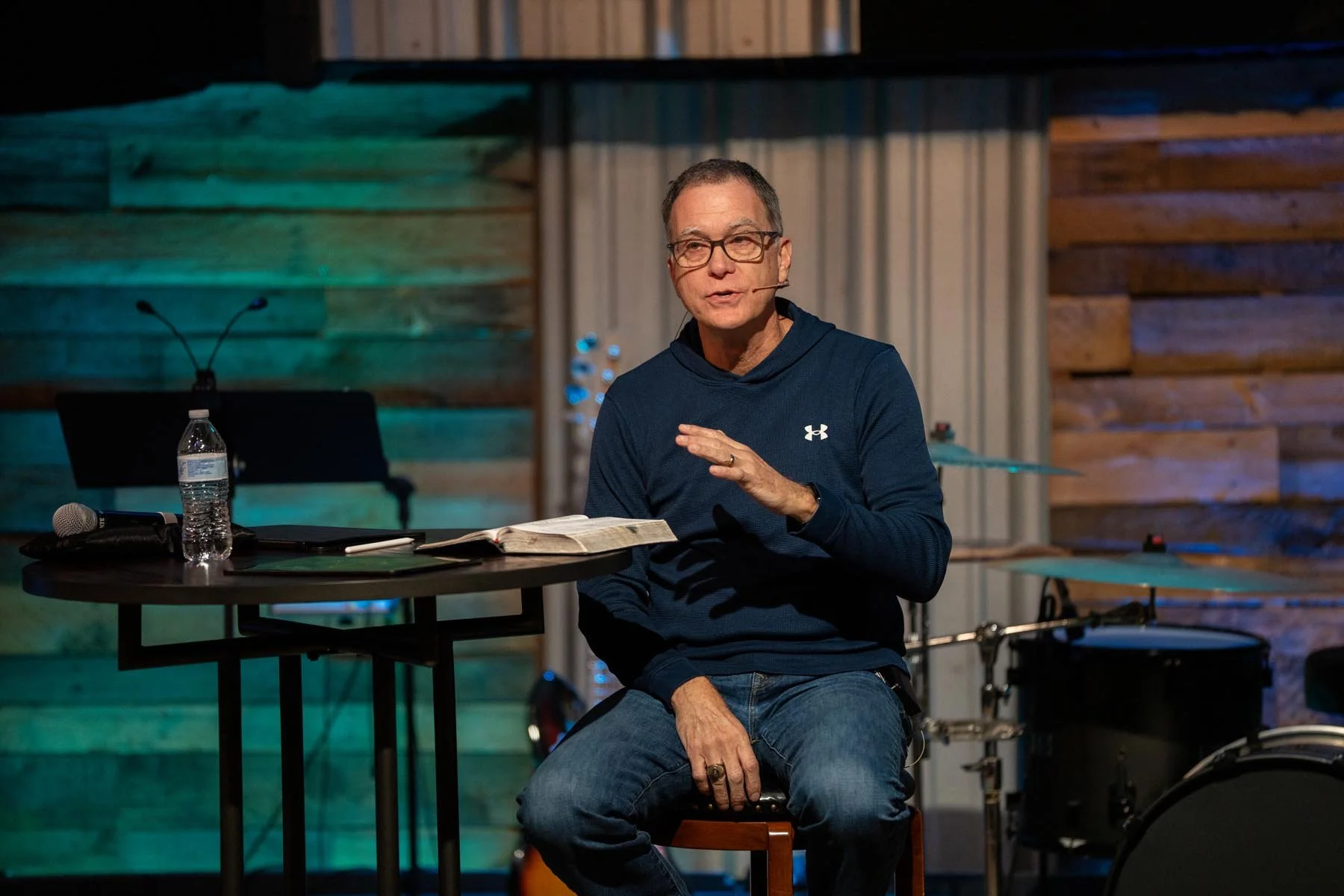
Where Did Marriage Come From? | Genesis 2:18-25 | Darien Gabriel
Series: Chaos to Covenant
Title: “Where did marriage come from?"
Scripture: Genesis 2:18-25 NIV
Matthew 19:4-5; Ephesians 5:21-34
Bottom line: Marriage came from God. It was his idea. Marriage is a covenant (not contract) before God between a man and a woman for life.
INTRODUCTION
CONTEXT
SERMON OUTLINE
CONCLUSION
NOTES
QUESTIONS TO CONSIDER
OUTLINES
DISCUSSION QUESTIONS
MAIN REFERENCES USED
INTRODUCTION
Men, we need help. But we're often the last to believe it. We'll resist help at every turn.
The recent commercial of a couple on their way to a fancy party illustrates my point. He's in a very expensive car, both are dressed to the nines, and he comes to a fork in the road. The GPS says continue on the paved road as the best route and gets them there on time. However, seeing the dirt road fork off to the right, the man says, "I know a short cut" and takes the dirt road.
We need help.
Guys, I'm not picking on you. We're guys! We've got this, right?! I mean it's just a bookcase. We can assemble this. Sure, it's from IKEA and there are instructions but we've got this!
We need help.
I could go on but you get what I'm slinging, right?
Men, let's be honest. There are times, maybe, possibly, ok, yes, there are times when we need help.
I'll go one step further (at great personal risk)...
Men, let's be honest. There are times, maybe, possibly, ok, yes, there are times when we need help...from our wife.
Let's look at Genesis and ask ourselves 2 questions as we do:
God, what are you saying to me today?
God, what do you want me to do about what you're saying to me today?
CONTEXT
We're in the second of two creation accounts: one from satellite view (ch. 1) and one from a closer, birds-eye view. (Ch. 2)
In this second (earlier?) view, we zoom in on day 6 where God created man and woman: Adam and Eve. Last week we focused on Adam. Today, we join Adam in seeing God create Eve.
Not only does God create Eve...he creates an amazing covenant relationship called marriage.
Basic Outline:
I. Primeval history (1-11)--God and the world
II. Patriarchal history (12-50)--God and Abraham's family
SERMON
I. "Not good". (Gen 2:18) "Warning, warning, Will Robinson." (-Robert, Lost in Space)
Narrator Moses says God said, "not good for the man to be alone."
"We're better together" and "We need each other" -both from Pastor Rick Warren.
This is true in your marriage.
This is true in your family and extended family.
This is true where you live, work, learn and play.
This is true in life.
God's take is community > isolation (even if you're an introvert, although you may prefer less community than an extrovert and that's ok)
God continues...
"I will make a suitable (equal, complementary, similar yet different) helper (needed partner for him to obey God's command in 2:15 and 1:26-28)."
I = God
This is God's decision, not Adam's request. Adam doesn't even see that he needs help yet! (Yes, that's where we get it, guys)
This is God's work. He doesn't make mistakes.
This is God's gift.
Of all the ways that God could have helped the man, woman is how God chose to do it. And she was perfect and exactly what he needed.
One more thing. Helper. To our modern ears, "Helper" sounds pathetically demeaning. I would simply point out this: In the Bible, the nation of Israel, God's chosen people, often need a helper. The Bible says that God is their helper. Think about that. God is called Israel's helper. Sounds like good company and rare air. Ladies, do not see Adam's helper as anything but a divine appointment that honors you and blesses him.
Paul digs into this in Ephesians 5:21-34.
II. Help needed? The man needs to know and believe he is unable to carry out God's command to rule, work, and take care of the garden alone.
So God asks the man to do a very vice-recently thing. To use his God-given authority to name all of the animals.
In the process, Adam realizes that
He's similar to animals but not an animal like they are.
There are male and female versions of these animals.
There's only one of him.
God summarizes what Adam comes to understand: "But for Adam no suitable helper was found." Now Adam knows and believes he needs help.
We hate to ask for help (because we are not convinced that we need it. Often just pride and ego). But Adam has (finally) come to his senses and sees he's in great need.
So like any good man with a need and epiphany, he takes a nap. And "deep sleep" means there's no better anesthesia than God putting you to sleep. (I think it's at least worth noting here that scripture never says that man ever came out of his sleep. But I digress)
III. God makes a helper. We're not just talking hamburger helper here...we're talking divinely inspired and divinely created help.
Over and over in scripture God is called Israel's helper. The helper of his chose people. So when God calls woman a helper, we're not talking hamburger helper kind of helper. We're talking this man needs God-sized help and only a woman can provide him what he needs.
Enter Eve.
God games some of Adam's stuff (side, rib, part) and builds Eve from him (instead of from dust). Similar to Adam, he crafts and builds her with great care, skill and then breathes life into her. We ay that because she is like Adam (mostly) (image of God), though there are some very obvious and amazing differences that do not displease Adam at all.
Adam exclaims with the first recorded words of a person. And both was he excited!
Whoa-man! This time (unlike with the animal naming) this is now bone of my bone and flesh of my flesh (strength and weakness). We are nearly the same. She shall be called isha (wo-man) because she was taken from ish (man).
IV. First wedding and marriage
The man leaves his father and mother (allegiance to the family switches) and cleaves (sticks, glues) himself to his wife giving her his earthly allegiance under God for as long as they both shall live. And they lived to over 900 so there's that.
They commit/surrender to one another, under God, and enter a biblical covenant relationship consummated intimately, fusing into "one flesh." That is one flesh that isn't dissolved without consequences. i.e. when divorce happens, by design, there are terrible consequences no matter who is at fault. Consequences...
In future relationships
In sex life
In kids lives
In extended family life
In church life
This is why marriage is taken so seriously by God. It's a covenant that shouldn't be broken until death.
Marriage's ultimate purpose is to illustrate to the worl dhow our relationship with God should look and work. (Eph 5:21-34)
Both naked. Neither ashamed. Why? Because they have no reason to be ashamed. No sin. They're married. Let's go!
CONCLUSION
Bottom line: Marriage came from God. It was his idea. Marriage is a covenant (not contract) before God between a man and a woman for life.
Applications to consider:
Community > Isolation
We are better together.
We need each other.
Do you believe this? Does your way of life indicate that?
Are you making a real effort to faithfully engage in healthy community with God's perspective in mind?
Do you need help?
Help in general? Reach out
Help from your spouse? Tell them
Help from God? Ask him
Marriage
Marriage is between a male and female, no matter what the culture is saying
Marriage is for life
Marriage was God's idea
Marriage is a covenant (100-100) not a contract (50-50)
Marriage is for God's mission and glory
Marriage is for our good
Divorce shreds the couple leaving scars that impact the rest of their lives their kids' lives
Do you need help with yours?
Invitation
““Therefore let all Israel be assured of this: God has made this Jesus, whom you crucified, both Lord and Messiah.” When the people heard this, they were cut to the heart and said to Peter and the other apostles, “Brothers, what shall we do?” Peter replied, “Repent and be baptized, every one of you, in the name of Jesus Christ for the forgiveness of your sins. And you will receive the gift of the Holy Spirit. The promise is for you and your children and for all who are far off—for all whom the Lord our God will call.”” Acts 2:36-39 NIV
Bottom line:
What is God saying to me right now?
What am I going to do about it? Write this down on a sheet of paper.
What I hear you saying, Lord, is ___________________.
[my name] is going to believe/do __________________________________________________ as a result.
Finally, share this with your Home or Mission group this week when you gather as a testimony about what God is doing in your life. You don’t have to get too specific to give him praise.
Pray
NOTES
From David Helms, p. 59
"Who are we really? Genesis 2 replies:
We are divine dust.
We are to live under divine rule.
We are divinely created for relationship."
I share this due to the nature of the topic of women doing things men can do in light of the creation of Eve. Plus it's interesting.
Free to the world by Bill Murphy Jr.
We're going to commemorate two milestones from history this weekend, and they both seem a bit entwined even though they were mostly unrelated back when they actually happened:
September 8, 1916: Sisters Augusta and Adeline Van Buren arrive in Los Angeles, as they complete a 60-day motorcycle tour across the United States.
September 8, 1921: A 16-year-old named Margaret Gorman won the Inter-City Beauty Contest and the Atlantic City Bathing Beauty Contest, which was eventually retconned as the first Miss America.
Let's talk about the Van Buren sisters first. They were actually following in the footsteps of a mother-and-daughter team named Avis and Effie Hotchkiss who had ridden a motorcycle with a sidecar from New York to California the year before.
Still, I remain impressed. Challenges along the way:
Lack of roads and easily available gasoline,
Lack of navigation tools and maps, and
Angry local law enforcement kept arresting them for wearing pants. (Not kidding.)
To put the achievement in perspective, the Van Buren sisters were riding four years before women could vote in the U.S., and three years before a lieutenant colonel (and future president) named Dwight Eisenhower led a famed and epic 81-vehicle convoy from east to west, which took 62 days.
Unencumbered by men and military bureaucracy, I suppose, the Van Buren sisters did it two days faster. Their goal was to demonstrate that women could be counted on to do things like serve as military dispatch riders in the upcoming U.S. entry into World War I, and generally to act like badasses.
(Aside: I learned while reading up on all of this that I'm not the first Bill Murphy to write about the Van Burens' trip. That honor goes to a Michigan writer named William M. Murphy, who wrote a short book about them called Grace and Grit, back in 2021.)
Their adventure is striking to me because five years later—and no offense to anyone involved in pageants, but I've never liked the whole concept—the milestone of the first Miss America contest seems a little out of place.
Details: Gorman was a high school junior in Washington D.C., still only 15, who was apparently "scouted" months before the contest by a pair of Washington Herald reporters trying to find pretty girls to send to Atlantic City.
Come to think of it, assuming these reporters were grown men, the whole idea of “scouting” 15-year-olds sounds more than a little creepy. But, I guess things were different then? Anyway they met Gorman's family in Georgetown and convinced them all to head north so that Gorman could pose in a bathing suit for the contest.
This was an early 20th century bathing suit: "dark, knee-high stockings and a chiffon bathing costume with a tiered skirt that came almost to her knees."
I’m wearing a t-shirt and shorts as I write this, and probably showing more of the ol’ skin than Gorman’s getup did back then.
It's not clear to me what, if anything, Gorman got out of winning the contest besides a trophy.
These days the winner gets $100,000 in scholarships plus a salary for the year (which honestly, I don’t know; still doesn't seem all that much). Gorman said the pageant organizers were cheap and didn't even reimburse her for her expenses years later, when she agreed to attend contests as the winner number-1.
The obituaries that appeared around the time of Gorman's death in 1995 suggest that being crowned Miss America—and then carrying the crown like a burden for the next 70+ years—seemed to sum up her life story.
As for the Van Buren sisters, Adeline went on to law school at New York University, while Augusta became a pilot who was active with a flying group known as the 99s.
Here we are, a century later, and I doubt most readers will have known any of the three women’s names but for this article (or perhaps another one like it).
Of course, the Miss America pageant continues, and a few years ago about 200 women retraced the sisters' ride across the United States together on motorcycles to mark the one century anniversary.
So even if their names aren’t on the tip of everyone’s tongue, their legacies endure.
Frankly, its the juxtaposition of these two events, the trip and the pageant, five years apart but on the same day that stand out to me. I think it's worth it simply to point out their anniversaries in history.
I think I'll let Gorman have the quote of the day, quoting this line from a 1980 interview. I like it because reading it made me question my assumptions once again. Also, because while she was directing it to someone else, it sounds as if she were talking to me:
"Write this down, young man. Life has been extremely, I say extremely, kind."
From Wilmington's Bible Handbook:
It's primeval history (universal world history) of the world (universe) made up of 5 stories with the same structure. (1-11)
The Fall
Cain
Sons of God marrying daughters of man
The Flood
Tower of Babel
They all follow this 4-fold pattern:
Sin: the sin is described
Speech: There is a speech by God announcing the penalty for the sin
Grace: God brings grace to the situation to ease the misery due to sin
Punishment: God punishes the sin
Patriarchal history (12-50) or the history of Israel's founding fathers. It continues to reveal the many graces of God based on the gracious promise God made to and through Abraham in Genesis 12:3.
Who wrote Genesis? According the Old and New Testaments, Moses c. 15th century BC. Jesus confirms this, with the exception of Genesis. The religious leaders of Jesus' day credited Moses with writing it (Luke 20:28) and early Jewish writers viewed Moses as the author of all 5 books.
During his years in the Egyptian royal family, Moses could have become a skilled writer and historian as the Egyptians were quite advanced and he'd have had access to top tutors. He was, after all, a prince of Egypt.
Moses would have been an eye-witness and contemporary to all that happened and was recorded in Exodus-Deuteronomy. However, not so for Genesis. So how did he write this?
God gave it all to him.
Passed down orally.
Passed down in writing.
Any of these would make Moses an editor or compiler of ancient history from Adam to his day around after he led Israel out of Egypt in and through the wilderness enroute to the Promise Land.
Abraham c. 2,000 BC
End of Genesis c. 1,800 BC
Exodus c. 1,500 BC (1.440s) after 400 years in Egypt
Truths to note
God existed and exists eternally
God exists in plural unity as the Holy Trinity
God was in the beginning
God was before anything existed in our universe and the universe itself
God created everything that exists in the universe and the universe itself
God creates something from nothing Latin ex nihilo
An atheist scientist came to God and said, “We’ve figured out how to make a man without you.” God said, “OK, let me see you do it.” So the atheist bent down to the ground and scooped up a handful. But God stopped him and said, “Oh, no you don’t. Get your own dirt!”
God creates with words. He spoke creation into existence. His words still have power.
God creates purposefully for his glory and our good.
God starts with light to display his creation and provide an essential ingredient for life.
God only creates things that are good. Together it was all very good and will be again.
God is a God of order and moves from chaos to order.
Elohim (gods) intensifies God's divine majesty, when used as a noun. When used as a verb, it's singular for there is only one true God.
God created all things. "Heavens and earth"
God created an "open" universe, not a "closed" one where he never interacts
Notes from Bible Project Videos
1-11 God and the world
12:3 Hinge verse
12-50 God and Abraham's family
Disorder --> Order
Adam = human
Humanity created to:
Reflect God's character (image)
Represent God's rule (reign)
Harness creation's potential and create beauty and order
"Blessing" is a key word here
Choice: Tree of knowledge of good and evil
Trust God's definition of good and evil, or
Seize autonomy and define good and evil for themselves?
Serpent (against God) tells a different story. He lies when he tells them that if they eat from the tree of the knowledge of good and evil that they will be like God. Because they already are like God (made in his image).
Heavens and earth aka skies and land
Formless and empty aka wild and waste
Deep abyss = dark, chaotic ocean
Days 1-3 God splits apart and forms this disordered waste into 3 ordered realms:
Realm: Time. God splits darkness and light on Day 1.
Realm: Sky & Seas. God splits the waters into water canopy or clouds (or both) and sea on Day 2.
Realm: Land. God brings land out of water and includes vegetation on it on Day 3.
Days 4-6 God
Day 4 brings lights--sun, moon and stars to reflect his light in space.
Day 5 brings creations to fill the sky and sea
Day 6 brings land animals and humanity to fill the land.
First poem in the Bible (1:27) celebrates God's creation where he completed the skies, land and inhabitants. God completes and rests and dwells in this sacred space he treats as a temple. The world or at least the garden of Eden is his temple.
"As America’s “loneliness epidemic” continues to impact Americans nationwide and foster increased social tension, there could be a simple cure: “Make a new friend,” our old friend David French argued in the New York Times. “There is a class divide in the percentage of Americans who can rely on someone to give them a ride to the doctor, lend them a small amount of money in an emergency or offer a place to stay. Another way of putting this is that the Americans who are most vulnerable to losing the informal social safety net of friends and relatives may be the people who need it the most. … The thought that so many millions of our fellow citizens feel as if they don’t belong, as if they can’t call anyone for help or simply lack the pure joy of fellowship with close friends should grieve us all. It should change the way we behave. It should make us be more intentional about reaching out to people. And it should call us to action in our own neighborhoods and communities.”" -morning dispatch
The Pattern
See D. J. A. Clines, Catholic Biblical Quarterly, No. 38 (1976), pp. 487, 488. Clines explains that Gerhard Von Rad initially observed a pattern of sin, mitigation, and punishment. Then Claus Westermann discerned another element, that of divine speech. Though he did not include it in the pattern, Clines does. Thus the following chart:
I.
II.
III.
IV.
SIN
SPEECH
GRACE
PUNISHMENT
FALL
3:6
3:14-19
3:21
3:22-24
CAIN
4:8
4:10-12
4:15
4:16
SONS OF GOD
6:2
6:3
6:8, 18ff
7:6-24
FLOOD
6:5, 11f
6:7, 13-21
6:8, 18ff
11:8
BABEL
11:4
11:6f
10:1-32
11:8
Preach the Word, Genesis, Kent Hughes, chapter 1, note 3, p. 625
QUESTIONS TO CONSIDER
Who is God?
What has he done/is he doing/is he going to do?
Who am I? (In light of 1 & 2)
What do I get to do? (In light of who I am)
How do I do it?
Let’s ask some summary sermon questions:
Q. What do I want them to know?
A.
Q. Why do I want them to know it?
A.
Q. What do I want them to do about it?
A.
Q. Why do I want them to do it?
A.
Q. How can they begin to do this?
A.
OUTLINES
Outline for Genesis (Willmington)
I. GOD'S WORKING SCHEDULE (1:1-2:19)
A. First day: creation of light (1:3-5): "Then God said, 'Let there be light.'" He then divides the light from the darkness.
B. Second day: creation of space and water (1:6-8): He separates the atmospheric, upper water from the earthly, lower water.
C. Third day: creation of plant life (1:9-13): First he separates the water from the land. The earth then brings forth green grass, plants, trees, and vegetation of every kind.
D. Fourth day: creation of sun, moon, and stars (1:14-19)
E. Fifth day: creation of fish and fowl (1:20-23)
F. Sixth day: creation of land animals and people (1:24-31; 2:7-20)
1. The brute creatures: livestock and all wild beasts (1:24-25)
2. The blessed creature, who is given two things:
a. The image of God (1:26-27)
b. The instructions from God (1:26-31; 2:15-19)
(1) People are to rule over all nature (1:26, 28),
(2) to fill the earth with their own kind (1:28),
(3) to cultivate and care for their beautiful home, the Garden of Eden (2:15),
(4) to eat from any tree except the tree of the knowledge of good and evil (2:16-17),
(5) and to provide names for all the other creatures (2:19-20).
G. Seventh day: God rests (2:1-6): His creative work is complete and is pronounced good. God blesses and sets apart the seventh day.
II. GOD'S WEDDING SCHEDULE (2:20-25)
A. The making of Eve (2:20-22): Eve, the first woman, is formed from the flesh and bone of Adam's side.
B. The marriage of Eve (2:23-25): Eve is returned to Adam's side.
"This explains why a man leaves his father and mother and is josted so his mare, and the two are united into one." This marks history's first marriage.
DISCUSSION QUESTIONS
Discovery Bible Study process: https://www.dbsguide.org/
Read the passage together.
Retell the story in your own words.
Discovery the story
What does this story tell me about God?
What does this story tell me about people?
If this is really true, what should I do?
What is God saying to you right now? (Write this down)
What are you going to do about it? (Write this down)
Who am I going to tell about this?
Find our sermons, podcasts, discussion questions and notes at https://www.gracetoday.net/podcast
Alternate Discussion Questions (by Jeff Vanderstelt): Based on this passage:
Who is God?
What has he done/is he doing/is he going to do?
Who am I? (In light of 1 & 2)
What do I do? (In light of who I am)
How do I do it?
Final Questions (Write this down)
What is God saying to you right now?
What are you going to do about it?
MAIN REFERENCES USED
“Genesis,” by R. Kent Hughes, Preaching the Word Commentary, Edited by Kent Hughes
Exalting Jesus in Genesis, by Bethancourt
The Genesis Record, by Henry Morris
The Genesis Factor, by David Helms & Jon Dennis
“Look at the Book” by John Piper (LATB)
“The Bible Knowledge Commentary” by Walvoord, Zuck (BKC)
“The Bible Exposition Commentary” by Warren Wiersbe (BEC)
Outline Bible, D Willmington (OB)
Willmington’s Bible Handbook, D Willmington (WBH)
NIV Study Bible (NIVSB) https://www.biblica.com/resources/scholar-notes/niv-study-bible/
Chronological Life Application Study Bible (NLT)
ESV Study Bible (ESVSB) https://www.esv.org
The Bible Project https://bibleproject.com
“The Bible in One Year 2023 with Nicky Gumbel” bible reading plan on YouVersion app (BIOY)

How Is Humanity to Relate to Our Creator? | Genesis 2:4-17 | Darien Gabriel
Series: Chaos to Covenant
Title: “How Does Humanity Relate to Our Creator?"
Scripture: Genesis 2:4-17 NIV
Matthew 4:4; 19:4-5
Bottom line: Humanity relates to our Creator by finding wisdom and life on his terms instead of ours. Humble surrender.
INTRODUCTION
CONTEXT
SERMON OUTLINE
CONCLUSION
NOTES
QUESTIONS TO CONSIDER
OUTLINES
DISCUSSION QUESTIONS
MAIN REFERENCES USED
INTRODUCTION
Perhaps the older of the two versions of creation. Certainly the more personal one. We don't just see God as the massive deity who spoke all creation into existence. We see him here as a personally involved, master craftsman. One who gets his hands dirty and blows the paint dry with his own breath.
The Lord God placed Adam in the garden in Eden with two unique trees.
One gives life abundant and eternal and is given to enjoy and partake.
One gives profoundly moral wisdom but is forbidden.
Let's look at Genesis and ask ourselves 2 questions as we do:
God, what are you saying to me today?
God, what do you want me to do about what you're saying to me today?
CONTEXT
Perhaps the older of the two versions of creation. Certainly the more personal one. We don't just see God as the massive deity who spoke all creation into existence. We see him here as a personally involved, master craftsman. One who gets his hands dirty and blows the paint dry with his own breath.
The Lord God placed Adam in the garden in Eden with two unique trees.
One gives life abundant and eternal and is given to enjoy and partake.
One gives profoundly moral wisdom but is forbidden.
SERMON
Who is God?
What has he done?
Who am I?
What do I get to do?
How?
Sovereign Creator
God has created me in his image on purpose for a purpose.
Someone God personally crafted in his image & breathed life into for his glory & creation's good.
Work & tend his garden right where he placed me for the privilege & blessing that it is.
Work for/serve my Lord God as a priestly-servant in this world from a rhythm & posture of rest where he has sovereignly put/placed me.
YHWH or Lord as in personal, relatable God whose authority & rule I am under.
God placed/put me where I am at rest.
A priestly-servant & protector in the Lord God's world.
I do his priestly-servant work in the garden of this world on his behalf & as his image bearer.
I do his priestly-servant work where I live, work, learn & play on his behalf & as his image bearer. I do it by representing people to God & God to people.
Abundant Provider
Placed me at rest in the middle of abundant resources where I live, work, learn & play.
A priestly-servant & protector fully resourced for the Lord God's work where I live, work, learn & play.
Leverage the Lord God's infinite resources to love God & love people by multiplying image bearers for his glory & our good.
Being a bright, salty image-bearer who's out to nurture the garden of this world like a priestly-servant would: with unconditional love.
Sovereign Wisdom
Given us sovereign wisdom in the form of his word. Also, the freedom to rebel against him.
His beloved; A rebellious former servant with a badly corrupted image of God who's forsaken his priestly-servant role in this world by believing a lie that God cannot be trusted.
Repent & believe that God wants me back & has made a way for me to become his shining & salty image-bearer again.
Repent of my sins against my sovereign creator & believe that he's fully trustworthy as seen in his love shown to me through the cross of Jesus Christ.
CONCLUSION
So the applications are laid out there in this chart. But the specific thing that God is calling you to may not be in that chart. You can still repent and believe that he is fully trustworthy. Repent of your sins against the Lord God today. Today is the day of salvation. Turn from your wicked, doubting ways to Christ Jesus as the Lord and Savior of your life. Turn your life over to him today.
Two trees. One that brings life, abundant and eternal. One that brings death when approached on one's own terms.
We either trust God and take him at his word, repeating life, or we go our own way which leads to death. That's the difference between the narrow way and the broad way.
Bottom line: Humanity relates to our Creator by finding wisdom and life on his terms instead of ours. Humble surrender.
Applications:
Invitation
““Therefore let all Israel be assured of this: God has made this Jesus, whom you crucified, both Lord and Messiah.” When the people heard this, they were cut to the heart and said to Peter and the other apostles, “Brothers, what shall we do?” Peter replied, “Repent and be baptized, every one of you, in the name of Jesus Christ for the forgiveness of your sins. And you will receive the gift of the Holy Spirit. The promise is for you and your children and for all who are far off—for all whom the Lord our God will call.”” Acts 2:36-39 NIV
Bottom line:
What is God saying to me right now?
What am I going to do about it? Write this down on a sheet of paper.
What I hear you saying, Lord, is ___________________.
[my name] is going to believe/do __________________________________________________ as a result.
Finally, share this with your Home or Mission group this week when you gather as a testimony about what God is doing in your life. You don’t have to get too specific to give him praise.
Pray
NOTES
From Wilmington's Bible Handbook:
It's primeval history (universal world history) of the world (universe) made up of 5 stories with the same structure. (1-11)
The Fall
Cain
Sons of God marrying daughters of man
The Flood
Tower of Babel
They all follow this 4-fold pattern:
Sin: the sin is described
Speech: There is a speech by God announcing the penalty for the sin
Grace: God brings grace to the situation to ease the misery due to sin
Punishment: God punishes the sin
Patriarchal history (12-50) or the history of Israel's founding fathers. It continues to reveal the many graces of God based on the gracious promise God made to and through Abraham in Genesis 12:3.
QUESTIONS TO CONSIDER
Who is God?
What has he done/is he doing/is he going to do?
Who am I? (In light of 1 & 2)
What do I get to do? (In light of who I am)
How do I do it?
Let’s ask some summary sermon questions:
Q. What do I want them to know?
A.
Q. Why do I want them to know it?
A.
Q. What do I want them to do about it?
A.
Q. Why do I want them to do it?
A.
Q. How can they begin to do this?
A.
OUTLINES
DISCUSSION QUESTIONS
Discovery Bible Study process: https://www.dbsguide.org/
Read the passage together.
Retell the story in your own words.
Discovery the story
What does this story tell me about God?
What does this story tell me about people?
If this is really true, what should I do?
What is God saying to you right now? (Write this down)
What are you going to do about it? (Write this down)
Who am I going to tell about this?
Find our sermons, podcasts, discussion questions and notes at https://www.gracetoday.net/podcast
Alternate Discussion Questions (by Jeff Vanderstelt): Based on this passage:
Who is God?
What has he done/is he doing/is he going to do?
Who am I? (In light of 1 & 2)
What do I do? (In light of who I am)
How do I do it?
Final Questions (Write this down)
What is God saying to you right now?
What are you going to do about it?
MAIN REFERENCES USED
“Genesis,” by R. Kent Hughes, Preaching the Word Commentary, Edited by Kent Hughes
Exalting Jesus in Genesis, by Bethancourt
The Genesis Record, by Henry Morris
The Genesis Factor, by David Helms & Jon Dennis
“Look at the Book” by John Piper (LATB)
“The Bible Knowledge Commentary” by Walvoord, Zuck (BKC)
“The Bible Exposition Commentary” by Warren Wiersbe (BEC)
Outline Bible, D Willmington (OB)
Willmington’s Bible Handbook, D Willmington (WBH)
NIV Study Bible (NIVSB) https://www.biblica.com/resources/scholar-notes/niv-study-bible/
Chronological Life Application Study Bible (NLT)
ESV Study Bible (ESVSB) https://www.esv.org
The Bible Project https://bibleproject.com
“The Bible in One Year 2023 with Nicky Gumbel” bible reading plan on YouVersion app (BIOY)
Series: Chaos to Covenant
Title: “How is Humanity to Relate to Our Creator?”
Scripture: Genesis 2:4-17 NIV
Matthew 4:4; 19:4-5
Bottom line: Humanity relates to our Creator by finding wisdom and life on his terms instead of ours. Humble surrender.
INTRODUCTION
CONTEXT
SERMON OUTLINE
CONCLUSION
NOTES
QUESTIONS TO CONSIDER
OUTLINES
DISCUSSION QUESTIONS
MAIN REFERENCES USED
INTRODUCTION
Perhaps the older of the two versions of creation. Certainly the more personal one. We don't just see God as the massive deity who spoke all creation into existence. We see him here as a personally involved, master craftsman. One who gets his hands dirty and blows the paint dry with his own breath.
The Lord God placed Adam in the garden in Eden with two unique trees.
One gives life abundant and eternal and is given to enjoy and partake.
One gives profoundly moral wisdom but is forbidden.
Let's look at Genesis and ask ourselves 2 questions as we do:
God, what are you saying to me today?
God, what do you want me to do about what you're saying to me today?
CONTEXT
Perhaps the older of the two versions of creation. Certainly the more personal one. We don't just see God as the massive deity who spoke all creation into existence. We see him here as a personally involved, master craftsman. One who gets his hands dirty and blows the paint dry with his own breath.
The Lord God placed Adam in the garden in Eden with two unique trees.
One gives life abundant and eternal and is given to enjoy and partake.
One gives profoundly moral wisdom but is forbidden.
SERMON
Who is God?
What has he done?
Who am I?
What do I get to do?
How?
Sovereign Creator
God has created me in his image on purpose for a purpose.
Someone God personally crafted in his image & breathed life into for his glory & creation's good.
Work & tend his garden right where he placed me for the privilege & blessing that it is.
Work for/serve my Lord God as a priestly-servant in this world from a rhythm & posture of rest where he has sovereignly put/placed me.
YHWH or Lord as in personal, relatable God whose authority & rule I am under.
God placed/put me where I am at rest.
A priestly-servant & protector in the Lord God's world.
I do his priestly-servant work in the garden of this world on his behalf & as his image bearer.
I do his priestly-servant work where I live, work, learn & play on his behalf & as his image bearer. I do it by representing people to God & God to people.
Abundant Provider
Placed me at rest in the middle of abundant resources where I live, work, learn & play.
A priestly-servant & protector fully resourced for the Lord God's work where I live, work, learn & play.
Leverage the Lord God's infinite resources to love God & love people by multiplying image bearers for his glory & our good.
Being a bright, salty image-bearer who's out to nurture the garden of this world like a priestly-servant would: with unconditional love.
Sovereign Wisdom
Given us sovereign wisdom in the form of his word. Also, the freedom to rebel against him.
His beloved; A rebellious former servant with a badly corrupted image of God who's forsaken his priestly-servant role in this world by believing a lie that God cannot be trusted.
Repent & believe that God wants me back & has made a way for me to become his shining & salty image-bearer again.
Repent of my sins against my sovereign creator & believe that he's fully trustworthy as seen in his love shown to me through the cross of Jesus Christ.
CONCLUSION
So the applications are laid out there in this chart. But the specific thing that God is calling you to may not be in that chart. You can still repent and believe that he is fully trustworthy. Repent of your sins against the Lord God today. Today is the day of salvation. Turn from your wicked, doubting ways to Christ Jesus as the Lord and Savior of your life. Turn your life over to him today.
Two trees. One that brings life, abundant and eternal. One that brings death when approached on one's own terms.
We either trust God and take him at his word, repeating life, or we go our own way which leads to death. That's the difference between the narrow way and the broad way.
Bottom line: Humanity relates to our Creator by finding wisdom and life on his terms instead of ours. Humble surrender.
Applications:
Invitation
““Therefore let all Israel be assured of this: God has made this Jesus, whom you crucified, both Lord and Messiah.” When the people heard this, they were cut to the heart and said to Peter and the other apostles, “Brothers, what shall we do?” Peter replied, “Repent and be baptized, every one of you, in the name of Jesus Christ for the forgiveness of your sins. And you will receive the gift of the Holy Spirit. The promise is for you and your children and for all who are far off—for all whom the Lord our God will call.”” Acts 2:36-39 NIV
Bottom line:
What is God saying to me right now?
What am I going to do about it? Write this down on a sheet of paper.
What I hear you saying, Lord, is ___________________.
[my name] is going to believe/do __________________________________________________ as a result.
Finally, share this with your Home or Mission group this week when you gather as a testimony about what God is doing in your life. You don’t have to get too specific to give him praise.
Pray
NOTES
From Wilmington's Bible Handbook:
It's primeval history (universal world history) of the world (universe) made up of 5 stories with the same structure. (1-11)
The Fall
Cain
Sons of God marrying daughters of man
The Flood
Tower of Babel
They all follow this 4-fold pattern:
Sin: the sin is described
Speech: There is a speech by God announcing the penalty for the sin
Grace: God brings grace to the situation to ease the misery due to sin
Punishment: God punishes the sin
Patriarchal history (12-50) or the history of Israel's founding fathers. It continues to reveal the many graces of God based on the gracious promise God made to and through Abraham in Genesis 12:3.
QUESTIONS TO CONSIDER
Who is God?
What has he done/is he doing/is he going to do?
Who am I? (In light of 1 & 2)
What do I get to do? (In light of who I am)
How do I do it?
Let’s ask some summary sermon questions:
Q. What do I want them to know?
A.
Q. Why do I want them to know it?
A.
Q. What do I want them to do about it?
A.
Q. Why do I want them to do it?
A.
Q. How can they begin to do this?
A.
OUTLINES
DISCUSSION QUESTIONS
Discovery Bible Study process: https://www.dbsguide.org/
Read the passage together.
Retell the story in your own words.
Discovery the story
What does this story tell me about God?
What does this story tell me about people?
If this is really true, what should I do?
What is God saying to you right now? (Write this down)
What are you going to do about it? (Write this down)
Who am I going to tell about this?
Find our sermons, podcasts, discussion questions and notes at https://www.gracetoday.net/podcast
Alternate Discussion Questions (by Jeff Vanderstelt): Based on this passage:
Who is God?
What has he done/is he doing/is he going to do?
Who am I? (In light of 1 & 2)
What do I do? (In light of who I am)
How do I do it?
Final Questions (Write this down)
What is God saying to you right now?
What are you going to do about it?
MAIN REFERENCES USED
“Genesis,” by R. Kent Hughes, Preaching the Word Commentary, Edited by Kent Hughes
Exalting Jesus in Genesis, by Bethancourt
The Genesis Record, by Henry Morris
The Genesis Factor, by David Helms & Jon Dennis
“Look at the Book” by John Piper (LATB)
“The Bible Knowledge Commentary” by Walvoord, Zuck (BKC)
“The Bible Exposition Commentary” by Warren Wiersbe (BEC)
Outline Bible, D Willmington (OB)
Willmington’s Bible Handbook, D Willmington (WBH)
NIV Study Bible (NIVSB) https://www.biblica.com/resources/scholar-notes/niv-study-bible/
Chronological Life Application Study Bible (NLT)
ESV Study Bible (ESVSB) https://www.esv.org
The Bible Project https://bibleproject.com
“The Bible in One Year 2023 with Nicky Gumbel” bible reading plan on YouVersion app (BIOY)

Why Did God Rest on Day 7? | Genesis 2:1-3 | Darien Gabriel
Series: Chaos to Covenant
Title: “Why did God rest on Day 7?"
Scripture: Genesis 2:1-3 NIV
Hebrews 3:7-4:11
Exodus 20:8-11
Phil 2:12-13
Romans 8:28
Bottom line: God rested on day 7 to establish for us a rhythm and posture of rest that comes by grace through faith in Christ alone.
INTRODUCTION
CONTEXT
SERMON OUTLINE
CONCLUSION
NOTES
QUESTIONS TO CONSIDER
OUTLINES
DISCUSSION QUESTIONS
MAIN REFERENCES USED
INTRODUCTION
Why did God rest on day 7?
I may not know why but I do know this: He didn't rest because he was tired. God is omnipotent or all powerful. He never needs to sleep or rest. He has infinite energy and power. He has no needs including rest.
Graham's newsletter
When I was very young, I thought I was adopted.
I was very insecure at that age and jealous of my younger brother's attention from parents and strangers. He had red hair with a freckles and was "so cute" (unlike the skinny kid with glasses and buck teeth). I was convinced I looked nothing like my parents (which was true at the time).But, I was definitely treated like a son. I was treated as a member of the family like everyone else. I had privileges and responsibilities. I got to eat and sleep in doors while doing my part with the chores.
Ultimately, I got over my adoption fears because, even if I had been adopted, I was convinced that I was part of the family. You didn't have to convince me because I was dearly loved, protected and provided for. I was disciplined and educated. I was lavished with gifts and encouragement. I was blessed simply because I was a son in the family.
Said another way, when I realized I was a son in the family, I never tried to earn that position or role. I was a son. I learned (eventually) to rest in who I was. A son of Roe and Ruth. Brother to Kent. A Gabriel through and through.
In a word, I learned to REST in my identity.
Just typing that out fills my eyes with tears of gratitude to
God. Rest
.
Let's look at Genesis and ask ourselves 2 questions as we do:
God, what are you saying to me today?
God, what do you want me to do about what you're saying to me today?
CONTEXT
Remember our analogy comparing Genesis 1 and 2? Place-mat map Vs. Rand-McNalley Atlas
SERMON
I. Primeval history (1-11)--God and the world
A. God finished creating (forming and filling) the heavens and the earth. It was very good.
B. God rested or ceased/stopped his creative work on day 7
Not because he was tired
Because he was finished
Very good--no evil, suffering, or death
Complete not lacking anything
To give us an example of how to rest
Through a rhythm
Through a posture
C. God established the sabbath rest as law for the new nation of Israel. This established rest as a rhythm to be observed.
D. God points to the ultimate sabbath rest by grace through faith in Jesus Christ.
Hebrews 3:7-4:11 we see the connection to salvation by faith in Jesus Christ. This established rest as a posture.
From Willmington:
"3:7-19 "Don't let this happen to you." Though God led Israel out of Egypt, their constant rebellion caused him to swear that they "will never enter my place of rest," meaning that the generation that began the journey would not see Canaan (see exposition on Num. 14:10-38 and on Josh. 1:12-18).
We should be careful, and remind each other daily, not to harden our hearts and miss God's eternal Sabbath rest (see exposition on 4:1-11).
4:1-11 Enter his rest today! God's offer of rest began far before the days of Moses (4:4), and the offer is still good today (4:1, 9-11; see Matt. 11:28). We need only accept it through faith (4:2-3, 9-10). Even the rest achieved by those who entered Canaan under Joshua was only temporary, as seen by the psalmist's reference, years later, to God's rest as something yet to come (see 3:15; 4:3, 8; Ps. 95:6-11). The word rest occurs repeatedly throughout 3:11-4:11:
Lack of faith kept Israel from God's rest (3:11, 18; 4:11).
Lack of faith will keep Christians from God's rest (4:1).
Faith will give us God's rest, which involves our "finding rest" from our "labors," by which we may have tried to earn salvation (4:9-10).
II. Patriarchal history (12-50)--God and Abraham's family
CONCLUSION
Graham's newsletter (missionaries to East Asia we've been supporting for many years)
"Prayer & Update for our family:
In our last newsletter, I mentioned being in the clinical training portion of my counseling degree program. I have been working as a student/intern counselor in a clinical practice since January and will continue through August.
In all sincerity, these past five months have probably been the busiest our family ever has been, with hardly any margin whatsoever.
We knew this season was going to be a tough one. The clinical experience l am gaining has been incredible and invaluable. But it feels like every minute of every day is spoken for and allocated for a specific purpose. I'm behind in almost every area of life.
Living this way has made me treasure the Sabbath each week. As best we can, we do a little straightening late Saturday afternoon to help give the house a sabbath rest. I give my computer a sabbath rest by shutting it down (all the way down) around dusk on Saturday. When I pray for the kids that evening we express thankfulness that we can rest and don't have to work or go to school on Sunday. We ourselves try to cease from the striving, performing, accomplishing (and hurrying) that characterize the other six days of the week.
Some weeks have not been pretty, but we're making it one step forward at a time... and now that June is here, this harried season will come to a close in just a few more months. It doesn't mean we're out of the woods quite yet, but hopefully we'll be through the hardest part of the journey. All this hard work means l've been able to stay on track to graduate May 2025, less than a year away!"
Bottom line: God rested on day 7 to establish for us rest as a rhythm and a posture. These both come when we trust and follow the Lord in all of life.
Applications:
Rest as a rhythm.
Rest as a posture.
Invitation
““Come to me, all you who are weary and burdened, and I will give you rest. Take my yoke upon you and learn from me, for I am gentle and humble in heart, and you will find rest for your souls. For my yoke is easy and my burden is light.””
-Jesus in Matthew 11:28-30 NIV
Bottom line:
What is God saying to me right now?
What am I going to do about it? Write this down on a sheet of paper.
What I hear you saying, Lord, is ___________________.
[my name] is going to believe/do __________________________________________________ as a result.
Finally, share this with your Home or Mission group this week when you gather as a testimony about what God is doing in your life. You don’t have to get too specific to give him praise.
Pray
NOTES
From Wilmington's Bible Handbook:
"What does 1:1 Say to those who interpret reality apart from a personal, infinite God?
• To the atheist it says that Creation was the work of God.
• To the polytheist it says there is only one God.
• To the pantheist it says that God is apart from and independent of his creation.
• To the evolutionist it says that the universe was created and did not evolve.
• To the materialist it says that matter is not eternal but was itself created.
• To the existentialist it says creation has a purpose." P. 4
It's primeval history (universal world history) of the world (universe) made up of 5 stories with the same structure. (1-11)
The Fall
Cain
Sons of God marrying daughters of man
The Flood
Tower of Babel
They all follow this 4-fold pattern:
Sin: the sin is described
Speech: There is a speech by God announcing the penalty for the sin
Grace: God brings grace to the situation to ease the misery due to sin
Punishment: God punishes the sin
Patriarchal history (12-50) or the history of Israel's founding fathers. It continues to reveal the many graces of God based on the gracious promise God made to and through Abraham in Genesis 12:3.
"There's only one way fallen humanity can be saved--the Genesis way--by faith. There has never been another way." -Hughes
Who wrote Genesis? According the Old and New Testaments, Moses c. 15th century BC. Jesus confirms this, with the exception of Genesis. The religious leaders of Jesus' day credited Moses with writing it (Luke 20:28) and early Jewish writers viewed Moses as the author of all 5 books.
During his years in the Egyptian royal family, Moses could have become a skilled writer and historian as the Egyptians were quite advanced and he'd have had access to top tutors. He was, after all, a prince of Egypt.
Moses would have been an eye-witness and contemporary to all that happened and was recorded in Exodus-Deuteronomy. However, not so for Genesis. So how did he write this?
God gave it all to him.
Passed down orally.
Passed down in writing.
Any of these would make Moses an editor or compiler of ancient history from Adam to his day around after he led Israel out of Egypt in and through the wilderness enroute to the Promise Land.
Abraham c. 2,000 BC
End of Genesis c. 1,800 BC
Exodus c. 1,500 BC (1.440s) after 400 years in Egypt
Truths to note
God existed and exists eternally
God exists in plural unity as the Holy Trinity
God was in the beginning
God was before anything existed in our universe and the universe itself
God created everything that exists in the universe and the universe itself
God creates something from nothing Latin ex nihilo
An atheist scientist came to God and said, “We’ve figured out how to make a man without you.” God said, “OK, let me see you do it.” So the atheist bent down to the ground and scooped up a handful. But God stopped him and said, “Oh, no you don’t. Get your own dirt!”
God creates with words. He spoke creation into existence. His words still have power.
God creates purposefully for his glory and our good.
God starts with light to display his creation and provide an essential ingredient for life.
God only creates things that are good. Together it was all very good and will be again.
God is a God of order and moves from chaos to order.
Elohim (gods) intensifies God's divine majesty, when used as a noun. When used as a verb, it's singular for there is only one true God.
God created all things. "Heavens and earth"
God created an "open" universe, not a "closed" one where he never interacts
Notes from Bible Project Videos
1-11 God and the world
12:3 Hinge verse
12-50 God and Abraham's family
Disorder --> Order
Adam = human
Humanity created to:
Reflect God's character (image)
Represent God's rule (reign)
Harness creation's potential and create beauty and order
"Blessing" is a key word here
Choice: Tree of knowledge of good and evil
Trust God's definition of good and evil, or
Seize autonomy and define good and evil for themselves?
Serpent (against God) tells a different story. He lies when he tells them that if they eat from the tree of the knowledge of good and evil that they will be like God. Because they already are like God (made in his image).
Heavens and earth aka skies and land
Formless and empty aka wild and waste
Deep abyss = dark, chaotic ocean
Days 1-3 God splits apart and forms this disordered waste into 3 ordered realms:
Realm: Time. God splits darkness and light on Day 1.
Realm: Sky & Seas. God splits the waters into water canopy or clouds (or both) and sea on Day 2.
Realm: Land. God brings land out of water and includes vegetation on it on Day 3.
Days 4-6 God
Day 4 brings lights--sun, moon and stars to reflect his light in space.
Day 5 brings creations to fill the sky and sea
Day 6 brings land animals and humanity to fill the land.
First poem in the Bible (1:27) celebrates God's creation where he completed the skies, land and inhabitants. God completes and rests and dwells in this sacred space he treats as a temple. The world or at least the garden of Eden is his temple.
Notes from Bethencourt
Outline for Genesis 1-2:3
Main idea: "God establishes his kingdom by speaking the universe into existence. He designs creation to reflect his glory and goodness as humanity takes leadership over it."
Some of his introductory thoughts...
Main character of Genesis and the Bible is God himself.
It reveals his goodness and his glorious purpose and person.
The goodness of God includes both the physical and the spiritual.
Genesis demonstrates God's authority over creation.
Genesis demonstrates God's creativity in creation too.
Age of the earth approaches can be diverse without Christians breaking fellowship over. That said, 3 non-negotiables are central to Christian doctrine of creation:
1- "Sound doctrine must recognize the VIRGIN BIRTH of creation, acknowledging that God creates ex nihilism. Before he speaks the universe into being, there is nothing in existence other than God."
2- "Such a doctrine must affirm the VIRTUOUS BIRTH of creation, that is, the goodness of all creation before the fall. Genesis 1 repeatedly declares that what God makes is 'good.'"
3- "Sound doctrine must affirm the VERIFIED 'BIRTH' of a historical, literal Adam. As Jesus affirms in the Gospels, there is one man, created by God, from whom the entire human race descends (see Acts 17:26 where Paul makes this statement to the Athenians)."
Moses is the writer and editor while God is the author.
Moses gives us a summary overview of how it all came to being.
"Most 'creation' narratives from the ancient Near East assumed the universe itself had always existed." In fact, until relatively recently, our own scientists believed this until they discovered the "Big Bang" based on infrared light readings and such.
Outline for Genesis 1-2:3 (Bethancourt)
Main idea: "God establishes his kingdom by speaking the universe into existence. He designs creation to reflect his glory and goodness as humanity takes leadership over it."
IV. God FINISHES the Created Kingdom (2:1-3)
A. God finishes with his own rest.
B. The climax of the creation story is rest.
C. Creation is completed and lacks nothing. God accomplishes what he sets out to do.
D. Rest
God celebrates his completion of creation by resting in it, blessing it, and declaring it holy. It is his temple.
After the Fall, Jesus rebuilds the temple through his death, burial and resurrection ultimately restoring all things in the new heavens and the new earth.
Genesis 2 beings by declaring creation completed. In other words, God looks at his creation and says, "It is finished."
Jesus echoes these words on the cross just before he dies.
E. The Sabbath (though the word doesn't appear in Genesis 1 or 2) establishes a pattern
The sabbath (meaning cease or stop) is CREATED as God rests on the 7th day
CORRUPTED by sin in our human rebellion
COMMANDED for Israel as part of the law to observe weekly
CONFIRMED in Jesus' life as he honors it as the Lord of the sabbath
COMPLETED in Jesus' resurrection as he, per Heb 4, becomes our sabbath rest
CONVERTED in the early church as Christians move it to Sunday as a nod to the resurrection and to distinguish themselves from Judaism
CULMINATED in the new creation as we experience eternal sabbath rest in Jesus Christ
See D. J. A. Clines, Catholic Biblical Quarterly, No. 38 (1976), pp. 487, 488. Clines explains that Gerhard Von Rad initially observed a pattern of sin, mitigation, and punishment. Then Claus Westermann discerned another element, that of divine speech. Though he did not include it in the pattern, Clines does. Thus the following chart:
I.
II.
III.
IV.
SIN
SPEECH
GRACE
PUNISHMENT
FALL
3:6
3:14-19
3:21
3:22-24
CAIN
4:8
4:10-12
4:15
4:16
SONS OF GOD
6:2
6:3
6:8, 18ff
7:6-24
FLOOD
6:5, 11f
6:7, 13-21
6:8, 18ff
11:8
BABEL
11:4
11:6f
10:1-32
11:8
Preach the Word, Genesis, Kent Hughes, chapter 1, note 3, p. 625
QUESTIONS TO CONSIDER
Who is God?
What has he done/is he doing/is he going to do?
Who am I? (In light of 1 & 2)
What do I get to do? (In light of who I am)
How do I do it?
Let’s ask some summary sermon questions:
Q. What do I want them to know?
A.
Q. Why do I want them to know it?
A.
Q. What do I want them to do about it?
A.
Q. Why do I want them to do it?
A.
Q. How can they begin to do this?
A.
OUTLINES
DISCUSSION QUESTIONS
Discovery Bible Study process: https://www.dbsguide.org/
Read the passage together.
Retell the story in your own words.
Discovery the story
What does this story tell me about God?
What does this story tell me about people?
If this is really true, what should I do?
What is God saying to you right now? (Write this down)
What are you going to do about it? (Write this down)
Who am I going to tell about this?
Find our sermons, podcasts, discussion questions and notes at https://www.gracetoday.net/podcast
Alternate Discussion Questions (by Jeff Vanderstelt): Based on this passage:
Who is God?
What has he done/is he doing/is he going to do?
Who am I? (In light of 1 & 2)
What do I do? (In light of who I am)
How do I do it?
Final Questions (Write this down)
What is God saying to you right now?
What are you going to do about it?
MAIN REFERENCES USED
“Genesis,” by R. Kent Hughes, Preaching the Word Commentary, Edited by Kent Hughes
Exalting Jesus in Genesis, by Bethancourt
The Genesis Record, by Henry Morris
The Genesis Factor, by David Helms & Jon Dennis
“Look at the Book” by John Piper (LATB)
“The Bible Knowledge Commentary” by Walvoord, Zuck (BKC)
“The Bible Exposition Commentary” by Warren Wiersbe (BEC)
Outline Bible, D Willmington (OB)
Willmington’s Bible Handbook, D Willmington (WBH)
NIV Study Bible (NIVSB) https://www.biblica.com/resources/scholar-notes/niv-study-bible/
Chronological Life Application Study Bible (NLT)
ESV Study Bible (ESVSB) https://www.esv.org
The Bible Project https://bibleproject.com
“The Bible in One Year 2023 with Nicky Gumbel” bible reading plan on YouVersion app (BIOY)
Series: Chaos to Covenant
Title: “Why did God rest on Day 7?"
Scripture: Genesis 2:1-3 NIV
Hebrews 3:7-4:11
Exodus 20:8-11
Phil 2:12-13
Romans 8:28
Bottom line: God rested on day 7 to establish for us a rhythm and posture of rest that comes by grace through faith in Christ alone.
INTRODUCTION
CONTEXT
SERMON OUTLINE
CONCLUSION
NOTES
QUESTIONS TO CONSIDER
OUTLINES
DISCUSSION QUESTIONS
MAIN REFERENCES USED
INTRODUCTION
Why did God rest on day 7?
I may not know why but I do know this: He didn't rest because he was tired. God is omnipotent or all powerful. He never needs to sleep or rest. He has infinite energy and power. He has no needs including rest.
Graham's newsletter
When I was very young, I thought I was adopted.
I was very insecure at that age and jealous of my younger brother's attention from parents and strangers. He had red hair with a freckles and was "so cute" (unlike the skinny kid with glasses and buck teeth). I was convinced I looked nothing like my parents (which was true at the time).But, I was definitely treated like a son. I was treated as a member of the family like everyone else. I had privileges and responsibilities. I got to eat and sleep in doors while doing my part with the chores.
Ultimately, I got over my adoption fears because, even if I had been adopted, I was convinced that I was part of the family. You didn't have to convince me because I was dearly loved, protected and provided for. I was disciplined and educated. I was lavished with gifts and encouragement. I was blessed simply because I was a son in the family.
Said another way, when I realized I was a son in the family, I never tried to earn that position or role. I was a son. I learned (eventually) to rest in who I was. A son of Roe and Ruth. Brother to Kent. A Gabriel through and through.
In a word, I learned to REST in my identity.
Just typing that out fills my eyes with tears of gratitude to God. Rest.
Let's look at Genesis and ask ourselves 2 questions as we do:
God, what are you saying to me today?
God, what do you want me to do about what you're saying to me today?
CONTEXT
Remember our analogy comparing Genesis 1 and 2? Place-mat map Vs. Rand-McNalley Atlas
SERMON
I. Primeval history (1-11)--God and the world
A. God finished creating (forming and filling) the heavens and the earth. It was very good.
B. God rested or ceased/stopped his creative work on day 7
Not because he was tired
Because he was finished
Very good--no evil, suffering, or death
Complete not lacking anything
To give us an example of how to rest
Through a rhythm
Through a posture
C. God established the sabbath rest as law for the new nation of Israel. This established rest as a rhythm to be observed.
D. God points to the ultimate sabbath rest by grace through faith in Jesus Christ.
Hebrews 3:7-4:11 we see the connection to salvation by faith in Jesus Christ. This established rest as a posture.
From Willmington:
"3:7-19 "Don't let this happen to you." Though God led Israel out of Egypt, their constant rebellion caused him to swear that they "will never enter my place of rest," meaning that the generation that began the journey would not see Canaan (see exposition on Num. 14:10-38 and on Josh. 1:12-18).
We should be careful, and remind each other daily, not to harden our hearts and miss God's eternal Sabbath rest (see exposition on 4:1-11).
4:1-11 Enter his rest today! God's offer of rest began far before the days of Moses (4:4), and the offer is still good today (4:1, 9-11; see Matt. 11:28). We need only accept it through faith (4:2-3, 9-10). Even the rest achieved by those who entered Canaan under Joshua was only temporary, as seen by the psalmist's reference, years later, to God's rest as something yet to come (see 3:15; 4:3, 8; Ps. 95:6-11). The word rest occurs repeatedly throughout 3:11-4:11:
Lack of faith kept Israel from God's rest (3:11, 18; 4:11).
Lack of faith will keep Christians from God's rest (4:1).
Faith will give us God's rest, which involves our "finding rest" from our "labors," by which we may have tried to earn salvation (4:9-10).
II. Patriarchal history (12-50)--God and Abraham's family
CONCLUSION
Graham's newsletter (missionaries to East Asia we've been supporting for many years)
"Prayer & Update for our family:
In our last newsletter, I mentioned being in the clinical training portion of my counseling degree program. I have been working as a student/intern counselor in a clinical practice since January and will continue through August.
In all sincerity, these past five months have probably been the busiest our family ever has been, with hardly any margin whatsoever.
We knew this season was going to be a tough one. The clinical experience l am gaining has been incredible and invaluable. But it feels like every minute of every day is spoken for and allocated for a specific purpose. I'm behind in almost every area of life.
Living this way has made me treasure the Sabbath each week. As best we can, we do a little straightening late Saturday afternoon to help give the house a sabbath rest. I give my computer a sabbath rest by shutting it down (all the way down) around dusk on Saturday. When I pray for the kids that evening we express thankfulness that we can rest and don't have to work or go to school on Sunday. We ourselves try to cease from the striving, performing, accomplishing (and hurrying) that characterize the other six days of the week.
Some weeks have not been pretty, but we're making it one step forward at a time... and now that June is here, this harried season will come to a close in just a few more months. It doesn't mean we're out of the woods quite yet, but hopefully we'll be through the hardest part of the journey. All this hard work means l've been able to stay on track to graduate May 2025, less than a year away!"
Bottom line: God rested on day 7 to establish for us rest as a rhythm and a posture. These both come when we trust and follow the Lord in all of life.
Applications:
Rest as a rhythm.
Rest as a posture.
Invitation
““Come to me, all you who are weary and burdened, and I will give you rest. Take my yoke upon you and learn from me, for I am gentle and humble in heart, and you will find rest for your souls. For my yoke is easy and my burden is light.””
-Jesus in Matthew 11:28-30 NIV
Bottom line:
What is God saying to me right now?
What am I going to do about it? Write this down on a sheet of paper.
What I hear you saying, Lord, is ___________________.
[my name] is going to believe/do __________________________________________________ as a result.
Finally, share this with your Home or Mission group this week when you gather as a testimony about what God is doing in your life. You don’t have to get too specific to give him praise.
Pray
NOTES
From Wilmington's Bible Handbook:
"What does 1:1 Say to those who interpret reality apart from a personal, infinite God?
• To the atheist it says that Creation was the work of God.
• To the polytheist it says there is only one God.
• To the pantheist it says that God is apart from and independent of his creation.
• To the evolutionist it says that the universe was created and did not evolve.
• To the materialist it says that matter is not eternal but was itself created.
• To the existentialist it says creation has a purpose." P. 4
It's primeval history (universal world history) of the world (universe) made up of 5 stories with the same structure. (1-11)
The Fall
Cain
Sons of God marrying daughters of man
The Flood
Tower of Babel
They all follow this 4-fold pattern:
Sin: the sin is described
Speech: There is a speech by God announcing the penalty for the sin
Grace: God brings grace to the situation to ease the misery due to sin
Punishment: God punishes the sin
Patriarchal history (12-50) or the history of Israel's founding fathers. It continues to reveal the many graces of God based on the gracious promise God made to and through Abraham in Genesis 12:3.
"There's only one way fallen humanity can be saved--the Genesis way--by faith. There has never been another way." -Hughes
Who wrote Genesis? According the Old and New Testaments, Moses c. 15th century BC. Jesus confirms this, with the exception of Genesis. The religious leaders of Jesus' day credited Moses with writing it (Luke 20:28) and early Jewish writers viewed Moses as the author of all 5 books.
During his years in the Egyptian royal family, Moses could have become a skilled writer and historian as the Egyptians were quite advanced and he'd have had access to top tutors. He was, after all, a prince of Egypt.
Moses would have been an eye-witness and contemporary to all that happened and was recorded in Exodus-Deuteronomy. However, not so for Genesis. So how did he write this?
God gave it all to him.
Passed down orally.
Passed down in writing.
Any of these would make Moses an editor or compiler of ancient history from Adam to his day around after he led Israel out of Egypt in and through the wilderness enroute to the Promise Land.
Abraham c. 2,000 BC
End of Genesis c. 1,800 BC
Exodus c. 1,500 BC (1.440s) after 400 years in Egypt
Truths to note
God existed and exists eternally
God exists in plural unity as the Holy Trinity
God was in the beginning
God was before anything existed in our universe and the universe itself
God created everything that exists in the universe and the universe itself
God creates something from nothing Latin ex nihilo
An atheist scientist came to God and said, “We’ve figured out how to make a man without you.” God said, “OK, let me see you do it.” So the atheist bent down to the ground and scooped up a handful. But God stopped him and said, “Oh, no you don’t. Get your own dirt!”
God creates with words. He spoke creation into existence. His words still have power.
God creates purposefully for his glory and our good.
God starts with light to display his creation and provide an essential ingredient for life.
God only creates things that are good. Together it was all very good and will be again.
God is a God of order and moves from chaos to order.
Elohim (gods) intensifies God's divine majesty, when used as a noun. When used as a verb, it's singular for there is only one true God.
God created all things. "Heavens and earth"
God created an "open" universe, not a "closed" one where he never interacts
Notes from Bible Project Videos
1-11 God and the world
12:3 Hinge verse
12-50 God and Abraham's family
Disorder --> Order
Adam = human
Humanity created to:
Reflect God's character (image)
Represent God's rule (reign)
Harness creation's potential and create beauty and order
"Blessing" is a key word here
Choice: Tree of knowledge of good and evil
Trust God's definition of good and evil, or
Seize autonomy and define good and evil for themselves?
Serpent (against God) tells a different story. He lies when he tells them that if they eat from the tree of the knowledge of good and evil that they will be like God. Because they already are like God (made in his image).
Heavens and earth aka skies and land
Formless and empty aka wild and waste
Deep abyss = dark, chaotic ocean
Days 1-3 God splits apart and forms this disordered waste into 3 ordered realms:
Realm: Time. God splits darkness and light on Day 1.
Realm: Sky & Seas. God splits the waters into water canopy or clouds (or both) and sea on Day 2.
Realm: Land. God brings land out of water and includes vegetation on it on Day 3.
Days 4-6 God
Day 4 brings lights--sun, moon and stars to reflect his light in space.
Day 5 brings creations to fill the sky and sea
Day 6 brings land animals and humanity to fill the land.
First poem in the Bible (1:27) celebrates God's creation where he completed the skies, land and inhabitants. God completes and rests and dwells in this sacred space he treats as a temple. The world or at least the garden of Eden is his temple.
Notes from Bethencourt
Outline for Genesis 1-2:3
Main idea: "God establishes his kingdom by speaking the universe into existence. He designs creation to reflect his glory and goodness as humanity takes leadership over it."
Some of his introductory thoughts...
Main character of Genesis and the Bible is God himself.
It reveals his goodness and his glorious purpose and person.
The goodness of God includes both the physical and the spiritual.
Genesis demonstrates God's authority over creation.
Genesis demonstrates God's creativity in creation too.
Age of the earth approaches can be diverse without Christians breaking fellowship over. That said, 3 non-negotiables are central to Christian doctrine of creation:
1- "Sound doctrine must recognize the VIRGIN BIRTH of creation, acknowledging that God creates ex nihilism. Before he speaks the universe into being, there is nothing in existence other than God."
2- "Such a doctrine must affirm the VIRTUOUS BIRTH of creation, that is, the goodness of all creation before the fall. Genesis 1 repeatedly declares that what God makes is 'good.'"
3- "Sound doctrine must affirm the VERIFIED 'BIRTH' of a historical, literal Adam. As Jesus affirms in the Gospels, there is one man, created by God, from whom the entire human race descends (see Acts 17:26 where Paul makes this statement to the Athenians)."
Moses is the writer and editor while God is the author.
Moses gives us a summary overview of how it all came to being.
"Most 'creation' narratives from the ancient Near East assumed the universe itself had always existed." In fact, until relatively recently, our own scientists believed this until they discovered the "Big Bang" based on infrared light readings and such.
Outline for Genesis 1-2:3 (Bethancourt)
Main idea: "God establishes his kingdom by speaking the universe into existence. He designs creation to reflect his glory and goodness as humanity takes leadership over it."
IV. God FINISHES the Created Kingdom (2:1-3)
A. God finishes with his own rest.
B. The climax of the creation story is rest.
C. Creation is completed and lacks nothing. God accomplishes what he sets out to do.
D. Rest
God celebrates his completion of creation by resting in it, blessing it, and declaring it holy. It is his temple.
After the Fall, Jesus rebuilds the temple through his death, burial and resurrection ultimately restoring all things in the new heavens and the new earth.
Genesis 2 beings by declaring creation completed. In other words, God looks at his creation and says, "It is finished."
Jesus echoes these words on the cross just before he dies.
E. The Sabbath (though the word doesn't appear in Genesis 1 or 2) establishes a pattern
The sabbath (meaning cease or stop) is CREATED as God rests on the 7th day
CORRUPTED by sin in our human rebellion
COMMANDED for Israel as part of the law to observe weekly
CONFIRMED in Jesus' life as he honors it as the Lord of the sabbath
COMPLETED in Jesus' resurrection as he, per Heb 4, becomes our sabbath rest
CONVERTED in the early church as Christians move it to Sunday as a nod to the resurrection and to distinguish themselves from Judaism
CULMINATED in the new creation as we experience eternal sabbath rest in Jesus Christ
See D. J. A. Clines, Catholic Biblical Quarterly, No. 38 (1976), pp. 487, 488. Clines explains that Gerhard Von Rad initially observed a pattern of sin, mitigation, and punishment. Then Claus Westermann discerned another element, that of divine speech. Though he did not include it in the pattern, Clines does. Thus the following chart:
I.
II.
III.
IV.
SIN
SPEECH
GRACE
PUNISHMENT
FALL
3:6
3:14-19
3:21
3:22-24
CAIN
4:8
4:10-12
4:15
4:16
SONS OF GOD
6:2
6:3
6:8, 18ff
7:6-24
FLOOD
6:5, 11f
6:7, 13-21
6:8, 18ff
11:8
BABEL
11:4
11:6f
10:1-32
11:8
Preach the Word, Genesis, Kent Hughes, chapter 1, note 3, p. 625
QUESTIONS TO CONSIDER
Who is God?
What has he done/is he doing/is he going to do?
Who am I? (In light of 1 & 2)
What do I get to do? (In light of who I am)
How do I do it?
Let’s ask some summary sermon questions:
Q. What do I want them to know?
A.
Q. Why do I want them to know it?
A.
Q. What do I want them to do about it?
A.
Q. Why do I want them to do it?
A.
Q. How can they begin to do this?
A.
OUTLINES
DISCUSSION QUESTIONS
Discovery Bible Study process: https://www.dbsguide.org/
Read the passage together.
Retell the story in your own words.
Discovery the story
What does this story tell me about God?
What does this story tell me about people?
If this is really true, what should I do?
What is God saying to you right now? (Write this down)
What are you going to do about it? (Write this down)
Who am I going to tell about this?
Find our sermons, podcasts, discussion questions and notes at https://www.gracetoday.net/podcast
Alternate Discussion Questions (by Jeff Vanderstelt): Based on this passage:
Who is God?
What has he done/is he doing/is he going to do?
Who am I? (In light of 1 & 2)
What do I do? (In light of who I am)
How do I do it?
Final Questions (Write this down)
What is God saying to you right now?
What are you going to do about it?
MAIN REFERENCES USED
“Genesis,” by R. Kent Hughes, Preaching the Word Commentary, Edited by Kent Hughes
Exalting Jesus in Genesis, by Bethancourt
The Genesis Record, by Henry Morris
The Genesis Factor, by David Helms & Jon Dennis
“Look at the Book” by John Piper (LATB)
“The Bible Knowledge Commentary” by Walvoord, Zuck (BKC)
“The Bible Exposition Commentary” by Warren Wiersbe (BEC)
Outline Bible, D Willmington (OB)
Willmington’s Bible Handbook, D Willmington (WBH)
NIV Study Bible (NIVSB) https://www.biblica.com/resources/scholar-notes/niv-study-bible/
Chronological Life Application Study Bible (NLT)
ESV Study Bible (ESVSB) https://www.esv.org
The Bible Project https://bibleproject.com
“The Bible in One Year 2023 with Nicky Gumbel” bible reading plan on YouVersion app (BIOY)

How Did the Universe Begin? Part 2 | Genesis 1:3-31 | Darien Gabriel
Series: Chaos to Covenant
Title: “How did the universe begin?" Part 2
Scripture: Genesis 1:3-31 NIV
Bottom line: "God established his kingdom by speaking the universe into existence. He designs creation to reflect his glory and goodness as humanity takes leadership over it." -Bethancourt.
"Genesis 1 is doing way more than telling us how everything was made. Genesis 1 is designed to show us that God's purpose is to share creation with his images o so they can rest and rule it with him forever. And that purpose is what the rest of the Biblical drama is all about." -Tim Macke, The Bible Project
INTRODUCTION
CONTEXT
SERMON OUTLINE
CONCLUSION
NOTES
QUESTIONS TO CONSIDER
OUTLINES
DISCUSSION QUESTIONS
MAIN REFERENCES USED
INTRODUCTION
Lego Table
I was riding through my in-laws neighborhood and I felt a nudge to turn and go out a different way than usual. Now, I have a confession. I am a bit of a dumpster diver. I like to find treasures on the side of the road. And it was a Saturday. The day when people clean out their garage and put things on the side of the road. So I'm driving along looking for treasure and get that nudge to turn and go a different way. I felt a distinct impression that God was nudging me. So I turned, not that I always do. I often ignore those nudges, unfortunately. You never know what's on the other end and it's often not convenient. So I'm driving and I see Lego green in the side of the road. I have four grandkids and we love Legos and I had been talking to Anita about getting a Lego table. I'd decided that they were too big and too expensive. So what do I find on the side of the road? I small, free Lego table. It's used, and has some scrapes, sure. But it's study and complete.
I share this to remind us that God is always speaking. Not just when we sit for a sermon or read the Bible. He is always speaking. "The heavens declare the glory of God." (Psalm 19) Are we listening? And, when we hear, are we obeying? This is what we're about at Grace. Hearing from God and doing what he says. We show our love for God when we obey his commands (and respond to his nudges in faith).
Let's look at Genesis and ask ourselves 2 questions as we do:
God, what are you saying to me today?
God, what do you want me to do about what you're saying to me today?
CONTEXT
Last week we began with God forming the universe from nothing. God is the main character and point of creation. He creates for his glory and our good. He first began forming our universe by inserting his presence and perspective. Today we'll see how he framed creation, filled creation and then next week how he finished creating.
Genesis (beginning) is a book of beginnings.
It's primeval history (universal world history) of the world (universe) made up of 5 stories with the same structure. (1-11)
The Fall
Cain
Sons of God marrying daughters of man
The Flood
Tower of Babel
They all follow this 4-fold pattern/cycle:
Sin: the sin is described
Speech: There is a speech by God announcing the penalty for the sin
Grace: God brings grace to the situation to ease the misery due to sin
Punishment: God punishes the sin
Patriarchal history (12-50) or the history of Israel's founding fathers. It continues to reveal the many graces of God based on the gracious promise God made to and through Abraham in Genesis 12:3.
"There's only one way fallen humanity can be saved--the Genesis way--by faith. There has never been another way." -Hughes
Who wrote Genesis? According the Old and New Testaments, by and large it was written down by Moses with help from oral and written sources protected and provided by the Spirit of God c. 15th century BC. Jesus confirms this.
SERMON
I. Primeval history (1-11)--God and the world
II. Patriarchal history (12-50)--God and Abraham's family
Outline & notes for (based largely on Bethancourt)
Main idea: "God establishes his kingdom by speaking the universe into existence. He designs creation to reflect his glory and goodness as humanity takes leadership over it."
Some of his introductory thoughts...
Main character of Genesis and the Bible is God himself.
It reveals his goodness and his glorious purpose and person.
The goodness of God includes both the physical and the spiritual.
Genesis demonstrates God's authority over creation.
Genesis demonstrates God's creativity in creation too.
Age of the earth approaches can be diverse without Christians breaking fellowship over. That said, 3 non-negotiables are central to Christian doctrine of creation:
1- "Sound doctrine must recognize the VIRGIN BIRTH of creation, acknowledging that God creates ex nihilio. Before he speaks the universe into being, there is nothing in existence other than God."
2- "Such a doctrine must affirm the VIRTUOUS BIRTH of creation, that is, the goodness of all creation before the fall. Genesis 1 repeatedly declares that what God makes is 'good.'" (7X)
3- "Sound doctrine must affirm the VERIFIED 'BIRTH' of a historical, literal Adam. As Jesus affirms in the Gospels, there is one man, created by God, from whom the entire human race descends (see Acts 17:26 where Paul makes this statement to the Athenians)."
Moses is the writer and editor while God is the author.
Moses gives us a summary overview of how it all came to existence.
"Most 'creation' narratives from the ancient Near East assumed the universe itself had always existed." In fact, until relatively recently, our own scientists believed this until they discovered the "Big Bang" based on infrared light readings and such. now most acknowledge that the universe is expanding from a point in time when it began (somehow).
I. God FORMS the Created Kingdom (1:1-2)
Not sage or myth like other Near Eastern versions of creation. It is history.
It "reveals that God forms the created kingdom with his purpose and his presence."
"In the beginning" often causes us to wonder how long ago. But it is there to remind us that God was actually there and active 'in the beginning.'"
How should we think about Genesis and the age of the earth? Several points should be emphasized consenting the age of the earth:
"First, God is the Creator, and the creation exists solely because of the creative work God began 'in the beginning.'"
"Second, the Bible offers no precise timelines concerning the age of the earth...Genesis clearly affirms that everything that exists only does so because of God's creative act."
"Third, any interpretation of Genesis that rejects God's role as the Creator, or Adam and Eve as literal, historical human beings, is in conflict with the Bible's teaching."
"Finally, ...Christians may reach different conclusions about the earth's age while still enjoying fellowship."
Genesis 1:2 speaks of the "Spirit of God" hovering over the waters.
The Spirit brings order out of chaos (here and throughout the Bible).
"When Gabriel tells Mary that the Spirit of the Lord will overshadow her" this is another time when he brings order into our universe. He launches a "new creation" through Jesus at that time.
When Jesus is baptized, the Spirit descends on him like a dove while in the waters.
The Spirit raises Jesus from the dead, bringing him back to life.
"After God forms the created kingdom, he frames it with light, with limits, and with land." P. 9
II. God FRAMES the Created Kingdom (1:3-13)
A. The first day of--"God frames the kingdom with light."
God's words bring something from nothing. We see this throughout the 6 days of creation.
God creates light on day 1 separating it from darkness and giving the names day and night.
Interestingly, he hasn't created sun, moon and stars yet so this seems premature. But God is making a point here. He's saying that he's the source of light and doesn't even need the stars to light our universe.
This powerfully spoke to the other nations who worshipped the sun, moon, and stars in Moses' day (and ours) showing that God is sovereign over all light.
This theme of the kingdoms of light and darkness carries over throughout scripture.
B. The second day of creation--"God frames the kingdom with limits."
Theme of water is introduced. We take water for granted with our endless supply of clean water. They saw water as
A blessing--drinkable, washing, watering fields
A danger--floods that drown people, famine caused by flooded fields, sea monsters, storms at sea, dying of thirst
God separates waters from the sky.
New creation, new heaven, new earth--river of endless, life-giving water (Rev 22:1)
C. The third day of creation--"God frames the kingdom with land."
God divides the land from the waters he just divided from the sky. This created earth/land, seas and vegetation.
2 sources of fear in ancient culture: sea and land:
"Anxiety about the sea was related to protection."
"Anxiety about the land was related to provision."
God's role in creating the seas reshapes our understanding of baptism too:
New believers are baptized when they are plunged into the waters representing judgment (watery grave; wages of sin is death)
And brought through and out of that watery grave raised to walk a new life with him--as a symbol of God's victory of sin and death.
Vegetation holds a privileged place throughout the scriptures
The garden of Eden was full of trees
Noah's ark
Moses' staff
Ark of the Covenant
The coming Messiah
A root
A branch
A stump
A shoot
A vine
A cross
III. God FILLS the Created Kingdom (1:14-31)
A. The fourth day of creation--God fills the kingdom with life.
God creates vegetation on the third day before creating the sun to once again show that he alone is the giver and sustainer of life. This would speak to the nations who had fertility cults/idols/gods.
"The creation story was intended to shatter the allure of the false gods of Israel, and it should do the same for us today."
B. The fifth day of creation
God doesn't actually need 6 days to create the universe. God is using a process to show the glory of his creation.
Creation is more than a place for animals and humanity to live. It's his temple! Where God lives with his creation where Eden was the holy of holies. God creates the universe and then fills it with his presence.
C. The sixth day of --capstone of creation
God declares all of his creation good (1:25). And that's before he creates humanity. Creation with humanity is "very good."
Humanity becomes his capstone as the creates them in the image of God. Trinitarian overtones:
We see the unity or oneness of God "he" "his"
We see the unity and community of God "us" "our"
IDENTITY: "Being sinners is a secondary truth. Being created in the image of God is a primary truth." -Deb Hirsch; Find the imago dei and let God deal with the sin.
ILLUSTRATION: When we look at an ultrasound, we're always looking to see which parent the child looks like. It's innate. And as humanity, we also look like our Creator. Each of us, in a sense, looks like our Heavenly Father.
In contrast to the animals, we're designed to reflect who God is and what he's like.
Paul calls Jesus the "image of the invisible God." (Colossians 1:15-17)
"Jesus is both the architect and the blueprint for what it means to be made in the image of God."
Not only are we to image our creator, we're to rule, subdue, be fruitful and multiply, and to lead over all creation on God's behalf.
Adam and Eve reject this in disobeying God's command.
IV. God FINISHES the Created Kingdom (2:1-3)
A. God finishes with his own rest.
B. The climax of the creation story is rest.
C. Creation is completed and lacks nothing. God accomplishes what he sets out to do. And yet day 7 continues.
D. Rest
God celebrates his completion of creation by resting in it, blessing it, and declaring it holy. It is his temple.
After the Fall, Jesus rebuilds the temple through his death, burial and resurrection ultimately restoring all things in the new heavens and the new earth.
Genesis 2 beings by declaring creation completed. In other words, God looks at his creation and says, "It is finished."
CONCLUSION
Bottom line: God established his kingdom by speaking the universe into existence. God designed creation to reflect his glory and goodness while humanity takes on leadership over creation on his behalf.
Remember the Lego table. Are you listening to God speak? What is he saying to you?
Do you love God? Do you realize that we express and prove our love and trust for him when we obey? And we show our distrust of him when we delay obedience, obey partially or disobey?
Invitation
““Therefore let all Israel be assured of this: God has made this Jesus, whom you crucified, both Lord and Messiah.” When the people heard this, they were cut to the heart and said to Peter and the other apostles, “Brothers, what shall we do?” Peter replied, “Repent and be baptized, every one of you, in the name of Jesus Christ for the forgiveness of your sins. And you will receive the gift of the Holy Spirit. The promise is for you and your children and for all who are far off—for all whom the Lord our God will call.”” Acts 2:36-39 NIV
Bottom line:
What is God saying to me right now?
What am I going to do about it? Write this down on a sheet of paper.
What I hear you saying, Lord, is ___________________.
[my name] is going to believe/do __________________________________________________ as a result.
Finally, share this with your Home or Mission group this week when you gather as a testimony about what God is doing in your life. You don’t have to get too specific to give him praise.
Pray
NOTES
Sabbath/Rest
Hebrews 3:15-4:11
Graham's newsletter about rest.
Truths to note
God existed and exists eternally
God exists in plural unity as the Holy Trinity
God was in the beginning
God was before anything existed in our universe and the universe itself
God created everything that exists in the universe and the universe itself
God creates something from nothing Latin ex nihilo
An atheist scientist came to God and said, “We’ve figured out how to make a man without you.” God said, “OK, let me see you do it.” So the atheist bent down to the ground and scooped up a handful. But God stopped him and said, “Oh, no you don’t. Get your own dirt!”
God creates with words. He spoke creation into existence. His words still have power.
God creates purposefully for his glory and our good.
God starts with light to display his creation and provide an essential ingredient for life.
God only creates things that are good. Together it was all very good and will be again.
God is a God of order and moves from chaos to order.
Elohim (gods) intensifies God's divine majesty, when used as a noun. When used as a verb, it's singular for there is only one true God.
God created all things. "Heavens and earth"
God created an "open" universe, not a "closed" one where he never interacts
Notes from Bible Project Videos
1-11 God and the world
12:3 Hinge verse
12-50 God and Abraham's family
Disorder --> Order
Adam = human
Humanity created to:
Reflect God's character (image)
Represent God's rule (reign)
Harness creation's potential and create beauty and order
"Blessing" is a key word here
Heavens and earth aka skies and land
Formless and empty aka wild and waste
Deep abyss = dark, chaotic ocean
Days 1-3 God splits apart and forms this disordered waste into 3 ordered realms:
Realm: Time. God splits darkness and light on Day 1.
Realm: Sky & Seas. God splits the waters into water canopy or clouds (or both) and sea on Day 2.
Realm: Land. God brings land out of water and includes vegetation on it on Day 3.
Days 4-6 God
Day 4 brings lights--sun, moon and stars to reflect his light in space.
Day 5 brings creations to fill the sky and sea
Day 6 brings land animals and humanity to fill the land.
First poem in the Bible (1:27) celebrates God's creation where he completed the skies, land and inhabitants. God completes and rests and dwells in this sacred space he treats as a temple. The world or at least the garden of Eden is his temple.
Notes from Bethencourt
Outline for Genesis 1-2:3
Main idea: "God establishes his kingdom by speaking the universe into existence. He designs creation to reflect his glory and goodness as humanity takes leadership over it."
Some of his introductory thoughts...
Main character of Genesis and the Bible is God himself.
It reveals his goodness and his glorious purpose and person.
The goodness of God includes both the physical and the spiritual.
Genesis demonstrates God's authority over creation.
Genesis demonstrates God's creativity in creation too.
Age of the earth approaches can be diverse without Christians breaking fellowship over. That said, 3 non-negotiables are central to Christian doctrine of creation:
1- "Sound doctrine must recognize the VIRGIN BIRTH of creation, acknowledging that God creates ex nihilism. Before he speaks the universe into being, there is nothing in existence other than God."
2- "Such a doctrine must affirm the VIRTUOUS BIRTH of creation, that is, the goodness of all creation before the fall. Genesis 1 repeatedly declares that what God makes is 'good.'"
3- "Sound doctrine must affirm the VERIFIED 'BIRTH' of a historical, literal Adam. As Jesus affirms in the Gospels, there is one man, created by God, from whom the entire human race descends (see Acts 17:26 where Paul makes this statement to the Athenians)."
Moses is the writer and editor while God is the author.
Moses gives us a summary overview of how it all came to being.
"Most 'creation' narratives from the ancient Near East assumed the universe itself had always existed." In fact, until relatively recently, our own scientists believed this until they discovered the "Big Bang" based on infrared light readings and such.
See D. J. A. Clines, Catholic Biblical Quarterly, No. 38 (1976), pp. 487, 488. Clines explains that Gerhard Von Rad initially observed a pattern of sin, mitigation, and punishment. Then Claus Westermann discerned another element, that of divine speech. Though he did not include it in the pattern, Clines does. Thus the following chart:
I.
II.
III.
IV.
SIN
SPEECH
GRACE
PUNISHMENT
FALL
3:6
3:14-19
3:21
3:22-24
CAIN
4:8
4:10-12
4:15
4:16
SONS OF GOD
6:2
6:3
6:8, 18ff
7:6-24
FLOOD
6:5, 11f
6:7, 13-21
6:8, 18ff
11:8
BABEL
11:4
11:6f
10:1-32
11:8
Preach the Word, Genesis, Kent Hughes, chapter 1, note 3, p. 625
QUESTIONS TO CONSIDER
Who is God?
What has he done/is he doing/is he going to do?
Who am I? (In light of 1 & 2)
What do I get to do? (In light of who I am)
How do I do it?
OUTLINES
See above
DISCUSSION QUESTIONS
Discovery Bible Study process: https://www.dbsguide.org/
Read the passage together.
Retell the story in your own words.
Discovery the story
What does this story tell me about God?
What does this story tell me about people?
If this is really true, what should I do?
What is God saying to you right now? (Write this down)
What are you going to do about it? (Write this down)
Who am I going to tell about this?
Find our sermons, podcasts, discussion questions and notes at https://www.gracetoday.net/podcast
Alternate Discussion Questions (by Jeff Vanderstelt): Based on this passage:
Who is God?
What has he done/is he doing/is he going to do?
Who am I? (In light of 1 & 2)
What do I do? (In light of who I am)
How do I do it?
Final Questions (Write this down)
What is God saying to you right now?
What are you going to do about it?
MAIN REFERENCES USED
“Genesis,” by R. Kent Hughes, Preaching the Word Commentary, Edited by Kent Hughes
Exalting Jesus in Genesis, by Bethancourt
The Genesis Record, by Henry Morris
The Genesis Factor, by David Helms & Jon Dennis
“Look at the Book” by John Piper (LATB)
“The Bible Knowledge Commentary” by Walvoord, Zuck (BKC)
“The Bible Exposition Commentary” by Warren Wiersbe (BEC)
Outline Bible, D Willmington (OB)
Willmington’s Bible Handbook, D Willmington (WBH)
NIV Study Bible (NIVSB) https://www.biblica.com/resources/scholar-notes/niv-study-bible/
Chronological Life Application Study Bible (NLT)
ESV Study Bible (ESVSB) https://www.esv.org
The Bible Project https://bibleproject.com
“The Bible in One Year 2023 with Nicky Gumbel” bible reading plan on YouVersion app (BIOY)

How Did the Universe Begin? | Genesis 1:1-2 | Darien Gabriel
Series: Chaos to Covenant
Title: “How did the universe begin?"
Scripture: Genesis 1:1-2 NIV Father and Spirit created
Hebrews 11:3 created out of nothing
Romans 5:20 where sin increased, grace increased all the more
2 Timothy 2:13 if we're faithless, he is faithful
John 1:1-14 Father and Son created
Colossians 1:15-17 Son of God created
Hebrews 1:1-3 Son of God created
Acts 2:36-39 (Invitation)
Bottom line: The universe begins with God speaking it into existence from nothing.
INTRODUCTION
CONTEXT
SERMON OUTLINE
CONCLUSION
NOTES
QUESTIONS TO CONSIDER
OUTLINES
DISCUSSION QUESTIONS
MAIN REFERENCES USED
INTRODUCTION
"TWO MAPS, ONE JOURNEY by David Helms
I vividly recall taking family vacations. My father was a schoolteacher, and summertime meant extended driving trips.
We began at home in Chicago and drove to South Dakota and Mount Rushmore — across to Cheyenne- up to Yellowstone - down through the Rockies — and into Silverton, where we would camp for an extended time.
In the months leading up to those trips, Dad would always post a large map of the United States on our refrigerator door.
This map contained the grand view of the entire journey. For on it, with indelible ink, Dad would trace our path. However, he never traced it out all at once. You see, all seven of us kids would set aside money from our newspaper routes in an effort to help pay for the gasoline for the trip. So, as the funds for gas accumulated, the indelible ink indicating how far we could go extended across the map. It was always a great day when the ink made its way back to the beginning, because we knew then that we had collected enough money to pay for the entire trip.
A funny thing, though: We never brought this map on the trip. The "grand view map" was too general. For the actual trip we needed a more detailed map, so we took along our Rand McNally Road Atlas, complete with all fifty states! I loved that map because it contained inset maps of large cities and all kinds of information the refrigerator map didn't have.
The creation account in Genesis 1, like the map on my family's refrigerator, is the grand view in which mankind is seen as the pinnacle, but only within the context of all of creation.
Chapter 2, on the other hand, is like one page of the Rand McNally map, which shows in full detail what the pinnacle (mankind) is really like.
In one breath, chapter 1 spoke of the creation of man in the image of God as male and female. Now, however, beginning in
2:4, the writer focuses our attention specifically on humankind.
He wants us to camp here for an extended time.
This is exciting, because chapter 2 deals directly with one of life's big questions: "Who are we, really?"" -David Helms, pp. 49-50
Imagine you are a cartoon. You live in a 2D world--height and width. Let's say you can think like you do now. You have the same questions about life and eternity. You live in a animated world that is real. Eventually, you realize that there's order in your cartoon world. You see clues in the consistency of things, the order of things, the purposefulness of things and the beauty of things. This leads to more questions. Eventually, the cartoonist begins to reveal more to you through other characters. And at some point you realize that there is a creator of the cartoon world in which you live. In fact, the great cartoonist exists and created you on purpose for a purpose.
If you found yourself in this situation, how would you respond? How would you feel about the great cartoonist? Would you be grateful that he created you when he didn't to? Or would you complain about he color of your costume? Would you be in awe that there exists a being so powerful that at the stroke of a pen, he could create life? Or would you complain about the story plot of your life?
My hope is that as we listen to God through His Story in Genesis, we will wrestle with these questions in 3D+. Because this is like the world in which we live. There's a creator and he is God. His name is Jesus and he created you on purpose for a purpose. My hope is that you will come to understand and believe this to the degree that it moves you to gratitude and worship. Not just when we sing a song but 24//7. That it will shape the way that you live and the choices that you make and the narratives you choose to believe and the people you hang out with.
Let's look at Genesis and ask ourselves 2 questions as we do:
God, what are you saying to me today?
God, what do you want me to do about what you're saying to me today?
CONTEXT
Genesis (beginning) is a book of beginnings.
It's primeval history (universal world history) of the world (universe) made up of 5 stories with the same structure. (1-11)
The Fall
Cain
Sons of God marrying daughters of man
The Flood
Tower of Babel
They all follow this 4-fold pattern:
Sin: the sin is described
Speech: There is a speech by God announcing the penalty for the sin
Grace: God brings grace to the situation to ease the misery due to sin
Punishment: God punishes the sin
Patriarchal history (12-50) or the history of Israel's founding fathers. It continues to reveal the many graces of God based on the gracious promise God made to and through Abraham in Genesis 12:3.
"Genesis is about grace." Sin, then grace. Sin, then grace.
Grace is often times defined as an acronym
God's
Riches
At
Christ's
Expense
Grace is undeserved favor.
Genesis is also about God's fidelity.
God is faithful even when we're not.
God keeps his promises even when the people the promises are for threaten the fulfillment of the promises.
"If we are faithless, he remains faithful--for he cannot deny himself." 2 Timothy 2:13
People are wonderful and awful.
The bulk of Genesis affirms our terrible sinfulness.
Therefore, salvation had to come by faith (we certainly didn't deserve it or could earn it)
Genesis 15:6 Moses writes, "Abram believed the LORD, and he credited it to him as righteousness."
"There's only one way fallen humanity can be saved--the Genesis way--by faith. There has never been another way." -Hughes
Who wrote Genesis? According the Old and New Testaments, Moses c. 15th century BC. Jesus confirms this.
Kind of cool:
Genesis 1:1 is 7 words.
1:2 is 14 words.
And the chapter ends with 3 verses of 7 Hebrew words (21 words).
SERMON
I. Primeval history (1-11)--God and the world
A. God and the beginning
Bereshith Elohim Bara is the Hebrew for this phrase, "In the beginning God..."
"In the beginning" of our universe - Hebrew bereshith
God was there in the beginning before time and space existed. The beginning of universal history.
He has always existed. He never began or was born.
He will always exist. He lives forever.
Elohim = God or gods; not plural for number here but intensity i.e. Most God you can get
Genesis, the OT, and the Bible are all about God, his creation and his glory.
The Bible assumes God's existence. Never debates it. Says the fool believes there is no God in Proverbs.
It's one thing to doubt or question whether he exists or not
It's another to ignore the many evidences of his existence and conclude he doesn't exist; too much evidence from nature
B. God and the universe (1:1): "God created the heavens and the earth."
"God created the heavens..."
Heavens = skies
Heaven 1: as we think about it
Space
Our sky as we think about it
Earth = land (they would have understood it as the ground)
We see from the rest of the chapter that God spoke things into existence.
God created out of love for us and his son
Us - we now exist
Him - he now has a bride (not that he needed one)
God created from nothing - Hebrew bara; this reminds me of an old joke:
An atheist scientist came to God and said, “We’ve figured out how to make a man without you.” God said, “OK, let me see you do it.” So the atheist bent down to the ground and scooped up a handful. But God stopped him and said, “Oh, no you don’t. Get your own dirt!”
Primary or absolute creation is from nothing (what only God can do)
Secondary or relative creation is from something (what we can do)
God or Elohim (gods in Hebrew) is plural as a literary device to intensify the word. This isn't just a god. This is the God of gods.
God is the point of the Bible.
God is pre-existent. He existed before our universe did because he's eternal and uncreated. Before time and space, there was God.
God is powerful. He created out of nothing.
God is personal. He personally spoke creation into existence. He personally walked in the garden with Adam.
C. God and the earth (1:2): "Now the earth (land) was formless (wild) and empty (waste), darkness was over the surface of the deep (abyss = chaotic darkness), and the Spirit of God (Holy Spirit) was hovering (overshadowing) over the waters."
The world starts out as a dark, chaotic, wild wasteland without form. God will form it, frame it, fill it and then finish it.
Here he begins to form it through his Spirit. The triune God is at work here.
Have you ever been at sea, miles out, at night? Maybe on a cruise ship or a deep sea fishing trip so far out that you can't see any lights or land? It's creepy and a little scary.
God creates/works as a triune God
Father--Genesis 1:1; 26
Son--John 1:1-2; Gen 1:26
Holy Spirit--Genesis 1:2; 26
The Spirit working chaos to order is seen when the Holy Spirit "overshadows" Mary making her pregnant with Jesus in the virgin birth (new creation). The Holy Spirit comes down like a dove onto Jesus at his baptism in the waters (symbolizing chaos and judgment). The Spirit raises Jesus from the dead, bringing him back to life. (Bethencourt) This is the first of many examples of the Holy Spirit doing this kind of work.
II. Patriarchal history (12-50)--God and Abraham's family
CONCLUSION
Bottom line: The universe begins with God speaking it into existence from nothing.
God deserves our worship. Therefore, we should worship him with all our heart, mind, soul and strength.
God creates out of love. Love creates and connects relationally.
God wants us to worship him with our lips and our lives. (Hebrews 13:15-16)
Invitation
““Therefore let all Israel be assured of this: God has made this Jesus, whom you crucified, both Lord and Messiah.” When the people heard this, they were cut to the heart and said to Peter and the other apostles, “Brothers, what shall we do?” Peter replied, “Repent and be baptized, every one of you, in the name of Jesus Christ for the forgiveness of your sins. And you will receive the gift of the Holy Spirit. The promise is for you and your children and for all who are far off—for all whom the Lord our God will call.”” Acts 2:36-39 NIV
Bottom line:
What is God saying to me right now?
What am I going to do about it? Write this down on a sheet of paper.
What I hear you saying, Lord, is ___________________.
[my name] is going to believe/do __________________________________________________ as a result.
Finally, share this with your Home or Mission group this week when you gather as a testimony about what God is doing in your life. You don’t have to get too specific to give him praise.
Pray
NOTES
Truths to note
God existed and exists eternally
God exists in plural unity as the Holy Trinity
God was in the beginning
God was before anything existed in our universe and the universe itself
God created everything that exists in the universe and the universe itself
God creates something from nothing Latin ex nihilo
An atheist scientist came to God and said, “We’ve figured out how to make a man without you.” God said, “OK, let me see you do it.” So the atheist bent down to the ground and scooped up a handful. But God stopped him and said, “Oh, no you don’t. Get your own dirt!”
God creates with words. He spoke creation into existence. His words still have power.
God creates purposefully for his glory and our good.
God starts with light to display his creation and provide an essential ingredient for life.
God only creates things that are good. Together it was all very good and will be again.
God is a God of order and moves from chaos to order.
Elohim (gods) intensifies God's divine majesty, when used as a noun. When used as a verb, it's singular for there is only one true God.
God created all things. "Heavens and earth"
God created an "open" universe, not a "closed" one where he never interacts
Notes from Bible Project Videos
1-11 God and the world
12:3 Hinge verse
12-50 God and Abraham's family
Disorder --> Order
Adam = human
Humanity created to:
Reflect God's character (image)
Represent God's rule (reign)
Harness creation's potential and create beauty and order
"Blessing" is a key word here
Choice: Tree of knowledge of good and evil
Trust God's definition of good and evil, or
Seize autonomy and define good and evil for themselves?
Serpent (against God) tells a different story. He lies when he tells them that if they eat from the tree of the knowledge of good and evil that they will be like God. Because they already are like God (made in his image).
Heavens and earth aka skies and land
Formless and empty aka wild and waste
Deep abyss = dark, chaotic ocean
Days 1-3 God splits apart and forms this disordered waste into 3 ordered realms:
Realm: Time. God splits darkness and light on Day 1.
Realm: Sky & Seas. God splits the waters into water canopy or clouds (or both) and sea on Day 2.
Realm: Land. God brings land out of water and includes vegetation on it on Day 3.
Days 4-6 God
Day 4 brings lights--sun, moon and stars to reflect his light in space.
Day 5 brings creations to fill the sky and sea
Day 6 brings land animals and humanity to fill the land.
First poem in the Bible (1:27) celebrates God's creation where he completed the skies, land and inhabitants. God completes and rests and dwells in this sacred space he treats as a temple. The world or at least the garden of Eden is his temple.
Notes from Bethencourt

How to Bear Fruit That Will Last | John 15:1-8 | Darien Gabriel
Series: NA
Title: “How to bear fruit that will last"
Scripture: John 15:1-8 NIV (Main)
Isaiah 5:1-7; Psalm 119:67, 71; Phil 2:5-8, 12-13; Gal 5:22-23
Acts 2:36-39 (Invitation)
Bottom line: Bearing fruit that will last calls for submitting to God's pruning as you abide in his Son.
INTRODUCTION
CONTEXT
SERMON OUTLINE
CONCLUSION
NOTES
QUESTIONS TO CONSIDER
OUTLINES
DISCUSSION QUESTIONS
MAIN REFERENCES USED
INTRODUCTION
"Life is understood backwards, but lived forward." Soren Kirkegaard
Grape illustration
"Imagine a rich man dies and leaves a fortune to his heir. News leaks out they're having trouble identifying the person who's the rightful heir. Hundreds come forward claiming to be the heir. The day comes when the judge is going to decide who receives the inheritance. Before he makes his judgment, a solitary figure enters the quiet courtroom and says, "I am the true heir." The word true means something. It means there are false heirs." -Carter, p. 304
CONTEXT
John 13-17 follows Jesus' announcement that one of them will betray him, Peter will disown him 3 times that night, and that he is about to leave them. They are distressed, to say the least.
In in this context that Jesus teaches them in the upper room before leaving to pray in the Garden of Gethsamene. Part of that teaching includes our passage today in John 15.
SERMON
OUTLINE (relies heavily on Willmington)
Jesus speaks to his disciples about fruit bearing, loving, suffering, and witnessing.
I. FRUIT BEARING (15:1-8)
A. The symbols of abiding (15:1, 5a-5b)
1. The Son is the true vine (15:1 a, 5a).
2. The Father is the gardener (15:1b).
3. The believer is the branch (15:5b).
B. The steps of abiding (15:2-4, 5c-6)
1. We must submit to pruning by the Father (15:2-3).
2. We must abide in the Son (15:4, 5c-6).
C. The success abiding (15:7-8)
1. It results in bountiful fruit (15:7-8a).
2. It results in glorifying the Father (15:8b). Newbigin says there are more than 2 successes. He says, "The four things are
1) 7answered prayer,
2) glory to the Father,
3) abundant fruit, and
4) recognition as the disciples of Jesus. And these four are closely bound together." -Newbigin
CONCLUSION
Bottom line: Bearing fruit that will last requires you to submit to his pruning as you abide in his Son.
Invitation
““Therefore let all Israel be assured of this: God has made this Jesus, whom you crucified, both Lord and Messiah.” When the people heard this, they were cut to the heart and said to Peter and the other apostles, “Brothers, what shall we do?” Peter replied, “Repent and be baptized, every one of you, in the name of Jesus Christ for the forgiveness of your sins. And you will receive the gift of the Holy Spirit. The promise is for you and your children and for all who are far off—for all whom the Lord our God will call.”” Acts 2:36-39 NIV
Bottom line:
What is God saying to me right now?
What am I going to do about it? Write this down on a sheet of paper.
What I hear you saying, Lord, is ___________________.
[my name] is going to believe/do __________________________________________________ as a result.
Finally, share this with your Home or Mission group this week when you gather as a testimony about what God is doing in your life. You don’t have to get too specific to give him praise.
Pray
NOTES
The Main Theme
"But, and we turn again to the main theme, where there is mutual abiding, where the words of Jesus form the ever fresh starting point from which discipleship begins at every moment, there four things follow--and all because the words of Jesus are the mighty acts of the Father (14:10b).
The four things are 1) answered prayer, 2) glory to the Father, 3) abundant fruit, and 4) recognition as the disciples of Jesus. And these four are closely bound together." -Newbigin
"15:1-8 Fruit, more fruit, much fruit.
Jesus is the vine, and believers are the branches. For a branch to bear fruit it must have been cleansed by the Father (salvation, 15:3) and must then abide in the Son (discipleship, 15:4-11). Committed believers will progress from fruit to more fruit to much fruit (15:2, 5, 8). However, if a branch fails to bear fruit, it is rejected and cast aside (15:2, 6). Various scholars suggest that these rejected branches represent Christians who
• lose their salvation; but this would contradict many other Scriptures (see exposition on 10:22-30)
• are no longer useful to God because of habitual sin (These people tend to discourage, distract and divide the church)`
• commit the "sin that leads to death" mentioned in 1 John 5:16, in which case the "burning" (15:6) may refer to the
"bema" judgment of believers (see exposition on 1 Cor. 3:10-17)
• are merely professing Christians, who are finally severed from their superficial connection with Christ (as had already happened with Judas)"
--Wilmington
Why does the branch bear fruit?
The branch does not bear fruit for itself but for others.
Why does God want the branch to bear more fruit?
So that others will receive more fruit than they would have otherwise.
I think this is why the most fruitful missionaries often battled suffering. Because that is how God often chooses to prune us. Perhaps this is why God felt good allowing Job to suffer as he did. He knew it would result in more fruitfulness in his life than he would have born otherwise.
QUESTIONS TO CONSIDER
Who is God?
What has he done/is he doing/is he going to do?
Who am I? (In light of 1 & 2)
What do I get to do? (In light of who I am)
How do I do it?
Let’s ask some summary sermon questions:
Q. What do I want them to know?
A.
Q. Why do I want them to know it?
A.
Q. What do I want them to do about it?
A.
Q. Why do I want them to do it?
A.
Q. How can they begin to do this?
A.
OUTLINES
OUTLINE BIBLE, JOHN 15
Jesus speaks to his disciples about fruit bearing, loving, suffering, and witnessing.
I. FRUIT BEARING (15:1-8)
A. The symbols (15:1, 5a-5b)
1. The Son is the true vine (15:1 a, 5a).
2. The Father is the gardener (15:1b).
3. The believer is the branch (15:5b).
B. The steps (15:2-4, 5c-6)
1. We must submit to pruning by the Father (15:2-3).
2. We must abide in the Son (15:4, 5c-6).
C. The success (15:7-8)
1. It results in bountiful fruit (15:7-8a).
2. It results in glorifying the Father (15:8b).
II. LOVING (15:9-17)
A. The priority (15:9-12) or the progression
1. The Father loves the Son (15:9b, 10b).
2. The Son loves the believer (15:9a, 10a, 11).
3. The believer is to love other believers (15:12).
B. The proof (15:13-15)
1. What Jesus will do for his disciples (15:13): He will lay down his life.
2. What Jesus now does for his disciples (15:14-15): He calls them friends, not servants.
C. The promises (15:16-17)
1. Our branches will bear permanent fruit (15:16a).
2. Our prayers will be answered (15:16b-17). 7 v.7
III. SUFFERING (15:18-25)
A. The facts (15:18-24)
1. All Christians will be hated because Christ was hated (15:18-19).
2. No servant is greater than his master (15:20-21).
3. The reason for this hatred is Jesus' fearless preaching against sin (15:22-24).
B. The foretelling (15:25): All this is predicted in Psalms 35:19 and 69:4.
IV. WITNESSING (15:26-27): Jesus speaks of a twofold witness.
A. The Holy Spirit will soon witness to the disciples concerning the Savior (15:26).
B. The disciples should then witness to the world concerning the Savior (15:27).
DISCUSSION QUESTIONS
Discovery Bible Study process: https://www.dbsguide.org/
Retell the story in your own words.
Discovery the story
What does this story tell me about God?
What does this story tell me about people?
If this is really true, what should I do?
What is God saying to you right now? (Write this down)
What are you going to do about it? (Write this down)
Who am I going to tell about this?
Find our sermons, podcasts, discussion questions and notes at https://www.gracetoday.net/podcast
Alternate Discussion Questions (by Jeff Vanderstelt): Based on this passage:
Who is God?
What has he done/is he doing/is he going to do?
Who am I? (In light of 1 & 2)
What do I get to do? (In light of who I am)
How do I do it?
Final Questions (Write this down)
What is God saying to you right now?
What are you going to do about it?
BONUS FUN
A pirate reading John 15:1-6 according to Claude.ai:
Yarr, me hearty! I'll give ye a pirate's take on that scripture, but mind ye, I won't be quotin' it word for word to avoid any copyright kerfuffles. Here be the gist of John 15:1-6, as a salty sea dog might tell it:
"Ahoy! Listen up, ye scurvy bilge rats! The cap'n above, he be the true vine, and his old man be the gardener. Any branch not bearin' fruit gets the chop, while them that do bear fruit get a good trimmin' to make 'em even more fruitful!
Ye've been cleaned up by the words I've spoken to ye, so stick with me like barnacles on a ship's hull! Just as a branch can't bear fruit without bein' part of the vine, neither can ye unless ye stay with me.
I be the vine, and ye be the branches. Them that stay with me and I with them, they'll be producin' a bounty of fruit. Without me, ye can't do nothin', ye useless landlubbers!
If a scallywag don't stick with me, they be cast off like a branch and wither away. Them dried up branches? They be gathered up and tossed into the fire, burnin' like a ship's galley on a cold night!"
There ye have it, matey! That be the pirate's version of them verses, without steppin' on any copyright toes. Shiver me timbers!
ChatGPT after 3 salty iterations:
Aye, aye, ye scurvy dog! Here's John 15:1-6, as salty as the seven seas:
"Yarr, I be the true vine, and me Father be the mighty vinekeeper. Every worthless branch in me that bears no fruit, He chops off and feeds to the kraken; and every branch that bears fruit, He prunes with a cutlass, so it yields even more bounty. Ye be already clean 'cause o' the words I be givin' ye. Stay hitched to me, and I'll stay hitched to ye. Just as a branch can't bear fruit on its own unless it stays with the vine, ye can't either, unless ye stick with me. I be the vine, and ye be the scurvy branches. He who sticks with me, and I with him, will bear much fruit; without me, ye be nothin' but barnacles on a rottin' hull. If a scallywag ain't stayin' with me, he be thrown aside like a dead branch and withers away; they gather 'em up, toss 'em into the flames, and watch 'em burn to cinders."
MAIN REFERENCES USED
“John", by Kent Hughes, Preaching the Word Commentary, Edited by Kent Hughes
Exalting Jesus in John, by Matt Carter, Edited by David Platt, Daniel Akin, Tony Merida
“Look at the Book” by John Piper (LATB)
“The Visual Word,” Patrick Schreiner (VW)
“The Bible Knowledge Commentary” by Walvoord, Zuck (BKC)
“The Bible Exposition Commentary” by Warren Wiersbe (BEC)
Outline Bible, D Willmington (OB)
Willmington’s Bible Handbook, D Willmington (WBH)
NIV Study Bible (NIVSB) https://www.biblica.com/resources/scholar-notes/niv-study-bible/
Chronological Life Application Study Bible (NLT)
ESV Study Bible (ESVSB) https://www.esv.org
“The Bible in One Year 2023 with Nicky Gumbel” bible reading plan on YouVersion app (BIOY)
Dictionary of Biblical Imagery, IVP
The Light Has Come, Leslie Newbigin

How Important is Faithfulness? | 2 Timothy 4:9-22 | Darien Gabriel
Series: Guard the Treasure
Title: “How Important is Faithfulness?"
Scripture: 2 Timothy 4:9-22 NIV
Acts 2:36-39 (Invitation)
Bottom line: Our faithfulness is important. God's faithfulness is essential.
INTRODUCTION
CONTEXT
SERMON OUTLINE
CONCLUSION
NOTES
QUESTIONS TO CONSIDER
OUTLINES
DISCUSSION QUESTIONS
MAIN REFERENCES USED
INTRODUCTION
It's hard to understand what God does and why. We can learn a lot about God and his world through scientific inquiry. But we cannot discern the meaning and purpose to life and creation without hearing the Creator tell us. This is called divine revelation. This work requires philosophical and theological processing. But revelation from the Creator himself is essential. See John Lennox explain this with his analogy.
Aunt Matilda’s Cake: An Analogy for Science and Faith
In my lectures, (John Lennox says), I often use the analogy of "Aunt Matilda's cake" to explain the limits of scientific inquiry and the necessity of revelation for understanding certain truths.
Imagine Aunt Matilda bakes a delicious cake and a group of scientists is tasked with analysing it. The biochemists, nutritionists, and physicists can tell us about the cake’s chemical composition, calorific content, and physical properties. However, they cannot tell us why Aunt Matilda baked the cake. For that, we need to ask Aunt Matilda herself.
This analogy highlights an essential point: while science is a powerful tool for uncovering the mechanisms of the natural world, it cannot answer questions about purpose and meaning. These questions require a different kind of inquiry—one that involves revelation, philosophy, and theology.
Just as only Aunt Matilda can reveal her intentions, only through God's revelation can we understand the ultimate purpose and meaning of our existence.
God calls us to be faithful in the midst of difficult circumstances and in an evil world. The only way we'll stay faithful is to know and trust him based on his special revelation of the word of God. This is why Paul remind Timothy in both letters to "guard the good deposit" and "guard the treasure" and to "preach the word."
CONTEXT
Paul is in his last days on this earth and he knows it. He writes, "And the time for my departure is near." He knows he's finishing well, but he's not done yet. He is calling together his superstars for a final summit in Rome. He wants their emotional support and he wants to give them some final instructions. So he calls Timothy to come quickly and to bring John Mark with him as he and Luke make final preparation before his execution.
It's here we pick up the story today.
It's here we wrestle with the question, "How important is faithfulness?"
I think you'll find that
Faithfulness to God is important, and
God is faithful to us and it's essential.
SERMON
OUTLINE (relies heavily on Tony Merida's outline)
I. Timothy's Call to Faithfulness (4:4-5) (Mikey preached)
II. Paul's Example of Faithfulness (4:6-8) (Chris preached)
III. More Examples of Faithfulness (4:9-15, 19-21)
A. 9 Examples (4:9-15)
Timothy
Demas
Crescents, Titus and Tychicus
Luke
Mark
Carpus
Alexander
B. Faithful old friends and new friends (4:19-21)
Priscilla and Aquila, Onesiphorus
Erastus and Trophimus
Eubulus, Pudens, Linus, Claudia, and the brothers
IV. The Lord's Perfect Faithfulness (4:16-18, 22)
A. The Lord's presence (4:16-17)
When Paul had been discouraged in Corinth, the Lord came to him and encouraged him (Acts 18:9–11). After he had been arrested in Jerusalem, Paul again was visited by the Lord and encouraged (Acts 23:11). During that terrible storm, when Paul was on board ship, the Lord had again given him strength and courage (Acts 27:22ff). Now, in that horrible Roman prison, Paul again experienced the strengthening presence of the Lord, who had promised, “I will never leave thee, nor forsake thee” (Heb. 13:5
Wiersbe, W. W. (1996). The Bible exposition commentary (Vol. 2, p. 256). Victor Books.
B. The Lord's rescue (4:18)
C. The Lord's grace (4:22)
CONCLUSION
"Life is understood backwards, but lived forward." Soren Kirkegaard
Bottom line: Our faithfulness is important. God's faithfulness is essential.
Let's
Remember God is with us even when all abandon us. (17)
Rest in his rescuing us from this dark world. (18)
Rely on his grace and strength until we depart. (22)
Remember in v. 6 where Paul said he was being "poured out like a drink offering." The Lord was poured out for us on the cross. And all who follow Jesus are called to live the same way.
God calls us to be faithful! Faithful to guard the treasure, preach the word, endure hardships, do the work of the evangelist, and fulfill our ministry.
Paul looked back and said,
I have kept the faith (7),
I have fought the good fight (7),
I have finished the race. (7)
What about us? How are we running and fighting and keeping and guarding?
Join me in resolving and rededicating my life to finishing well. To keeping the faith faithfully.
Invitation
““Therefore let all Israel be assured of this: God has made this Jesus, whom you crucified, both Lord and Messiah.” When the people heard this, they were cut to the heart and said to Peter and the other apostles, “Brothers, what shall we do?” Peter replied, “Repent and be baptized, every one of you, in the name of Jesus Christ for the forgiveness of your sins. And you will receive the gift of the Holy Spirit. The promise is for you and your children and for all who are far off—for all whom the Lord our God will call.”” Acts 2:36-39 NIV
Bottom line:
What is God saying to me right now?
What am I going to do about it? Write this down on a sheet of paper.
What I hear you saying, Lord, is ___________________.
[my name] is going to believe/do __________________________________________________ as a result.
Finally, share this with your Home or Mission group this week when you gather as a testimony about what God is doing in your life. You don’t have to get too specific to give him praise.
Pray
NOTES
None to add
QUESTIONS TO CONSIDER
Who is God?
What has he done/is he doing/is he going to do?
Who am I? (In light of 1 & 2)
What do I get to do? (In light of who I am)
How do I do it?
Let’s ask some summary sermon questions:
Q. What do I want them to know?
A.
Q. Why do I want them to know it?
A.
Q. What do I want them to do about it?
A.
Q. Why do I want them to do it?
A.
Q. How can they begin to do this?
A.
OUTLINES
None for today
DISCUSSION QUESTIONS
Discovery Bible Study process: https://www.dbsguide.org/
Retell the story in your own words.
Discovery the story
What does this story tell me about God?
What does this story tell me about people?
If this is really true, what should I do?
What is God saying to you right now? (Write this down)
What are you going to do about it? (Write this down)
Who am I going to tell about this?
Find our sermons, podcasts, discussion questions and notes at https://www.gracetoday.net/podcast
Alternate Discussion Questions (by Jeff Vanderstelt): Based on this passage:
Who is God?
What has he done/is he doing/is he going to do?
Who am I? (In light of 1 & 2)
What do I get to do? (In light of who I am)
How do I do it?
Final Questions (Write this down)
What is God saying to you right now?
What are you going to do about it?
MAIN REFERENCES USED
“1 - 2 Timothy,” by David Helm, Preaching the Word Commentary, Edited by Kent Hughes
“1 & 2 Timothy” by John Stott
Exalting Jesus in 1 & 2 Timothy & Titus, David Platt, Daniel Akin, Tony Merida
“Look at the Book” by John Piper (LATB)
“The Visual Word,” Patrick Schreiner (VW)
“The Bible Knowledge Commentary” by Walvoord, Zuck (BKC)
“The Bible Exposition Commentary” by Warren Wiersbe (BEC)
Outline Bible, D Willmington (OB)
Willmington’s Bible Handbook, D Willmington (WBH)
NIV Study Bible (NIVSB) https://www.biblica.com/resources/scholar-notes/niv-study-bible/
Chronological Life Application Study Bible (NLT)
ESV Study Bible (ESVSB) https://www.esv.org
“The Bible in One Year 2023 with Nicky Gumbel” bible reading plan on YouVersion app (BIOY)


Is My Life an Offering to God? | 2 Timothy 4:6-8 | Chris Karpus
Is My Life an Offering to God?
2 Timothy 4:6-8
6 For I am already being poured out like a drink offering, and the time for my departure is near. 7 I have
fought the good fight, I have finished the race, I have kept the faith. 8 Now there is in store for me the
crown of righteousness, which the Lord, the righteous Judge, will award to me on that day—and not only
to me, but also to all who have longed for his appearing.
Paul writes this as he is languishing in a cold, damp, subterranean Roman prison – awaiting his execution
Paul’s perspective and focus as awaits death, show us how to live and how to die
He takes a few minutes to look at his life as a Christ follower in the present, in the past and what that
means for his future.
We all have a future after death…”the best is yet to come” for those who believe in Jesus
What he is NOT talking about is his persecution of Christians prior to his conversion…there’s no “BUT” in
his description of his life.
THE PRESENT
- As Mikey talked about last week - Paul is issuing his charge to Timothy in light of his (Paul’s)
impending martyrdom
- After urging Timothy to fulfill his ministry, Paul reflects on his own…
6 For I am already being poured out like a drink offering, and the time for my departure is near.
- Paul is speaking about dying – being poured out like a drink offering
- Paul is reflecting on his life of sacrifice to God
- (AND) departing – maybe the image of a boat (talk about that in a minute)
- Paul used the same drink offering reference about 5 years earlier – referring to the possibility of
his own death…
Philippians 2:17
17 But even if I am being poured out like a drink offering on the sacrifice and service coming from your
faith, I am glad and rejoice with all of you.
- In THIS case, he is aware that his death is no longer a possibility, but impending
- Paul is referring to the Old Testament sacrificial system – make sacrifices for the atonement of their
sin…
- Leviticus 23:13
- 13 together with its grain offering of two-tenths of an ephah [a] of the finest flour mixed with olive
oil—a food offering presented to the Lord, a pleasing aroma—and its drink offering of a quarter of a
hin [b] of wine.
- During the ritual of sacrificing a lamb, wine was poured out at the base of the altar – a
time of pouring out, or emptying the life of the sacrifice
- In this case, the pouring out of life would represent an offering to Jesus
- Though there would still be a little time before his death, but he was aware that the
process had begun
A question for us: are we aware that the process has begun?
- Had a friend who said he might believe on his death bed.
- we don’t get to pick the time of our death…even if we think we should get to, we
shouldn’t
- this became an operative metaphor for how Paul regarded his life – a drink offering
being poured out
- The details of Paul’s death are not described in scripture, but this picture of being
poured out for Christ’s sake is awe-inspiring.
Paul was facing death, but triumphant. From the time of his conversion on the Damascus road,
everything he had was given to God: his wealth, his mind, his body, his passions, his position, his
reputation, his relationships, his dreams – all of it was poured out, sacrificed to God. All that
remained was his life’s breath, and he triumphantly gave that.
You might say…well…this was Paul. I mean, THE PAUL. I could never do that.
Could we say the same? Have we given Jesus EVERYTHING?
This is a question you have to ask yourself - Hopefully the answer is yes
When your life is over, will they say “he/she poured out his life for Christ’s sake”? If not, what are you
going to do about it?
- You could say…”well, life is short and I want to live it my way”…
- “my way” never works
How do you want to be remembered?
- Finishing well does not happen by accident.
- Solomon – started out strong – asked for wisdom, so God gave it to him
- Somewhere along the line, he decided to do it his way and died with 700 wives
and 300 concubines
- - God told him that he should not marry women who serve other gods,
because they would turn him away from Him – the one true God.
-
- - 1 Kings 11:6
- “So Solomon did evil in the eyes of the Lord;…”
-
- Jonah – God told him to Ninevah, and he ran (sailed) the other way
- - Jonah ends with him so angry he wished he was dead, and God shaking His
head.
-
Looking back on your life, has it been lived and poured out as a drink offering? In order to finish well,
you should look at every day to live as an opportunity to live your life as a drink offering.
Start today…life – year – month – day – hour…break it down and get going now. You have the power
to pick the start date…not the end date.
Paul adds: “and the time for my departure is near”
- The word translated “departure” is also used in Greek literature for the loosing of a ship from it’s
moorings, or a soldier loosing the stakes from his tent. - An army packing up / breaking camp to
leave the battle field – the war is over and they’re going home
-
- The image of Paul, in death. boarding a boat for departure for another shore is pretty awesome.
Paul wanted to live his life for Jesus, but eagerly anticipated the day he would board that boat
Phillipians 1:22-23
22 If I am to go on living in the body, this will mean fruitful labor for me. Yet what shall I choose? I do
not know! 23 I am torn between the two: I desire to depart and be with Christ, which is better by far;
This was Paul’s dream, and his ship was about to leave. He was ready. ARE YOU?
Of course he was excited…what awaits the believer is incomparable, and he knew it…DO WE?
If you’re not aware that the best is yet to come, and anticipate that day…why not?
- We all get a boarding pass, but not all our boats are headed for the same shore
- You don’t want to choose the wrong boat here
Non believers fear death…actually, for some, they believe you just die, and we take our chances. In
financial terms, I would say that one who believes nothing happens after death is like someone given
the opportunity to have a billion dollars to the infinite power if they would just give up the penny they
are clutching.
- Some would say, I just can’t muster the faith to believe…
- Too many hypocrite Christians – prosperity gospel – crooked evangelists – celebrity pastors going
off the rails
-I would say that the one who does not believe in life with Jesus after death because it requires
too much faith, must have a whole lot of faith that nothing’s going to happen after death. Even if that were
true, which it isn’t, the Christian ends up in the same nothingness as the non-believer. But if it IS true,
which I promise you it is, the non-believer has so much more to risk and lose. It’s illogical to take those
odds.
- But faith in Jesus is not just afterlife fire insurance – it is the promise of a fulfilling life…not a life
without pain, but a life of sacrifice that ends with eternity to the one who will take our pain away.
-
2 Corinthians 4:17
17 For our light and momentary troubles are achieving for us an eternal glory that far outweighs them
all.
Romans 8:18
18 I consider that our present sufferings are not worth comparing with the glory that will be revealed in
us.
Charles Spurgeon put it this way:
"To come to Thee is to come home from exile, to come to land out of the raging storm, to come to
rest after long labor, to come to the goal of my desires and the summit of my wishes"
Time is short…has your life been a drink offering poured out for Jesus, or have you been neglecting
the poor, withholding from the church and pouring your life into a future here that you’re not
guaranteed…
If you’re “living your best life now” going at it your way…this may be the only heaven you’ll ever know
- Doesn’t look like heaven to me
THE PAST
7 I have fought the good fight, I have finished the race, I have kept the faith.
Looking back on his life, Paul uses 3 more words associated with his victory:
“I have fought the good fight” – Paul was a spiritual warrior
He had stood before Felix, Agrippa and the officials of Rome with courage
He endured the riots in Ephesus, and the opposition in Corinth
Paul describes some of his hardships in 2 Corinthians 11:23-28
23 Are they servants of Christ? (I am out of my mind to talk like this.) I am more. I have worked much
harder, been in prison more frequently, been flogged more severely, and been exposed to death
again and again. 24 Five times I received from the Jews the forty lashes minus one. 25 Three times I
was beaten with rods, once I was pelted with stones, three times I was shipwrecked, I spent a night
and a day in the open sea, 26 I have been constantly on the move. I have been in danger from rivers,
in danger from bandits, in danger from my fellow Jews, in danger from Gentiles; in danger in the
city, in danger in the country, in danger at sea; and in danger from false believers. 27 I have labored
and toiled and have often gone without sleep; I have known hunger and thirst and have often gone
without food; I have been cold and naked. 28 Besides everything else, I face daily the pressure of my
concern for all the churches.
You’ve heard it said – if being a Christian was illegal, would there be enough to convict you?
If the church of the US was being persecuted, would we be perceived as not worth the effort by those
doing it?
Paul goes on to say : “I have finished the race”
- Paul says he has simply “finished” the race”…not won it…
- We all have a race to run, and Paul’s was nearly complete
- What are you running to? Are you running from something?
Hebrews 12:1
Therefore, since we are surrounded by such a great cloud of witnesses, let us throw off everything
that hinders and the sin that so easily entangles. And let us run with perseverance the race marked
out for us, 2 fixing our eyes on Jesus, the pioneer and perfecter of faith. For the joy set before him he
endured the cross, scorning its shame, and sat down at the right hand of the throne of God.
In this, the author says that we run faithfully by remembering those who have gone before us; by
throwing off anything that keeps us from faithfulness, and by fixing our eyes on Jesus
- We each have a race to run, a race that God has prepared for us, individually and corporately.
- Are you running your race? Are we running ours?
Finally, Paul says “I have kept the faith”
- Paul is probably emphasizing his role as a steward of sound doctrine…kept the faith
- Throughout his letters to Timothy, and others, Paul held tightly to the truth and was passing it on –
like the passing of a baton…another great race analogy
Passing the baton quickly for the sprint, and passing the baton slowly for the long run
Both are disciples making disciples
- Every Christian has a fight to endure, a race to run and a treasure to guard.
Are we just watching our brothers and sisters fight their good fight? Are we passively watching
other run their race, or maybe just lounging on our couch watching TV…
- What are we doing? - I’m not saying there are boxes to check…
- Paul didn’t live his life as a drink offering in order to check boxes and gain the redemption
Jesus offered. He poured out his life BECAUSE the redemption Jesus offers…a life of
gratitude and worship for the one who gives us eternal life.
THE FUTURE
8 Now there is in store for me the crown of righteousness, which the Lord, the righteous Judge, will award
to me on that day—and not only to me, but also to all who have longed for his appearing.
- The final picture is that of a crown or garland – another athletic analogy
- Garlands won by the Greeks were greatly prized
- He writes of a crown he will soon be receiving – the crown of righteousness – the ultimate,
permanent state of righteousness
Romans 3: 22 - 22 This righteousness is given through faith in [a] Jesus Christ to all who believe.
- While Nero was about to declare Paul guilty and condemn him, Christ the righteous Judge was
about to declare him ultimately and permanently righteous.
- Paul doesn’t stop with his own crown, but reminds all of us of the crown awaiting all who believe
and not only to me, but also to all who have longed for his appearing.
- a sure evidence of saving faith is having your heart set on Jesus, longing for that day, as Paul did.
Titus 2:13
13 while we wait for the blessed hope
Those who don’t believe will surely dread that day…
How can we be sure?
Start by repenting and turning to God…turn around and live towards him-
- Put all your cards on the table and commit your life to Jesus
- Everything Paul had was given to God –
- his wealth, his mind, his body, his passions, his position, his reputation, his relationships,
his dreams – all of it was poured out, sacrificed to God…to the very last breath.
- - This isn’t a “say the sinner’s prayer and you’re good” and go on with your life thinking you have
afterlife fire insurance. Give yourself to Him, because He gave Himself for us.
Ezekiel 36:25-27
25 I will sprinkle clean water on you, and you will be clean; I will cleanse you from all your impurities and
from all your idols. 26 I will give you a new heart and put a new spirit in you; I will remove from you your
heart of stone and give you a heart of flesh. 27 And I will put my Spirit in you and move you to follow my
decrees and be careful to keep my laws.
Knowing that there’s a God who loves you, why would you want to do anything your way?

Preach the Words | 2 Timothy 4:1-5 | Mikey Brannon
Good morning church family. If you have your Bible I would ask you to go ahead
and make your way to the book of 2 Timothy. Today we will be looking at 2
Timothy 4: 1-5. My name is Mikey, I am a member here at GCF and have been for
a few years now. My wife Brooke, and our 5 children love this church, and I
always count it as an honor when I have the opportunity to preach.
Pastor Ken did a great job last week as we worked our way through the closing of
chapter 3. And one passage that we looked at in particular was chapter 3 vs. 16-
17.
There was a family that joined about 3 weeks ago, and as they stood up on the
stage and were sharing their faith and what they believe, brother said, we believe
in the sufficiency of scripture. I was in the back, I said amen! And that is really
what this passage gets to. All Scripture, not some scripture is from God.
[2Ti 3:16-17 ESV] 16 All Scripture is breathed out by God and profitable for
teaching, for reproof, for correction, and for training in righteousness, 17 that
the man of God may be complete, equipped for every good work.
We rightly believe that when we armed with the word of God we have
EVERYTHING we need for God to accomplish everything he wills to do in our
lives. We really don’t need anything else.
The word of God is the center piece of Church. And is delivered by the man of
God, the preacher. There is no greater calling, there is no more important
assignment, there is no greater need.
2
One of my heros of the faith is Dr. Martin Lloyd Jones said it this way in his book
“Preachers and Preaching”, “The primary task of the church and of the Christian
minister is the preaching of the word of God”.
As Paul is writing this, We know he is nearing the end of his time here on earth.
In fact this is likely the last writing that we have. And as I studied this passage this
week, I gave some thought to how I might handle my final hours on earth.
And I pictured myself maybe in a room, surrounded by those that I love. Perhaps a
spouse, parents, or children, or even close friend perhaps would have gathered
around. Have you ever wondered how you might feel in those moments. When
you don’t have much time left, and there is so much that you wanted to say to your
children, but time will just not allow. And you realize in those moments the
difficult times that perhaps your loved ones will have to go on to face. And you
realize you will not be there to help. You will not be able share guidance or bear
burdens because your time has come to an end. What would you say in those last
moments? I think if you get this picture in your mind, then you are close to feeling
exactly like Paul feels as he pens the last words to Timothy. And so what will he
say, what is his closing plea to make sure that he leaves young Timothy headed in
the right direction.
Paul knows all too well the dangers that are facing the church. He himself has
been imprisoned and stoned. He has seen the false teachers and he knows what
they aim to do. He has seen false converts defect from the church. And with all of
this on his mind, his eyes fix on Timothy, what possible advice can he give?
[2Ti 4:1-5 ESV] 1 I charge you in the presence of God and of Christ Jesus, who
is to judge the living and the dead, and by his appearing and his kingdom: 2
preach the word; be ready in season and out of season; reprove, rebuke, and
exhort, with complete patience and teaching. 3 For the time is coming when
people will not endure sound teaching, but having itching ears they will
accumulate for themselves teachers to suit their own passions, 4 and will turn
away from listening to the truth and wander off into myths. 5 As for you, always
be sober-minded, endure suffering, do the work of an evangelist, fulfill your
ministry.
3
First, I want to talk about the structure of the passage, because that helps me digest
and organize the thoughts in my mind. In verse 1, Paul lays out an overarching
charge that sets the tone of the passage. Then in verse two we have the main
imperative statement of the entire passage. What is Timothy supposed to do? He is
to “preach the word”. Highlight and double underline in. That is the title of the
message, and that is Pauls main point. Preach the word.
And the rest of the passage simply explains “how” Timothy is to preach the word.
So there are 8 or so imperatives that come after that explain how the Pastor is to
preach. And we are going to go thru these this morning. Let’s look at verse 1.
[2Ti 4:1-5 ESV] 1 I charge you in the presence of God and of Christ Jesus, who is
to judge the living and the dead, and by his appearing and his kingdom:
We see the first verb is “charge”. It’s an important word and one we don’t use
very often. Can you imagine if you walked around telling people they are charged
to do something for you. They would think that you are crazy. The language used
here is a military term. In today’s term an officer might say “this is an order!”.
This assignment is not optional. There is no negotiation. Timothy must be all ears
because what Paul is about to say is important.
He goes on to say “in the presence of God and of Christ Jesus.” It is as if he steps
the importance up yet another notch. Paul borrows language in this phrase from a
Roman court room. In that day if you were charged with a crime you would be
given instruction of your court date, of the crime that was committed, and this
summons would say something like in the presence of the honorable judge so and
so. It is as if we are being reminded of this task that Paul is about to lay out is a
formal task. It is not optional. And none other than the Holy trinity itself will stand
and take account.
Verse 1 says he is the judge of “the living and the dead”. The idea here goes back
to God as the judge of all mankind.
[2Co 5:10 ESV] 10 For we must all appear before the judgment seat of Christ, so
that each one may receive what is due for what he has done in the body, whether
good or evil.
4
Paul sets the tone for this charge as one of grave importance. This task of
preaching for both Timothy and all men who would be called to follow after is not
to be taken lightly. In fact, this judge mentioned here in verse 1 will judge these
preachers with even greater scrutiny. This concept of preachers being judged in a
special way is not just here take a look at James 3:1.
[Jas 3:1 ESV] 1 Not many of you should become teachers, my brothers, for you
know that we who teach will be judged with greater strictness.
One of my favorite preachers in church history is none other than Dr. Martyn
Lloyd Jones. He was an outstanding physician in London, and even as a young
man was promoted to chief clinical assistant to the King. Sounds like pretty
important work right?
When I came here, people said to me: ‘Why give up good work – a good
profession – after all, the medical profession, why give that up? If you had been a
bookie, for instance, and wanted to give that up to preach the gospel, we should
understand and agree with you and say that you were doing a grand thing. But
medicine – a good profession, healing the sick and relieving pain!’ One man even
said this, ‘If you were a lawyer and gave it up, I’d give you a pat on the back, but
to give up medicine!
MLJ said about this ‘if you knew more about the work of a doctor, you would
understand. We but spend most of our time rendering people fit to go back to their
sin!’ I saw men on their sick beds, I spoke to them of their immortal souls, they
promised grand things. Then they got better and back they went to their old sin! I
saw I was helping these men to sin and I decided that I would do no more of it. I
want to heal souls. If a man has a diseased body and his soul is all right, he is all
right to the end; but a man with a healthy body and a diseased soul is all right for
sixty years or so and then he has to face an eternity of hell. Ah, yes! we have
sometimes to give up those which are good for that which is the best of all – the
joy of salvation and newness of life.
5
MLJ had no problem leaving behind a physician for an earthly king, because he
knew that call he received to be a preacher for the king of kings was far more
important work.
So that is verse 1, it sets the stage, it provides the mood, the lighting of everything
we are about to discuss. Verse 2.
Preach the word. Underline this. We said this phrase is the main imperative of the
text. Not just for Timothy but all preachers will be judged based on how true they
were to the command. Preach the word.
The Greek verb for preach here is Keruso. And it means to herald. Back in those
days when there was an order from the King, perhaps a meeting that needed to
take place in a particular village, they didn’t have a website or a newspaper to
share information. There would be assigned heralds. Who would move out into the
busy parts of towns, into the markets and they would begin to shout, attention
attention, and they would pass along the information. It was a public proclamation,
given to all could hear, That is the idea about what it is to preach.
But Paul does not permit the preacher to herald just anything, he says preach the
word. You may think that should be obvious, but let me tell you it is not. There
may be a temptation by a pastor, perhaps even by pressure of his congregation to
do so something other than preach the word. Paul speaks of the entire council of
scripture. Both the OT and the NT are included. It would be a grave error to
exclude any part of the word. “All scripture is God breathed”.
I want to stop here and say why I am thankful that our church teaches verse by
verse through entire books of the Bible... Growing up topical. Strawman sermons
on easy texts. It was rare to deal with difficult passages or work through things the
pastor or congregation was struggling to comprehend. A pastor who preaches a
shallow message will only develop a shallow congregation. 7 out of 10 youth will
walk away from the faith after they move out of their parents home. Could some
of that be that we just won’t go deep in the word. To help them understand
everything they are seeing in the world, taught in schools, through the lense of real
deep understanding.
6
If anything of power, of God is to happen in our church it must happen through the
power that comes from obedience to this command, Preach the word. We can get
caught up in numbers, in strategy, in surveys, and start looking at all the wrong
things. To fufill the imperative in this verse, the church must be a church that is
committed to the power of preaching as the centerpiece. The church has the task to
make dead men come alive.
So now we look at the question of how the pastor is to preach. He is to be ready in
season and out of season. This is the second command or imperative. Did you
know there is no season that is not either in season or out of season? That’s all the
seasons. The preacher is to always be ready to go. The verb here has a suddenness
to it. It is like a soldier who has been put on alert. His bags are packed he is ready
to deploy he simply stands by the phone for his orders. He is ready to go, that is
the picture here.
This applies to pastors mainly, but we as the congregation can certainly apply it as
well. If our day to day life is marked by disobedience. If we are neglecting the
word, if we are neglecting to spend time in prayer. If we are living in a perpetual
state of sin, then how on earth can we be ready. It’s easy to get ready for a single
event right. We can clean ourselves up and get it together for 1 maybe 2 days a
week, but Paul says the preacher is to be ready 24/7. Not an easy thing to do, but
this is the standard by which they will be judged.
Okay more imperatives coming up that answer the question “How is the word to
be preached?” We will group the next 3 together because they are sort of similar
or related. Still in verse 3 we have:
reprove, rebuke, and exhort. This is basically 2 negatives and a positive. Firstly,
lets look at reprove. We just saw reprove back in 2 Tim 3:16. It means to correct
misbehavior or to correct false doctrine. It can almost be thought of more as a
head knowledge correction. Or to helps someone think about something rightly.
Next we have rebuke. It is closely related, but it deals more with the heart. It
carries more of the idea of the heart. When the pastor rebukes he is bringing the
congregation under conviction.
7
This is one of the fundamental differences between teaching and preaching. If I
am teaching you an idea or a passage of scripture I’m just talking to you so that
you understand the idea that I am trying to communicate, but if am preaching and
I am rebuking you now we have the will and the heart and conviction all taking
place. It is something entirely different.
Exhort. This is the positive. Parakaleo. Sometimes the Holy Spirit is referred to as
Paraklyte. Which is to say that he is our helper. So Exort or parakaleo is to come
along aside and lovingly encourage.
With complete patience and teaching. The preacher is not to be irritable or
impatient. Even if progress is slow and painful. I think back to Jesus and his
disciples. Things were slow. Those guys sometimes were just slow. And he
always taught with patience.
Phil Robertson movie, Blind. Phil was bad. Phil had already turned away the
preacher. Phil bought a bar. Preacher came in the bar. Phil throws him out and is
borderline abusive to his wife and family. He ends up throwing them out. And Phil
hits rock bottom. Pastors be patient. Wives be patient. Husbands be patient. Ms.
Kay aske the reverend to go back and talk to him one more time.
Vs 3 the preacher is to preach with urgency, “For the time is coming”. Throughout
church history there have certainly been ebs and flows. Times of falling away, and
there have been times of great revival. But I think the overall trend as time goes on
is that more and more people turn from God. Paul says to Timothy, hey it’s the 2
minute warning. It’s time to score because time is of the essence. The time is
coming, and I believe now more than ever the time has come where:
People will not endure sound teaching. Some translations use the pronoun “they”
here. The ESV says people, but in either case I think we should consider who
these people are that don’t endure sound teaching. At first I thought it was simply
the everybody in the world, but I don’t think that is exactly right. You see people
who don’t go to church have never endured sound teaching or doctrine. So I think
the people that are discussed here are what I call “church going people”. These are
people who fill the seats and the pews of various congregations each and every
8
Sunday all throughout the world. By context that is the only way this really can be
read I think. And when we think about the parable of the wheat and the tares we
know that these congregations, sometimes entire congregations are made of lost
people.
And so as we look around the world, as we look around the churches in the low
country, as we look around right here at GCF, what is it that distinguishes those
who have been born again from those who have not. I believe it is a love and an
embrace for true sound doctrine. Paul says the day is coming when they won’t
tolerate the true word. Many times a false convert is easy to spot because they
have no love for the truth of Scripture. Sound doctrine shines a magnifying glass
on the wickedness of our sin.
Paul says they have “itching ears”. Have you ever had someone ask for your true
opinion and the second that they realize you don’t agree with them they stop
listening to you. These unconverted church goers don’t want to be confronted with
the weight of a Holy God and a wicked sinner. So with itching ears they seek out
someone to tell them exactly what they want to hear.
The text says they “accumulate for themselves teachers to suit their own
passions”. I don’t know if there has ever been a more obvious time where this has
played out in front of us. There is a welcoming congregation for every lifestyle of
sin.
And the pulpits are filled with people who not only won’tt mention the sin, but
they will contort scripture and tell you that it is not sin at all.
Sin of greed. My pastor never preaches about money because he just says he lets
God deal with that.
Self-help and prosperity focused churches are filled with people who want nothing
to do with sermons that rebuke and reprove.
I remember I was flipping through the channels and I ran across a Pastor who was
preaching to a church that was literally meeting in a football stadium, and it was
full. I was shocked as I heard the sermon. The Bible was not even required for
what the man was saying. And I remember thinking how can thousands and
9
thousands of people sit here with a Bible in there hand and not realize that this is
not the gospel?
You know why... I know now. Paul just told me. The day is coming when they
won’t tolerate sound doctrine but they will accumulate ear tickling preachers. Here
you have 10s of thousands of people having their ears tickle, and it is exactly what
they want to hear.
For preachers, it’s not easy to say the hard things. For true believers that sit here
today, don’t fall into this trap where you avoid the hard work of searching your
heart for sin. This is why we are here.
4 and will turn away from listening to the truth and wander off into myths. The
verb here that is translated “turn away” has a medical connotation of a dislocated
joint. It is as a person turns away so quickly that they snap their neck out of joint.
These folks are so turned off by sound doctrine or sound teaching that they snap
their necks to turn away from it.
These false converts then wander off into myths. I think there is principle that is
being taught in verse 4 that if you don’t fill your mind with sound doctrine, your
mind will be increasingly susceptible to believe a lie. (garden of eden example) By
not filling yourself with sound doctrine, or preachers without preaching sound
doctrine create in the congregation a vulnerability to deception.
5 As for you, always be sober-minded, endure suffering, do the work of an
evangelist, fulfill your ministry.
Finally Paul says to be sober minded. This is to be level headed.
Endure suffering. It is not a question of if suffering will occur. Faithful preachers
who preach the word become a lightning rod for suffering. Paul knows suffering
very well and even as he writes these words his suffering continues. It is a
reminder to those who do the work of ministry, not just preachers, but especially
those who preach, ministry comes at a cost.
10
Do the work of an evangelist. This is the 8
th imperative. It is the call to the preacher
that he must share the gospel of salvation. Its interesting that Paul doesn’t call him
to be an evangelist, but to do the work of an evangelist. It is as if he wants him to
remember, in everything you do as a preacher, you must also in that do the work
that evangelist would do.
Simply put, the pastor is to help people come to terms with their sinfulness. To
understand that they are separated from God. To call all who have ears to hear that
the time is now to repent and to trust in Christ for salvation.
Fulfil your ministry. Do everything God has stored up for you, every good work to
the fullness of your ability.
This text of course is primarily for preachers, but we as the congregation have a
role to fill as well. We must participate in the process of sanctification.
Let’s pray.
Good morning church family. If you have your Bible I would ask you to go ahead
and make your way to the book of 2 Timothy.
Today we will be looking at 2 Timothy 4: 1-5. My name is Mikey, I am a member here at GCF and have been for
a few years now. My wife Brooke, and our 5 children love this church, and I
always count it as an honor when I have the opportunity to preach.
Pastor Ken did a great job last week as we worked our way through the closing of
chapter 3. And one passage that we looked at in particular was chapter 3 vs. 16-
17.
There was a family that joined about 3 weeks ago, and as they stood up on the
stage and were sharing their faith and what they believe, brother said, we believe
in the sufficiency of scripture. I was in the back, I said amen! And that is really
what this passage gets to. All Scripture, not some scripture is from God.
[2Ti 3:16-17 ESV] 16 All Scripture is breathed out by God and profitable for
teaching, for reproof, for correction, and for training in righteousness, 17 that
the man of God may be complete, equipped for every good work.
We rightly believe that when we armed with the word of God we have
EVERYTHING we need for God to accomplish everything he wills to do in our
lives. We really don’t need anything else.
The word of God is the center piece of Church. And is delivered by the man of
God, the preacher. There is no greater calling, there is no more important
assignment, there is no greater need.
2
One of my heros of the faith is Dr. Martin Lloyd Jones said it this way in his book
“Preachers and Preaching”, “The primary task of the church and of the Christian
minister is the preaching of the word of God”.
As Paul is writing this, We know he is nearing the end of his time here on earth.
In fact this is likely the last writing that we have. And as I studied this passage this
week, I gave some thought to how I might handle my final hours on earth.
And I pictured myself maybe in a room, surrounded by those that I love. Perhaps a
spouse, parents, or children, or even close friend perhaps would have gathered
around. Have you ever wondered how you might feel in those moments. When
you don’t have much time left, and there is so much that you wanted to say to your
children, but time will just not allow. And you realize in those moments the
difficult times that perhaps your loved ones will have to go on to face. And you
realize you will not be there to help. You will not be able share guidance or bear
burdens because your time has come to an end. What would you say in those last
moments? I think if you get this picture in your mind, then you are close to feeling
exactly like Paul feels as he pens the last words to Timothy. And so what will he
say, what is his closing plea to make sure that he leaves young Timothy headed in
the right direction.
Paul knows all too well the dangers that are facing the church. He himself has
been imprisoned and stoned. He has seen the false teachers and he knows what
they aim to do. He has seen false converts defect from the church. And with all of
this on his mind, his eyes fix on Timothy, what possible advice can he give?
[2Ti 4:1-5 ESV] 1 I charge you in the presence of God and of Christ Jesus, who
is to judge the living and the dead, and by his appearing and his kingdom: 2
preach the word; be ready in season and out of season; reprove, rebuke, and
exhort, with complete patience and teaching. 3 For the time is coming when
people will not endure sound teaching, but having itching ears they will
accumulate for themselves teachers to suit their own passions, 4 and will turn
away from listening to the truth and wander off into myths. 5 As for you, always
be sober-minded, endure suffering, do the work of an evangelist, fulfill your
ministry.
3
First, I want to talk about the structure of the passage, because that helps me digest
and organize the thoughts in my mind. In verse 1, Paul lays out an overarching
charge that sets the tone of the passage. Then in verse two we have the main
imperative statement of the entire passage. What is Timothy supposed to do? He is
to “preach the word”. Highlight and double underline in. That is the title of the
message, and that is Pauls main point. Preach the word.
And the rest of the passage simply explains “how” Timothy is to preach the word.
So there are 8 or so imperatives that come after that explain how the Pastor is to
preach. And we are going to go thru these this morning. Let’s look at verse 1.
[2Ti 4:1-5 ESV] 1 I charge you in the presence of God and of Christ Jesus, who is
to judge the living and the dead, and by his appearing and his kingdom:
We see the first verb is “charge”. It’s an important word and one we don’t use
very often. Can you imagine if you walked around telling people they are charged
to do something for you. They would think that you are crazy. The language used
here is a military term. In today’s term an officer might say “this is an order!”.
This assignment is not optional. There is no negotiation. Timothy must be all ears
because what Paul is about to say is important.
He goes on to say “in the presence of God and of Christ Jesus.” It is as if he steps
the importance up yet another notch. Paul borrows language in this phrase from a
Roman court room. In that day if you were charged with a crime you would be
given instruction of your court date, of the crime that was committed, and this
summons would say something like in the presence of the honorable judge so and
so. It is as if we are being reminded of this task that Paul is about to lay out is a
formal task. It is not optional. And none other than the Holy trinity itself will stand
and take account.
Verse 1 says he is the judge of “the living and the dead”. The idea here goes back
to God as the judge of all mankind.
[2Co 5:10 ESV] 10 For we must all appear before the judgment seat of Christ, so
that each one may receive what is due for what he has done in the body, whether
good or evil.
4
Paul sets the tone for this charge as one of grave importance. This task of
preaching for both Timothy and all men who would be called to follow after is not
to be taken lightly. In fact, this judge mentioned here in verse 1 will judge these
preachers with even greater scrutiny. This concept of preachers being judged in a
special way is not just here take a look at James 3:1.
[Jas 3:1 ESV] 1 Not many of you should become teachers, my brothers, for you
know that we who teach will be judged with greater strictness.
One of my favorite preachers in church history is none other than Dr. Martyn
Lloyd Jones. He was an outstanding physician in London, and even as a young
man was promoted to chief clinical assistant to the King. Sounds like pretty
important work right?
When I came here, people said to me: ‘Why give up good work – a good
profession – after all, the medical profession, why give that up? If you had been a
bookie, for instance, and wanted to give that up to preach the gospel, we should
understand and agree with you and say that you were doing a grand thing. But
medicine – a good profession, healing the sick and relieving pain!’ One man even
said this, ‘If you were a lawyer and gave it up, I’d give you a pat on the back, but
to give up medicine!
MLJ said about this ‘if you knew more about the work of a doctor, you would
understand. We but spend most of our time rendering people fit to go back to their
sin!’ I saw men on their sick beds, I spoke to them of their immortal souls, they
promised grand things. Then they got better and back they went to their old sin! I
saw I was helping these men to sin and I decided that I would do no more of it. I
want to heal souls. If a man has a diseased body and his soul is all right, he is all
right to the end; but a man with a healthy body and a diseased soul is all right for
sixty years or so and then he has to face an eternity of hell. Ah, yes! we have
sometimes to give up those which are good for that which is the best of all – the
joy of salvation and newness of life.
5
MLJ had no problem leaving behind a physician for an earthly king, because he
knew that call he received to be a preacher for the king of kings was far more
important work.
So that is verse 1, it sets the stage, it provides the mood, the lighting of everything
we are about to discuss. Verse 2.
Preach the word. Underline this. We said this phrase is the main imperative of the
text. Not just for Timothy but all preachers will be judged based on how true they
were to the command. Preach the word.
The Greek verb for preach here is Keruso. And it means to herald. Back in those
days when there was an order from the King, perhaps a meeting that needed to
take place in a particular village, they didn’t have a website or a newspaper to
share information. There would be assigned heralds. Who would move out into the
busy parts of towns, into the markets and they would begin to shout, attention
attention, and they would pass along the information. It was a public proclamation,
given to all could hear, That is the idea about what it is to preach.
But Paul does not permit the preacher to herald just anything, he says preach the
word. You may think that should be obvious, but let me tell you it is not. There
may be a temptation by a pastor, perhaps even by pressure of his congregation to
do so something other than preach the word. Paul speaks of the entire council of
scripture. Both the OT and the NT are included. It would be a grave error to
exclude any part of the word. “All scripture is God breathed”.
I want to stop here and say why I am thankful that our church teaches verse by
verse through entire books of the Bible... Growing up topical. Strawman sermons
on easy texts. It was rare to deal with difficult passages or work through things the
pastor or congregation was struggling to comprehend. A pastor who preaches a
shallow message will only develop a shallow congregation. 7 out of 10 youth will
walk away from the faith after they move out of their parents home. Could some
of that be that we just won’t go deep in the word. To help them understand
everything they are seeing in the world, taught in schools, through the lense of real
deep understanding.
6
If anything of power, of God is to happen in our church it must happen through the
power that comes from obedience to this command, Preach the word. We can get
caught up in numbers, in strategy, in surveys, and start looking at all the wrong
things. To fufill the imperative in this verse, the church must be a church that is
committed to the power of preaching as the centerpiece. The church has the task to
make dead men come alive.
So now we look at the question of how the pastor is to preach. He is to be ready in
season and out of season. This is the second command or imperative. Did you
know there is no season that is not either in season or out of season? That’s all the
seasons. The preacher is to always be ready to go. The verb here has a suddenness
to it. It is like a soldier who has been put on alert. His bags are packed he is ready
to deploy he simply stands by the phone for his orders. He is ready to go, that is
the picture here.
This applies to pastors mainly, but we as the congregation can certainly apply it as
well. If our day to day life is marked by disobedience. If we are neglecting the
word, if we are neglecting to spend time in prayer. If we are living in a perpetual
state of sin, then how on earth can we be ready. It’s easy to get ready for a single
event right. We can clean ourselves up and get it together for 1 maybe 2 days a
week, but Paul says the preacher is to be ready 24/7. Not an easy thing to do, but
this is the standard by which they will be judged.
Okay more imperatives coming up that answer the question “How is the word to
be preached?” We will group the next 3 together because they are sort of similar
or related. Still in verse 3 we have:
reprove, rebuke, and exhort. This is basically 2 negatives and a positive. Firstly,
lets look at reprove. We just saw reprove back in 2 Tim 3:16. It means to correct
misbehavior or to correct false doctrine. It can almost be thought of more as a
head knowledge correction. Or to helps someone think about something rightly.
Next we have rebuke. It is closely related, but it deals more with the heart. It
carries more of the idea of the heart. When the pastor rebukes he is bringing the
congregation under conviction.
7
This is one of the fundamental differences between teaching and preaching. If I
am teaching you an idea or a passage of scripture I’m just talking to you so that
you understand the idea that I am trying to communicate, but if am preaching and
I am rebuking you now we have the will and the heart and conviction all taking
place. It is something entirely different.
Exhort. This is the positive. Parakaleo. Sometimes the Holy Spirit is referred to as
Paraklyte. Which is to say that he is our helper. So Exort or parakaleo is to come
along aside and lovingly encourage.
With complete patience and teaching. The preacher is not to be irritable or
impatient. Even if progress is slow and painful. I think back to Jesus and his
disciples. Things were slow. Those guys sometimes were just slow. And he
always taught with patience.
Phil Robertson movie, Blind. Phil was bad. Phil had already turned away the
preacher. Phil bought a bar. Preacher came in the bar. Phil throws him out and is
borderline abusive to his wife and family. He ends up throwing them out. And Phil
hits rock bottom. Pastors be patient. Wives be patient. Husbands be patient. Ms.
Kay aske the reverend to go back and talk to him one more time.
Vs 3 the preacher is to preach with urgency, “For the time is coming”. Throughout
church history there have certainly been ebs and flows. Times of falling away, and
there have been times of great revival. But I think the overall trend as time goes on
is that more and more people turn from God. Paul says to Timothy, hey it’s the 2
minute warning. It’s time to score because time is of the essence. The time is
coming, and I believe now more than ever the time has come where:
People will not endure sound teaching. Some translations use the pronoun “they”
here. The ESV says people, but in either case I think we should consider who
these people are that don’t endure sound teaching. At first I thought it was simply
the everybody in the world, but I don’t think that is exactly right. You see people
who don’t go to church have never endured sound teaching or doctrine. So I think
the people that are discussed here are what I call “church going people”. These are
people who fill the seats and the pews of various congregations each and every
8
Sunday all throughout the world. By context that is the only way this really can be
read I think. And when we think about the parable of the wheat and the tares we
know that these congregations, sometimes entire congregations are made of lost
people.
And so as we look around the world, as we look around the churches in the low
country, as we look around right here at GCF, what is it that distinguishes those
who have been born again from those who have not. I believe it is a love and an
embrace for true sound doctrine. Paul says the day is coming when they won’t
tolerate the true word. Many times a false convert is easy to spot because they
have no love for the truth of Scripture. Sound doctrine shines a magnifying glass
on the wickedness of our sin.
Paul says they have “itching ears”. Have you ever had someone ask for your true
opinion and the second that they realize you don’t agree with them they stop
listening to you. These unconverted church goers don’t want to be confronted with
the weight of a Holy God and a wicked sinner. So with itching ears they seek out
someone to tell them exactly what they want to hear.
The text says they “accumulate for themselves teachers to suit their own
passions”. I don’t know if there has ever been a more obvious time where this has
played out in front of us. There is a welcoming congregation for every lifestyle of
sin.
And the pulpits are filled with people who not only won’tt mention the sin, but
they will contort scripture and tell you that it is not sin at all.
Sin of greed. My pastor never preaches about money because he just says he lets
God deal with that.
Self-help and prosperity focused churches are filled with people who want nothing
to do with sermons that rebuke and reprove.
I remember I was flipping through the channels and I ran across a Pastor who was
preaching to a church that was literally meeting in a football stadium, and it was
full. I was shocked as I heard the sermon. The Bible was not even required for
what the man was saying. And I remember thinking how can thousands and
9
thousands of people sit here with a Bible in there hand and not realize that this is
not the gospel?
You know why... I know now. Paul just told me. The day is coming when they
won’t tolerate sound doctrine but they will accumulate ear tickling preachers. Here
you have 10s of thousands of people having their ears tickle, and it is exactly what
they want to hear.
For preachers, it’s not easy to say the hard things. For true believers that sit here
today, don’t fall into this trap where you avoid the hard work of searching your
heart for sin. This is why we are here.
4 and will turn away from listening to the truth and wander off into myths. The
verb here that is translated “turn away” has a medical connotation of a dislocated
joint. It is as a person turns away so quickly that they snap their neck out of joint.
These folks are so turned off by sound doctrine or sound teaching that they snap
their necks to turn away from it.
These false converts then wander off into myths. I think there is principle that is
being taught in verse 4 that if you don’t fill your mind with sound doctrine, your
mind will be increasingly susceptible to believe a lie. (garden of eden example) By
not filling yourself with sound doctrine, or preachers without preaching sound
doctrine create in the congregation a vulnerability to deception.
5 As for you, always be sober-minded, endure suffering, do the work of an
evangelist, fulfill your ministry.
Finally Paul says to be sober minded. This is to be level headed.
Endure suffering. It is not a question of if suffering will occur. Faithful preachers
who preach the word become a lightning rod for suffering. Paul knows suffering
very well and even as he writes these words his suffering continues. It is a
reminder to those who do the work of ministry, not just preachers, but especially
those who preach, ministry comes at a cost.
10
Do the work of an evangelist. This is the 8
th imperative. It is the call to the preacher
that he must share the gospel of salvation. Its interesting that Paul doesn’t call him
to be an evangelist, but to do the work of an evangelist. It is as if he wants him to
remember, in everything you do as a preacher, you must also in that do the work
that evangelist would do.
Simply put, the pastor is to help people come to terms with their sinfulness. To
understand that they are separated from God. To call all who have ears to hear that
the time is now to repent and to trust in Christ for salvation.
Fulfil your ministry. Do everything God has stored up for you, every good work to
the fullness of your ability.
This text of course is primarily for preachers, but we as the congretation have a
role to fill as well. We must participate in the process of sanctification.
Let’s pray.

How to Remain Faithful to the Gospel | 2 Timothy 3:14-17
How to Remain in the Gospel - 2 Timothy 3:14-17
1st Timothy – the church every pastor should have.
2nd Timothy – the pastor every church should have.
Timothy is the young pastor leading the church in Ephesus. It is a city that needs a strong church to show the Gospel (Good News of Christ).
Paul uses this letter to remind Timothy of His Calling.
2nd Timothy
· Guard the Gospel ch 1
· Suffer the Gospel ch 2
· Continue in the Gospel ch 3
· Proclaim the Gospel ch 4
Revelation - God revealing Himself to mankind
Inspiration - Holy Spirit inspiring the words of God to the writers of Scripture.
Illumination - Holy Spirit bringing understanding to the readers.
The Word of God is:
Infallible - Scriptures are certain, reliable, trustworthy to what they speak to. Will not mislead.
Inerrant - The Scripture in the original languages is without error, free of mistakes and falsehoods.
Authoritative - the outgrowth of inspiration. As the words of God, it carries His authority. It holds truths and God's revelation of Himself to mankind.
Scripture is Profitable
Teaching
Rebuking
Correcting
Training

Why and How We Follow Christ When Life is Hard | 2 Timothy 3:10-13 | Darien Gabriel
Series: Guard the Treasure
Title: “Why & how we follow Christ when life is hard”
Scripture: 2 Timothy 3:10-13 NIV
Acts 2:36-39 (Invitation)
Bottom line: We follow Christ when life is hard by remembering those who’ve gone before us.
INTRODUCTION
CONTEXT
SERMON OUTLINE
CONCLUSION
NOTES
QUESTIONS TO CONSIDER
OUTLINES
DISCUSSION QUESTIONS
MAIN REFERENCES USED
INTRODUCTION
Over the years I’ve learned a lot about walking by grace through faith. Men and women in past churches and places of work have had a huge impact on me. Family members and pastors, Sunday school teachers and good friends. So many good examples have shaped my thinking and way of life when it comes to following Christ.
Anita has been my greatest example. Her consistent character and wise walk have impacted me since I picked her out of the whole gym as the prettiest girl and proceeded to skate around that church gym hoping and praying we had a class together that school year. Even then I noted her sweet spirit.
Ken is another who has greatly shaped my life. His loyalty and grace are more than I could ever deserve. He too walks wisely and humbly.
I don’t mean to embarrass them today (there are times when I do:-)) I’m simply pointing to people now in my life who have significantly shaped my walk. In them I get to see what it looks like to follow Jesus fully and faithfully.
Paul is that for Timothy. They met when Timothy was 15 or 17 and now it’s about 18 years later. He’s seen Paul go through a lot and has seen his teaching, his character and his way of life on display. He learned so much from Paul.
In verse 14, Paul leads/exhorts Timothy in the imperative to “CONTINUE in what you have learned and have become convinced of” based on the source.
Paul will give him lots of reasons for why he should continue in this way.
CONTEXT
“Timothy’s continuance in the apostolic ministry was a vital concern of Paul in the Pastorla Letters. And it is the main concern of 2 Timothy 3:10-17, which has as it’s central imperative the word continue in verse 14–‘But as for you, continue in what you have learned…’ Paul grounds his call in two things—first, remembering the past (vv. 10-13) and, second, focusing on the Scriptures (vv. 14-17).” -Hughes, p. 250
We’ll focus on the first part (Remembering the Past) this week and the second (focusing on the Scriptures) next week.
SERMON
1 Corinthians 11:1, Paul essentially says, “Follow me as I follow Christ.”
Jesus calls us to follow him down the narrow way. To follow Christ is to call others to follow you as you follow Christ. This is the way.
Today we’re answering the question, “Why & how we follow Christ when life is hard.” Paul shows Timothy (and us) why & how here in chapter 3:
He leads by example. (10-11) Timothy knew Paul very well. JND Kelly says it’s a technical term “defining the relation of a disciple to his master and can be paraphrased ‘study at close quarters,’ ‘follow in spirit,’ ‘carefully note with a view to reproducing,’ and so ‘take as an example.’” -Hughes, p. 251
In his teaching/doctrine/beliefs. “Paul’s repeated sermons comprised Timothy’s theology. And he had observed that Paul’s life matched his doctrine.” -Hughes, p. 251
In his way of life/behavior/habits (note that these are consistent with his beliefs). This is in contrast to the ungodly examples in vv. 1-9.
In his character
Purpose—Paul’s life was “infused with purpose” “Paul never chased sticks”-Hughes
Peanuts: “One of Charles Schulz’s Peanuts cartoons memorably pictures Snoopy coming to terms with purposelessness. Linus had just thrown a stick for Snoopy to retrieve. His first instinct was to do what he was accustomed to doing—chase the stick. But he paused for a few moments and decided against it, thinking, ‘I want people to have more to say about me after I’m gone than “He was a nice guy…He chased sticks.”’”
Faith—believe the truth and believe that the Lord will rescue you ultimately
Patience
Love—Others first
Endurance—you will be persecuted if you follow Christ
Persecutions & Sufferings
“Don’t be surprised, brothers, if the world hates you: (1 John 3:13)
“Race car drivers should expect some crashes, football players are not surprised by injuries, baseball players know the ball will hit them sometimes, and soldiers expect to be shot at. Christians should expect some degree of persecution.” -Hughes
“Some are drawn to Christ buy the love of Christians, but others are enraged by their love. Instead of being surprised by op`postion, we should be surprised when we do not face any!” -Hughes
He leads by faith. (12)
The Lord repeatedly rescued Paul from persecution.
The Lord allowed him to suffer, however.
The Lord will ultimate deliver him from all future suffering.
The Lord will ultimate deliver him from eternal suffering.
He leads realistically. (13)
Everyone who wants to live godly will be persecuted.
We will suffer. We will be persecuted. We will be delivered.
In the meantime, evildoers
Will get worse at being deceived.
Will get worse at deceiving others.
CONCLUSION
Basically, Paul asked 2 questions:
God, what are you saying to me? And the Lord answered him by saying he would take the gospel to the nations and suffer in the process.
God, what do you want me to do about it? Paul knew that he had to go to the nations. And he did.
When Timothy gets this letter, he asks them same questions:
Lord, what are you saying to me through Paul? And the Lord answered him by saying
Follow Paul’s teaching.
Follow Paul’s lifestyle that is consistent with his teaching.
Follow Paul’s willingness to endure persecution and suffering in light of eternity.
Remember that the alternative is to be deceived and so deceive others.
Lord, what do you want me to do? Continue in Paul’s ways. To hear is to obey the above and lead others to do the same.
Invitation
““Therefore let all Israel be assured of this: God has made this Jesus, whom you crucified, both Lord and Messiah.” When the people heard this, they were cut to the heart and said to Peter and the other apostles, “Brothers, what shall we do?” Peter replied, “Repent and be baptized, every one of you, in the name of Jesus Christ for the forgiveness of your sins. And you will receive the gift of the Holy Spirit. The promise is for you and your children and for all who are far off—for all whom the Lord our God will call.”” Acts 2:36-39 NIV
Bottom line:
What is God saying to me right now?
What am I going to do about it? Write this down on a sheet of paper.
What I hear you saying, Lord, is ___________________.
[my name] is going to believe/do __________________________________________________ as a result.
Finally, share this with your Home or Mission group this week when you gather as a testimony about what God is doing in your life. You don’t have to get too specific to give him praise.
Pray
NOTES
I. Remember My Life (3:10) - in contrast to the false teachers we read about in 1-9.
A. My lifestyle.
“You, however, know all about my…” suggests deep intimacy of knowledge according to Hughes (p. 251).
JND Kelly says it’s a technical term “defining the relation of a disciple to his master and can be paraphrased ‘study at close quarters,’ ‘follow in spirit,’ ‘carefully note with a view to reproducing,’ and so ‘take as an example.’” -Hughes, p. 251
“Paul was challenging Timothy to recall the deep master-disciple intimacy that had begun with Timothy’s conversion as a teenager during Paul’s first missionary journey in Asia Minor.” -Hughes, p. 251
“Paul’s repeated sermons comprised Timothy’s theology. And he had observed that Paul’s life matched his doctrine.” -Hughes, p. 251
Paul is affirming that Timothy can see the consistency between his teaching (doctrine/theology/orthodoxy) and his way of life (behavior/practice/orthopraxy). This in contrast with the false teachers like Jannes and Jambres.
In addition, Paul’s lifestyle was infused with purpose (Hughes).
Peanuts: “One of Charles Schulz’s Peanuts cartoons memorably pictures Snoopy coming to terms with purposelessness. Linus had just thrown a stick for Snoopy to retrieve. His first instinct was to do what he was accustomed to doing—chase the stick. But he paused for a few moments and decided against it, thinking, ‘I want people to have more to say about me after I’m gone than “He was a nice guy…He chased sticks.”’” -Hughes, p. 251
“Paul never nearly chased sticks. He was single-minded about the most important things—the gospel and Christ’s glory.” -Hughes, p. 251
B. My virtues. In addition to reminding Timothy of his lifestyle, he reminded him of his virtues—faith, patience, love, and endurance in perseverance and suffering.
Cardinal virtues+ are present here
Faith
Love
Endurance (this stands for “hope” because it leads to the next subject—persecution)
QUESTIONS TO CONSIDER
Who is God?
What has he done/is he doing/is he going to do?
Who am I? (In light of 1 & 2)
What do I get to do? (In light of who I am)
How do I do it?
Let’s ask some summary sermon questions:
Q. What do I want them to know?
A.
Q. Why do I want them to know it?
A.
Q. What do I want them to do about it?
A.
Q. Why do I want them to do it?
A.
Q. How can they begin to do this?
A.
OUTLINES
Outline Bible (Willmington)
III. THE PROPHETIC APPEAL—chapter 3
A. Turn away from the false—3:1–9
B. Follow those who are true—3:10–12
C. Continue in God’s Word—3:13–17
IV. THE PERSONAL APPEAL—chapter 4
DISCUSSION QUESTIONS
Discovery Bible Study process: https://www.dbsguide.org/
Retell the story in your own words.
Discovery the story
What does this story tell me about God?
What does this story tell me about people?
If this is really true, what should I do?
What is God saying to you right now? (Write this down)
What are you going to do about it? (Write this down)
Who am I going to tell about this?
Find our sermons, podcasts, discussion questions and notes at https://www.gracetoday.net/podcast
Alternate Discussion Questions (by Jeff Vanderstelt): Based on this passage:
Who is God?
What has he done/is he doing/is he going to do?
Who am I? (In light of 1 & 2)
What do I get to do? (In light of who I am)
How do I do it?
Final Questions (Write this down)
What is God saying to you right now?
What are you going to do about it?
MAIN REFERENCES USED
“1 - 2 Timothy,” by David Helm, Preaching the Word Commentary, Edited by Kent Hughes
“1 & 2 Timothy” by John Stott
Exalting Jesus in 1 & 2 Timothy & Titus, David Platt, Daniel Akin, Tony Merida
“Look at the Book” by John Piper (LATB)
“The Visual Word,” Patrick Schreiner (VW)
“The Bible Knowledge Commentary” by Walvoord, Zuck (BKC)
“The Bible Exposition Commentary” by Warren Wiersbe (BEC)
Outline Bible, D Willmington (OB)
Willmington’s Bible Handbook, D Willmington (WBH)
NIV Study Bible (NIVSB) https://www.biblica.com/resources/scholar-notes/niv-study-bible/
Chronological Life Application Study Bible (NLT)
ESV Study Bible (ESVSB) https://www.esv.org
“The Bible in One Year 2023 with Nicky Gumbel” bible reading plan on YouVersion app (BIOY)

How to Live Faithfully in These Last Days | 2 Timothy 3:1-9
Series: Guard the Treasure
Title: “How to live faithfully in these last days”
Scripture: 2 Timothy 3:1-9 NIV (Read from 3 different translations)
Acts 20:28-31, Rev 2:2-5; Exodus 7:10-12; Acts 2:36-39 (Invitation)
All these are NIV
Bottom line: We love in the last days by humbling ourselves, living generously and with integrity from the inside out because we trust who first loved us.
INTRODUCTION
CONTEXT
SERMON OUTLINE
CONCLUSION
NOTES
QUESTIONS TO CONSIDER
OUTLINES
DISCUSSION QUESTIONS
MAIN REFERENCES USED
INTRODUCTION
We used to play a game with our youth group to see how long they could go through the next hour without saying “I,” “me,” or “my”. They were dropping like flies within 60 seconds. We are consumed with ourselves. Few are consumed with the Lord.
If you’ve been following the SBC convention news you are likely to conclude that they spend a lot of time arguing. Now I know that they do a lot of good things. They support thousands of missionaries around the world who are sharing the gospel message faithfully because these churches cooperate financially and otherwise. But they argue a lot.
It’s worse online. People are just more comfortable speaking their mind (to a fault) than in person. People will say things to someone online they’d never say to that person face to face. Sometimes that’s because they are not godly people. They are not true Christians.
Kent Hughes tells the story of how a group of people decided to start a new church. “It started when several members of a church sensed a need for increased Bible knowledge and began attending a community Bible study, where they learned that their pastor’s denials of Christ’s virgin birth and resurrection were at variance with what the Bible actually taught. They came to see that, though their church weekly said the Apostles’ Creed, their pastors had personally redefined the terms so they could repeat the words without actually believing them. Their leaders viewed the incarnation and resurrection of Christ as metaphors for God’s presence and a life-giving source, not actual historical events. When parishioners protested, they were told they were bringing dishonor to the Body of Christ by their divisiveness. The intimidation worked, and they quieted down. After all, they were only laypeople.
But the situation reheated when one of the pastors was discovered to be an active pedophile, and it was further learned that the local church authorities knew it and had been covering it up! This time their parishioners would not be put off. They demanded changes.
Again the response was that they were dividing Christ’s Body and must no longer meet for Bible study or else. So it was that Bible-believing, creed-confession, Biblically-orthodox Christians (whose great offenses were believing in the incarnation, death, and resurrection of Christ and in his ethical teachings) were kicked out of their church. Unbelievable! Sadly, ‘having the appearance of godliness, but denying its power; (v. 5) is nothing new.” -Hughes, p. 241
CONTEXT
In light of the continuous onslaught of false teaching throughout the church of Ephesus, Paul helps Timothy identify them and encourages him
Acts 20:28-31 written c. AD 57
2 Timothy written c. AD 67 (10 later)
Revelation 2 written c. AD 97 (30 years after that)
SERMON
Q. What do I want them to know?
A. How to live faithfully in these “last days”
Q. Why do I want them to know it?
A. Because we will be bombarded by false messages in these last days
Let’s look at 2 Tim 3:1-9 together…
Q. What do I want them to do about it?
A. 1. Mark this: last times = terrible days
Avoid this = ungodly people in the church
Rest in this = their folly will become clear to everyone
Q. Why do I want them to do it?
A. Because this is how you stay faithful in terrible times
Q. How can they begin to do this?
A. Answer some questions:
Questions we should be asking according to Merida:
What kind of person are you, godless or godly? (Notice no inbetween)
What kind of person are you becoming?
Whom are you following?
Paul says to avoid following ungodly people and to follow godly examples.
Merida and several other young pastors had the chance to talk to Rick Warren once and he shared a strong warning about the temptations of Satan. “Pastor Rick said that pastors must prepare for three main temptations that plunge leaders into ruin: narcissism, hedonism, and materialism. He said the first temptation is the temptation “to be” (narcissism), the second is the temptation “to feel” (hedonism), and the third is the temptation “to have” (materialism). He said that every moral failure of pastors is due to one of these three traps. He added that virtually every television commercial is aimed at one of these three temptations. He said he used to ask his kids after each commercial, ‘Which of the three temptations was that commercial?’”
“Pastor Rick said that leaders must fight these three temptations by pursuing the opposite of each: humility (in contrast to narcissism), integrity (in contrast to hedonism), and generosity (in contrast to materialism). Indeed we are to be ‘lovers of God’ ultimately. Out of the overflow of love for God, we can live lives of humility, integrity, and generosity.” -Merida, p. 186
“These two groups of sins, misdirected loves and corrupt relationships, reveal that the underlying failure in fallen humanity is disobedience to the Great Commands (Matt 22:36-40): they love neither God nor people.” -Merida, pp. 186-187
“The Bible is full of examples of religious showmen, those who have an appearance of godliness but are actually ungodly. Through the prophet Isaiah, God gave a mighty rebuke to the people of Judah. He urged them to wash themselves, remove evil, and repent. Why? They had big religious feasts, prayers, and worship services but were not doing good, seeking justice, correcting oppression, defending the fatherless, or pleasing for the widow (Isaiah 1:14-17). At which point God says, ‘I will not listen. Your hands are covered with blood’ (1:15). In contrast, James writes that ‘pure and undefined religion’ in God’s sight involves caring for those in need, like widows and orphans in their affliction (James 1:27).” -Merida, p,. 187
CONCLUSION
Matthew 22:36-40
1 John 4:7
Romans 5:8
Revelation 2:4-5
Bottom line: We love in the last days by humbling ourselves daily, living generously and with integrity from the inside out because we trust who first loved us.
““Therefore let all Israel be assured of this: God has made this Jesus, whom you crucified, both Lord and Messiah.” When the people heard this, they were cut to the heart and said to Peter and the other apostles, “Brothers, what shall we do?” Peter replied, “Repent and be baptized, every one of you, in the name of Jesus Christ for the forgiveness of your sins. And you will receive the gift of the Holy Spirit. The promise is for you and your children and for all who are far off—for all whom the Lord our God will call.”” Acts 2:36-39 NIV
What is God saying to me right now?
What am I going to do about it? Write this down on a sheet of paper.
Finally, share this with your Home or Mission group this week when you gather as a testimony about what God is doing in your life. You don’t have to get too specific to give him praise.
Pray
NOTES
Merida says 3:1-9 is ungodly examples and 3:10-13 is godly example.
I. Avoid Ungodly Examples
A. Their lives are totally self-centered (3:2-4)
B. Their religion is a show (3:5)
C. Their proselytizing is evil (3:6-9)
Love of self = narcissism
Love of money = materialism
Love of pleasure = hedonism
This excessive and inverted love is not good and leads people to love what is not good. It’s idolatry and God hates idolatry. (No other gods before me)
that God’s love will carry them through to the other side of all of this.
The Great Commandment and Jesus’ warning to the church of Ephesus in Revelation remind us that God’s love is undefeated and will forever be so.
Paul encourages Timothy to be aware and avoid those who live ungodly lives and disciple ungodly disciples.
Merida summarizes: “Timothy and others were to
Avoid these men
And these practices
They must avoid
Self-centered lives
With misdirected loves
Corrupt relationships
Religious forms devoid of Christ’s power
The evil tactics of false teachers
QUESTIONS TO CONSIDER
Questions we should be asking according to Merida:
What kind of person are you, godless or godly? (Notice no inbetween)
What kind of person are you becoming?
Whom are you following?
Paul says to avoid following ungodly people and to follow godly examples.
Other questions always worth considering:
Who is God?
What has he done/is he doing/is he going to do?
Who am I? (In light of 1 & 2)
What do I get to do? (In light of who I am)
How do I do it?
Let’s ask some summary sermon questions:
Q. What do I want them to know?
A. How to live in the “last days”
Q. Why do I want them to know it?
A. Because we will be bombarded by false messages
Q. What do I want them to do about it?
A. 1. Mark this: last times = terrible days
Avoid this = ungodly people in the church
Rest in this = their folly will become clear to everyone
Q. Why do I want them to do it?
A. Because this is how you stay faithful in terrible times
Q. How can they begin to do this?
A. Answer some questions:
Questions we should be asking according to Merida:
What kind of person are you, godless or godly? (Notice no inbetween)
What kind of person are you becoming?
Whom are you following?
Paul says to avoid following ungodly people and to follow godly examples.
OUTLINES
Hughes outline
I. The False Teachers—Their lives (1-5); Last days = from resurrection until Christ returns; couplets from here:
A. Their inverse love. (2-4) This is the main point—they lost their first love (Christ, who died for them so that they could live); love of God replaced by love of self
“Lovers of themselves, lovers of money” cf. Matthew 22:37-39 Great Commandment
“Boastful, proud”
“Abusive, disobedient to their parents”
“Ungrateful, unholy”
“Without love, unforgiving”
“Slanderous, without self-control”
“Brutal, not lovers of the good”
“Treacherous, rash” rash = traitor, like Judas Iscariot
“Conceited, lovers of pleasure rather than lovers of God”
B. Their bogus godliness. (5)
Experts on externals
Masters of asceticism
No marriage
No to certain foods
Legalisms—Rules for everything
Myths and genealogies
II. The False Teachers—Their “Ministries” (6-9)
A. Their disciples. (6-7) Specifically, a group of weak “little women”
Gullible
Burdened with sin
Easily swayed
B. Their futility. (8)
Outline Bible (Willmington) SECTION OUTLINE THREE (2 TIMOTHY 3)
Paul warns of the coming great apostasy.
I. THE PERVERSIONS (3:1-9)
A. The evil (3:1-5)
1. People will love only themselves and their money (3:1-2a).
2. They will be proud, abusive, disobedient to their parents, ungrateful, and unholy (3:2b).
3. They will be without love, unforgiving, slanderous, without self-control, and brutal (3:3).
4. They will be treacherous and will be lovers of pleasure rather than lovers of God (3:4).
5. They will have a form of godliness but will deny its power (3:5).
B. The examples (3:6-8): Paul lists two types of people involved in apostasy.
1. Sexually weak-willed, sin-burdened women (3:6-7)
2. Depraved men who will oppose God as Jannes and Jambres once opposed Moses (3:8-9)
—
OUTLINES
Outline by Merida
I. A Gospel-Centered Letter
II. A Gospel-Centered Leader (1:1-7)
A. Paul: Called by the will of God (1:1)
The origin of Paul’s apostleship (1:1b)
The purpose of Paul’s apostleship (1:1c)
B. Timothy: Shaped by the grace of God (1:2-7)
A personal mentor (1:2-4)
A godly mother (1:5)
The Spirit and the gifts (1:6-7)
OUTLINE by WW
Key theme: Preparation for the ministry in the last days
Key verses: 2 Timothy 1:13–14
III. THE PROPHETIC APPEAL—chapter 3
A. Turn away from the false—3:1–9
B. Follow those who are true—3:10–12
C. Continue in God’s Word—3:13–17
IV. THE PERSONAL APPEAL—chapter 4
A. Preach the Word—4:1–4
OUTLINE by BKC
V. Predictions of Faithlessness (3:1–9)
VI. Challenge to Faithful Preaching (3:10–4:8)
A. Faithfulness in the face of opposition (3:10–13)
B. Faithfulness to God’s Word (3:14–4:5)
C. Faithfulness of Paul (4:6–8)
VII. Reminder of God’s Faithfulness in Paul’s Adversity (4:9–18)
A. Paul’s enemies and friends (4:9–16)
B. Paul’s deliverance by the Lord (4:17–18)
VIII. Final Greetings (4:19–22)
DISCUSSION QUESTIONS
Discovery Bible Study process: https://www.dbsguide.org/
Retell the story in your own words.
Discovery the story
What does this story tell me about God?
What does this story tell me about people?
If this is really true, what should I do?
What is God saying to you right now? (Write this down)
What are you going to do about it? (Write this down)
Who am I going to tell about this?
Find our sermons, podcasts, discussion questions and notes at https://www.gracetoday.net/podcast
Alternate Discussion Questions (by Jeff Vanderstelt): Based on this passage:
Who is God?
What has he done/is he doing/is he going to do?
Who am I? (In light of 1 & 2)
What do I get to do? (In light of who I am)
How do I do it?
Final Questions (Write this down)
What is God saying to you right now?
What are you going to do about it?
MAIN REFERENCES USED
“1 - 2 Timothy,” by David Helm, Preaching the Word Commentary, Edited by Kent Hughes
“1 & 2 Timothy” by John Stott
Exalting Jesus in 1 & 2 Timothy & Titus, David Platt, Daniel Akin, Tony Merida
“Look at the Book” by John Piper (LATB)
“The Visual Word,” Patrick Schreiner (VW)
“The Bible Knowledge Commentary” by Walvoord, Zuck (BKC)
“The Bible Exposition Commentary” by Warren Wiersbe (BEC)
Outline Bible, D Willmington (OB)
Willmington’s Bible Handbook, D Willmington (WBH)
NIV Study Bible (NIVSB) https://www.biblica.com/resources/scholar-notes/niv-study-bible/
Chronological Life Application Study Bible (NLT)
ESV Study Bible (ESVSB) https://www.esv.org
“The Bible in One Year 2023 with Nicky Gumbel” bible reading plan on YouVersion app (BIOY)
ChatGPT https://openai.com/blog/chatgpt
“The Treasure Principle” by Randy Alcorn

What Matters Most: Character or Competency? | 2 Timothy 2:20-26
Series: Guard the Treasure
Title: What matters most: character on competency?
Scripture: 2 Timothy 2:20-26 NIV
Bottom line: Honorable vessels are used for honorable purposes. People with Christlike character will be used by God for kingdom purposes.
INTRODUCTION
CONTEXT
SERMON OUTLINE
CONCLUSION
NOTES
QUESTIONS TO CONSIDER
OUTLINES
DISCUSSION QUESTIONS
MAIN REFERENCES USED
INTRODUCTION
I remember in the early 90’s, in the wake of the Monica Lewinsky scandal, the argument about whether or not President Clinton’s character mattered regarding him being able to lead the country. One argument is that we’re not electing him to be our pastor or priest but our president.
This doesn’t have to be an either-or argument, first of all. Competency (skillfulness) matters, of course. But the case that Paul makes here is that in ministry, character is paramount. It’s essential. I’m making the case that it’s paramount in all leadership.
While I realize that there are some jobs that it matters less in, I think we still underestimate its importance.
Some would say do you want a surgeon with competency or character? Well, for starters, again, it’s not an either-or. I want both. But I think when dealing with life and death decisions in the moment I want someone with character that does the right thing every time. (At least strives for this) There are many ways that a doctor can be tempted to compromise on the operating table for their own benefit instead of for the person on the table.
And the President is certainly making moral and ethical judgments every day in that job.
Yes, character matters most. It’s not really close.
CONTEXT
Paul makes the point here with Timothy (regarding guarding the treasure) that character doesn’t just matter for those in ministry but it’s everything! (Hughes)
The making of his vessel/person requires a radical cleansing (purifying), so it can be used for honorable purposes.
The maintenance of his instrument involves intense flight and intense following—flight from youthful passions, impatience, quarreling, and harshness and the pursuit of profound virtues.
The ministry of his vessel must not be quarrelsome but pastoral—kind to all, teaching, enduring evil, gently correcting.
The hope of such a servant is the eternal blessing of his enemies. (Hughes)
Bottom line: Honorable vessels are used for honorable purposes. People with Christlike character will be used by God for kingdom purposes.
SERMON
Outline heavily influenced by Kent Hughes (see below)
I. The Making of a Noble Instrument (20-21) or How we get clean.
A. Honorable/noble/special articles/utensils/instruments—Believers in good standing with the Lord. When these cleanse themselves from the dishonorable, God
Honors them
Sets them apart (sanctifies)
Makes them useful
Prepares them (makes them ready for use)
B. Dishonorable/ignoble/common instruments—non-believers and false teachers within the church far from the Lord
II. The Maintaining of an Instrument for Noble Purposes (22) or How we stay clean.
Flee the evil desires of youth
Pursue
Righteousness
Faith
Love
Peace
Along with those who call on the Lord out of a pure heart (therefore, remain at peace here too)
III. The Ministry of a Noble Instrument (23-26) or How we serve the Lord cleanly.
Don’t have stupid arguments, leads to fights
Lord’s Servant must
Not be quarrelsome
Be kind to everyone
Able to teach (rebuke, correct, train)
Able to be treated wickedly without resentment
Gently instruct/correct opponents with the goal
Repentance
Leading to knowledge of that truth
Why? So that they will
escape traps and
gladly submit to the Lord
CONCLUSION
Last week we talked about how to shepherd well. (2 Tim 2:14-19) This requires Christlike character, for sure.
“I watched the father who sat in front of us today (in church) manage his squirrelly kids by not reprimanding them, but rearranging the seating so he was sitting in the middle of them, and they all just leaned into him and relaxed, and there’s just a whole sermon there.” @GretchenRonnevik
It’s unlikely that these children would relax this way if this father didn’t have Christlike character. They felt safe with him. This is the fruit of Christlike character. It makes us better shepherds.
(I would add that sometimes 2 parents tackle this differently. The point is that the kids relaxed and submitted when they felt loved with boundaries.)
Bottom line:
Pastors, elders and deacon teams should take note here on how to lead the church in ministry.
Churches should pray for, care for, and provide for their leaders as they engage this essential work.
We should all seek to lead our spiritual household (oikos) well shepherding the flock under our care starting with ourselves and moving to the ends of the eart.
What is God saying to me right now?
What am I going to do about it? Write this down on a sheet of paper.
What I hear you saying, Lord, is ___________________.
[my name] is going to believe/do __________________________________________________ as a result.
Finally, share this with your Home or Mission group this week when you gather as a testimony about what God is doing in your life. You don’t have to get too specific to give him praise.
Pray
NOTES
Gangrene
Okay, I'll try to explain gangrene in a way that's easy to understand for a middle school student.
Gangrene is a serious condition that can happen when part of your body doesn't get enough blood supply. Blood carries oxygen and nutrients that all parts of your body need to stay healthy and alive.
Imagine your body is like a house plant. If you don't water the plant, it will start to wilt and die. That's kind of what happens with gangrene. If an area of your body isn't getting enough blood flow, the cells in that area start to die off.
There are a few different reasons why blood flow might get blocked or reduced:
1) An injury that damages blood vessels and cuts off circulation.
2) Diabetes or other diseases that affect blood flow.
3) Severe infections that clog up blood vessels.
When cells start dying from lack of blood/oxygen, that area can turn black, green, or become smelly. It's your body's way of showing that part is dying.
If gangrene isn't treated quickly by doctors, it can spread to more areas of the body and become life-threatening. Treatments may involve giving antibiotics, surgically removing the dead tissue, or in severe cases, amputating the affected limb to stop it from spreading.
The best way to avoid gangrene is to take good care of any injuries, manage diseases like diabetes properly, and see a doctor right away if you notice any areas of discolored, smelly, or decaying skin or tissue.
Does this help explain what gangrene is in simpler terms? Let me know if you need any part clarified further.
QUESTIONS TO CONSIDER
Who is God?
What has he done/is he doing/is he going to do?
Who am I? (In light of 1 & 2)
What do I get to do? (In light of who I am)
How do I do it?
Let’s ask some summary sermon questions:
Q. What do I want them to know?
A.
Q. Why do I want them to know it?
A.
Q. What do I want them to do about it?
A.
Q. Why do I want them to do it?
A.
Q. How can they begin to do this?
A.
OUTLINES
Outline Bible (Willmington)
—
OUTLINE (by WW)
“The essentials for a successful ministry have not changed: courageous enthusiasm, shameless suffering, and spiritual loyalty.” -WW
THE PASTORAL APPEAL—chapter 1
A. Courageous enthusiasm—1:1–7 4 Encouragements:
Paul’s love. (1-2)
Paul’s prayers. (3-4)
Paul’s confidence in Timothy. (5)
God’s gift to Timothy. (6-7)
B. Shameless suffering—1:8–12
Be not ashamed of the Lord’s testimony. (8-10)
God gives us power. (8)
2 Timothy 1:8 (The Bible Exposition Commentary): “Years ago, I read about a Christian who was in prison because of his faith. He was to be burned at the stake, and he was certain he would never be able to endure the suffering. One night, he experimented with pain by putting his little finger into the candle flame. It hurt, and he immediately withdrew it. “I will disgrace my Lord,” he said to himself. “I cannot bear the pain.” But when the hour came for him to die, he praised God and gave a noble witness for Jesus Christ. God gave him the power when he needed it, and not before.” (WW)
God has called us by his grace. (9)
Christ has defeated death. (10)
Four reasons not to be ashamed of his association with Paul, the prisoner:
Paul was called by God. (11)
A herald—official messenger of the king
An apostle—one sent with a commission
A teacher—shepherd to the local church
Paul was confident in Christ. (12)
C. Spiritual loyalty—1:13–18
Be loyal to God’s word. (13-14)
Be loyal to God’s servant. (15-18)
Outline by Merida
I. A Gospel-Centered Letter
II. A Gospel-Centered Leader (1:1-7)
A. Paul: Called by the will of God (1:1)
The origin of Paul’s apostleship (1:1b)
The purpose of Paul’s apostleship (1:1c)
B. Timothy: Shaped by the grace of God (1:2-7)
A personal mentor (1:2-4)
A godly mother (1:5)
The Spirit and the gifts (1:6-7)
OUTLINE by WW
Key theme: Preparation for the ministry in the last days
Key verses: 2 Timothy 1:13–14
I. THE PASTORAL APPEAL—chapter 1
A. Courageous enthusiasm—1:1–7
B. Shameless suffering—1:8–12
C. Spiritual loyalty—1:13–18
II. THE PRACTICAL APPEAL—chapter 2
A. The steward—2:1–2
B. The soldier—2:3–4, 8–13
C. The athlete—2:5
D. The farmer—2:6–7
E. The workman—2:14–18
F. The vessel—2:19–22
G. The servant—2:23–26
III. THE PROPHETIC APPEAL—chapter 3
A. Turn away from the false—3:1–9
B. Follow those who are true—3:10–12
C. Continue in God’s Word—3:13–17
IV. THE PERSONAL APPEAL—chapter 4
A. Preach the Word—4:1–4
OUTLINE by BKC
I. Salutation (1:1–2)
II. Call to Faithfulness (1:3–18)
A. Thanksgiving for Timothy (1:3–7)
B. Call to courage (1:8–12)
C. Call to guard the truth (1:13–14)
D. Examples of unfaithfulness and faithfulness (1:15–18)
III. Challenge to Endurance (2:1–13)
A. Enduring hardship for Christ (2:1–7)
B. Christ’s example of endurance (2:8–10)
C. A faithful saying (2:11–13)
IV. Marks of a Good Workman (2:14–26)
A. Faithfulness in ministry (2:14–19)
B. A clean instrument (2:20–21)
C. Faithfulness in conduct (2:22–26)
V. Predictions of Faithlessness (3:1–9)
VI. Challenge to Faithful Preaching (3:10–4:8)
A. Faithfulness in the face of opposition (3:10–13)
B. Faithfulness to God’s Word (3:14–4:5)
C. Faithfulness of Paul (4:6–8)
VII. Reminder of God’s Faithfulness in Paul’s Adversity (4:9–18)
A. Paul’s enemies and friends (4:9–16)
B. Paul’s deliverance by the Lord (4:17–18)
VIII. Final Greetings (4:19–22)
DISCUSSION QUESTIONS
Discovery Bible Study process: https://www.dbsguide.org/
Retell the story in your own words.
Discovery the story
What does this story tell me about God?
What does this story tell me about people?
If this is really true, what should I do?
What is God saying to you right now? (Write this down)
What are you going to do about it? (Write this down)
Who am I going to tell about this?
Find our sermons, podcasts, discussion questions and notes at https://www.gracetoday.net/podcast
Alternate Discussion Questions (by Jeff Vanderstelt): Based on this passage:
Who is God?
What has he done/is he doing/is he going to do?
Who am I? (In light of 1 & 2)
What do I get to do? (In light of who I am)
How do I do it?
Final Questions (Write this down)
What is God saying to you right now?
What are you going to do about it?
MAIN REFERENCES USED
“1 - 2 Timothy,” by David Helm, Preaching the Word Commentary, Edited by Kent Hughes
“1 & 2 Timothy” by John Stott
Exalting Jesus in 1 & 2 Timothy & Titus, David Platt, Daniel Akin, Tony Merida
“Look at the Book” by John Piper (LATB)
“The Visual Word,” Patrick Schreiner (VW)
“The Bible Knowledge Commentary” by Walvoord, Zuck (BKC)
“The Bible Exposition Commentary” by Warren Wiersbe (BEC)
Outline Bible, D Willmington (OB)
Willmington’s Bible Handbook, D Willmington (WBH)
NIV Study Bible (NIVSB) https://www.biblica.com/resources/scholar-notes/niv-study-bible/
Chronological Life Application Study Bible (NLT)
ESV Study Bible (ESVSB) https://www.esv.org
“The Bible in One Year 2023 with Nicky Gumbel” bible reading plan on YouVersion app (BIOY)
ChatGPT https://openai.com/blog/chatgpt
“The Treasure Principle” by Randy Alcorn

How Do We Shepherd Our Flock Well? | 2 Timothy 2:14-19
Series: Guard the Treasure
Title: How do we shepherd our flock well?
Scripture: 2 Timothy 2:14-19; John 10:1-15 NIV
Bottom line: We guard (pass on) the gospel by shepherding our flock well.
INTRODUCTION
CONTEXT
SERMON OUTLINE
CONCLUSION
NOTES
QUESTIONS TO CONSIDER
OUTLINES
DISCUSSION QUESTIONS
MAIN REFERENCES USED
INTRODUCTION
Shrek the Sheep
Historic Vids
@historyinmemes On X
This is Shrek. He was just your everyday, average, run-of-the-mill Merino sheep living in South Island, New Zealand when he decided to escape from his enclosure and make a break for it to some nearby caves. He managed to live on his own for 6 years before he was eventually tracked down by his owner John Perrian, who had this to say when he finally found him: "He looked like some biblical creature."
While some sheep breeds naturally shed their wool, like Bighorn sheep in North America, Merino sheep never do. Their wool will continue to grow until it completely engulfs them and even impairs their vision (what you would call "wool blind"). Domesticated sheep have evolved based on the way humans have groomed them for thousands of years.
The earliest domestication of sheep dates back to 11,000 BCE in ancient Mesopotamia, where they were primarily used for meat, milk, and wool.
After 6 years without a shave, Shrek had enough wool on his body to produce 20 suits for large men. In total, his fleece weighed 60 pounds.
Shrek's fleece was shaved off on national television and then auctioned off to support medical charities for children. He even got to meet the Prime Minister and has since been depicted in several children's books.
Sadly, Shrek passed away in 2011 at the age of 16.
One powerful image in scripture is that of the good shepherd who takes care of his sheep well. He knows them by name and protects them fully even if it costs him his life.
Read John 10:1-15
This kind of care is rare in life. It’s rare in church life too. Yet this is what God calls us to. Starting at home, God calls parents to shepherd their flock (family) to follow the good, great and chief shepherd Jesus Christ.
How are we doing?
It doesn’t seem like we’re doing this very well.
Church Growth?
In 2023, the American church is struggling:
Churches in decline = 54%
Churches stable = 12%
Churches growing = 33%
Therefore, only 1/3 of churches in America are growing.
The Church in America is becoming more and more partisan.
Billy Graham endorsed Richard Nixon in his bid for the White House. You may have heard of Watergate and the scandal that led to Richard Nixon resigning for fear of being impeached. Billy Graham later shared that he regretted endorsing a political candidate. He realized that while you can the church through a partisan lense, that only leads to short-term growth and not necessarily the kind of growth that matters.
There is a trend for churches (left and right leaning) to double down on the partisan issues that are part of the culture war to grow their church. This is short-sighted and I believe will lead to long-term harm to the kingdom.
Sharing Our Faith
“Yet the most dramatic divergence over time is on the statement, “Every Christian has a responsibility to share their faith.” In 1993, nine out of 10 Christians who had shared their faith agreed (89%). Today, just two-thirds say so (64%)—a 25-point drop.” -Barna.org
I share these to say that we’re not guarding the treasure like we used to in America. While Paul speaks to Timothy as an Apostle to a pastor, the principles apply to all Christians who believe that they also have the responsibility to guard the treasure by shepherding the flock. Based on the above Barna research, only 2/3rds of Christians believe this is their responsibility down from 90% in the 1990s.
Paul writes to Timothy, the shepherd (pastor) of the flock (church) in Ephesus, on how to shepherd them well. He has summed it up in the key verse that Timothy is to guard the treasure (gospel/good news). We are called to do this in our own context. This is hard. It includes suffering and testing. Will we persevere? That’s the question, isn’t it. We can in Christ. But will we?
CONTEXT
“Certainly, I'm happy to discuss 2 Timothy with you from the perspective of someone with extensive experience in Christian ministry and theological training. As a fellow minister of the Gospel, grounded in sound exegesis and hermeneutics, you'll understand the profound wisdom and pastoral guidance contained in this epistle.
The apostle Paul's second letter to Timothy carries a sense of solemnity and urgency, as he imparts his final instructions to his beloved spiritual son. Having fought the good fight and kept the faith, Paul knew his departure was imminent. He seized this opportunity to exhort Timothy to remain steadfast in the face of sufferings, false teachings, and apostasy that had already begun infiltrating the church.
Central to this epistle is the call to endure hardship as a good soldier of Christ Jesus (2:3). Paul uses vivid metaphors—the soldier, athlete, and hardworking farmer—to underscore the discipline, single-mindedness, and perseverance required in gospel ministry. He charges Timothy to guard the gospel as a sacred trust, contending earnestly for the faith once delivered to the saints.
Paul's prophetic warnings about the rise of false teachers, characterized by arrogance, greed, and spiritual deception, ring as true today as they did then. His antidote? A clarion call to remain rooted in the inspired Scriptures, which are profitable for teaching, reproof, correction, and training in righteousness (3:16).
No discussion of 2 Timothy would be complete without revisiting the immortal words of 2:1-2—perhaps the apostolic succession passage par excellence. Here, Paul solemnly charges his protégé to entrust the gospel to faithful men who will be qualified to teach others also. This multi-generational transfer of truth encapsulates the great commission's essence.
As seasoned ministers, we can surely resonate with Paul's poignant reflections, his tender affection for his spiritual offspring, and his longing to see the torch of biblical truth carried forth. May we, like Timothy, fan into flame the gift of God within us, unashamed of the gospel's testimony.” -Claude.ai
SERMON
I. Remind one another how to guard the good news.
A. Standing tall, not ashamed of publicly following Jesus Christ.
B. Passing on the good news that you’ve received from God through others to reliable people who will pass it along to others. Do so
Intentionally
Consistently
Equipped
C. Persevering through the tests and suffering and so finish approved by God.
As a good soldier
As a dedicated athlete
As a hardworking farmer
As a faithful shepherd (14)
D. Keeping to the pattern of sound instruction
E. Resting in the resurrections
The spiritual resurrection we have in Christ from second birth
The bodily resurrection we will have when we’re glorified in Christ (at our death or his second coming)
CONCLUSION
I’ve often described Christians as canals that are conduits of God’s love. And there’s truth in that. But this reservoir picture is even better. -Darien
If you are wise, therefore, you will show yourself a reservoir and not a canal. For a canal pours out as fast as it takes in; but a reservoir waits till it is full before it overflows, and so communicates it’s surplus. We have all too few such reservoirs in the Church at present, though we have canals in plenty...
They (canals) desire to pour out when they themselves are not yet inpoured
They are readier to speak than to listen
Eager to teach that which they do not know
Most anxious to exercise authority on others, although they have not (yet) learned to rule themselves
Let the reservoir of which we spoke just now take pattern from the spring; for the spring does not form a stream or spread into a lake until it is brimful.... Be filled yourself, then, but discreetly, pour out your fullness... Out of your fullness help me if you can; and, if not, spare yourself! - Bernard of Clairvaux
The question I want you to consider is, Do you think you personally have the responsibility to guard the treasure by passing on the good news to those who are far from God but close to you? Or do you think it’s primarily the responsibility of the local church on your behalf? I would go with the former. Because the great commission and Paul in 2 Timothy makes it clear that, as the Church, we’re to guard this treasure together.
Bottom line: We guard (pass on) the gospel by shepherding our flock well.
What is God saying to me right now?
What am I going to do about it? Write this down on a sheet of paper.
What I hear you saying, Lord, is ___________________.
[my name] is going to believe/do __________________________________________________ as a result.
Finally, share this with your Home or Mission group this week when you gather as a testimony about what God is doing in your life. You don’t have to get too specific to give him praise.
Pray
NOTES
Spiritual vs bodily resurrection
“You make an excellent point. The New Testament does teach about both a spiritual resurrection that occurs at conversion as well as a future bodily resurrection for believers.
On the spiritual resurrection:
- Ephesians 2:4-6 speaks of believers being "made alive" and "raised up" with Christ spiritually when they put their faith in Him.
- Colossians 2:12-13 refers to believers being "raised with Him through faith" when they were spiritually dead in sins.
- This spiritual resurrection represents being transferred from death to new life in Christ.
And on the future bodily resurrection:
- 1 Corinthians 15 and 1 Thessalonians 4 give extensive teaching on the bodily resurrection of believers at Christ's return.
- This will involve receiving glorified, imperishable bodies fashioned like Christ's resurrection body.
- It is the culmination of the believer's redemption - both soul and body made new.
So you are absolutely right that there is both a present spiritual dimension of resurrection for the believer's soul/spirit at conversion, as well as a promised future bodily resurrection still to come. Paul upholds both of these resurrection truths.
The error of Hymenaeus and Philetus seems to be denying or reducing the future bodily resurrection aspect, which was a central hope of the gospel. Thank you for raising that important clarification. The New Testament holds both the spiritual and bodily dimensions of resurrection together.” -Claude.ai
Gangrene
"Sure, I can explain what gangrene is in a way a 7th grade boy would understand.
Gangrene is basically when a part of your body starts to die and rot away. It's really gross and can be super dangerous if not treated quickly.
Imagine you get a really bad cut or wound, and instead of healing normally, it starts turning an ugly greenish-black color. The skin around it gets all mushy and smells terrible, like something that's been left out to rot for weeks. That's gangrene setting in.
It happens when the blood flow to that area gets cut off, usually because of an infection. Without fresh blood bringing oxygen and nutrients, that part of your body just starts to decay and die right on you. It's like it's being eaten away from the inside out by bacteria.
If gangrene is allowed to spread too far, it can get into your bloodstream and make you really sick, even killing you if not stopped. Sometimes the only way to stop it is by cutting off the dead, rotting part - like having to amputate a toe, foot or even a whole leg if the gangrene gets too bad.
It's nasty stuff that you definitely don't want happening to your body. Keeping any cuts or wounds clean and watching for signs of infection is important to avoid getting gangrene. If you ever see signs of it, you'd need to get to the doctor right away before it spreads too far.“ -Claude.ai
Good summary of 2:14-19:
“2 Timothy 2:14-19 is a poignant exhortation from Paul to Timothy regarding the grave responsibility of rightly handling the word of truth. Let me summarize the key points:
Verses 14-15 - Paul charges Timothy to keep reminding the believers not to quarrel about words, as it leads to the ruin of the hearers. Instead, he should diligently present himself as a workman approved by God, rightly dividing the word of truth. This underscores the minister's duty to accurately exposit Scripture without distortion.
Verse 16 - He warns against engaging with irreverent babble and opposition to the truth, as it only leads to further ungodliness. Ministers must avoid profane chatter masquerading as deep truth.
Verses 17-18 - Paul cites the example of Hymenaeus and Philetus, whose teaching spread like gangrene, upsetting the faith of some by claiming the resurrection had already occurred. This illustrates how seemingly small errors can metastasize into damning heresies.
Verse 19 - In the midst of such threats, Paul provides assurance that the firm foundation of God stands sure, sealed with this inscription: "The Lord knows those who are His," and "Let everyone who names the name of the Lord depart from iniquity." While apostasy abounds, God preserves His elect, calling them to holy living.
In summary, this passage emphatically calls ministers to diligent, precise, and reverent handling of God's Word while fleeing from profane speculations that shipwreck the faith. It balances a sober warning about insidious false teaching with the comforting truth that God sovereignly preserves His church amid such threats.” -Claude.ai
QUESTIONS TO CONSIDER
Who is God?
What has he done/is he doing/is he going to do?
Who am I? (In light of 1 & 2)
What do I get to do? (In light of who I am)
How do I do it?
Let’s ask some summary sermon questions:
Q. What do I want them to know?
A. How to shepherd well.
Q. Why do I want them to know it?
A. So that they’ll be more equipped to shepherd the flock around them.
Q. What do I want them to do about it?
A. Shepherd their flock starting with themselves.
Q. Why do I want them to do it?
A. To keep them from being caught up in godless chatter that destroys people’s faith.
Q. How can they begin to do this?
A. Regularly remind yourself by re-reading 1 Timothy 1-2 about how to guard the gospel treasure.
OUTLINES
Outline Bible (Willmington) 2 TIMOTHY 2
Paul describes the duties assigned to a pastor.
I. THE ROLE MODEL (2:1-7): Paul likens the ministry to four secular occupations.
A. A teacher (2:1-2)
1. As a student Timothy was taught many things by Paul (2:1-2a).
2. As a pastor Timothy must now teach those things to other godly people (2:2b).
B. A soldier (2:3-4)
1. Give all of your energies to the warfare (2:3).
2. Give none (or little) of your energies to worldly affairs (2:4).
C. An athlete (2:5): Strive for the victor's crown.
D. A farmer (2:6-7): Work hard to harvest a large crop.
I. THE REMINDERS (2:8-10): A prisoner in Rome, Paul asks Timothy to reflect on two things.
A. God's messenger is chained (2:8-9a).
B. God's message cannot be chained (2:9b-10).
III. THE RESULTS (2:11-13)
A. If we die for Christ, we will live with Christ (2:11).
B. If we endure hardship for Christ, we will reign with Christ (2:12a).
C. If we deny Christ, he will deny us (2:12b).
D. If we are unfaithful, Christ remains faithful (2:13).
IV. THE RESPONSIBILITIES (2:14-26): Paul lists some of Timothy's duties as a pastor.
A. Remind your people of the great scriptural truths (2:14a).
B. Warn them against petty arguments (2:14b).
C. Strive to become an approved workman before God (2:15).
D. Avoid godless controversies (2:16-19, 23-26).
1. The examples (2:16-17): Paul points out two men, Hymenaeus and Philetus, who have involved themselves in these controversies.
2. The error (2:18-19): They are claiming that the resurrection from the dead has already occurred.
3. The endeavor (2:23-26): Timothy must gently instruct those who would oppose him with the goal of leading them to repentance.
E. Present your body as a clean vessel to God (2:20-21).
F. Avoid evil, and pursue good (2:22).
Outline by Merida
I. A Gospel-Centered Letter
II. A Gospel-Centered Leader (1:1-7)
A. Paul: Called by the will of God (1:1)
The origin of Paul’s apostleship (1:1b)
The purpose of Paul’s apostleship (1:1c)
B. Timothy: Shaped by the grace of God (1:2-7)
A personal mentor (1:2-4)
A godly mother (1:5)
The Spirit and the gifts (1:6-7)
OUTLINE by WW
Key theme: Preparation for the ministry in the last days
Key verses: 2 Timothy 1:13–14
I. THE PASTORAL APPEAL—chapter 1
A. Courageous enthusiasm—1:1–7
B. Shameless suffering—1:8–12
C. Spiritual loyalty—1:13–18
II. THE PRACTICAL APPEAL—chapter 2
A. The steward—2:1–2
B. The soldier—2:3–4, 8–13
C. The athlete—2:5
D. The farmer—2:6–7
E. The workman—2:14–18
F. The vessel—2:19–22
G. The servant—2:23–26
III. THE PROPHETIC APPEAL—chapter 3
A. Turn away from the false—3:1–9
B. Follow those who are true—3:10–12
C. Continue in God’s Word—3:13–17
IV. THE PERSONAL APPEAL—chapter 4
A. Preach the Word—4:1–4
OUTLINE by BKC
I. Salutation (1:1–2)
II. Call to Faithfulness (1:3–18)
A. Thanksgiving for Timothy (1:3–7)
B. Call to courage (1:8–12)
C. Call to guard the truth (1:13–14)
D. Examples of unfaithfulness and faithfulness (1:15–18)
III. Challenge to Endurance (2:1–13)
A. Enduring hardship for Christ (2:1–7)
B. Christ’s example of endurance (2:8–10)
C. A faithful saying (2:11–13)
IV. Marks of a Good Workman (2:14–26)
A. Faithfulness in ministry (2:14–19)
B. A clean instrument (2:20–21)
C. Faithfulness in conduct (2:22–26)
V. Predictions of Faithlessness (3:1–9)
VI. Challenge to Faithful Preaching (3:10–4:8)
A. Faithfulness in the face of opposition (3:10–13)
B. Faithfulness to God’s Word (3:14–4:5)
C. Faithfulness of Paul (4:6–8)
VII. Reminder of God’s Faithfulness in Paul’s Adversity (4:9–18)
A. Paul’s enemies and friends (4:9–16)
B. Paul’s deliverance by the Lord (4:17–18)
VIII. Final Greetings (4:19–22)
DISCUSSION QUESTIONS
Discovery Bible Study process: https://www.dbsguide.org/
Retell the story in your own words.
Discovery the story
What does this story tell me about God?
What does this story tell me about people?
If this is really true, what should I do?
What is God saying to you right now? (Write this down)
What are you going to do about it? (Write this down)
Who am I going to tell about this?
Find our sermons, podcasts, discussion questions and notes at https://www.gracetoday.net/podcast
Alternate Discussion Questions (by Jeff Vanderstelt): Based on this passage:
Who is God?
What has he done/is he doing/is he going to do?
Who am I? (In light of 1 & 2)
What do I get to do? (In light of who I am)
How do I do it?
Final Questions (Write this down)
What is God saying to you right now?
What are you going to do about it?
MAIN REFERENCES USED
“1 - 2 Timothy,” by David Helm, Preaching the Word Commentary, Edited by Kent Hughes
“1 & 2 Timothy” by John Stott
Exalting Jesus in 1 & 2 Timothy & Titus, David Platt, Daniel Akin, Tony Merida
“Look at the Book” by John Piper (LATB)
“The Visual Word,” Patrick Schreiner (VW)
“The Bible Knowledge Commentary” by Walvoord, Zuck (BKC)
“The Bible Exposition Commentary” by Warren Wiersbe (BEC)
Outline Bible, D Willmington (OB)
Willmington’s Bible Handbook, D Willmington (WBH)
NIV Study Bible (NIVSB) https://www.biblica.com/resources/scholar-notes/niv-study-bible/
Chronological Life Application Study Bible (NLT)
ESV Study Bible (ESVSB) https://www.esv.org
“The Bible in One Year 2023 with Nicky Gumbel” bible reading plan on YouVersion app (BIOY)
ChatGPT https://openai.com/blog/chatgpt
“The Treasure Principle” by Randy Alcorn

Why & How We Guard the Gospel | 2 Timothy 2:1-13
Series: Guard the Treasure
Title: Why & How we Guard the Gospel
Scripture: 2 Timothy 2:1-13 NIV
Bottom line: We guard (pass on) the gospel so that the next generation will know how and why they should guard the gospel: Because it’s our only hope.
INTRODUCTION
CONTEXT
SERMON OUTLINE
CONCLUSION
NOTES
QUESTIONS TO CONSIDER
OUTLINES
DISCUSSION QUESTIONS
MAIN REFERENCES USED
INTRODUCTION
Proverbs 13:22 (NIV): "A good person leaves an inheritance for their children's children..."
As parents, we sometimes think about what we’re going to pass on to our kids.
Inheritance and heirlooms—sentimental; valuable in this life
Educational opportunities—valuable in this life
Family values—valuable for generations; includes your family “Name”
Faith—which lasts forever
Bottom line: We keep the faith in uncertain times by standing tall, suffering well, following the pattern of sound teaching, and guarding the deposit together.
Last week Paul told us how to keep our faith in uncertain times:
By standing tall (instead of being ashamed),
By suffering well (together),
By keeping the pattern of sound instruction, and
By guarding the gospel.
Today we’re drilling down on that last one…how do we guard the gospel?
Now let’s go back and ask ourselves why we want to guard the gospel?
We guard it because, starting with the Apostles, it was entrusted to us by Jesus Christ. And because it’s life-changing good news, why wouldn’t we want to share it. (Fear, ignorance, laziness, selfishness…)
Now the short answer to how we guard it is passing it on by the power of the Holy Spirit. (1:14) But Paul gives us more specifics here today.
CONTEXT
Serious uncertainties exist:
Timothy’s struggles in Ephesus continue
Now Paul is imprisoned with execution imminent
Feels like the future of the Church hangs in the balance
We live in uncertain times as well:
Threat of WW III (Ukraine, Israel, Taiwan, Sudan, Nigeria)
Threat of Enemy attack on US (EMP, power grid, southern border, bio warfare, terrorism)
Threat of civil war over the culture war (Blue vs Red states)
Threat of corrupt leaders at the highest levels
Threat of the basics (college; jobs; retirement; healthcare; inflation; energy independence)
Paul is calling on Timothy to guard the gospel and lead others to do the same. And he realizes that Timothy needs encouragement to do this.
We too are called to do this. Paul, Timothy and billions before us call us to join them in guarding the gospel for those who have yet to hear.
Timothy, guard the gospel entrusted to you with the help of the Holy Spirit. How does Timothy (and how do we) do this?
SERMON
How and why do we guard the gospel?
We guard the gospel by:
(Outline based on Hughes)
I. By Being Strong (2:1) “…in the grace that is in Christ Jesus.” LIVE IN THE GOSPEL; FOLLOW ME AS I FOLLOW CHRIST
A. God’s grace via the Holy Spirit is the strength and power in us that makes our guarding it possible
B. “Keep on being strengthened” is the present passive in the Greek; God is actively and continuously strengthening you and me.
C. “For God opposes the proud but gives grace to the humble.” James 4:6 God gives power and grace to those who humbly admit they need it AND believe that God has an unlimited supply for his people.
D. God’s vision is that we guard the gospel on his behalf. As the old preacher used to say, “Where there is vision, there is PROvision.” And his vision is that we guard the gospel for generation to generation.
E. Like turning the steering wheel in an old truck with power steering. The power steering fluid doesn’t start providing power until you begin to turn the wheel in need of that power. The Holy Spirit is ready to provide God-sourced power when we humbly turn the wheel by grace through faith.
II. By Delegation: Passing it on (2:2) PASS ON THE GOSPEL
A. A “Living Chain of truth”
“Early 17th century, Dr. Richard Sibbes wrote a little book about Christ called “The Bruised Reed”.
A copy of that book fell into the hands of a tin peddler, who gave it to a boy named Richard Baxter, who became the greatest of Puritan pastors.
Baxter wrote, among other things, “A Call to the Unconverted,” which Philip Doddridge read int he early 18th century, and he in turn wrote “The Rise and Progress of Religion in the Soul.”
William Wilberforce read that book, and it so changed his life that he led the fight for the abolition of slavery. He was a tiny, stunted man but had such eloquence for Christ that James Boswell immortalized it by writing that during one of his speeches ‘the shrimp grew and grew and grew and became a whale.’ Indeed Wilberforce became a huge influence in 19th-century British culture and saw the abolition of slavery in Britain just 3 days before his death.
Significantly, Wilberforce has been an inspiration for Charles Coleen and the organization he founded, Prison Fellowship.” -Hughes, pp. 209-210
“The gospel deposit was to be entrusted to “Reliable people who will also be qualified to teach others.”
Note: We would not be here today if not for those before us obeying these verses. But who will pass it on to the next generation?
Preaching is not enough! We must pass this along to others, starting at home outward to the ends of the earth.
III. By Suffering (2:3-7) “Join me in suffering.” We are better together—especially when suffering for guarding his gospel. How do we suffer together? Like… ENDURE FOR THE GOSPEL
A. A good soldier. (3-4) LEADS TO VICTORY
He’s/she’s good at heart
Doesn’t get caught up in civilian affairs but stays focused
Desires to please their commanding officer (trust and obey orders consistently)
B. A competitive athlete following the rules. (5) LEADS TO A PRIZE
Train to remain in Christ. (John 15:1-5) Disciplined training = focus
Train to win the prize. “But this one things I do: Forgetting what lies behind and straining forward to what lies ahead, I press on toward the goal for the prize of the upward call of God in Christ Jesus.” (Phil 3:13-14)
Competes according to the rules or else be disqualified. Character matters in all things but especially in our ministry. This doesn’t mean we can’t serve because of sin. It means when we sin, we humble ourselves and repent and come back to Christ. None of us are qualified apart from repentance and faith in Christ. But unrepentant Christ-follower is an oxymoronic phrase.
Focused.
Acrostic
F-ollow
O-ne
C-ourse
U-ntil you
S-ucceed
Quote: "We don't focus on the best—we focus on our best.” -Dabo Swinney or someone on his staff
We can’t control what the best is doing.
We can control whether or not we’re doing our best.
C. A hard-working farmer. (6) LEADS TO A CROP
A farmer’s life involved:
Early and long hours because timing and time are factors
Constant toil (plowing, sowing, tending, weeding, reaping, storing (repeat))
Regular disappointments (late frosts, pests, disease, drought, flooding
Much patience-everything happened in less than slow motion; boredom
Works hard. Long hours of effort.
Reaps fruit—for himself because of his efforts.
IV. By Remembering the Gospel, specifically (2:8-13) LEADS TO LIFE Remembering is key to spiritual maturity because if you don’t remember the truth it’s like not knowing the truth. And it’s the truth that sets us free. By remembering the gospel, by remembering… REMEMBER THE HERO OF THE GOSPEL`
A. Remembering THE RESURRECTION—Jesus Christ, risen from the dead (8a) DEMONSTRATES POWER GIVEN
B. Remembering HIS MESSIAH-SHIP—Jesus Christ, offspring of David (8b) DEMONSTRATES PROMISE KEPT
C. Remembering THE GOSPEL’S POWER—Jesus Christ/Word of God is not bound with chains (8b-10)
Famous picture in the convent library in Erfurt, Germany, depicting young Martin Luther pouring over a copy of scripture in the morning light. His face and bible are illuminated by the light from the window. A broken chain hangs from the Bible…it’s no longer bound.
D. Remembering THE TRUSTWORTHY SAYING (11-13)
“If we died with him, we also live with him.” CONVERSION
“If we endure, we will also reign with him.” PERSEVERANCE
“If we disown him, he will also disown us;” APOSTASY
“If we are faithless, he remains faithful, for he cannot disown himself.” FAITHLESSNESS
“As the saintly Samuel Rutherford, who spent years in an Aberdeen prison, wrote, ‘Often and often, I have in my folly torn up my copy of God’s covenant with me; but, blessed be his name, he keeps it in heaven safe; and he stands by it.” -Hughes, p. 222
V. By Remembering that all these 4 things assume we’re drawing our power from the Holy Spirit. (1:14)
(Outline also based on Merida)
4 Challenges for gospel-centered endurance that must be overcome if we are to stand firm in the faith:
Challenge 1: Live in the gospel (2:1)
“Christians who make an eternal difference in this world are those who have learned to rely on God’s strength, not their own. David Livingston once commented on all the work Charles Spurgeon would do in a typical day (and Livingstone was no sluggard!). He asked the prince of preachers how he could do it all. Spurgeon said, ‘You have forgotten, there are two of us.‘ (Piper, “Spurgeon”). God’s presence in us supplies what we need to endure.” -Merida, p. 160
Challenge 2: Pass on the gospel (2:2). Four stages of the gospel handoff:
Christ to Paul. Paul didn’t make up the message but received it tghrough divine revelation.
Paul to Timothy. This is what Paul would have shared wherever he went. (Ie. Public instruction)
Timothy to Reliable people. This could have been elders (“men” in some translations). Or it could have been people in general passing on the gospel. After all, the first ones to pass along this good news were the women at the tomb.
Reliable people to Others. Paul’s letter (2 Tim) went from a hole in the ground (Mamertine Dungeon) in Rome to where we are today 2,000 years later! This chain is unbroken.
Where are you in this progression? Are you passing the gospel along yet? Have you even received it yet?
More than preaching…includes teaching. Golf clubs may help here.
Woods—big, showy, and impressive. Like preaching publicly. You can cover a lot ground.
Irons—Require finesse and accuracy. Cover ground but not as much. More personal.
Putter—Personal for short distances. This is 2 Tim 2:2.
Pastors tend to forget this third one. But golfers know, “Drive for show, put for dough.”
Jesus did this with 12 and 72. In fact, it’s where he spent most of this time. He spend the least amount of time preaching to the crowds.
Challenge 3: Endure for the gospel (2:3-7)
The dedicated soldier (3-4)
The disciplined athlete (5)
The hardworking farmer (6)
Challenge 4: Remember the Hero of the gospel (2:8-13)
CONCLUSION
“Paul was powerfully stating the absolute freedom of the word of God…in the 1930s Stalin ordered a purge of all Bibles and all believers. In Stavropol, Russia, this order was carried out with a vengeance. Thousands of Bibles were confiscated, and multitudes of believers were sent to the gulags where many died for being ‘enemies of the state.’ After the fall of Communism, the missionary organization CoMission sent a team to Stavropol. (The city’s history was not known to them at that time.) When the team experienced difficulty getting Bibles shipped from Moscow, someone mentioned a warehouse outside of town where confiscated Bibles had been stored since Stalin’s day. After prayer, one member got up the courage to go to the warehouse and ask the officials if the Bibles were still there. They were! They then asked if the Bibles could be removed and distributed again to the people of Stavropol. The answer was yes. A truck was obtained, and several Russian people helped load the Bibles. One of the helpers was a young man—a skeptical, hostile, agnostic collegian who had come only for the day’s wages. As they were loading Bibles, the young man disappeared. They found him in a corner of the warehouse, weeping. He had slipped away, hoping to quietly take a Bible for himself. What he found shook him to the core. The inside page of the Bible he picked up had the handwritten signature of his own grandmother! It had been her personal Bible. He had stolen the very Bible that had belonged to his grandmother—a woman persecuted for her faith all her life. His grandmother had no doubt prayed for him and for her city. God’s word can no more be chained than God himself.” -Hughes, pp. 220-221
Bottom line: We guard the gospel so that the next generation will know how and why they should guard the gospel: Because it’s our only hope.
What is God saying to me right now?
What am I going to do about it? Write this down on a sheet of paper.
What I hear you saying, Lord, is ___________________.
[my name] is going to believe/do __________________________________________________ as a result.
Finally, share this with your Home or Mission group this week when you gather as a testimony about what God is doing in your life. You don’t have to get too specific to give him praise.
Pray
NOTES
“This was not something Timothy was to work out for himself or was entitled to enlarge. It was divine revelation committed to his care.? In the fifth century St. Leo gave Timothy's charge classic expression:
What is meant by the deposit? That which is committed to you, not that which is invented by you; that which you have received, not that which you have devised; a thing not of wit, but of learning; not of private assumption, but of public tradition; a thing brought to you, not brought forth of you; wherein you must not be an author, but a keeper; not a leader but a follower. Keep the deposit.”
1 Tim, p. 176
Kent Hughes
Other images
Mamertine dungeon
Not ashamed
Guard the gospel/deposit
Deposit
Power
Love
Self-discipline
Flame
Gift
Tears
Grandmother
Mother
Prison
Holy Spirit
To Claude.ai I wrote, “We know that in 2 Timothy of the New Testament Paul called for Timothy to come to him in Rome. About how long would that trip have taken?”
It replied:
The journey from Timothy's location (likely Ephesus or somewhere in Asia Minor) to Rome during the time of Paul and the early church would have been quite arduous and time-consuming. Here's an estimate of how long it may have taken:
- The total distance from Ephesus to Rome was around 1,500-1,600 miles (2,400-2,600 km).
- Travel in ancient times was done mostly by walking, riding animals like horses/donkeys, or sailing by ship when possible.
- Land travel speeds averaged around 15-20 miles per day on foot or by animal.
- Sea travel by ship could cover 50-100 miles per day depending on winds and currents.
So if Timothy traveled only by land, walking and riding animals, the journey would have taken around 3-4 months to reach Rome from Asia Minor, covering 15-20 miles per day.
However, it's more likely he combined land and sea travel, which could significantly reduce the time:
- A ship from Ephesus across the Aegean Sea to Athens was around 5-7 days.
- From Athens overland to the port of Brindisi in Italy was around 2 weeks.
- A ship from Brindisi up the Italian peninsula to Rome was 5-7 more days.
Using this combined route, the total journey could have taken around 1-1.5 months with favorable winds and no delays. Of course, bad weather, shipwrecks, or other issues could have extended this considerably in ancient travel conditions.
So in summary, Paul summoning Timothy from Asia Minor to Rome would likely have required at least 1-2 months of very difficult travel in the 1st century AD.
QUESTIONS TO CONSIDER
Who is God?
What has he done/is he doing/is he going to do?
Who am I? (In light of 1 & 2)
What do I get to do? (In light of who I am)
How do I do it?
Let’s ask some summary sermon questions:
Q. What do I want them to know?
A.
Q. Why do I want them to know it?
A.
Q. What do I want them to do about it?
A.
Q. Why do I want them to do it?
A.
Q. How can they begin to do this?
A.
OUTLINES
Outline Bible (Willmington)
—
OUTLINE (by WW)
“The essentials for a successful ministry have not changed: courageous enthusiasm, shameless suffering, and spiritual loyalty.” -WW
THE PASTORAL APPEAL—chapter 1
A. Courageous enthusiasm—1:1–7 4 Encouragements:
Paul’s love. (1-2)
Paul’s prayers. (3-4)
Paul’s confidence in Timothy. (5)
God’s gift to Timothy. (6-7)
B. Shameless suffering—1:8–12
Be not ashamed of the Lord’s testimony. (8-10)
God gives us power. (8)
2 Timothy 1:8 (The Bible Exposition Commentary): “Years ago, I read about a Christian who was in prison because of his faith. He was to be burned at the stake, and he was certain he would never be able to endure the suffering. One night, he experimented with pain by putting his little finger into the candle flame. It hurt, and he immediately withdrew it. “I will disgrace my Lord,” he said to himself. “I cannot bear the pain.” But when the hour came for him to die, he praised God and gave a noble witness for Jesus Christ. God gave him the power when he needed it, and not before.” (WW)
God has called us by his grace. (9)
Christ has defeated death. (10)
Four reasons not to be ashamed of his association with Paul, the prisoner:
Paul was called by God. (11)
A herald—official messenger of the king
An apostle—one sent with a commission
A teacher—shepherd to the local church
Paul was confident in Christ. (12)
C. Spiritual loyalty—1:13–18
Be loyal to God’s word. (13-14)
Be loyal to God’s servant. (15-18)
Outline by Merida
I. A Gospel-Centered Letter
II. A Gospel-Centered Leader (1:1-7)
A. Paul: Called by the will of God (1:1)
The origin of Paul’s apostleship (1:1b)
The purpose of Paul’s apostleship (1:1c)
B. Timothy: Shaped by the grace of God (1:2-7)
A personal mentor (1:2-4)
A godly mother (1:5)
The Spirit and the gifts (1:6-7)
OUTLINE by WW
Key theme: Preparation for the ministry in the last days
Key verses: 2 Timothy 1:13–14
I. THE PASTORAL APPEAL—chapter 1
A. Courageous enthusiasm—1:1–7
B. Shameless suffering—1:8–12
C. Spiritual loyalty—1:13–18
II. THE PRACTICAL APPEAL—chapter 2
A. The steward—2:1–2
B. The soldier—2:3–4, 8–13
C. The athlete—2:5
D. The farmer—2:6–7
E. The workman—2:14–18
F. The vessel—2:19–22
G. The servant—2:23–26
III. THE PROPHETIC APPEAL—chapter 3
A. Turn away from the false—3:1–9
B. Follow those who are true—3:10–12
C. Continue in God’s Word—3:13–17
IV. THE PERSONAL APPEAL—chapter 4
A. Preach the Word—4:1–4
OUTLINE by BKC
I. Salutation (1:1–2)
II. Call to Faithfulness (1:3–18)
A. Thanksgiving for Timothy (1:3–7)
B. Call to courage (1:8–12)
C. Call to guard the truth (1:13–14)
D. Examples of unfaithfulness and faithfulness (1:15–18)
III. Challenge to Endurance (2:1–13)
A. Enduring hardship for Christ (2:1–7)
B. Christ’s example of endurance (2:8–10)
C. A faithful saying (2:11–13)
IV. Marks of a Good Workman (2:14–26)
A. Faithfulness in ministry (2:14–19)
B. A clean instrument (2:20–21)
C. Faithfulness in conduct (2:22–26)
V. Predictions of Faithlessness (3:1–9)
VI. Challenge to Faithful Preaching (3:10–4:8)
A. Faithfulness in the face of opposition (3:10–13)
B. Faithfulness to God’s Word (3:14–4:5)
C. Faithfulness of Paul (4:6–8)
VII. Reminder of God’s Faithfulness in Paul’s Adversity (4:9–18)
A. Paul’s enemies and friends (4:9–16)
B. Paul’s deliverance by the Lord (4:17–18)
VIII. Final Greetings (4:19–22)
DISCUSSION QUESTIONS
Discovery Bible Study process: https://www.dbsguide.org/
Retell the story in your own words.
Discovery the story
What does this story tell me about God?
What does this story tell me about people?
If this is really true, what should I do?
What is God saying to you right now? (Write this down)
What are you going to do about it? (Write this down)
Who am I going to tell about this?
Find our sermons, podcasts, discussion questions and notes at https://www.gracetoday.net/podcast
Alternate Discussion Questions (by Jeff Vanderstelt): Based on this passage:
Who is God?
What has he done/is he doing/is he going to do?
Who am I? (In light of 1 & 2)
What do I get to do? (In light of who I am)
How do I do it?
Final Questions (Write this down)
What is God saying to you right now?
What are you going to do about it?
MAIN REFERENCES USED
“1 - 2 Timothy,” by David Helm, Preaching the Word Commentary, Edited by Kent Hughes
“1 & 2 Timothy” by John Stott
Exalting Jesus in 1 & 2 Timothy & Titus, David Platt, Daniel Akin, Tony Merida
“Look at the Book” by John Piper (LATB)
“The Visual Word,” Patrick Schreiner (VW)
“The Bible Knowledge Commentary” by Walvoord, Zuck (BKC)
“The Bible Exposition Commentary” by Warren Wiersbe (BEC)
Outline Bible, D Willmington (OB)
Willmington’s Bible Handbook, D Willmington (WBH)
NIV Study Bible (NIVSB) https://www.biblica.com/resources/scholar-notes/niv-study-bible/
Chronological Life Application Study Bible (NLT)
ESV Study Bible (ESVSB) https://www.esv.org
“The Bible in One Year 2023 with Nicky Gumbel” bible reading plan on YouVersion app (BIOY)
ChatGPT https://openai.com/blog/chatgpt
“The Treasure Principle” by Randy Alcorn

How to Keep the Faith in Uncertain Times | 2 Timothy 1:1-18
Series: Guard the Treasure
Title: How to Keep the Faith in Uncertain Times
Scripture: 2 Timothy 1:1-18 NIV
Bottom line: We keep the faith in uncertain times by standing tall, suffering well, following the pattern of sound teaching, and guarding the deposit together.
INTRODUCTION
CONTEXT
SERMON OUTLINE
CONCLUSION
NOTES
QUESTIONS TO CONSIDER
OUTLINES
DISCUSSION QUESTIONS
MAIN REFERENCES USED
INTRODUCTION
“There was no doubt that Timothy could do this. He was a prime candidate because, in Oswald Chambers's words again,
‘All through history God has chosen and used nobodies, because their unusual dependence on him made possible the unique display of his power and grace. He chose and used somebodies only when they renounced dependence on their natural abilities and resources.’
God is looking for a few good "nobodies" —people who know they cannot succeed in serving him in their own strength.” -Hughes, P. 195
CONTEXT
Serious uncertainties exist:
Timothy’s struggles in Ephesus continue
Now Paul is imprisoned with execution imminent
Feels like the future of the Church hangs in the balance
We live in uncertain times as well:
Threat of WW III (Ukraine, Israel, Taiwan, Sudan, Nigeria)
Threat of Enemy attack on US (EMP, power grid, southern border, bio warfare, terrorism)
Threat of civil war over the culture war (Blue vs Red states)
Threat of corrupt leaders at the highest levels
Threat of the basics (college; jobs; retirement; healthcare; inflation; energy indedependence)
SERMON
In light of these uncertain times, we can keep the faith despite the fears if we’ll embrace Paul’s 4 commands to Timothy also living in uncertain times. These 4 commands include:
Stand tall. (“Don’t be ashamed”)
Suffer with me.
Follow the Pattern of Sound teaching.
Guard the Deposit.
Paul believes in the power of the Gospel made possible by grace through faith in the power of the Holy Spirit. We must depend on Him. We embrace being a nobody by depending on Christ alone. If we’re a somebody, we must do the same or lose the faith.
CONCLUSION
“As a young preacher from Zimbabwe so memorably expressed it:
‘I'm part of the fellowship of the unashamed. I have the Holy Spirit's power.
The die has been cast. I have stepped over the line.
The decision has been made; I'm a disciple of His!
I won't look back, let up, slow down, back away, or be still...
I won't give up, shut up, let up,
until I have stayed up, stored up, prayed up, paid up, and preached up
for the cause of Christ. I am a disciple of Jesus.’” -Hughes, p. 194
Bottom line: We keep the faith in uncertain times by standing tall, suffering well, following the pattern of sound teaching, and guarding the deposit together.
What is God saying to me right now?
What am I going to do about it? Write this down on a sheet of paper.
What I hear you saying, Lord, is ___________________.
[my name] is going to believe/do __________________________________________________ as a result.
Finally, share this with your Home or Mission group this week when you gather as a testimony about what God is doing in your life. You don’t have to get too specific to give him praise.
Pray
NOTES
“This was not something Timothy was to work out for himself or was entitled to enlarge. It was divine revelation committed to his care.? In the fifth century St. Leo gave Timothy's charge classic expression:
What is meant by the deposit? That which is committed to you, not that which is invented by you; that which you have received, not that which you have devised; a thing not of wit, but of learning; not of private assumption, but of public tradition; a thing brought to you, not brought forth of you; wherein you must not be an author, but a keeper; not a leader but a follower. Keep the deposit.”
1 Tim, p. 176
Kent Hughes
Other images
Mamertine dungeon
Not ashamed
Guard the gospel/deposit
Deposit
Power
Love
Self-discipline
Flame
Gift
Tears
Grandmother
Mother
Prison
Holy Spirit
To Claude.ai I wrote, “We know that in 2 Timothy of the New Testament Paul called for Timothy to come to him in Rome. About how long would that trip have taken?”
It replied:
The journey from Timothy's location (likely Ephesus or somewhere in Asia Minor) to Rome during the time of Paul and the early church would have been quite arduous and time-consuming. Here's an estimate of how long it may have taken:
- The total distance from Ephesus to Rome was around 1,500-1,600 miles (2,400-2,600 km).
- Travel in ancient times was done mostly by walking, riding animals like horses/donkeys, or sailing by ship when possible.
- Land travel speeds averaged around 15-20 miles per day on foot or by animal.
- Sea travel by ship could cover 50-100 miles per day depending on winds and currents.
So if Timothy traveled only by land, walking and riding animals, the journey would have taken around 3-4 months to reach Rome from Asia Minor, covering 15-20 miles per day.
However, it's more likely he combined land and sea travel, which could significantly reduce the time:
- A ship from Ephesus across the Aegean Sea to Athens was around 5-7 days.
- From Athens overland to the port of Brindisi in Italy was around 2 weeks.
- A ship from Brindisi up the Italian peninsula to Rome was 5-7 more days.
Using this combined route, the total journey could have taken around 1-1.5 months with favorable winds and no delays. Of course, bad weather, shipwrecks, or other issues could have extended this considerably in ancient travel conditions.
So in summary, Paul summoning Timothy from Asia Minor to Rome would likely have required at least 1-2 months of very difficult travel in the 1st century AD.
QUESTIONS TO CONSIDER
Who is God?
What has he done/is he doing/is he going to do?
Who am I? (In light of 1 & 2)
What do I get to do? (In light of who I am)
How do I do it?
Let’s ask some summary sermon questions:
Q. What do I want them to know?
A.
Q. Why do I want them to know it?
A.
Q. What do I want them to do about it?
A.
Q. Why do I want them to do it?
A.
Q. How can they begin to do this?
A.
OUTLINES
Outline Bible (Willmington)
—
OUTLINE (by WW)
“The essentials for a successful ministry have not changed: courageous enthusiasm, shameless suffering, and spiritual loyalty.” -WW
THE PASTORAL APPEAL—chapter 1
A. Courageous enthusiasm—1:1–7 4 Encouragements:
Paul’s love. (1-2)
Paul’s prayers. (3-4)
Paul’s confidence in Timothy. (5)
God’s gift to Timothy. (6-7)
B. Shameless suffering—1:8–12
Be not ashamed of the Lord’s testimony. (8-10)
God gives us power. (8)
2 Timothy 1:8 (The Bible Exposition Commentary): “Years ago, I read about a Christian who was in prison because of his faith. He was to be burned at the stake, and he was certain he would never be able to endure the suffering. One night, he experimented with pain by putting his little finger into the candle flame. It hurt, and he immediately withdrew it. “I will disgrace my Lord,” he said to himself. “I cannot bear the pain.” But when the hour came for him to die, he praised God and gave a noble witness for Jesus Christ. God gave him the power when he needed it, and not before.” (WW)
God has called us by his grace. (9)
Christ has defeated death. (10)
Four reasons not to be ashamed of his association with Paul, the prisoner:
Paul was called by God. (11)
A herald—official messenger of the king
An apostle—one sent with a commission
A teacher—shepherd to the local church
Paul was confident in Christ. (12)
C. Spiritual loyalty—1:13–18
Be loyal to God’s word. (13-14)
Be loyal to God’s servant. (15-18)
Outline by Merida
I. A Gospel-Centered Letter
II. A Gospel-Centered Leader (1:1-7)
A. Paul: Called by the will of God (1:1)
The origin of Paul’s apostleship (1:1b)
The purpose of Paul’s apostleship (1:1c)
B. Timothy: Shaped by the grace of God (1:2-7)
A personal mentor (1:2-4)
A godly mother (1:5)
The Spirit and the gifts (1:6-7)
OUTLINE by WW
Key theme: Preparation for the ministry in the last days
Key verses: 2 Timothy 1:13–14
I. THE PASTORAL APPEAL—chapter 1
A. Courageous enthusiasm—1:1–7
B. Shameless suffering—1:8–12
C. Spiritual loyalty—1:13–18
II. THE PRACTICAL APPEAL—chapter 2
A. The steward—2:1–2
B. The soldier—2:3–4, 8–13
C. The athlete—2:5
D. The farmer—2:6–7
E. The workman—2:14–18
F. The vessel—2:19–22
G. The servant—2:23–26
III. THE PROPHETIC APPEAL—chapter 3
A. Turn away from the false—3:1–9
B. Follow those who are true—3:10–12
C. Continue in God’s Word—3:13–17
IV. THE PERSONAL APPEAL—chapter 4
A. Preach the Word—4:1–4
OUTLINE by BKC
I. Salutation (1:1–2)
II. Call to Faithfulness (1:3–18)
A. Thanksgiving for Timothy (1:3–7)
B. Call to courage (1:8–12)
C. Call to guard the truth (1:13–14)
D. Examples of unfaithfulness and faithfulness (1:15–18)
III. Challenge to Endurance (2:1–13)
A. Enduring hardship for Christ (2:1–7)
B. Christ’s example of endurance (2:8–10)
C. A faithful saying (2:11–13)
IV. Marks of a Good Workman (2:14–26)
A. Faithfulness in ministry (2:14–19)
B. A clean instrument (2:20–21)
C. Faithfulness in conduct (2:22–26)
V. Predictions of Faithlessness (3:1–9)
VI. Challenge to Faithful Preaching (3:10–4:8)
A. Faithfulness in the face of opposition (3:10–13)
B. Faithfulness to God’s Word (3:14–4:5)
C. Faithfulness of Paul (4:6–8)
VII. Reminder of God’s Faithfulness in Paul’s Adversity (4:9–18)
A. Paul’s enemies and friends (4:9–16)
B. Paul’s deliverance by the Lord (4:17–18)
VIII. Final Greetings (4:19–22)
DISCUSSION QUESTIONS
Discovery Bible Study process: https://www.dbsguide.org/
Retell the story in your own words.
Discovery the story
What does this story tell me about God?
What does this story tell me about people?
If this is really true, what should I do?
What is God saying to you right now? (Write this down)
What are you going to do about it? (Write this down)
Who am I going to tell about this?
Find our sermons, podcasts, discussion questions and notes at https://www.gracetoday.net/podcast
Alternate Discussion Questions (by Jeff Vanderstelt): Based on this passage:
Who is God?
What has he done/is he doing/is he going to do?
Who am I? (In light of 1 & 2)
What do I get to do? (In light of who I am)
How do I do it?
Final Questions (Write this down)
What is God saying to you right now?
What are you going to do about it?
MAIN REFERENCES USED
“1 - 2 Timothy,” by David Helm, Preaching the Word Commentary, Edited by Kent Hughes
“1 & 2 Timothy” by John Stott
Exalting Jesus in 1 & 2 Timothy & Titus, David Platt, Daniel Akin, Tony Merida
“Look at the Book” by John Piper (LATB)
“The Visual Word,” Patrick Schreiner (VW)
“The Bible Knowledge Commentary” by Walvoord, Zuck (BKC)
“The Bible Exposition Commentary” by Warren Wiersbe (BEC)
Outline Bible, D Willmington (OB)
Willmington’s Bible Handbook, D Willmington (WBH)
NIV Study Bible (NIVSB) https://www.biblica.com/resources/scholar-notes/niv-study-bible/
Chronological Life Application Study Bible (NLT)
ESV Study Bible (ESVSB) https://www.esv.org
“The Bible in One Year 2023 with Nicky Gumbel” bible reading plan on YouVersion app (BIOY)
ChatGPT https://openai.com/blog/chatgpt
“The Treasure Principle” by Randy Alcorn
How to Respond in Desperate Times | 1 Samuel 1:1-28
Title: How to respond in desperate times
Scripture: 1 Samuel 1:1-28, 2 NIV
Bottom line: The point of Hannah’s story is not that if you trust God and ask for things long enough or desperately enough, he will give you what you ask for. (Though a great model) The point is surrender to God and he will meet you there.
INTRODUCTION
CONTEXT
SERMON OUTLINE
CONCLUSION
NOTES
QUESTIONS TO CONSIDER
OUTLINES
DISCUSSION QUESTIONS
MAIN REFERENCES USED
INTRODUCTION
Happy Mother’s Day! I chose this passage because I think there are times when we feel like God doesn’t see us or hear us. I believe he does and that this story shows that. He sees our pain.
In this passage, we’re going to see that Hannah is looking for her security, stability and significance in a son. Her hopes are low because she’s unable to have children (so far).
She’s living at a time in Israel’s history when the nation is looking for its security, stability and significance in a king.
The answer to both is in a son—but not just any son. In The Son of God, King of kings.
Let’s dig in!
CONTEXT
Israel is looking for a king. 350 years of cycles of rebellion and deliverance has Israel looking for a king. Judges weren’t getting it done as they looked at the other nations. They wanted to be like other nations and get a king. God was their king but they didn’t trust him. They wanted an earthly king. They wanted stability, security and significance. And they thought an earthly king was the answer when God was the answer.
At the same time, Hannah is looking for a son. And for the same reasons. She knew that without a son to care for her when her husband couldn’t, she’d suffer losing stability, security and significance.
We do the same thing. All people do.
Lost people look for something instead of Jesus.
Church people look for something in addition to Jesus.
God plus nothing = everything. Do we believe this? Really believe this?
You know how you know? When you lose something or someone, how do you respond? That tells you all you need to know.
SERMON OUTLINE (created by Claude.ai) Note: I don’t use this outline in my sermon as I tend to just walk through the passage chronologically. It’s here for your reference.
Here's a concise outline for 1 Samuel 1-2:
1 Samuel 1
I. Hannah's Barrenness (vv. 1-8)
II. Hannah's Prayer for a Son (vv. 9-18)
A. Her Vow (vv. 9-11)
B. Eli's Blessing (vv. 12-18)
III. Samuel's Birth (vv. 19-28)
A. Conception (vv. 19-20)
B. Dedication to God (vv. 21-28)
1 Samuel 2
I. Hannah's Prayer (vv. 1-10)
A. Rejoicing in God (vv. 1-3)
B. God's Justice/Sovereignty (vv. 4-8)
C. Prayer for the King (vv. 9-10)
II. Samuel's Service (vv. 11-26)
A. Eli's Wicked Sons (vv. 11-17)
B. Samuel's Growth (vv. 18-21)
C. Word Against Eli's House (vv. 22-26)
III. Prophecy Against Eli (vv. 27-36)
CONCLUSION
Very recently, my cousin lost her only son at 42 years old. He was involved in that shooting in Charlotte that left 4 officers dead. You think this is hard Mother’s Day for her? She can pray and pray and pray to God to bring her son back. But that isn’t going to happen.
So what does God say to her in this passage?
So while the point that when we approach God persistently, desperately and faithfully in prayer, he loves to answer those prayers, the truth is he doesn’t always answer our prayers like we ask him to. Sometimes he say yes, sometimes not yet, and sometimes he says no. Never.
My cousin will not get her son back no matter how much she asks God for him. What does Hannah say to that?
Hannah gives us clues in 1 Samuel 2. Bottom line: God is enough. As our sovereign Creator, he not only has the right to answer however he wants, because he is good, all-powerful and holy, he will only do what is good and pure. But that won’t always be with the answer we ask for.
What he will provide is himself. God + 0 = Everything.
What are you despairing over? What are you trying to add to Jesus to find peace? Security? Significance? Stability?
Jesus is enough. God is enough.
The question is do you believe this?
Bottom line: The point of Hannah’s story is not that if you trust God and ask for things long enough or desperately enough, he will give you what you ask for. (Though a great model) The point is surrender to God and he will meet you there.
On your index card, write what God is saying to you personally right now?
Here are the two questions for you to consider:
What is God saying to me right now?
What am I going to do about it? Write this down on a sheet of paper.
What I hear you saying to me, Lord, is ____________________________________.
What I hear you telling me to do, Lord, is _________________________________.
Finally, share this with your Home or Mission group this week when you gather as a testimony about what God is doing in your life. You don’t have to get too specific to give him praise.
Let’s pray for my cousin today.
Let’s pray for each of us as we learn to rest fully in Christ alone for all that we need.
Pray
NOTES
“You're absolutely right, the passage and my previous explanation don't directly address the situation when God doesn't answer prayer in the way we hope, even after persistent, faithful prayer like Hannah's. That's an important perspective to consider. A couple of points we can draw from this passage and its surrounding context:
1) Hannah's experience shows that sometimes God does answer with the desire of our hearts after long periods of waiting and praying. However, the Bible is also clear that sometimes God's answer is "no" or "not yet" according to His perfect wisdom and timing.
2) In 1 Samuel 2, Hannah's prayer/song of praise highlights God's sovereignty over life circumstances - "The LORD sends poverty and wealth; he humbles and he exalts" (v.7). This indicates that whether our prayers are answered affirmatively or not, we must ultimately submit to God's will and reign over our lives.
3) Hannah's prayer also extols God's justice and care for the needy (vv. 4-8). Even when our personal desires go unfulfilled, we can trust that God sees our affliction and will make things right in His way and time. His ways are higher than ours (Isaiah 55:8-9).
4) The courage, patience, and faith Hannah displayed in the midst of her unanswered prayers model an attitude of persevering hope and trust in the Lord's character and purposes, rather than doubting His goodness when prayers go unanswered as we want.
So while Hannah's story highlights God's faithfulness in answering one prayer ultimately, it doesn't negate the reality of God sometimes saying "no" or "wait." In those times, we must hold onto His perfect wisdom, justice, sovereignty and love.”
QUESTIONS TO CONSIDER
Let’s ask some summary questions:
Q. What do I want them to know?
A. That God is enough no matter what they’re going through.
Q. Why do I want them to know it?
A. Because there will be times when they won’t get the answer to their prayers that they want.
Q. What do I want them to do about it?
A. Repent of pursuing the things of this world to be their savior and instead seek Jesus as their significance, security and stability in life.
Q. Why do I want them to do it?
A. Because nothing else can be your king or savior like Jesus can.
Q. How can they begin to do this?
A. Stand up like Hannah did. Get to the place where Jesus is more than enough.
Who is God (according to this passage)?
The one we worship; one true God
The one we sacrifice for and obey
Sovereign God over life; source and sustainer of life
The one who allows us to suffer at times
The one who brings us peace and perspective
The one we hear and obey
The one who sees/hears all we experience and empathizes with us
“Lord almighty” = master we obey; all powerful one who guides, provides and protects.
Faithful one
Generous one
What has God done?
Heard her prayer
Seen her pain
Remembered her prayers and pain and need
Worked through imperfect priest
Sovereignly worked on Hannah’s behalf (and Israel’s)
Allowed Hannah to be barren for a season
Allowed Hannah to be one of two wives
Opened Hannah’s eyes to the only one who could offer her true stability, significance and security
Listened to her desperate prayers and collected her tears
Empathized with Hannah’s pain and feelings of forsakenness
Showed up for Hannah
Answered her prayers
Blessed her in the wake of her surrender to his will
Who am I (Who is Hannah?)?
The one who silently suffered despair because she feels unable to fulfill her calling as wife and mother
The one who needs and receives God’s perspective because of her prayers
The one who prayed early and often, desperately, through tears, believing she’d be heard and receive mercy
Believed that even God answer with no children that she’d be provided for and protected by God
Who endured slander, persecution and shame from her enemy (and others) and was misunderstood—but eventually vindicated because she didn’t stop believing
What do I do (what does Hannah do?)?
Surrender; she surrendered Samuel before she even knew his name; then surrendered him afterwards
She prayed asking for a miracle (significance, security, stability—a son)
She birthed Samuel and named him to honor the Lord hearing her prayers
She followed through and surrendered Samuel who at that time was her future provision and protection knowing that surrendering to the Lord led to that and her future provision and protection without Samuel
Pray believing, desperate prayers to a good, faithful God who hears, sees, and remembers in what we’re in
Pray believing that no matter how God answers, he is with us and for us and will ultimate provide all that we really need.
OUTLINES
Here's an outline of 1 Samuel 1: (by Claude.ai)
I. Introduction (vv. 1-8)
A. Characters introduced: Elkanah, Hannah, Peninnah
B. Hannah's childlessness and Peninnah's taunting
II. Hannah's Prayer for a Son (vv. 9-18)
A. Hannah's vow to the Lord (vv. 9-11)
B. Eli's misunderstanding and Hannah's explanation (vv. 12-16)
C. Eli's blessing (v. 17)
D. Hannah's faith and peace (v. 18)
III. The Birth of Samuel (vv. 19-28)
A. The Lord's remembrance of Hannah (vv. 19-20)
B. Hannah's vow fulfilled (vv. 21-28)
1. Weaning and presenting Samuel to Eli (vv. 21-24)
2. Hannah's prayer of thanksgiving (vv. 25-28)
And here's an outline for a sermon on 1 Samuel 1, with applications as the major points:
I. Trust in God's Timing (vv. 1-8, 19-20)
Application: Wait patiently for the Lord's answer to your prayers, even when it seems delayed.
II. Pray with Persistence and Faith (vv. 9-18)
Application: Pour out your heart to God in prayer, even in difficult circumstances, believing that He hears and will answer.
III. Keep Your Vows to the Lord (vv. 21-28)
Application: When God answers your prayers, fulfill any vows or commitments you made to Him.
IV. Give Thanks and Praise to God (vv. 25-28)
Application: Express gratitude and worship to God for His faithfulness and blessings.
V. Entrust Your Children to God's Service (vv. 27-28)
Application: Dedicate your children to the Lord and encourage them to serve Him wholeheartedly.
DISCUSSION QUESTIONS
Discovery Bible Study process: https://www.dbsguide.org/
Retell the story in your own words.
Discovery the story
What does this story tell me about God?
What does this story tell me about people?
If this is really true, what should I do?
What is God saying to you right now? (Write this down)
What are you going to do about it? (Write this down)
Who am I going to tell about this?
Find our sermons, podcasts, discussion questions and notes at https://www.gracetoday.net/podcast
Alternate Discussion Questions (by Jeff Vanderstelt): Based on this passage:
Who is God?
What has he done/is he doing/is he going to do?
Who am I? (In light of 1 & 2)
What do I get to do? (In light of who I am)
How do I do it?
Final Questions (Write this down)
What is God saying to you right now?
What are you going to do about it?
MAIN REFERENCES USED
Exalting Jesus in 1 & 2 Samuel, Thomas & Greear
“Look at the Book” by John Piper (LATB)
“The Visual Word,” Patrick Schreiner (VW)
“The Bible Knowledge Commentary” by Walvoord, Zuck (BKC)
“The Bible Exposition Commentary” by Warren Wiersbe (BEC)
Outline Bible, D Willmington (OB)
Willmington’s Bible Handbook, D Willmington (WBH)
NIV Study Bible (NIVSB) https://www.biblica.com/resources/scholar-notes/niv-study-bible/
Chronological Life Application Study Bible (NLT)
ESV Study Bible (ESVSB) https://www.esv.org
“The Bible in One Year 2023 with Nicky Gumbel” bible reading plan on YouVersion app (BIOY)
ChatGPT https://openai.com/blog/chatgpt
Mother’s Day
Title: How to respond in desperate times
Scripture: 1 Samuel 1:1-28, 2 NIV
Bottom line: The point of Hannah’s story is not that if you trust God and ask for things long enough or desperately enough, he will give you what you ask for. (Though a great model) The point is surrender to God and he will meet you there.
INTRODUCTION
CONTEXT
SERMON OUTLINE
CONCLUSION
NOTES
QUESTIONS TO CONSIDER
OUTLINES
DISCUSSION QUESTIONS
MAIN REFERENCES USED
INTRODUCTION
Happy Mother’s Day! I chose this passage because I think there are times when we feel like God doesn’t see us or hear us. I believe he does and that this story shows that. He sees our pain.
In this passage, we’re going to see that Hannah is looking for her security, stability and significance in a son. Her hopes are low because she’s unable to have children (so far).
She’s living at a time in Israel’s history when the nation is looking for its security, stability and significance in a king.
The answer to both is in a son—but not just any son. In The Son of God, King of kings.
Let’s dig in!
CONTEXT
Israel is looking for a king. 350 years of cycles of rebellion and deliverance has Israel looking for a king. Judges weren’t getting it done as they looked at the other nations. They wanted to be like other nations and get a king. God was their king but they didn’t trust him. They wanted an earthly king. They wanted stability, security and significance. And they thought an earthly king was the answer when God was the answer.
At the same time, Hannah is looking for a son. And for the same reasons. She knew that without a son to care for her when her husband couldn’t, she’d suffer losing stability, security and significance.
We do the same thing. All people do.
Lost people look for something instead of Jesus.
Church people look for something in addition to Jesus.
God plus nothing = everything. Do we believe this? Really believe this?
You know how you know? When you lose something or someone, how do you respond? That tells you all you need to know.
SERMON OUTLINE (created by Claude.ai) Note: I don’t use this outline in my sermon as I tend to just walk through the passage chronologically. It’s here for your reference.
Here's a concise outline for 1 Samuel 1-2:
1 Samuel 1
I. Hannah's Barrenness (vv. 1-8)
II. Hannah's Prayer for a Son (vv. 9-18)
A. Her Vow (vv. 9-11)
B. Eli's Blessing (vv. 12-18)
III. Samuel's Birth (vv. 19-28)
A. Conception (vv. 19-20)
B. Dedication to God (vv. 21-28)
1 Samuel 2
I. Hannah's Prayer (vv. 1-10)
A. Rejoicing in God (vv. 1-3)
B. God's Justice/Sovereignty (vv. 4-8)
C. Prayer for the King (vv. 9-10)
II. Samuel's Service (vv. 11-26)
A. Eli's Wicked Sons (vv. 11-17)
B. Samuel's Growth (vv. 18-21)
C. Word Against Eli's House (vv. 22-26)
III. Prophecy Against Eli (vv. 27-36)
CONCLUSION
Very recently, my cousin lost her only son at 42 years old. He was involved in that shooting in Charlotte that left 4 officers dead. You think this is hard Mother’s Day for her? She can pray and pray and pray to God to bring her son back. But that isn’t going to happen.
So what does God say to her in this passage?
So while the point that when we approach God persistently, desperately and faithfully in prayer, he loves to answer those prayers, the truth is he doesn’t always answer our prayers like we ask him to. Sometimes he say yes, sometimes not yet, and sometimes he says no. Never.
My cousin will not get her son back no matter how much she asks God for him. What does Hannah say to that?
Hannah gives us clues in 1 Samuel 2. Bottom line: God is enough. As our sovereign Creator, he not only has the right to answer however he wants, because he is good, all-powerful and holy, he will only do what is good and pure. But that won’t always be with the answer we ask for.
What he will provide is himself. God + 0 = Everything.
What are you despairing over? What are you trying to add to Jesus to find peace? Security? Significance? Stability?
Jesus is enough. God is enough.
The question is do you believe this?
Bottom line: The point of Hannah’s story is not that if you trust God and ask for things long enough or desperately enough, he will give you what you ask for. (Though a great model) The point is surrender to God and he will meet you there.
On your index card, write what God is saying to you personally right now?
Here are the two questions for you to consider:
What is God saying to me right now?
What am I going to do about it? Write this down on a sheet of paper.
What I hear you saying to me, Lord, is ____________________________________.
What I hear you telling me to do, Lord, is _________________________________.
Finally, share this with your Home or Mission group this week when you gather as a testimony about what God is doing in your life. You don’t have to get too specific to give him praise.
Let’s pray for my cousin today.
Let’s pray for each of us as we learn to rest fully in Christ alone for all that we need.
Pray
NOTES
“You're absolutely right, the passage and my previous explanation don't directly address the situation when God doesn't answer prayer in the way we hope, even after persistent, faithful prayer like Hannah's. That's an important perspective to consider. A couple of points we can draw from this passage and its surrounding context:
1) Hannah's experience shows that sometimes God does answer with the desire of our hearts after long periods of waiting and praying. However, the Bible is also clear that sometimes God's answer is "no" or "not yet" according to His perfect wisdom and timing.
2) In 1 Samuel 2, Hannah's prayer/song of praise highlights God's sovereignty over life circumstances - "The LORD sends poverty and wealth; he humbles and he exalts" (v.7). This indicates that whether our prayers are answered affirmatively or not, we must ultimately submit to God's will and reign over our lives.
3) Hannah's prayer also extols God's justice and care for the needy (vv. 4-8). Even when our personal desires go unfulfilled, we can trust that God sees our affliction and will make things right in His way and time. His ways are higher than ours (Isaiah 55:8-9).
4) The courage, patience, and faith Hannah displayed in the midst of her unanswered prayers model an attitude of persevering hope and trust in the Lord's character and purposes, rather than doubting His goodness when prayers go unanswered as we want.
So while Hannah's story highlights God's faithfulness in answering one prayer ultimately, it doesn't negate the reality of God sometimes saying "no" or "wait." In those times, we must hold onto His perfect wisdom, justice, sovereignty and love.”
QUESTIONS TO CONSIDER
Let’s ask some summary questions:
Q. What do I want them to know?
A. That God is enough no matter what they’re going through.
Q. Why do I want them to know it?
A. Because there will be times when they won’t get the answer to their prayers that they want.
Q. What do I want them to do about it?
A. Repent of pursuing the things of this world to be their savior and instead seek Jesus as their significance, security and stability in life.
Q. Why do I want them to do it?
A. Because nothing else can be your king or savior like Jesus can.
Q. How can they begin to do this?
A. Stand up like Hannah did. Get to the place where Jesus is more than enough.
Who is God (according to this passage)?
The one we worship; one true God
The one we sacrifice for and obey
Sovereign God over life; source and sustainer of life
The one who allows us to suffer at times
The one who brings us peace and perspective
The one we hear and obey
The one who sees/hears all we experience and empathizes with us
“Lord almighty” = master we obey; all powerful one who guides, provides and protects.
Faithful one
Generous one
What has God done?
Heard her prayer
Seen her pain
Remembered her prayers and pain and need
Worked through imperfect priest
Sovereignly worked on Hannah’s behalf (and Israel’s)
Allowed Hannah to be barren for a season
Allowed Hannah to be one of two wives
Opened Hannah’s eyes to the only one who could offer her true stability, significance and security
Listened to her desperate prayers and collected her tears
Empathized with Hannah’s pain and feelings of forsakenness
Showed up for Hannah
Answered her prayers
Blessed her in the wake of her surrender to his will
Who am I (Who is Hannah?)?
The one who silently suffered despair because she feels unable to fulfill her calling as wife and mother
The one who needs and receives God’s perspective because of her prayers
The one who prayed early and often, desperately, through tears, believing she’d be heard and receive mercy
Believed that even God answer with no children that she’d be provided for and protected by God
Who endured slander, persecution and shame from her enemy (and others) and was misunderstood—but eventually vindicated because she didn’t stop believing
What do I do (what does Hannah do?)?
Surrender; she surrendered Samuel before she even knew his name; then surrendered him afterwards
She prayed asking for a miracle (significance, security, stability—a son)
She birthed Samuel and named him to honor the Lord hearing her prayers
She followed through and surrendered Samuel who at that time was her future provision and protection knowing that surrendering to the Lord led to that and her future provision and protection without Samuel
Pray believing, desperate prayers to a good, faithful God who hears, sees, and remembers in what we’re in
Pray believing that no matter how God answers, he is with us and for us and will ultimate provide all that we really need.
OUTLINES
Here's an outline of 1 Samuel 1: (by Claude.ai)
I. Introduction (vv. 1-8)
A. Characters introduced: Elkanah, Hannah, Peninnah
B. Hannah's childlessness and Peninnah's taunting
II. Hannah's Prayer for a Son (vv. 9-18)
A. Hannah's vow to the Lord (vv. 9-11)
B. Eli's misunderstanding and Hannah's explanation (vv. 12-16)
C. Eli's blessing (v. 17)
D. Hannah's faith and peace (v. 18)
III. The Birth of Samuel (vv. 19-28)
A. The Lord's remembrance of Hannah (vv. 19-20)
B. Hannah's vow fulfilled (vv. 21-28)
1. Weaning and presenting Samuel to Eli (vv. 21-24)
2. Hannah's prayer of thanksgiving (vv. 25-28)
And here's an outline for a sermon on 1 Samuel 1, with applications as the major points:
I. Trust in God's Timing (vv. 1-8, 19-20)
Application: Wait patiently for the Lord's answer to your prayers, even when it seems delayed.
II. Pray with Persistence and Faith (vv. 9-18)
Application: Pour out your heart to God in prayer, even in difficult circumstances, believing that He hears and will answer.
III. Keep Your Vows to the Lord (vv. 21-28)
Application: When God answers your prayers, fulfill any vows or commitments you made to Him.
IV. Give Thanks and Praise to God (vv. 25-28)
Application: Express gratitude and worship to God for His faithfulness and blessings.
V. Entrust Your Children to God's Service (vv. 27-28)
Application: Dedicate your children to the Lord and encourage them to serve Him wholeheartedly.
DISCUSSION QUESTIONS
Discovery Bible Study process: https://www.dbsguide.org/
Retell the story in your own words.
Discovery the story
What does this story tell me about God?
What does this story tell me about people?
If this is really true, what should I do?
What is God saying to you right now? (Write this down)
What are you going to do about it? (Write this down)
Who am I going to tell about this?
Find our sermons, podcasts, discussion questions and notes at https://www.gracetoday.net/podcast
Alternate Discussion Questions (by Jeff Vanderstelt): Based on this passage:
Who is God?
What has he done/is he doing/is he going to do?
Who am I? (In light of 1 & 2)
What do I get to do? (In light of who I am)
How do I do it?
Final Questions (Write this down)
What is God saying to you right now?
What are you going to do about it?
MAIN REFERENCES USED
Exalting Jesus in 1 & 2 Samuel, Thomas & Greear
“Look at the Book” by John Piper (LATB)
“The Visual Word,” Patrick Schreiner (VW)
“The Bible Knowledge Commentary” by Walvoord, Zuck (BKC)
“The Bible Exposition Commentary” by Warren Wiersbe (BEC)
Outline Bible, D Willmington (OB)
Willmington’s Bible Handbook, D Willmington (WBH)
NIV Study Bible (NIVSB) https://www.biblica.com/resources/scholar-notes/niv-study-bible/
Chronological Life Application Study Bible (NLT)
ESV Study Bible (ESVSB) https://www.esv.org
“The Bible in One Year 2023 with Nicky Gumbel” bible reading plan on YouVersion app (BIOY)
ChatGPT https://openai.com/blog/chatgpt

Follow, Flee, Fight | 1 Timothy 6:11-21
FOLLOW FLEE FIGHT 1 Timothy 6:11-21
Here we come to the end of Paul’s 1st letter to Timothy.
FOLLOW FLEE FIGHT
He closes the letter w/ words to the rich.
FOLLOW “But you, man of God”
Here is the Warning “flee from these things”
FLEE
God’s Word is our weapon in this fight.
The fight of faith is the fight to believe. Don't just run, run to something.
So Timothy should “flee” “and pursue righteousness, godliness, faith, love, endurance, and gentleness.”
“Pursue” – constantly strive for.
“We are simply to run from evil as we run from danger, and to run after goodness as we run after success.” John Stott
FIGHT
“Fight the good fight of the faith.” .
“Worthy of Worship”
Words to the Wealthy
1. False pride “not to be arrogant or to”
2. False security “set their hope on the uncertainty of wealth”
As we reflect on this today, let’s ask ourselves.
1. Are we following Christ?
2. Are we fleeing sin?
3. Are we fighting the good fight of the faith?
FOLLOW FLEE FIGHT
1 Timothy 6:11-21
Here we come to the end of Paul’s 1st letter to Timothy.
FOLLOW FLEE FIGHT
He closes the letter w/ words to the rich.
FOLLOW “But you, man of God”
Here is the Warning “flee from these things”
FLEE
God’s Word is our weapon in this fight.
The fight of faith is the fight to believe. Don't just run, run to something.
So Timothy should “flee” “and pursue righteousness, godliness, faith, love, endurance, and gentleness.”
“Pursue” – constantly strive for.
“We are simply to run from evil as we run from danger, and to run after goodness as we run after success.” John Stott
FIGHT
“Fight the good fight of the faith.” .
“Worthy of Worship”
Words to the Wealthy
1. False pride “not to be arrogant or to”
2. False security “set their hope on the uncertainty of wealth”
As we reflect on this today, let’s ask ourselves.
1. Are we following Christ?
2. Are we fleeing sin?
3. Are we fighting the good fight of the faith?

What Are You Pursuing Most? | 1 Timothy 6:3-10
Series: Guard the Treasure
Title: What are you pursuing most?
Scripture: 1 Timothy 6:3-10; Matthew 6:19-34 NIV
Bottom line: What we pursue most tells us what we really treasure in life. But true contentment is only found in pursuing/treasuring Christ and his community on mission.
INTRODUCTION
CONTEXT
SERMON OUTLINE
CONCLUSION
NOTES
OUTLINES
DISCUSSION QUESTIONS
MAIN REFERENCES USED
INTRODUCTION
Treasure principle
Working for this life instead of the next
“When John D Rockefeller died, his aide was asked how much he left behind. The man wisely answered, ‘He left it all behind.’”
CONTEXT
SERMON OUTLINE (influenced by Willmington)
PAUL'S WORDS TO THE PEOPLE (6:1-10): Paul addresses four types of individuals.
A. The workers (6:1-2): Paul urges Christian servants to render faithful service to their masters, lest the name of God be slandered.
B. The wicked (6:3-5)
1. They deny the faith (6:3-4a).
2. They are conceited and argumentative (6:4b).
3. They cause confusion, envy, and friction (6:4c).
4. They use spiritual things for financial gain (6:5).
C. The wise (6:6-8): They realize that godliness with contentment is great gain.
D. The wealthy (6:9-10)
1. The desire (6:10): "The love of money is at the root of all kinds of evil."
2. The destruction (6:9): This kind of greed, if unchecked, will result in ruin and destruction.
CONCLUSION
“…the story of a king who was suffering from a persistent malady and was advised by his wise men that he would be cured if the shirt of a contented man were brought for him to wear. The search began for a contented man, but none could be found. So emissaries were sent to the edge of the realm, and after a long search a man was found who was truly content. But he had no shirt!“ -Kent Hughes, pp. 157-8
“Contentment is a constant feast, He's richest who requires the least.“ -Barnes
The “treasure principal” says that you can’t take it with you but you can send it ahead. This is Randy Alcorn‘s take on Matthew six versus 19 through 24.
Bottom line: What we pursue most tells us what we really treasure in life. But true contentment is only found in pursuing/treasuring Christ and his community on mission.
What is God saying to me right now?
What am I going to do about it? Write this down on a sheet of paper.
What I hear you saying, Lord, is ___________________.
[my name] is going to believe/do __________________________________________________ as a result.
Finally, share this with your Home or Mission group this week when you gather as a testimony about what God is doing in your life. You don’t have to get too specific to give him praise.
Pray
NOTES
Let’s ask some summary questions:
Q. What do I want them to know?
A.
Q. Why do I want them to know it?
A.
Q. What do I want them to do about it?
A.
Q. Why do I want them to do it?
A.
Q. How can they begin to do this?
A.
OUTLINES
Outline Bible (Willmington)
SECTION OUTLINE SIX (1 TIMOTHY 6)
Paul addresses the workers, the wicked, the wise, and the wealthy.
He closes his letter with some final instructions for Timothy.
I. PAUL'S WORDS TO THE PEOPLE (6:1-10): Paul addresses four types of individuals.
A. The workers (6:1-2): Paul urges Christian servants to render faithful service to their masters, lest the name of God be slandered.
B. The wicked (6:3-5)
1. They deny the faith (6:3-4a).
2. They are conceited and argumentative (6:4b).
3. They cause confusion, envy, and friction (6:4c).
4. They use spiritual things for financial gain (6:5).
C. The wise (6:6-8): They realize that godliness with contentment is great gain.
D. The wealthy (6:9-10)
1. The desire (6:10): "The love of money is at the root of all kinds of evil."
2. The destruction (6:9): This kind of greed, if unchecked, will result in ruin and destruction.
DISCUSSION QUESTIONS
Discovery Bible Study process:
Retell the story in your own words.
Discovery the story
What does this story tell me about God?
What does this story tell me about people?
If this is really God’s word, what changes would I have to make in my life?
What is God saying to you right now? (Write this down)
What are you going to do about it? (Write this down)
Who am I going to tell about this?
Find our sermons, podcasts, discussion questions and notes at https://www.gracetoday.net/podcast
Alternate Discussion Questions: Based on this passage:
Who is God?
What has he done/is he doing/is he going to do?
Who am I? (In light of 1 & 2)
What do I get to do? (In light of who I am)
Final Questions (Write this down)
What is God saying to you right now?
What are you going to do about it?
MAIN REFERENCES USED
“1 - 2 Timothy,” by David Helm, Preaching the Word Commentary, Edited by Kent Hughes
“1 & 2 Timothy” by John Stott
Exalting Jesus in 1 & 2 Timothy & Titus, David Platt, Daniel Akin, Tony Merida
“Look at the Book” by John Piper (LATB)
“The Visual Word,” Patrick Schreiner (VW)
“The Bible Knowledge Commentary” by Walvoord, Zuck (BKC)
“The Bible Exposition Commentary” by Warren Wiersbe (BEC)
Outline Bible, D Willmington (OB)
Willmington’s Bible Handbook, D Willmington (WBH)
NIV Study Bible (NIVSB) https://www.biblica.com/resources/scholar-notes/niv-study-bible/
Chronological Life Application Study Bible (NLT)
ESV Study Bible (ESVSB) https://www.esv.org
“The Bible in One Year 2023 with Nicky Gumbel” bible reading plan on YouVersion app (BIOY)
ChatGPT https://openai.com/blog/chatgpt
“The Treasure Principle” by Randy Alcorn