
Sermons
Watch Now

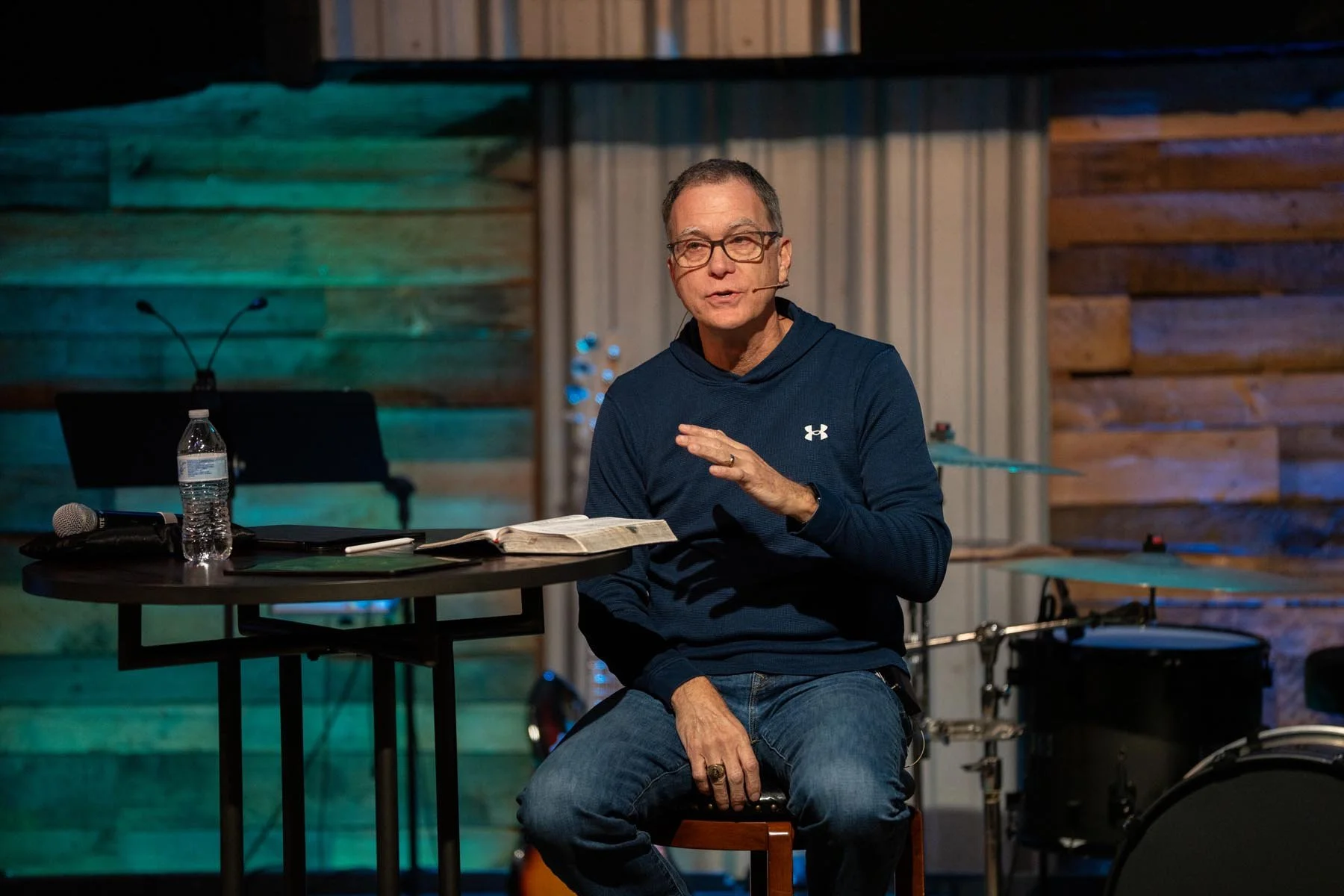
Who Is In Charge of Your Life? | Matthew 12:1-21
Series: King & Countries (week 5)
Scripture: Matthew 12:1-21 (Main)
Title: “Who is in charge of your life?” (Darien Gabriel)
Bottom line: When we surrender our lives to Jesus, the Lord of Sabbath, mercy and justice rules in our hearts and helps us overcome fear, doubts, and burdens.
Discussion questions for group and personal study.
1. Why are legalistic hearts so resistant to Jesus?
2. How does legalism and a desire to earn your standing before God manifest itself in your own life?
3. Explain what it means to say that Jesus is greater than the temple.
4. Matthew presents Christ as merciful in this passage. How is the mercy of Jesus different from a "live and let live" mind-set?
5. In an effort to make the cost of following Christ clear, what is the danger of downplaying His mercy?
Final Questions (optional or in place of above)
What is God saying to you right now?
What are you going to do about it?
Find our sermons, podcasts, discussion questions and notes at https://www.gracetoday.net/podcast
Intro
We've been looking at the portraits of Jesus given to us by Matthew.
We've seen Jesus as:
Promised Messiah
Authoritative Judge
Sovereign Son
Gracious Master
Today we'll add:
King of Rest
Merciful Servant-King
Bottom line: When we surrender our lives to Jesus, the Lord of Sabbath, mercy and justice rules in our hearts and helps us overcome fear, doubts, and burdens.
Q. What do I want you to know?
A. Jesus is Lord of the Sabbath (rest) in life.
Q. Why?
A. Because this is the only place we will find true rest and peace. Our faith is a conscious choice to rest on Jesus' work on the cross.
Q. What do I want you to do?
A. Rest in Jesus Christ alone.
Q. Why?
A. So that you'll be able to overcome your fears, doubts and burdens.
SECTION OUTLINE TEN (MATTHEW 12) Outline Bible, Willmington
SECTION OUTLINE ELEVEN (MATTHEW 12)
Jesus heals the sick, confronts the Pharisees, and fulfills ancient prophecies.
1. JESUS AND THE PHARISEES (12:1-14, 22-45) On three separate occasions, Jesus is confronted by these wicked men.
A. The Sabbath conflict (12:1-14): The Pharisees take issue with Jesus when he performs his miracles.
1. In regard to eating on the Sabbath (12:1-8): Jesus is criticized by the Pharisees for allowing his disciples to pluck some heads of grain from a field on the Sabbath. The Savior reports by pointing out two facts:
a. The purpose of the Sabbath (12:1-7): The Sabbath was made for man, and not the reverse!
(1) As seen in the life of David (12:3-4): David and his men ate the bread reserved for the priests.
(2) As seen in the law of Moses (12:5-6): The priests are allowed to serve in the Temple on the Sabbath.
(3) As seen in the Book of Hosea (12:7): God wants them to be merciful; he doesn't care that much about their sacrifices.
b. The person of the Sabbath (12:8): The Son of Man is Lord even of the Sabbath!
2. In regard to healing on the Sabbath (12:9-14): Jesus notices a man with a deformed hand.
a. The accusation (12:9-10): The Pharisees ask Jesus whether it is legal to work by healing on the Sabbath day.
b. The answer (12:11-12): Jesus replies by asking them if they would rescue a sheep on the Sabbath. He says, "Of course you would! And how much more valuable is a person than a sheep!"
c. The action by the Savior (12:13-14): He heals the man's hand.
B. The source conflict (12:22-37): The Pharisees claim that Satan is the source of Jesus' miracles. On this occasion Jesus has just healed a demon-possessed, blind, mute man.
1. The criticism by the Pharisees (12:22-29)
a. Their accusation (12:22-24): "He gets his power from Satan, the prince of demons."
b. His argument (12:25-29)
(1) "A city or home divided against itself is doomed"
(12:25).
(2) "If Satan is casting out Satan, he is fighting against himself" (12:26-29).
2. The condemnation of the Pharisees (12:30-37)
a. Jesus says their sin is terrible (12:30-34).
(1) They are corrupt fruit trees (12:30-33): A tree is known by its fruit.
(2) They are poisonous snakes (12:34): Whatever is in their hearts determines what they say.
b. Jesus says their sin is terminal (12:35-37): The words they say now will determine their fate on judgment day.
C. The sign conflict (12:38-45): The Pharisees insist that Jesus do something spectacular just for them.
1. Jesus refers to Jonah and Nineveh (12:38-41).
a. The illustration from the life of the prophet of God
(12:38-40): Jonah's experience in the belly of the fish depicts Jesus' death and resurrection; this is the only sign he gives them!
b. The indictment from the lips of the people of Nineveh
(12:41): The Ninevites will someday condemn Jesus' generation, for Nineveh repented at the preaching of Jonah, but Jesus is greater than Jonah.
2. Jesus refers to Solomon and the Queen of Sheba (12:42): She will condemn Jesus' generation because she had great respect for Solomon, and Jesus is greater than Solomon.
3. Jesus refers to eight evil spirits (12:43-45): Here Jesus likens his generation to a demon-possessed man.
a. The first state of the man (12:43): The original demon living within him departs.
b. The final state of the man (12:44-45): Unable to find
another person to indwell, the spirit returns to the man, this time bringing seven other spirits more wicked than himself.
I. JESUS AND THE PROPHECIES (12:15-21): Jesus fulfills the prophecies of Isaiah, who predicted the earthly ministry of the Messiah (Isa. 42:1-4).
A. Jesus' heavenly relationships (12:18a-18b)
1. Concerning the Father (12:18a): The Father would love him.
2. Concerning the Spirit (12:18b): The Spirit would fill him.
B. Jesus' earthly actions (12:15-17, 18c-21)
1. Concerning the nations (12:18c, 21): He would proclaim justice to the nations.
2. Concerning himself (12:19): He would not be quarrelsome or rebellious.
3. Concerning the weak and hopeless (12:20): He would treat them with gentleness and understanding.
4. Concerning the sick (12:15-17): He would heal the sick.
III. JESUS AND HIS FAMILY (12:46-50)
A. His earthly family (12:46-47): Jesus is told his mother and brothers are waiting to meet with him.
B. His eternal family (12:48-50): He says all who obey his heavenly
Father are part of his family!
References/Bibliography:
“Preaching the Word” Commentary, Douglas Sean O’Donnell, Edited by Kent Hughes
“Matthew” by RC Sproul
“CSB Christ Chronological,” Holman
“Jesus Manifesto” sermon series, by Darien Gabriel: https://youtu.be/x65i2tqFrXk
“The Bible Knowledge Commentary” by Walvoord, Zuck (BKC)
“The Bible Exposition Commentary” by Warren Wiersbe (BEC)
“Exalting Jesus in Matthew” by David Platt (CCE)
Outline Bible, D Willmington
NIV Study Bible (NIVSB)
ESV Study Bible
ESV Gospel Transformation Bible (GTB)
Series: King & Countries (week 5)
Scripture: Matthew 12:1-21 (Main)
Title: “Who is in charge of your life?” (Darien Gabriel)
Bottom line: When we surrender our lives to Jesus, the Lord of Sabbath, mercy and justice rules in our hearts and helps us overcome fear, doubts, and burdens.
Discussion questions for group and personal study.
1. Why are legalistic hearts so resistant to Jesus?
2. How does legalism and a desire to earn your standing before God manifest itself in your own life?
3. Explain what it means to say that Jesus is greater than the temple.
4. Matthew presents Christ as merciful in this passage. How is the mercy of Jesus different from a "live and let live" mind-set?
5. In an effort to make the cost of following Christ clear, what is the danger of downplaying His mercy?
Final Questions (optional or in place of above)
What is God saying to you right now?
What are you going to do about it?
Find our sermons, podcasts, discussion questions and notes at https://www.gracetoday.net/podcast
Intro
We've been looking at the portraits of Jesus given to us by Matthew.
We've seen Jesus as:
Promised Messiah
Authoritative Judge
Sovereign Son
Gracious Master
Today we'll add:
King of Rest
Merciful Servant-King
Bottom line: When we surrender our lives to Jesus, the Lord of Sabbath, mercy and justice rules in our hearts and helps us overcome fear, doubts, and burdens.
Q. What do I want you to know?
A. Jesus is Lord of the Sabbath (rest) in life.
Q. Why?
A. Because this is the only place we will find true rest and peace. Our faith is a conscious choice to rest on Jesus' work on the cross.
Q. What do I want you to do?
A. Rest in Jesus Christ alone.
Q. Why?
A. So that you'll be able to overcome your fears, doubts and burdens.
SECTION OUTLINE TEN (MATTHEW 12) Outline Bible, Willmington
SECTION OUTLINE ELEVEN (MATTHEW 12)
Jesus heals the sick, confronts the Pharisees, and fulfills ancient prophecies.
1. JESUS AND THE PHARISEES (12:1-14, 22-45) On three separate occasions, Jesus is confronted by these wicked men.
A. The Sabbath conflict (12:1-14): The Pharisees take issue with Jesus when he performs his miracles.
1. In regard to eating on the Sabbath (12:1-8): Jesus is criticized by the Pharisees for allowing his disciples to pluck some heads of grain from a field on the Sabbath. The Savior reports by pointing out two facts:
a. The purpose of the Sabbath (12:1-7): The Sabbath was made for man, and not the reverse!
(1) As seen in the life of David (12:3-4): David and his men ate the bread reserved for the priests.
(2) As seen in the law of Moses (12:5-6): The priests are allowed to serve in the Temple on the Sabbath.
(3) As seen in the Book of Hosea (12:7): God wants them to be merciful; he doesn't care that much about their sacrifices.
b. The person of the Sabbath (12:8): The Son of Man is Lord even of the Sabbath!
2. In regard to healing on the Sabbath (12:9-14): Jesus notices a man with a deformed hand.
a. The accusation (12:9-10): The Pharisees ask Jesus whether it is legal to work by healing on the Sabbath day.
b. The answer (12:11-12): Jesus replies by asking them if they would rescue a sheep on the Sabbath. He says, "Of course you would! And how much more valuable is a person than a sheep!"
c. The action by the Savior (12:13-14): He heals the man's hand.
B. The source conflict (12:22-37): The Pharisees claim that Satan is the source of Jesus' miracles. On this occasion Jesus has just healed a demon-possessed, blind, mute man.
1. The criticism by the Pharisees (12:22-29)
a. Their accusation (12:22-24): "He gets his power from Satan, the prince of demons."
b. His argument (12:25-29)
(1) "A city or home divided against itself is doomed"
(12:25).
(2) "If Satan is casting out Satan, he is fighting against himself" (12:26-29).
2. The condemnation of the Pharisees (12:30-37)
a. Jesus says their sin is terrible (12:30-34).
(1) They are corrupt fruit trees (12:30-33): A tree is known by its fruit.
(2) They are poisonous snakes (12:34): Whatever is in their hearts determines what they say.
b. Jesus says their sin is terminal (12:35-37): The words they say now will determine their fate on judgment day.
C. The sign conflict (12:38-45): The Pharisees insist that Jesus do something spectacular just for them.
1. Jesus refers to Jonah and Nineveh (12:38-41).
a. The illustration from the life of the prophet of God
(12:38-40): Jonah's experience in the belly of the fish depicts Jesus' death and resurrection; this is the only sign he gives them!
b. The indictment from the lips of the people of Nineveh
(12:41): The Ninevites will someday condemn Jesus' generation, for Nineveh repented at the preaching of Jonah, but Jesus is greater than Jonah.
2. Jesus refers to Solomon and the Queen of Sheba (12:42): She will condemn Jesus' generation because she had great respect for Solomon, and Jesus is greater than Solomon.
3. Jesus refers to eight evil spirits (12:43-45): Here Jesus likens his generation to a demon-possessed man.
a. The first state of the man (12:43): The original demon living within him departs.
b. The final state of the man (12:44-45): Unable to find
another person to indwell, the spirit returns to the man, this time bringing seven other spirits more wicked than himself.
I. JESUS AND THE PROPHECIES (12:15-21): Jesus fulfills the prophecies of Isaiah, who predicted the earthly ministry of the Messiah (Isa. 42:1-4).
A. Jesus' heavenly relationships (12:18a-18b)
1. Concerning the Father (12:18a): The Father would love him.
2. Concerning the Spirit (12:18b): The Spirit would fill him.
B. Jesus' earthly actions (12:15-17, 18c-21)
1. Concerning the nations (12:18c, 21): He would proclaim justice to the nations.
2. Concerning himself (12:19): He would not be quarrelsome or rebellious.
3. Concerning the weak and hopeless (12:20): He would treat them with gentleness and understanding.
4. Concerning the sick (12:15-17): He would heal the sick.
III. JESUS AND HIS FAMILY (12:46-50)
A. His earthly family (12:46-47): Jesus is told his mother and brothers are waiting to meet with him.
B. His eternal family (12:48-50): He says all who obey his heavenly
Father are part of his family!
References/Bibliography:
“Preaching the Word” Commentary, Douglas Sean O’Donnell, Edited by Kent Hughes
“Matthew” by RC Sproul
“CSB Christ Chronological,” Holman
“Jesus Manifesto” sermon series, by Darien Gabriel: https://youtu.be/x65i2tqFrXk
“The Bible Knowledge Commentary” by Walvoord, Zuck (BKC)
“The Bible Exposition Commentary” by Warren Wiersbe (BEC)
“Exalting Jesus in Matthew” by David Platt (CCE)
Outline Bible, D Willmington
NIV Study Bible (NIVSB)
ESV Study Bible
ESV Gospel Transformation Bible (GTB)

How to Overcome Fears, Doubts & Burdens | Matthew 11
Series: King & Countries (week 5)
Scripture: Matthew 12:1-21 (Main)
Title: “Who is in charge of your life?” (Darien Gabriel)
Bottom line: When we surrender our lives to Jesus, the Lord of Sabbath, mercy and justice rules in our hearts and helps us overcome fear, doubts, and Burns.
Discussion questions for group and personal study.
1. Why are legalistic hearts so resistant to Jesus?
2. How does legalism and a desire to earn your standing before God manifest itself in your own life?
3. Explain what it means to say that Jesus is greater than the temple.
4. Matthew presents Christ as merciful in this passage. How is the mercy of Jesus different from a "live and let live" mind-set?
5. In an effort to make the cost of following Christ clear, what is the danger of downplaying His mercy?
6. How might the portrait of Jesus' power in this passage impact our view of spiritual warfare?
7. How would you counsel someone who feared that they had committed the unpardonable sin because of a sinful thought or word toward God?
8. Matthew compares Jesus to Jonah and Solomon. How do these comparisons speak to the seriousness of rejecting Christ?
9. It's common to hear unbelievers refer to everyone as "God's children." How does Matthew 12:50 help us rightly define God's family?
10. Some sermons only emphasize moral lessons for believers. How does an emphasis on the person of Christ as we see in Matthew 12 help correct such an approach? What is the danger of not presenting Jesus as central in our teaching and preaching?
Final Questions (optional or in place of above)
What is God saying to you right now?
What are you going to do about it?
Find our sermons, podcasts, discussion questions and notes at https://www.gracetoday.net/podcast
Intro
We've been looking at the portraits of Jesus given to us by Matthew.
We've seen Jesus as:
Promised Messiah
Authoritative Judge
Sovereign Son
Gracious Master
Today we'll add:
King of Rest
Merciful Servant-King
Bottom line: When we surrender our lives to Jesus, the Lord of Sabbath, mercy and justice rules in our hearts and helps us overcome fear, doubts, and Burns.
Q. What do I want you to know?
A. Jesus is Lord of the Sabbath (rest) in life.
Q. Why?
A. Because this is the only place we will find true rest and peace. Our faith is a conscious choice to rest on Jesus' work on the cross.
Q. What do I want you to do?
A. Rest in Jesus Christ alone.
Q. Why?
A. So that you'll be able to overcome your fears, doubts and burdens.
SECTION OUTLINE TEN (MATTHEW 12) Outline Bible, Willmington
SECTION OUTLINE ELEVEN (MATTHEW 12)
Jesus heals the sick, confronts the Pharisees, and fulfills ancient prophecies.
1. JESUS AND THE PHARISEES (12:1-14, 22-45) On three separate occasions, Jesus is confronted by these wicked men.
A. The Sabbath conflict (12:1-14): The Pharisees take issue with Jesus when he performs his miracles.
1. In regard to eating on the Sabbath (12:1-8): Jesus is criticized by the Pharisees for allowing his disciples to pluck some heads of grain from a field on the Sabbath. The Savior reports by pointing out two facts:
a. The purpose of the Sabbath (12:1-7): The Sabbath was made for man, and not the reverse!
(1) As seen in the life of David (12:3-4): David and his men ate the bread reserved for the priests.
(2) As seen in the law of Moses (12:5-6): The priests are allowed to serve in the Temple on the Sabbath.
(3) As seen in the Book of Hosea (12:7): God wants them to be merciful; he doesn't care that much about their sacrifices.
b. The person of the Sabbath (12:8): The Son of Man is Lord even of the Sabbath!
2. In regard to healing on the Sabbath (12:9-14): Jesus notices a man with a deformed hand.
a. The accusation (12:9-10): The Pharisees ask Jesus whether it is legal to work by healing on the Sabbath day.
b. The answer (12:11-12): Jesus replies by asking them if they would rescue a sheep on the Sabbath. He says, "Of course you would! And how much more valuable is a person than a sheep!"
c. The action by the Savior (12:13-14): He heals the man's hand.
B. The source conflict (12:22-37): The Pharisees claim that Satan is the source of Jesus' miracles. On this occasion Jesus has just healed a demon-possessed, blind, mute man.
1. The criticism by the Pharisees (12:22-29)
a. Their accusation (12:22-24): "He gets his power from Satan, the prince of demons."
b. His argument (12:25-29)
(1) "A city or home divided against itself is doomed"
(12:25).
(2) "If Satan is casting out Satan, he is fighting against himself" (12:26-29).
2. The condemnation of the Pharisees (12:30-37)
a. Jesus says their sin is terrible (12:30-34).
(1) They are corrupt fruit trees (12:30-33): A tree is known by its fruit.
(2) They are poisonous snakes (12:34): Whatever is in their hearts determines what they say.
b. Jesus says their sin is terminal (12:35-37): The words they say now will determine their fate on judgment day.
C. The sign conflict (12:38-45): The Pharisees insist that Jesus do something spectacular just for them.
1. Jesus refers to Jonah and Nineveh (12:38-41).
a. The illustration from the life of the prophet of God
(12:38-40): Jonah's experience in the belly of the fish depicts Jesus' death and resurrection; this is the only sign he gives them!
b. The indictment from the lips of the people of Nineveh
(12:41): The Ninevites will someday condemn Jesus' generation, for Nineveh repented at the preaching of Jonah, but Jesus is greater than Jonah.
2. Jesus refers to Solomon and the Queen of Sheba (12:42): She will condemn Jesus' generation because she had great respect for Solomon, and Jesus is greater than Solomon.
3. Jesus refers to eight evil spirits (12:43-45): Here Jesus likens his generation to a demon-possessed man.
a. The first state of the man (12:43): The original demon living within him departs.
b. The final state of the man (12:44-45): Unable to find
another person to indwell, the spirit returns to the man, this time bringing seven other spirits more wicked than himself.
I. JESUS AND THE PROPHECIES (12:15-21): Jesus fulfills the prophecies of Isaiah, who predicted the earthly ministry of the Messiah (Isa. 42:1-4).
A. Jesus' heavenly relationships (12:18a-18b)
1. Concerning the Father (12:18a): The Father would love him.
2. Concerning the Spirit (12:18b): The Spirit would fill him.
B. Jesus' earthly actions (12:15-17, 18c-21)
1. Concerning the nations (12:18c, 21): He would proclaim justice to the nations.
2. Concerning himself (12:19): He would not be quarrelsome or rebellious.
3. Concerning the weak and hopeless (12:20): He would treat them with gentleness and understanding.
4. Concerning the sick (12:15-17): He would heal the sick.
III. JESUS AND HIS FAMILY (12:46-50)
A. His earthly family (12:46-47): Jesus is told his mother and brothers are waiting to meet with him.
B. His eternal family (12:48-50): He says all who obey his heavenly
Father are part of his family!
References/Bibliography:
“Preaching the Word” Commentary, Douglas Sean O’Donnell, Edited by Kent Hughes
“Matthew” by RC Sproul
“CSB Christ Chronological,” Holman
“Jesus Manifesto” sermon series, by Darien Gabriel: https://youtu.be/x65i2tqFrXk
“The Bible Knowledge Commentary” by Walvoord, Zuck (BKC)
“The Bible Exposition Commentary” by Warren Wiersbe (BEC)
“Exalting Jesus in Matthew” by David Platt (CCE)
Outline Bible, D Willmington
NIV Study Bible (NIVSB)
ESV Study Bible
ESV Gospel Transformation Bible (GTB)
Series: King & Countries (week 4)
Scripture: Matthew 11 (Main)
Title: “How to Overcome Fears, Doubts & Burdens” (Darien Gabriel)
Bottom line: Jesus tells us to overcome fears, doubts and burdens by trusting Jesus as promised Messiah, authoritative judge, sovereign son, and gracious master.
Discussion questions for group and personal study.
1. How has doubt been a struggle in your own relationship with God? What truths from God's Word were the most difficult to believe in the midst of your doubts?
2. How can difficulties, disappointments, and suffering feed into our doubts? How did this play out in the life of John the Baptist?
3. Why is it futile to fight doubt apart from the foundation of God's Word?
4. How is joyful submission to Jesus an antidote to doubt? Explain.
5. Many Christians wish they had lived in the time when Scriptures were recorded. How does this passage correct such a notion?
6. How might the expectation of opposition and criticism from the world help you persevere in the faith? What is the danger to your faith of not expecting trials?
7. How does Jesus' role as your authoritative Judge affect how you relate to Him? How might it affect your approach to sharing the gospel with others?
8. Jesus is presented as the sovereign Son in Matthew 11. How does this portrait of Jesus correct our culture's understanding of Him? How about your own?
9. In your own words, explain why Matthew 11:28-30 speaks against the idea of works-righteousness. How does it speak to the notion that the Christian life is burdensome?
10. How would you respond to the following questions: "What is my role and responsibility in responding to the gospel? What is God's role in this process?"
Final Questions (optional or in place of above)
What is God saying to you right now?
What are you going to do about it?
Find our sermons, podcasts, discussion questions and notes at https://www.gracetoday.net/podcast
Intro
My phone takes great pictures. It has this one mode called Portrait Mode. This mode digitally adjusts the photo settings so that the main subject in the picture (usually a person) is brought into sharp focus while the background is slightly blurred creating a sense of depth to the photo. As a result, the main subject stands out as the most important part of the photo. Hence, it is called a portrait.
In today’s message, we’re going to look at four portraits of Jesus Christ. These portraits are there to help us overcome our fears, doubts and burdens in life. They are there to help us remember that he’s trustworthy no matter how life feels or is going.
Bottom line: Jesus tells us to overcome fears, doubts and burdens by trusting Jesus as promised Messiah, authoritative judge, sovereign son, and gracious master.
Q. What do I want you to know?
A. 4 portraits of Christ given in ch. 11
Q. Why?
A. Because they lead us to overcome our fears, doubts and burdens by trusting fully in Jesus Christ.
Q. What do I want you to do?
A. Exchange your fears, doubts, and burdens for abundant life in Christ Jesus.
Q. Why?
A. Because I don’t want you to flounder in fear, doubt and burdened over your sin.
Q. How?
A. Four parts:
Repent of your sins.
Rest in Christ alone.
Renounce yourself.
Rejoice forever in Christ.
FOUR PORTRAITS OF JESUS (David Platt)
I. The promised messiah.
A. John doubts Jesus
B. Anatomy of doubt (Platt) Doubt often arises
During difficult situations
Accompanying unmet expectations
Limited perception
C. Answer to doubt
Biblical revelation
Joyful submission
D. Jesus defends John
John was the greatest prophet.
We have a greater privilege.
E. Like Jesus and John
We will be opposed by this world.
We will be criticized by this world.
Both will come from both
The outside and
The inside of the church
II. The authoritative judge.
A. Jesus will condemn the unrepentant.
B. Jesus will damn the indifferent.
III. The sovereign son.
A. Jesus alone KNOWS the Father.
B. Jesus alone REVEALS the Father. We respond
Not with un-repentance and indifference, but
Through human faith.
IV. The gracious master.
A. An explanation of Christianity
We give all we have to Jesus.
“To begin with, (come to Jesus) means we give all we have to Jesus. The imagery in this passage is of a ‘yoke’ (v. 29), a heavy wooden bar that fits over the neck of an ox so that it can pull a cart or a plow. The yoke could be put on one animal or it could be shared between two animals. In a shared yoke, one of the oxen would often be much stronger (and experienced) than the other. The stronger ox was more schooled in the commands of the master, and so it would guide the other according to the master’s commands. By coming into the yoke with the stronger ox, the weaker ox could learn to obey the master’s voice.”
The people were burdened by the law of the OT and the man made laws pilled on top of them by the priests and rabbi’s. But they didn’t provide relief through the forgiveness of sins. So the people were burdened by their sins. They couldn’t find relief. Jesus calls us to give him the full weight of our sins so that he can fully pardon us and lift off that burden that wearies us.
We give him our sins.
We give him our inability to obey the commands.
Jesus gives all He has to us.
He gives us his full pardon.
He gives us rest and peace with God.
He gives us the ability to obey his commands completely and immediately.
B. The invitation (Command, Call) of Christ: When faith is hard and the burden is heavy
Repent of sin
Renounce yourself
Rest in Christ
Rejoice forever in him
SECTION OUTLINE TEN (MATTHEW 11) Outline Bible, Willmington
Jesus reassures the disciples of John the Baptist, rebukes several cities, rejoices in his Father's wisdom, and reveals that he is the only way to the Father.
I. THE REASSURING BY THE SAVIOR (11:1-19)
A. John's request to Jesus (11:1-3): In a moment of doubt, the imprisoned Baptist sends a group of men to Jesus.
1. Who they are (11:1-2): They are John's disciples.
2. What they ask (11:3): John wants to know if Christ is really the Messiah.
B. John's reassurance by Jesus (11:4-19)
1. The proof for John (11:4-6): They are to return and tell John concerning all the miracles they see Christ do.
2. The praise of John (11:7-11): Jesus says John is one of history's greatest men!
3. The prophet like John (11:12-15): Jesus compares John's ministry with that of Elijah.
4. The prejudice against John (11:16-19): Jesus condemns his generation, who accuses John of being demon-possessed!
II. THE REBUKING BY THE SAVIOR (11:20-24): Jesus denounces three Galilean cities.
A. Korazin and Bethsaida (11:20-22)
1. Their privilege (11:20-21a): He did many miracles among them.
2. Their pride (11:21b): They rejected him.
3. Their punishment (11:22): Wicked Tyre and Sidon will be better off on judgment day than they!
B. Capernaum (11:23-24)
1. Its privilege (11:23b): Identical to that of the above cities.
2. Its pride (11:23a): Identical to that of the above cities.
3. Its punishment (11:24): Wicked Sodom will be better off on the judgment day than Capernaum!
III. THE REJOICING BY THE SAVIOR (11:25-26): Jesus thanks his heavenly Father for revealing spiritual truth to the childlike and for hiding it from those who think themselves wise.
IV. THE REVEALING BY THE SAVIOR (11:27-30)
A. The illumination (11:27): The believer can only know the Father through the Son.
B. The invitation (11:28-30): Jesus invites the weary and burdened to find their rest in him.
References/Bibliography:
“Preaching the Word” Commentary, Douglas Sean O’Donnell, Edited by Kent Hughes
“Matthew” by RC Sproul
“CSB Christ Chronological,” Holman
“Jesus Manifesto” sermon series, by Darien Gabriel: https://youtu.be/x65i2tqFrXk
“The Bible Knowledge Commentary” by Walvoord, Zuck (BKC)
“The Bible Exposition Commentary” by Warren Wiersbe (BEC)
“Exalting Jesus in Matthew” by David Platt (CCE)
Outline Bible, D Willmington
NIV Study Bible (NIVSB)
ESV Study Bible
ESV Gospel Transformation Bible (GTB)