
Sermons
Watch Now
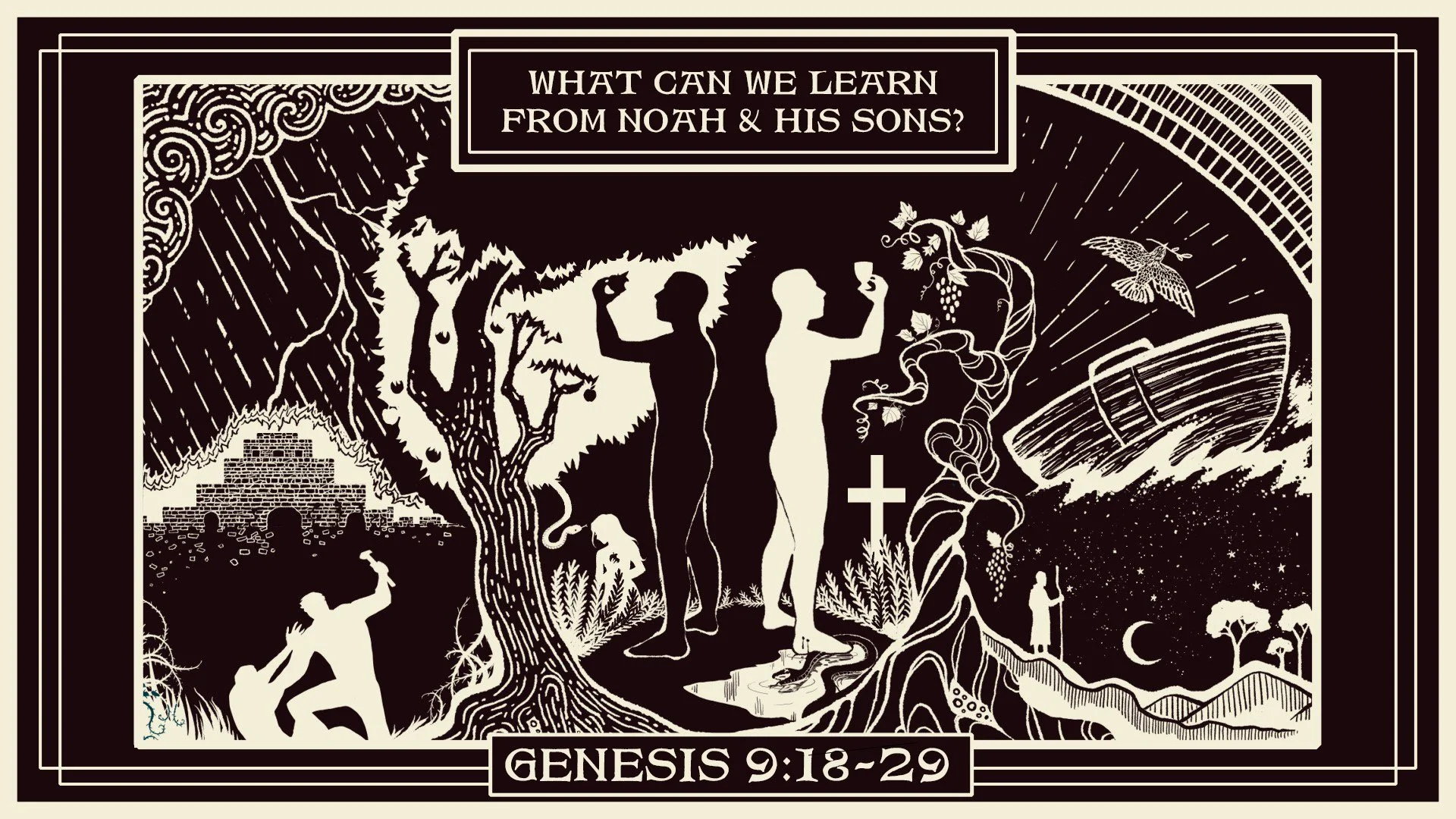
What Can We Learn from Noah and His Sons? | Genesis 9:18-29 | Darien Gabriel
Series: Chaos to Covenant
Title: "What can we learn from Noah and his sons?"
Scripture: Genesis 9:18-29
Hebrews 11:7; Gen 6:8-9; 7:5; 9:8-9; Micah 6:8
Bottom line: We learn from Noah and his sons that as fellow image bearers we love and value each other as an act of faith in God's good plan for us.
INTRODUCTION
CONTEXT
SERMON OUTLINE
CONCLUSION
NOTES
OUTLINES
QUESTIONS TO CONSIDER
DISCUSSION QUESTIONS
MAIN REFERENCES USED
My opening prayer: Lord God, help us grow to be and do like Jesus, while abiding in him and leading others to do the same.
INTRODUCTION
"A rubbernecker is a term used to describe someone who slows down or stops to stare at something, often out of curiosity, especially at accidents or incidents on the road. The term comes from the idea of “rubbernecking,” where someone cranes their neck, almost stretching it like rubber, to get a better view of something happening.
Examples:
• A driver slowing down to look at a car crash on the side of the highway.
• A pedestrian stopping to watch emergency responders at a scene.
This behavior is often criticized, especially when it causes traffic delays or gets in the way of emergency workers. It’s a mix of curiosity and distraction that can sometimes lead to further accidents." -ChatGPT
CONTEXT
In the wake of God's flood of judgment and rescue effectively restarting creation, we see the righteous, blameless, faith-filled and faithful Noah sin along with his son, Ham. So while we see God re-create the world, it doesn't start without sin this time. Temptation and sin are still present.
SERMON
What do I want them to know?
That even in success, we're all vulnerable to temptation and misusing God's blessings.
That we're all made in his image.
That sin has consequences...sometimes for generations.
Honoring > Gossiping, which dishonors God and people.
Why do I want them to know it?
We're a blessed people meaning we're vulnerable right now unless we humble ourselves and become vigilant.
We're blessed no matter our circumstances because we're image bearers.
A lot hangs in the balance because the consequences of our sins has a long reach.
Not honoring/dishonoring is a serious sin.
What do I want them to do?
Humble themselves.
Remain vigilant.
Walk as an image-bearer
Honor others instead of gossiping about them.
Why do I want them to do it?
Because the consequences are great.
How do they do this?
Prayer for themselves and others.
Care for themselves and others.
Share with others what God is teaching you today.
CONCLUSION
How do they do this?
Prayer for themselves and others.
Care for themselves and others.
Share with others what God is teaching you today.
Main takeaways:
We're all from one race made in the image of God. Therefore, love and value each and every person.
Even mature believers can fall into sin; humble yourself and stay alert for temptations are ever-present.
When we see someone sin, we have a choice. We can
Honor them by respectfully and discreetly leading them towards repentance.
Dishonor them by gossiping about reveling in their shameful actions.
Sin has consequences that can ripple for generations.
Even flawed people can be used by God. Don't let your sinful past keep you down. Repent, believe and move forward. Also, don't let the sin of others against you keep you down. Forgive and more forward whether they reconcile or not.
Bottom line: We learn from Noah and his sons that as fellow image bearers we love and value each other as an act of faith in God's good plan for us.
Peter puts it all in perspective in his first sermon:
““Therefore let all Israel be assured of this: God has made this Jesus, whom you crucified, both Lord and Messiah.” When the people heard this, they were cut to the heart and said to Peter and the other apostles, “Brothers, what shall we do?” Peter replied, “Repent and be baptized, every one of you, in the name of Jesus Christ for the forgiveness of your sins. And you will receive the gift of the Holy Spirit. The promise is for you and your children and for all who are far off—for all whom the Lord our God will call.”” Acts 2:36-39 NIV
Invitation
How do we respond? Answer 2 questions:
Take out a card or piece of paper right now. Write down the answer to these questions:
What is God saying to me right now?
What am I going to do about it? Write this down on a sheet of paper.
What I hear you saying, Lord, is ___________________.
[my name] is going to believe/do __________________________________________________ as a result.
Finally, share this with your Home or Mission group this week when you gather as a testimony about what God is doing in your life. You don’t have to get too specific to give him praise.
Lord's Supper, 1 Cor 11:23-26 is good passage.
Also, say something like, "Christ has died, Christ is risen, Christ will come again." (past, present, and future)
Pray
NOTES
Good summary: Lessons from Noah & his Sons: A Tale of Blessing, Sin, and Redemption
Text: Genesis 9:18-29
Main Points with Answers
1. What does the unity of humanity’s origins teach us about God’s plan for all nations?
• All nations come from one family, showing that God’s plan is for unity, shared purpose, and relationship with Him. This underscores our responsibility to love and value all people as part of God’s creation.
2. How does Noah’s sin remind us of our vulnerability to temptation?
• Even the most faithful people are not immune to sin. Noah’s failure after his great obedience shows the need for vigilance and humility in guarding against temptation.
3. How do Ham’s actions and Shem and Japheth’s response challenge us to honor others?
• Ham’s disrespect highlights the destructiveness of dishonor and gossip, while Shem and Japheth’s actions demonstrate the importance of covering others’ failures with grace and respect.
4. What do Noah’s blessings and curses reveal about the consequences of our actions?
• Ham’s dishonor led to a generational curse, while Shem and Japheth’s honor brought blessings. Our choices have lasting effects on us and those who come after us.
5. How does Noah’s life and death point us to God’s grace and covenant faithfulness?
• Noah’s story shows that even flawed people can be used by God. His faithfulness to Noah’s family reminds us of His unchanging promises and grace despite human sin.
-ChatGPT
3 Question version:
Lessons from Noah & his Sons: A Tale of Blessing, Sin, and Redemption
Text: Genesis 9:18-29
Main Points in Question Form (ChatGPT inspired)
1. What does Noah’s sin teach us about the ongoing struggle with temptation? (Genesis 9:20-21)
• Even the faithful are vulnerable to sin,
reminding us to remain vigilant and humble.
2. How do Ham’s actions and Shem and Japheth’s response challenge us to honor others? (Genesis 9:22-23)
• Ham’s dishonor shows the harm of gossip,
while Shem and Japheth’s actions highlight the power of love and respect.
3. What do Noah’s blessings and curses reveal about the impact of our choices? (Genesis 9:24-27)
• Our actions carry lasting consequences for us and future generations,
but God’s faithfulness remains constant.
OUTLINES
N/A
QUESTIONS TO CONSIDER
Who is God?
Creator/re-creator
Holy judge
Merciful rescuer
Father of humanity and creation
Provider of good things; blessor
Curser of those who dishonor him and his people
Sustainer of life
What has he done/is he doing/is he going to do?
Creates/restores
Judges
Rescues
Parents
Provides
Blesses
Curses
Sustains
Who am I? (In light of 1 & 2)
His creation created in his image; image-bearer
His child
His rescued, forgiven rebel child
Receiver of his blessings and/or curses
The one whom he sustains
What do I get to do? (In light of who I am)
Bear his image
Follow his lead
Join him in rescuing others far from God but close to me
Bless and not curse
For the rest of my life
How do I do it?
Pray for those far from God but close to me.
Care for those far from God but close to me.
Share with those far from God but close to me.
DISCUSSION QUESTIONS
Discovery Bible Study process: https://www.dbsguide.org/
Read the passage together.
Retell the story in your own words.
Discovery the story
What does this story tell me about God?
What does this story tell me about people?
If this is really true, what should I do?
What is God saying to you right now? (Write this down)
What are you going to do about it? (Write this down)
Who am I going to tell about this?
Find our sermons, podcasts, discussion questions and notes at https://www.gracetoday.net/podcast
Alternate Discussion Questions (by Jeff Vanderstelt): Based on this passage:
Who is God?
What has he done/is he doing/is he going to do?
Who am I? (In light of 1 & 2)
What do I do? (In light of who I am)
How do I do it?
Final Questions (Write this down)
What is God saying to you right now?
What are you going to do about it?
MAIN REFERENCES USED
“Genesis,” by R. Kent Hughes, Preaching the Word Commentary, Edited by Kent Hughes
Exalting Jesus in Genesis, by Bethancourt
The Genesis Record, by Henry Morris
The Genesis Factor, by David Helms & Jon Dennis
“Look at the Book” by John Piper (LATB)
“The Bible Knowledge Commentary” by Walvoord, Zuck (BKC)
“The Bible Exposition Commentary” by Warren Wiersbe (BEC)
Outline Bible, D Willmington (OB)
Willmington’s Bible Handbook, D Willmington (WBH)
NIV Study Bible (NIVSB) https://www.biblica.com/resources/scholar-notes/niv-study-bible/
Chronological Life Application Study Bible (NLT)
ESV Study Bible (ESVSB) https://www.esv.org
The Bible Project https://bibleproject.com
“The Bible in One Year 2023 with Nicky Gumbel” bible reading plan on YouVersion app (BIOY)
Series: Chaos to Covenant
Title: "What can we learn from Noah and his sons?"
Scripture: Genesis 9:18-29
Hebrews 11:7; Gen 6:8-9; 7:5; 9:8-9; Micah 6:8
Bottom line: We learn from Noah and his sons that as fellow image bearers we love and value each other as an act of faith in God's good plan for us.
INTRODUCTION
CONTEXT
SERMON OUTLINE
CONCLUSION
NOTES
OUTLINES
QUESTIONS TO CONSIDER
DISCUSSION QUESTIONS
MAIN REFERENCES USED
My opening prayer: Lord God, help us grow to be and do like Jesus, while abiding in him and leading others to do the same.
INTRODUCTION
"A rubbernecker is a term used to describe someone who slows down or stops to stare at something, often out of curiosity, especially at accidents or incidents on the road. The term comes from the idea of “rubbernecking,” where someone cranes their neck, almost stretching it like rubber, to get a better view of something happening.
Examples:
• A driver slowing down to look at a car crash on the side of the highway.
• A pedestrian stopping to watch emergency responders at a scene.
This behavior is often criticized, especially when it causes traffic delays or gets in the way of emergency workers. It’s a mix of curiosity and distraction that can sometimes lead to further accidents." -ChatGPT
CONTEXT
In the wake of God's flood of judgment and rescue effectively restarting creation, we see the righteous, blameless, faith-filled and faithful Noah sin along with his son, Ham. So while we see God re-create the world, it doesn't start without sin this time. Temptation and sin are still present.
SERMON
What do I want them to know?
That even in success, we're all vulnerable to temptation and misusing God's blessings.
That we're all made in his image.
That sin has consequences...sometimes for generations.
Honoring > Gossiping, which dishonors God and people.
Why do I want them to know it?
We're a blessed people meaning we're vulnerable right now unless we humble ourselves and become vigilant.
We're blessed no matter our circumstances because we're image bearers.
A lot hangs in the balance because the consequences of our sins has a long reach.
Not honoring/dishonoring is a serious sin.
What do I want them to do?
Humble themselves.
Remain vigilant.
Walk as an image-bearer
Honor others instead of gossiping about them.
Why do I want them to do it?
Because the consequences are great.
How do they do this?
Prayer for themselves and others.
Care for themselves and others.
Share with others what God is teaching you today.
CONCLUSION
How do they do this?
Prayer for themselves and others.
Care for themselves and others.
Share with others what God is teaching you today.
Main takeaways:
We're all from one race made in the image of God. Therefore, love and value each and every person.
Even mature believers can fall into sin; humble yourself and stay alert for temptations are ever-present.
When we see someone sin, we have a choice. We can
Honor them by respectfully and discreetly leading them towards repentance.
Dishonor them by gossiping about reveling in their shameful actions.
Sin has consequences that can ripple for generations.
Even flawed people can be used by God. Don't let your sinful past keep you down. Repent, believe and move forward. Also, don't let the sin of others against you keep you down. Forgive and more forward whether they reconcile or not.
Bottom line: We learn from Noah and his sons that as fellow image bearers we love and value each other as an act of faith in God's good plan for us.
Peter puts it all in perspective in his first sermon:
““Therefore let all Israel be assured of this: God has made this Jesus, whom you crucified, both Lord and Messiah.” When the people heard this, they were cut to the heart and said to Peter and the other apostles, “Brothers, what shall we do?” Peter replied, “Repent and be baptized, every one of you, in the name of Jesus Christ for the forgiveness of your sins. And you will receive the gift of the Holy Spirit. The promise is for you and your children and for all who are far off—for all whom the Lord our God will call.”” Acts 2:36-39 NIV
Invitation
How do we respond? Answer 2 questions:
Take out a card or piece of paper right now. Write down the answer to these questions:
What is God saying to me right now?
What am I going to do about it? Write this down on a sheet of paper.
What I hear you saying, Lord, is ___________________.
[my name] is going to believe/do __________________________________________________ as a result.
Finally, share this with your Home or Mission group this week when you gather as a testimony about what God is doing in your life. You don’t have to get too specific to give him praise.
Lord's Supper, 1 Cor 11:23-26 is good passage.
Also, say something like, "Christ has died, Christ is risen, Christ will come again." (past, present, and future)
Pray
NOTES
Good summary: Lessons from Noah & his Sons: A Tale of Blessing, Sin, and Redemption
Text: Genesis 9:18-29
Main Points with Answers
1. What does the unity of humanity’s origins teach us about God’s plan for all nations?
• All nations come from one family, showing that God’s plan is for unity, shared purpose, and relationship with Him. This underscores our responsibility to love and value all people as part of God’s creation.
2. How does Noah’s sin remind us of our vulnerability to temptation?
• Even the most faithful people are not immune to sin. Noah’s failure after his great obedience shows the need for vigilance and humility in guarding against temptation.
3. How do Ham’s actions and Shem and Japheth’s response challenge us to honor others?
• Ham’s disrespect highlights the destructiveness of dishonor and gossip, while Shem and Japheth’s actions demonstrate the importance of covering others’ failures with grace and respect.
4. What do Noah’s blessings and curses reveal about the consequences of our actions?
• Ham’s dishonor led to a generational curse, while Shem and Japheth’s honor brought blessings. Our choices have lasting effects on us and those who come after us.
5. How does Noah’s life and death point us to God’s grace and covenant faithfulness?
• Noah’s story shows that even flawed people can be used by God. His faithfulness to Noah’s family reminds us of His unchanging promises and grace despite human sin.
-ChatGPT
3 Question version:
Lessons from Noah & his Sons: A Tale of Blessing, Sin, and Redemption
Text: Genesis 9:18-29
Main Points in Question Form (ChatGPT inspired)
1. What does Noah’s sin teach us about the ongoing struggle with temptation? (Genesis 9:20-21)
• Even the faithful are vulnerable to sin,
reminding us to remain vigilant and humble.
2. How do Ham’s actions and Shem and Japheth’s response challenge us to honor others? (Genesis 9:22-23)
• Ham’s dishonor shows the harm of gossip,
while Shem and Japheth’s actions highlight the power of love and respect.
3. What do Noah’s blessings and curses reveal about the impact of our choices? (Genesis 9:24-27)
• Our actions carry lasting consequences for us and future generations,
but God’s faithfulness remains constant.
OUTLINES
N/A
QUESTIONS TO CONSIDER
Who is God?
Creator/re-creator
Holy judge
Merciful rescuer
Father of humanity and creation
Provider of good things; blessor
Curser of those who dishonor him and his people
Sustainer of life
What has he done/is he doing/is he going to do?
Creates/restores
Judges
Rescues
Parents
Provides
Blesses
Curses
Sustains
Who am I? (In light of 1 & 2)
His creation created in his image; image-bearer
His child
His rescued, forgiven rebel child
Receiver of his blessings and/or curses
The one whom he sustains
What do I get to do? (In light of who I am)
Bear his image
Follow his lead
Join him in rescuing others far from God but close to me
Bless and not curse
For the rest of my life
How do I do it?
Pray for those far from God but close to me.
Care for those far from God but close to me.
Share with those far from God but close to me.
DISCUSSION QUESTIONS
Discovery Bible Study process: https://www.dbsguide.org/
Read the passage together.
Retell the story in your own words.
Discovery the story
What does this story tell me about God?
What does this story tell me about people?
If this is really true, what should I do?
What is God saying to you right now? (Write this down)
What are you going to do about it? (Write this down)
Who am I going to tell about this?
Find our sermons, podcasts, discussion questions and notes at https://www.gracetoday.net/podcast
Alternate Discussion Questions (by Jeff Vanderstelt): Based on this passage:
Who is God?
What has he done/is he doing/is he going to do?
Who am I? (In light of 1 & 2)
What do I do? (In light of who I am)
How do I do it?
Final Questions (Write this down)
What is God saying to you right now?
What are you going to do about it?
MAIN REFERENCES USED
“Genesis,” by R. Kent Hughes, Preaching the Word Commentary, Edited by Kent Hughes
Exalting Jesus in Genesis, by Bethancourt
The Genesis Record, by Henry Morris
The Genesis Factor, by David Helms & Jon Dennis
“Look at the Book” by John Piper (LATB)
“The Bible Knowledge Commentary” by Walvoord, Zuck (BKC)
“The Bible Exposition Commentary” by Warren Wiersbe (BEC)
Outline Bible, D Willmington (OB)
Willmington’s Bible Handbook, D Willmington (WBH)
NIV Study Bible (NIVSB) https://www.biblica.com/resources/scholar-notes/niv-study-bible/
Chronological Life Application Study Bible (NLT)
ESV Study Bible (ESVSB) https://www.esv.org
The Bible Project https://bibleproject.com
“The Bible in One Year 2023 with Nicky Gumbel” bible reading plan on YouVersion app (BIOY)

What Happens When a Society Rejects God? | Genesis 4:16-26 | Mikey Brannon
What Happens When A Society Rejects God?
Grace Christian Fellowship
Mikey Brannon
October 13, 2024
[Gen 4:16 ESV] 16 Then Cain went away from the presence of the LORD and settled in the land of Nod, east of Eden. • Went away from the presence of the Lord.
o 4:6-7 Cain is filled with rage against his brother, but is gracious to him and gives him an opportunity to repent.
o How sin is conceived (like a baby) in Gen 4:6-7, James 1:14-15
o God uses vivid language to describe his sin (4:7) “crouching desire”. (ref. 1 Peter 5:8)
o Cain’s biggest issue
Cain conceived the sin of murder in his heart
His desire for sin was greater than his desire for God
While cain was religious, fundamentally he was a non-believer!
• Knows God personally
• Talks with God
• Still does not trust God’s words
Cain is the first cursed person. (4:11-12)
The result of the curse is that Cain is forced to become a wanderer, a nomad, a homeless vagabond.
Notice Cain willingly gives up religion and relationship with God, in order to rid himself of the precepts that come along with it. This is the choice of the sinner.
o “East of Eden” – Genesis language shows that as one moves Eastward they are moving further from the presence of God.
o “Land of Nod” Nod means wanderer, exile, or fugitive.
[Gen 4:17 ESV] 17 Cain knew his wife, and she conceived and bore Enoch. When he built a city, he called the name of the city after the name of his son, Enoch. • Even this vile sinner found a wife to marry. Cain obviously married one of his sisters. Together they have a son named Enoch.
• “Built a City” - It is not what we expect the vagabond to do, establish a city. It is as if he says, I’ll show you God, I’ll settle my on place and I don’t need you to help. But even the name of the city suggest it is futile.
• The Hebrew verb tense suggests that Cain didn’t just build a city, but that he was continually building a city. Essentially we can picture Cain endlessly working to buid this city, but never finishing it, until he eventually turns it over to his son to whom it is named Enoch.
• This city that Cain would build would be common a city of apostasy and of the inhabatens present and future would be rejecters of God, and they will eventually be drowned.
[Gen 4:18 ESV] 18 To Enoch was born Irad, and Irad fathered Mehujael, and Mehujael fathered Methushael, and Methushael fathered Lamech. • Our sin doesn’t just affect us but it affects others around us, and even future generations.
• In Chapter 5 and 6 we get 2 genealogies here in our text we have a genealogy of Cain, and in the next chapter we have the genealogy of Seth. More on that later.
• This geneology traces Cain to one of his descendants Lamech. Lamech is the arch type evil representative of what has come from Cain’s apostasy.
• Enoch means “dedicated”. Cain running from the curse God has placed on him attempts to build a city and he names his Son and his city “dedicated”. He dedicates his son to his city. As if his son may finally be able to stop running and wandering.
• Talk about how sinners try to find comfort somewhere other than God.
• Enoch is cains big dillusion.
• Our kids are not fooled by our dillusions are they, its very interesting what Enoch names his son, Irad, which can be loosely translated city dweller
• Then you have Mejujael and Methusahael, which scholars say means something like, God Blots out and violence to God
• Do you see the direction from cain to -> city dweller-> outright violence to God this is trendline of the society.
[Gen 4:19 ESV] 19 And Lamech took two wives. The name of the one was Adah, and the name of the other Zillah. • The apostate generation culminates with a picture of a man named Lamech (conquerer).
• Instantly we encounter an issue with Lamech. He has 2 wives.
• We know that God has already established marriage as a union between 1 man and 1 woman. Any other version of this union is a sinful corruption. (Gen. 2:24)
• Some people encounter polygamy in the OT and they say see the Bible is wrong it condones things like that. Or that the Bible is inconsistent on its view on marriage. Not true.
• Whenever polygamy is shown in the OT it always results in hurt and devastation. (Abraham)
• As we can see here in our example text the Bible doesn’t come out and make a moral statement about polygamy here. Because it doesn’t need to. That is the entire point of this geneology.
[Gen 4:20 ESV] 20 Adah bore Jabal; he was the father of those who dwell in tents and have livestock. • The “bal” brothers: Jabal, Jubal, and Tubal
• Stem bal means to produce
• Society was a great at producing things
• We have world leading agriculture, invention of music, of musical instruments, iron working, bronze instruments of all kinds
• Jabal was a shepherd who likely tended sheep. People in the city need someone else to produce meat and garments, so what we see here is the first glimmering of the agricultural industry.
• Discussion about how long they lived in this society Adam lived 930 years. In fact did you ever realize Adam almost lived long enough to see the birth of Noah. Cain lived 730 years.
[Gen 4:21 ESV] 21 His brother's name was Jubal; he was the father of all those who play the lyre and pipe. • Jubal, invented music, and the first instruments. Can you imagine what an accomplishment, Chris Karpus level stuff here. They had likely had figured out things like scales, and chords, and how to construct various instruments to create harmonies.
• Now many of us in this room are musicians. How many of you feel like you have enough time to practice your instrument? How many of you feel like you have mastered it and there is nothing else to learn? Imagine if you had 700 years to work on it. Do you think you would be pretty good?
[Gen 4:22 ESV] 22 Zillah also bore Tubal-cain; he was the forger of all instruments of bronze and iron. The sister of Tubal-cain was Naamah. • Tubal-cain in a similar way had perfected the art of metal working. He is the father of blacksmithing and was the master of the craft. In a similar way having so much time on the earth to master the craft.
• These 3 sons were epic leaders of a godless city.
• Application: I wonder what outsiders would have said about the city of Nod as they passed by. Great city! Technological leaders, Innovative, Wealthy, luxurious? Does this sound like a cursed city to you?
• A society without God is striving to find satisfaction in something else, but they will ever find is emptiness.
• This is a society who works and works for the one thing they will never have, rest. Sabbath. Because they have rejected the ultimate rest. (Matthew 12:8)
[Gen 4:23 ESV] 23 Lamech said to his wives: "Adah and Zillah, hear my voice; you wives of Lamech, listen to what I say: I have killed a man for wounding me, a young man for striking me. • Lamech becomes the poster boy for how far from God this society has come.
• Brags to his wives about his murderous rampage
o Notice how he speaks to his wives. How far has this Godless society gotten from what Adam first spoke, “bone of my bone flesh of my flesh”
o Murder of man
o Murder of a child
o In both instances Lamech brags about his brutality
o What we can observe here in this society that is far from God there is no longer an appreciation for human life.
o Why is murder such a heinous crime in the first place?
o Gen. 1:27, Gen.9:6
o So what we see in a society that is far from God, there is a loss of appreciation for human life
o Another way to say this is that the value you we place on one another comes from the value that we place in God.
o Another way to say this is, Love God, Love People
[Gen 4:24 ESV] 24 If Cain's revenge is sevenfold, then Lamech's is seventy-sevenfold." • The reference here is back to verse 4:15.
• Remember God had promised Cain protection of his life. Word got around.
• In hindsight now that we have studied this passage I think God allowed Cain to live just so that the fullness of his wickedness would play out. It would have been to easy for him to die. So Cain spends hundreds of years trying to outrun the curse, only to die in his futile attempts. It is a much more worthy punishment.
• Lamech makes a mockery of God’s curse. He is vile, and wicked, he even brags about his wickedness. This city is lost indeed.
• What a terrible story if it ended here!
[Gen 4:25 ESV] 25 And Adam knew his wife again, and she bore a son and called his name Seth, for she said, "God has appointed for me another offspring instead of Abel, for Cain killed him." • Able the presumed line of redemption is dead. Cain is unfit and cursed. The last time things looked this dark were after the fall.
• We think back to the promise (Gen. 3:14). And in God’s graciousness we find hope. This verse gives us hope.
• Adam and Eve have another son who can help fulfill the promise of Genesis 3:14, Seth.
• Seth is not the one to crush the head of the serpant, but we will find out in the next chapter exactly where is line will lead, ultimately to Christ, the ultimate head crusher. Luke 3:38
[Gen 4:26 ESV] 26 To Seth also a son was born, and he called his name Enosh. At that time people began to call upon the name of the LORD. • Even in the early days apparently outside of the line of Cain people had begun to stray from God
• Enosh marks a period of revival where people began to again call upon the name of the Lord.
What Happens When A Society Rejects God?
Grace Christian Fellowship
Mikey Brannon
October 13, 2024
[Gen 4:16 ESV] 16 Then Cain went away from the presence of the LORD and settled in the land of Nod, east of Eden. • Went away from the presence of the Lord.
o 4:6-7 Cain is filled with rage against his brother, but is gracious to him and gives him an opportunity to repent.
o How sin is conceived (like a baby) in Gen 4:6-7, James 1:14-15
o God uses vivid language to describe his sin (4:7) “crouching desire”. (ref. 1 Peter 5:8)
o Cain’s biggest issue
Cain conceived the sin of murder in his heart
His desire for sin was greater than his desire for God
While cain was religious, fundamentally he was a non-believer!
• Knows God personally
• Talks with God
• Still does not trust God’s words
Cain is the first cursed person. (4:11-12)
The result of the curse is that Cain is forced to become a wanderer, a nomad, a homeless vagabond.
Notice Cain willingly gives up religion and relationship with God, in order to rid himself of the precepts that come along with it. This is the choice of the sinner.
o “East of Eden” – Genesis language shows that as one moves Eastward they are moving further from the presence of God.
o “Land of Nod” Nod means wanderer, exile, or fugitive.
[Gen 4:17 ESV] 17 Cain knew his wife, and she conceived and bore Enoch. When he built a city, he called the name of the city after the name of his son, Enoch. • Even this vile sinner found a wife to marry. Cain obviously married one of his sisters. Together they have a son named Enoch.
• “Built a City” - It is not what we expect the vagabond to do, establish a city. It is as if he says, I’ll show you God, I’ll settle my on place and I don’t need you to help. But even the name of the city suggest it is futile.
• The Hebrew verb tense suggests that Cain didn’t just build a city, but that he was continually building a city. Essentially we can picture Cain endlessly working to buid this city, but never finishing it, until he eventually turns it over to his son to whom it is named Enoch.
• This city that Cain would build would be common a city of apostasy and of the inhabatens present and future would be rejecters of God, and they will eventually be drowned.
[Gen 4:18 ESV] 18 To Enoch was born Irad, and Irad fathered Mehujael, and Mehujael fathered Methushael, and Methushael fathered Lamech. • Our sin doesn’t just affect us but it affects others around us, and even future generations.
• In Chapter 5 and 6 we get 2 genealogies here in our text we have a genealogy of Cain, and in the next chapter we have the genealogy of Seth. More on that later.
• This geneology traces Cain to one of his descendants Lamech. Lamech is the arch type evil representative of what has come from Cain’s apostasy.
• Enoch means “dedicated”. Cain running from the curse God has placed on him attempts to build a city and he names his Son and his city “dedicated”. He dedicates his son to his city. As if his son may finally be able to stop running and wandering.
• Talk about how sinners try to find comfort somewhere other than God.
• Enoch is cains big dillusion.
• Our kids are not fooled by our dillusions are they, its very interesting what Enoch names his son, Irad, which can be loosely translated city dweller
• Then you have Mejujael and Methusahael, which scholars say means something like, God Blots out and violence to God
• Do you see the direction from cain to -> city dweller-> outright violence to God this is trendline of the society.
[Gen 4:19 ESV] 19 And Lamech took two wives. The name of the one was Adah, and the name of the other Zillah. • The apostate generation culminates with a picture of a man named Lamech (conquerer).
• Instantly we encounter an issue with Lamech. He has 2 wives.
• We know that God has already established marriage as a union between 1 man and 1 woman. Any other version of this union is a sinful corruption. (Gen. 2:24)
• Some people encounter polygamy in the OT and they say see the Bible is wrong it condones things like that. Or that the Bible is inconsistent on its view on marriage. Not true.
• Whenever polygamy is shown in the OT it always results in hurt and devastation. (Abraham)
• As we can see here in our example text the Bible doesn’t come out and make a moral statement about polygamy here. Because it doesn’t need to. That is the entire point of this geneology.
[Gen 4:20 ESV] 20 Adah bore Jabal; he was the father of those who dwell in tents and have livestock. • The “bal” brothers: Jabal, Jubal, and Tubal
• Stem bal means to produce
• Society was a great at producing things
• We have world leading agriculture, invention of music, of musical instruments, iron working, bronze instruments of all kinds
• Jabal was a shepherd who likely tended sheep. People in the city need someone else to produce meat and garments, so what we see here is the first glimmering of the agricultural industry.
• Discussion about how long they lived in this society Adam lived 930 years. In fact did you ever realize Adam almost lived long enough to see the birth of Noah. Cain lived 730 years.
[Gen 4:21 ESV] 21 His brother's name was Jubal; he was the father of all those who play the lyre and pipe. • Jubal, invented music, and the first instruments. Can you imagine what an accomplishment, Chris Karpus level stuff here. They had likely had figured out things like scales, and chords, and how to construct various instruments to create harmonies.
• Now many of us in this room are musicians. How many of you feel like you have enough time to practice your instrument? How many of you feel like you have mastered it and there is nothing else to learn? Imagine if you had 700 years to work on it. Do you think you would be pretty good?
[Gen 4:22 ESV] 22 Zillah also bore Tubal-cain; he was the forger of all instruments of bronze and iron. The sister of Tubal-cain was Naamah. • Tubal-cain in a similar way had perfected the art of metal working. He is the father of blacksmithing and was the master of the craft. In a similar way having so much time on the earth to master the craft.
• These 3 sons were epic leaders of a godless city.
• Application: I wonder what outsiders would have said about the city of Nod as they passed by. Great city! Technological leaders, Innovative, Wealthy, luxurious? Does this sound like a cursed city to you?
• A society without God is striving to find satisfaction in something else, but they will ever find is emptiness.
• This is a society who works and works for the one thing they will never have, rest. Sabbath. Because they have rejected the ultimate rest. (Matthew 12:8)
[Gen 4:23 ESV] 23 Lamech said to his wives: "Adah and Zillah, hear my voice; you wives of Lamech, listen to what I say: I have killed a man for wounding me, a young man for striking me. • Lamech becomes the poster boy for how far from God this society has come.
• Brags to his wives about his murderous rampage
o Notice how he speaks to his wives. How far has this Godless society gotten from what Adam first spoke, “bone of my bone flesh of my flesh”
o Murder of man
o Murder of a child
o In both instances Lamech brags about his brutality
o What we can observe here in this society that is far from God there is no longer an appreciation for human life.
o Why is murder such a heinous crime in the first place?
o Gen. 1:27, Gen.9:6
o So what we see in a society that is far from God, there is a loss of appreciation for human life
o Another way to say this is that the value you we place on one another comes from the value that we place in God.
o Another way to say this is, Love God, Love People
[Gen 4:24 ESV] 24 If Cain's revenge is sevenfold, then Lamech's is seventy-sevenfold." • The reference here is back to verse 4:15.
• Remember God had promised Cain protection of his life. Word got around.
• In hindsight now that we have studied this passage I think God allowed Cain to live just so that the fullness of his wickedness would play out. It would have been to easy for him to die. So Cain spends hundreds of years trying to outrun the curse, only to die in his futile attempts. It is a much more worthy punishment.
• Lamech makes a mockery of God’s curse. He is vile, and wicked, he even brags about his wickedness. This city is lost indeed.
• What a terrible story if it ended here!
[Gen 4:25 ESV] 25 And Adam knew his wife again, and she bore a son and called his name Seth, for she said, "God has appointed for me another offspring instead of Abel, for Cain killed him." • Able the presumed line of redemption is dead. Cain is unfit and cursed. The last time things looked this dark were after the fall.
• We think back to the promise (Gen. 3:14). And in God’s graciousness we find hope. This verse gives us hope.
• Adam and Eve have another son who can help fulfill the promise of Genesis 3:14, Seth.
• Seth is not the one to crush the head of the serpant, but we will find out in the next chapter exactly where is line will lead, ultimately to Christ, the ultimate head crusher. Luke 3:38
[Gen 4:26 ESV] 26 To Seth also a son was born, and he called his name Enosh. At that time people began to call upon the name of the LORD. • Even in the early days apparently outside of the line of Cain people had begun to stray from God
• Enosh marks a period of revival where people began to again call upon the name of the Lord.
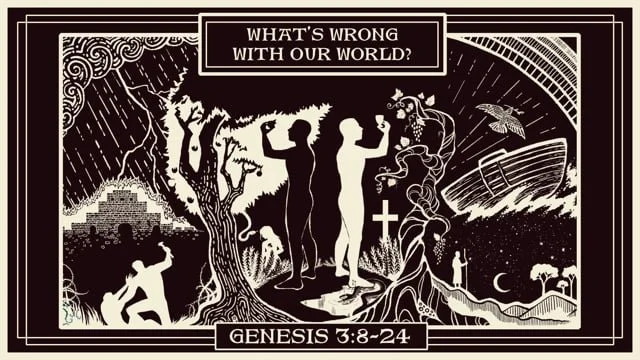
What's Wrong With Our World? | Genesis 3:8-16 | Darien Gabriel
Series: Chaos to Covenant
Title: “What's wrong with our world?"
Scripture: Genesis 3:8-16
Romans 5:15-19
Bottom line: Our world was broken by our sin but will be fully restored by Jesus Christ. Hope follows heartbreak.
INTRODUCTION
CONTEXT
SERMON OUTLINE
CONCLUSION
NOTES
QUESTIONS TO CONSIDER
OUTLINES
DISCUSSION QUESTIONS
MAIN REFERENCES USED
INTRODUCTION
In his book The Genesis Factor, David Helms says that Genesis answers many of life's questions.
He says or implies that Genesis 3 answers at least 3 questions:
Is God really good? If God is good, why are there boundaries? (God's character)
Can you trust God's word no matter what? (The Bible)
What's the matter with us? (Humanity) What's wrong with the world?
Ask yourself this question: How would I feel if I did something that I knew God told me not to do that infected or cursed each and every one of my children, grandchildren and beyond? How would I feel? What would I do? This is what Adam and Eve had to live with. And did so for nearly a millennium.
When we ask the question, what's wrong with our world, the snarky answer could be, "Adam and Eve screwed it up. Now we're cursed." And that would be true.
But it's time that we realize that we can't pass the buck. We must take responsibility for our own thoughts, behaviors, attitudes and beliefs.
Our world is broken because of sin. Their sin, yes. But our sin too.
But there's hope. And it is found in none other than the Lord Jesus Christ as prophesied in Genesis 3.
There's hope after the heartbreak.
And, as for Adam and Eve, it's because of this hope that I'd like to think that they believed God and repented.
"What's wrong with the world today?"
David Helms writes,
"Put differently, which view makes better sense of the world in which we live —the voice of Genesis, or the voice of Peter Fromm? Is humanity basically good? Or has moral corruption touched us all?
Many years ago a famous correspondence in the London Times wrestled with these very issues. The editors of the newspaper asked individuals to respond to the question, "What is wrong with the world today?" The best letter of all was also the shortest. It read,
Dear Sir,
I am,
Yours faithfully,
G. K. Chesterton
Reader, do you believe that? If asked, "What is wrong with the world," would your response be, "I am?" You see, before you make a judgment on the rest of humanity, you must come to terms with the nature of yourself: Who are you, really?" -David Helms
CONTEXT
Adam and Eve have been created and married. They are in a blissful garden of existence where they have all that they need and their Creator, the Lord God, spends time walking and talking with them everyday. They have no relational distress with God or each other or creation. They are experiencing perfect peace and joy.
And yet they find themselves capable of being tempted to forget that God is good and doubt his trustworthiness.
SERMON
Q. What do I want them to know?
A. Two things:
Our world is broken because of our sin.
Our world has hope because of God's mercy.
Q. Why do I want them to know it?
A. Two reasons:
Because it makes sense of why things are so broken, and
Because it shows we don't have to give in to despair. Hope can follow heartbreak.
Q. What do I want them to do about it?
A. Two things:
Rest in the hope that comes through the woman's offspring (Jesus Christ), and
Share this good news with our broken world where you live, work, learn and play.
Q. Why do I want them to do it?
A. Because this is what you do with good news--you share it!
Q. How can they begin to do this?
A. Several ways:
Train to remain (abide) in Christ daily.
Train to remain in your mission field ready to prayer, care and share his love.
Prayer-Care-Share where we live, work, learn and play:
Pray for your neighbors (where you live, work, learn and play),
Care for them as you become aware of their needs, and
Share with them why you cared for them when the opportunity comes up.
NOTE the chiasm here in vv. 11-19:
Sin of Adam (9-11)
Sin of Eve (12)
Sin of Serpent (13)
Judgment of Serpent (14-15)
Judgment of Eve (16)
Judgment of Adam (17-19)
What's at the focal point is: Sin, death and Satan will be defeated by Eve's offspring. Why not Adam's? Because her offspring is Jesus and he was born of a virgin, not of Adam or his seed.`
CONCLUSION
Bottom line: Our world was broken by sin but will be fully restored by Jesus Christ. Hope follows heartbreak.
““Therefore let all Israel be assured of this: God has made this Jesus, whom you crucified, both Lord and Messiah.” When the people heard this, they were cut to the heart and said to Peter and the other apostles, “Brothers, what shall we do?” Peter replied, “Repent and be baptized, every one of you, in the name of Jesus Christ for the forgiveness of your sins. And you will receive the gift of the Holy Spirit. The promise is for you and your children and for all who are far off—for all whom the Lord our God will call.”” Acts 2:36-39 NIV
How do we respond? Answer 2 questions:
Invitation
What is God saying to me right now?
What am I going to do about it? Write this down on a sheet of paper.
What I hear you saying, Lord, is ___________________.
[my name] is going to believe/do __________________________________________________ as a result.
Finally, share this with your Home or Mission group this week when you gather as a testimony about what God is doing in your life. You don’t have to get too specific to give him praise.
Pray
NOTES
G.K. Chesterton (1874–1936) was an English writer, philosopher, lay theologian, and literary critic known for his wit, paradoxes, and diverse body of work. He wrote in many genres, including essays, fiction, poetry, and journalism, and was a prominent Christian apologist. Chesterton is perhaps best known for his *Father Brown* detective stories and his book *Orthodoxy*, which defends Christian faith as rational and joyful.
A devout Christian, Chesterton converted to Roman Catholicism in 1922, and his faith heavily influenced much of his later writing. He critiqued secularism, materialism, and modernism, often engaging with prominent thinkers like George Bernard Shaw and H.G. Wells in public debates.
His style was marked by humor, irony, and a love for paradox, as he often used apparent contradictions to reveal deeper truths. His works continue to influence Christian thought and apologetics today.
My first question:
I have a question about Adam and Eve in the Bible. I am seminary trained so talk to me as if I have some knowledge about the Bible. My question is why did God remove Adam and Eve from the garden?
"God's removal of Adam and Eve from the Garden of Eden in Genesis 3:22-24 is primarily to prevent them from accessing the Tree of Life after their disobedience. After Adam and Eve ate from the Tree of the Knowledge of Good and Evil, they gained the knowledge of good and evil, which was not meant for them. Their newfound awareness brought sin and separation from God into the world.
Genesis 3:22 states, "Behold, the man has become like one of us in knowing good and evil. Now, lest he reach out his hand and take also of the tree of life and eat, and live forever—" God immediately expels them from Eden to prevent them from eating from the Tree of Life and thus living eternally in their fallen state.
So, the expulsion from Eden serves a dual purpose:
1. As a consequence of their disobedience (i.e., sin), they are removed from the place of God's direct presence and blessing.
2. It is also an act of mercy, ensuring they do not live forever in a corrupted state.
In a theological sense, this introduces the concept of death as a limitation, but also as part of God’s redemptive plan, allowing for eventual resurrection and redemption rather than eternal life in a fallen condition." -ChatGPT
My second question: But if Adam and eve stay in the garden and eat from the tree of life and while there repent and believe, would they still live forever in a corrupted state? I seems to me that they would be forgiven?
"That’s an interesting theological question, and you’re right to focus on the dynamic tension between the Tree of Life, repentance, and the consequences of sin.
Here’s the key theological consideration: **repentance and belief** are indeed central to forgiveness in the biblical narrative, but there’s more to the situation in Genesis than just forgiveness. The Garden of Eden is not simply about access to eternal life but also about the state in which that life would be lived.
1. **The Nature of the Tree of Life and Eternal Life**: In Genesis 3:22, God’s concern is not just about forgiveness but about the state in which humanity would live eternally. The Tree of Life represents the ability to live forever, but in the context of the narrative, eternal life in a corrupted state would be a disaster. Imagine living forever with the ongoing effects of sin—physical, emotional, and spiritual decay. Even if Adam and Eve repented and believed, they would still be living in a world now subject to the curse of sin (pain, toil, suffering, and eventual death as outlined in Genesis 3:16-19).
So the problem isn't just moral guilt but the entire reality of living in a world where sin has entered. God’s removal of them from the garden was not simply about preventing eternal life—it was about preventing eternal life **in a corrupted world**. Repentance alone doesn’t reverse the cosmic consequences of sin. The entire creation needed restoration (Romans 8:20-22).
2. **The Larger Redemptive Plan**: While forgiveness is essential, so is the **plan of redemption** that goes beyond forgiveness to full restoration. For instance, the ultimate goal of the biblical narrative isn’t just the forgiveness of individual sins, but the **renewal of all creation**. This is why Christ’s work includes not just forgiveness but also the promise of **resurrection** and **new creation** (Revelation 21-22). Adam and Eve eating from the Tree of Life after sinning might grant them eternal life, but not in the transformed, glorified state God intends for His people.
3. **Why Death is Necessary**: In God’s redemptive plan, death became a necessary part of undoing the effects of sin. God allowed death to enter the world not merely as punishment but also as part of the plan that ultimately leads to resurrection. Paul speaks of death as the last enemy to be defeated (1 Corinthians 15:26), but through Christ, death becomes the gateway to new life. Had Adam and Eve eaten from the Tree of Life while in their fallen state, they might have bypassed death, but they would have missed out on the full restoration that comes through death and resurrection.
4. **The Typology of Christ and the Tree of Life**: Theologically, Christ is often seen as the fulfillment of the Tree of Life. In the new creation, those who believe in Him will once again have access to the Tree of Life (Revelation 22:14). This shows that eternal life comes not just through forgiveness but through transformation. Christ doesn’t just forgive; He renews all things, including the body and the entire creation. Adam and Eve, even if they had repented and believed in the garden, would still need this fuller redemptive work to be fully restored to God’s ultimate intention for humanity.
In summary, even if Adam and Eve had repented and believed, staying in the garden and eating from the Tree of Life would have meant eternal life in a fallen state. Forgiveness alone would not have solved the problem of the corruption of their nature and the curse on creation. God’s plan required not just forgiveness but the eventual defeat of death and the renewal of all creation, something that could only be achieved through Christ’s redemptive work. The removal from Eden, then, can be seen as a merciful act, preserving them for a future, greater restoration." -ChatGPT
From Wilmington's Bible Handbook:
It's primeval history (universal world history) of the world (universe) made up of 5 stories with the same structure. (1-11)
The Fall
Cain
Sons of God marrying daughters of man
The Flood
Tower of Babel
They all follow this 4-fold pattern:
Sin: the sin is described
Speech: There is a speech by God announcing the penalty for the sin
Grace: God brings grace to the situation to ease the misery due to sin
Punishment: God punishes the sin
Patriarchal history (12-50) or the history of Israel's founding fathers. It continues to reveal the many graces of God based on the gracious promise God made to and through Abraham in Genesis 12:3.
Notes from Bible Project Videos
1-11 God and the world
12:3 Hinge verse
12-50 God and Abraham's family
"Blessing" is a key word here
Choice: Tree of knowledge of good and evil
Trust God's definition of good and evil, or
Seize autonomy and define good and evil for themselves?
Serpent (against God) tells a different story. He lies when he tells them that if they eat from the tree of the knowledge of good and evil that they will be like God. Because they already are like God (made in his image).
The Pattern
See D. J. A. Clines, Catholic Biblical Quarterly, No. 38 (1976), pp. 487, 488. Clines explains that Gerhard Von Rad initially observed a pattern of sin, mitigation, and punishment. Then Claus Westermann discerned another element, that of divine speech. Though he did not include it in the pattern, Clines does. Thus the following chart:
I.
II.
III.
IV.
SIN
SPEECH
GRACE
PUNISHMENT
FALL
3:6
3:14-19
3:21
3:22-24
CAIN
4:8
4:10-12
4:15
4:16
SONS OF GOD
6:2
6:3
6:8, 18ff
7:6-24
FLOOD
6:5, 11f
6:7, 13-21
6:8, 18ff
11:8
BABEL
11:4
11:6f
10:1-32
11:8
Preach the Word, Genesis, Kent Hughes, chapter 1, note 3, p. 625
Hamilton puts it this way:
"God acts and speaks; man rebels; God punishes; God protects and reconciles." P. 201
GOD ACTS & SPEAKS MAN REBELS GOD PUNISHES GOD PROTECTS & RECONCILES
QUESTIONS TO CONSIDER
Who is God?
God is present with his people. He was in the garden with A & E. He was with Israel when he lived as Jesus of Nazareth. He's with his people today in us as Holy Spirit.
God is omniscient (all knowing/seeing/hearing).
God is holy which means he's just.
What has he done/is he doing/is he going to do?
He walks and talks with his people who know and trust him.
He is fully aware of all that's going on in our world and in our minds.
He punishes his kids when they disobey. He pours out his wrath on those who sin but don't repent and turn back to him.
Who am I? (In light of 1 & 2)
I am his son in the Lord. I get to be with my father and learn from him and be known by him.
I am known by him inside out.
I am forgiven because even though I sinned and deserve God's wrath, he made a way for me to be forgiven. He did this by sending Jesus Christ to die in my place for my sins on the cross. I am forgiven because I believe that. However, if I haven't repented of my sin then I'm not forgiven yet. I am hell bound. I am heading where people who don't want to be with God go.
What do I get to do? (In light of who I am)
I get to be his son and to enjoy all the benefits of being his son forever.
I get to be known and loved.
I get to live forgiven, beloved and intentionally sharing this good news with others. But if I don't believe, I live in misery doomed to be separated from my Creator forever.
How do I do it?
Rest in my identity as his son and serve others selflessly.
Spend time with God listening and talking.
I believe and receive his forgiveness through Jesus Christ. I readily forgive others by grace through faith.
OUTLINES
OUTLINE (GENESIS 3:1-24) by H. Willmington
This section describes the corruption of all things.
I. THE TRANSGRESSION OF ADAM (3:1-24)
A. Adam's disobedience (3:1-6)
1. The treachery (3:1-5)
a. Satan begins by casting doubt on God's Word (3:1-3): "Did God really say you must not eat any of the fruit in the garden?"
b. Satan concludes by denying God's Word (3:4-5): "'You won't die!' The serpent hissed...'You will become just like God, knowing everything, both good and evil.'"
2. The tragedy (3:6): Both Eve and Adam disobey God and eat of the forbidden tree.
B. Adam's deceit (3:7-8): He attempts to cover his nakedness by making clothes from fig leaves. He then hides among the trees.
C. Adam's despair (3:9-11): He acknowledges his fear and nakedness before God.
D. Adam's defense (3:12-19): Adam blames Eve, but Eve blames the serpent.
E. Adam's discipline (3:14-19): God sets up his divine court in Eden and imposes the following sentences:
1. Upon the serpent (3:14-15): to be the most cursed of all creatures and to crawl on its belly, eating dust. Also, his head will be crushed by the offspring of the woman.
2. Upon the woman (3:16): to suffer pain in childbirth and to be ruled by her husband.
3. Upon the man (3:17-19): to endure wearisome labor as he grows food from unproductive soil and to eventually die physically.
4. Upon nature (3:18): to be infested with thorns and this-tles.
F. Adam's deliverance (3:15, 20-21)
1. The promise (3:15): Someday a Savior will defeat Satan, the serpent!
2. The provision (3:20-21): After Adam names his wife Eve, God clothes both of them with animal skins.
DISCUSSION QUESTIONS
Discovery Bible Study process: https://www.dbsguide.org/
Read the passage together.
Retell the story in your own words.
Discovery the story
What does this story tell me about God?
What does this story tell me about people?
If this is really true, what should I do?
What is God saying to you right now? (Write this down)
What are you going to do about it? (Write this down)
Who am I going to tell about this?
Find our sermons, podcasts, discussion questions and notes at https://www.gracetoday.net/podcast
Alternate Discussion Questions (by Jeff Vanderstelt): Based on this passage:
Who is God?
What has he done/is he doing/is he going to do?
Who am I? (In light of 1 & 2)
What do I do? (In light of who I am)
How do I do it?
Final Questions (Write this down)
What is God saying to you right now?
What are you going to do about it?
MAIN REFERENCES USED
“Genesis,” by R. Kent Hughes, Preaching the Word Commentary, Edited by Kent Hughes
Exalting Jesus in Genesis, by Bethancourt
The Genesis Record, by Henry Morris
The Genesis Factor, by David Helms & Jon Dennis
“Look at the Book” by John Piper (LATB)
“The Bible Knowledge Commentary” by Walvoord, Zuck (BKC)
“The Bible Exposition Commentary” by Warren Wiersbe (BEC)
Outline Bible, D Willmington (OB)
Willmington’s Bible Handbook, D Willmington (WBH)
NIV Study Bible (NIVSB) https://www.biblica.com/resources/scholar-notes/niv-study-bible/
Chronological Life Application Study Bible (NLT)
ESV Study Bible (ESVSB) https://www.esv.org
The Bible Project https://bibleproject.com
“The Bible in One Year 2023 with Nicky Gumbel” bible reading plan on YouVersion app (BIOY)
Series: Chaos to Covenant
Title: “What's wrong with our world?"
Scripture: Genesis 3:8-16
Romans 5:15-19
Bottom line: Our world was broken by our sin but will be fully restored by Jesus Christ. Hope follows heartbreak.
INTRODUCTION
CONTEXT
SERMON OUTLINE
CONCLUSION
NOTES
QUESTIONS TO CONSIDER
OUTLINES
DISCUSSION QUESTIONS
MAIN REFERENCES USED
INTRODUCTION
In his book The Genesis Factor, David Helms says that Genesis answers many of life's questions.
He says or implies that Genesis 3 answers at least 3 questions:
Is God really good? If God is good, why are there boundaries? (God's character)
Can you trust God's word no matter what? (The Bible)
What's the matter with us? (Humanity) What's wrong with the world?
Ask yourself this question: How would I feel if I did something that I knew God told me not to do that infected or cursed each and every one of my children, grandchildren and beyond? How would I feel? What would I do? This is what Adam and Eve had to live with. And did so for nearly a millennium.
When we ask the question, what's wrong with our world, the snarky answer could be, "Adam and Eve screwed it up. Now we're cursed." And that would be true.
But it's time that we realize that we can't pass the buck. We must take responsibility for our own thoughts, behaviors, attitudes and beliefs.
Our world is broken because of sin. Their sin, yes. But our sin too.
But there's hope. And it is found in none other than the Lord Jesus Christ as prophesied in Genesis 3.
There's hope after the heartbreak.
And, as for Adam and Eve, it's because of this hope that I'd like to think that they believed God and repented.
"What's wrong with the world today?"
David Helms writes,
"Put differently, which view makes better sense of the world in which we live —the voice of Genesis, or the voice of Peter Fromm? Is humanity basically good? Or has moral corruption touched us all?
Many years ago a famous correspondence in the London Times wrestled with these very issues. The editors of the newspaper asked individuals to respond to the question, "What is wrong with the world today?" The best letter of all was also the shortest. It read,
Dear Sir,
I am,
Yours faithfully,
G. K. Chesterton
Reader, do you believe that? If asked, "What is wrong with the world," would your response be, "I am?" You see, before you make a judgment on the rest of humanity, you must come to terms with the nature of yourself: Who are you, really?" -David Helms
CONTEXT
Adam and Eve have been created and married. They are in a blissful garden of existence where they have all that they need and their Creator, the Lord God, spends time walking and talking with them everyday. They have no relational distress with God or each other or creation. They are experiencing perfect peace and joy.
And yet they find themselves capable of being tempted to forget that God is good and doubt his trustworthiness.
SERMON
Q. What do I want them to know?
A. Two things:
Our world is broken because of our sin.
Our world has hope because of God's mercy.
Q. Why do I want them to know it?
A. Two reasons:
Because it makes sense of why things are so broken, and
Because it shows we don't have to give in to despair. Hope can follow heartbreak.
Q. What do I want them to do about it?
A. Two things:
Rest in the hope that comes through the woman's offspring (Jesus Christ), and
Share this good news with our broken world where you live, work, learn and play.
Q. Why do I want them to do it?
A. Because this is what you do with good news--you share it!
Q. How can they begin to do this?
A. Several ways:
Train to remain (abide) in Christ daily.
Train to remain in your mission field ready to prayer, care and share his love.
Prayer-Care-Share where we live, work, learn and play:
Pray for your neighbors (where you live, work, learn and play),
Care for them as you become aware of their needs, and
Share with them why you cared for them when the opportunity comes up.
NOTE the chiasm here in vv. 11-19:
Sin of Adam (9-11)
Sin of Eve (12)
Sin of Serpent (13)
Judgment of Serpent (14-15)
Judgment of Eve (16)
Judgment of Adam (17-19)
What's at the focal point is: Sin, death and Satan will be defeated by Eve's offspring. Why not Adam's? Because her offspring is Jesus and he was born of a virgin, not of Adam or his seed.`
CONCLUSION
Bottom line: Our world was broken by sin but will be fully restored by Jesus Christ. Hope follows heartbreak.
““Therefore let all Israel be assured of this: God has made this Jesus, whom you crucified, both Lord and Messiah.” When the people heard this, they were cut to the heart and said to Peter and the other apostles, “Brothers, what shall we do?” Peter replied, “Repent and be baptized, every one of you, in the name of Jesus Christ for the forgiveness of your sins. And you will receive the gift of the Holy Spirit. The promise is for you and your children and for all who are far off—for all whom the Lord our God will call.”” Acts 2:36-39 NIV
How do we respond? Answer 2 questions:
Invitation
What is God saying to me right now?
What am I going to do about it? Write this down on a sheet of paper.
What I hear you saying, Lord, is ___________________.
[my name] is going to believe/do __________________________________________________ as a result.
Finally, share this with your Home or Mission group this week when you gather as a testimony about what God is doing in your life. You don’t have to get too specific to give him praise.
Pray
NOTES
G.K. Chesterton (1874–1936) was an English writer, philosopher, lay theologian, and literary critic known for his wit, paradoxes, and diverse body of work. He wrote in many genres, including essays, fiction, poetry, and journalism, and was a prominent Christian apologist. Chesterton is perhaps best known for his *Father Brown* detective stories and his book *Orthodoxy*, which defends Christian faith as rational and joyful.
A devout Christian, Chesterton converted to Roman Catholicism in 1922, and his faith heavily influenced much of his later writing. He critiqued secularism, materialism, and modernism, often engaging with prominent thinkers like George Bernard Shaw and H.G. Wells in public debates.
His style was marked by humor, irony, and a love for paradox, as he often used apparent contradictions to reveal deeper truths. His works continue to influence Christian thought and apologetics today.
My first question:
I have a question about Adam and Eve in the Bible. I am seminary trained so talk to me as if I have some knowledge about the Bible. My question is why did God remove Adam and Eve from the garden?
"God's removal of Adam and Eve from the Garden of Eden in Genesis 3:22-24 is primarily to prevent them from accessing the Tree of Life after their disobedience. After Adam and Eve ate from the Tree of the Knowledge of Good and Evil, they gained the knowledge of good and evil, which was not meant for them. Their newfound awareness brought sin and separation from God into the world.
Genesis 3:22 states, "Behold, the man has become like one of us in knowing good and evil. Now, lest he reach out his hand and take also of the tree of life and eat, and live forever—" God immediately expels them from Eden to prevent them from eating from the Tree of Life and thus living eternally in their fallen state.
So, the expulsion from Eden serves a dual purpose:
1. As a consequence of their disobedience (i.e., sin), they are removed from the place of God's direct presence and blessing.
2. It is also an act of mercy, ensuring they do not live forever in a corrupted state.
In a theological sense, this introduces the concept of death as a limitation, but also as part of God’s redemptive plan, allowing for eventual resurrection and redemption rather than eternal life in a fallen condition." -ChatGPT
My second question: But if Adam and eve stay in the garden and eat from the tree of life and while there repent and believe, would they still live forever in a corrupted state? I seems to me that they would be forgiven?
"That’s an interesting theological question, and you’re right to focus on the dynamic tension between the Tree of Life, repentance, and the consequences of sin.
Here’s the key theological consideration: **repentance and belief** are indeed central to forgiveness in the biblical narrative, but there’s more to the situation in Genesis than just forgiveness. The Garden of Eden is not simply about access to eternal life but also about the state in which that life would be lived.
1. **The Nature of the Tree of Life and Eternal Life**: In Genesis 3:22, God’s concern is not just about forgiveness but about the state in which humanity would live eternally. The Tree of Life represents the ability to live forever, but in the context of the narrative, eternal life in a corrupted state would be a disaster. Imagine living forever with the ongoing effects of sin—physical, emotional, and spiritual decay. Even if Adam and Eve repented and believed, they would still be living in a world now subject to the curse of sin (pain, toil, suffering, and eventual death as outlined in Genesis 3:16-19).
So the problem isn't just moral guilt but the entire reality of living in a world where sin has entered. God’s removal of them from the garden was not simply about preventing eternal life—it was about preventing eternal life **in a corrupted world**. Repentance alone doesn’t reverse the cosmic consequences of sin. The entire creation needed restoration (Romans 8:20-22).
2. **The Larger Redemptive Plan**: While forgiveness is essential, so is the **plan of redemption** that goes beyond forgiveness to full restoration. For instance, the ultimate goal of the biblical narrative isn’t just the forgiveness of individual sins, but the **renewal of all creation**. This is why Christ’s work includes not just forgiveness but also the promise of **resurrection** and **new creation** (Revelation 21-22). Adam and Eve eating from the Tree of Life after sinning might grant them eternal life, but not in the transformed, glorified state God intends for His people.
3. **Why Death is Necessary**: In God’s redemptive plan, death became a necessary part of undoing the effects of sin. God allowed death to enter the world not merely as punishment but also as part of the plan that ultimately leads to resurrection. Paul speaks of death as the last enemy to be defeated (1 Corinthians 15:26), but through Christ, death becomes the gateway to new life. Had Adam and Eve eaten from the Tree of Life while in their fallen state, they might have bypassed death, but they would have missed out on the full restoration that comes through death and resurrection.
4. **The Typology of Christ and the Tree of Life**: Theologically, Christ is often seen as the fulfillment of the Tree of Life. In the new creation, those who believe in Him will once again have access to the Tree of Life (Revelation 22:14). This shows that eternal life comes not just through forgiveness but through transformation. Christ doesn’t just forgive; He renews all things, including the body and the entire creation. Adam and Eve, even if they had repented and believed in the garden, would still need this fuller redemptive work to be fully restored to God’s ultimate intention for humanity.
In summary, even if Adam and Eve had repented and believed, staying in the garden and eating from the Tree of Life would have meant eternal life in a fallen state. Forgiveness alone would not have solved the problem of the corruption of their nature and the curse on creation. God’s plan required not just forgiveness but the eventual defeat of death and the renewal of all creation, something that could only be achieved through Christ’s redemptive work. The removal from Eden, then, can be seen as a merciful act, preserving them for a future, greater restoration." -ChatGPT
From Wilmington's Bible Handbook:
It's primeval history (universal world history) of the world (universe) made up of 5 stories with the same structure. (1-11)
The Fall
Cain
Sons of God marrying daughters of man
The Flood
Tower of Babel
They all follow this 4-fold pattern:
Sin: the sin is described
Speech: There is a speech by God announcing the penalty for the sin
Grace: God brings grace to the situation to ease the misery due to sin
Punishment: God punishes the sin
Patriarchal history (12-50) or the history of Israel's founding fathers. It continues to reveal the many graces of God based on the gracious promise God made to and through Abraham in Genesis 12:3.
Notes from Bible Project Videos
1-11 God and the world
12:3 Hinge verse
12-50 God and Abraham's family
"Blessing" is a key word here
Choice: Tree of knowledge of good and evil
Trust God's definition of good and evil, or
Seize autonomy and define good and evil for themselves?
Serpent (against God) tells a different story. He lies when he tells them that if they eat from the tree of the knowledge of good and evil that they will be like God. Because they already are like God (made in his image).
The Pattern
See D. J. A. Clines, Catholic Biblical Quarterly, No. 38 (1976), pp. 487, 488. Clines explains that Gerhard Von Rad initially observed a pattern of sin, mitigation, and punishment. Then Claus Westermann discerned another element, that of divine speech. Though he did not include it in the pattern, Clines does. Thus the following chart:
I.
II.
III.
IV.
SIN
SPEECH
GRACE
PUNISHMENT
FALL
3:6
3:14-19
3:21
3:22-24
CAIN
4:8
4:10-12
4:15
4:16
SONS OF GOD
6:2
6:3
6:8, 18ff
7:6-24
FLOOD
6:5, 11f
6:7, 13-21
6:8, 18ff
11:8
BABEL
11:4
11:6f
10:1-32
11:8
Preach the Word, Genesis, Kent Hughes, chapter 1, note 3, p. 625
Hamilton puts it this way:
"God acts and speaks; man rebels; God punishes; God protects and reconciles." P. 201
GOD ACTS & SPEAKS MAN REBELS GOD PUNISHES GOD PROTECTS & RECONCILES
QUESTIONS TO CONSIDER
Who is God?
God is present with his people. He was in the garden with A & E. He was with Israel when he lived as Jesus of Nazareth. He's with his people today in us as Holy Spirit.
God is omniscient (all knowing/seeing/hearing).
God is holy which means he's just.
What has he done/is he doing/is he going to do?
He walks and talks with his people who know and trust him.
He is fully aware of all that's going on in our world and in our minds.
He punishes his kids when they disobey. He pours out his wrath on those who sin but don't repent and turn back to him.
Who am I? (In light of 1 & 2)
I am his son in the Lord. I get to be with my father and learn from him and be known by him.
I am known by him inside out.
I am forgiven because even though I sinned and deserve God's wrath, he made a way for me to be forgiven. He did this by sending Jesus Christ to die in my place for my sins on the cross. I am forgiven because I believe that. However, if I haven't repented of my sin then I'm not forgiven yet. I am hell bound. I am heading where people who don't want to be with God go.
What do I get to do? (In light of who I am)
I get to be his son and to enjoy all the benefits of being his son forever.
I get to be known and loved.
I get to live forgiven, beloved and intentionally sharing this good news with others. But if I don't believe, I live in misery doomed to be separated from my Creator forever.
How do I do it?
Rest in my identity as his son and serve others selflessly.
Spend time with God listening and talking.
I believe and receive his forgiveness through Jesus Christ. I readily forgive others by grace through faith.
OUTLINES
OUTLINE (GENESIS 3:1-24) by H. Willmington
This section describes the corruption of all things.
I. THE TRANSGRESSION OF ADAM (3:1-24)
A. Adam's disobedience (3:1-6)
1. The treachery (3:1-5)
a. Satan begins by casting doubt on God's Word (3:1-3): "Did God really say you must not eat any of the fruit in the garden?"
b. Satan concludes by denying God's Word (3:4-5): "'You won't die!' The serpent hissed...'You will become just like God, knowing everything, both good and evil.'"
2. The tragedy (3:6): Both Eve and Adam disobey God and eat of the forbidden tree.
B. Adam's deceit (3:7-8): He attempts to cover his nakedness by making clothes from fig leaves. He then hides among the trees.
C. Adam's despair (3:9-11): He acknowledges his fear and nakedness before God.
D. Adam's defense (3:12-19): Adam blames Eve, but Eve blames the serpent.
E. Adam's discipline (3:14-19): God sets up his divine court in Eden and imposes the following sentences:
1. Upon the serpent (3:14-15): to be the most cursed of all creatures and to crawl on its belly, eating dust. Also, his head will be crushed by the offspring of the woman.
2. Upon the woman (3:16): to suffer pain in childbirth and to be ruled by her husband.
3. Upon the man (3:17-19): to endure wearisome labor as he grows food from unproductive soil and to eventually die physically.
4. Upon nature (3:18): to be infested with thorns and this-tles.
F. Adam's deliverance (3:15, 20-21)
1. The promise (3:15): Someday a Savior will defeat Satan, the serpent!
2. The provision (3:20-21): After Adam names his wife Eve, God clothes both of them with animal skins.
DISCUSSION QUESTIONS
Discovery Bible Study process: https://www.dbsguide.org/
Read the passage together.
Retell the story in your own words.
Discovery the story
What does this story tell me about God?
What does this story tell me about people?
If this is really true, what should I do?
What is God saying to you right now? (Write this down)
What are you going to do about it? (Write this down)
Who am I going to tell about this?
Find our sermons, podcasts, discussion questions and notes at https://www.gracetoday.net/podcast
Alternate Discussion Questions (by Jeff Vanderstelt): Based on this passage:
Who is God?
What has he done/is he doing/is he going to do?
Who am I? (In light of 1 & 2)
What do I do? (In light of who I am)
How do I do it?
Final Questions (Write this down)
What is God saying to you right now?
What are you going to do about it?
MAIN REFERENCES USED
“Genesis,” by R. Kent Hughes, Preaching the Word Commentary, Edited by Kent Hughes
Exalting Jesus in Genesis, by Bethancourt
The Genesis Record, by Henry Morris
The Genesis Factor, by David Helms & Jon Dennis
“Look at the Book” by John Piper (LATB)
“The Bible Knowledge Commentary” by Walvoord, Zuck (BKC)
“The Bible Exposition Commentary” by Warren Wiersbe (BEC)
Outline Bible, D Willmington (OB)
Willmington’s Bible Handbook, D Willmington (WBH)
NIV Study Bible (NIVSB) https://www.biblica.com/resources/scholar-notes/niv-study-bible/
Chronological Life Application Study Bible (NLT)
ESV Study Bible (ESVSB) https://www.esv.org
The Bible Project https://bibleproject.com
“The Bible in One Year 2023 with Nicky Gumbel” bible reading plan on YouVersion app (BIOY)
How Is Humanity to Relate to Our Creator? | Genesis 2:4-17 | Darien Gabriel
Series: Chaos to Covenant
Title: “How Does Humanity Relate to Our Creator?"
Scripture: Genesis 2:4-17 NIV
Matthew 4:4; 19:4-5
Bottom line: Humanity relates to our Creator by finding wisdom and life on his terms instead of ours. Humble surrender.
INTRODUCTION
CONTEXT
SERMON OUTLINE
CONCLUSION
NOTES
QUESTIONS TO CONSIDER
OUTLINES
DISCUSSION QUESTIONS
MAIN REFERENCES USED
INTRODUCTION
Perhaps the older of the two versions of creation. Certainly the more personal one. We don't just see God as the massive deity who spoke all creation into existence. We see him here as a personally involved, master craftsman. One who gets his hands dirty and blows the paint dry with his own breath.
The Lord God placed Adam in the garden in Eden with two unique trees.
One gives life abundant and eternal and is given to enjoy and partake.
One gives profoundly moral wisdom but is forbidden.
Let's look at Genesis and ask ourselves 2 questions as we do:
God, what are you saying to me today?
God, what do you want me to do about what you're saying to me today?
CONTEXT
Perhaps the older of the two versions of creation. Certainly the more personal one. We don't just see God as the massive deity who spoke all creation into existence. We see him here as a personally involved, master craftsman. One who gets his hands dirty and blows the paint dry with his own breath.
The Lord God placed Adam in the garden in Eden with two unique trees.
One gives life abundant and eternal and is given to enjoy and partake.
One gives profoundly moral wisdom but is forbidden.
SERMON
Who is God?
What has he done?
Who am I?
What do I get to do?
How?
Sovereign Creator
God has created me in his image on purpose for a purpose.
Someone God personally crafted in his image & breathed life into for his glory & creation's good.
Work & tend his garden right where he placed me for the privilege & blessing that it is.
Work for/serve my Lord God as a priestly-servant in this world from a rhythm & posture of rest where he has sovereignly put/placed me.
YHWH or Lord as in personal, relatable God whose authority & rule I am under.
God placed/put me where I am at rest.
A priestly-servant & protector in the Lord God's world.
I do his priestly-servant work in the garden of this world on his behalf & as his image bearer.
I do his priestly-servant work where I live, work, learn & play on his behalf & as his image bearer. I do it by representing people to God & God to people.
Abundant Provider
Placed me at rest in the middle of abundant resources where I live, work, learn & play.
A priestly-servant & protector fully resourced for the Lord God's work where I live, work, learn & play.
Leverage the Lord God's infinite resources to love God & love people by multiplying image bearers for his glory & our good.
Being a bright, salty image-bearer who's out to nurture the garden of this world like a priestly-servant would: with unconditional love.
Sovereign Wisdom
Given us sovereign wisdom in the form of his word. Also, the freedom to rebel against him.
His beloved; A rebellious former servant with a badly corrupted image of God who's forsaken his priestly-servant role in this world by believing a lie that God cannot be trusted.
Repent & believe that God wants me back & has made a way for me to become his shining & salty image-bearer again.
Repent of my sins against my sovereign creator & believe that he's fully trustworthy as seen in his love shown to me through the cross of Jesus Christ.
CONCLUSION
So the applications are laid out there in this chart. But the specific thing that God is calling you to may not be in that chart. You can still repent and believe that he is fully trustworthy. Repent of your sins against the Lord God today. Today is the day of salvation. Turn from your wicked, doubting ways to Christ Jesus as the Lord and Savior of your life. Turn your life over to him today.
Two trees. One that brings life, abundant and eternal. One that brings death when approached on one's own terms.
We either trust God and take him at his word, repeating life, or we go our own way which leads to death. That's the difference between the narrow way and the broad way.
Bottom line: Humanity relates to our Creator by finding wisdom and life on his terms instead of ours. Humble surrender.
Applications:
Invitation
““Therefore let all Israel be assured of this: God has made this Jesus, whom you crucified, both Lord and Messiah.” When the people heard this, they were cut to the heart and said to Peter and the other apostles, “Brothers, what shall we do?” Peter replied, “Repent and be baptized, every one of you, in the name of Jesus Christ for the forgiveness of your sins. And you will receive the gift of the Holy Spirit. The promise is for you and your children and for all who are far off—for all whom the Lord our God will call.”” Acts 2:36-39 NIV
Bottom line:
What is God saying to me right now?
What am I going to do about it? Write this down on a sheet of paper.
What I hear you saying, Lord, is ___________________.
[my name] is going to believe/do __________________________________________________ as a result.
Finally, share this with your Home or Mission group this week when you gather as a testimony about what God is doing in your life. You don’t have to get too specific to give him praise.
Pray
NOTES
From Wilmington's Bible Handbook:
It's primeval history (universal world history) of the world (universe) made up of 5 stories with the same structure. (1-11)
The Fall
Cain
Sons of God marrying daughters of man
The Flood
Tower of Babel
They all follow this 4-fold pattern:
Sin: the sin is described
Speech: There is a speech by God announcing the penalty for the sin
Grace: God brings grace to the situation to ease the misery due to sin
Punishment: God punishes the sin
Patriarchal history (12-50) or the history of Israel's founding fathers. It continues to reveal the many graces of God based on the gracious promise God made to and through Abraham in Genesis 12:3.
QUESTIONS TO CONSIDER
Who is God?
What has he done/is he doing/is he going to do?
Who am I? (In light of 1 & 2)
What do I get to do? (In light of who I am)
How do I do it?
Let’s ask some summary sermon questions:
Q. What do I want them to know?
A.
Q. Why do I want them to know it?
A.
Q. What do I want them to do about it?
A.
Q. Why do I want them to do it?
A.
Q. How can they begin to do this?
A.
OUTLINES
DISCUSSION QUESTIONS
Discovery Bible Study process: https://www.dbsguide.org/
Read the passage together.
Retell the story in your own words.
Discovery the story
What does this story tell me about God?
What does this story tell me about people?
If this is really true, what should I do?
What is God saying to you right now? (Write this down)
What are you going to do about it? (Write this down)
Who am I going to tell about this?
Find our sermons, podcasts, discussion questions and notes at https://www.gracetoday.net/podcast
Alternate Discussion Questions (by Jeff Vanderstelt): Based on this passage:
Who is God?
What has he done/is he doing/is he going to do?
Who am I? (In light of 1 & 2)
What do I do? (In light of who I am)
How do I do it?
Final Questions (Write this down)
What is God saying to you right now?
What are you going to do about it?
MAIN REFERENCES USED
“Genesis,” by R. Kent Hughes, Preaching the Word Commentary, Edited by Kent Hughes
Exalting Jesus in Genesis, by Bethancourt
The Genesis Record, by Henry Morris
The Genesis Factor, by David Helms & Jon Dennis
“Look at the Book” by John Piper (LATB)
“The Bible Knowledge Commentary” by Walvoord, Zuck (BKC)
“The Bible Exposition Commentary” by Warren Wiersbe (BEC)
Outline Bible, D Willmington (OB)
Willmington’s Bible Handbook, D Willmington (WBH)
NIV Study Bible (NIVSB) https://www.biblica.com/resources/scholar-notes/niv-study-bible/
Chronological Life Application Study Bible (NLT)
ESV Study Bible (ESVSB) https://www.esv.org
The Bible Project https://bibleproject.com
“The Bible in One Year 2023 with Nicky Gumbel” bible reading plan on YouVersion app (BIOY)
Series: Chaos to Covenant
Title: “How is Humanity to Relate to Our Creator?”
Scripture: Genesis 2:4-17 NIV
Matthew 4:4; 19:4-5
Bottom line: Humanity relates to our Creator by finding wisdom and life on his terms instead of ours. Humble surrender.
INTRODUCTION
CONTEXT
SERMON OUTLINE
CONCLUSION
NOTES
QUESTIONS TO CONSIDER
OUTLINES
DISCUSSION QUESTIONS
MAIN REFERENCES USED
INTRODUCTION
Perhaps the older of the two versions of creation. Certainly the more personal one. We don't just see God as the massive deity who spoke all creation into existence. We see him here as a personally involved, master craftsman. One who gets his hands dirty and blows the paint dry with his own breath.
The Lord God placed Adam in the garden in Eden with two unique trees.
One gives life abundant and eternal and is given to enjoy and partake.
One gives profoundly moral wisdom but is forbidden.
Let's look at Genesis and ask ourselves 2 questions as we do:
God, what are you saying to me today?
God, what do you want me to do about what you're saying to me today?
CONTEXT
Perhaps the older of the two versions of creation. Certainly the more personal one. We don't just see God as the massive deity who spoke all creation into existence. We see him here as a personally involved, master craftsman. One who gets his hands dirty and blows the paint dry with his own breath.
The Lord God placed Adam in the garden in Eden with two unique trees.
One gives life abundant and eternal and is given to enjoy and partake.
One gives profoundly moral wisdom but is forbidden.
SERMON
Who is God?
What has he done?
Who am I?
What do I get to do?
How?
Sovereign Creator
God has created me in his image on purpose for a purpose.
Someone God personally crafted in his image & breathed life into for his glory & creation's good.
Work & tend his garden right where he placed me for the privilege & blessing that it is.
Work for/serve my Lord God as a priestly-servant in this world from a rhythm & posture of rest where he has sovereignly put/placed me.
YHWH or Lord as in personal, relatable God whose authority & rule I am under.
God placed/put me where I am at rest.
A priestly-servant & protector in the Lord God's world.
I do his priestly-servant work in the garden of this world on his behalf & as his image bearer.
I do his priestly-servant work where I live, work, learn & play on his behalf & as his image bearer. I do it by representing people to God & God to people.
Abundant Provider
Placed me at rest in the middle of abundant resources where I live, work, learn & play.
A priestly-servant & protector fully resourced for the Lord God's work where I live, work, learn & play.
Leverage the Lord God's infinite resources to love God & love people by multiplying image bearers for his glory & our good.
Being a bright, salty image-bearer who's out to nurture the garden of this world like a priestly-servant would: with unconditional love.
Sovereign Wisdom
Given us sovereign wisdom in the form of his word. Also, the freedom to rebel against him.
His beloved; A rebellious former servant with a badly corrupted image of God who's forsaken his priestly-servant role in this world by believing a lie that God cannot be trusted.
Repent & believe that God wants me back & has made a way for me to become his shining & salty image-bearer again.
Repent of my sins against my sovereign creator & believe that he's fully trustworthy as seen in his love shown to me through the cross of Jesus Christ.
CONCLUSION
So the applications are laid out there in this chart. But the specific thing that God is calling you to may not be in that chart. You can still repent and believe that he is fully trustworthy. Repent of your sins against the Lord God today. Today is the day of salvation. Turn from your wicked, doubting ways to Christ Jesus as the Lord and Savior of your life. Turn your life over to him today.
Two trees. One that brings life, abundant and eternal. One that brings death when approached on one's own terms.
We either trust God and take him at his word, repeating life, or we go our own way which leads to death. That's the difference between the narrow way and the broad way.
Bottom line: Humanity relates to our Creator by finding wisdom and life on his terms instead of ours. Humble surrender.
Applications:
Invitation
““Therefore let all Israel be assured of this: God has made this Jesus, whom you crucified, both Lord and Messiah.” When the people heard this, they were cut to the heart and said to Peter and the other apostles, “Brothers, what shall we do?” Peter replied, “Repent and be baptized, every one of you, in the name of Jesus Christ for the forgiveness of your sins. And you will receive the gift of the Holy Spirit. The promise is for you and your children and for all who are far off—for all whom the Lord our God will call.”” Acts 2:36-39 NIV
Bottom line:
What is God saying to me right now?
What am I going to do about it? Write this down on a sheet of paper.
What I hear you saying, Lord, is ___________________.
[my name] is going to believe/do __________________________________________________ as a result.
Finally, share this with your Home or Mission group this week when you gather as a testimony about what God is doing in your life. You don’t have to get too specific to give him praise.
Pray
NOTES
From Wilmington's Bible Handbook:
It's primeval history (universal world history) of the world (universe) made up of 5 stories with the same structure. (1-11)
The Fall
Cain
Sons of God marrying daughters of man
The Flood
Tower of Babel
They all follow this 4-fold pattern:
Sin: the sin is described
Speech: There is a speech by God announcing the penalty for the sin
Grace: God brings grace to the situation to ease the misery due to sin
Punishment: God punishes the sin
Patriarchal history (12-50) or the history of Israel's founding fathers. It continues to reveal the many graces of God based on the gracious promise God made to and through Abraham in Genesis 12:3.
QUESTIONS TO CONSIDER
Who is God?
What has he done/is he doing/is he going to do?
Who am I? (In light of 1 & 2)
What do I get to do? (In light of who I am)
How do I do it?
Let’s ask some summary sermon questions:
Q. What do I want them to know?
A.
Q. Why do I want them to know it?
A.
Q. What do I want them to do about it?
A.
Q. Why do I want them to do it?
A.
Q. How can they begin to do this?
A.
OUTLINES
DISCUSSION QUESTIONS
Discovery Bible Study process: https://www.dbsguide.org/
Read the passage together.
Retell the story in your own words.
Discovery the story
What does this story tell me about God?
What does this story tell me about people?
If this is really true, what should I do?
What is God saying to you right now? (Write this down)
What are you going to do about it? (Write this down)
Who am I going to tell about this?
Find our sermons, podcasts, discussion questions and notes at https://www.gracetoday.net/podcast
Alternate Discussion Questions (by Jeff Vanderstelt): Based on this passage:
Who is God?
What has he done/is he doing/is he going to do?
Who am I? (In light of 1 & 2)
What do I do? (In light of who I am)
How do I do it?
Final Questions (Write this down)
What is God saying to you right now?
What are you going to do about it?
MAIN REFERENCES USED
“Genesis,” by R. Kent Hughes, Preaching the Word Commentary, Edited by Kent Hughes
Exalting Jesus in Genesis, by Bethancourt
The Genesis Record, by Henry Morris
The Genesis Factor, by David Helms & Jon Dennis
“Look at the Book” by John Piper (LATB)
“The Bible Knowledge Commentary” by Walvoord, Zuck (BKC)
“The Bible Exposition Commentary” by Warren Wiersbe (BEC)
Outline Bible, D Willmington (OB)
Willmington’s Bible Handbook, D Willmington (WBH)
NIV Study Bible (NIVSB) https://www.biblica.com/resources/scholar-notes/niv-study-bible/
Chronological Life Application Study Bible (NLT)
ESV Study Bible (ESVSB) https://www.esv.org
The Bible Project https://bibleproject.com
“The Bible in One Year 2023 with Nicky Gumbel” bible reading plan on YouVersion app (BIOY)

How Did the Universe Begin? Part 2 | Genesis 1:3-31 | Darien Gabriel
Series: Chaos to Covenant
Title: “How did the universe begin?" Part 2
Scripture: Genesis 1:3-31 NIV
Bottom line: "God established his kingdom by speaking the universe into existence. He designs creation to reflect his glory and goodness as humanity takes leadership over it." -Bethancourt.
"Genesis 1 is doing way more than telling us how everything was made. Genesis 1 is designed to show us that God's purpose is to share creation with his images o so they can rest and rule it with him forever. And that purpose is what the rest of the Biblical drama is all about." -Tim Macke, The Bible Project
INTRODUCTION
CONTEXT
SERMON OUTLINE
CONCLUSION
NOTES
QUESTIONS TO CONSIDER
OUTLINES
DISCUSSION QUESTIONS
MAIN REFERENCES USED
INTRODUCTION
Lego Table
I was riding through my in-laws neighborhood and I felt a nudge to turn and go out a different way than usual. Now, I have a confession. I am a bit of a dumpster diver. I like to find treasures on the side of the road. And it was a Saturday. The day when people clean out their garage and put things on the side of the road. So I'm driving along looking for treasure and get that nudge to turn and go a different way. I felt a distinct impression that God was nudging me. So I turned, not that I always do. I often ignore those nudges, unfortunately. You never know what's on the other end and it's often not convenient. So I'm driving and I see Lego green in the side of the road. I have four grandkids and we love Legos and I had been talking to Anita about getting a Lego table. I'd decided that they were too big and too expensive. So what do I find on the side of the road? I small, free Lego table. It's used, and has some scrapes, sure. But it's study and complete.
I share this to remind us that God is always speaking. Not just when we sit for a sermon or read the Bible. He is always speaking. "The heavens declare the glory of God." (Psalm 19) Are we listening? And, when we hear, are we obeying? This is what we're about at Grace. Hearing from God and doing what he says. We show our love for God when we obey his commands (and respond to his nudges in faith).
Let's look at Genesis and ask ourselves 2 questions as we do:
God, what are you saying to me today?
God, what do you want me to do about what you're saying to me today?
CONTEXT
Last week we began with God forming the universe from nothing. God is the main character and point of creation. He creates for his glory and our good. He first began forming our universe by inserting his presence and perspective. Today we'll see how he framed creation, filled creation and then next week how he finished creating.
Genesis (beginning) is a book of beginnings.
It's primeval history (universal world history) of the world (universe) made up of 5 stories with the same structure. (1-11)
The Fall
Cain
Sons of God marrying daughters of man
The Flood
Tower of Babel
They all follow this 4-fold pattern/cycle:
Sin: the sin is described
Speech: There is a speech by God announcing the penalty for the sin
Grace: God brings grace to the situation to ease the misery due to sin
Punishment: God punishes the sin
Patriarchal history (12-50) or the history of Israel's founding fathers. It continues to reveal the many graces of God based on the gracious promise God made to and through Abraham in Genesis 12:3.
"There's only one way fallen humanity can be saved--the Genesis way--by faith. There has never been another way." -Hughes
Who wrote Genesis? According the Old and New Testaments, by and large it was written down by Moses with help from oral and written sources protected and provided by the Spirit of God c. 15th century BC. Jesus confirms this.
SERMON
I. Primeval history (1-11)--God and the world
II. Patriarchal history (12-50)--God and Abraham's family
Outline & notes for (based largely on Bethancourt)
Main idea: "God establishes his kingdom by speaking the universe into existence. He designs creation to reflect his glory and goodness as humanity takes leadership over it."
Some of his introductory thoughts...
Main character of Genesis and the Bible is God himself.
It reveals his goodness and his glorious purpose and person.
The goodness of God includes both the physical and the spiritual.
Genesis demonstrates God's authority over creation.
Genesis demonstrates God's creativity in creation too.
Age of the earth approaches can be diverse without Christians breaking fellowship over. That said, 3 non-negotiables are central to Christian doctrine of creation:
1- "Sound doctrine must recognize the VIRGIN BIRTH of creation, acknowledging that God creates ex nihilio. Before he speaks the universe into being, there is nothing in existence other than God."
2- "Such a doctrine must affirm the VIRTUOUS BIRTH of creation, that is, the goodness of all creation before the fall. Genesis 1 repeatedly declares that what God makes is 'good.'" (7X)
3- "Sound doctrine must affirm the VERIFIED 'BIRTH' of a historical, literal Adam. As Jesus affirms in the Gospels, there is one man, created by God, from whom the entire human race descends (see Acts 17:26 where Paul makes this statement to the Athenians)."
Moses is the writer and editor while God is the author.
Moses gives us a summary overview of how it all came to existence.
"Most 'creation' narratives from the ancient Near East assumed the universe itself had always existed." In fact, until relatively recently, our own scientists believed this until they discovered the "Big Bang" based on infrared light readings and such. now most acknowledge that the universe is expanding from a point in time when it began (somehow).
I. God FORMS the Created Kingdom (1:1-2)
Not sage or myth like other Near Eastern versions of creation. It is history.
It "reveals that God forms the created kingdom with his purpose and his presence."
"In the beginning" often causes us to wonder how long ago. But it is there to remind us that God was actually there and active 'in the beginning.'"
How should we think about Genesis and the age of the earth? Several points should be emphasized consenting the age of the earth:
"First, God is the Creator, and the creation exists solely because of the creative work God began 'in the beginning.'"
"Second, the Bible offers no precise timelines concerning the age of the earth...Genesis clearly affirms that everything that exists only does so because of God's creative act."
"Third, any interpretation of Genesis that rejects God's role as the Creator, or Adam and Eve as literal, historical human beings, is in conflict with the Bible's teaching."
"Finally, ...Christians may reach different conclusions about the earth's age while still enjoying fellowship."
Genesis 1:2 speaks of the "Spirit of God" hovering over the waters.
The Spirit brings order out of chaos (here and throughout the Bible).
"When Gabriel tells Mary that the Spirit of the Lord will overshadow her" this is another time when he brings order into our universe. He launches a "new creation" through Jesus at that time.
When Jesus is baptized, the Spirit descends on him like a dove while in the waters.
The Spirit raises Jesus from the dead, bringing him back to life.
"After God forms the created kingdom, he frames it with light, with limits, and with land." P. 9
II. God FRAMES the Created Kingdom (1:3-13)
A. The first day of--"God frames the kingdom with light."
God's words bring something from nothing. We see this throughout the 6 days of creation.
God creates light on day 1 separating it from darkness and giving the names day and night.
Interestingly, he hasn't created sun, moon and stars yet so this seems premature. But God is making a point here. He's saying that he's the source of light and doesn't even need the stars to light our universe.
This powerfully spoke to the other nations who worshipped the sun, moon, and stars in Moses' day (and ours) showing that God is sovereign over all light.
This theme of the kingdoms of light and darkness carries over throughout scripture.
B. The second day of creation--"God frames the kingdom with limits."
Theme of water is introduced. We take water for granted with our endless supply of clean water. They saw water as
A blessing--drinkable, washing, watering fields
A danger--floods that drown people, famine caused by flooded fields, sea monsters, storms at sea, dying of thirst
God separates waters from the sky.
New creation, new heaven, new earth--river of endless, life-giving water (Rev 22:1)
C. The third day of creation--"God frames the kingdom with land."
God divides the land from the waters he just divided from the sky. This created earth/land, seas and vegetation.
2 sources of fear in ancient culture: sea and land:
"Anxiety about the sea was related to protection."
"Anxiety about the land was related to provision."
God's role in creating the seas reshapes our understanding of baptism too:
New believers are baptized when they are plunged into the waters representing judgment (watery grave; wages of sin is death)
And brought through and out of that watery grave raised to walk a new life with him--as a symbol of God's victory of sin and death.
Vegetation holds a privileged place throughout the scriptures
The garden of Eden was full of trees
Noah's ark
Moses' staff
Ark of the Covenant
The coming Messiah
A root
A branch
A stump
A shoot
A vine
A cross
III. God FILLS the Created Kingdom (1:14-31)
A. The fourth day of creation--God fills the kingdom with life.
God creates vegetation on the third day before creating the sun to once again show that he alone is the giver and sustainer of life. This would speak to the nations who had fertility cults/idols/gods.
"The creation story was intended to shatter the allure of the false gods of Israel, and it should do the same for us today."
B. The fifth day of creation
God doesn't actually need 6 days to create the universe. God is using a process to show the glory of his creation.
Creation is more than a place for animals and humanity to live. It's his temple! Where God lives with his creation where Eden was the holy of holies. God creates the universe and then fills it with his presence.
C. The sixth day of --capstone of creation
God declares all of his creation good (1:25). And that's before he creates humanity. Creation with humanity is "very good."
Humanity becomes his capstone as the creates them in the image of God. Trinitarian overtones:
We see the unity or oneness of God "he" "his"
We see the unity and community of God "us" "our"
IDENTITY: "Being sinners is a secondary truth. Being created in the image of God is a primary truth." -Deb Hirsch; Find the imago dei and let God deal with the sin.
ILLUSTRATION: When we look at an ultrasound, we're always looking to see which parent the child looks like. It's innate. And as humanity, we also look like our Creator. Each of us, in a sense, looks like our Heavenly Father.
In contrast to the animals, we're designed to reflect who God is and what he's like.
Paul calls Jesus the "image of the invisible God." (Colossians 1:15-17)
"Jesus is both the architect and the blueprint for what it means to be made in the image of God."
Not only are we to image our creator, we're to rule, subdue, be fruitful and multiply, and to lead over all creation on God's behalf.
Adam and Eve reject this in disobeying God's command.
IV. God FINISHES the Created Kingdom (2:1-3)
A. God finishes with his own rest.
B. The climax of the creation story is rest.
C. Creation is completed and lacks nothing. God accomplishes what he sets out to do. And yet day 7 continues.
D. Rest
God celebrates his completion of creation by resting in it, blessing it, and declaring it holy. It is his temple.
After the Fall, Jesus rebuilds the temple through his death, burial and resurrection ultimately restoring all things in the new heavens and the new earth.
Genesis 2 beings by declaring creation completed. In other words, God looks at his creation and says, "It is finished."
CONCLUSION
Bottom line: God established his kingdom by speaking the universe into existence. God designed creation to reflect his glory and goodness while humanity takes on leadership over creation on his behalf.
Remember the Lego table. Are you listening to God speak? What is he saying to you?
Do you love God? Do you realize that we express and prove our love and trust for him when we obey? And we show our distrust of him when we delay obedience, obey partially or disobey?
Invitation
““Therefore let all Israel be assured of this: God has made this Jesus, whom you crucified, both Lord and Messiah.” When the people heard this, they were cut to the heart and said to Peter and the other apostles, “Brothers, what shall we do?” Peter replied, “Repent and be baptized, every one of you, in the name of Jesus Christ for the forgiveness of your sins. And you will receive the gift of the Holy Spirit. The promise is for you and your children and for all who are far off—for all whom the Lord our God will call.”” Acts 2:36-39 NIV
Bottom line:
What is God saying to me right now?
What am I going to do about it? Write this down on a sheet of paper.
What I hear you saying, Lord, is ___________________.
[my name] is going to believe/do __________________________________________________ as a result.
Finally, share this with your Home or Mission group this week when you gather as a testimony about what God is doing in your life. You don’t have to get too specific to give him praise.
Pray
NOTES
Sabbath/Rest
Hebrews 3:15-4:11
Graham's newsletter about rest.
Truths to note
God existed and exists eternally
God exists in plural unity as the Holy Trinity
God was in the beginning
God was before anything existed in our universe and the universe itself
God created everything that exists in the universe and the universe itself
God creates something from nothing Latin ex nihilo
An atheist scientist came to God and said, “We’ve figured out how to make a man without you.” God said, “OK, let me see you do it.” So the atheist bent down to the ground and scooped up a handful. But God stopped him and said, “Oh, no you don’t. Get your own dirt!”
God creates with words. He spoke creation into existence. His words still have power.
God creates purposefully for his glory and our good.
God starts with light to display his creation and provide an essential ingredient for life.
God only creates things that are good. Together it was all very good and will be again.
God is a God of order and moves from chaos to order.
Elohim (gods) intensifies God's divine majesty, when used as a noun. When used as a verb, it's singular for there is only one true God.
God created all things. "Heavens and earth"
God created an "open" universe, not a "closed" one where he never interacts
Notes from Bible Project Videos
1-11 God and the world
12:3 Hinge verse
12-50 God and Abraham's family
Disorder --> Order
Adam = human
Humanity created to:
Reflect God's character (image)
Represent God's rule (reign)
Harness creation's potential and create beauty and order
"Blessing" is a key word here
Heavens and earth aka skies and land
Formless and empty aka wild and waste
Deep abyss = dark, chaotic ocean
Days 1-3 God splits apart and forms this disordered waste into 3 ordered realms:
Realm: Time. God splits darkness and light on Day 1.
Realm: Sky & Seas. God splits the waters into water canopy or clouds (or both) and sea on Day 2.
Realm: Land. God brings land out of water and includes vegetation on it on Day 3.
Days 4-6 God
Day 4 brings lights--sun, moon and stars to reflect his light in space.
Day 5 brings creations to fill the sky and sea
Day 6 brings land animals and humanity to fill the land.
First poem in the Bible (1:27) celebrates God's creation where he completed the skies, land and inhabitants. God completes and rests and dwells in this sacred space he treats as a temple. The world or at least the garden of Eden is his temple.
Notes from Bethencourt
Outline for Genesis 1-2:3
Main idea: "God establishes his kingdom by speaking the universe into existence. He designs creation to reflect his glory and goodness as humanity takes leadership over it."
Some of his introductory thoughts...
Main character of Genesis and the Bible is God himself.
It reveals his goodness and his glorious purpose and person.
The goodness of God includes both the physical and the spiritual.
Genesis demonstrates God's authority over creation.
Genesis demonstrates God's creativity in creation too.
Age of the earth approaches can be diverse without Christians breaking fellowship over. That said, 3 non-negotiables are central to Christian doctrine of creation:
1- "Sound doctrine must recognize the VIRGIN BIRTH of creation, acknowledging that God creates ex nihilism. Before he speaks the universe into being, there is nothing in existence other than God."
2- "Such a doctrine must affirm the VIRTUOUS BIRTH of creation, that is, the goodness of all creation before the fall. Genesis 1 repeatedly declares that what God makes is 'good.'"
3- "Sound doctrine must affirm the VERIFIED 'BIRTH' of a historical, literal Adam. As Jesus affirms in the Gospels, there is one man, created by God, from whom the entire human race descends (see Acts 17:26 where Paul makes this statement to the Athenians)."
Moses is the writer and editor while God is the author.
Moses gives us a summary overview of how it all came to being.
"Most 'creation' narratives from the ancient Near East assumed the universe itself had always existed." In fact, until relatively recently, our own scientists believed this until they discovered the "Big Bang" based on infrared light readings and such.
See D. J. A. Clines, Catholic Biblical Quarterly, No. 38 (1976), pp. 487, 488. Clines explains that Gerhard Von Rad initially observed a pattern of sin, mitigation, and punishment. Then Claus Westermann discerned another element, that of divine speech. Though he did not include it in the pattern, Clines does. Thus the following chart:
I.
II.
III.
IV.
SIN
SPEECH
GRACE
PUNISHMENT
FALL
3:6
3:14-19
3:21
3:22-24
CAIN
4:8
4:10-12
4:15
4:16
SONS OF GOD
6:2
6:3
6:8, 18ff
7:6-24
FLOOD
6:5, 11f
6:7, 13-21
6:8, 18ff
11:8
BABEL
11:4
11:6f
10:1-32
11:8
Preach the Word, Genesis, Kent Hughes, chapter 1, note 3, p. 625
QUESTIONS TO CONSIDER
Who is God?
What has he done/is he doing/is he going to do?
Who am I? (In light of 1 & 2)
What do I get to do? (In light of who I am)
How do I do it?
OUTLINES
See above
DISCUSSION QUESTIONS
Discovery Bible Study process: https://www.dbsguide.org/
Read the passage together.
Retell the story in your own words.
Discovery the story
What does this story tell me about God?
What does this story tell me about people?
If this is really true, what should I do?
What is God saying to you right now? (Write this down)
What are you going to do about it? (Write this down)
Who am I going to tell about this?
Find our sermons, podcasts, discussion questions and notes at https://www.gracetoday.net/podcast
Alternate Discussion Questions (by Jeff Vanderstelt): Based on this passage:
Who is God?
What has he done/is he doing/is he going to do?
Who am I? (In light of 1 & 2)
What do I do? (In light of who I am)
How do I do it?
Final Questions (Write this down)
What is God saying to you right now?
What are you going to do about it?
MAIN REFERENCES USED
“Genesis,” by R. Kent Hughes, Preaching the Word Commentary, Edited by Kent Hughes
Exalting Jesus in Genesis, by Bethancourt
The Genesis Record, by Henry Morris
The Genesis Factor, by David Helms & Jon Dennis
“Look at the Book” by John Piper (LATB)
“The Bible Knowledge Commentary” by Walvoord, Zuck (BKC)
“The Bible Exposition Commentary” by Warren Wiersbe (BEC)
Outline Bible, D Willmington (OB)
Willmington’s Bible Handbook, D Willmington (WBH)
NIV Study Bible (NIVSB) https://www.biblica.com/resources/scholar-notes/niv-study-bible/
Chronological Life Application Study Bible (NLT)
ESV Study Bible (ESVSB) https://www.esv.org
The Bible Project https://bibleproject.com
“The Bible in One Year 2023 with Nicky Gumbel” bible reading plan on YouVersion app (BIOY)
Series: Chaos to Covenant
Title: “How did the universe begin?" Part 2
Scripture: Genesis 1:3-31 NIV
Bottom line: "God established his kingdom by speaking the universe into existence. He designs creation to reflect his glory and goodness as humanity takes leadership over it." -Bethancourt.
"Genesis 1 is doing way more than telling us how everything was made. Genesis 1 is designed to show us that God's purpose is to share creation with his images o so they can rest and rule it with him forever. And that purpose is what the rest of the Biblical drama is all about." -Tim Macke, The Bible Project
INTRODUCTION
CONTEXT
SERMON OUTLINE
CONCLUSION
NOTES
QUESTIONS TO CONSIDER
OUTLINES
DISCUSSION QUESTIONS
MAIN REFERENCES USED
INTRODUCTION
Lego Table
I was riding through my in-laws neighborhood and I felt a nudge to turn and go out a different way than usual. Now, I have a confession. I am a bit of a dumpster diver. I like to find treasures on the side of the road. And it was a Saturday. The day when people clean out their garage and put things on the side of the road. So I'm driving along looking for treasure and get that nudge to turn and go a different way. I felt a distinct impression that God was nudging me. So I turned, not that I always do. I often ignore those nudges, unfortunately. You never know what's on the other end and it's often not convenient. So I'm driving and I see Lego green in the side of the road. I have four grandkids and we love Legos and I had been talking to Anita about getting a Lego table. I'd decided that they were too big and too expensive. So what do I find on the side of the road? I small, free Lego table. It's used, and has some scrapes, sure. But it's study and complete.
I share this to remind us that God is always speaking. Not just when we sit for a sermon or read the Bible. He is always speaking. "The heavens declare the glory of God." (Psalm 19) Are we listening? And, when we hear, are we obeying? This is what we're about at Grace. Hearing from God and doing what he says. We show our love for God when we obey his commands (and respond to his nudges in faith).
Let's look at Genesis and ask ourselves 2 questions as we do:
God, what are you saying to me today?
God, what do you want me to do about what you're saying to me today?
CONTEXT
Last week we began with God forming the universe from nothing. God is the main character and point of creation. He creates for his glory and our good. He first began forming our universe by inserting his presence and perspective. Today we'll see how he framed creation, filled creation and then next week how he finished creating.
Genesis (beginning) is a book of beginnings.
It's primeval history (universal world history) of the world (universe) made up of 5 stories with the same structure. (1-11)
The Fall
Cain
Sons of God marrying daughters of man
The Flood
Tower of Babel
They all follow this 4-fold pattern/cycle:
Sin: the sin is described
Speech: There is a speech by God announcing the penalty for the sin
Grace: God brings grace to the situation to ease the misery due to sin
Punishment: God punishes the sin
Patriarchal history (12-50) or the history of Israel's founding fathers. It continues to reveal the many graces of God based on the gracious promise God made to and through Abraham in Genesis 12:3.
"There's only one way fallen humanity can be saved--the Genesis way--by faith. There has never been another way." -Hughes
Who wrote Genesis? According the Old and New Testaments, by and large it was written down by Moses with help from oral and written sources protected and provided by the Spirit of God c. 15th century BC. Jesus confirms this.
SERMON
I. Primeval history (1-11)--God and the world
II. Patriarchal history (12-50)--God and Abraham's family
Outline & notes for (based largely on Bethancourt)
Main idea: "God establishes his kingdom by speaking the universe into existence. He designs creation to reflect his glory and goodness as humanity takes leadership over it."
Some of his introductory thoughts...
Main character of Genesis and the Bible is God himself.
It reveals his goodness and his glorious purpose and person.
The goodness of God includes both the physical and the spiritual.
Genesis demonstrates God's authority over creation.
Genesis demonstrates God's creativity in creation too.
Age of the earth approaches can be diverse without Christians breaking fellowship over. That said, 3 non-negotiables are central to Christian doctrine of creation:
1- "Sound doctrine must recognize the VIRGIN BIRTH of creation, acknowledging that God creates ex nihilio. Before he speaks the universe into being, there is nothing in existence other than God."
2- "Such a doctrine must affirm the VIRTUOUS BIRTH of creation, that is, the goodness of all creation before the fall. Genesis 1 repeatedly declares that what God makes is 'good.'" (7X)
3- "Sound doctrine must affirm the VERIFIED 'BIRTH' of a historical, literal Adam. As Jesus affirms in the Gospels, there is one man, created by God, from whom the entire human race descends (see Acts 17:26 where Paul makes this statement to the Athenians)."
Moses is the writer and editor while God is the author.
Moses gives us a summary overview of how it all came to existence.
"Most 'creation' narratives from the ancient Near East assumed the universe itself had always existed." In fact, until relatively recently, our own scientists believed this until they discovered the "Big Bang" based on infrared light readings and such. now most acknowledge that the universe is expanding from a point in time when it began (somehow).
I. God FORMS the Created Kingdom (1:1-2)
Not sage or myth like other Near Eastern versions of creation. It is history.
It "reveals that God forms the created kingdom with his purpose and his presence."
"In the beginning" often causes us to wonder how long ago. But it is there to remind us that God was actually there and active 'in the beginning.'"
How should we think about Genesis and the age of the earth? Several points should be emphasized consenting the age of the earth:
"First, God is the Creator, and the creation exists solely because of the creative work God began 'in the beginning.'"
"Second, the Bible offers no precise timelines concerning the age of the earth...Genesis clearly affirms that everything that exists only does so because of God's creative act."
"Third, any interpretation of Genesis that rejects God's role as the Creator, or Adam and Eve as literal, historical human beings, is in conflict with the Bible's teaching."
"Finally, ...Christians may reach different conclusions about the earth's age while still enjoying fellowship."
Genesis 1:2 speaks of the "Spirit of God" hovering over the waters.
The Spirit brings order out of chaos (here and throughout the Bible).
"When Gabriel tells Mary that the Spirit of the Lord will overshadow her" this is another time when he brings order into our universe. He launches a "new creation" through Jesus at that time.
When Jesus is baptized, the Spirit descends on him like a dove while in the waters.
The Spirit raises Jesus from the dead, bringing him back to life.
"After God forms the created kingdom, he frames it with light, with limits, and with land." P. 9
II. God FRAMES the Created Kingdom (1:3-13)
A. The first day of--"God frames the kingdom with light."
God's words bring something from nothing. We see this throughout the 6 days of creation.
God creates light on day 1 separating it from darkness and giving the names day and night.
Interestingly, he hasn't created sun, moon and stars yet so this seems premature. But God is making a point here. He's saying that he's the source of light and doesn't even need the stars to light our universe.
This powerfully spoke to the other nations who worshipped the sun, moon, and stars in Moses' day (and ours) showing that God is sovereign over all light.
This theme of the kingdoms of light and darkness carries over throughout scripture.
B. The second day of creation--"God frames the kingdom with limits."
Theme of water is introduced. We take water for granted with our endless supply of clean water. They saw water as
A blessing--drinkable, washing, watering fields
A danger--floods that drown people, famine caused by flooded fields, sea monsters, storms at sea, dying of thirst
God separates waters from the sky.
New creation, new heaven, new earth--river of endless, life-giving water (Rev 22:1)
C. The third day of creation--"God frames the kingdom with land."
God divides the land from the waters he just divided from the sky. This created earth/land, seas and vegetation.
2 sources of fear in ancient culture: sea and land:
"Anxiety about the sea was related to protection."
"Anxiety about the land was related to provision."
God's role in creating the seas reshapes our understanding of baptism too:
New believers are baptized when they are plunged into the waters representing judgment (watery grave; wages of sin is death)
And brought through and out of that watery grave raised to walk a new life with him--as a symbol of God's victory of sin and death.
Vegetation holds a privileged place throughout the scriptures
The garden of Eden was full of trees
Noah's ark
Moses' staff
Ark of the Covenant
The coming Messiah
A root
A branch
A stump
A shoot
A vine
A cross
III. God FILLS the Created Kingdom (1:14-31)
A. The fourth day of creation--God fills the kingdom with life.
God creates vegetation on the third day before creating the sun to once again show that he alone is the giver and sustainer of life. This would speak to the nations who had fertility cults/idols/gods.
"The creation story was intended to shatter the allure of the false gods of Israel, and it should do the same for us today."
B. The fifth day of creation
God doesn't actually need 6 days to create the universe. God is using a process to show the glory of his creation.
Creation is more than a place for animals and humanity to live. It's his temple! Where God lives with his creation where Eden was the holy of holies. God creates the universe and then fills it with his presence.
C. The sixth day of --capstone of creation
God declares all of his creation good (1:25). And that's before he creates humanity. Creation with humanity is "very good."
Humanity becomes his capstone as the creates them in the image of God. Trinitarian overtones:
We see the unity or oneness of God "he" "his"
We see the unity and community of God "us" "our"
IDENTITY: "Being sinners is a secondary truth. Being created in the image of God is a primary truth." -Deb Hirsch; Find the imago dei and let God deal with the sin.
ILLUSTRATION: When we look at an ultrasound, we're always looking to see which parent the child looks like. It's innate. And as humanity, we also look like our Creator. Each of us, in a sense, looks like our Heavenly Father.
In contrast to the animals, we're designed to reflect who God is and what he's like.
Paul calls Jesus the "image of the invisible God." (Colossians 1:15-17)
"Jesus is both the architect and the blueprint for what it means to be made in the image of God."
Not only are we to image our creator, we're to rule, subdue, be fruitful and multiply, and to lead over all creation on God's behalf.
Adam and Eve reject this in disobeying God's command.
IV. God FINISHES the Created Kingdom (2:1-3)
A. God finishes with his own rest.
B. The climax of the creation story is rest.
C. Creation is completed and lacks nothing. God accomplishes what he sets out to do. And yet day 7 continues.
D. Rest
God celebrates his completion of creation by resting in it, blessing it, and declaring it holy. It is his temple.
After the Fall, Jesus rebuilds the temple through his death, burial and resurrection ultimately restoring all things in the new heavens and the new earth.
Genesis 2 beings by declaring creation completed. In other words, God looks at his creation and says, "It is finished."
CONCLUSION
Bottom line: God established his kingdom by speaking the universe into existence. God designed creation to reflect his glory and goodness while humanity takes on leadership over creation on his behalf.
Remember the Lego table. Are you listening to God speak? What is he saying to you?
Do you love God? Do you realize that we express and prove our love and trust for him when we obey? And we show our distrust of him when we delay obedience, obey partially or disobey?
Invitation
““Therefore let all Israel be assured of this: God has made this Jesus, whom you crucified, both Lord and Messiah.” When the people heard this, they were cut to the heart and said to Peter and the other apostles, “Brothers, what shall we do?” Peter replied, “Repent and be baptized, every one of you, in the name of Jesus Christ for the forgiveness of your sins. And you will receive the gift of the Holy Spirit. The promise is for you and your children and for all who are far off—for all whom the Lord our God will call.”” Acts 2:36-39 NIV
Bottom line:
What is God saying to me right now?
What am I going to do about it? Write this down on a sheet of paper.
What I hear you saying, Lord, is ___________________.
[my name] is going to believe/do __________________________________________________ as a result.
Finally, share this with your Home or Mission group this week when you gather as a testimony about what God is doing in your life. You don’t have to get too specific to give him praise.
Pray
NOTES
Sabbath/Rest
Hebrews 3:15-4:11
Graham's newsletter about rest.
Truths to note
God existed and exists eternally
God exists in plural unity as the Holy Trinity
God was in the beginning
God was before anything existed in our universe and the universe itself
God created everything that exists in the universe and the universe itself
God creates something from nothing Latin ex nihilo
An atheist scientist came to God and said, “We’ve figured out how to make a man without you.” God said, “OK, let me see you do it.” So the atheist bent down to the ground and scooped up a handful. But God stopped him and said, “Oh, no you don’t. Get your own dirt!”
God creates with words. He spoke creation into existence. His words still have power.
God creates purposefully for his glory and our good.
God starts with light to display his creation and provide an essential ingredient for life.
God only creates things that are good. Together it was all very good and will be again.
God is a God of order and moves from chaos to order.
Elohim (gods) intensifies God's divine majesty, when used as a noun. When used as a verb, it's singular for there is only one true God.
God created all things. "Heavens and earth"
God created an "open" universe, not a "closed" one where he never interacts
Notes from Bible Project Videos
1-11 God and the world
12:3 Hinge verse
12-50 God and Abraham's family
Disorder --> Order
Adam = human
Humanity created to:
Reflect God's character (image)
Represent God's rule (reign)
Harness creation's potential and create beauty and order
"Blessing" is a key word here
Heavens and earth aka skies and land
Formless and empty aka wild and waste
Deep abyss = dark, chaotic ocean
Days 1-3 God splits apart and forms this disordered waste into 3 ordered realms:
Realm: Time. God splits darkness and light on Day 1.
Realm: Sky & Seas. God splits the waters into water canopy or clouds (or both) and sea on Day 2.
Realm: Land. God brings land out of water and includes vegetation on it on Day 3.
Days 4-6 God
Day 4 brings lights--sun, moon and stars to reflect his light in space.
Day 5 brings creations to fill the sky and sea
Day 6 brings land animals and humanity to fill the land.
First poem in the Bible (1:27) celebrates God's creation where he completed the skies, land and inhabitants. God completes and rests and dwells in this sacred space he treats as a temple. The world or at least the garden of Eden is his temple.
Notes from Bethencourt
Outline for Genesis 1-2:3
Main idea: "God establishes his kingdom by speaking the universe into existence. He designs creation to reflect his glory and goodness as humanity takes leadership over it."
Some of his introductory thoughts...
Main character of Genesis and the Bible is God himself.
It reveals his goodness and his glorious purpose and person.
The goodness of God includes both the physical and the spiritual.
Genesis demonstrates God's authority over creation.
Genesis demonstrates God's creativity in creation too.
Age of the earth approaches can be diverse without Christians breaking fellowship over. That said, 3 non-negotiables are central to Christian doctrine of creation:
1- "Sound doctrine must recognize the VIRGIN BIRTH of creation, acknowledging that God creates ex nihilism. Before he speaks the universe into being, there is nothing in existence other than God."
2- "Such a doctrine must affirm the VIRTUOUS BIRTH of creation, that is, the goodness of all creation before the fall. Genesis 1 repeatedly declares that what God makes is 'good.'"
3- "Sound doctrine must affirm the VERIFIED 'BIRTH' of a historical, literal Adam. As Jesus affirms in the Gospels, there is one man, created by God, from whom the entire human race descends (see Acts 17:26 where Paul makes this statement to the Athenians)."
Moses is the writer and editor while God is the author.
Moses gives us a summary overview of how it all came to being.
"Most 'creation' narratives from the ancient Near East assumed the universe itself had always existed." In fact, until relatively recently, our own scientists believed this until they discovered the "Big Bang" based on infrared light readings and such.
See D. J. A. Clines, Catholic Biblical Quarterly, No. 38 (1976), pp. 487, 488. Clines explains that Gerhard Von Rad initially observed a pattern of sin, mitigation, and punishment. Then Claus Westermann discerned another element, that of divine speech. Though he did not include it in the pattern, Clines does. Thus the following chart:
I.
II.
III.
IV.
SIN
SPEECH
GRACE
PUNISHMENT
FALL
3:6
3:14-19
3:21
3:22-24
CAIN
4:8
4:10-12
4:15
4:16
SONS OF GOD
6:2
6:3
6:8, 18ff
7:6-24
FLOOD
6:5, 11f
6:7, 13-21
6:8, 18ff
11:8
BABEL
11:4
11:6f
10:1-32
11:8
Preach the Word, Genesis, Kent Hughes, chapter 1, note 3, p. 625
QUESTIONS TO CONSIDER
Who is God?
What has he done/is he doing/is he going to do?
Who am I? (In light of 1 & 2)
What do I get to do? (In light of who I am)
How do I do it?
OUTLINES
See above
DISCUSSION QUESTIONS
Discovery Bible Study process: https://www.dbsguide.org/
Read the passage together.
Retell the story in your own words.
Discovery the story
What does this story tell me about God?
What does this story tell me about people?
If this is really true, what should I do?
What is God saying to you right now? (Write this down)
What are you going to do about it? (Write this down)
Who am I going to tell about this?
Find our sermons, podcasts, discussion questions and notes at https://www.gracetoday.net/podcast
Alternate Discussion Questions (by Jeff Vanderstelt): Based on this passage:
Who is God?
What has he done/is he doing/is he going to do?
Who am I? (In light of 1 & 2)
What do I do? (In light of who I am)
How do I do it?
Final Questions (Write this down)
What is God saying to you right now?
What are you going to do about it?
MAIN REFERENCES USED
“Genesis,” by R. Kent Hughes, Preaching the Word Commentary, Edited by Kent Hughes
Exalting Jesus in Genesis, by Bethancourt
The Genesis Record, by Henry Morris
The Genesis Factor, by David Helms & Jon Dennis
“Look at the Book” by John Piper (LATB)
“The Bible Knowledge Commentary” by Walvoord, Zuck (BKC)
“The Bible Exposition Commentary” by Warren Wiersbe (BEC)
Outline Bible, D Willmington (OB)
Willmington’s Bible Handbook, D Willmington (WBH)
NIV Study Bible (NIVSB) https://www.biblica.com/resources/scholar-notes/niv-study-bible/
Chronological Life Application Study Bible (NLT)
ESV Study Bible (ESVSB) https://www.esv.org
The Bible Project https://bibleproject.com
“The Bible in One Year 2023 with Nicky Gumbel” bible reading plan on YouVersion app (BIOY)

How Did the Universe Begin? | Genesis 1:1-2 | Darien Gabriel
Series: Chaos to Covenant
Title: “How did the universe begin?"
Scripture: Genesis 1:1-2 NIV Father and Spirit created
Hebrews 11:3 created out of nothing
Romans 5:20 where sin increased, grace increased all the more
2 Timothy 2:13 if we're faithless, he is faithful
John 1:1-14 Father and Son created
Colossians 1:15-17 Son of God created
Hebrews 1:1-3 Son of God created
Acts 2:36-39 (Invitation)
Bottom line: The universe begins with God speaking it into existence from nothing.
INTRODUCTION
CONTEXT
SERMON OUTLINE
CONCLUSION
NOTES
QUESTIONS TO CONSIDER
OUTLINES
DISCUSSION QUESTIONS
MAIN REFERENCES USED
INTRODUCTION
"TWO MAPS, ONE JOURNEY by David Helms
I vividly recall taking family vacations. My father was a schoolteacher, and summertime meant extended driving trips.
We began at home in Chicago and drove to South Dakota and Mount Rushmore — across to Cheyenne- up to Yellowstone - down through the Rockies — and into Silverton, where we would camp for an extended time.
In the months leading up to those trips, Dad would always post a large map of the United States on our refrigerator door.
This map contained the grand view of the entire journey. For on it, with indelible ink, Dad would trace our path. However, he never traced it out all at once. You see, all seven of us kids would set aside money from our newspaper routes in an effort to help pay for the gasoline for the trip. So, as the funds for gas accumulated, the indelible ink indicating how far we could go extended across the map. It was always a great day when the ink made its way back to the beginning, because we knew then that we had collected enough money to pay for the entire trip.
A funny thing, though: We never brought this map on the trip. The "grand view map" was too general. For the actual trip we needed a more detailed map, so we took along our Rand McNally Road Atlas, complete with all fifty states! I loved that map because it contained inset maps of large cities and all kinds of information the refrigerator map didn't have.
The creation account in Genesis 1, like the map on my family's refrigerator, is the grand view in which mankind is seen as the pinnacle, but only within the context of all of creation.
Chapter 2, on the other hand, is like one page of the Rand McNally map, which shows in full detail what the pinnacle (mankind) is really like.
In one breath, chapter 1 spoke of the creation of man in the image of God as male and female. Now, however, beginning in
2:4, the writer focuses our attention specifically on humankind.
He wants us to camp here for an extended time.
This is exciting, because chapter 2 deals directly with one of life's big questions: "Who are we, really?"" -David Helms, pp. 49-50
Imagine you are a cartoon. You live in a 2D world--height and width. Let's say you can think like you do now. You have the same questions about life and eternity. You live in a animated world that is real. Eventually, you realize that there's order in your cartoon world. You see clues in the consistency of things, the order of things, the purposefulness of things and the beauty of things. This leads to more questions. Eventually, the cartoonist begins to reveal more to you through other characters. And at some point you realize that there is a creator of the cartoon world in which you live. In fact, the great cartoonist exists and created you on purpose for a purpose.
If you found yourself in this situation, how would you respond? How would you feel about the great cartoonist? Would you be grateful that he created you when he didn't to? Or would you complain about he color of your costume? Would you be in awe that there exists a being so powerful that at the stroke of a pen, he could create life? Or would you complain about the story plot of your life?
My hope is that as we listen to God through His Story in Genesis, we will wrestle with these questions in 3D+. Because this is like the world in which we live. There's a creator and he is God. His name is Jesus and he created you on purpose for a purpose. My hope is that you will come to understand and believe this to the degree that it moves you to gratitude and worship. Not just when we sing a song but 24//7. That it will shape the way that you live and the choices that you make and the narratives you choose to believe and the people you hang out with.
Let's look at Genesis and ask ourselves 2 questions as we do:
God, what are you saying to me today?
God, what do you want me to do about what you're saying to me today?
CONTEXT
Genesis (beginning) is a book of beginnings.
It's primeval history (universal world history) of the world (universe) made up of 5 stories with the same structure. (1-11)
The Fall
Cain
Sons of God marrying daughters of man
The Flood
Tower of Babel
They all follow this 4-fold pattern:
Sin: the sin is described
Speech: There is a speech by God announcing the penalty for the sin
Grace: God brings grace to the situation to ease the misery due to sin
Punishment: God punishes the sin
Patriarchal history (12-50) or the history of Israel's founding fathers. It continues to reveal the many graces of God based on the gracious promise God made to and through Abraham in Genesis 12:3.
"Genesis is about grace." Sin, then grace. Sin, then grace.
Grace is often times defined as an acronym
God's
Riches
At
Christ's
Expense
Grace is undeserved favor.
Genesis is also about God's fidelity.
God is faithful even when we're not.
God keeps his promises even when the people the promises are for threaten the fulfillment of the promises.
"If we are faithless, he remains faithful--for he cannot deny himself." 2 Timothy 2:13
People are wonderful and awful.
The bulk of Genesis affirms our terrible sinfulness.
Therefore, salvation had to come by faith (we certainly didn't deserve it or could earn it)
Genesis 15:6 Moses writes, "Abram believed the LORD, and he credited it to him as righteousness."
"There's only one way fallen humanity can be saved--the Genesis way--by faith. There has never been another way." -Hughes
Who wrote Genesis? According the Old and New Testaments, Moses c. 15th century BC. Jesus confirms this.
Kind of cool:
Genesis 1:1 is 7 words.
1:2 is 14 words.
And the chapter ends with 3 verses of 7 Hebrew words (21 words).
SERMON
I. Primeval history (1-11)--God and the world
A. God and the beginning
Bereshith Elohim Bara is the Hebrew for this phrase, "In the beginning God..."
"In the beginning" of our universe - Hebrew bereshith
God was there in the beginning before time and space existed. The beginning of universal history.
He has always existed. He never began or was born.
He will always exist. He lives forever.
Elohim = God or gods; not plural for number here but intensity i.e. Most God you can get
Genesis, the OT, and the Bible are all about God, his creation and his glory.
The Bible assumes God's existence. Never debates it. Says the fool believes there is no God in Proverbs.
It's one thing to doubt or question whether he exists or not
It's another to ignore the many evidences of his existence and conclude he doesn't exist; too much evidence from nature
B. God and the universe (1:1): "God created the heavens and the earth."
"God created the heavens..."
Heavens = skies
Heaven 1: as we think about it
Space
Our sky as we think about it
Earth = land (they would have understood it as the ground)
We see from the rest of the chapter that God spoke things into existence.
God created out of love for us and his son
Us - we now exist
Him - he now has a bride (not that he needed one)
God created from nothing - Hebrew bara; this reminds me of an old joke:
An atheist scientist came to God and said, “We’ve figured out how to make a man without you.” God said, “OK, let me see you do it.” So the atheist bent down to the ground and scooped up a handful. But God stopped him and said, “Oh, no you don’t. Get your own dirt!”
Primary or absolute creation is from nothing (what only God can do)
Secondary or relative creation is from something (what we can do)
God or Elohim (gods in Hebrew) is plural as a literary device to intensify the word. This isn't just a god. This is the God of gods.
God is the point of the Bible.
God is pre-existent. He existed before our universe did because he's eternal and uncreated. Before time and space, there was God.
God is powerful. He created out of nothing.
God is personal. He personally spoke creation into existence. He personally walked in the garden with Adam.
C. God and the earth (1:2): "Now the earth (land) was formless (wild) and empty (waste), darkness was over the surface of the deep (abyss = chaotic darkness), and the Spirit of God (Holy Spirit) was hovering (overshadowing) over the waters."
The world starts out as a dark, chaotic, wild wasteland without form. God will form it, frame it, fill it and then finish it.
Here he begins to form it through his Spirit. The triune God is at work here.
Have you ever been at sea, miles out, at night? Maybe on a cruise ship or a deep sea fishing trip so far out that you can't see any lights or land? It's creepy and a little scary.
God creates/works as a triune God
Father--Genesis 1:1; 26
Son--John 1:1-2; Gen 1:26
Holy Spirit--Genesis 1:2; 26
The Spirit working chaos to order is seen when the Holy Spirit "overshadows" Mary making her pregnant with Jesus in the virgin birth (new creation). The Holy Spirit comes down like a dove onto Jesus at his baptism in the waters (symbolizing chaos and judgment). The Spirit raises Jesus from the dead, bringing him back to life. (Bethencourt) This is the first of many examples of the Holy Spirit doing this kind of work.
II. Patriarchal history (12-50)--God and Abraham's family
CONCLUSION
Bottom line: The universe begins with God speaking it into existence from nothing.
God deserves our worship. Therefore, we should worship him with all our heart, mind, soul and strength.
God creates out of love. Love creates and connects relationally.
God wants us to worship him with our lips and our lives. (Hebrews 13:15-16)
Invitation
““Therefore let all Israel be assured of this: God has made this Jesus, whom you crucified, both Lord and Messiah.” When the people heard this, they were cut to the heart and said to Peter and the other apostles, “Brothers, what shall we do?” Peter replied, “Repent and be baptized, every one of you, in the name of Jesus Christ for the forgiveness of your sins. And you will receive the gift of the Holy Spirit. The promise is for you and your children and for all who are far off—for all whom the Lord our God will call.”” Acts 2:36-39 NIV
Bottom line:
What is God saying to me right now?
What am I going to do about it? Write this down on a sheet of paper.
What I hear you saying, Lord, is ___________________.
[my name] is going to believe/do __________________________________________________ as a result.
Finally, share this with your Home or Mission group this week when you gather as a testimony about what God is doing in your life. You don’t have to get too specific to give him praise.
Pray
NOTES
Truths to note
God existed and exists eternally
God exists in plural unity as the Holy Trinity
God was in the beginning
God was before anything existed in our universe and the universe itself
God created everything that exists in the universe and the universe itself
God creates something from nothing Latin ex nihilo
An atheist scientist came to God and said, “We’ve figured out how to make a man without you.” God said, “OK, let me see you do it.” So the atheist bent down to the ground and scooped up a handful. But God stopped him and said, “Oh, no you don’t. Get your own dirt!”
God creates with words. He spoke creation into existence. His words still have power.
God creates purposefully for his glory and our good.
God starts with light to display his creation and provide an essential ingredient for life.
God only creates things that are good. Together it was all very good and will be again.
God is a God of order and moves from chaos to order.
Elohim (gods) intensifies God's divine majesty, when used as a noun. When used as a verb, it's singular for there is only one true God.
God created all things. "Heavens and earth"
God created an "open" universe, not a "closed" one where he never interacts
Notes from Bible Project Videos
1-11 God and the world
12:3 Hinge verse
12-50 God and Abraham's family
Disorder --> Order
Adam = human
Humanity created to:
Reflect God's character (image)
Represent God's rule (reign)
Harness creation's potential and create beauty and order
"Blessing" is a key word here
Choice: Tree of knowledge of good and evil
Trust God's definition of good and evil, or
Seize autonomy and define good and evil for themselves?
Serpent (against God) tells a different story. He lies when he tells them that if they eat from the tree of the knowledge of good and evil that they will be like God. Because they already are like God (made in his image).
Heavens and earth aka skies and land
Formless and empty aka wild and waste
Deep abyss = dark, chaotic ocean
Days 1-3 God splits apart and forms this disordered waste into 3 ordered realms:
Realm: Time. God splits darkness and light on Day 1.
Realm: Sky & Seas. God splits the waters into water canopy or clouds (or both) and sea on Day 2.
Realm: Land. God brings land out of water and includes vegetation on it on Day 3.
Days 4-6 God
Day 4 brings lights--sun, moon and stars to reflect his light in space.
Day 5 brings creations to fill the sky and sea
Day 6 brings land animals and humanity to fill the land.
First poem in the Bible (1:27) celebrates God's creation where he completed the skies, land and inhabitants. God completes and rests and dwells in this sacred space he treats as a temple. The world or at least the garden of Eden is his temple.
Notes from Bethencourt
Series: Chaos to Covenant
Title: “How did the universe begin?"
Scripture: Genesis 1:1-2 NIV Father and Spirit created
Hebrews 11:3 created out of nothing
Romans 5:20 where sin increased, grace increased all the more
2 Timothy 2:13 if we're faithless, he is faithful
John 1:1-14 Father and Son created
Colossians 1:15-17 Son of God created
Hebrews 1:1-3 Son of God created
Acts 2:36-39 (Invitation)
Bottom line: The universe begins with God speaking it into existence from nothing.
INTRODUCTION
CONTEXT
SERMON OUTLINE
CONCLUSION
NOTES
QUESTIONS TO CONSIDER
OUTLINES
DISCUSSION QUESTIONS
MAIN REFERENCES USED
INTRODUCTION
"TWO MAPS, ONE JOURNEY by David Helms
I vividly recall taking family vacations. My father was a schoolteacher, and summertime meant extended driving trips.
We began at home in Chicago and drove to South Dakota and Mount Rushmore — across to Cheyenne- up to Yellowstone - down through the Rockies — and into Silverton, where we would camp for an extended time.
In the months leading up to those trips, Dad would always post a large map of the United States on our refrigerator door.
This map contained the grand view of the entire journey. For on it, with indelible ink, Dad would trace our path. However, he never traced it out all at once. You see, all seven of us kids would set aside money from our newspaper routes in an effort to help pay for the gasoline for the trip. So, as the funds for gas accumulated, the indelible ink indicating how far we could go extended across the map. It was always a great day when the ink made its way back to the beginning, because we knew then that we had collected enough money to pay for the entire trip.
A funny thing, though: We never brought this map on the trip. The "grand view map" was too general. For the actual trip we needed a more detailed map, so we took along our Rand McNally Road Atlas, complete with all fifty states! I loved that map because it contained inset maps of large cities and all kinds of information the refrigerator map didn't have.
The creation account in Genesis 1, like the map on my family's refrigerator, is the grand view in which mankind is seen as the pinnacle, but only within the context of all of creation.
Chapter 2, on the other hand, is like one page of the Rand McNally map, which shows in full detail what the pinnacle (mankind) is really like.
In one breath, chapter 1 spoke of the creation of man in the image of God as male and female. Now, however, beginning in
2:4, the writer focuses our attention specifically on humankind.
He wants us to camp here for an extended time.
This is exciting, because chapter 2 deals directly with one of life's big questions: "Who are we, really?"" -David Helms, pp. 49-50
Imagine you are a cartoon. You live in a 2D world--height and width. Let's say you can think like you do now. You have the same questions about life and eternity. You live in a animated world that is real. Eventually, you realize that there's order in your cartoon world. You see clues in the consistency of things, the order of things, the purposefulness of things and the beauty of things. This leads to more questions. Eventually, the cartoonist begins to reveal more to you through other characters. And at some point you realize that there is a creator of the cartoon world in which you live. In fact, the great cartoonist exists and created you on purpose for a purpose.
If you found yourself in this situation, how would you respond? How would you feel about the great cartoonist? Would you be grateful that he created you when he didn't to? Or would you complain about he color of your costume? Would you be in awe that there exists a being so powerful that at the stroke of a pen, he could create life? Or would you complain about the story plot of your life?
My hope is that as we listen to God through His Story in Genesis, we will wrestle with these questions in 3D+. Because this is like the world in which we live. There's a creator and he is God. His name is Jesus and he created you on purpose for a purpose. My hope is that you will come to understand and believe this to the degree that it moves you to gratitude and worship. Not just when we sing a song but 24//7. That it will shape the way that you live and the choices that you make and the narratives you choose to believe and the people you hang out with.
Let's look at Genesis and ask ourselves 2 questions as we do:
God, what are you saying to me today?
God, what do you want me to do about what you're saying to me today?
CONTEXT
Genesis (beginning) is a book of beginnings.
It's primeval history (universal world history) of the world (universe) made up of 5 stories with the same structure. (1-11)
The Fall
Cain
Sons of God marrying daughters of man
The Flood
Tower of Babel
They all follow this 4-fold pattern:
Sin: the sin is described
Speech: There is a speech by God announcing the penalty for the sin
Grace: God brings grace to the situation to ease the misery due to sin
Punishment: God punishes the sin
Patriarchal history (12-50) or the history of Israel's founding fathers. It continues to reveal the many graces of God based on the gracious promise God made to and through Abraham in Genesis 12:3.
"Genesis is about grace." Sin, then grace. Sin, then grace.
Grace is often times defined as an acronym
God's
Riches
At
Christ's
Expense
Grace is undeserved favor.
Genesis is also about God's fidelity.
God is faithful even when we're not.
God keeps his promises even when the people the promises are for threaten the fulfillment of the promises.
"If we are faithless, he remains faithful--for he cannot deny himself." 2 Timothy 2:13
People are wonderful and awful.
The bulk of Genesis affirms our terrible sinfulness.
Therefore, salvation had to come by faith (we certainly didn't deserve it or could earn it)
Genesis 15:6 Moses writes, "Abram believed the LORD, and he credited it to him as righteousness."
"There's only one way fallen humanity can be saved--the Genesis way--by faith. There has never been another way." -Hughes
Who wrote Genesis? According the Old and New Testaments, Moses c. 15th century BC. Jesus confirms this.
Kind of cool:
Genesis 1:1 is 7 words.
1:2 is 14 words.
And the chapter ends with 3 verses of 7 Hebrew words (21 words).
SERMON
I. Primeval history (1-11)--God and the world
A. God and the beginning
Bereshith Elohim Bara is the Hebrew for this phrase, "In the beginning God..."
"In the beginning" of our universe - Hebrew bereshith
God was there in the beginning before time and space existed. The beginning of universal history.
He has always existed. He never began or was born.
He will always exist. He lives forever.
Elohim = God or gods; not plural for number here but intensity i.e. Most God you can get
Genesis, the OT, and the Bible are all about God, his creation and his glory.
The Bible assumes God's existence. Never debates it. Says the fool believes there is no God in Proverbs.
It's one thing to doubt or question whether he exists or not
It's another to ignore the many evidences of his existence and conclude he doesn't exist; too much evidence from nature
B. God and the universe (1:1): "God created the heavens and the earth."
"God created the heavens..."
Heavens = skies
Heaven 1: as we think about it
Space
Our sky as we think about it
Earth = land (they would have understood it as the ground)
We see from the rest of the chapter that God spoke things into existence.
God created out of love for us and his son
Us - we now exist
Him - he now has a bride (not that he needed one)
God created from nothing - Hebrew bara; this reminds me of an old joke:
An atheist scientist came to God and said, “We’ve figured out how to make a man without you.” God said, “OK, let me see you do it.” So the atheist bent down to the ground and scooped up a handful. But God stopped him and said, “Oh, no you don’t. Get your own dirt!”
Primary or absolute creation is from nothing (what only God can do)
Secondary or relative creation is from something (what we can do)
God or Elohim (gods in Hebrew) is plural as a literary device to intensify the word. This isn't just a god. This is the God of gods.
God is the point of the Bible.
God is pre-existent. He existed before our universe did because he's eternal and uncreated. Before time and space, there was God.
God is powerful. He created out of nothing.
God is personal. He personally spoke creation into existence. He personally walked in the garden with Adam.
C. God and the earth (1:2): "Now the earth (land) was formless (wild) and empty (waste), darkness was over the surface of the deep (abyss = chaotic darkness), and the Spirit of God (Holy Spirit) was hovering (overshadowing) over the waters."
The world starts out as a dark, chaotic, wild wasteland without form. God will form it, frame it, fill it and then finish it.
Here he begins to form it through his Spirit. The triune God is at work here.
Have you ever been at sea, miles out, at night? Maybe on a cruise ship or a deep sea fishing trip so far out that you can't see any lights or land? It's creepy and a little scary.
God creates/works as a triune God
Father--Genesis 1:1; 26
Son--John 1:1-2; Gen 1:26
Holy Spirit--Genesis 1:2; 26
The Spirit working chaos to order is seen when the Holy Spirit "overshadows" Mary making her pregnant with Jesus in the virgin birth (new creation). The Holy Spirit comes down like a dove onto Jesus at his baptism in the waters (symbolizing chaos and judgment). The Spirit raises Jesus from the dead, bringing him back to life. (Bethencourt) This is the first of many examples of the Holy Spirit doing this kind of work.
II. Patriarchal history (12-50)--God and Abraham's family
CONCLUSION
Bottom line: The universe begins with God speaking it into existence from nothing.
God deserves our worship. Therefore, we should worship him with all our heart, mind, soul and strength.
God creates out of love. Love creates and connects relationally.
God wants us to worship him with our lips and our lives. (Hebrews 13:15-16)
Invitation
““Therefore let all Israel be assured of this: God has made this Jesus, whom you crucified, both Lord and Messiah.” When the people heard this, they were cut to the heart and said to Peter and the other apostles, “Brothers, what shall we do?” Peter replied, “Repent and be baptized, every one of you, in the name of Jesus Christ for the forgiveness of your sins. And you will receive the gift of the Holy Spirit. The promise is for you and your children and for all who are far off—for all whom the Lord our God will call.”” Acts 2:36-39 NIV
Bottom line:
What is God saying to me right now?
What am I going to do about it? Write this down on a sheet of paper.
What I hear you saying, Lord, is ___________________.
[my name] is going to believe/do __________________________________________________ as a result.
Finally, share this with your Home or Mission group this week when you gather as a testimony about what God is doing in your life. You don’t have to get too specific to give him praise.
Pray
NOTES
Truths to note
God existed and exists eternally
God exists in plural unity as the Holy Trinity
God was in the beginning
God was before anything existed in our universe and the universe itself
God created everything that exists in the universe and the universe itself
God creates something from nothing Latin ex nihilo
An atheist scientist came to God and said, “We’ve figured out how to make a man without you.” God said, “OK, let me see you do it.” So the atheist bent down to the ground and scooped up a handful. But God stopped him and said, “Oh, no you don’t. Get your own dirt!”
God creates with words. He spoke creation into existence. His words still have power.
God creates purposefully for his glory and our good.
God starts with light to display his creation and provide an essential ingredient for life.
God only creates things that are good. Together it was all very good and will be again.
God is a God of order and moves from chaos to order.
Elohim (gods) intensifies God's divine majesty, when used as a noun. When used as a verb, it's singular for there is only one true God.
God created all things. "Heavens and earth"
God created an "open" universe, not a "closed" one where he never interacts
Notes from Bible Project Videos
1-11 God and the world
12:3 Hinge verse
12-50 God and Abraham's family
Disorder --> Order
Adam = human
Humanity created to:
Reflect God's character (image)
Represent God's rule (reign)
Harness creation's potential and create beauty and order
"Blessing" is a key word here
Choice: Tree of knowledge of good and evil
Trust God's definition of good and evil, or
Seize autonomy and define good and evil for themselves?
Serpent (against God) tells a different story. He lies when he tells them that if they eat from the tree of the knowledge of good and evil that they will be like God. Because they already are like God (made in his image).
Heavens and earth aka skies and land
Formless and empty aka wild and waste
Deep abyss = dark, chaotic ocean
Days 1-3 God splits apart and forms this disordered waste into 3 ordered realms:
Realm: Time. God splits darkness and light on Day 1.
Realm: Sky & Seas. God splits the waters into water canopy or clouds (or both) and sea on Day 2.
Realm: Land. God brings land out of water and includes vegetation on it on Day 3.
Days 4-6 God
Day 4 brings lights--sun, moon and stars to reflect his light in space.
Day 5 brings creations to fill the sky and sea
Day 6 brings land animals and humanity to fill the land.
First poem in the Bible (1:27) celebrates God's creation where he completed the skies, land and inhabitants. God completes and rests and dwells in this sacred space he treats as a temple. The world or at least the garden of Eden is his temple.
Notes from Bethencourt