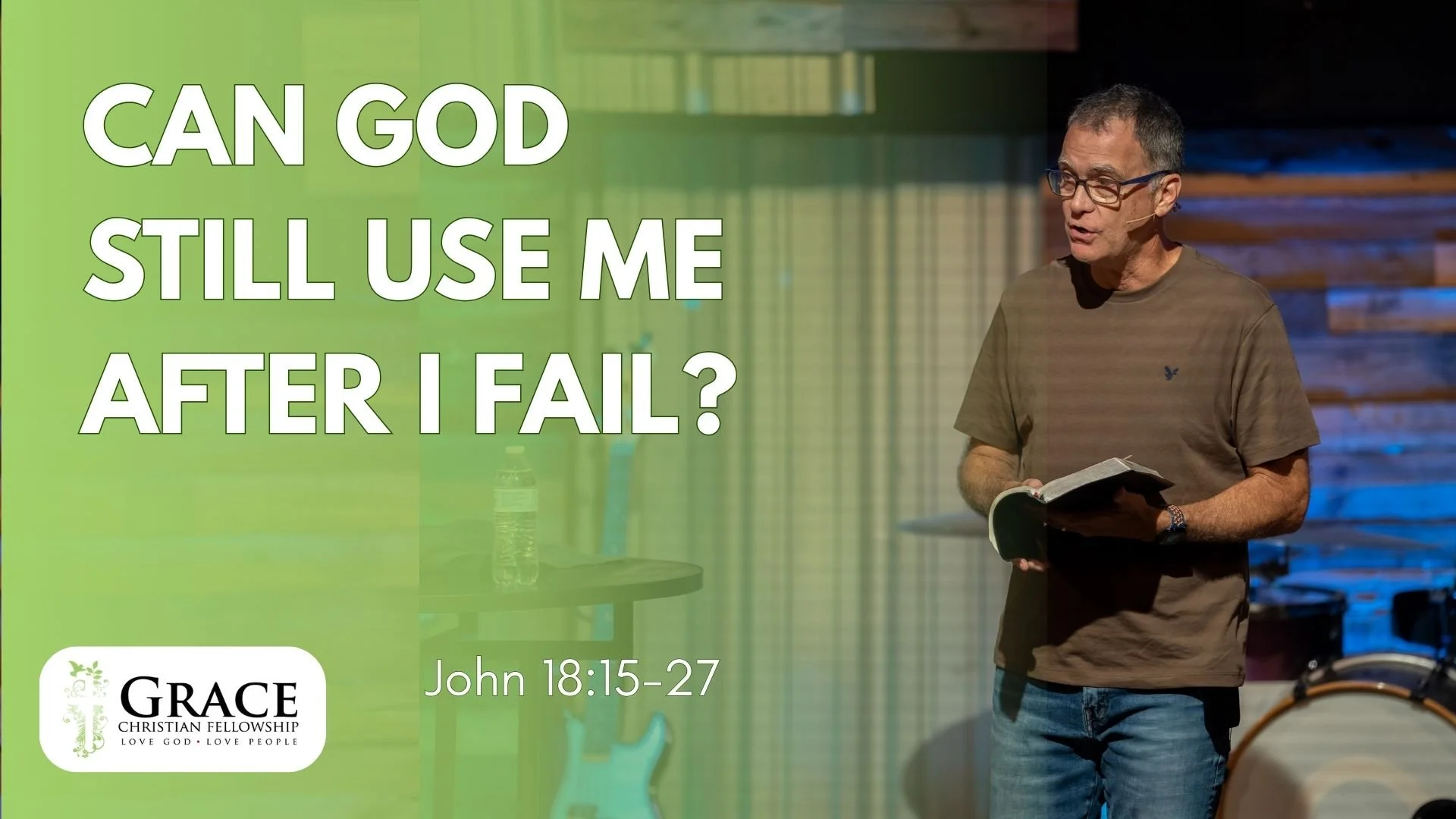
Series: Signs & Glory
Title: Which one are you most like?
Scripture: 📖 John 18:28-40
Preacher: Darien Roger Gabriel
Bottom Line: Hopefully I'm like Barabbas who literally had Jesus die in his place to save him.
INTRODUCTION
CONTEXT
📖 SERMON OUTLINE
CONCLUSION
NOTES
QUESTIONS TO CONSIDER
DISCUSSION QUESTIONS
🎥 YOUTUBE DESCRIPTION
MAIN REFERENCES USED
Opening prayer: Lord God, help us grow to be and do like Jesus, while abiding in him and leading others to do the same.
INTRODUCTION
Which one of these guys are you most like? Pilate? Chief priests? Peter? Barabbas?
Bottom Line: Hopefully I'm like Barabbas who literally had Jesus die in his place to save him.
CONTEXT
It's early Friday morning...the day of the cross. Jesus is being interrogated as he goes through pseudo and mock trials with the religious leaders. They take him to Pilate to gain access to a Roman crucifixion for Jesus, further humiliating him (discrediting him?) by having him be cursed for dying on "a tree."
According to Tim Keller, there are 3 basic or chief idols we all tend to worship:
Ambition--power, control
Approval--reputation, being liked by others, caring what other people think about us
Appetites--things that make us feel good--food, drink, drugs, sex, creature comforts, security
An idol is anything we value above or put ahead of God. You might think money is an idol. But money's power is that it can feed all 3 of these idols. It's a currency we can spend worshipping our God.
“For where your treasure is, there your heart will be also.”
Matthew 6:21 NIV
These men worshipped idols at this point in their lives.
Pilate was ambitious--all about power and control. He wanted to be successful enough as governor of Judea that he'd get transferred to a better station. He was afraid of being removed by Caesar. So he did whatever was politically expedient--even crucifying a man he said himself was innocent.
The priests were all about the approval of others--especially prestige and reputation. They loved to be seen at the head of the table and to be visible at the festivals respected as pious men.
Peter wanted to be wherever Jesus was, because he felt safe there. He worshipped appetites and his coveted appetite seemed to be safety and security. He did seem to be willing to defend Jesus by himself but then cowered in the courtyard 3 times when asked by servants if he followed Jesus. His cowardice was eventually redeemed and he became courageous.
Which one are you most like?
SERMON OUTLINE
My thoughts as I read through these verses in no particular order:
John goes back and forth contrasting Jesus' courageous revelations to the religious leaders about who he is while Peter cowardly denies who he is to lowly slaves and servants. "I am" vs "I am not." Both were in the cross-hairs of powerful enemies.
Jesus makes it clear that
He's a King, but not like any other earthly king.
He's the Truth, not just factually but personally.
He has followers who are loyal to him and his ways.
His kingdom is real, in this world, but not of this world.
The religious leaders were extremely hypocritical in that
While they were careful not to pollute themselves by going into a Gentile building,
They were pursuing a great injustice as they sought the death of the Messiah and Son of God.
They were honoring God with their lips, but
Their hearts were far from him.
They exercised religion,
Even as they denied faith in the One True God.
Barabbas was who Jesus died for:
He was guilty before God and man. Terrorist, murderer, and thief.
He was freed as Jesus, innocent before God and man, literally and legally took his place.
Bar abbas = son of a/the father.
Was replaced by Son of The Father.
Tradition has it that his first name was Jesus.
CONCLUSION
Which one are you most like?
Pilate--afraid of losing control and power?
Priests--afraid of losing popularity and persuasion over the Sanhedrin, people and even favor with Rome?
Peter--afraid of suffering and dying on a cross?
The 4 G's
God is great. Therefore, we don't have to be in control, for God is able.
God is gracious. Therefore, we don't have to prove ourselves to other people, for God loves us just as we are.
God is good. Therefore, we don't have to find satisfaction anywhere else. For God is more than enough for me.
Finally, we have Barabbas...are you like Barabbas?
Guilty of sin? Guilty in God's eyes? Afraid of dying outside of your Creator's kingdom?
Remember this, then.
God is glorious. Therefore, we don't have to be afraid of anything or anyone, for God is with us.
Bottom Line: Hopefully I'm like Barabbas who literally had Jesus die in his place to save him.
INVITATION
What about you?
Peter puts it all in perspective in his first sermon:
““Therefore let all Israel be assured of this: God has made this Jesus, whom you crucified, both Lord and Messiah.” When the people heard this, they were cut to the heart and said to Peter and the other apostles, “Brothers, what shall we do?” Peter replied, “Repent and be baptized, every one of you, in the name of Jesus Christ for the forgiveness of your sins. And you will receive the gift of the Holy Spirit. The promise is for you and your children and for all who are far off—for all whom the Lord our God will call.”” Acts 2:36-39 NIV
How do we respond? Answer 2 questions:
Take out a card or piece of paper right now. Write down the answer to these questions:
What is God saying to me right now?
What am I going to do about it? Write this down on a sheet of paper.
What I hear you saying, Lord, is ___________________.
[my name] is going to believe/do __________________________________________________ as a result.
Finally, share this with your Home or Mission group this week when you gather as a testimony about what God is doing in your life. You don’t have to get too specific to give him praise.
Lord's Supper, 1 Cor 11:23-26 is good passage.
Also, say something like, "Christ has died, Christ is risen, Christ will come again." (past, present, and future)
Pray
NOTES
In light of John 18:37, this is a Christmas, Good Friday and Easter verse all in one.
Perhaps you're like Peter? He was like a groupie, at first.
Are you a Jesus groupie?
“We are like Peter. In the flesh, we are all groupies. We love to get close to the rich and famous, to those who are in positions of power and of adulation. However, we are like Peter in another way. When those we idolize fall, we run for cover; when our heroes come under criticism, we no longer want to be identified with them at all. Just a few days after the transfiguration, when Jesus was betrayed by Judas and arrested, Peter could not bring himself to acknowledge his Lord” -RC Sproul
A roadie for a rock band is someone who works long hours before, during and after the show but is always in the background. They work to make the star look good. It's all about the star for them. They aren't looking out for themselves, primarily. In contrast, a groupie is all about themselves. They come for the show and to be seen at the show with the star for their benefit. They use the star to promote themselves afterwards with selfies.
Another point of comparison is the difference between a hireling and a true shepherd of a flock of sheep. The true shepherd will defend the sheep at great personal cost. The hireling will run to save his own life instead of the sheep. They live for themselves.
In the flesh, we live for ourselves. It's all about us. In Christ, it's all about him and we live and die for him, his mission, his glory, his kingdom.
Which are you?
Do you ever feel that tension in your life?
ChatGPT notes on my thoughts:
These are excellent, rich observations, Darien. Below I’ve taken what you wrote and organized it to help you see structure, themes, and sermon-worthy insights emerging from John 18:28–40. I’ve also added a few clarifying notes and interpretive expansions you might find useful as you preach, teach, or meditate on the text.
⸻
🧱 Organizing Your Observations from John 18:28–40
1. The Narrative Contrast: Courage vs. Cowardice
Your insight is spot-on and Johannine to the core.
John deliberately interweaves two “identity scenes”:
Jesus: “I AM.”
• He openly reveals His identity before the most powerful figures in Judea.
• He declares truth, submits freely, and refuses to hide.
• He stands in the light.
Peter: “I am not.”
• He hides his identity before the least powerful: servants and doorkeepers.
• He fears exposure and denies his relationship with Jesus.
• He stands in the dark.
Literary power:
John uses antiphonal structure—Jesus’ interrogations are bracketed around Peter’s denials—to show that the cross is not only the place where Jesus is revealed, but where disciples often unravel.
Preaching angle:
Everyone answers the same question:
“Who are you in relation to Jesus?”
Only one answer brings life.
⸻
2. Jesus’ Self-Revealed Identity as King and Truth
You’ve captured the heart of this interrogation scene. Pilate’s question “Are you the king of the Jews?” uncovers several truths:
a. Jesus is a King—just not the kind Pilate expects.
• Not political, not nationalistic, not violent.
• His kingdom doesn’t originate from this world’s systems, values, or power structures.
b. Jesus is the Truth.
• Not just correct doctrine or factually accurate statements.
• Truth personified.
• Truth revealed.
• Truth embodied.
Implication:
Every earthly kingdom rests on power.
Jesus’ kingdom rests on truth, which is a greater power.
c. Jesus has followers.
• Jesus implies the existence of a real, loyal community shaped by His truth.
• This is the seed of the church’s identity: a people who listen to His voice.
d. His kingdom is present but not worldly.
• Not “otherworldly” as in far away.
• But “not of worldly origin” (ἐκ) — meaning His authority isn’t humanly sourced.
Kingdom takeaway:
Jesus’s kingdom is in this world, but not from this world.
It confronts the world but isn’t contaminated by the world.
⸻
3. The Stunning Hypocrisy of the Religious Elite
Your list captures the irony John wants his readers to feel:
a. They won’t enter a Gentile building…
To avoid ritual defilement so they can “eat the Passover.”
b. …but they will commit judicial murder.
The irony screams:
How can they be worried about symbolic defilement while committing the actual defilement of killing the Son of God?
c. They honor God with religious appearances…
• Purity rituals
• Legal compliance
• Scriptural vocabulary
d. …while their hearts are hardened and murderous.
This echoes Isaiah 29:13 (which Jesus quotes in Matt. 15).
They exercise religion without faith.
And religion without faith always leads to cruelty.
e. Religious zeal + unbelief = deadly.
This section displays the worst form of unbelief:
self-justified religious unbelief—dead conscience, blind ambition, cloaked in piety.
⸻
4. Barabbas: A Living Parable of Substitution
This is one of the richest theological portraits in the whole Passion narrative.
a. Barabbas is unquestionably guilty.
• Insurrectionist
• Violent robber (λῃστής)
• Murderer (per other Gospel data)
He is everything society fears.
b. Jesus—unquestionably innocent—takes his place.
The guilty man walks free.
The innocent man suffers as a criminal.
This is the Gospel in miniature.
c. His name matters: Bar Abba (son of a father).
He is every man, every sinner, every rebel.
d. The true Son of the Father dies in place of a “son of a father.”
A poignant contrast:
• The false son freed
• The true Son condemned
e. Tradition that his name was “Jesus Barabbas.”
Some early manuscripts of Matthew read this.
If true, Pilate’s question becomes even more striking:
“Which Jesus do you want?”
• Jesus Bar-Abbas (violent revolutionary)
• Jesus called Christ (suffering Redeemer)
Humanity still answers this question today.
⸻
🔥 Sermon/Teaching Themes Emerging from Your Observations
1. What Kind of King Do You Want?
A king of political power?
Or a king of truth?
2. What Do You Do With the Truth?
Truth is confronted.
Truth is questioned.
Truth is dismissed.
Truth is crucified.
But truth cannot be killed.
3. Every Person in the Passage Is Forced Into a Choice.
• Peter
• The priests
• Pilate
• The crowds
• Barabbas himself
John draws the reader into that same decision.
4. Religion Without Truth Leads to Violence.
They preserve ceremony but murder Jesus.
This is a warning for every religious community.
5. Barabbas Is the Gospel.
The guilty goes free.
The innocent is condemned.
Penal substitution enacted visibly.
QUESTIONS TO CONSIDER
What do I want them to know?
Why do I want them to know it?
What do I want them to do?
Why do I want them to do it?
How do they do this?
DISCUSSION QUESTIONS
Discovery Bible Study process: https://www.dbsguide.org/
Read the passage together.
Retell the story in your own words.
Discovery the story
What does this story tell me about God?
What does this story tell me about people?
If this is really true, what should I do?
What is God saying to you right now? (Write this down)
What are you going to do about it? (Write this down)
Who am I going to tell about this?
Find our sermons, podcasts, discussion questions and notes at https://www.gracetoday.net/podcast
Alternate Discussion Questions (by Jeff Vanderstelt): Based on this passage:
Who is God?
What has he done/is he doing/is he going to do?
Who am I? (In light of 1 & 2)
What do I do? (In light of who I am)
How do I do it?
Final Questions (Write this down)
What is God saying to you right now?
What are you going to do about it?